The Dreaming

Theatre is a valuable metaphor to help us understand how our perceptions operate. Stories have the unique ablility to press the play, fast forward, rewind and stop buttons, in our heads, for the dimension of time holds no power over imagination. Weirdly our physical ‘reality’ has a similar quality, as the Shakespeare quotation above infers. Our experience of the world is as a stage set, with backdrops, painted scenes, actors and special effects…whizz! bang! hoopla!

Can we deny that there is an illusory quality to our experience of the world, a fakeness that was recognised even four hundred or so, years ago? Elizabethan England was vivified by magic, notably by those who were masters of illusion through magic, poetry and prose, such as John Dee, Francis Bacon and of course, William Shakespeare.

Magic is ‘other worldly’ and sorcerers manipulate what others believe. Our minds have a frailty which is both our power and a weakness. Mind slips in and out of our control. It is called waking and dreaming and the two are interchangeable, morphing at the mere echo sound of cricket’s cough.

Modern psychologists will describe a person who fades out of our contemporary collective theatre of the imagination as psychotic, but are we not all, at times, cretins in the same bowl of soup? Is this not a modern world of illusion, experiencing super-charged storytellers, on-line, in cinemas, in the media, television; spinning a world wide web of illusion.
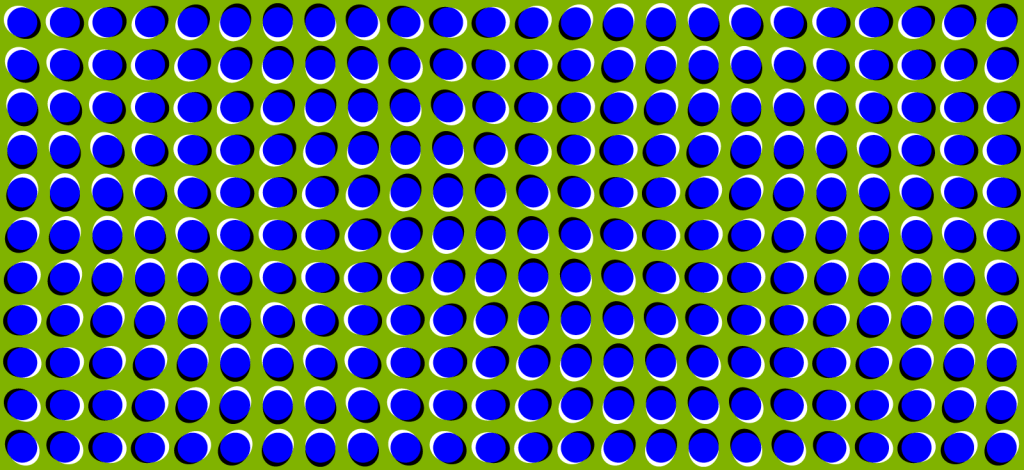
When we dream at night we experience alternative realities most vividly. Impressions form in our minds that we recognise but in the way we perceive a surreal painting or story. As an ‘Alice in Wonderland’, the whole geometry and order of life is tipped on it’s head, stirred, shaken and rolled out as a disturbing dream.

Such states can control us in our waking and sleeping, but it is possible to step out of the magnetic loop in which we are contained. ‘Lucid dreaming’ is the experience of waking up whilst still dreaming. Physical objects exist such as a light switch, but when flicked the light does not come on. Many drug induced experiences are states of mind that are both illusory and real. The latter are more likely found in indigenous cultures such as the legendary Don Juan in the books of his pupil Carlos Casteneda. Such experiences involve energetic beings and powers way beyond anything we might call ‘physical reality’.

Shaman in traditional communities inherit ‘second sight’ and the means to constructively use drugs, such as ayahuasca and peyote, from their forefathers. There are recognisable separate realities occupied by conscious but disembodied entities, which offer insights not available on You Tube. The encounters by adepts and students are predictable and repeatable, so rationally, are not vague dream impressions.

Much of the work of C.G. Jung explored this area of experience and established the concept of archetypes; powerful entities that resonate as mathematical constants that do not change with time or place.

On the other hand, there is our waking experience in which repeatable rules apply. We are able to manipulate the world and agree with others about our perceptions, even if we may sometimes disagree. In this ‘reality’ we can also repeat experience in the same way that a scientist can repeat an experiment and get the same result. But again, this ‘reality’ is nuanced by an undercurrent of dreaming. We experience ‘day dreams’ where our train of thought occupies our attention in place of our immediate sensual experiences. Children are particularly susceptible to daytime dreaming and much of their play is in their imagination, a world in which they usually reject adult interference!

From these examples we may appreciate that dreaming is not binary; our minds do not switch it on or off. Waking and sleeping are both areas where dreams operate.

In ‘waking’ our egos develope ‘areas of interest’ which are the well trodden paths of our fascinations. Such compulsions are triggers of past memories of excitement and pleasure that control us mostly unconsciously. For instance, when we go to a sports stadium to watch the team we have supported all our lives, we are in our own ‘heaven’. Our senses align with pleasant memories that we wish to re-experience, even as we park our car. If our team loses we experience displeasure, even though our lives have not really been affected; it’s just a dream turned into a nightmare. The faces of the losers tell it all!

So human experience bounces between pleasure seeking and displeasure avoidance. Gamblers enter a deep rut from which it is nearly impossible to escape. The ‘comfortable’ in society are risk averse seek a circular life, as in the classic comedy on UK Television sitcom, ‘Ever Decreasing Circles’.
Those who challenge ‘responsible’ comfort zones are the artists and drug users. Artists ‘create a stir’ by fashioning a form that breaks the rules. Drug users do the same but within very personal boundaries and without guidance as a consequence, which can cause harm and mental illness.

The mind is complex and we should expect to encounter one special trick that it plays on us, whether dreaming or awake. This is ‘projection’ and acts unconsciously. Within our unconscious mind is that which we have little or no control. During our waking state we might project a ‘complex’ from within that part of our mind. This is best expressed by the adage, the ‘pot calling the kettle black’. We criticise a shadow aspect of our character most strongly when we see it in others. It’s an opportunity to self realise and can become less ‘compulsive’ through self reflection and if appropriate, self control.

The autonomic nature of dreams is remarkably similar, projecting as in a film, elements of our own character in the play’s cast.

Whilst a comfortable physical reality is beguiling, it can be experienced too literally and believed too much. We are born into material bodies to overcome the limitation of being purely ‘Mind’ and one might expect such a transition merits a determination not to waste life by just staring out of the window.

After the use of our physical bodies, I believe we will once again return to ‘pure Mind’ or ‘God’. Without a physical body our mind is no longer able to observe the physical world or be informed by the physical senses.

Whilst in a body we are like a person who has learnt to swim in water; which we might experience as an ocean. Without a body we become that swimmer using all their skills learnt by swimming in that physical ocean. Within this ocean are small islands, which remind the swimmer of the physical world but are mere dream impressions and memories; just as in they physical world there are small islands which are not real.

picture credit: Aquabumps

Imagine

Mind and Matter

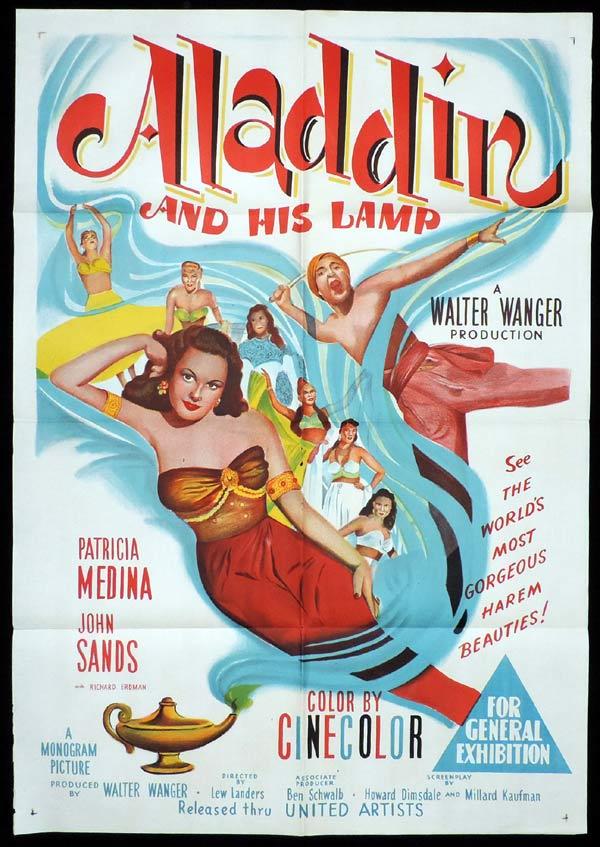
The thing about Aladdin is that, for a ‘good for nothing’ youth, he had a very powerful imagination.

‘He ordered the jinnee thus; “I want you to bring me a retinue of four dozen slaves, two dozen to ride before me and two dozen to ride behind me, complete with livery, horses and weapons. Both slaves and horses must be arrayed in the finest and the best. After that bring me a thorough bred steed worthy of an emperor’s stable, with trappings all of gold studded with rich jewels.“‘

from : ‘A Thousand and One Arabian Nights’ : translated by N J Wadood : Penguin Classics

Most people in modern times, have played the lottery. Winning is about as likely as being hit by a piece of space debris, but the dream is real enough to part with money. Lottery organisers face an unexpected problem; helping winners, deal with their sudden wealth. Unlike Aladdin, many have no idea how to spend their millions. One U.K. winner went out and bought a new machine machine.

‘New Washing Machine’s for Old!’

As with much of ‘ordinary life’, we are fenced in by, not only our wallet, but our imagination. Aladdin wanted nothing less than the Sultan’s daughter, slaves, dancing girls and a marble Palace with windows made from precious stones. A new washing machine was not on his list.

This essay is about ‘imagination’ and also about another characteristic of human thought; ‘fantasy’. In common usage, these terms are similar but I would like to draw an important distinction between the two.;

Imagination: the ability to configure something that can be made real.

Fantasy: the ability to configure something that can never be made real.

Between these two is a spectrum of the possibility of ‘making dreams come true’. The lottery is highly unlikely to make you rich while becoming an innovative entrepreneur is moderately achievable.

Let us examine a few examples at the ‘fantasy’ end of this spectrum. Fantasy is a pretend world occupied by children in the early stages of their lives. Anything can become anything. You can be the doctor and I shall be the nurse. The whole game is meaningless except as a faculty of mental maturing in which rehearsals for real life are being run safely.

Children are whisked off to see Cinderella’s Castle in Disneyland or Santa Claus in Finland in harmless but expensive escapade’s by indulgent parents. What anyone gains apart from temporary gratification, is open to debate.

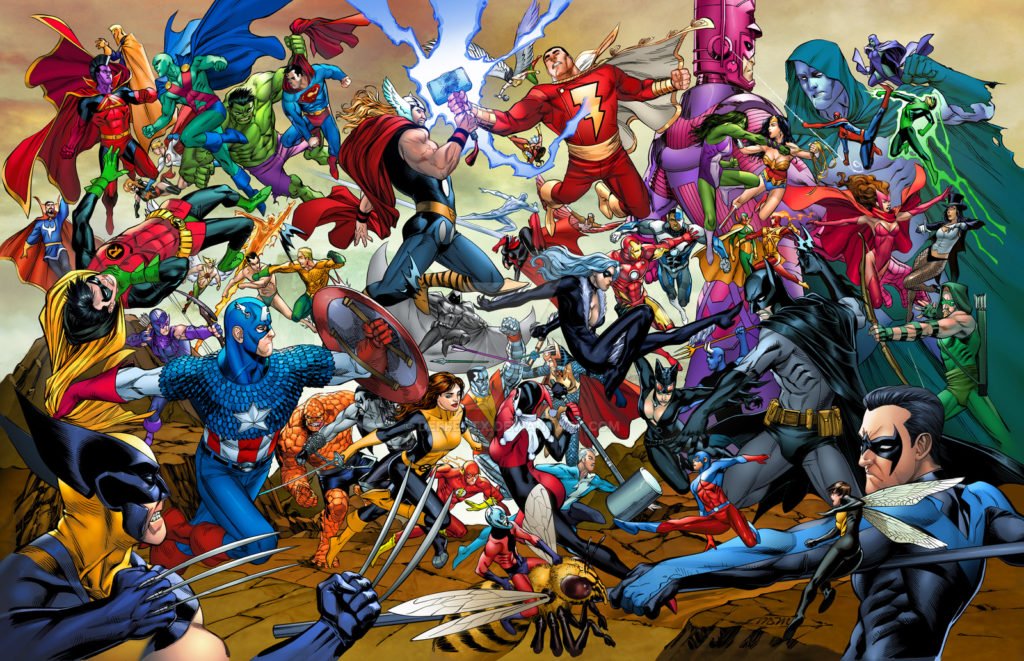
Is all this the archetypal ‘Hero’s Journey’ or just ‘Wham! Bam! Sock! Pow?

Teenager’s are sometimes drawn to the concept of a ‘super hero’. It’s a kind of oblique reference to the myths and legends of gods and goddesses of ancient Egypt and Greece that ignores any truth.

The ‘struggle for personal power, haunts many unfulfilled adults even in such mundane matters as their choice of car – a modern day ‘chariot of triumph’. Such self empowment was first expressed in a teenager’s bedroom in posters fantasising about becoming Superman or Wonder Woman or Taylor Swift or Beyonce. Association (borrowing power from another) is expressed but never achieved by mimicry of a ‘super hero’.

Comic heroes in both meanings! picture credit: The Mo Co Show

Whilst the comic hero may enrapture, the bottom line is that they are no stronger than the paper on which they are printed. The fantasy only lasts the time it takes to read the comic, unless you want to dress up!

Cinema certainly has that ability to make us confuse fantasy with reality. The first cinema presentation by the Lumier Brothers in 1896 had audiences running for their lives when they imagined an approaching train in the film was real. Today the opposite has become the case and audiences dissolve their minds with fantasies on the white screen that have no substance.

Marilyn Monroe ; screen godess and girl next door

Whether at home on in collective presentations, Hollywood has led the way. Marilyn Monroe called it Weird Wood because presumably she saw nothing holy in it’s halls. Her off-screen persona – Norma Jean – was as real to her as the on-screen beguiling sex-goddess character and was her anchor that kept her in touch with her true self. Like the fragile letters on the famous hillside, the Hollywood fantasy is always as two dimensional as the silver screen.

The crux of what pure ‘fanatasy’ does to us is that it is a world of ‘pretend’ and gives no objective benefit other than perhaps, passing the time and unsatisying catharsis.

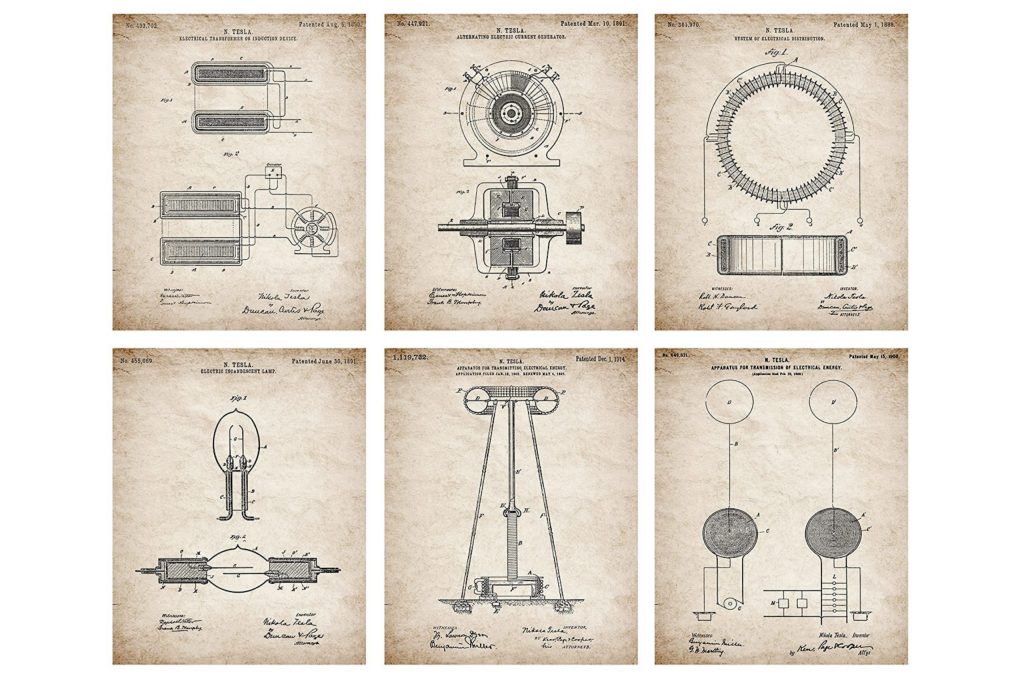
We should study now how the dream states of ‘fantasy’ and ‘imagination’, differ. Imagination introduces the possibility of making thoughts come true. An engineer for instance, might visualise an invention before recording the working processes on paper. Nicola Tesla sometimes invented whilst sleeping. He could turn an scientific device around in his imagination and make any necessary corrections before building it. We have to thank him for AC / DC electricity supply, TV remote controllers, radio and many other inventions in general use today.

Imagination is about making the possible possible and fantasy merely making the impossible, impossible. This is an important distinction because I believe so much human preoccupation today is as useful as smoke. Fantasist s follow, imaginaries lead.

The dreams that float across our minds in childhood may reflect some truth. They may be a memory and anticipation of past and future lives. Fortunate children will know from a very early age what they were in a previous life; a concert pianist or doctor or scientist. Some go on to have a rewarding career in that field. The phenomena of the three year old virtuous violinist fits few other explanations.

There is a channeller on You Tube called Daryl Anka who is worthy of consideration. The principle ‘teaching’ from his channelled entity called Bashar is to;

“Act on your excitement to the best of your ability without any expectation of outcome.”

This trigger of ‘excitement’ is something that is often extinguished by one’s self doubt or unconstructive feedback from others.

In endeavours of an artisitic nature, I would always advise people to explore what they love and are irresistably drawn to. This principle is a spark that contains truth and tremendous possibility of fulfilment in life; not just art. Without love we become like skittles without that array of arms that comes down from above and sets us up straight again, waiting for life’s next ball. We just roll around and fall into the black hole of disappointment.

In contrast, love connects to natural forces in a way that we do not understand and do not need to. It is inherently constructive in the way that imagination is constructive even if we do not know where it’s fractal growing patterns will take us. Nature works in this way and is beautifully described in such books as the Tao Te Ching by Lao Tsu; written 500 BCE and still freshly inspirational.

‘The leaves fall without purpose.’ Zen Photo and poem by the author

Much imagination and inspiration in human cultural and scientific achievement is inspired by nature. Art of great beauty inspires emotional responses in the same way that nature creates delight. Many artificially intelligent robots today, replicate the perfect design of the human body, animals and even humble insects because nature cannot be improved.

The evolution of human imagination using the scientific method, is surely a flowering of human consciousness, in the same way that that classicism inspired the Renaissance. This scientific evolution has brought to life moving holograms and virtual realities which even today are seen as magic. These techniques expand and explore the physical and energetic worlds in a manner that would never have been found without a scientist with imagination. Is this why scientists who are also artists, such as Leonardo da Vinci and Albert Einstein are some of the greatest thinkers?

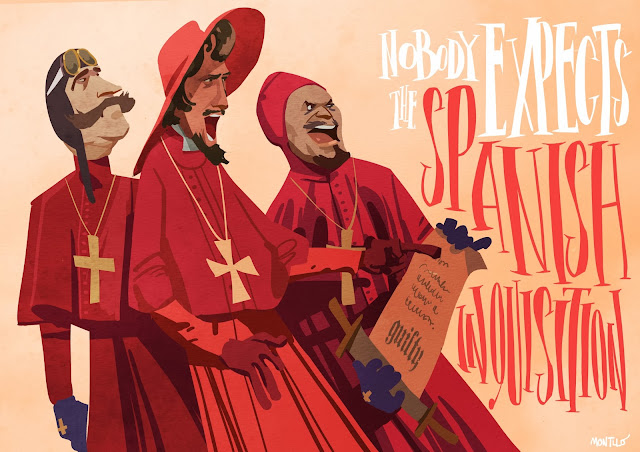
Human thought that is clearly ‘off the wall’ can be overwhelming and hide a darker force. The world of the ‘impossibly impossible’ was seized and used by religions to control others. When prophets and saints exemplify love, humility and compassion, there message becomes watered down over the centuries and tragically can become toxic, as in the Spanish Inquisition between 1478 and 1834. It would fantasise various versions of ‘heresy’ into being and punish those who did not comply.

Power to imagine is ultimately a personal endeavour. No religion, state or institution should ever be allowed to overrule the highest love and excitement of the people, in my view. I believe that we are all capable of ‘parting the Red Sea’ using mind alone. People with terminal cancer have died, come back and been cured the disease in days. Dr. Eben Alexander’s story describes his own experiences when in a medical coma and being treated by his colleagues in his book Proof of Heaven.

The only slippery nature of this slope is when we fantasise about things that just will never come true.

Our yellow brick road leads us to the Wizard of Oz who turns out to be just like us. Are we being force fed the fantasy of this illusory path and if so by whom?

The Holy Forest

Once upon a time the world was covered in forests. People lived in these forests happily until one dreadful day a war started.

The people in one particular forest were badly persecuted by their enemy. Most of their trees were cut down and the people died in great numbers as they could not survive without the bounty of nature. By the end of the war only one man survived, called The Hunter.

The Hunter

The kind people from all over the world felt sorry for the Hunter. They decided to send him to the very best forest in the world known as the Holy Forest. It was for him to look after and live in peace with the forest animals for the rest of his life.

The Hunter was very pleased and quickly set to work building himself a timber house in a clearing. The forest animals watched from their hiding places and wondered how the Hunter had been allowed to live in their Holy Forest. One day the Hunter walked out with his axe and started to chop down trees. He chopped and he chopped all day long until the clearing was very much bigger. The forest animals who lived in those trees ran away to their friends and family and hid in fear.

As the months and years went by, the Hunter carried on chopping down trees until there was only a tiny part of The Holy Forest left. The animals were hiding anywhere they could find but could not avoid the bullets from the hunter’s gun.

They could not understand why he hated them, so they sent the largest of the bears to warn him to stop – and fight him if he refused. The Hunter did not want to talk with the bear so the bear scratched his face very badly and blood poured out. The man grabbed his gun in a rage and shot the bear dead.

Now the forest animals were very frightened and hid in their burrows and up in the trees. In a rage The Hunter shouted that he was going to kill every living creature and that was all their fault for sending the bear. He took out his axe and cut down the remaining trees, shooting the forest animals one by one for they had nowhere to run.

The kind people of the world had been watching the Hunter all this time. Although they protested at what he was doing, they never stopped him. When they saw that the Holy Forest was gone and the ground was littered with the bones of the forest animals, they were shocked.

They could not understand how someone who lost his own people’s forest could destroy another one gifted to him in peace, especially one so holy. When they asked him he flew into a rage and accused them of being friends of the bear who cut his face and he pointed to his scars. His sense of self righteousness knew no limits and his eyes flashed anger and hatred at them.

So they walked away, and it started to rain on the once Holy land and the Hunter had no animals to hunt, no kind friends to look after him and only a wasteland in his memory.
He realised then that he had done exactly the bad things that had been done to his people without knowing what he was doing. ‘Bad things happen to make us wise,’ he thought, ‘when all the time I blamed others. Now I understand my actions were filled with fear and hatred but it is too late’. And the Hunter laid down his gun and collapsed. He had broken the sacred law to only do as you would be done by, and to break this law in a holy place was an end of honour for his fallen people and himself.

Imagination Theory

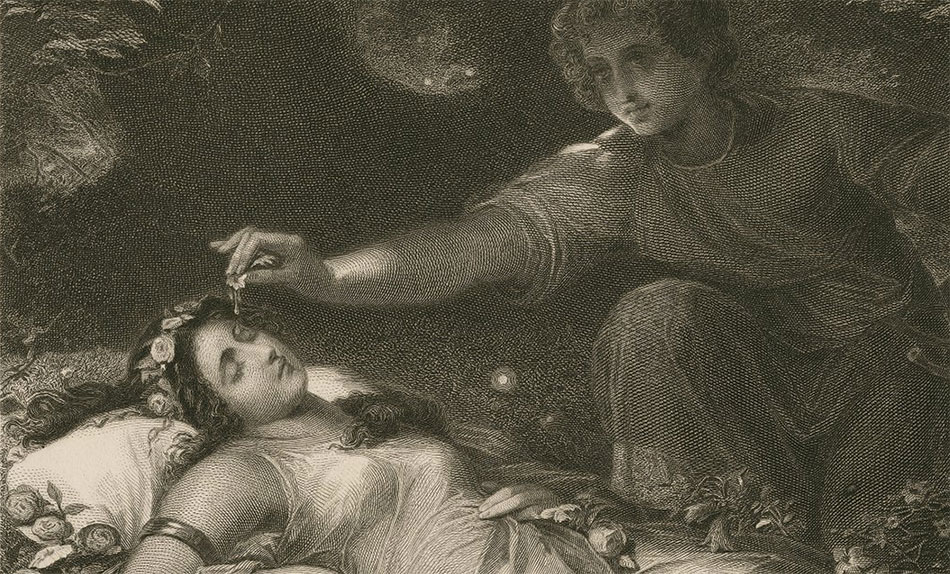
If we shadows have offended,

think but this and all is mended,

that you have but slumbered here,

While these visions did appear.

The Faerie ‘Puck’ in William Shakespeare’s ‘Midsummer Nights Dream’

The greatest mistake a human can make, in my view, is to not treat imagination as real. This does not mean that what we call ‘reality’, is unreal. Reality and imagination both have a vital role to play in our lives.

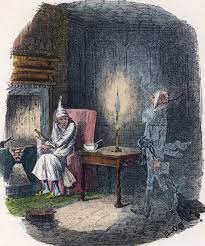
The character of Ebenezer Scrooge in Charles Dickens’s A Christmas Carol, had to learn this lesson three times in order to understand himself better. Three ‘spirits’ took him on three journeys into his own past, present and future. From objectively viewing his own character weaknesses, his false pride was beaten into submission and he learnt the most valuable life lesson of all – unconditional love. These ‘imaginary’ journeys and the lessons overpowered the lonely ‘refority’ he had built for himself.

All of us encounter these three ‘spirits’ in our lives, if we can make a leap of faith and objectify our ‘imaginary’ selves as ‘real’.

The first such spirit we encounter is in our childhood when we understand very little about the real workings of life. Rather, we ‘act out’ roles that our imaginary selves would like to be in the future…our ‘Christmas yet to come.’ The dressing up box is a most useful item, enabling children to assume wildly fanciful roles as magicians, dentists, racing drivers, astronauts and so on. The most ordinary prop fulfils the need for an exact semblance of physical reality in their imaginary world. Watching children at play is a most rewarding way to understand our own susceptibility to imaginary states of mind. When we are children, fantasy often overwhelms what we feel is our ‘objective self’ and teases us with pleasures and torments, in a safe way. But, like Peter Pan, some children refuse to ‘grow up’ into an adult. The world of frigates, flying and fairies is far too much fun to frizzle away.

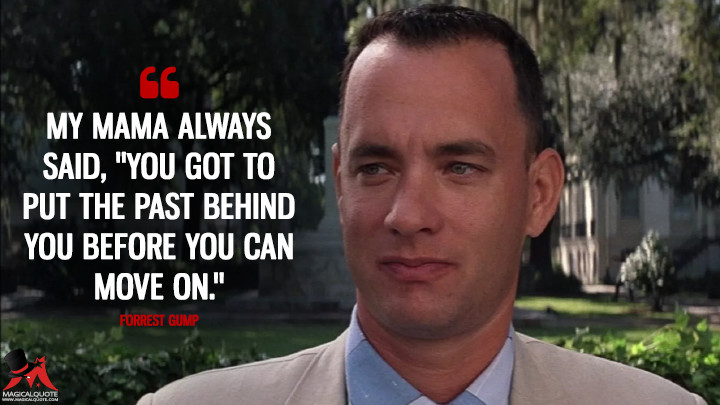
The character of Walter Mitty is a literary example of how there can be a child in an adult’s body. Mitty lived in an absorbing ‘dream world’ with flights of fancy that would replay dreams with himself in the lead role. He would encounter a situation the real Walter Mitty would be completely unable to deal with, and compensate with his imagination; such as flying a plane or conducting an orchestra. This is the ‘ghost of Christmas present’ where as individuals we have moved on the adulthood, but in a failed way. Unlike Walter Mitty, most people engage with the ‘hum drum real world’ and it’s seemingly endless burdens and chores, punctuated by few delights. Remember the character played by Tom Hanks; Forest Gump? For this character, a string of exciting situations were both wild and implausible enough to be fantasy and yet were firmly, real. Forest, in contrast to Walter Mitty, had mastered the most important challenge of all; to successfully merge imagination with reality.

Our most important decision is to find what people call our ‘destiny’, but this often sounds rather a vague destination. Even the decision to find a career is an extremely difficult one for a young person. From the view of an elder, I would define ‘destiny’ as simply following the people and things that you love. Although this sounds simple it is of course much harder that it sounds, as there are often obstacles to our dreams. As a child my dream was to be an Admiral but when the time came, my eyesight was not good enough. Watching Lionel Andres Messi play football for Argentina in the 2022 World Cup, is to see a man fulfill his destiny as a footballer. Those who purchased his No.10 shirt and wore it to the match were merely living the dream of a third partie’s achievements, a dead end path to their own destiny.

When we follow and act out an overwhelming excitement to do something, this is our own dream becoming true. Unfortunately, it is a sad fact that less than 4% of Western Europeans are in what they would call ‘their dream job’. The rest find themselves working in order to earn money and have no dream. The servers in the restaurants in Hollywood are often ‘wannabe’ film stars. The lucky minority who are ‘successful’, appear on our television screens.

As well as finding the employment that makes us fulfilled, we must find a partner who fits our ‘imaginary ideal’ of a partner. This again is a huge challenge as the ‘ideal’ man or woman is rarely found and if found; is available and inclined to reciprocate those feelings. If the latter does happen, as in the fairy story of the prince and princess falling in love for ever and ever, then blue birds will sing among the pink clouds and the castle turrets will tower over the cheering crowds at their wedding. Walt Disney has relived this imaginary moment for millions of children and adults and I would argue it is not wrong to dream. Through all these types of stories, whether in ancient myths and legends or on soap TV and radio, we learn to match objectively, our imaginations with reality. It is like two QR codes marked on two sheets of glass. When they slide over each other, the two appear to be identical. The worlds of imagination and physicality are just as unique and, when blue birds start flying around your head for real, they are in perfect harmony.

To return to our Christmas Carol theme, we enter the final stage of life. The woman or man lose their beauty as their body withers with age but their mind is usually disproportionately active and many older people will give you their ‘feeling age’ as their early twenties. When you engage them in conversation, they will recount their times of ‘Christmas past’ when significant moments fulfilled them. These will be substantially real but also coloured by imagination. Like old black and white films that have been digitally ‘colourised’, life becomes a series of memories which are a mixture of physical reality and imagination. The best are of course, those moments when our ‘dreams come true’.

Memories are valuable, but we should not forget that our true self is always in the present.

For this reason we cannot compare ourselves with others and form judgements.

We can only use the ‘guiding spirit’ (who taps on the frozen window pane of our own self pity one night) to remind us of who we might be and that we are not that person yet. The Dickens story recounts how it is never too late to learn how to become better. It is never too late to live the dream that you always wished for. It is never too late, unless you are one of those people who refuses to be motivated by your own imagination; to follow your own ‘yellow brick road’ that leads to the encounter with the Wizard of Oz or purchase the ‘giant Christmas turkey’ that with unconditional love, fills the bellies of all, including Tiny Tim.

What Mr. Scrooge had learnt was that living the present moment is the ultimate present to oneself and those around you.

Fifty Shades of Love

If the Inuit have multiple words for ‘snow’ then you might think that there are many words in English for ‘love’. Language has the ability to enable mutual understaning, even for the most mundane thing;

qanuk: ‘snowflake’kaneq: ‘frost’kanevvluk: ‘fine snow’qanikcaq: ‘snow on ground’muruaneq: ‘soft deep snow’nutaryuk: ‘fresh snow’pirta: ‘blizzard’qengaruk: ‘snow bank

So why does the word ‘love’, in all languages, fail to identify the spectrum of feelings it could and should represent?

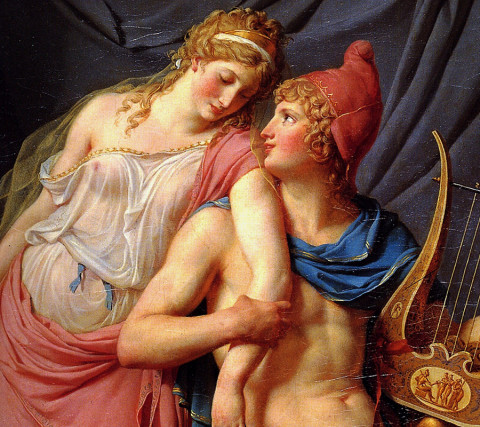
Before we start, let us agree that the word ‘feeling’ affirms love is an emotion. It is not the instinct ‘lust’ although the two may often be confused! As it can with the love of beauty and attraction that is only ‘skin deep’. Perhaps these errors once ‘launched a thousand ships’ to enable Paris to seduce Helen of Troy, or was an epic love story?

Lust has been crystallised in the English language by the phrase ‘to make love’. But clearly, animals ‘make love’; if all that is meant is to have sexual intercourse. When looking up ‘roll in the hay’ in a thesaurus, there are twenty seven synonyms for this expression. Clearly, westerners are as interested in sex as the Inuits are snow.

But we are going to pass over lust and concentrate on it’s more sublime incarnation and affirm that love is one of the most sublime emotions that humans ever experience. Although not easy to find, It too has many shades if we can find words to ‘nuance’ it into sub-categories.

So if we think of how we ‘love’ in our daily lives we can identify several ‘objects’ for our love to directed.

Romantic love should be our first choice as here we find the core of the word and it’s associated feeling. Romance sends humans into true and false expectations that are sometimes completely out of character. In youth this feeling is unknown and untested. But we are already on a collision course with that special person who will come into our lives. The emotional ‘volcano’ that erupts can leave one without thought and speech so paralysing is the impact of the explosive force. And just as in the making of volcanic mountains, the results of the experience last forever; impermeable to all later hurricanes and earthquakes.

The greatest romantic love involves a kind of electronic circuit, where both ends of the battery connect in what is called ‘requited love’. It’s corollary, unrequited love has spawned many an ancient Saga such as Sir Lancelot’s love for King Arthur’s wife, Guinevere.

Then there is love which has a different character; more calm and assured. When we think of how we love members of our family, we use the same word ‘love’ although there is no sudden ‘falling in love’. We learn to love our parents and siblings from birth to grave, a process that is not one necessarily of our own making. It is like a cosmic ‘arranged marriage’ where a soul is placed into the intimate company of strangers, it’s family. What we call ‘paternal’ and ‘maternal’ feelings of love are curiously blended with their equivalent instincts of unconditional parental protection; in the same way that ‘romantic love’ depends, in subtle ways, upon instinctual drives.

When children are old enough to leave the ‘love nest’ they call home and go on their own way, their connection with ‘family members’ falls more to a purely emotional attachment instead of one based on physical dependence. But when parents have bad characters and the process of childhood has involved abuse by parents towards their children, the detachment of a child to the family home becomes a ‘release’.

In that situation we have moved to the opposite end of the scale of the ‘fifty shades of love’ and discover the word ‘hate’. Hate after all, is the same as love only destructive in it’s effects rather than constructive. But the emotions come from the same source.

Romantic lovers and family members sometimes find themselves in the space of mutual emotional hate at the beginning and or end of relationships. In Shakespeare’s play ‘Much Ado About Nothing‘ the principal characters of Benedict and Beatrice cannot stand the sight of each other. Through the play their characters develop towards a deeper understanding of their similarities rather than their differences. The English language deserves a word for the ‘love / hate’ relationship!

We find the same scarcity of words when we describe ‘love’ in the context of religion and the concept of ‘loving God’. Those religions founded on monotheism, place intermediaries between the Divine and ourselves such as the prophets and the saints, their disciples and the self elected clergy who claim to be able to understand what was going on in the lives of the characters in the holy books.

There are those who have a direct relationship with the Divine with no intermediaries. Their relationship with God is greater than any love for any human and many retreat to monasteries and nunneries to play out and understand these feelings. Is such a feeling irrational? Again we need another word for ‘love of God’ because without it, we can cancel without due consideration the possibility that prophets and mystics can unconditionally love God.

As we scan these ‘shades of love’ we find next a rather prosaic category of ‘love of places, activities and things’. These I place together as they are generally dismissed by the aforementioned mystics as being ‘illusions’ at worst and ‘not of benefit to the soul’ at best.

And yet ninety nine percent of human activity is centered on the places, activities and things that we love. People who express in exceptional and imaginative ways are the artists in society. They choose things that inspire a love, such as nature in it’s many forms and people in their many activities, that they wish to share with others.

Certainly artists are able to observe and understand their feelings of love and passion in a focused and controlled way. Just as the person smelling blends of tea in a tea factory, artists are able to savor their deepest emotions, such as love, and present their inspiration in a way that is agreeable to others.

An example might be the Moghul mausoleum, the Taj Mahal in Agra (picture credit Smarthistory). It was famously built by the Shah Jahan to express his eternal love for his favourite wife Mumtaz Mahal. This leads us into the idea that love between human beings can be regarded as limited by society (monogamy) or plural (bigamy). With such dilemmas we can observe how ‘uncontrolled’ our emotions can become in the eyes of ‘society’ and again many great works of literature and art have been inspired to explore how this plays out among the humble and the great.

We should not overlook one of the most extraordinary aspects of love between humans; that we have an infinite capacity for love. Our hearts are wells that do not run dry, circulating love as effeciently as blood. Which is why many religions extorty Universal love for all things. As Jesus the Christ said, ‘love thy neighbour’.

The subject of love is indeed an immensely contradictory and complex; partly because of a lack of words to describe it’s many faces and flavours but also because of what today is identified as ’emotional intelligence’. If the ‘e’ in emotion represents the ‘energy’ that causes feelings to erupt as if from nowhere, the ‘motion’ part of the word describes how feelings are constantly changing. If we form fixed beliefs in our minds and accomplish specific skills in our bodies that do not change, can we extrapolate this to the idea that emotions are the same?

It would be good to believe this and allow our emotions, thoughts and bodies to constantly learn ‘new tricks’ throughout our lives. Our minds may wish to give the appearance that they are ‘in control’ but our emotions can overrule mind and the decisions it makes.

‘Don’t believe a thing just because you thought it.’ Groucho Marx.

What differentiates love from mind and body, in my view, is that emotions can understand what we might term, ‘truths’. A woman for instance may take a dislike for a person who her husband admires for no explainable reason, just a feeling. And years later the husband arrives at the same conclusion using the circuitous route of logic and deduction.

At the most sublime level the words of the prophets and saints express eternal truths when they experience a direct and immutable Divine command. Since such commands are always based on love and light, all who follow these words will benefit.

We can conclude then that love has multiple incarnations and pushes and pulls us simple humans, in the way that asteroids and meteors dance with solar systems. There are irresistible forces at work that can propel us further and faster as well as sometimes, cause us to crash.

What appears to be important and yet missing, is the ability to use language in subtle and, yes, exquisite ways, to direct our course of destiny. If nothing deserves better attention, I would contend that what, who, how, where and when we submit our very own ability to love; then we have learned the greatest trick of all.

Becoming the Rose

Very few people have come up with a good answer to the question of the meaning of life, the universe and everything. Perhaps the least reliable is in Douglas Adam’s ‘The Hitchers Guide to the Galaxy‘ where the computer gives the answer of ’42’.

In my view, the query itself may be wrong. It may be an impossible question, like the Koans beloved of the Zen masters in ancient China such as;

Q: Without speaking, without silence, how can you express the truth?

R: I always remember springtime in southern China. The birds sing among innumerable kinds of fragrant flowers.

‘OK smart guy. So if the meaning of life is a dead question, what should it be?’

Smart Guy replies, ‘how about; what is the challenge of life?’

This is a little easier to attempt to answer.

There are four interlinked aspects of ourselves. When these are understood individually (which could take a lifetime) and balanced (which could take another lifetime ) then a flowering of the human soul occurs. A poet might call it ‘the becoming the rose’, but before that, let us start at where we are.

As human souls we manifest into a physical body; from energy to matter.

A baby comes as a complete package ready to grow in four main areas;

Intellect The human brain is considered the nerve centre of the human being and consciousness appears to be centred here; although there are examples of near death experiences and other practices that induce consciousness to leave the body and return. The ‘mind’ learns the language of those around it and uses play to practice thought and actions that it will experience for real in the future.

Emotion This ‘feeling’ is generally experienced in the centre of the chest and heart. The nerve plexuses here connect directly with parts of the brain and can generate overwhelming imperatives that can override thought. Feelings are often completely correct despite the more usual reliance on rational thought, certainly in Western societies.

Instinct The body is controlled by conscious thought and automatically by the parasympathetic nervous system. Some bodily functions such as breathing, can be both consciously controlled or automatic.

Intuition The quietest of the four ‘imperatives’ yet possibly the closest to the question of what the challenge of life is. Many psychics, saints and seers have developed this faculty to a high degree and share their insights through example and teachings contained in art and ‘holy books’.

None of these four aspects of the ‘being human, roller coaster’ is particularly new. What may be new to you is the following very important consideration. That humans may acquire one of more of these four aspects of themselves to a certain level. What this level is ( e.g. how good you are at languages or art or dancing or wisdom ) can be ignored. What is important is; ‘are each of these four aspects of a person balanced?’

Now get personal and ask this question of yourself. How well balanced am I in these four areas of the my human experience?

We have to be careful, as the ego will resist any sort of challenge to it’s dominating ideas about itself. Ego’s like to feed the false notion that we are balanced individuals and good at most things.

‘I am’

But clearly, when we examine ourselves closely, we realise that we have not reached our full potential by any means of measurement. The challenge we face of becoming strong in all aspects of ourselves, is daunting and most of us fall well short of the target.

A metaphor for this task is an internal combustion engine that has four cylinders; each fired by a spark plug. It doesn’t matter what the cubic capacity is of each cylinder or even how many cylinders there are. What is critical is whether all cylinders are being fired in equal strength.

Perhaps you have driven a car that only has three cylinders working. The speed of the car is reduced and it is difficult to accelerate. If only two cylinders are working the engine may just judder to a halt.

Humans are similar. With these four aspects of being human consider how there are many permutations of weakness and strength.

A person who has a highly developed intellect might be a university professor with little emotional intelligence, is hopeless at dancing and sports and considers intuitive insights to be ‘flights of fancy’. The characterture is an elderly man who keeps losing his glasses, trips over carpets and forgets his wife’s birthday.

among contemporary European people, only one of the three independent data necessary for obtaining a sound human mind has developed – namely, their so-called thought, which tends to predominate in their individuality; whereas without feeling and instinct, as every man with normal reason must know, the understanding accessible to man cannot be formed.

-introduction to ‘Meetings With Remarkable Men’ by G. I. Gurdjieff

A poet or artist might be very good at expressing their feelings, but intellectually they cannot understand, or at least see the value, of logical hypothesis and experimentation. They will buy a car because of it’s colour.

An athlete might be exceptionally good at running (lean and large lungs) or jumping (good speed and long legs ) and yet they may not be able to fill in a form at the post office, tell someone they love them or understand mystery.
Empathic seers and psychics might find themselves at the subject of jokes and accusations of ‘fraud’ and yet be correct more times than chance. Similarly they might struggle in the other areas of their full potential.

Of course these examples are charactertures, but we see their similitude’s in the ‘celebrities’ of modern culture and those we know.

This, in my view, is the challenge of being human. We have not one purpose but four precise, aspects of ourselves to nurture and harmonise within us.

There is nothing new about this idea. If we look back in time we see it as part of many human cultural experiences and remains most prominently in symbols. The concept of a ‘balanced human being’ is the cross.

This symbol is older than Christianity, and represents the division of the whole into four equal parts. There may be different ideas as to the meaning but it is common to many interpretations that where the horizontal crosses the vertical the centre, is a special place.

The Rosicrucians placed a rose in this centre as a symbol of a ‘fifth element’ – a transcendence. Only by being ‘geometrically balanced’ – as a cross is – can the fourfold aspects of our nature integrate in equal measure. At that harmonious place, one is at the ‘centre of the universe’.

At this spot, miracles can come from the depths of the human soul. Various saints of all religions, have demonstrated extraordinary abilities such as being in two places at once, manifesting physical objects from nothing, miraculous healing and other miracles. We, the ‘unbalanced’ and ‘imperfect’, watch on in awe and have no explanation for what we see.

The challenge, in my view, is to concentrate on reaching your own potential. We are each capable of excellence but this is difficult because our weaknesses are pushed into the shadow areas of ourselves to be ignored.

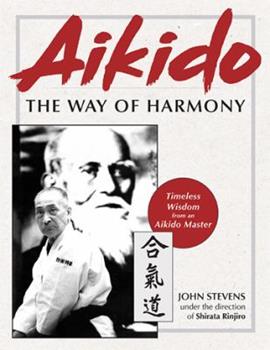
As children, one of the first things we explore is the miraculous experience of being in a body. We watch this as we see children run, skip and jump. But we may take a long time to learn to control our bodies. Most martial arts contain the teaching of moving into the centre of gravity of one’s body, which in most people is in line with the navel or sacral chakra. In Karate it is called the Hara, from where the student is taught to move the whole body. It is a mini-brain with it’s own supply of Ki energy. Masters of Aikido, even in old age, can produce a pulse of Ki energy from this centre to push a much stronger opponent across a room without physical contact.

The body never forgets it’s skills. It can act independently of mind such as in the old adage; ‘as easy as getting on a bike’.

There are also ‘reflexes’ which are part of the autonomic system of the body such as respiration, cardiac regulation and many other functions vital to life. The enteric nervous system is the intrinsic nervous system of the gastrointestinal functions. It has been described as “the Second Brain of the Human Body”.

In exactly the same way as our bodies, our mind, emotions and intuition learn and then repeat lessons and skills that become autonomous. To some extent, younger members of our tribe can learn from elders through such things as stories and sage advice, but generally, learning and personal development cannot be taught. It has to be experienced and recorded viscerally.

I am a teacher without a pupil and a pupil without a teacher.

When we have nurtured and grown our instincts, emotions, mind and intuition equally, we become balanced; in the same way that a cross can balance on one finger in its centre. This is known as ‘centreing’ or in Jungian psychology, ‘individuation’. We are no longer a ‘push over’ either physically, emotionally, intellectually or intuitively. The hardest shocks of life bounce off us and sent on their way. We do not become ‘victims’ and demand reparation. We are beyond argueing, sulking, resenting, blaming and all the other traits found in the unbalanced personality.

A Zen master was sitting in a room when an earthquake started. The other people in the room immediately started to panic and run screaming for the door, pushing each other out of the way in order to get to safety. The Zen master remained seated and upright.

The act of centering places an imaginary rod of iron vertically from the stars, through the top the head, through the chakras and into the earth below.

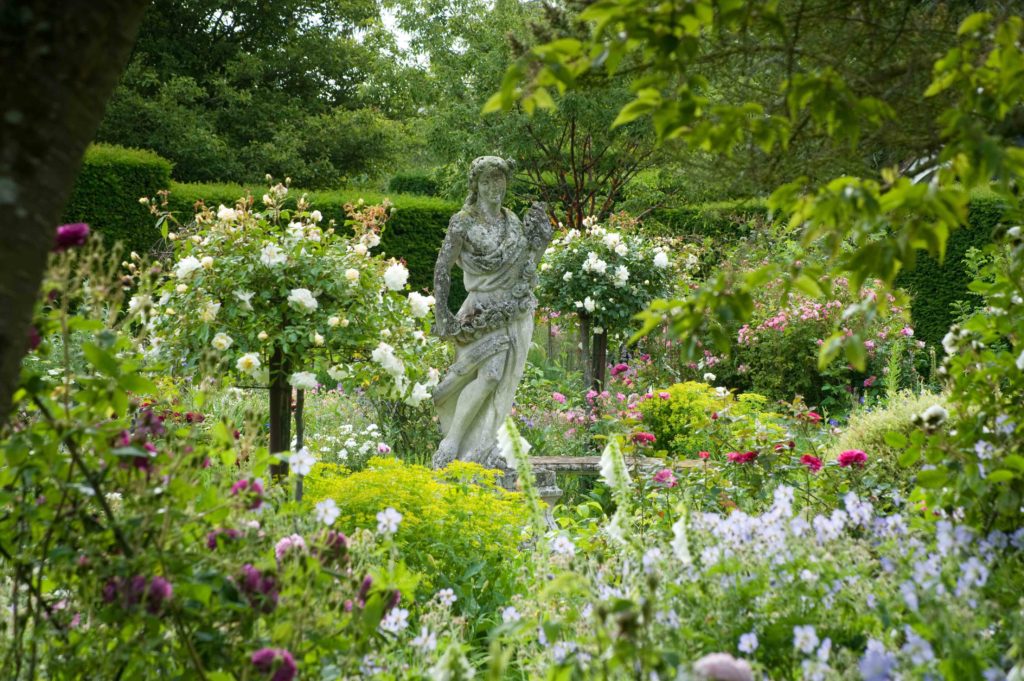
Once planted we do not move, other than to nod our head; as a rose in the garden moves with the breezes.

picture credit; The English Garden

Further reading:

Biorhythms describe the idea that the strength each of the four aspects of ourselves; mind, body, instinct, intuition…varies cyclically over time. For instance our physicality is governed by a 28 day cycle and during this time it follows a sine wave form from high to low. It is activated at birth so by calculating how many days since you were born, you will know where you are on this cycle. When your status is high is a good time to run a marathon. When it crosses the centre line of the graph is a ‘critical’ day and you will feel discombobulated before entering the less energetic 14 days of the cycle. To complicate matters the other three aspects of yourself are on different length cycles and the four combined describe how you are feeling. Fortunately there are Apps available to do the maths for you. This may help in ‘working backwards’ to achieving balance by being more aware of your whole self and it’s rhythms.

Watching Grass Grow

I do not normally watch football matches. The reason is simply that I find them slow and the match result often unsatisfying. More on this later. One the other hand I can be persuaded to watch any sport where England takes part in a sporting final and where there is a high likelihood of a match of equals.

So I sat down to watch the European Final of Womens Football 2022 last night. History, we were told, was about to be made.

But first, some game theory. Many games simulate military strategy and football is no different. Each side has an area to defend. The resources of each side are matched with no particular advantage to either other than their own esprit de corps, skill and strategy. With these resources, the sides must defend at the same time and with the same force, as attack.

What happens when one side is considerably less skilled and less determined in it’s aim than the other…is that the more skilful side wins convincingly.

This gives rise to a certain inevitability as to the outcome giving the supporters and participants of the losing side enormous disappointment. Their expectations of winning were shown to be based on false confidence in their own ability.

This is why sides which are equal in every way, provide the greatest challenge to the players and entertainment to the supporters.

The game of football, however, provides a disappointing set of rules that restricts uncertainty and the excitement that comes from the expectation of gaining a winning advantage at any moment.

What works most against football being entertaining, is the system of low scoring. A 0-0 result is not uncommon and only slightly better is a draw of say 1-1. Ideally a score should reflect the skill of a side as closely as possible and in low scoring games, it is unlikely to do this. In fact sometimes the better side may lose due to some random misfortune such as an injury or poor refereeing decision, giving rise to indignation amongst players and supporters; the phenomenon of a ‘pitch invasion’ by angry supporters must happen more in football than any other sport.

If we examine how well high scoring games reflect the process of a match and outcome, such as tennis or cricket or snooker, players have a chance to change the course of the game almost every time they touch the ball. The better player or side will almost certainly be identified by the final score and both sides feel fair play has taken place.

Compare this with football, where much of the play and touch of the ball results in no particular advantage to either side. Players often kick the ball back into their own area rather than forward. They engage in a series of safe passes in which the ball moves between players of the same side with little risk of losing possession. During this time the grass grows another micro millimeter.

Losing possession is not even a great disadvantage to either side. Goal keepers regularly kick the ball away high in the air with only limited accuracy as to where it is going to land. The opposing side might intercept the landing with a header which is so uncontrolled that possession changes side yet again.

The prospect of the ball moving around the pitch in this manner gives no reward to either side. Players compensate for their frustration by taking a risk of injury to themselves or other players, with aggressive tackles. The result is that play stops whilst a fallen party rolls around theatrically on the ground in order for the referee to take the matter more seriously than is warranted. Medical teams are permitted to run onto the pitch to give ‘treatment’ that in olden days consisted of squeezing a wet sponge over an affected area and today consists of more elaborate physiotherapy, ICU teams and trauma psychologists.

So the game stops and starts with as much randomness as a demolition ball and certainly not as interestingly. At the end of 45 minutes of nothing, both sides rush off as if they need a break. During this time supporters argue or fight or get more drunk, and players are given a victory talk by their coaches and managers and anyone else who happens to be in the dressing room, telling them all to ‘work together as a team’ and ‘get the ball in the back of the net’.

At the end of another 45 minutes of lawn care, neither side has managed to kick the ball into the exceedignly large space enclosed by the goal posts. One almost gets the feeling that even if the opposing side was not present, a team working on it’s own to move the ball from one end of the pitch to the other and then between the goal posts, would find the challenge irritatingly difficult.

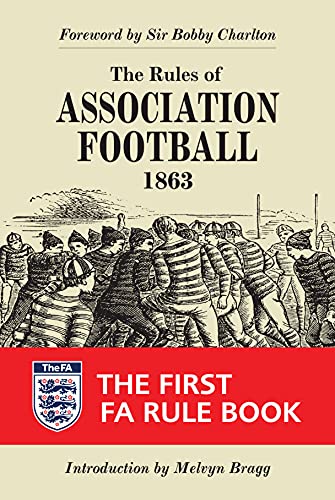
At the end of the game one side may have by some fluke, scored a goal and this sometimes unearned (even an own goal), event is considered enough in the Football Association rule book, to warrant deciding which is the better side.

Sweet FA

In the likely event of a draw, the most frustrating spectacle of a ‘penalty shoot out’ is commenced. Each side takes it in turns to stand right in front of the goal posts and kick the ball past the goal keeper. The success of this depends largely on randomness on behalf of the boot of the player, the arrangement of worm-casts, damage to the pitch over the penalty taking position, the strength and direction of the wind, the strength, height and direction of the sun, the clarity of mind of the players ( after brain damage caused by heading the ball too frequently in their career ) the clarity of mind of the goal keeper who has to guess which way the kicker is going to kick, and the conflicting chants of two opposing tribes of supporter.

In order for any game to avoid such a spectacle of chance to ‘decide’ the result of previous vain and worthless endeavours, I strongly suggest that a new system of continuous assessment is introduced.

This means that points will be awarded more often.

So to improve football certain changes might occur;

  1. Use a point based system instead of counting goals.
  2. Award 3 points for a goal, 2 for a corner and 1 for a side throw or hitting one of the football posts and horizontal bar by skill or fluke. This will keep the ball in play and the game moving and require skill and concentration.
  3. Increase the size of the goal or remove the goal keeper completely.
  4. Reduce or increase the number of players. For instance there could be one additional player coming on for each side every ten minutes. After half time players leave the pitch in the same way.
  5. Change the size of shape of the ball. A ball as large as the players would be hilarious if nothing else.
  6. Change the number of balls. Two balls could be in play at the same time, or twenty.
  7. Allow hitting the ball with a fist instead of the head (to preserve brains)
  8. Break the game down into more parts as in tennis, so that an uneven number of wins is required of sub parts of the game rather than have just the one result.
  9. Permit obstacles on the pitch such as sand pits and water holes and or circus perfomers.
  10. Give each player a giant inflatable hammer with which to hit each other.

There are no doubt many other variations to the rules of football that would create far greater entertainment. The key change to make however is to get rid of the unsatisfactory scoring system.

Games are invented by mankind and not received from God, and should never be subject to dogma. It’s okay to change / improve the rules.

People who resist change it is said, are willing to accept change only so long as the new version is the same as the old.

Flippant? Not really. Consider how after centuries of having male only matches, females are now also playing the game of football. Trouble is, it’s just more of the same.

Flippant? Then consider that football in this analogy illustrates how the human mind is resistant to change even when a particular mode of human behaviour and rules is clearly in need of improvement. Then, when change is finally accepted, it is often no change at all but the similitude of change.

Seeing is Unbelieving

Seeing is Unbelieving

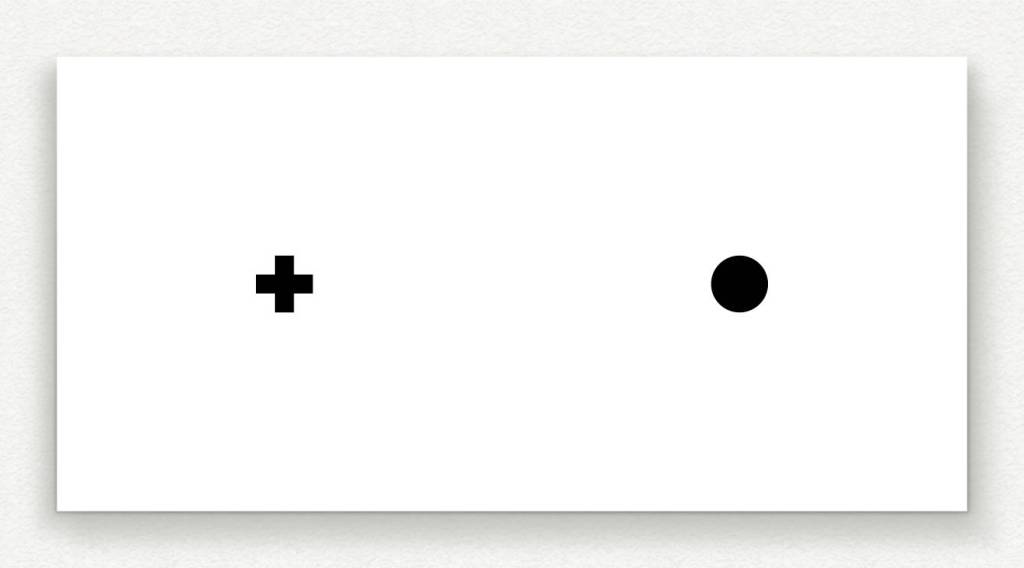
There is an intriguing eye test in which the subject looks at a cross and black dot spaced out on a sheet of paper. As the paper is drawn closer, whilst staring at the cross, the black dot disappears.

The explanation we know to be the ‘blind spot’ in the retina where the optic nerve enters and fans out. What is intriguing is that the brain is constantly filling in this ‘blind spot’ with information that we are not aware of.

It is the same with white ceilings. If there is a blemish or a stained patch, the brain will ‘see’ the ceiling as perfectly white. What we see is therefore, in some degree, doubtful.

Perhaps it will help us if we define ‘seeing’ and ‘looking’. Most of the time we ‘look’ without discernment. If however we focus our mind on what we are looking at, more information and understanding will become apparent. Artists learn to ‘see’ in order to render every aspect of the subject they are describing to an extraordinarily high degree.

The visual apparatus of humans can be trained, but we should also realise that what the brain does with the information is highly selective.

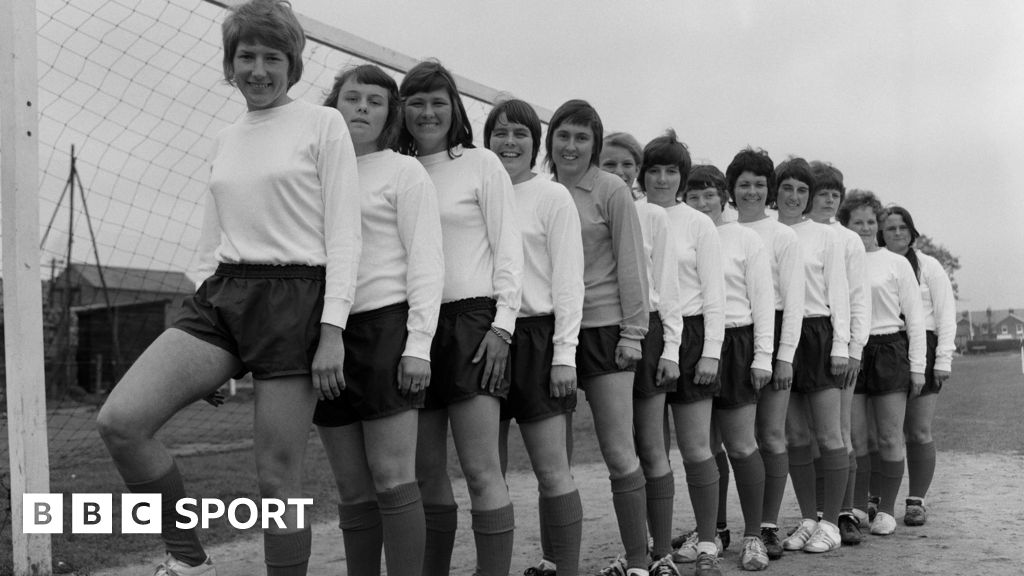
When two soccer teams play a match, the supporters identify with their own team. If there is an incident where the referee has to make a decision in favour of one side or the other, both sets of ‘witnesses’ i.e. supporters, will be highly biased towards their own side. They will talk about the incident and the injustice of the referee’s decision for weeks afterwards, based on their own biased view.

picture credit;
The Nutmeg News

Witnesses in criminal cases are notoriously biased and the justice system has to record what they saw as objectively as possible. When two witnesses present differing versions of events, which is the truth?

In one extreme case when people on a bus witnessed an incident in Israel, the police used a hypnotist to access what they saw in extraordinary detail. Our brains retain most of what we see, it is just that we blank most of it out unconsciously. Hypnotism retrieves this information in an unbiased way, so that for instance, car registration plates will be remembered.

Unfortunately, we do not have hypnotists to solve our family arguments about who said what to whom and how long this has been going on. Neither do whole nations have access to truthful descriptions of what is going on in the world and dictators exploit this.

It is possible to create a narrative so extreme that it can even be used to start a war with a neighbour. Witnesses to events in the war, even professional reporters, are today regarded as suspect in their reporting because even the media can either intentionally or unintentionally, select the truth according to their editor’s wishes.

picture credit; World Press Freedom Index

Even the photographs and videos are no longer able to be trusted as software is available to alter them.

All of this happens in what we call ‘the physical world’ but of course what we see is not always physical. Take an audience watching a film in a cinema. They are certainly not watching anything ‘real’ in the conventional sense, but they will be completely transfixed by the narrative being played out before them. There may be some self awareness retained as the popcorn in handed around which is similar to the way hypnotised subjects experience what they are viewing, but their focus is mainly in a virtual reality.

Hypnotised subjects reveal much about the complexity of how visual information reaches the mind and how it is interpreted. There is one case referred to in Michael Talbot’s book The Holographic Universe, in which a man is hypnotised and told that his teenage daughter is invisible to him. She stands in front of him and much to the delight of the audience and his giggling daughter, he swears he cannot see her. Then the hypnotists takes out a unique watch and presses it against the back of the young lady. He asks the father details about the watch which he squintsat and reports correctly everything he is asked about the watch.

There is no explanation for this phenomenon, but clearly it shows us that what we see is far more extensive and complicated in it’s mechanics than the diagrams of the eye that we study at school, explain.

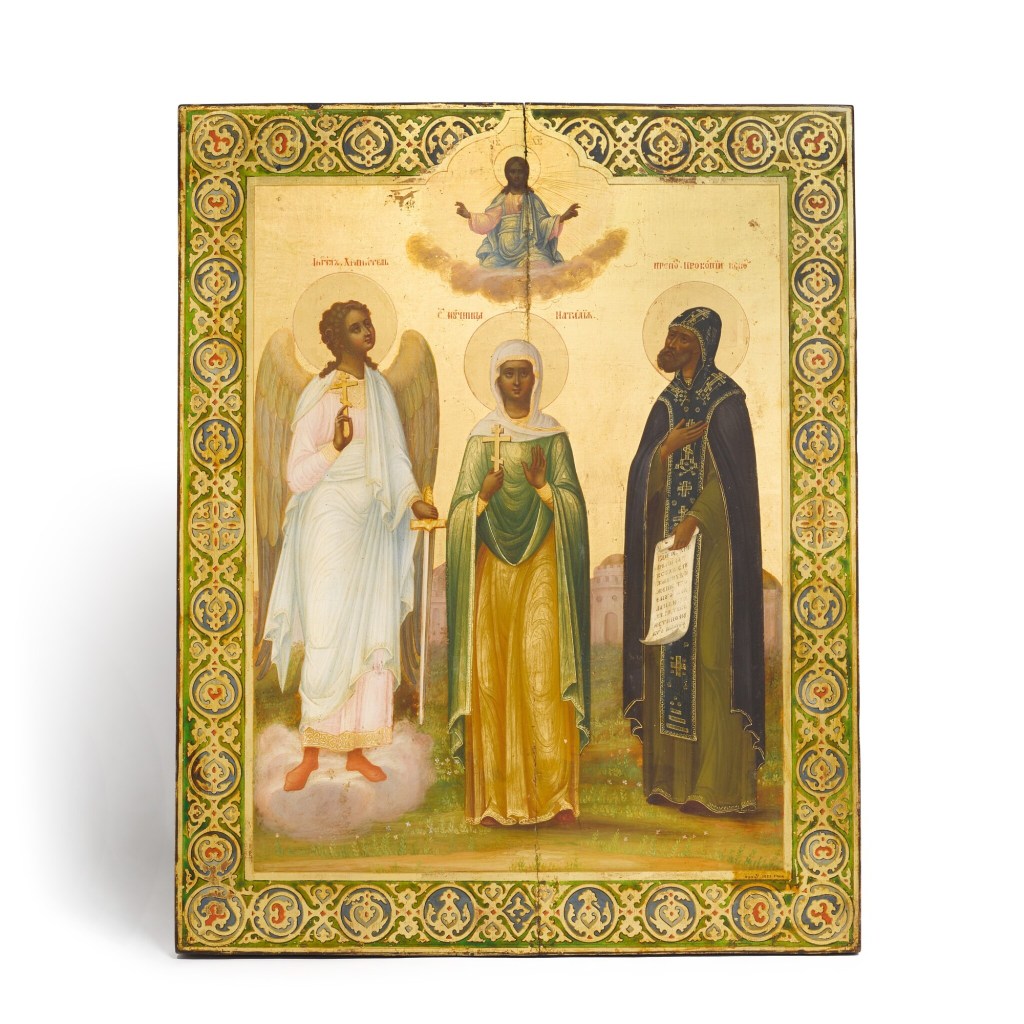
In a lifetime a person may experience visual ‘discontinuities’. These generally fall into the concept of ‘extra sensory perception’ such as seeing ghosts, spirits, poltergeist events, psychokinesis. Lorna Burne is a modern mystic who has written books about how she has seen and interacted with angels and archangels since she was a child. Her whole visual world includes angels and spirits which the ‘ordinary’ observer is completely unaware.

picture credit; Southerbys

Is it right to dismiss those with ‘second sight’ and their experiences or should society be more tolerant and inclusive towards people who in historical times would be regarded as either saints or witches?

Ironically, history has always taught us not to believe our eyes. The whole concept of an invisible God enables us to ‘look inward’ into our hearts and minds. A God who is never revealed is not open to be disproved or proved and yet, humans have sustained the experience of the ‘godhead’ across aeons and continents. The ancient Greeks experienced a world in which minor gods revealed themselves to mortals, and their stories, artefacts and architecture give vivid and consistent accounts of each and their powers to help or obstruct human endeavour.

The Ancient Greeks also believed in the idea that the eye ‘sees’ by projecting energy at the subject in the manner of a torch in a darkened room. Mind was an integral part of the process of seeing to the extent that the observed physical world is capable of being created by the observer.

Quantum physics has rested it’s gaze on exactly this probability; that the observer alters the events that take place right before our eyes. It supports the ‘idealistic’ philosophy in which mind has control of the material Universe. We understand that the Creator or Mind initially created the Universe by thought alone. Now scientists can step down through the different scales in which energy and matter perform their visual effects, and conclude that they personally are part of the experiment.

It is intriguing therefore as ordinary people, to become more sceptical about the ‘reality’ of our world of physicality and factor in our dreams, memories, intentions, ideals, beliefs, expectations, preconceptions in an attempt to grasp the slippery fish we call our world.

Images of Horror

At this time of year on this particular blending of day and night, the troubles and terrors of other worlds come by.

At the crossing point of summer and winter there is a bridge that we all have to cross, like it or not.

Traditionally, Halloween or All Hallows Eve is celebrated, if that is the right word, all over the world, each in their own way for different reason and sometimes, the same.

The spirit worlds are occupied by all kinds of colourful folk and the nearest and perhaps dearest are the departed. If you wish to say one last thing to a recently departed loved one, now is the time to say it. For the two worlds are separated by little more than a thin curtain at this particular time and we can whisper what we wish to those we cared for.

Apart from these dearly departed there are other spirits. Some on the wild side have never left the pull of the earth’s gravity, wishing instead to experience life’s promised pleasures – even from a tantalising distance. The great show of human kind must be fascinating to watch from above, below and sideways. If you wish to demonstrate a tantrum of feelings and send down a little abuse to those who cannot usually see or hear your footfalls, then tonight is the night.

Evil of a greater kind is naturally also present and not so far off as many ‘good folk’ would wish. It bends a curled line of finger tips through the intervening space and grabs unlucky souls from behind, twisting their lives in directions no sane person expected. Whether it is a war or a car crash or a boat disaster of the clashing of people in normally loving families, the great long bearded shadow comes down harder than people fall.

And all of this has become Walt Disneyised. While Celtic folk are keeping their doors closed for the passing of Samhain and the Witches Sabbath, curiously dressed children wander in the streets knocking on doors. The inhabitants are invited to give them fear or favour, in the expectation that nothing could possibly go wrong, and usually, thankfully, it does not.

But you have to ask, what do these children think they are doing? And the older ones who arrive in each others houses for a ‘party’ dressed as ghouls and fools and everything in between.

As if the spirit world and the horror of it’s separation that we call death, is entertainment. In a society where everything is ‘rock solid’ and ‘safe as houses’, materialism blinds the sixth sighted ( as we all are ) from the more gaseous reality of our forefathers and fore mothers. Perhaps they believe the energetic world of the disembodied was jno more than ‘once upon a time’. Despite the ‘Faerie Stories’ of childhood when distant memories of ancient archetypes are explained to the very young ( at their repeated insistence ), despite this grounding in the aerial worlds, they have forgotten or lost the ability to believe.

Like Wendy and Peter Pan, you only have to believe, to fly and live for all eternity. But instead we settle for rattling the bones of the unloved and invisible from the comfort of living rooms and television screams.

In my humble view we should tread carefully on graves and respect what we do not know and would not wish to know if we knew. Horror is not just the jingling of the vertebrae of the spine. It is as real now as it ever was, in fact more so, for the skin of the world is unpeeling before our eyes. Like lava pouring from the cauldron of La Palma and climate change, we risk being overwhelmed by what we summon up through ignorance.

LEAR 270Howl, howl, howl, howl! Oh, you are men of stones. Had I your tongues and eyes, I’d use them so That heaven’s vault should crack. She’s gone forever. I know when one is dead and when one lives. She’s dead as earth. Lend me a looking-glass. If that her breath will mist or stain the stone, Why then, she lives.

KENT    Is this the promised end?

EDGAR Or image of that horror?

Slay Your Dragon

Males Gain the Reward of Understanding Feminity and Visa Versa

To understand this essay you have to acknowledge the possibility, at least, of reincarnation. If it cannot be proved it can, at least, not be proved to be untrue.

To my mind you only have to observe natural processes to see that nothing is ever lost or thrown away. All the survival lessons learnt by plants, insects, reptiles, fish and animals are locked away in the DNA locker so that they will ‘rise again’ in the next generation.

In a period of knowledge where the physical is given preference over the energetic, it is understandable that some people think when their bodies expire, so does their consciousness. But because the events are concurrent, there is no reason for your energy body to expire with the physcial body. Why should it, when it has so many lessons gained in it’s lifetime?

Such lessons are like the oak tree that has learnt how to warn neighbouring oak trees of the presence of a root disease in the area. This skill will become part of what all oak trees are able to do. So with humans. Our souls learn lessons and ‘evolve’ naturally for the individual and collective.

If you think this is a ‘fairy story’ then prepare for more bad news. You see, there do be Dragons! When the scientists tell you that dragons are a mythical creature, they are themselves relaying a myth that they have accepted without proof…other than the empirical absence of dragons.

But in the reality of our energy bodies, we all carry a dragon or two. Imagine a soul awaiting rebirth onto this planet. This soul will have been ‘judged’ on arrival in Heaven and certain ‘flaws’ targetted for removal. For an abbreviated list of flaws there are seven known as ‘the deadly sins’…deadly because they can kill you, but more of that later.

To remind you they are; pride, greed, lust, envy, gluttony, wrath, and sloth.

The timing of the rebirth of the soul in need of ‘correction’ is key. The arsenal of personal strengths is contained in the twelve astrological sun signs. Each sign gives a new soul the strength of personality that they did not have in a previous life, such as being overwhelmed by lustful thoughts or greed. Such a soul might be reborn under the restraining discipline of Capricorn ruled by Saturn, governor of time and order.

The subject is huge and the examples examined in great depth but for the purposes of this short essay I shall suggest that you make friends with your astrological strengths and weaknesses and observe both in action as you live your daily life.

It will probably be some quirk or weakness of character that has been apparent since childhood. Perhaps you were spiteful as a child and always hurting other children, so that you had few friends. This is your dragon, alive and well and carried over from your previous lifetime. It is not created by family and social influence, it is not even your ‘nature’ but part of your previous life’s failure to learn.

The good news is that you have an ally. This ‘saviour’ has entertained and lifted the hearts of children in their stories for millennium, it is the ‘knight in shining armour’. This man or woman, has the inner strength of nobility, enshrined in the code of honour of the knight. They also have a suit of armour that protects the soul of the knight from harmful ‘slings and arrows’ that the enemy will send their way. But most useful of all is the proactive tool of the lance. With the aid of speed provided by a fast horse and accuracy provided by training, the lance has the power to penetrate the heart of the dragon and pin its dying body to the ground.

Children understand these ‘fairy stories’ in a manner that many adults do not.

They remember this ancient battle that that have played out over and over in recurring births. They are back on earth because in every previous lifetime the dragon has breathed fire on the knight and cooked him or her until death.

The ‘deadly sin’…the sin that kills a soul’s life chances…is often more powerful, than the noble knight. And yet, and yet, we will eventually prevail because we have as many chances as we need to use the strength of our planet and our birth date, to rise above the flames of the dragon’s breath.

That lifetime is ideally this moment. It may seems strange to you that there is an unusual amount of uncertainty at best, horror at worst, in the world right now. This is the battle field of old Medi-evil times that is the human condition. It has ‘speeded up’ our collective and personal evolution because the controlling power over us which we perceive as ‘time’ is losing it’s grip.

We have to adapt to survive quickly in difficult times and the greatest journey any of us can make is to adopt the knight’s noble code of honour, armour and spear to hunt down our inner dragon.

Once slain, our souls will experience a release that they have never experienced before. Perhaps another dragon will emerge, but hopefully not. Hopefully you will be able to join the line of noble souls that guard the Portcullis of Heaven and all things which have a value beyond the physical world.

Dragons live in the heavy physicality of Earth. Knights live in shining energetic light of Heaven. Where do you want to be?

The Alchemical Dual Gender Dragon –
it is already happening in you