Is There Anybody There?

A ghost walks into a bar and asks, ‘do you serve spirits?’

Humans have currently been obliged to believe in invisible beings, viruses. We believe that the Corona virus is everywhere as if it were a spirit. The only difference is that with a microscope you can see viruses and know that they exist.

The similarity of this belief to the ancient understanding of the spirit world is uncanny. Modern science has not been able to prove ‘spirits’ exist, therefore we are encouraged to believe that they do not. But logically, not being able to prove something exists, does not prove it does not exist. Perhaps the observer has the wrong sensing equipment or it is not sensitive enough, or too sensitive?

If we take a more rational approach, based on the acceptance that what the ancients believed, may still be true today, we can explore the existence of spirits further.

A friend of mine found himself, many years ago, in a monastery in Tibet. He casually opened a cupboard and was shocked to be staring at a human skull. He closed the door hurriedly and moved on. He returned the next day but the skull had been removed. Had he been seen by a spirit in the skull? The Sumerians of 3250 B.C kept a spirit in their homes, tempted there to occupy a statue, figurine or sometimes – a human skull.

I recently watched the ‘Magic Flute’ by the Master Mozart. The music is wonderful but my principle interest is the story. The first scene in Act One shows three witches destroying a serpent that has captured the hero, Tarantino. The opera sends him through an initiation process from darkness into light. He is able, when necessary, to annul the influences of evil spirits by playing a magic flute.

My own interpretation of the flute is that it symbolises the energy centres of the human body known as seven chakras. The flute plays a seven note scale by vibration of a column of sound and is similar to the hollow human spine in it’s construction.

Such control of energy within the human chakras affects our moods, feelings, physicality and state of mind. When mastered the adept in Tantric Yoga completes the journey from darkness into light.

Tarantino’s companion is a humble bird catcher. He represents the ‘ordinary’ man who goes through live mechanically. He fails the initiation tests preferring wine, women and bird song.

Let us move on to consider spirits outside of the story book, real live spirits. They love to do human things and are generally envious of the joys humans have from living in a physical world. The ancient Greek gods appeal to us because they behave as badly as humans. Lepricorns and other nature spirits adore dancing in rings in the moonlight to fairy fiddles. They look into our dimension with envy for they too enjoy nothing more than ‘wine women and song’.

Just as the ordinary human is enslaved by the five senses, so are spirits enslaved to us. The Genii in the story of Aladdin is in service, not a master. But secretly they long to occupy our living bodies for the same reason that God created the physical world – experience of physicality.

Sometimes they do – when someone is intoxicated for instance; which is the esoteric reason for alcohol being forbidden to Muslims. An intoxicated person often changes character quite noticeably and their bodies have super human strength, causing the North American Natives to name alcohol ‘fire water’.

Carl Jung concluded at the end of his life, that psychological complexes were outside of the human mind. When someone is ‘not themselves’ we should take this quite literally. Many Shamanistic rituals such as Voodoo, concern the removal of malign spirits or the placement of unwanted spirits for malign effects. Even modern Christianity has continued belief in the efficacy of exorcism and certain sensitive priests are trained in it’s practice. If it did not work, surely it would not have continued into the present day.

When a spirit is invited into a body as a Faustian ‘pact with the Devil’, the human party assumes magical powers. They may use these powers for entertainment as a magician or more worryingly, to gain political power. Should we accept the extraordinary rise of Adolf Hitler in 1930’s Germany as at least in part, being due to his thirst for occult powers? Why else did he send expeditions into Tibet and Antarctica, if it was not to gain occult power?

You might wish to believe that the modern psychiatric view that external beings are manifestation of our own minds. A vision of an etheric being by a single observer may occur when there is a conflation of the inner and outer worlds in that persons perception.

‘That way madness lies’

To which my reply is both yes and no. Yes, because all of our perceptions are no more than stimulus, decoded by bodily senses, into electrical pulses which are streamed into the brain. They are no more real than the images on our television sets are real. No, because the Universe is so large that there must be consciousness outside of human minds.

Part of the vanity of humans is the conscious or unconscious belief that we are alone. If we have never seen a spirit then it does not exist, is the false logic. It is false because there are many things we do not see that we use everyday. Our eyes only perceive a small part of the electromagnetic spectrum. We use infra-red ovens in the kitchen without a thought of whether infra-red energy exists. We use the effect and that is proof enough.

So it will come as a shock to humans when beings from other planets in our galaxy, appear on Earth, shaking the hands of heads of State. In doing so they will also shake the belief systems of every society, family and individual to the core. Present dogmas of belief whether in religion or politics or science, will be realised to have been at fault all along. For this reason governments seek to manage the time and place of this information. But it must be revealed and I sense that the present pandemic is building a global consciousness of cooperation that has never existed in history.

Accepting that consciousness exists outside of the human body, whether in spirit form or in another corporeal body, is the next step for humans.

The Old Testament describes how our forefathers experienced gods thousands of years ago but like the magic of the micro wave oven, they did not understand the causes of the manifestations.

Ping

Instant Experts

As knowledge expands through the centuries and decades, one might be forgiven for believing that, eventually, all that is possible to be known, will be known. It might be as a new dam which, after much rainfall, is full.

But like all oversimplified analogies, this one is flawed. As scientists discover more, they discover an infinity of new things. They have a job for life, for their subject reveals more, the further they explore. Hikers experience the same as they approach the apparent crest of a hill, only to discover more peaks beyond, what they call ‘false horizons’.

So, why are modern societies so confident? Well it is my contention that there is a part of the human psyche that is uncomfortable with the idea that it has only partial knowledge. I am referring to the ‘ego’ or ‘small self’. Ego’s have a tendency to take the easy route in life. They are for ever looking for the reward which requires little or no effort. Even dedicated scientists have been known to falsify their observations to promote their theories.

The present adulation of ‘celebrities’ in modern cultures is an example. An ordinary person, as we all are, may become celebrated for winning a competition or race or athletic achievement or something as banal as singing a song. The media and social glitterati turn on this flash of ‘success’ like sharks triggered by the scent of blood. The sometimes reluctant but usually eager victim, is propelled into a new world of abundance and admiration. Parties, limos, sex, money, drugs, interviews and media celebration all describe a voyage from the ordinary into an inflated fantasy world.

The truth behind this ‘yellow brick road’ is that this ‘celebrities’ are no different to any one of us. The only way out of ‘celebrity’ has sometimes sadly, been suicide.

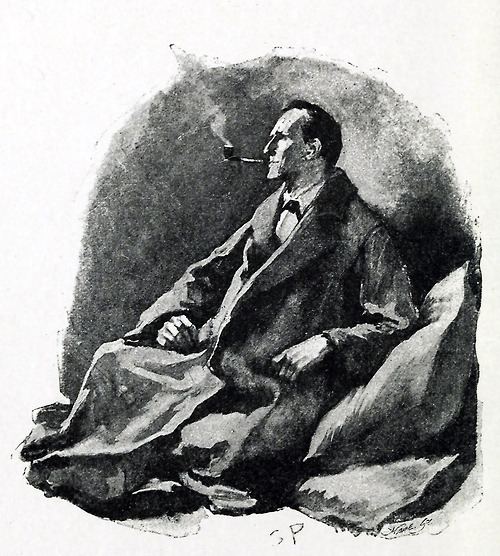
Many fictional characters encapsulate the myth of ‘knowing all’ and the power that brings. A well known example is Arthur Conan Doyle s detective, Sherlock Holmes. Mr Holmes has a super human gift of observation and deduction which puts him way ahead of those not so empowered. Holmes is what today is called a ‘super hero’ because he wins every fight, whether physical or mental. He represents an aspect of the ego that all egos aspire towards; to triumph in every endeavour. When Holmes succeeds again and again, we are programmed to believe that this ‘hero’ is indomitable, all knowing, all conquering.

But Conan Doyle was clever enough to make the character of Holmes in some way, fatally flawed. Holmes lacked emotional intelligence and perhaps compensated for this by using drugs. Even the Ancient Greek heroes such as Achilles, demonstrate after many victories that no person is perfect and die at the hands of their adversaries.

We would do well to remember this today as we observe a new cult of ‘knowing all’ emerging. The true experts in a subject, such as academics and professional practitioners are being degraded as fast as the fools are being upgraded.

Whether you are talking about Presidents or Street Cleaning Operatives, people are being persuaded that they possess the super human powers normally reserved for ‘the experts’.

This illusionary level of confidence has even infiltrated the curriculum in schools. Children are being promised elevated careers way beyond their abilities. The premise appears to be that anybody is capable of anything. If this were true then only the top jobs would be good enough for young people. Filled with false expectations, they go willingly to University and pay for the privilege. At the end of the course, as their application forms are returned from the promised ‘top jobs’, they finally are given a spoonful of reality.

It is an old adage that ‘a little knowledge is a dangerous thing’ and yet this truth is forgotten or ignored today. Persons are deciding to build their own houses and argue with their architects. They diagnose their illnesses and argue with doctors. They become international Statesmen based on bluster and the blood of others.

The origins of this illusion are those employed by the ego when things begin to go wrong; deceit, threats, grabbing, bullying and other methods of gaining power over others. Many dictators today have achieved their position through these means. They continue to use them to remain in power for an indefinite period with extraordinary self delusion that the people like them. Any challenges are fought with a ferocity of a cornered animal for indeed, such people have cornered themselves by taking a false and harmful path.

The was a study by two academics which observed what is termed the ‘Dunning Kruger Effect’. The crux of this study is that people do not understand that they do not know things. It is the nature of how humans acquire knowledge and associated skills that in the beginning they find the subject rather easy. It is not until much later that say, a surgeon, realises the hidden risks, false avenues and areas of the unknown in their specialisation.

People who are not trained initially acquire a false confidence simply because it is impossible for them to know their short comings. A couple building a house might proceed with crayons and a cornflake packet to design their ‘dream house’. They sink their entire savings into the project. As the build progresses they make mistakes that are hugely costly and are driven into deep despair. These mistakes are of course well known pitfalls to professionals and would have known how to avoid making them.

Life teaches us the hard way for the arrogance of the ego by cutting us ‘down to size’. False pride and self confidence built on self deception, succeed in the beginning but slowly the mistakes and falsehoods creep in.

In life we learn that there are no true heroes. We are all vulnerable in our weaknesses and only become strong when we realise this. Instead of being a ‘know all’ we are better advised to ‘know how little we know’ in other words, adopt humility in everything we do.

Until our prizes, awards, honours, celebration, adulation, high office in affairs of state, are given to the meek rather than the bold, society will have the ‘instant experts’ and flawed heroes of that it deserves.

Real heroes are those who work within their limitations and admit mistakes or ignorance. They may not even achieve very much but what they have done has been done honestly.

Listen carefully to your politicians and leaders and see how often they express realistic aims tempered by humility. When a leader promises all and rarely delivers or admits to mistakes, use your vote.

Symbols – unlocking the key

When human beings learn the language of symbolism, a great veil will fall from their eyes

Manly P. Hall

At the end of October each year, there is a flurry of excitement. The night of the 31st October is when the veil between the apparent physical world and the spirit world, opens wide. Across much of the western world the people are encouraged to make light of it. Children dress in demonic costumes and roam the streets knocking on stranger’s doors. This one night is when the ‘stranger danger’ thought bomb does not explode in parent’s minds. Local neighbourhood spirits offer treats to entice and draw children in. It’s viewed as all ‘quite normal’, by people who see the world through the great veil to which Hall refers.

‘Good Christian families’ ( or at least those millions in the United States of America who label themselves so ), engage in this most Pagan of all festivals as if they were celebrating a night with Mickey Mouse.

Few people pose the question, ‘what if All Hallows Eve is real?’.

I use Halloween as an example of the state of consciousness of our current civilisation in the West. Whilst it is true that many Hindus and Tibetan Buddhists for instance, have a powerful understanding of symbology, in the West ancient symbols are ‘not real’ and are treated at best as fantasy and at worst, entertainment.

In the present day, many people have retreated into a safety zone of ‘agnosticism’. They just do not believe in gnosis or ‘union with God’. The gods they trust are thier senses. There is no question when demon possessed magicians achieve the impossible on their television screens. People stare in disbelief as if, for the first time, they cannot trust their own eyes. Scientific reasoning has a lot of undoing to do, for it denies us thoughts beyond the information received from the senses. Western education has worked hard to achieve this.

In an hypnotic ‘Dance of Shiva‘ the technologies of information have built a wall between the soul and senses. To be ‘sensible’ in the English language means to be straight cut – down to earth, whilst also meaning, able to use the senses. So strong is this blockage, that thoughts of the collective soul remain a distant social memory. It is not that the memory is forgotten, although some politcal regimes desire that, it is that our perception is deceived so that reality becomes merely a fantasy and explained away as ‘just a bit of fun’.

We are educated to believe that every effect has a cause; to be rational. From childhood, westerners have been taught that coincidences happen for no reason, ghosts are tricks of the imagination and objects do not move on their own; if you tread on a crack in the pavement the bear will not really eat you…it can all be explained. Sigmund Freud wrote an essay called ‘Determinism, Belief in Chance and Superstition’ in which it was claimed rational explanations cleared the unconscious mind of irrational interpretations of the world and life. According to June Singer in her book Boundaries of the Soul, this view has changed the course of education – a process which aims beningly to turn the light on in a darkened mind.

Freud’s belief that rational explanations clear the unconscious, in the words of June Singer, ‘translated into psychological term the voices of the Enlightenment that called for the elimination of superstitions, the mystical and the non-rational in the Western intellectual tradition.’ As a Jungian psycologist Singer is sceptical to this view and I would agree. Where will we be when we have explained away everything in conclusions that are just interpretations? If you are prepared to believe in the power of the unknown you will never ‘educate away’ the unconscious and the irrational. When symbols link us to these ‘Neverlands‘, our spine should tingle.

David and Goliath retold centuries later

A trip to an ancient Egyptian temple by a group of Europeans straight from breakfast on the Nile river cruise ship, enters world for the merely curious. The guide will lead them through heavy doors into a new world where extraordinary people, long ago once trod. More than that they left for us beautifully designed and constructed buildings encoded from floor to Heaven with cartouches and pictures in relief. The entry into the Holy of Hollies in Karnac’s great halls will make them pause merely to check their camera settings and what time the taxis pick them up for the boat.

Of course this small group should be given credit for making the effort to be there but how sad they make little effort to ask ‘what went on here and what is left of it now?’ Few will entertain the idea that Temples represent a journey for mortals into their body, soul and spirit.

picture credit: Flying Carpet Tours

There is a temple in a New York museum which was transport block by block from Egypt. A modern mystic, Lorna Burne who is familiar with angels from early childhood, reports that there is a spirit in this temple in great anguish. The spirit circles in endless frustration that the temple has been moved and needs to be returned. Tell archaeologists that and they are likely to do little more than laugh.

Just as Halloween is reduced to a social joke, so are most experiences of those who make sense of things without using their senses. It’s as if modern cultures need a way of holding off the forces which they distrust, like an ancient DNA memory of a fear of spiders, rats and snakes. It is as if we have repressed our fears into two rationalisations labelled good and bad, then explore one but not the other.

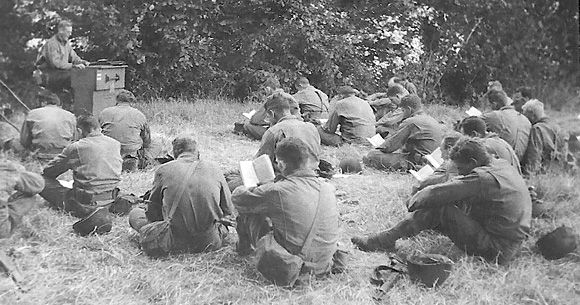
Many modern religionists express this dichotomy firmly with descriptions of the works of Satan on one hand and the love of Jesus on the other as if it was that simple. All mystics get to know Satan very well so as to overcome those elemental forces. Even when countries are at war, such as during the First World War, each hold their field services imploring favour to the same God! No contradiction is acknowledge since ‘the other side are Devils’, not us. Then both sides engage in mass slaughter, explained in their own minds as being on behalf of God. The killing is certainly not the work of the Devil. This is ignorance at it’s most extreme and most harmful.

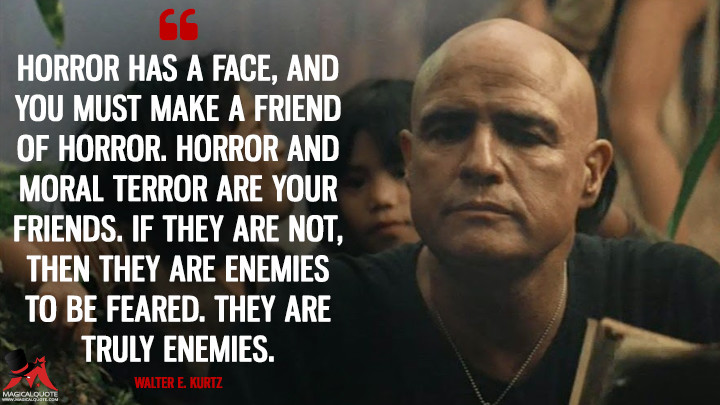
Soldiers returning from war find it incredibly difficult to face ‘civilian life’ after this madness. Sometimes their families and that world have become so alien to them that many choose never to return, like the character of Colonel Kurtz in Heart of Darkness by Joseph Conrad. Soldiers have their eyes opened by Mars, the God of War and enter a reality that has been skinned of fantasy. It is truely horrific, but is more real than anything ever experienced.

I firmly believe that by getting to grips with the ancient mythical descriptions of ‘mind’ and the human condition through the powerful symbols of the past and present, the possibilit open now for western culture to embrace our personal and collective unconscious.

A series of books by the author Dan Brown bears testament to this popular mood to understand symbols and the hidden worlds to which they allude. Albeit he shrouds his messages as ‘entertainment’, he perhaps knows or hopes that many an ‘agnostic’ might be moved by the power of the non-rational. In an age when even the scientists are building their theories of the contradictory laws of quantum physics, we should at least be open to the wealth of knowledge contained in the improbable.

Symbols are a massively important language for the mind. In a subtle way, the power of poetry is the same as symbols. Poets hint sideways at realities with few words, just as symbols point us to new understandings with no words.

Carl G. Jung was perhaps the most famous psychologist who opened up symbols as a reputable field of study and in particular dream interpretation. He used the study of his own dreams as well as patients, to gain insight into the personal and the collective psyche, the latter which he termed the ‘collective unconscious’.

Symbols dig deep into this unconsciousness, of which modern man was once most fearful but today, in my view, needs to be less so. Symbols not so much ‘explain’ as knock down row after row of balanced dominoes in an unexpected way to produce unintended effects that you might call ‘realisations’.

The plots of the Dan Brown novels are just such a cascade of ‘clue solving’. Through the broad knowledge of symbols by the character Professor Robert Langdon, mysteries are revealed in rapid twists and turns of the plot.

If psychosis is a surfacing of unconscious fears, then symbols enable that to happen as well. Perhaps the fear of that is the process most inhibiting understanding today. Ancient wisdom is wrapped up and scurried away by people of religion, so that it’s power is denied the possession of the people. We are told how damaging such knowledge is and how it is ‘the work of the Devil, aliens and Satanic cults, not for popular consumption and well past it’s sell-by date’.

The Vatican Secret Archives are themselves a symbol of this sublimation of sacred wisdom deemed never to surface into the minds of the common people. Beyond the political secrets and records of shameful past and present actions, you would like to think that mankind will benefit more, that be caused harm, by revealing the archive’s contents to the public.

Unfortunately, the battle between the Angels and the Demons takes place right before all of our eyes, if we looked. Even such things scientifically real as the present Covid virus is demonic in character. Viruses are hidden and not understood but powerful and with the ability to kill innocent humans. In this description we can see the description of the malign demi-god of ancient myth, the dragon that inhabits the cave and eats villagers, Count Dracula who enters a country and seeks it’s vulnerable female victims blood, Sleeping Beauty who falls under the spell of the witch and is put in a coma like a hospital patient.

The V1 and V2 rockets of Nazi Germany were powerful killing machines and inspired by the occult secrets of the ancients, as much as by likes of team of rocket scientists.

All of these encounters with demons and angels are happening and as real today, in my view, as they were in the past. The ancient Greeks saw the sun and the moon just as we do. The only difference is that we see them as a nuclear explosion and an empty rock rather than giving them respect for the way they command our every waking moment. The joy of life is dependent entirely on the gift of the sun’s rays depicted by the ancient Egyptians as a straight line from the sun, with an Ankh symbol at the end of each life giving ray of light.

Such symbols may never totally be understood by modern man because historical cycles move in spirals, not circles, but we do have symbols of our own that echo insignts from our ancestors. Understanding our own selves and our environment is key to the sustainability of our technological societies. Modern life is an Odyssey into a world of Sirens and Whirlpools, just as real as it ever was for Odysseus. Hold tight!

The Puppet That Pulls the Strings

One of the seven principles of Hermetic philosophy, is the law of cause and effect. Sir Isaac Newton was strongly influenced in his development and application of the scientific method, by this law. It appears in one of his universal laws of thermodynamics as ‘to every action there is an equal and opposite reaction’.

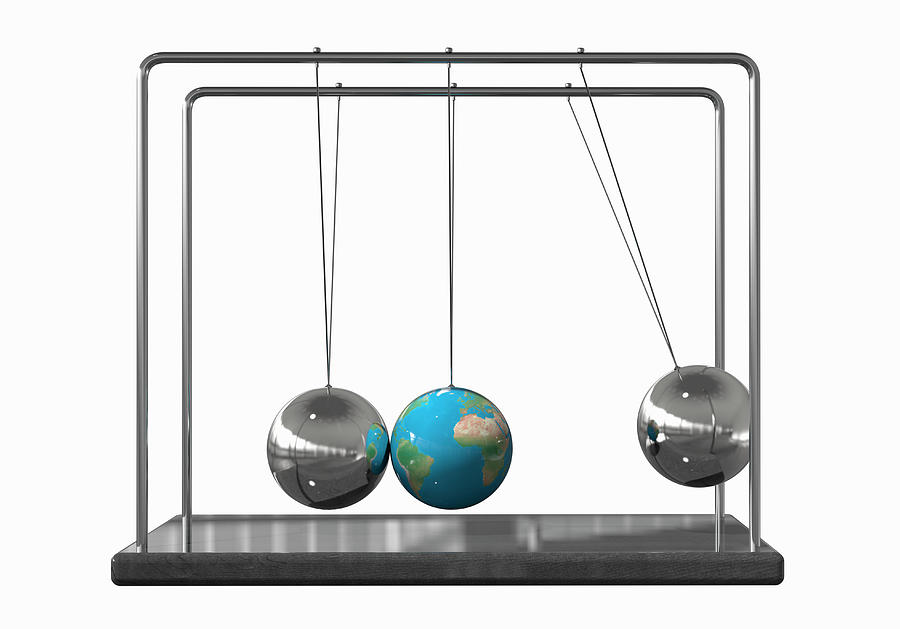
Can life be reduced to a sort of cosmic Newton’s Cradle, where impact at one end of a line of suspended spheres, sends kinetic energy invisibly through the line and appears miraculously at the other?

globe-as-ball-on-newtons-cradle

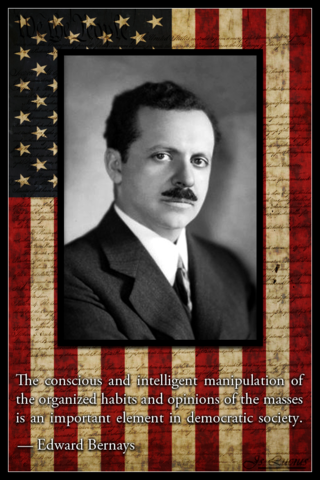
Surprisingly, in some respects, it can. When social groups are examined on a large scale, one psychologist found that they are highly susceptible to manipulation, ethically or not. His name was Edward Bernays and he was the nephew of Sigmund Freud.

Edward Bernays: would you buy a second hand car from this man?

Edward Bernays

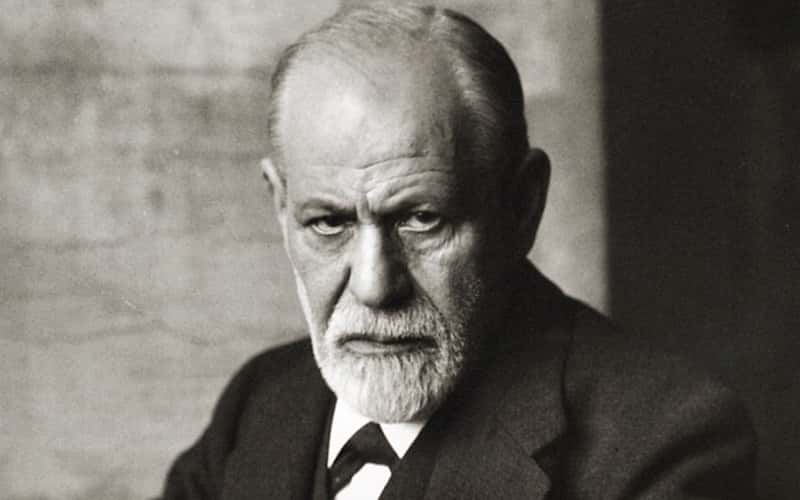
Sigmund Freud – are you happy?

sigmund-freud_800

Freud wrote a book entitled ‘Group Psychology and the Analysis of the Ego‘. In this he examined how individuality and consciousness of the ‘I’ can be subsumed when a person identifies with a group. The larger ‘group’ consciousness becomes dominant to the extent that individual’s will acts in a way that they would not on their own.

Examples are everywhere, such as the group identity of the supporters of a football team. They will dress in the colours of their team and occupy a part of the stands where they can appear as a powerful group both visually and through by tribal chants. The power gained by the players when they score goals and win, is shared through this identification by the supporters. A normally disempowered ‘ordinary’ man will feed off the power gained by the group, causing extreme elation.

At it’s most benign this effect can be used in sports, advertising and public relations. At it’s most dangerous, it can be used in political propaganda to influence the minds of the masses to behave in accordance with the aims of a small group.

Examine the the governments of countries and institutions and you may discover a sleeping monster. On a whim, leaders are fully capable of influencing the mental processes and social patterns of the citizens of that country, without them being aware.

The roots of how this is possible lie in our ancestors, who organised themselves in tribes and hunting groups in and be more successful; especially when hunting large animals such as Mammoths. Although modern man has morphed away from this psychology into separate individuality, there are times when we regress.

Individuals will identify readily with various social classifications that can be exploited to divide the populace. Examples are race, class / cast, politics, education, religion, sexuality etc. The motives for doing this might be as ordinary as making them choose a particular type of soap bar, or as extraordinary as bringing them out onto the streets to protest and or riot.

Edward Bernays was interested in how governments could rise or indeed fall by this phenomena. He wrote in his book Propaganda;

If we understand the mechanism and motives of the group mind, is it not possible to control and regiment the masses according to our will without their knowing it?

and…

They systematic study of mass psychology revealed…the potentialities of invisible government of society by manipulation of the motives which actuate man in the group.

Sigmund Freud attempted to explain why people engage in group identification. He proposed the idea that the thoughts and feelings of an individual are in some way compensatory for suppressed desires.

‘A thing may be desired not for it’s intrinsic worth of usefulness, but because he has unconsciously come to see in it the symbol of something else, the desire for which he is ashamed to admit to himself.’

In other words, our actions are spurred on by thoughts that come from our shadow selves, rather than for any conscious, considered reasoning. The conscious mind in most people, has a conscience which prevents negative behaviour through the emotion of guilt.

Whatever it is you are thinking, don’t do it!

sleeping monster

But unconsciously there may be ‘commanding’ thoughts which dominate decisions and actions. In this way we are like children who have not learnt to filter information coming from the outside world. We just absorb impressions and later act out what is good or not. In this way a government could move it’s people to adopt ideas such as the mass slaughter of a minority population, which would be abhorrent to the conscious mind but unconsciously fulfil unexpressed desires.

It is extraordinary to think that these theories were created at the end of the nineteenth century. If proof was needed, the next century provided glaring examples such as the rise of the Nazi Party in Germany and the genocides in Rwanda, Cambodia and other countries.

Joseph Goebbels: Wimp turned bully                 picture credit: BBC.com

Goebbels

The leaders of the Third Reich used propaganda ingeniously. Joseph Goebbels produced films as a key means of engeneering the minds and thereby, opinions, of the population. He understood that in cinemas and theatres audiences can drop their individual critical faculties. They connect unconsciously with powerful messages that feed off repressed emotions and ideas, such as in this case the ‘problem’ of the Jews.

In Rwanda, the radio became a powerful tool for government propaganda which described the minority tribe as ‘cockroaches’ who needed to be eliminated. The old instincts of tribal mutual hatred, suppressed through the adoption of modern social norms, were allowed to become dominate and so powerful that neighbour would kill neighbour with a machete.

Freud wrote in his book Group Psychology and the Analysis of the Ego;

‘A group is extraordinarily credulous and open to influence, it has no critical faculty.’

recruiting in WW1

The actions of the young men in the First World War is another clear example. Thousands signed up without hesitation to enlist in a war that would ‘be over by Christmas’. With hindsight this uncritical and unfeeling mass psychopathy across Europe and beyond, was absurd. Even the mitigating influence of the closely related European royal families of that time, were sucked into the mass psychosis of hatred and fear.

If we take these ideas and fast forward to the present day, many suggest that there is a small group focused global social manipulation, that has had over one hundred years to perfect it’s dark arts.

The, once hidden, now overt aim is to establish a world government and a disempowerment of it’s citizens through draconian laws and the use of new technologies such as artificial intelligence, mass surveillance, cyber robotics and enforced compliance with the State through removal of individual choice.

To achieve this requires deceit on a global scale. The internet and international media is the modern propaganda tool to achieve what one hundred years ago was unthinkable by peaceful means.

Does a secular society fear dying more than a devout society?

fear of dying

The repressed fear which is being exploited in 2020, is the fear of dying. Each person feels this fear whether they admit it or not. Death is something not understood today. It makes those left behind uncomfortable and deaths of loved ones are dealt with expediently. It is taboo to discuss death in anything but the most trivial way, with meaningless platitudes such as ‘he passed away’.

Death by natural causes is far more socially and politically acceptable than death by warfare. The appearance of a new virus, whether by fair means or foul, is something all governments expect and plan for. The Covid 19 virus was foreseen and plans were in place to use it as a means to suppress and perhaps cull populations. The smartest way to disempower people is to ruin the black economies and other economic enterprises that are not global. Then introduce technology based solutions that remove the last vestiges of personal choice, such as the cash-less society which has been happening in China.

You might have expected the citizens of Communist societies to adapt readily to strict government controls and sure enough, the Chinese leadership spearheaded the practice of the ‘lock down’ with ruthless efficiency. The Western societies had little choice but to follow the same solution even though it is opposite to their social freedoms.

Whilst isolation is clearly the correct way to deal with an individual case of viral infection, there is a logical argument that not all citizens need to be locked down at once. This was done to protect inadequate health services, not individuals.

Freedom is a hard won prize, but when the option is presented as ‘death’, freedoms have been handed over without a fight.

picture credit: CNN.com

statue of liberty

This is how I personally see the end of 2020 and most of 2021. We will see a ramping up of the ‘problems’ substantiated by rising lines on graphs. 

This will occur as the vast quantities of government ‘free’ money will begin to run dry. The problems of unemployment have only been postponed, not solved. The consequence will be an impossible situation for previously law abiding families. We can expect to see large scale public unrest driven initially by hunger. Looting and civil urban warfare, even in countries that have not armed their citizens in the way the United States has, will become a problem. The governments of the world will claim to have little choice other than to take away personal freedoms even more.

The United States runs an extra risk as it approaches it’s elections in November 2020. President Trump is also about to hit the railway buffers and he will bend the rules of democracy to remain in power, in the way he has shown America he can many times already. In doing so, citizens aware of the threat to their democracy and using their rights under the Founding Fathers Constitution may legally form militias and take on the government forces.

Would you buy a second hand car from this man?                     picture credit Newsweek.com

donald-trump-2020-election

Whoever is controlling the puppet that you are, will be pulling your strings to make you jump as they want, not as you want. All you can do is pull back on the strings, and collectively that could be powerful.

Individuals will identify readily with various social classifications that can be exploited to divide the populace. Examples are Race, Class, Politics, Education, Religion, Sexuality etc. The motives for doing this might be as ordinary as making them choose a particular type of soap bar, or as extraordinary as bringing them out onto the streets to protest and or riot.

Did Condaleezza Rice start Black Lives Matter? Probably not.                              picture credit: AZ quotes

Obama on democracy

Edward Bernays was interested in how governments could rise or indeed fall by social manipulation. He wrote in his book ‘Propaganda’;

‘If we understand the mechanism and motives of the group mind, is it not possible to control and regiment the masses according to our will without their knowing it?’

and…

‘The systematic study of mass psychology revealed…the potentialities of invisible government of society by manipulation of the motives which actuate many in the group’.

If we take these ideas and fast forward to the present day, many suggest that there is a small group focused global social manipulation, that has had over one hundred years to perfect it’s dark arts.

The, once hidden, now overt aim, is to establish a world government and a disempowerment of it’s citizens through draconian laws and the use of new technologies such as artificial intelligence, mass surveillance, cyber robotics and enforced compliance with the State through removal of individual choice.

To achieve this requires deceit on a global scale. The internet and international media is the modern propaganda tool to achieve what one hundred years ago was unthinkable by peaceful means.

picture credit: Houston Museum of Science, Death by Natural Causes Exhibit

Death

Previous pandemics have wiped out half the populations of each town and village. When that is happens today, there is indeed a problem deserving the solution being offered.

Whoever is controlling the puppet that you are, is pulling your strings. Now is the time to start pulling back. You might be surprised to find out who is on the other end of the string!

Mean

One of the tricks employed by those who construct crossword puzzles is to include words which have multiple meanings.

Take the word ‘mean’ for instance. It may immediately have meant to you, ‘to be stingy, one with an ungenerous nature’. Then again it might have meant ‘something in the middle’. Or it might also have meant, ‘the significance of something’. It is this third meaning which I intend to explore.

People with a philosophical bent of mind are often quizzing on what they construct as ‘the meaning of life’. This is as if the question, although perfectly constructed, can be answered. In reality it is one of those questions that has no answer, like a Zen koan. The Zen koan however is constructed because there is no expectation of an answer. Intellectual philosophers imagine that logic is without boundaries, when it is not.

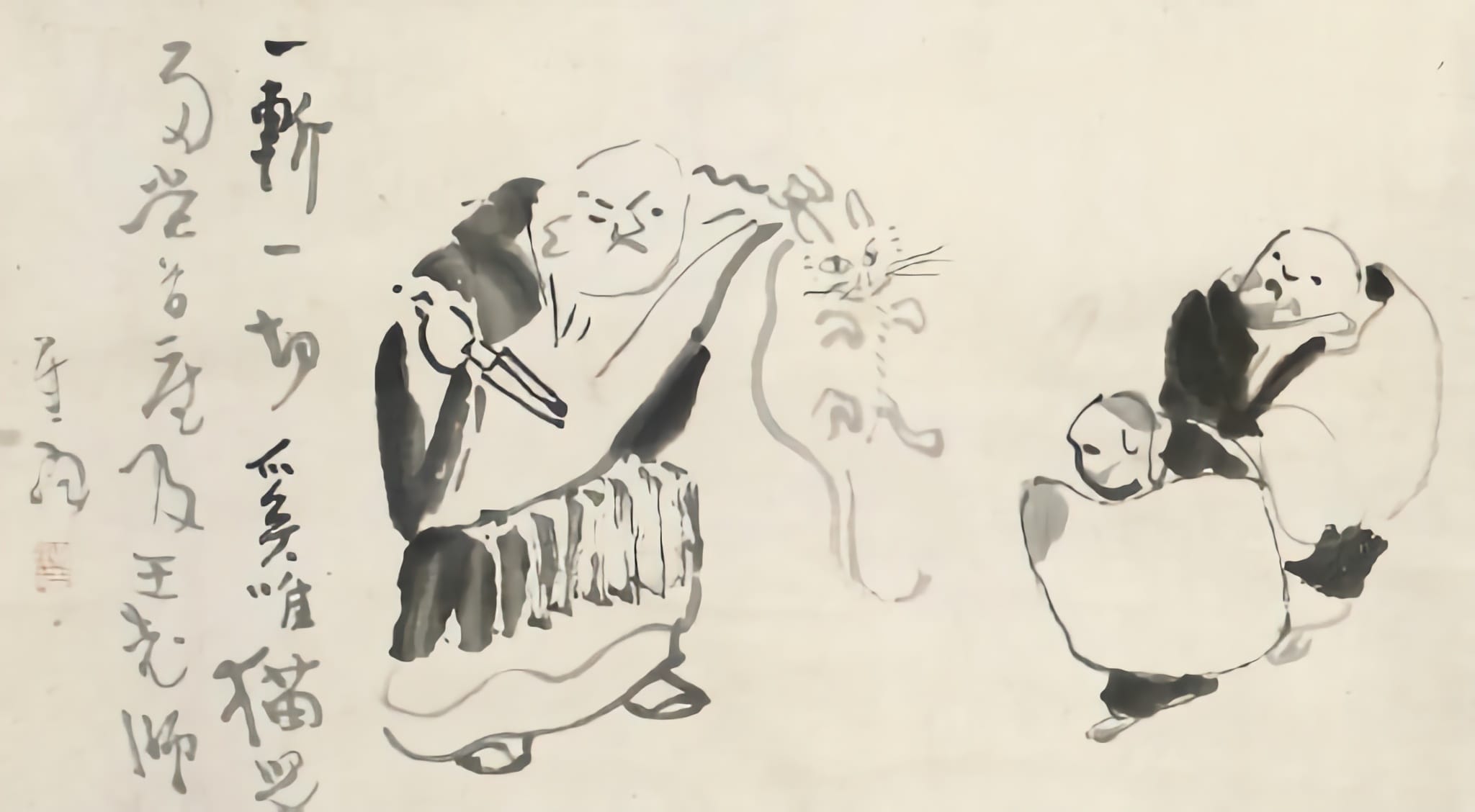
‘Quick, who can save this cat?’

l who can save this cat

The ‘life of meaning’ is a far more fruitful place for philosophical meandering, because when we understand what everything in life means, then we must be approaching an understanding of life.

When I was a young man studying architecture, there was a course entitled ‘Architecture Studies’. This did not convey the content of the course at all and I did not sign up for the lectures; not least because the Professor who introduced the course had a highly debilitating stammer which I thought I could not endure for a year. The serried ranks of students had great difficulty containing their laughter including, I am ashamed to say, myself.

It turned out that this professor was only the head of the department and therefore gave no further lectures, for obvious reasons. Instead lectures were presented by one of the most inspirational teachers I have ever had. (I took the course without gaining credits for my degree as I was fascinated and delighted the ‘head of department’ earned his money in some other way than lecturing.) John Steel came from California, had long straggly hair, tan leather trousers with a lace fly and taught us to question everything.

He told us that when he studied anthropology, instead of heading out into the jungles of Borneo with the other PhD students, he remained behind and studied the tribe who were his professors. How I would have loved to have seen the look on their faces when they read his thesis!

In the third year of this course we focused on ‘meaning in buildings’. How buildings convey very subtle thought forms that have meaning to the creator and users of buildings is a fascinating, if little considered, subject.

We were lead in this year by professor Robert Maxwell who had made this theme uniquely his own. We read about semantics and semiology and how all life and all things are imbued with meaning, both consciously and unconsciously. The master creator will be fully conscious of what knowledge and or wisdom the building is to contain and convey. This additional level of complexity in design is not optional for without it, I would argue no building can be ‘great’.

The Pyramid of Cheops has to be the most obvious example of a building, despite or because of being geometric in form, is layered with levels of significance that we are still in the process of understanding today.

Pyramid; electromagnetic images at various frequencies

l pyramid energy

The challenge of seeping meaning into a creation is common to anything from popular songs to domestic appliance design. In popular songs, the lyrics can lift a mediocre melody into a new dimension and a singer songwriter who exemplified this has to be Leonard Cohen. His songs lumbered along on a series of notes that moved unspontaneously one tone at a time in either the upward of downward direction. Amadeus M0zart would have laughed if you told him the songwriter was famous. But Mozart might not have understood the high level of the poetry that Cohen achieved and how the meanings he explored, were loved by his fans. His contemporary Bob Dylan was likewise a major poet, and a slightly better constructor of melodies.

Contemporary Rap Music has learnt nothing from the example of the great musicians from the past and makes little of no effort in constructing melody. The whole song is contained in the rhythm of the words as if the complexity of melody is just too difficult, which is a loss to the genre and it’s advocates in my view.

Finding meaning in words is not hard to understand, but finding meaning in household objects?

If you wander into a shop selling kitchenware there is a brand which specialises in bringing salad tongs, toast racks and cruet sets, to life. They are given arms and legs and cute smiles that grin up at you creating that all important ‘love me’ moment.

The previously ‘dead’ object of utility has been ‘Lazarused’.

The Japanese are a culture who collectively love any object imbued with character and meaning. The front view of a Japanese car for many years, had to contain a smiling face rather than a sad one. Smiles sell.

l smiling car

Such examples of life entering objects of human design are sadly rare. Most buildings never feel the pencil of a loving creator that breaths life into form.

The anthropologist studying modern western culture will find few objects imbued with life and might conclude that 2020 culture is impoverished of meaning.

If you have no religion, then your walls of your living room will not be hung with smiling images of your guru, might not have a saint or cross on your wall and the sideboard will be empty of smiling Buddhas. But don’t worry, says popular atheistic culture, ‘just do what you want’.

But imagine you wake up one morning and decide on a whim, that you want a tattoo on your arm. You don’t know why, it is just something you ‘want’.

So you find yourself sitting on an uncomfortable metal chair in the waiting room of the local tattoo parlour. You are flicking through a well thumbed booklet of tattoo designs whilst listening to the gentle buzz of the tattoo artist’s machine behind a curtain.

As the moment draws nearer for your initiation, you realise that you cannot decide what you want. You quite like the Maori swirls but actually, the Tibetan clouds take you fancy as well. Or should you go for ‘I love Mum’, perhaps not macho enough?

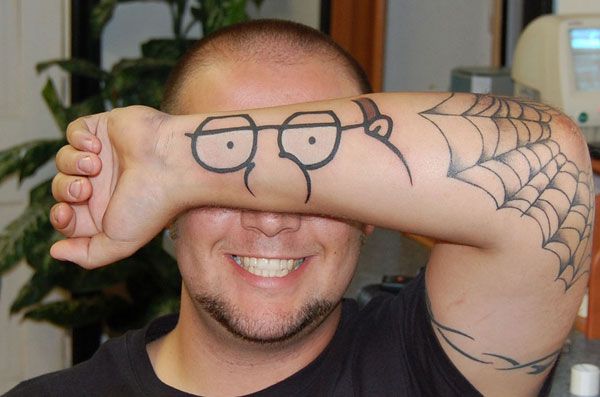
l stupid tatto

I would be very interested in a study of people who have chosen to be tattooed and how they made their choice. Do you think that the majority would present a meaningful explanation? ‘This is a prayer that my Aunty taught me when I was a child and I never want to forget it’ or ‘this is my blood group in case I have an accident’. Two thoughtful examples, but from what I have seen of the content of tattoos the answer is more likely to be ‘it’s what I wanted’.

Given that many in a multi-cultural western population will have few anchors of faith or ties with other belief systems such as ‘Hells Angels’, I expect that the majority of tattoos will be without meaning.

This is not a criticism of tattoos or those who have chose to have one. Traditionally, so called ‘primitive’ tribes around the world will have learnt to impregnate the skin with swirling patterns and designs that their ancestors taught them. The human skin was a book for writing on long before the invention of papyrus.

The problem we have today is that we have no subjects of interest and the readers don’t care if they did. Is this true even for architecture?

‘What is your favourite colour?’ asks the interior designer.

‘Blue’.

Most interior designers will know the significance of different hues and the psychological impact of these colours on mental processes and emotional responses. But the client will probably not understand these effects or wish to have them interfere with what they want. ‘I don’t know anything about art but I know what I like’ is the mantra of the uninitiated majority.

Those sceptical about the impact of colour in human messaging, should consider the skills of advertisers and marketeers.

l bbc logo

When the BBC have a red background to their logo there is a reason for this. It shows strength and an outgoing desire to search for truth.

l guardian newspaper

The Guardian newspaper online, chose yellow and black because this combination signifies a willingness to explore issues beyond the conventional. In nature it’s a waspy warning; in journalism it’s means ‘cutting edge’.

So to conclude, we ignore complexity at our peril. Yes, you can get by with just following a hunch and what you like. But you will rarely imbue your soul with the richness of any self or cultural understanding in this way.

By becoming a ‘skin deep’ society we risk losing contact with the expressions from the souls of our ancestors and beyond. We become no more than ink beneath the epidermis, injected to form a meaningless configuration. It stays for your whole life the body is returned to the ground.

Better luck next time.

New Think

You can deduce from current common ways of speaking that something is wrong with the way people are thinking.

George Orwell invented a type of language called New Speak in his revolutionary novel, 1984. The future society was envisaged as having been transformed into a totalitarian state, in which the individual had few rights and needed to act as instructed by the state at all times. This included which topics could be discussed. Clearly this meant that history and references to individual freedoms of old, was forbidden.

New Think

I am introducing here the brother of New Speak – New Think. The two are very closely linked since we use words to think and speak our thoughts with words. You might say that these words are the bricks with which we build the houses of our thoughts. When new patterns of speech emerge they show us that people are thinking differently.

It bears scrutiny then to investigate whether 2020 has constructed any new thinking patterns. If so, have they taken away the individuals right to think and speak with quite as much freedom as before?

Brief mention should be made of political correctness even though it has crept in over the last decades and is not new. But it now forms an underground of thought censorship by the masses, for the masses. As such it is perfectly protected from claims of being ‘government interference’ and becomes an illusionary ‘high moral ground’.

New You-must-master-a-new-way-to-think

The traditional boundaries of free thinking stop at what we call as ‘freedom of speech’. A verbal ‘blue sky’ does not really exist because it would allow bad people to express bad things. That would offend and moves into the area of anarchy. Perhaps the critical question therefore, is not freedom at all but what is good and what is bad?

It is never easy to define these terms. Do we realise when our good intentions are producing bad results? Do we hear what we are saying and analyse what thinking process made us say these things? We can self sensor and reduce our language to only what we know for certain is true, because we have measured, tested, experienced and listened. Or we can allow a strand of smoke to enter our heads and let it cloud our opinions…what we call our ‘beliefs’. Good intentions but poorly informed ideas are the road to Hell.

The principle matter is that a muddled head is open to suggestion. Of course it’s impossible not to be open to what we are told ( as proved by the advertising industry ) but a muddle mind and mixed up emotions are very welcoming nonsense with open arms. Governments, religions, friends, family are all whispering in our heads. Omitting facts and alternative interpretations are the ultimate form of censorship. When the sensor enters your head and starts constructing the way you think, are you aware of the stranger in your thoughts?

Let us go a little deeper into what we might call ‘distorted thinking’ or thinking that has been twisted in some way.

Firstly let us examine key words. These are words that immediately move you into the supposed ‘moral high ground’ when you use them. We hear these all the time and news readers and politicians will emphasise them. Examples are ‘health’ ‘police’ ‘safety’ ‘justice’ ‘freedom’ ‘right’ and so on. The use of these words are not generally challenged or open to scrutiny. As descriptions of motives or empowerment, they carry the argument a pretty long way, merely by their own ‘unquestionable truth’…even when, lacking any sort of detail, they are flawed.

Such words should demand of us further probing into their real meaning and the implications we draw from them. Does ‘justice’ examine the details in order the bring ‘fairness’ and ‘truth’ into the light?

If you had to write an essay on ‘freedom’ for instance, you had better give yourself plenty of time. When this word is heralded. everyone thinks they know what it means. In reality, it is so broad that it means different things to different people.


The Free World is coloured green – simple really.

New Free World

picture credit Freedom House

Such vague thinki ng will always be there, but sometimes there is no word and a new one has to be invented. The word ‘Brexit’ for instance is used to sum up the political aims of far right, single issue parties. By it’s unquestioned use and introduction into common speech, it gained far greater prominence than it deserved. Why? Because the term is so vague that it embraces different meanings amongst the people. Every special interest group such as farmers or fishermen, want some small part of Brexit to be a magic wand for them.

All the politicians have to do is keep repeating the slogan and ignore the detail.

Brexit means Brexit

These are the arguments of the absurd and bear little rational scrutiny, yet politically they paid off, because of the sense of high moral truth a generalisation infers. In the future the worms will come out and the fishermen will be at logger heads with the government of the day because they each expected different things and were given neither.

You will begin to recognise these key words when they are used because they mean everything and nothing. Take the word, ‘safety’ as an example. Safety means the avoidance of any and all risks…as if that were possible! It’s an abstract concept, yet it is treated as a golden promise.

‘The cabin crew are here for your safety’. Sounds very noble but in reality the cabin crew are here to sell as much crap as they can for company profits. A small part of their training covers what to do when everyone is going to die. The truth sounds considerably less moral high ground than the promise of ‘safety’.

So how come we let such words take over our rational thoughts? Well, It’s hard to argue against being safe. Everyone likes to think they are safe and will be highly indignant towards anyone who explains the risks. The necessity is not to accept promises of being safe, but to examine what is the best means to achieve being as safe as possible. When is an acceptable level of compromise between safety and harm achieved? Risk is all around us and only a fool would choose to give up having an exciting and interesting life, because of it.

New Demand-for-Deceit-Cover

In New Thinking, the objective is everything There is no debate about how to achieve this objective, either in broad or detailed terms. If the captain says you are safe in his boat or plane and at the end of the journey you have arrived safely, then the captain can be applauded and had spoken truthfully. Really? What really occured is that the captain glossed over listing the numerous risks that you take by traveling in his aircraft. He never tells all because this would make him appear unsure or incompetent. When he promises safety to all, he is kidding his passengers and maintaining his perfect record until the day comes when the problem he hoped would never happen, occurs. Then everyone on board is going to have to rely on what he learnt in training and how well he remembers it…something untested. As the North American Indians say, ‘it is easy to be brave from a distance’ and most of the time, we are at a distance, even the experts.

This leads onto the next New Think thought pattern which challenges the old adage that one swallow does not make a summer. In New Think, if a problem happens just once, it could happen again. Usually when a problem is encountered, say thieves breaking into cars in a supermarket car park, the New Thinker will pay no heed to what measures have been put in place to reduce the likelihood of it happening again. That is going into an area of complication that they believe they have no need to consider. They know secretly that if they did, they are entering an area of expertise they may not understand and expose the authority they pretend to have.

The solution in New Think is always extreme… ‘I will never use that car park again’. The hammer comes down on the nut. For Hitler and many societies before him (including the British in the city of York), the Jews were the problem and the hammer Hitler used we all know about. New Think, when delivered eloquently (and Hitler was an eloquent crowd pleaser) will stun into paralysis people’s critical thought patterns. We call it ‘propaganda’ or ‘spin’ and politicians today can spin plates like the Cirque de Soleil.

The New Thinker hopes and expects the listener is too polite to challenge and or ask for factual proof. Any such challenge is met with the wrath of the self righteous and in my experience, that is more scary than a person who knows or realises they are wrong.

Sometimes the generalisation it is generally true but either untrue in the detail as I have described or…wait for it… not even relevant!

An example would be a when woman lying on a beach is approached by a couple walking a dog. The dog sits and empties it’s bowels next to the womans towel. On seeing how upset the woman is, the man states loudly, ‘a dog has to go’. This statement is a true physiological fact, beyond challenge. It makes him feel reasonable and sensitive to his dogs needs. However by considering only how to justify himself over a third party, he effectively puts himself in a place where he can ‘move on’ and ignore the wronged party as a loser. The man’s self justification technique uses a true but blatantly irrelevant statement.

New Thinkers are keen to avoid responsibility. They work under the principle that they are right or can pretend to others that they are and in presenting the ‘proof’ the other party is logically, wrong! Since New Think skillfully avoids the contradictions and pitfalls that complex thinkers consider, New Thinkers rarely, if ever, say anything that they think, is wrong. Most of the time they are being so superficial or irrelevant that they are impossible to verbally challenge. There are certain politicians on the world stage now who employ the technique of ‘not answering the question’ particularly during Prime Ministers question time. Why be so foolish as to expect answers at question time!

This technique of New Think, produces more ‘red herrings’ than a deep sea trawler to distract and deflect listeners. The speaker raises and then explores areas that are not in any dispute. They will end their ‘true to another question but not this one’ ‘answer’, with a flourish of cliches and fist air punches, then sit back down to wait for the imaginary applause.

New Thinking awards the thinker a high self opinion after one unchallenged success after another. Expert thinkers can have the carpet pulled from under their feet when challenged by New Think. They can’t believe the other party is so ignorant and as they scramble for an answer the audience has stopped trusting them. This has given rise to the notion of ‘distrust the expert’. The thrones of the professional ‘experts’ are now occupied by uncrowned New Thinkers. So sure are the ignorant that knowledge is simple to obtain, that the butcher, baker and candlestick maker feel personal entitlement to opinions on most subjects. Do butchers make good surgeons? Probably not but test this with a DIY heart transplant if you doubt.

There is a measured phenomenon that enables a complete beginner to guess and be right. Professors David Dunning and Justin Kruger found that in the first instance a beginner will be highly confident when discussing and drawing conclusions on a complex subject. They are measurably more confident than an expert because experts are aware of the contradictions and elephant traps dug by the hunter known as ‘complexity’. It was found that after the initial burst of confidence the beginner / amateur soon discovers that they are wrong on many counts. Their confidence over time, takes a steep tumble to well below the expert. What harm they have done in that time depends on how much others believed them.

New Thinkers grab a few facts on a subject that interests them and present it as conclusions that have been subject to extensive research, experience and review. In fact what they are presenting is shallow, ill considered and potentially, dangerous. The initial facts may not even be real but imagined, or at least selected because they support the New Thinker’s views.

New Speak Words

New Speak has a special way of making fiction sound like fact. The phrase ‘to be honest’ is used as if the speaker has suddenly departed from fiction into Factland, or has been swept away by a Tsunami of emotion, gaining truth and sincerity in the process. Even words like ‘actually’ are able to make the fake more real. Just by using this word, truth is pretended.

When the New Speaker has no idea what the the facts of the matter are, they will move into the area of hope and expectation. Here, they can present themselves as that ‘jolly good fellow – the optimist’. Since everyone likes an optimist, however self elusory they may be, being hopeful for ‘good things’ is hard to shout down or challenge. For a start, anyone who does not believe an ‘optimist’ must logically be ‘a pessimist’ and we all know how wrong that is.

I suggest that optimist and pessimist are both subject to emotional thinking rather than rational thinking. Surely, outside of those in hope or despair, their exists, ‘the realist’. This person is not likely to be pontificating and making false promises or raising or lowering expectations amongst the naive. The realist will say their piece and disappear into the depths from which they emerged, because understanding reality takes time. Realists are usually experimenters and experts.

Some New Speak comes from faulty logic. Thinking and in particular logic is not necessarily taught in most primary and secondary education. There is some understanding of ’cause and effect’ from science classes but the process of thinking and it’s inevitable falsehoods rarely surface in mainstream education, let alone adulthood. One such example is a syllogism. These are two true statements but a false causal connection between them is assumed. An example might be,

The farmer had a bumper crop of apples this year.

The apples were sprinkled with a holy water from Lourdes brought by the farmers wife after her pilgrimage.

The holy water brought about the bumper crop of apples.

New apples


Armed with this and other kinds of flawed logic, the New Speaker can draw conclusions on all sorts of subjects using facts that are true but have no causal connection. There might well be inferred a connection but usually some simple analysis and testing, will disprove.

The best tool at the disposal of the new Speaker is to ‘totally ignore the question’. This a thinly disguised passive aggression. If it was aggression it would be challenged but omission is rarely challenged. Perhaps he just forgot the question? Perhaps he does not want to go there? – are the thoughts of the sensitive listener. In reality, the question was merely taken as a prompt for the new Speaker to move onto a favourite subject in which to sound correct, rather than get bogged down in analysis. Why would you do that, if your goal overrules your integrity?

When in full flow, a New Speaker, will use stock phrases often completely unconsciously. These phrases are the ‘you know?’ or ‘do you know what I mean’. These are repeated appeals for encouragement and continuation of verbalisation independent of agreement or truth. The listener might be tempted to rejoin, ‘no I don’t know’ or ‘I don’t know what you are talking about?’ Unfortunately the passive listener does not feel empowered to interrupt or rattle the New Speaker’s, well disguised lack of confidence.

‘As I said,’ begins the new speaker, at which point you rejoin, ‘well if you said it, why are you saying it again? I heard you the first time’.

So New Thinking and New Speaking are two sides of the same coin. They are not a new phenomenon, as new things come along all the time. What they are are a ‘temperature guage’ from which rational people can gain a warning.

Words, according to the Biblical story of the Tower of Babel, introduce confusion. This was true in ancient times and remains very much so today. We ignore obfuscation and ‘fakeness’ at our peril. The great babble from the World Wide Web has amplified untruth to the extreme. We have reached the point where people become ready to believe almost anything as fact.

Speak your truth, gentle citizen, and the truth will set you free. Or perhaps that’s not true any more? What do you think? Are you better at thinking than Jesus? Time to declare yourself as the new Messiah then…or just wind you neck in.

New Jesus

The Darker Side of You

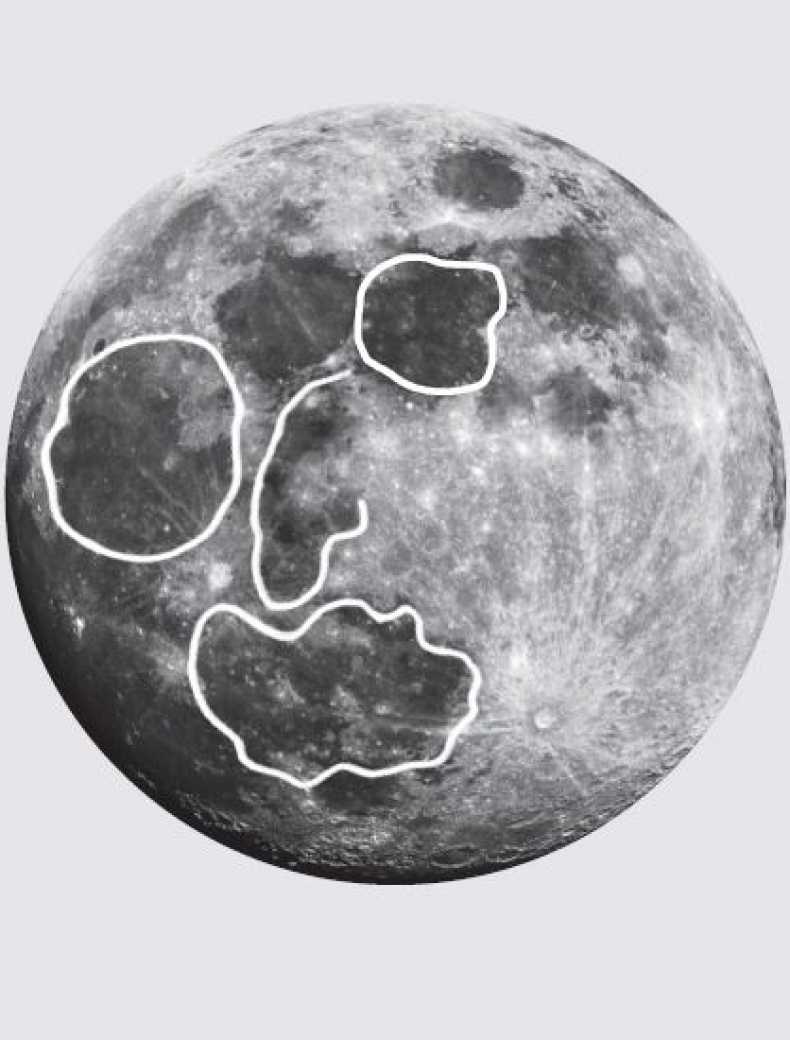
This month, on 4-5th July 2020, there will be a lunar eclipse. The shadow of the earth will trace a dark path across the moon. Whilst the moon does not have a dark side it does act as a projector screen for the earth’s shadow. Normally, the moon enables light to be reflected from the sun to lighten our nights, as well as help mankind reflect on it’s shadow nature.

picture credit: curlytales.com

Loon Moon by Curlytales

On 21 June 2020 there was a solar eclipse which curved around the earth from the Horn of Africa to China. Being only about 53 miles across the umbra shadow cut a relatively narrow road. To the people in it’s path, it was almost certainly an awesome experience.

To lose the light of the sun during the day when it would normally be a reassuring, continual presence, can be frightening. Humans are not naturally nocturnal creatures. We avoid the darkness and emerge from our sleep when the sun’s fingers cross our bedsheets and tickle our chins.

How comfortable our existence becomes! We are always guided by the light, warmed by the infra red or cooled in the shade. We become creatures of the light and self styled spiritual gurus in the west have adopted the title, ‘light workers’. A more balanced approach would be to examine shadows as well as light. Only in this way can the whole be understood. In reality there is no such thing as dark, only an abscence or reduction on light intensity which we call ‘dark’.

Events like solar and lunar eclipses and of course the night, underscore the ‘unwelcome’ reality that there is a dark side to everything. Sometimes the darkness creates fear, sometimes safety. A frightened child may run to the comfort of the wardrobe, only to find a Lion and a Witch and adventures therein. Even the internet has a ‘dark’ cavern where shady characters gather to share and enjoy the unmentionable.
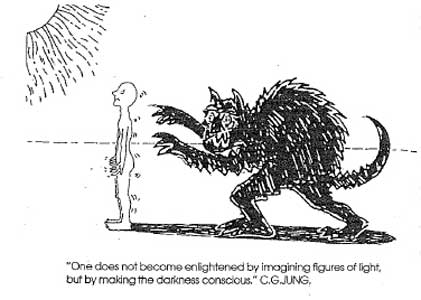
L jung-shadow cartoon

We ignore the spiritual and psychological reality of ‘darkness’ at our peril. For, like all external phenomenon – the cycles of nature – we have shadows within. They contain aspects of ourselves which are not necessarily ‘bad’ by any natural comparison but are deemed ‘bad’ by the arbitrary rules and regulations of society.
Bad in this context naturally excludes causing harm to others. The ‘bad’ is simply that part of our own nature which we are told as children and adults, is wrong to express.

Cultural taboos, customs and norms, laws; all draw boundaries around us which we are forbidden to cross.

Such ‘bad’ behaviour might be a refusal by a child to ‘do you are told’. I was once made to sit in a chair all afternoon staring outside, because I had rebelled against my parents rule that I return for lunch everyday. That day, I was having too much fun riding on top trailers of hay on the local farm. (This was the 1960’s when children played outside all day. Other people were not then regarded as ‘dark strangers’ as they are today by many fearful parents. )

Today I remain an ‘outdoor’ person and ‘sun lover’ much to the amusement of others who tend not to expose their bodies to it’s health giving rays. As an adult I can see that this is their choice and I have mine. There are rational reasons for both standpoints. I stand by my choice as an expression of my own nature. Without this aspect of myself being expressed and experienced, I would not be a whole person.

All of the above is of course pure Jungian psychology, named after the great Carl Jung, one time pupil of Sigmund Freud.

L psychology shadow diagram

Jung coined the termed ‘individuation’ as being the life time goal of an individual, in place of the less achievable ‘perfection’ in many more classical spiritual paths.

The distinction between the outer and inner nature is a product of dualistic or binary thought, where the two ‘opposites’ create each other.

The brighter the light, the darker the shadow

But we know from physical science that it is impossible to create a ‘dark’ box and it is impossible to create a light of maximum brightness. These two extremes merge into one another somewhere in the middle and that is a good metaphor for the goal of individuation. The light is not worshipped as the only thing that matters, as in the ancient sun god and to some extent modern new age thinkers, and the dark is not feared. The nature of reality is an infinite number of shades of grey.

Carl Jung realised that the repression of the expression of Self, puts away those aspects of consciousness that the individual cannot face and, or, comprehend.

This might be the experience of a trauma as an adult or a child. Whatever the strength of the repressed experience, Jung argued that if allowed to remain in the shadow side of the personality, it would have a negative influence on the personality which not only persists, but expands. This fear eventually becomes greater than the repressed thoughts and feelings and creates a blockage between the conscious and subconscious minds.

The story of Beauty and the Beast is a perfect example of this. The beast has become a completely horrific aspect in the mind of Beauty. She is used to the light and lightness of being and to have some aspect (her maleness ) of her mind shut away is not something she can approach easily. But in the story she over comes her fear of the beast within and eventually she falls in love. At this point the grip of the fear which once held her back from loving, has been broken. The beast turns into the handsome prince he always was.

We all need to discover the prince or princess within us and not shut him or her away in a dark or ivory tower. Sometimes society allows us to do this, sometimes not.

                                              Loki the Trickster

Loki the Trickster

At this moment in time we are reminded by the planets and their place in the spiralling heavens that we have nothing to fear. We need to take the advice from ‘the fool’ – another archetype who Jung termed ‘the Trickster’.

Imagine yourself as the tea pot in the Mad Hatter’s Tea Party in Alice in Wonderland. You are surrounded by rows of plates and cutlery and at each place sits a lunatic character each insistent on their own point of view. If you were that tea pot – sometimes with a dormouse inside and sometimes not – then your task is to remove your lid. Throw your hat into the crowd. Let the light into your dark interior, perhaps to let the dormouse in or out, perhaps just for your own satisfaction of feeling every permutation of what it is to be a tea pot.

There is a modern interviewing technique for candidates to an occupational post. It is to ask rather bizarre questions and record how the candidate responds. One such question is;

What is this? A tea pot is produced and placed on the table.

A conventional mind will answer ‘a tea pot’. An unconventional and open mind will suggest that it is a tool for catching tropical fish underwater, a rain catcher for a leaky log cabin, an echo chamber to aid singers practice as if in a cathedral, a device for pouring liquid concrete into unwanted mouse holes and so on. The obvious answer is obvious, everything else comes from the personal unconscious and sometimes, the shadow self as well.

There is no right answer just the endless horizon of possibilities. When we cross the unreal boundaries drawn by our own minds and, or, social human norms, we cross over into the world of imagination.

Dorothy in The Wizard of Oz experiences individuation by overcoming her fear of the physical world, represented by the characters of the Lion, Scarecrow and Tin Man. These are symbols of the animal, vegetable and mineral kingdoms / emotions, instincts, mind, within the parameters of which we each play out our lives. As humans we have a unique chance to travel the golden road. At the end of that road, if we ever reach it, we realise – that is, it becomes real – that the Wizard in the dark castle of our minds, is just a frail old man who holds no power over us at all.

If you wish to understand how the ‘fairy tales’ of our childhood are not fairy tales at all, it really is not necessary. They work like the ‘patches’ that we download into our computers. We do not need to understand how they work but by absorbing them the threat to your computer has gone. This is why children crave traditional ‘bedtime stories’ that come from the collective repair shop of mankind’s evolution. What are termed ‘fairy stories’ but are more real than anyone can imagine.

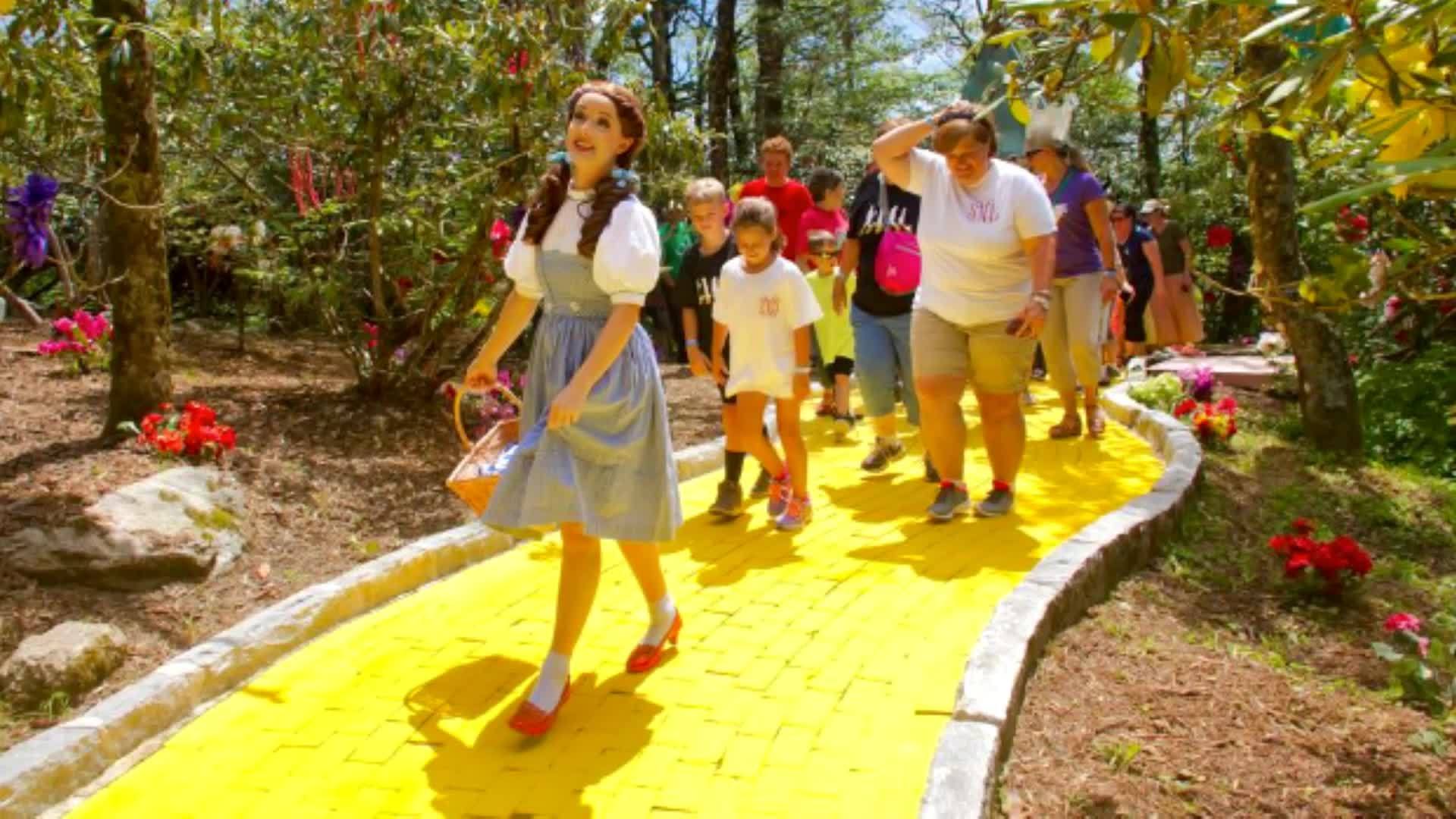
Hello yellow brick road.

L_the_yellow_brick_road_myHighPlains

picture credit: myHighPlains.com

Life in the Soup

For us simple human beings, working our way through our lives like fish in a kind of information soup, we long for the soup to become clear. We long to see the other side of the dish and to travel in every direction. It can be done, because we are super computers. We just need to know the process and that is what life in soup can do. That is why, we are – in the soup with not a clue what to do but go round and round! Even religions offer little advice or explanation to why we cannot see what is right in front of us. Why is human behaviour so repetitive – throughout history and the history of histories. Surely there is a process to move us into the next dimension? Well here it is; read on.

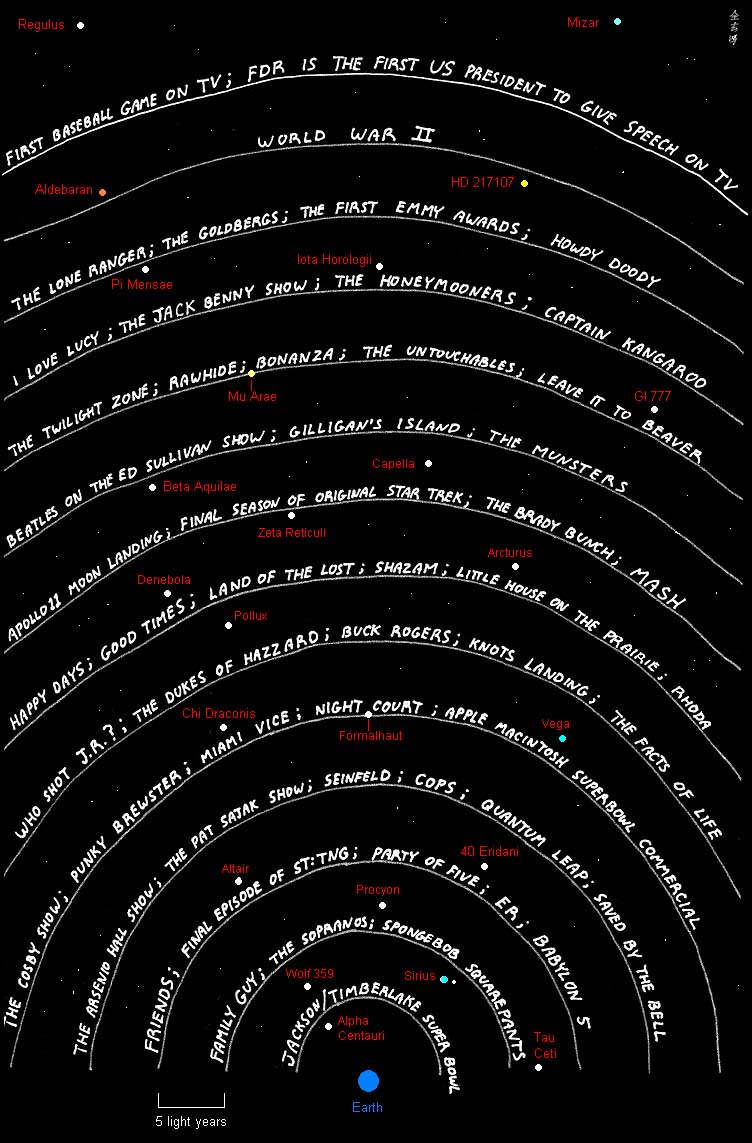
It is a well known phenomenon that radio waves have been leaving this planet since the first Marconi, Bell and Tesla radio transmissions. Like some giant expanding onion, information has been hurtling ever outward at the speed of light. If you could catch everything up in a warp speed craft, you would overtake the history of broadcasting, second by second.

Aldebaran residents are about to listen to WW II – if the baseball didn’t put them off.

soup how-far-radio-signals-have-traveled

So it is not so hard to understand the idea that electromagnetic energy can be used to carry information. Just as we compress and release air in our vocal chords to make sounds that carry words, so em wave energy can be compressed into ones and noughts in infinite combinations.

Can you imagine yourselves, contained apparently in a physical body, with the memory of your many lives, expanding in an ever increasing bubble of information? Perhaps you have to grow old to realise this. When you are very young, your universe is proportionately small and memories are being made, like a new formed galaxy.

Recently I was trying remember the names of a couple who I knew almost fifty years ago. I could see their faces, but my memory was blank. So I left it for a while and sure enough, the librarians in my head approached me triumphantly with just what I had been looking for. Wow! The names themselves then become memory triggers for more information; incidents, happy days.

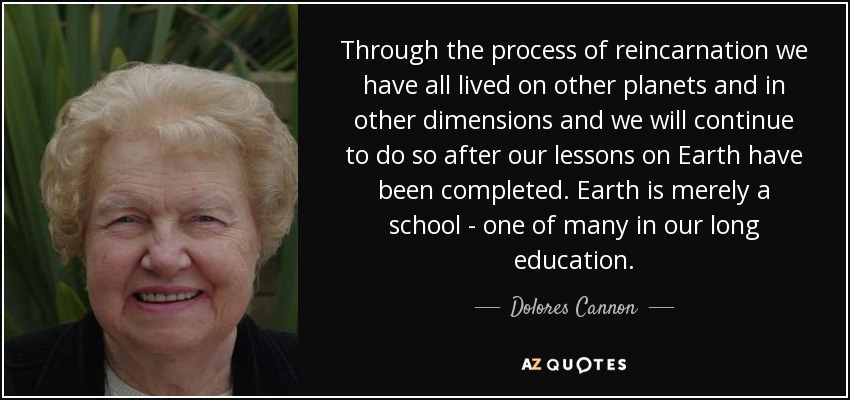
Any hypnotists will tell you that their science of the mind is premised on the fact that every piece of information that has even entered the human brain is still there. As an organic super computer; the brain can store and retrieve information without or without instructions from the conscious mind. A hypnotist uses suggestion to the unconscious mind, to travel in these memories of events and people both in this and past lives*. They take what useful lessons can be learnt from the highs and lows of someone’s life. As conscious beings we have a habit of remembering highs and forgetting lows, which is why we see the world and ourselves, with rose tinted spectacles.

*look up the late Dolores Canon on You Tube for a complete life’s work on this subject

Soup Dolores Cannon

This great bubble of information that is contained within and without of our bodies, becomes what we believe ourselves to be. We are the sum of the books we have read, the films we have seen, the computer programmes and television programmes, the motor skills of the body, the languages of the mind, the poetry of inner space and countless other forms of perception.

The secondary process that the brain undertakes with time, is to bring together strands of information which can be classified in complementary ways. These are the patterns we use to help ‘understanding’ take over from the fear of the unknown that we experience as children. When we know what has happened we get a general idea of what will happen when the ducks line up in a particular way. Brains love patterns, and much of mankind’s classic architecture, sculpture, mosaics, art, puzzles work on this particular hunger. And patterns are important because they become what we term ‘knowledge’.

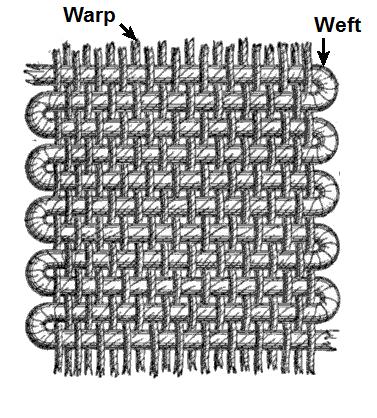
Knowledge is a higher form of information because knowing is the bare facts spun and woven into a useable cloth. It has a practical function similar to cloth and performs well for as long as it remains without tears and holes. Even computer programmes need ‘patches’ every now and again and human knowledge is the same. We have to edit and update skills that we have learnt and maybe need refreshing. We have to make space for new cloth to be woven and hung where we can see it. The advantage knowledge has over information is that it is faster to retrieve and read.

soup Warp_and_weft

Iron Man sits in his palace with a wall of transparent computer screens in front of him. The images and words present a pattern that only he is comfortable with.

Neo in the Matrix films, moves in and out of an information soup which is a green cascade of numbers and letters, bytes.

Neither view of information is a particularly accurate representation of how complexity compresses into simple strands of knowledge. One example would be a Japanese chef who spends hours creating a dish. On the plate looks like it has taken minutes to prepare. Simplicity is one of the hardest things to get right because it is made from complexity with exactness.

Then, to extend this metaphor to it’s extreme, one day the weft is separate from warp. The warp stretches out as a single, perfectly aligned, strand of knowledge.

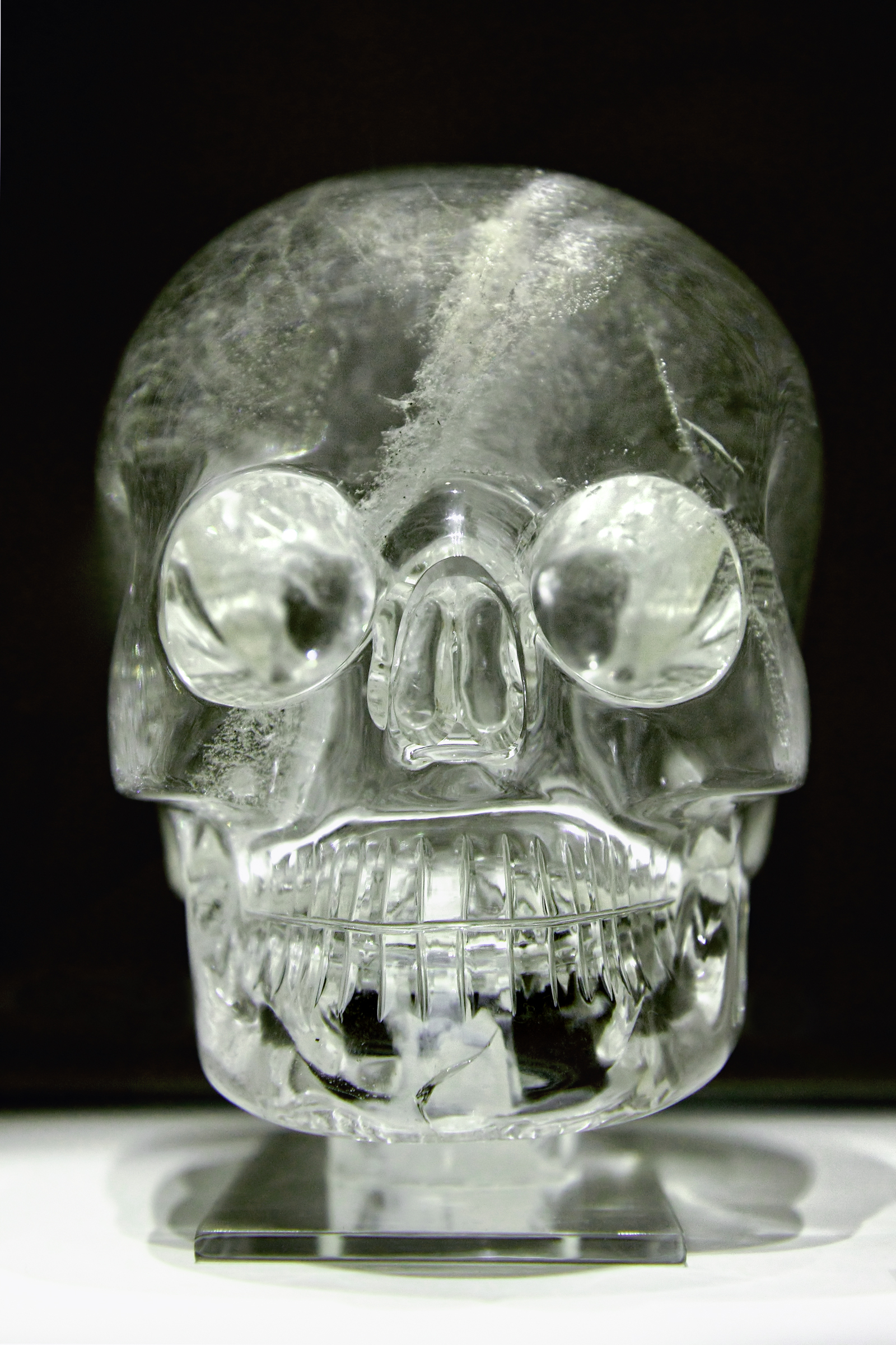
Just as a metamorphic rock is opaque and it’s associated minerals like quartz are clear. A mineral is compressed and heated before it cools into perfect molecular alignment. Light travels through it in the same way that the rising sun’s rays can travel through an orchard, of perfectly aligned trees.

Crystal_skull_british_museum_random9834672

The childhood negative memories of the bee string and the choking in water and the hot coals and the unexpected negative emotions and abuse from other humans. Well these can potentially become realised and placed in a perfect pattern in the later years of life.

What was opaque has become clear. This is wisdom. Wisdom is no more than knowing intuitively and rationally every aspect of everything. Light travels in all directions through the mind and the person has become ‘enlightened’.

It is not a learning process. It is not a remembering process. It is not a staring into space process. There are no wishes and no regrets. There is no instructed and no instructor. There is no god and no devil. There are no special words and no special clothes.

Everything that made your information bubble has collapsed into it’s centre, because it was able to. The process is no more than returning everything to a single point; the place where you were when you were born.

And if you don’t believe this, then consider the Universe because the transient human, is a working, scale model of the same. The Universe is currently expanding in all directions. It is even speeding up, which baffles astronomers but because we have only a fraction of a nano-second in astronomical time, to view the subject, it is possible only to surmise what is going on and the present Big Bang theory is only partly correct. It does not explain what caused the Big Bang – there is a chicken and egg logic puzzle that is avoided. If I look into the future, then I see the universe will slowly stop expanding just as a ball thrown into the air vertically, finds a still point before falling.

The universe will then contract into a single point over unimaginable aeons of time and at that single moment the concentration of power that started the last ‘big bang’ will start a new universe. As Isaac Newton observed; to every action there is an equal and opposite, reaction.

Our own lives are made up of a similar expansion and contraction process which can work through in one life time, but because it is complex, usually not. It is called Transfiguration and is the spiritualisation of the human body. When the process is completed, such happened to prophets like, Moses, Elijah, Jesus of Nazareth and the Prophet Mohammed (SAS), the body becomes light. When the Universe is also begins the process of Transfiguration or ‘big bang’, it also is light.

In the beginning, God created the heavens and the earth. The earth was without form and void, and darkness was over the face of the deep. And the Spirit of God was hovering over the face of the waters. And God said, “Let there be light,” and there was light. And God saw that the light was good. Genesis 1.1-31

which is complementary to John (not contradictory as light is both a wave and a particle )

In the beginning there was the word and the word was with God and the word was God. John 1.1

And from this expanding light /energy / information; tiny droplets of matter are formed – star dust – because matter can become light / energy and visa versa ( e = mc2 ).

soup star dust

And as we are told our bodies are made of ‘star dust’:

We Are Stardust—Literally. In this infrared image, stellar winds from a giant star cause interstellar dust to form ripples. There’s a whole lot of dust—which contains oxygen, carbon, iron, nickel, and all the other elements—out there, and eventually some of it finds its way into our bodies.

National Geographic Jan 28, 2015

– then are we not fortunate to live in a time when science is viewing the world in the same way as the mystics? Is not the soup becoming more, a consommé?

The Man in the Moon

The Anthropomorphic Universe

Who believes in the man in the moon?

man-in-moon-crop

For centuries, so called sophisticated societies have continued traditions, superstitions, folk tales and festivals inherited from rural ancestors. Much will certainly have been lost, as modern man’s connections with nature have been severed. But mothers still point out the face in the moon to their children who stand open mouthed at the mystery. Our companion animals are named and loved as if they were our children who never grow up; Peter Pan style.

Even the star map itself is full of the figures of gods and animals, a continuous tradition going back to the Ancient Egyptians and Sumeria.

Many cultures across time and the world have seen animal and human faces in rock formations and considered the effect significant.

rock as a face

Modern urban man likes to think that these are all in the realm of ‘myth’ – that is, stories that have no meaning any longer.

When I was in Japan with my Japanese girlfriend many years ago, she took me to her grandmother’s beautiful traditional home. In one room was a Shinto shrine. Megumi knelt before this shrine to pray and invited me to join her. I politely declined thinking myself a monotheist and forbidden to worship idols. But I now realise that Shinto is a religion of worship of nature and not idols. Each tree, rock, flower; is seen as a manifestation of living spirit just as we are manifestations of living spirit.

Shinto Shrine

In Pagan Britain before the Roman invasions, people lived by the cyclic laws of nature. Natural features, fauna and flora were also a living presence on the physical and spiritual planes. Such living things acquired names and often magical properties. To kill or take away was done with a blessing for the spirit which was being released.

Now that scientists have persuaded us from viewing the world as sentient, we are expected to consider industrial methods of rearing and killing animals and plants as a necessary evil. But if you want to know the truth, ask a cow in line to enter the red doors of the abortoir.

Such practices which many now view as abhorrent, are likely to become questioned more in the future because modern man is on the brink of extinction.

So brutally has the scientific materialism ethical view damaged the world and it’s creatures that ecosystems are being destroyed faster and in greater areas than ever before.

Already people in so called ‘civilised’ societies are realising that there is only one way to live with a rain forest and that is to live in it. The indigenous people of the Amazon basin have practised a closeness to nature that has retained the forest in it’s glory for many generations. This generation however is having to watch as loggers, farmers and prospectors rape the mother who has protected and fed them. Nature hits back by releasing viruses in the populations of city dwellers – but need it come to this? Perhaps mankind will come to realise that all nature is sentient, before it is too late.

Walt Disney hit on an idea to make cartoon stories using talking animals. As ludicrous as this may have seemed to his contemporaries, who were making films about humans, Walt Disney was digging into the gold mine of imagination.

Despite or perhaps because of being ‘sophisticated’ children in particular needed to view the world in the old way of our rural ancestors. Stories in which animal and magical characters could speak and interact with each other like humans – gripped the imagination. Science may not like it, but humans are complex and deep in their needs and this foaming ocean of stories such as the Cinderella and Snow White and the Seven Dwarfs, are archetypal stories for thousands of years ago (Isis and Osiris if you are curious).

Snow white

Modern men, women and children naturally engage with nature. We have a deep physical and psychological need to be nourished by nature and allowed to bloom, as flowers do.

There is a young gecko in my bathroom whom I have seen a couple of times now. He looks at me and does not move and I look at him. Yesterday I named him, BR, which stands for ‘bathroom’. We have a relationship – of sorts.

Humour aside, this is the direction that humans in the 21st century must go if they wish to maintain their present numbers. They have to understand the sanctity of all life, whether it is in rocks, vegetation or animals.

Practises such as ‘whaling for scientific purposes’ should be and will be seen as relics of a shameful past when scientific materialism ruled the brain waves.

header-illegal-whaling

There have been extraordinary studies between humans and primates already, from which lessons are still to be understood. Chimpanzees have been taught to use tokens to buy food in one study. This is remarkable in itself until it was found that they also understood many more principles of economics, like ‘best price’.

I predict that in the next twenty years man will be speaking with marine mammals as fluently as Google Translate serves us today. These steps are more important than interplanetary exploration at the moment in my view, because they will lead modern man into an honourable way of relating with nature, as did our forefathers.

Once this is accomplished, the further step will be to communicate with sentient beings who are not of this planet. If the E.T’s observe that humans are not responsible enough to inhabit a planet without damaging it, they may introduce themselves first.

And if that thought fills you with dread, then you have been the victim of a misrepresentation of alien beings through propaganda. Be assured that they will not use violence to persuade. Such methods for them and perhaps one day for us – are history.


Red Ball White Ball

These series of essays have one common theme. They take another view from the conventional one. In life, we encounter complexity and the principle way we deal with this, is to simplify. When this happens however, something is lost and often that thing was the most precious. It is called;

Throwing the baby out with the bath water

Problem solving is one life skill that is invaluable, more so than, dare I say it, algebra. Almost everything we do and our games are problems in need of a solution. If the bath water is cold, mothers remove the baby before throwing the water on to the garden. It may sound obvious but often problems present in confusing ways…too many things are at the same time. That is when the baby ends up in the rhubard patch.

baby_bathwater

A game such as Snooker is a problem solving game. The players are presented with the complex task of putting the red balls into the table pockets. Complexity is introduced by rules. One is that the balls can only be pushed with a stick; you cannot pick them up and put them into the nearest pocket! Then you have to push a coloured ball into a pocket alternately with a red ball, and a scoring system giving values to balls, means that the best player will win prize money and fame. But the most complex skill of all is the use of the white ball. This must be pushed with the stick to hit the other balls and it must always be controlled, so that it comes to rest in anticipation of the next move. Those not familiar with the game take a while to realise that hitting the red balls is not the primary objective, but skilfully placing the white ball as it rebounds off the red or coloured ball. With this skill you  solve the obvious problem and set up for the next problem, within your own hidden game strategy.

red ball white ball pocket

Complete problem solving involves a highly inclusive level of complexity, where consequences are anticipated rather than left to chance. There must be no ‘unintended’ consequences.

Stage illusionists know that the human brain simplifies what it sees in order to interpret what it is seeing. They use the technique of distraction. They know that the audience will watch the hand thrust towards them whilst something not to be seen is done so fast and discretely, that it is not seen. This is classic, red ball, white ball.

Politicians have to solve highly complex problems and apply practical solutions. The first stage of problem solving is to define the problem.

At present the world economy’s are being threatened by a pandemic. That is the problem. People with the disease are a short term problem, whereas the world economy needs to provide work and a livelihood for every citizen of every country. This is a far greater problem in the long term than the present ‘red ball’ events presented to us daily concerning Covid 19.

We are told that the origin of the new virus was from markets in China where bats were being sold. We all believe this. This is the red ball. We think we have seen it go into a pocket. But did the Chinese authorities close down the markets selling wild animals? Why didn’t they after SARS? Could there have been another source of Covid19?

One Chinese lady interviewed declared, ‘This could have happened anywhere’, being defensive over the suggestion that this and previous viruses like SARS, happen in China because of their love for exotic meats. Perhaps she has been told that people in the West also eat bats and rats and cats. That would be her ‘red ball’.

There is an Institute for Virology in Wuhan; the Province where the outbreak is alleged to have started. You might expect that they would be anxious to deny accusations that they let out and or create Covid 19.

Yet if you view the home page on their web site, the top story is about HIV. The top news story is that a delegation from the Ministry of Education of Kenya visited. No red balls present, just a white ball suggesting the aim of the Chinese to develop the untapped resources of Africa.

Was there a terrorist incident involving the release of this virus, as has been the plot in Hollywood films?  Are too many people now living in cities? Have individuals immune defences been reduced through poor diet and lack of sunshine? Is there more than one variety of Covid 19, one strain being more virulent than the other? (The purpose of this would be to increase fear of the virus whilst limiting deaths.)

Could there have been some political placing of the virus in a country to destabilise it more than other countries? Both China and Iran are viewed as threats to peace in the West and Middle East by western politicians.

These and many other possibilities, are unexplored but possible ‘white balls’ that indicate hidden agendas. But we are too engrossed with watching red balls (or red herrings!?) fall neatly into pockets.

Few journalists have asked challenging ‘white ball’ questions on the television screens in the west. What is being presented are ‘red ball’ events such as where the virus is now and in what strength. Which events have been cancelled, how is it going to affect various people in various situations, etc. etc. One red ball after another is being put into a pocket and as quickly as they go more appear on the table. It’s fascinating and distracting.

The real question is ‘what is the white ball doing?’

Who is behind what is going on, is an unspoken question. Any suggestion that the pandemic is a deliberate manipulation is ignored or described as ‘fake’ or ‘conspiracy’. And yet, the most important rational task, is to discover a conspiracy if one exists.

Puppet President

Who is pulling the strings of the puppet president of the United States of America for instance? Why? Because Mr T. started the health emergency by denying one exists and that it will go when the weather gets warmer in April…standard off the cuff remarks made by the uninformed. Behind the curtain a patriotic doctor who started testing for Covid 19 is told to stop, as that is the responsibility of another department. This department came up with a test three weeks later which did not work. By this time the Jennii was already in LA and not to enjoy the surfing. 

We saw the same ‘white ball’ tactics with 9/11. Every day of the year, every hour of the year, fighter jets are on the runway, ready to defend the USA from hostile aircraft entering US air space. But on 9/11 all those jets were off somewhere else on a pre-planned exercise. The guard was down. International conspiracy? The prize for the winner of that game was to up national surveillance and remove individual freedoms for Americans. It is called the National Security Agency and it is saving everyone from terror plots.

Who will gain from the current pandemic and the fall of western economy’s? No individual government gains. In fact they all lose. The only gains will be upping international surveillance and removing individual freedoms.

Specifically, cash will be removed as a system of payment, on the grounds that it ‘spreads viruses’. This has never been true in the past few thousand years but suddenly it is. In place of cash is the card (or RFID implant) and the control this brings to governments to know where it’ s citizens are and whether it wants to allow them to have personal money.

Second is the extinction of small and medium size businesses and the self-employed. Examples might be taxi drivers who own their own cars and certainly low cost airlines. This is in contrast to large and multinational corporations such as Amazon, Microsoft and Google, who act in the interests of the large white ball.

One day this large white ball will put the last ball of the game in the pocket. That will be the black ball worth seven points. If you think things are dark already, then that will be the blackest of black days; the end of personal freedom. Game over.