Thinking About Thinking

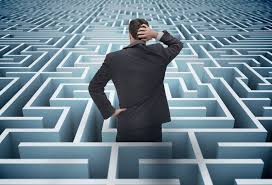
Thought Maze

This may sound like digging a spade with a spade or mixing clouds – confusing.

But thinking is a tool and like all tools it needs to be made of high quality materials and regularly maintained.

Thinking was not taught in schools and places of further education. Perhaps it is on the National Curriculum now? If it is not and I was a parent I would want to know why. Because thinking is perhaps the most important of all acquired and learnt skills. Not only because it governs our whole perception of events and things we call – reality – but because it has the tendency to pretend it is not there.

Like a fish swimming in the sea, if you asked it where the sea was, it would not know.

The nearest we get to any sort of scientific reality is through ‘rational’ thought. To be rational is to use logic as a device in which information is chosen to be from a credible source, tested in every manner possible and judged to be useful or not.

Here are some of the ways of thinking that are problematic;

Filtering: when information is presented the thinker chooses either consciously or unconsciously the facts which fit the thinkers prior beliefs.

For example: a person develops a hatred towards a religion and it’s followers. Events around the world which reflect badly on those who may or may not represent that religion, are used as examples justifying extreme behaviour.

Polarisation: Dualistic thought considers only the two extremes of something that in reality has a million levels of degree. An action can be judged as bad when in fact it has some good effects. To judge how far along the see-saw between good and bad is complex and sometimes impossible.

For example: Criminals are sent to jail for an act that is perceived as ‘bad’. If Adolph Hitler had been murdered to stop the war early, was that a ‘bad’ act?

Over-generalisation: The thinker arrives at a conclusion based on sparse or selected facts. The saying ‘one swallow does not make a summer’ describes this. Sometimes political correctness will leap on one very minor aspect of a statement or action and generalise this into something much greater than it is.

For example a group of young girls wearing unsuitable clothing and footwear attempt to climb a mountain; get lost and have to be rescued suffering from hypothermia. Afterwards the politically correct Authorities revue whether to close access to the mountain for reasons of safety.

Mind Reading: Without their saying so, the thinker assumes to know what people are feeling and why they do what they do. This may be particularly directed towards how others feel about you.

For example someone you think of as a friend ignores you when you pass them in the street. You feel offended and decide to cut them out of your friendship circle. In reality they are short sighted (which you did not know about) and on this particular day they were not wearing their contact lenses and therefore did not recognise you.

Catastrophising: The thinker suffers from emotional fears which tell them to ‘expect the worse’. These type of emotional demons can be learnt in an unbalanced way from watching or reading tragic news reported from anywhere in the world. These events are not representative of the thinkers personal risks but never the less influence their decisions.

For example: A plane crashes in on the other side of the world the day before someone frightened of flying is due to fly. They cancel their ticket and take the train. The fact that air travel is the safest method of travel per mile, is ignored.

Personalisation: Another individual, often in authority, makes a decision that affects the thinker in a way that displeases them. The thinker does not refute the actions / decisions of the authority figure with reasoned debate. Instead the thinker personalises matters. In this way they move the debate from a subject they are less likely to win to won that may allow the thinker to ‘triumph’.

For example: A politician decides to allow the building of a nuclear power station contrary to the wishes of the local people. At a public meeting they pillory the politician over his or her personal conduct and private life.

Control Fallacies: You are Under Control

The thinker may feel that they are in a situation over which they have no control. This can lead them to feeling stressed and unable to escape.

For example; A person believes that the authorities are monitoring their behaviour using technology for sinister reasons. This is fictionalised as ‘Big Brother’.

Control Fallacies: You are In Control

The thinker feels that they are responsible for the pain, happiness or other feelings of those around.

For example the hostess of a dinner party is distraught when two of the guests have an argument in the garden.

To be continued…
Caterpillar Sheds his Skin

The marble table in the centre of the kitchen is gleaming. You make a note to compliment Mrs. Caterpillar – the housekeeper – how well she keeps the servants busy cleaning and polishing.

For you have been the butler in this fine and noble house for as long as you can remember. You sit now, at the kitchen table with a copy of yesterday’s Time’s (that your master discarded) a warm coffee and rather tasteless cigarette. It is seven o’clock in the morning and the kitchen staff will be down soon to prepare breakfast. But for the moment all is quiet.

Above you are seven brass bells are linked to thin wires that travel across the ceiling and up. Each bell is labelled in gold script with the name of a room.

Before we going any further, bemused yet interested reader, know that the house in which you sit is yourself; your physical body and all the aspects of self that you experience as ‘being alive’.

The first three bells relate to the three rooms commanding your instinctual behaviour. Your body mind unity has many instinctual needs and of all the bells, this one summons you the most – or at least it seems that way. They are characterised as demanding immediate gratification whether it be the alleviation of pain, sleep or hunger. Sometimes they are craving pleasure associated with sex or relaxation. The bells are labelled in accordance with the three base chakras (which the master learnt about during his service in the Army for the West India Company). They are named Root chakra, Sacral chakra and Solar Plexus chakra

And as if these were not demanding enough, there are four more.

The next in line is the one labelled Heart chakra. In a way, this one is the most important and yet most difficult to satisfy. When you enter this room and enquire politely after the reason for your attendance, the master or mistress is likely to be experiencing either pleasing or difficult emotions. The pleasing are generally rewarding and include happiness and contentment. The less positive will present as states of anxiety or extreme disquiet as a result of some injustice, frustration, jealousy, annoyance and many others.

Each one has to be dealt with head on and care taken for the matter in hand to be explored thoroughly and in the presence of other parties involved, if possible. Failure to work through these emotions to an acceptable conclusion to all, can lead to problems. The master has been known to order you to lock a troublesome feeling in one of the large cupboards – to be ignored. When in there, experience tells you that it will grow and emerge even more strongly and therefore more troublesome. Emotions tempt your master and mistress into behaviour which is clearly ‘risky’ whether it involves amorousness and romance, gambling, cocained addiction and much, much worse.

The next bell is labelled Throat chakra. This is the room where all communication goes on. There are comfortable chairs for sitting and smoking after dinner for the gentlemen. The ladies occupy another room in which to withdraw, where considerable conversation takes place on topics which the men are generally totally unaware.

The conversations in these rooms are contained within the room as silent speech or as we say, ‘thoughts’. They can take over your time with alarming ease and rapidity often in the middle of the night. Little or no benefit is likely to occur from this obsession with thinking and chattering, but still it goes on.

The last two bells are the rooms which interest you most; although being called there is regrettably all too uncommon.

They are labelled the Third Eye chakra and Crown chakra. You might expect these rooms to be occupied mostly on religious festivals and Sundays, but this is not the case at all. When the master and mistress enter these rooms they do so generally in complete silence. In this condition and in a slightly melancholy atmosphere tinged by the musty smell coming from the peeling wallpaper where it meets the ceiling and the roof above, here great self discoveries are made. It is as if not only the combined knowledge and experience of those in the room come into conscious understanding and therefore ‘guidance’; but the whole knowledge and experience of the community at large – indeed the whole world – is here.

All of the above illustrates in metaphor the position that we occupy in our early lives in relation to our body mind complex. It is hard to get to grips with and involves a lot of running around. Fortunately the energy of youth makes these huge tasks just about manageable – although you are aware that there are some of your peers for whom the tasks become too difficult. They withdraw into a sort of mechanical relationship with the world and their fellow occupants of the world – whom they blame for most of their own shortcomings.

Now as in all tales told by the masterful story tellers of the past, there is a twist – an unexpected turn – as in life, the road very occasionally takes a sideways impromptu step or about turn.

Here in your house, where you thought you were the butler, something extraordinary happens. As you peer over the top of your Times newspaper one morning, you observe yourself unexpectedly sitting in the master’s high backed leather chair. The pipe resting on the ivory holder next to you, curls a wisp of luxurious perfume and tempts you to take another draught of it’s smoky elixir.

With both shock and satisfaction in equal measure, you realise that you have either become the master of the house or have in fact, been the master all along and failed to realise it.

And there is Mdme. Butterfly, your wife now, sat opposite, threading a needle into a circle of cream canvass stretched on a mahogany frame. Several of her colourful depictions of your favourite flowers, adorn the wall behind her.

Sun enters the room, as if to sweep the colour from the exquisite Persian rugs into the air. You feel exalted, ecstatic even – and only the ardour of your parallel experience ‘downstairs’ prevents you from rising at will to the ceiling.

You have experienced what psychologist’s term ‘individuation’ – become a collection of part’s united – a whole being.

Slowly, tentatively, tortuously you reach across the rich velvet arm of your chair for the tasselled bell chord. You wonder;

‘Is there anybody there?’

butterfly and flowers

Boring into Boring

My inspiring English teacher, ‘Windy’ Gale, fixed the aphorism

There are no dull subjects, only dull mind

to the classroom wall.

This supported my own attitude to life of keeping myself perpetually busy. I was an inventor or games amongst my childhood peers and a ‘meddle Sir Mattey’ on protracted visits to grandparents. My grand mother didn’t like her clothes mangle taken to pieces and reassembled in a novel way. But I was busy.

Teenage is the classic period in one’s life for being ‘bored’ – that is entering a state of inaction due to lack of stimulation. This state of inactivity is induced by mental and socio-environmental factors. It is mostly found in predominantly ‘inactive’ people who rely on external forms of stimulation. Their minds have become dull – uninterested in the apparently, uninteresting.

If and when we realise a need to change, then it is down to the individual to break out. Proactivity rarely produces boredom.

Boredom Newton's Cradle

Psychologists nominate the state of boredom as a ‘feeling’.

If people, places and / or events induce a state of inactivity in us, then we ‘feel’ bored. This may explain why boredom is hard to identify at first. We will then need to understand it’s causes and take control in order to move out of it’s influence.

A classic way of doing this can be seen in the interaction between a parent and young child. Children often require a boost from outside themselves. They just run out of steam (attention span) and need support. Any or all of the people-place-event factors, need to be manipulated by the parent to provide stimulus to the child to prevent it drifting into a state of boredom.

Does this pattern disappear through adolescence and into adulthood? I fear that as adults, many of us today become even more stuck in the reliance for external stimulation. If you question adults about a simple activity like ‘going to the beach’ – many will reply that they don’t do it because they find it ‘boring’. The beach is a place which indeed provides limited stimulation. In it’s simplest natural state there is just a large volume of empty sky, empty sea and (on a quiet day) – an empty beach.

But if you took a child to this place they would be filled with excitement. Think for a moment of your own endless hours of pleasure spent as a child on a beach…often with hardly any play things, just what nature provided.

Harvard Graduate School of Education

Something has happened in our modern Western societies that leaves adults unable to be proactive when the external stimulation of people, place and events is limited to say, ‘a beach’. Late nineteenth century sea-side resorts in the United Kingdom, evolved and thrived on their ability to provide stimulation such as Punch and Judy shows and donkey rides. Today the ‘amusements’ are multiple and complex. You might think that there really is no excuse for being bored on a beach, but apparently there is.

Leo Tolstoy defined boredom as ‘a desire for desires’. I do not agree with this definition as I have already described boredom as a ‘reactive’ rather than a ‘proactive’ state – which surely desire is. The powerful emotion that ‘desire’ is hardly produces any relief from boredom because it is ill equipt to do so. Desires are either realistic or unrealistic and both can be frustrated and denied for reasons out of an individual’s control. This realisation prompted the detached mental state associated with Buddhist philosophy. Sorry Leo old boy, but you are behind the times.

Life has a habit of placing you in a situation that you cannot control or choose. In the nineteenth century you might have to work long hours in a factory for very little reward. There might be a day’s outing to the sea side once a year to relieve the boredom – but that was it.

Factory work is, by definition, repetitive, which is an obvious and common cause of boredom.

I recently took a flight with a well known air line where the cabin crew had a sort of comedy routine to read out.

It was unfunny and in places, in bad taste; ‘the company’s priority is making money over safety‘. Yes, passengers were meant to laugh at that, at a time when Boeing 737 Max 8 airliners are grounded following two fatal crashes.

It appeared to me that the routine was for the benefit of the cabin crew rather than the passengers, because the cabin crew were,  well – bored. Can you imagine doing that safety routine with the life jacket and exits, over and over again? Yet these are people who self selected the work as it was ‘exciting’ to travel. Well clearly it isn’t; it gets boring. The people, the places and the events don’t provide sufficient novelty. It’s like a play in which there is only one act, one actor and one set. Life can feel like ‘Waiting for Godot’.

Like all emotions we repress them. Apparently psychologists have discovered that after ‘anger’, boredom is the most repressed emotion.

Even the most proactive, inventive, creative, unpredictable mind finds itself at times running down the endless sets that appear in cartoons like ”Tom and Jerry‘. Or like the scene in The Matrix movie where the character Leo finds himself on an all-white platform, waiting for a train. When he runs down the tunnel he returns to the same platform. Life has this quality in spades and we have to learn to deal with it. We all get bored, even the most active of us.

Psychologists define five levels of boredom ranging from ‘indifferent boredom’ to ’empathic boredom’. They are scalar between one and five. If you wish to know more look here;

5 Types of Boredom

I would add that boredom should not be confusded with being frustrated. Being frustrated is like waiting in a queue that hardly moves, in a supermarket or airport. Being bored goes deeper than that as it drills into our emotional state and brings us uncontrollably down, down, down.

This might be why children and adolescents, scream so loudly when boredom hits them between the ribs. For them it’s not always easy to get active – the only known cure. They usually do not have the power to change the cast, the set and the story line in the play of life in which they find themselves.

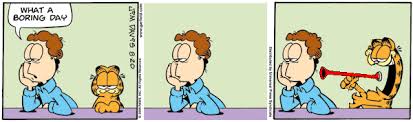
Garfield on Boredom

But sometimes you have to wonder, how much of ‘I’m bored’ or ‘are we there yet’ is down them to find a way out of the boredom pit.

I listened to an account on the radio of a female journalist Zehra Dogan, who is an Kurd and an artist working in southern Turkey. She painted the war zone as she saw it and was imprisoned by the Turkish authorities. In jail, her friends and family sent her art materials but these never reached her.

So the journalist / artist made art on bits of bed clothes that she bleached so that the guards did not recognise them. She used coffee, tea, blood and no doubt tears as her medium for expression. In all she was able to take out 300 pieces of work when she was released, which now form a major exhibition.

With the right state of mind, I believe that most humans can overcome the most extreme deprivation by being active. This natural state of mind is what children, teenagers and many adults benefit from being able to conjure; for the world can and will stop spinning for you– if you let it or can’t stop it.

It takes the super hero or heroine to start the world up again but I believe that power is contained within us all because there are no dull subjects.

Looking Through the Glass

OK, look out of the window and tell me what you see.

I see some fields and trees and a couple of cows.

Think carefully. Tell me what is the first thing you see.

The fields.

Wrong. The first thing you see when you look out of any window is glass.

This little exchange may sound pedantic but it crudely illustrates how we ignore the way we perceive the world. Sweeping short cuts are made during the process of perception in order to to establish some sort of certainty of what is out there, for our deaf and blind brains.

The next logical step in this line of thought, is to consider how many other things we do not see, whether they be ideas or physical things.

I would argue that there are many more than we believe.

Take technological ‘evolution’. I avoid the word progress because there are examples of new technologies that were a step backwards rather than forward. The release of energy from matter in nuclear fission for instance, creates as many horrors as quick fixes for warfare or the provision of electrical power.

Nobody votes for new technology. One day you are sitting on the sofa eating your dinner when, on the news, they are demonstrating a car that drives itself. Or you are a farmer in nineteenth century England and suddenly you hear you neighbour starting up his new tractor.

These changes to our lives come about as if by stealth. Generally they are considered benign – that is the benefits out weigh the problems. The fact that all new technology is by definition ‘untried’ is something that neither proves nor denies a problem exists, in the present or future. So it is allowed to be produced.

The mobile phone, for instance, has revolutionised many people’s lives. Even children as young as three are given them. And yet there remains a question mark over the emission of microwave energy and the effect it has on young and adult brains. At present the young are thought to be particularly at risk because their brains are developing. Making a phone call in a car for instance, is the same as putting food in a microwave cooker, only it’s not food being cooked – it’s you and your family. Because this background energy has been with us for over a generation, it is not possible to establish a ‘control group’ to measure the development of brains. There are no humans alive now, who have lived without a constant background of microwave energy.

Of course there are checks and balances at work in various committees in Universities where research is done. Also government organisations monitor and grant licences to new technologies. The ethical concerns, the effect on other systems such as the environment, sustainability, disposability, carbon footprint etc. are just a few of the concerns applied to new technological developments.

The problem is not all countries judge new technology in the same way. If there is a political, monetary or social ‘quick gain’ to be made through say, shale gas fracking, then some country somewhere is going to do it.

And if in the eighteenth century what happened on the other side of the world didn’t matter because it was too far away; this century has no choice but to think global.

The trails of diesel exhaust from ships crossing oceans can be seen from space. Imported goods do not arrive without an environmental price tag.

It is as if technology has a mind of it’s own – and in the next few decades it will quite literally– using 5G and the ‘internet of things’.

But without innovative technologies, the planet would not be supporting the present human population. The number of people pre-industrial revolution, was small. England had about four million citizens when horses ploughed fields. Now there are over seventy million.

But new technology is not the only object seen in the window. Remember the glass.

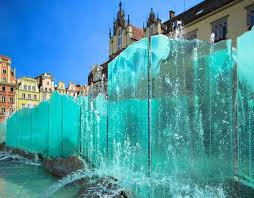
Glass in Wroclaw

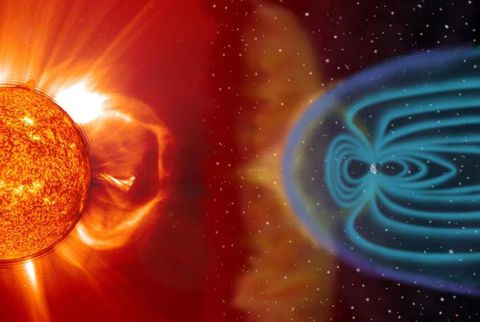
And it might not be a new technology that is about to alter the course of your life fundamentally. There are numerous ‘low balls’ that could change everything tomorrow. For instance there might be a series of powerful solar mass ejections, bombarding earth with cosmic rays so strong that the earth’s protective magnetosphere gives way. Computer systems go down, power grids and machinery of all kinds are cooked.

Solar Super Storm

Trusted technologies, reveal that they have been trusted too much. The impossible or ‘once in a thousand year event’, happens. Then mankind realises it had not seen the glass in the window.

The earth is a space craft and like all complex systems they are fine until they break down. Then back up systems have to be activated and emergency plans initiated…if they exist.

In the case of planet earth they do not. A ‘survivalist’ shelter designed for two weeks, two months or even two years, will eventually either be discovered or run out of supplies before the re-population even begins. Mad Max doesn’t even come close to the post apocalypse chaos.

The question for the present generation and for those yet to be born is;

‘what are the blind spots in our modern lifestyle that could leave human population exposed to near elimination and what is the back up plan to each eventuality?’

Governments, committees,  industrialists, academics  scientific researchers and technological inventors and innovators are our modern day ‘dictators’. You won’t be voting whether to survive disaster or not. Your trusted leaders just won’t have seen it coming because they too were looking through the glass, like Alice.

Go Forth and Multiply

The spring is an excellent time of year to be considering all things reproductive. Whilst male hares are playing fisticuffs in the fields over a prospective female, blog writers are being thankful for rainbows.

The Old Testament character, Noah is an important symbol or rebirth and regeneration. The story is so fundamental that Noah appears in most ancient cultures in various disguises;

Sumer – Ziusudra

Hindu – Manu

Mesopotamia – Atrahass

Babylon – Upnapishtim

Zoroastraism – Zend Avesta

Ancient Greece – Dionysus the Younger

Ancient Egypt – Osiris

Like many bible stories, the flood is both allegorical and historical. The ending of the ice age around 11,000 BCE, unquestionably released a huge quantity of water in just a few years. The Almighty was enacting revenge on the evil doing of the earth’s inhabitants at that time – and He should know. Noah and his family were chosen, possibly, for their hygienic practices around the house and regular donations to animal charities. Whatever the reason, the best of the human race was always intended to survive the flood; along with the plants and animals.

Noah built a boat out of reeds or gopher wood depending on your source. With a layer of bitumen the vessel was able to float and survive storms. On board was a seed bank relating to plants and possibly animals. In some versions of the story the animals do not become a floating zoo but merely a place to store ‘seeds’ – a practice that overcomes the practical problems of feeding and fodder storage.

Whatever the case, it is curious to wonder whether the ‘two by two’ is a description of the counter directional spirals of DNA protein and / or the Nadi of which we will hear more later.

Pause and move forward in time to young Dionysus, swanning around in Ancient Greece. He had his own religion based on drunken debauchery, something God should have known about, but we have to suppose that being omnipresent can distract One’s attention. Anyway, Dionysian followers are depicted as carrying a staff called a Thyrsus. This is a stem of the perennial herb fennel topped with a pine cone and twined with ivy along it’s length. Some commentators have suggested this represents an erect phallus, as a symbol of fertility and rebirth – both important in their religion.

Keen symbologist’s will have noted that fennel is a vigorous perennial herb growing abundantly in Mediterranean areas where the grape is cultivated. There are clear intentions to depict the abundance of life, wine growing and the cycle of the seasons.

As Melchizedek, Noah taught Adam the secret of eternal life which was symbolised by bread (seed) and wine ( blood / water ). This may remind you of another Biblical character who popped up later and adopted this symbolism as a way for his followers to remember his body and blood. We know that for him wine and water were fairly interchangeable; one having a Divine, consciousness altering ingredient (wine). (Hang onto the idea of altering consciousness as this returns at the end.)

Another part of the story of Dionysus is that he spent some of his life floating in a box and was stopped by a tree. This is clearly the same story as Noah and the link intended. A tree represents organic life as a organisation of fractals, in the same way as a snowflake. When Dionysus becomes one with the tree, the intention is to depict the movement of consciousness into a human body which consists principally of a spine from which ribs are hung. This makes more sense of Adam being created from a rib. He is grown as you might grow a cutting from a plant to create a perfectly new whole plant without seed.

If you remember Noah was greeted by a bird with part of a tree in it’s beak at the end of the inundation – after Noah too had spent time in a box, albeit a big box of Biblical proportions.

So we have two demi-gods floating along in a sort of spring time re-enactment of the Oxford and Cambridge boat race. A scene that would probably not appear on the BBC sporting coverage is a curious story in the Genesis 9:20 – 22.

And Noah became a husbandmand and he planted a vineyard, and he drank of this wine, and was drunken and was uncovered in his tent. And Ham saw the nakedness of his father and told his two brethren without.

Firstly note the immediate link with Dionysus, wine growing and drunkenness. But what the story is depicting is a step change into human form. Until that time, homo sapien sapien did not have genitals and was not perfect. The God’s, demi-gods, animal and plant kingdoms were intertwined in the way that produced incomplete hybrids.

The reawakening of a new branch of mankind included the possibility to reproduce by the production of semen. This knowledge was passed onto the male off-spring of Noah and pretty soon we can expect the female off-spring began to know about it. This explains the edict ‘go forth and multiply’ because before this had not been possible – they had to be told. The human race had become perfect in form a message not missed by the Ancient Greeks who’s artists were inspired by the perfection of the human figure.

Lastly, there is another aspect to the Noah story that should be looked upon in a new light.

We have to go back to the bread and wine. Bread is made from seed. It is merely flour in the hands of the cosmic baker until a magical ingredient is added – yeast. We know that yeast comes from the fungus kingdom created millions of years ago. It is significantly neither plant nor animal but a hybrid with the ability to reproduce exponentially.

Then take a look at wine. This is grape juice that has been allowed to ferment – introducing yeasts occurring naturally on the vine.

In both cases the story takes us from the normal, casual, harmless state of material existence into a state of magical, altered consciousness.

This symbolises moving from a spirit in a body to becoming a soul in a body powered by spirit. In other words not just electricity (spirit) and atoms (body) – but a container for Divine consciousness (soul). And the rainbow, that started this story, depicts the full octave of human experience depicted in the chakras of Hindu understanding and of course as a Thrysus.

The seven spiralling energy centres are joined by two counter helical lines of energy called the Nadis, also referred to earlier. Again we see a reference to DNA, energy, matter and information coiled around a spine – or a stem of fennel.

There is much to consider about the chakras but suffice to say that each colour represents a state of human consciousness, ranging from the animal to the Divine.

So we should not be surprised that a rainbow over Noah and is depicted again in the Old Testament in the story of Joseph and the coat of many colours. This is a coat we all wear and brings us potentially, into a pure state of consciousness and a teller of truths.

I have set my rainbow in the clouds, and it will be a sign of my covenant between me and the earth                   Genesis 13

Pleasure Palaces

Pleasure and happiness are not the same thing in my view. Pleasures are sensory stimuli through the senses. Animals are motivated to seek compulsively a combination of pleasures.

Humans are naturally motivated by pleasure seeking as much as the animals. The animal nature of the body is something that should never be denied – as in aesthetic practices. Abstention from pleasure for controlled periods of time for a specific psycho / physiological purpose may be directed by a teacher, dietician or medical practitioner. For instance, seven days of a water fast puts the body into a state where stem cells are released into the damaged parts of the bodies, replacing cells that the body is beginning to consume as a source of protein. In this way organs can be rejuvenated and the life of the body enhanced and even extended.

In general though, most people living in a western culture or aspiring to western style culture, are orientated principally towards pleasure. The body craves satiation of it’s desires and a state of comfort and rest results. I can observe this simply in my cats. They crave their food. When it appears and they consume it – they will retreat to a favourite place to wash and then sleep.

At this level humans are no different. The technology of the western cultures has enabled food to available in supermarkets continually. Hunger is something to be avoided. The same process is mirrored in the other sensual pleasures.

Sexual gratification is deemed a right – even in a war zone where children are not going to have a good life. The pervasion of pornography and places for dignified and undignified sexual gratification are available – if not openely condoned. Humans are animals and the gratification of the desire to have sex is no different to the lusts felt by a stallion of a mare in a field. The indoctrination of philosophies such as Puritanism and social remnants from societies such as the Victorians in England – have left a hypocritical attitude to sex and other pleasures.

Swinging the other way in the ‘swinging sixties’ has left present societies with a liberalism moving ever towards citizens demanding unrelenting pleasure. Social media and it’s content reflect this starkly. Even the gratification of committing suicide is instructed and awarded a status of ‘do-able’.

All of these pleasures and desires put humans on a ‘one track’ direction that is hard to leave. Prince Sidhartha in Indian legend, became disenchanted with his life of luxury and left his family, his palace and social status to search for a reality that was not transient – as is desire for pleasure.

After practising extreme aestheticism he moved into what is now called ‘a middle way’ where ‘just enough’ is enough. For whilst the desire for pleasure and it’s satiation produces problems if totally ignored, too much pleasure also blinds the soul to an inner life with qualities that are not transient – a true ‘heaven’.

From pleasures come a state known as ‘contentment’. This state is also temporary and dependent on the outside world for it’s perpetuation – so contentment is not a destination for seekers of Heaven! Immortality has to be earned.

In my view pleasure palaces contain only the first steps on a long ladder reaching into the heavens. We can remain on the lower steps if we wish. Animals find it hard to climb ladders but humans do not. We have the potential to move vertically through our desire for pleasure and contentment, not negating them, but not seeking them either. They will always come along one way or another. As Jesus the Christ says in Matthew 6

31 “Therefore do not worry, saying, ‘What shall we eat?’ or ‘What shall we drink?’ or ‘What shall we wear?’ 32 For after all these things the Gentiles seek. For your heavenly Father knows that you need all these things. 33 But seek first the kingdom of God and His righteousness, and all these things shall be added to you. 34 Therefore do not worry about tomorrow, for tomorrow will worry about its own things. Sufficient for the day is its own trouble.

To the modern western mind this sounds like a recipe for disaster – for planning and preparation, is a key to the pursuit of perpetual pleasure.

In the Taoist philosophy we find exactly the same aim as Christianity;

It is more important

to see the simplicity

To realise one’s true nature

To cast off selfishness

And temper desire

(chapter 19 of the Tao Te Ching by Lao Tsu)

Note that desire is only tempered not destroyed. When desire becomes a small part of life, it can no longer dominate a person’s being and purpose. The void that is left will be filled by the Divine – in it’s own time.

In the words of the Sufi poet and seer – Sabistari

Go sweep out the chamber of your heart.
Make it ready to be the dwelling place of the Beloved.
When you depart out,
He will enter it.
In you,
void of yourself,
will He display His beauties.

The tavern-haunter wanders alone in a desolate place,
seeing the whole world as a mirage.

The tavern-haunter is a seeker of Unity,
a soul freed from the shackles of himself.

 Through the chamber of the heart is small,
it’s large enough for the Lord of both worlds
to gladly make His home there.

Note the reference to ‘both worlds’ – for Sufism does not deny our presence as a soul in a material body. Both the physical world and it’s pleasures and the non-physical worlds are the abode of the Beloved. The task of the human is merely to become lost in the love of the Beloved and everything else, will follow – including happiness and pleasure.

Word Pairs

We think using words.

The choice and arrangement of words form our thoughts and ideas.

These are two well understood concepts that we learn in childhood become tools that we forget we use. Less well understood is that our words are constructed by thoughts and our thoughts and ideas are constructed by the arrangement of words.

When we study new languages it becomes clear that some cultures have words for an idea, feeling, nuance or even a noun that does not exist in our own. Such words tend to jump from the nest language into the world of other languages, such as email, weekend, zeitgeist, bon appetite.

My interest is going to focus in this essay, on how paired words influence our thoughts. I will use three well known paired words common in the United Kingdom.

The first is ‘drugs and alcohol’. Many public and voluntary organisations concerned with public health, law and social cohesion, mental health and education use this pairing of words. What is revealing is that alcohol is a drug. The question introduced by slicing alcohol away from the ‘drug’ label is, why? Alcohol is a known harmful drug. When Professor David Nutt published his research on the social harm of drugs in the medical publication The Lancet*, he classified alcohol as fifth down the list of the most harmful drugs to individuals and society. If it were to be classified under the 1971 Drugs Act it would have been given a Class A rating; that is the highest possible.

Instead, alcohol is legal in the United Kingdom and many Western style countries. There are certainly historical reasons for the tolerance of this drug as being easy to produce from almost any plant, and was consumed in times when clean drinking water was not available. Like so many discoveries, once found it is impossible to prohibit as the United States discovered in the early twentieth century.

In my view however, alcohol should not be seperated by the phrase ‘drugs and alcohol’, as if it were somehow a benign drug.

Less controversially is ‘Fire and Rescue’. In the United Kingdom, if you are involved in a collision on a road and need to be cut out of your car, this will be done by ‘Firemen’ and of course ‘Firewomen’. If I were hanging upside down by my seat belt with blood dripping from my forehead, I think this aberration of thought through incorrect use of a noun would be more disturbing to me than my prognosis of recovery. How can we send fire fighting specialists to collisions on the highways where there is no fire? At least half of all ‘call outs’ to the Fire Brigade in the United Kingdom are to these type of incidents. This was recognised at least in part by the innovation of adding the word ‘Rescue’ to the title of the Fire and Rescue Service. I would argue however that carrying victims from burning buildings is a ‘rescue’ by any definition. I have heard of fire service personnel donning their breathing apparatus designed for entering smoke filled buildings and walking into a lake to rescue persons in difficulties in the lake. Again, this is a rescue. To foreshorten the argument, all activities of the Fire and Rescue service are ‘rescues’ just like the Thunderbird puppets who operate International Rescue. Once the thought blockage is removed by removing the word ‘fire’ from their title, the Rescue Service will be trained and equipped to tackle any incident where humans are in immediate danger of injury or death.

Lastly, the third unnecessary pairing of words in a title I wish to highlight is ‘Accident and Emergency‘. These hospital departments are placed under increasing pressure in the United Kingdom, particularly at times of high demand such as the winter. So serious has this pressure become that patients lie on trolleys in hospital corridors with ambulance staff, waiting to be triaged and treated. If the staff in these departments were asked how these numbers could be reduced I expect many would say that non-urgent patients should not be attending their departments. They could go to their local doctor’s surgery or even a pharmacist for simple and fast treatment.

My point here is that the title Accident and Emergency is misleading to the public. Clearly the department is there only for emergency patients, not necessarily for those involved in accidents – what ever they might be. The cause of the need for emergency treatment is, I would argue, irrelevant. An emergency can be the result of something that was not an accident, like a heart or asthma attack or fit. The use of the word ‘accident’ is giving permission for patients to attend an emergency department when their injury is not life threatening. By redirecting these patients to other services and professionals and funding this extra demand on them, the Emergency Departments will run more efficiently with less unnecessary stress on staff and patients.

As thinkers, we tend to become lazy and adopt historical phrases as normal, long after the logic of their original inspiration.

Think then of all the other neural pathways we adopt through life and never challenge. Life started when we as humans became separate from animals as thinkers. We will progress the evolution of homo sapiens sapiens when our thoughts intiate pathways to new ways of thinking and being.

We might start by no longer tolerate hanging around in hospital corridors, expect to be saved by a rescuers and think ‘drug’ before we have ‘a drink’.

Mind Mapping

Mind Mapping and Mind Napping

Perched on a library chair waiting to speak to the teacher at a parents evening, I looked up. There on the wall was an illustration of something I already used, but not given a name. It was a poster called ‘mind mapping’ and appeared as a collection of errant balloons attached to a central point by lines. Each balloon contained a sub-subject title related to the central concept which was written in bold capitols in the central balloon .

I was impressed that schools were teaching thinking. After all there is no qualification in thinking, no examination. It’s one of those things that is so ‘natural’ (like breathing) that it is often ignored. However, many past cultures, such as in the Middle East and Ancient Greece, have given great importance to the subject. Stories such as The Thousand and One Arabian Nights and The Iliad contain in hidden layers, instruction about the common failings and strengths of the emotional, instinctual, intellectual and intuitive drivers in the human psyche.

I use the word ‘drivers’ deliberately as they are very similar to the ‘drivers’ needed by computer programmes to enable programmes to link with individual computers. Without drivers the programmes – although present – do not work.

The most common thinking malfunction that I believe is prevalent in western societies is the dualism and syllogistic fallacies.

To examine dualism first; this is the division of an idea into two opposing parts – the ‘either / or ‘ question. This question structure is heard repeatedly in interviews on television and radio. To the credit of interviewees, they often reply – ‘it is both’ – thus up-ending the hidden intention on behalf of the questioner to illicit an answer that might be probed to destruction.

In Eastern philosophy dualistic thought is not prevalent. Things with a common thread are seen to co-exist and have a scalar quality; meaning they are similar and differ more in scale than quality. The Yin Yang symbol is a well known illustration of parts that describe a whole, without opposing each other.

A syllogism is like a crevasse in an ice field; everything looks easy to walk through, but is not. It consists of two preconceptions, which conflate into an untruth.

All journalists are wrong

There is a journalist interviewing me

Therefore this journalist is wrong.

There is a swallow

Swallows appear in the summer

Therefore it must be summer.

With such dangerous thinking patterns posing as logical, I believe that it is important that we think before we think.

This is because most of our reality consists of thoughts that we make real, through our thoughts. In life, we set up neural patterns which act as ‘safe routes’ across the ice fields. This is fine, but it also has the effect of restricting exploration.

londonundergroundmap

When I look at the map of the London Underground I see a perfect example of the ‘mind map’ of a human. There are places which are signified by a circle and the name of a station. Most importantly, these stations are linked in specific, but restricted, ways. When you examine the map there are more journeys you cannot make, than journeys you can.

This is exactly how the freedom of our thoughts becomes frozen and so makes the freedom, impossible.

Only at moments in our life that we later look back upon as highly significant, do we link up old stations in new ways. The creation of the new Thames Link railway illustrates this perfectly. Previously existing stations are joined in directions previously labelled as ‘too expensive’ or ‘too risky’ or ‘not necessary’.

As humans we become experts at finding reasons why new ideas should not be explored. With age we are prone to become content with what we see as ‘our lot’. Further explorations are not deemed necessary and we trot out the ‘proofs’ that we hold close to our hearts as ‘forever truths’.

In the real world there are no ‘forever truths’. Life is subject to constant change even if – like the slow moving glacier – it does not appear to be so.

Moments like going to the hairdresser or barber, are therefore stations in time for deep reflection.