Like many I have often thought about the ‘ego’ and how it fits in with a contemporary search for spiritual enlightenment.
Ego is a term originating from Sigmund Freud and has a technical meaning in psychoanalysis which I shall not include in this essay as there are plenty of psychology books for those interested in a clinical version of the idea.
It’s common usage in English today is to mean that a person is vain and has an unjustified high opinion of themselves, however when we use the word to understand ourselves or ‘what makes us tick’, it has a more constructive purpose.
Ego is Latin for ‘I’ and this sense of ‘I’ works to develope our feelings all through life. I is the observer who perceives through the five physical senses. But this very act of ‘perception’ includes unconscious filtering, predjudices and biases to support what we believe. If this process is unconscious, how sure can we be about the ‘I’ personality we build up through life? How authentic to truth are we?
Whatever ‘I’ is, we can be certain that it rules a great deal of our conscious behaviour; in fact – almost everything.
This is where ‘spirituality’ may start to appeal to a person; to fill this uncertainty and distrust of a fake ‘persona’, accompanied by a suspicion that there must be something beyond personality. The ego is unlikely to admit there is a higher intelligence to it but on surrender of egotistic desires a person can expand their consciousness beyond the everyday.
There are three words which come together to form this expanded version of who we might be; ‘body’ ‘soul’ and ‘spirit’.
It is simple to understand that we are in a body. This was one of the first learning hurdles we had as a baby even though ‘being just a body’ is another of nature’s illusions. You can lose your legs in an accident and still be the same person.
Soul and spirit have various definitions which I shall not explore here. Let us merely propose that beyond our body and senses, there is more that is not within the experience of being me, even if it is mysterious!
In many cultures and traditions the spiritual journey aims to reach an alternative to ego called ‘enlightenment’. Many spiritual leaders claim to have abandoned their egoistic desires and become enlightened. The past remembers such people as prophets and saints but enlightened people are alive today, even if they do not realise it themselves! Perhaps the most beguiling such teacher on the internet is Eckhart Tolle who is candid about his transition into a non-ego driven life and gives gentle and amusing lectures to modern audiences. He does not couch his teaching within terms of any religion unless there is a need to use a specific word or idea. The core of his advice is transferring self guidance away from the ego to the higher self while letting life just happen without needing to control it for desires.
There was a famous Sufi who was stopped by a friend in the street by calling out his name. The Sufi replied, ‘he has gone and I hope he never comes back!’ Dying whilst alive is not part of doctrine in many religions, preferring instead to promise reward after physical death.
In ancient cultures around the world such as Egypt, temples were built mainly for the purpose of placing initiates into a non-egoic state. From here they would leave the body and after three days, just as sun, moon or distant star light fills the chamber, return as a resurrected being. The gnostic Jesus of Nazareth referred to this as being ‘born again’.
One might wonder then what part the ego has in the spiritual quest. Well, clearly the process is not as simple as just abandoning ego.
The truth is that the ego has a particularly strong hold over us, something that it is easy to underestimate. The process of ‘dying’ is anathema to the ego and it will do almost anything to stay alive. Being ‘frightened of dying’ is common for the general population and understandable. We have a choice. Either to be haunted by The Grim Reaper all your life or ‘die before you die’.
The Japanese Samurai in Feudal Japan were spiritually trained as well as being fearless warriors. They entered fights in which they were very likely to be killed for the simple reason that they had overcome the fear of death. What did it matter? The Templar knights in twelth century Europe went through a similar initiation process and were likewise, fearless warriors.
A Templar Knight picture credit Middle Temple
So when a person in modern times takes up the spiritual path and accepts that the final destination is an abandonment of ‘I’ and everything, the ego opens it’s playbook of dirty tricks. It will not give up without a fight to the death.
The most blatant of these is to transfer the feeling of ‘I’-ness into a new, highly spiritual ‘I’ personality.
When the ego is transferred to spirituality in this way, all hell can be let loose!
I once stood at a London rail station with some friends. We looked across the concourse to a large group of African Muslims dressed from head to toe in white robes. They were clearly performing the spiritual journey of the Hajj, bound for Mecca. The pilgrims strict dress code to wear white for humility and yet this group clearly ignored the spirit of the dress code. Their robes were over sized and flowing and their headgear voluminous so as to draw attention solely to project their imaginary high status.
The extremist armed groups of all faiths and political persuasions in modern times are twice as deadly and ruthless precisely because their egoistic sense of being ‘right’ holds power over others. The fact their their evil actions are the opposite of the religion their profess blinds them in a way that only the ego knows how to do.
The Spanish Inquisition operated what we might call today a ‘death squad’ against all the Christian principles of compassion and love, for over three hundred and fifty years.
picture credit: Ancient Origins
Even peaceful looking cross legged gurus and self style ‘god men’ in India and other with strong spiritual traditions, may secretly hide the fact that they have simply adopted the appearance of being spiritual for a variety of non-spiritual reasons. These might range from obtaining money and property, sexual exploitation of naïve followers, illusions of self importance and power over others.
Their conman techniques include dressing up elaborately clothing, hypnotic music, chanting and dance, illusory tricks such as surgery without incision, strict regimes of ritual, unquestioning obedience, removal of individuals from family and friends, shaming and praise and a thousand other deceits and conceits. It is the pyschology of the cult which promises a way to overcome personal egotistic desires but replaces them with the egotistic desires of the guru.
When ‘abandoning ego’ we are as vulnerable as a crab without a shell and great care is needed to value the role of the ego as something that keeps us going in a difficult even dangerous world. Ego is not something to be abandoned without something more real and more reliable to replace it. It is after all, the motor that gets us up in the morning and sustains us however frail and feint we may feel.
Perhaps the middle way is not to abandon egoistic ‘desires’ but to come to terms with them in such a way that our ego does not pull our higher self along like a dog on a lead. The path to perfection is to separate our consciousness from the ego as described in gnostic teachings. In this state, the ego must do as it is told be the highest benefit of oneself and others.
There are a series of paintings in Zen Buddhism which describe this process, one part of which is called ‘taming the bull’ where the bull is our ego.
Taming the Bull picture credit: thedawnwithin.com
The whip and rope are necessary,
Else he might stray off down some dusty road.
Being well trained, he becomes naturally gentle,
Then, unfettered, he obeys his master.
From “Zen Flesh, Zen Bones” by Paul Reps
The rider of the bull is then, that part of ourselves that has become separate and yet still connected to ego or ‘I’ ness. A connection to spirit without destroying the grounding ego gives us, is achieved through strict objectivity in attention and awareness, just as in the expression, ‘in the world but not of it.’
This enables our state of being to move into the ‘higher-self’ or ‘infinite consciousness’; our eternal and infinite connection with ‘all that is and ever shall be’ . It is attained not by the ‘achievements’ that we are encouraged to aim for by society, but by removal of our ‘imitation self’ or ‘personality’. Surrender, non-attachment and the knowledge of forgetting, are just three tools from the wisdom schools of the past which steered seekers of self knowledge long before the modern schools of psychoanalysis and psychiatry.
My first visit to the mosque in Cordoba got me into trouble with the security guard. It was winter and I entered wearing my hat. I was approached and told to remove my headgear. I considered this rather odd as covering one’s head is mandatory in a mosque. But then when you look at the guide book it calls the mosque a cathedral for the reason that there is indeed a cathedral that was dropped as if lowered from outer space, through the ancient roof of the mosque.
As soon as the guard was out of sight, I replaced my hat. Hats on or hats off, women hats on, men hats off, in my heretical view, is a product of imagining unreasonable rules by those who do not know. On that note, the following essay may also appear to be conjecture to which I would humbly request that the reader suspends disbelief. There is much being discovered from our ancient past at this time and buildings such as the Mezquita in Cordoba are perfect places to go and experience for oneself.
If one were to construct a holy building, meaning not just for shelter, it would have to embody both matter and energy. But some energies are beyond scope of scientist’s instruments. There is plenty of evidence of manipulation of energy by and through buildings in the past.
We need not look far for examples. The ancient Egyptian sacred buildings, such as the Osirion Temple at Abydos or the Temple of Luxor, copied the sacred proportions of the human body. The energetic and physical functions of the building were designed to be proportionate to and reflected the energetic and physical functions of the body. Much of the work of the French Egyptologist R.A. Schwaller de Lubitcz gives many examples as in this illustration. The legs are the two lines of columns at the temple entrance working through to the head which is the altar and initiation chambers.
With this understood at least as a possibility, I would like to use the Mezquita in Cordoba in Southern Spain as example of a ‘living’ building energised by spirit.
It is to be found in the old town of Cordoba beside the River Guadalquivir; a waterway that was once navigable to the Atlantic Ocean.
This grand building was built in Al-andalus in Southern Spain between 784 – 987 B.C.E. It was expanded at various times, to accommodate growing congregations. It’s functional layout is similar to a modern industrial building allowing it to grow. In 1236 under the King of Castille and Leon Ferdinand III, the city of Cordoba was captured. The mosque was repurposed as a cathedral.
The Mezquita garden is a landscaped courtyard with fountains and a cistern, presumably once for ritual ablution before prayers. The planting is principally standard sized trees in a regular pattern resembling an orchard rather than a forest. This theme mirrors the rectangular grid of the mosque’s structure. A rectangular grid of columns supports double arches and a high roof.
This then is a brief description of the of the mosque as it appears materially. Now let us move on to consider ‘energy’.
picture credit: Lions in the Piazza
The first thing you notice when entering the mosque are the red and white arches supported by marble columns, recycled from Roman and Visigoth buildings. These columns do not reach the desired height of the roof so a higher arch sits on top of the lower arch. This is an unusual engineering solution but there is a possible explanation that these columns were selected for another reason than for practically. They were made by the Romans from various types of stone but principally polished marble, jasper, porphyry and granite.
All of these stones contain quartz to varying degrees and from the energetic viewpoint, this is significant. Quartz is piezoelectric mineral, meaning that when compressed, the geometric structure of the atoms squeezes out positive and negative electrons producing a voltage across the stone. The voltage is proportionate to the amount of weight on the pillar, hence one might conjecture, the unusual second arch above the first. Structurally, the second arch has no other purpose than to add height and weight, evident because these arches are only used in one direction of the grid where the weight of the roof is supported. This device of increasing weight to increase the electric potential of columns is evident in much sacred architecture. At the Gobleki Tepe temple in Turkey, standing stones are T-shaped, at Stonehenge in England they have lintels and the pyramids of Egypt compress pink granite lined chambers. The ancient Egyptian temples such as Luxor contain an excessive number of columns to support the roof. All around the world and throughout time, sacred buildings are structurally over designed which is in my view is to produce electric potential.
Electricity works closely with magnetism, for instance inducing magnetic fields when an element such as iron moves through an electrified copper coil as in a simple electric generator. We are familiar with electromagnetism but not the as yet undiscovered organic force known as Chi or Prana in the east and Ether or Orgone in the West. It is this as yet unscientifically proven energy that is connected with the spiritual effects it has on the human body and soul.
So to the return the Mezquita, do these arches remind you of horse shoe magnets? Indeed, the typical shape of the arches in Islamic architecture is called a ‘horseshoe arch’. If an arch and it’s two columns are electrically charged, then one column will be positive and the other negative.The grid plan supports this hypothesis, as it connects these opposite electric poles in series, in the manner that batteries are connected to produce more amps at the same voltage. One can go even further if we include the fact that human bodies also contain an electric charge which in a mosque are again aligned during communal prayer. Could males be separated from females not for religious and cultural reasons, but to configure human experience?
Do the red and white patterns in the arches physically mirror the anodes and cathodes in the whole design at least symbolically? If human electricity or bioelectricity sounds beyond scienctific acceptance then the work of Sally Adee confirms we are indeed walking light bulbs!
Any person who has attended an event where a large number of people congregate such as a football match, know that the ‘atmosphere’ during that occasion is not experienced by those who are physically removed from the event and watching on television.
When large numbers of people congregate they are capable of producing powerful sounds. At a football match, the compression waves from the chanting and cheering is capable of boiling one pint of water; a small amount in terms of heat but definitely an effect. So one might wonder whether the compression waves in air from sacred chanting and music is sufficient to produce a piezoelectric effect in stone?
Consider a human body which is constantly vibrating at certain frequencies. Through resonance each person is able to resonate with others during in prayer and meditation. When this is performed as a ritual performance in a sacred building, the context amplifies the effect on each individual. In this way worshippers of any religion have their frequency raised which they experience as an uplifting of spirit in a heart centred rather than a head centred way. Although there is hardly room in this essay, I should also suggest there is the whole subject of healing that has taken place at sacred times and places, sometimes at the level of miracles.
Consider the original plan and physical location of the Mezquita. It is aligned so that the congregation face Mecca in a south easterly direction; 100 degrees and 5 million yards away. Consider the thought that the prayers of the faithful, were directed into the flowing waters of the river Quadalquivir. A controversial scientist of today, Masaru Emoto discovered experimentally, that water records words and thought as changes in it’s molecular structure. Such resonances through prayer of love and beauty may well have been intentional?
Picture credit: Venerable Master Chin Kung
As well as sound we should consider every type of wave in the electromagnetic spectrum. At a lower frequency than visible light are radio waves which in themselves are strongly connected to crystals. The early radio receivers needed no battery, just a quartz crystal, an aerial and electrical earth. An operator could listen to the waves of an radio broadcast using headphones. Conversely, a slice of a quartz or galena (lead sulphide) crystal, works as a microphone in response to sound waves and sends a modulated signal through insulated copper wires. This shows that even a tiny pressure from sound in air produces a response in crystals. A forest of columns containing crystal in a mosque is therefore something not to be underestimated in it’s effects on the human energy field and through that, perception.
Let us look far away for an example as this effect is not as far fetched as it may at first appear. There are in existence thirteen quartz crystals carved into the shape of human skulls.
One such skull is on view in the British Museum in London, England. I have been to view it and found it exhibited on a sultry landing in a stair well. It had been removed from the Aztec gallery on the grounds that some marks from modern instruments had been found on it when viewed under a microscope. The conclusion was made that the skull was made in the same moment of history as these instruments. In my view this is false logic as any object can be altered at any time in history. Work at a moment in an objects existence does not suggest when it was made . It’s the same false logic from archaeologists who find a skeleton in a dolmen and assume the dolmen was made for that burial.
If we can accept that we do not know the age of these crystal skulls then they could be any age including from the Younger Dryas event and even pre-deluvian times.
To quote Daryl Anka from You Tube Twin Flame – the Forbidden Connection;
In Atlantean times the council of 13 would sit in a circle around the master skull and they would sing; they would chant to it. The idea of Tibetan chants is a hand me down of a memory of the idea of using vibrational resonance through chanting to release information from the skull.
In other words, the quartz crystal not only act as ‘microphones’ absorbing sound energy containing information and converting it, but also ‘speakers’, emitting information.
Could granite columns act in the same way when stimulated by the collective chanting and energetic vibration of a congregation? Quartz crystal is silicon dioxide or (SiO2) and silicon is used in the memory of modern computers as a chip. It works by using billions of microscopic switches called transistors on a silicon base to control electrical current, processing data as binary 1’s and 0’s, functioning as tiny logic gates that perform calculations and execute commands.
Whilst granite columns are clearly not computers, could they work in a similar way to store information for later release to following generations?
I shall quote Daryl Anka again from the same video;
The arrangement of the atoms within the crystals is a representation of information storage in terms of how light courses through the crystal…sound can release the idea of information by hitting the right note and pattern / chord key…and it can actually release the information by vibrating the molecular matrix so as to allow the information to come out.
So the key energy in this arrangement is sound and if you consider sacred buildings around the world, sound is an important feature of worship whether it be bells, organ pipes, chanting, choirs, congregations singing and intoning.
The Mezquita in Cordoba during a storm
A largely unknown and curious example of this are the gargoyles featured on Gothic churches and fashioned as devilish creatures with open mouths. These functioned not only to scare evil entities but to channel rain water but contained within some are precisely carved resonant chambers. These ‘squeeze’ the sound of bells and project it in an amplified form for long distances. Salisbury cathedral in England is an example and the scientific principle used is a Helmholtz resonator.
A Helmholtz resonator is an acoustic device, like an empty bottle, that resonates at a specific low frequency, acting as a mass-spring system where air in a neck (mass) oscillates against the compressible air in a cavity (spring). It’s used to analyse sound (by isolating specific pitches) or control noise (like in mufflers or rooms) by absorbing certain frequencies. The resonant frequency depends on the cavity’s volume, neck length, and neck area.
Source Google AI
Returning to Cordoba and the Mezquita, we know that custom for Muslim prayer is first to perform an ablution. This is not only to remove physical dirt but spiritual dirt in the form of conscious entities known as Jinn in Islam or Archons by gnostics. These can be detached from one’s energetic body by washing and sacred incantations such as the call-to-prayer, prayer and recitation.
Imagine then the possibility that sacred sounds in whatever form are absorbed and emitted by a place of worship and meditation, in the way of a simple microphone and speaker. If one can suspend judgment a little further, then consider this extract from ‘Crystals and Stones’ on You Tube by Bashar,
…crystals – the chamber (in which they are built) resonate in such a way as to imbue to you whatever information they have stored in their molecular matrix that you are open to receiving.
The reference to ‘open to receiving’ is important, as we know that people are not necessarily aware of the effects of unseen energies upon their mind, spirit and body. For instance, the earth emits a sound at the frequency of 7.83hz known as the Shumanresonance and experiments have shown that this creates an Alpha wave state in the human brain.
AI Google gives this concise description of this state of mind. Compare it as you read, the state of mind of congregations at prayer,
Alpha waves are brainwave patterns (8-12 Hz) common during relaxed wakefulness, like daydreaming or meditating, acting as a bridge between focused (beta) and drowsy (theta/delta) states, promoting calmness, creativity, and efficient information processing by inhibiting distractions and enhancing mental clarity…
If quartz in granite columns is recording sound vibrations from nature and humans in sacred buildings, then this information, this memory, is present from the previous days, weeks, months and even years. Are our ancestors talking to us and if this were true, then would you not also record your culture’s information, knowledge and wisdom in some indestructible for those who come after you?
When science has the instruments to measure and interpret information contained in crystal bearing stone such as the red granite lining the inner chambers in the Pyramid of Ku fu, then we may understand the purpose of using such particular stone, because at present we do not.
My experience when dowsing, is that sacred buildings such as the Mezquita in Cordoba are highly energetic. The intention in it’s choice of building materials and construction was in my view, to imbue a received meditative state of mind and feeling of closeness to Allah in those who enter the mosque. There is no need even for worship to be taking place to have this experience for the stone pillars emanate an form ofq bio-electromagnetic energy which is an as yet, undiscovered energy to which humans naturally resonate in their own bio-electric field or shall we say, chakras.
I should include another important source of energy in sacred buildings which is from the earth on which they sit. It is significant that worshippers in a mosque stand in regular lines. They have removed their footwear, not only for cleanliness but also to make sure they are electrically earthed. Some more sensitive souls carry metal tipped walking sticks for this same reason for a build up of energy requires controlled discharge. Beneath the mosque are tellurgic currents associated with water; remembering the mosque is sited next to a significant overground river.
Whilst dowsing in the courtyard gardens, I found a spiralling spring under the present cistern and fountains. Such currents will certainly extend into the mosque itself and connect with the bases of the granite columns.
This energy can rise in a spiral around the columns as depicted in Freemasonry as symbolic columns named Boaz and Jachin. These formed a ‘portal’ into the Temple of Sol-om-on, a ‘third space’ between sun and moon or masculine and feminine in which was to be found completeness.
The Healing Rod of Asclepius picture credit: Greek City Times
It is a fact known to the Knights Templar and Freemasons who inherited the practice from the Ancient Egyptians, that most sacred buildings around the world are placed over global, regional and local nodes of tellurgic current. It should also be noted when considering the properties of granite that it can be naturally magnetic when containing magnetite or ilmenite. The darker or metallic coloured granites exhibit this property most and there are many such columns in the Mezquita.
Many sacred buildings connect visually with ‘heaven’ or the sky by means of a tower or spire. A minaret was added to the Cordoba mosque in 958 BCE. Such high structures were built not only for the call to prayer by the muezzin, but to connect the entire complex with positive and negative ions in the atmosphere, notably moist thunder clouds or the hot dry air of summer. Most dramatically, lightning seeks high buildings to discharge into the earth. This effect was utilised by the ancient Egyptians when they built pyramid topped granite obelisks some of which have been relocated to European cities such as Paris, Rome, London and Washington DC. The city of Washington has an interesting street plan likely to be designed by the Freemasons within which the ‘Washington Monument‘ plays a key role.
Such macro views resemble in a fractal pattern, the layout of micro circuit boards and transistors. Modern science is catching up with ancient science but at micro scale as in quantum mechanics. The statue of a god in the Greek or Egyptian Temple which gods found irresistable to enter, is today known as Artificial Intelligence and is already equally potent.
The pyramid’s geometry both discharges and collects energy from the atmosphere and the heavenly bodies particularly at certain astronomical alignments with the sun and constellations. The pavement surrounding the Great Pyramid of Kufu in Giza is said to have a surface of fulgurite a stone produced by the action of lightning striking the earth.
To ‘reverse engineer’ the energetic qualities of buildings from our past is an inconclusive enterprise. It is hard to convince others as present day knowledge does not consider the energetic characteristics of buildings in any depth. The task of convincing others is left to people who are sensitive and responsive to changes through feeling qualities in their body, mind, emotions and intuitions when entering sacred buildings and places.
It appears to me that we are metaphorically trying to extract the sword of truth Excalibur from the stone of ignorance. Never the less, I do believe that there are many minds open to the suggestion that buildings have a powerful influence upon us and if one of two of the ideas here presented make your gargoyles resonate; listen.
Gaining knowledge from the past and present buildings are a gift to us that we would be foolish to ignore, for when the sword is finally extracted it might well make kings of us all.
H.G. Wells wrote The War of the Worlds, a story about creatures from another part of the Universe invading the planet Earth and how the humans fought back. Words too can conquer worlds, especially the world in your mind. For this reason, I believe it is vital that we choose words that fit exactly the meaning we intend.
When speaking, we like to believe that we use words to converse clearly with others.
If there are no words in our own language we can create new words in fun and familiar ways. This linguistic phenomena is apparent in the speech of young people. New generations invent their own vocabulary with which to talk behind the backs of adults!
The power of language is it’s ability to open new perspectives on life. A restricted vocabulary will limit thoughts to the point that they no longer serve anyone’s best interest.
Words create our thoughts which can in inturn be inhibited by those words. Imagine a map of a city as a model of your neural pathways. Those journeys we repeat, such as to work, become familiar, almost over used. A map is also constrained by it’s boundaries. It does no show the whole world. The unreachable thoughts are as if in another dimension. Logic cannot venture beyond logic.
I listened to a debate on the radio recently in which scientists were challenging each other over the popular conundrum, ‘which came first, the chicken or the egg?’ They conjectured about birds as dinosaurs and an absurd point in time when the first egg was laid. Only one scientist suggested that change is a gradual process when viewed over long periods of time. No parrot changes colour over night. Evolutionary changes take thousands of years before being noticeable. There is no single moment when chickens and eggs come ‘into being’.
picture credit: The Australian Academy of Science
The same is true in astronomy. Do you believe the universe happened in a nano second as the so called ‘big bang’. Scientists are currently theorising that universes expand and contract over vast periods of time. The explosive power of the ‘big bang’ phrase, froze original thinking about how the universe began for decades. The universe was never a chicken, nor an egg…it is obviously both.
Semiotics is the science of language and meaning. In my view, we all benefit from understanding how we structure our thoughts using language and meaning. Here is an exercise;
Imagine a ‘cake’.
There are many categories we can use to describe cakes. There are cakes we sub-categorise by their ingredients such as a sponge cake, fruit cake, carrot cake and oat cake. Then there terms for cake which describe when we eat it, such as birthday cake, Christmas cake or wedding cake. Alternatively the means of production is a description such as home-made or shop-bought. Another way of thinking about cake is the origin of the recipe such as Black Forest, Dundee or French Fancies.
None of these sub-categories describe cake but the word cake includes all of the sub-categories. When we choose which cake is included in which sub-category we use thought to DISCRIMINATE between different cakes. This tool is an important power of mental faculty but unfortunately it’s meaning has changed in common usage. It has become to mean PREDJUDICE and in my view, there is a loss of meaning and ergo understanding, when these two are confused.
Discrimination is an objective skill whereas prejudice is subjective. When we think subjectively we mix emotions with logic. Feelings introduce prejudice for or against something in a way that cannot be explained logically. Insignificant examples are then used ‘prove’ to oneself and others that a prejudice is based on fact in a process known as ‘bias confirmation’.
Bear with me if you think I am stating the obvious but in my view much cultural, ethnic, racial, gender based, geographic, religious and political misunderstanding has it’s roots in how language governs thinking and in particular, prejudice.
A mind which for whatever reason developes a predjudice against a general category of something is in trouble. To use our previous example, it would be wrong to say ‘I don’t like cake’ when what is meant is that you do not like cake with a lot of cream.
When it comes to making prejudices against categories of fellow human beings we hit trouble. Any prejudice is more a product of intolerance, misunderstanding, eliteism, narrow mindedness and other unelightened views in the mind of the observer. However, we hear predjudice views in the news regularly so it is important to unpick how and why they are held.
Consider the term ‘anti-Semitism’. The German journalist Wilhelm Adolph Marr lived at the end of the nineteenth century. He popularised the term ‘anti-Semitic’ to describe anti-Jewish sentiment within political ideology and the general public.
This prejudice towards Jews we know has been present for thousands of years. What was new then was the term, ‘anti-Semitic’. It could be argued that this contributed to the start of the second world war and it remains in common usage today, so did it ever serve the world well?
Let us examine the term. We might question the meaning of the term Semite. Who can define what this means other than an anthropologist? Cynics might suggest the use of the term was a pseudo scientific device to impress and support a prejudice which in turn came from right wing views on eugenics.
Certainly just as ‘cake’ has many sub-categories, so does the word Semite. Historically a Semite might be from a specific geographical location such as Canaan, Judah, Judea, Israel or Palestine.
The term ‘Jew’ is entomologically derived from the tribe of Judea. Then of course there are sub-categories for a Jewish person by religion such as orthodox, conservative or reform. Then there are those who are Jewish but do not practice a religion such as non-practising Jews and those who do not believe in God such as Zionists; who might be Jewish or Christian.
Sometimes language is used to catergorise a ‘people’ and using this categorisation, Semites would be a group who speak Hebrew and / or Aramaic.
The Nazi’s in the 1930’s arbitrarily define a Jew by racial characteristics, not religion, derived from an elitist philosophy of the Aryan race being superior to others on which an extreme predjudice was based.
We might expect a national category of Jew, but the Supreme Court of Israel has determined there is no Israel nationality.
There are other sub-categories of Jewish identity such as by culture, ethnicity and politics, but I hope that I have made the point that the terms ‘Semite’ and ‘Jew’ mean many things to many people depending on what category you choose to define them.
Who is a Jew? picture: Instagram
There is a criticism of the term Semite as meaning Jewish by non-jewish people, that it ‘disingenuously’ excludes those who also identify themselves as Semite, such as Arabs. Does the term anti-semite poplarly applied to Jewish people, imply a denial that Arabs are also of Semitic origin?
In my view, the nineteenth century pseudo scientific phrase ‘anti-Semitic’ continues to obfuscate clear thought and sustains predjudice rather than exposing it. It has been used by politicians in particular with the intention including victims of the holocaust and stealing their suffering to gain the moral high ground. Such verbal smoke and mirrors has spawned wars and continues to do so to this day, unquestioned.
In my view, it time to clear our thoughts of words that do not describe precisely what they mean. This is not just a matter of taking sides but simply being clinically clear about where are ideas come from? Are they the product of predjudices? What are the intended and unintended consequences?
To be impartial in a debate that is more a minefield than a cornfield, let us reverse the coin and examine the current term for ‘hatred of Muslims’; Islamaphobia. Again, should we not question the use of this term? Should the psychological term ‘phobia’ really be used to describe a fear of spiders, snakes and Muslims? Clearly confusion, not clarity will result from humans being casually categorised using a word from the science of psychology incorrectly, rather than a clear expression most people understand.
Fortunately, words can serve us to correct such unclear thinking. We can invent new words or phrases in any language and in doing so, say exactly what we mean, fairly and without bias.
It should not be, but if a bigot wishes to describe a group of humans using a term of predjudice, then I suggest that those describing distaste of a sub-category of a human being, should use the prefix ‘anti’. This creates the terms anti-jewish or anti-muslim concisely and without ambiguity. Alternatively, the terms ‘jew hate’ and ‘muslim hate’ in countries where ‘hatred’ is an important aspect of a legal definition and unambiguous to all. The prejudice is clear to all and not spun with fake science. It also makes clear that these are irrational generalisations.
There is a war of the worlds, but it is contained in our heads, not the heads of other people who we may not understand.
In my opinion, the dangerous, self-unaware prejudices that thrive in the emotional biases of current politics, poison the thoughts of otherwise rational and compassionate human beings, and in doing so whole communities. Such hatred of difference is so divisive that it incites violence between one group and another. The simplest example is when governments of countries declare war on each other.
Words are powerful as they form a part of the process whereby we create and sustain our beliefs. How much of the horror that we see in the news today, started as copied or learnt bias, built on an emotional response to an unfiltered stimulus, that slipped under the barrier of compassion towards others.
It is clear to many but sadly not all, that those who express ‘anti’ views in the name of a religion, are not following the most basic rules of the religion they profess to follow.
Fortunately, those who are strongly, even violently prejudiced, are in a tiny minority. The general population do respect and are prepared to learn from, those who are different to themselves. The world’s religions all follow the principle of do-as-you-would-be-done-by.
I have recently written two essays on ‘Physcial Enlightenment’ and ‘Spiritual Enlightenment’. The former is a rarely discussed subject, certainly amongst spiritual seekers. My point was that both are not only valid but complementary.
But in a western culture that thinks in dualistic terms, there will always be the question, ‘which is the most important?’ Even in spiritual countries such as modern and ancient India, ‘godmen’ have perched themselves on top of poles or stood on one leg for literally years, thinking this was a suitable way to deny their physicality and ergo, increase their spirituality.
This is in my view, nonsense but stay there if you want to.
My sideways sliding mind brought up the famous formula of Albert Einstein and a philosophers permutation of it;
SPIRIT = PHYSICALITY (c2) or E = M (c2)
I will also give credit to Alan Watts for a lecture ( now on You Tube) he gave on why saints struggle with lust. I don’t usually pick over the bones of someone else’s feast but Alan structures his talks so superbly that I shall credit to him because his ideas remain very relevant today.
The subject of lust has of course remained taboo in polite western society for many hundreds of years, repressed largely to it’s own detriment (almost suicide), by the Church.
The irony is that those who seek to become spiritualy awakened and do so, also awaken their sensitivity to everything in the physical world. We are all, after all, spirits in an animal body.
The Temptation of St. Anthony by Hieronymous Bosch c.1501
Alan points out that with spiritual awakening induces a desire to withdraw from the world. The shallowness of values and the platitudes of conversation do not contribute to the compelling desire to know oneself. Silence and contemplation are the tools of those with this particular desire and naturally find a place and a way that enables them to do this.
It is my belief that humans are strongly controlled by their ‘chakras’. I assume I need not explain what chakras are so that when I use traffic lights as a metaphor for chakras, readers will understand.
I assume red appears at the top of automatic traffic signals as it can be seen from the furthest distance, and is the only one of the red, amber, green, that causes harm to motorists if not seen.
Let us reverse their order however and place the red light at the bottom, keep amber in the middle and place green at the top.
These three chakras, base, sacral and heart are of great interest for the purpose of this essay. The red base chakra covers our strong connection to ‘tribe’ and family and the amber sacral chakra to basically, lust and animal desire. These two chakras show our bodily physicality and how it connects us with ourselves and those around us, family, friends, lovers, colleagues, leaders, employers, politicians…you get the picture.
Yet our green heart chakra transcends all of this. It is concerned with non-instinctual desire namely, love. This is expressed as love between humans, love of nature, beauty, and our strongest excitement, Divine love.
To sustain the metaphor, these signals are changing within us all the time, red, amber, green and in doing so affecting our behaviour. As much as the traffic controller may want to, there is no point in being on green all the time and creating traffic chaos. We go up and down switching on and off our desires in response to our affairs. Importantly, as one becomes spiritually awakened, the lights get brighter and demand constant attention.
picture credit: Live Science
The consequence is that spiritually guided people become unconscious beacons to other people and entities. The latter includes thought forms who exist in other energetic dimensions where there is a vacuum of love. Prayer, choirs, bells, holy relics, smoke, smells, statues, architecture, geomancy, flags, gongs and other devices are employed by religions to dispel these demons from sacred places. The grinning gargoyles on mediaeval cathedrals are the embodiment of these forces that circle us day and night. Gremlins, Demons, Archons or Jinn, wish to shame and ultimately destroy spirituality awakened humans. The power and prescence of saints in any ‘tribal’ congregation is a threat to demons because ‘love conquers all’. They want to pull you down into the red and amber light and keep you there; the red devil. Their desire is to drain your battery to the last few volts.
It gets worse. A spiritually awakening person has to fight their inner demons as well. Since birth our inner lights have been frustrated and dimmed by various spiritual and emotional wounds. I remember crying on my last day of primary school when I realised I would never see my dear friends again. These were children with whom I had grown up, including one, Fiona, who I had literally been born with in the same hospital and ward. I have a photograph.
Alan Watts explains that spiritual awakening brings ‘old pains’ to the surface, such as loss, fear of abandonment, shame, fear of no love. Lustful pleasures sooth these wounds even if only temporarily. For a ‘holy’ or ‘noble’ person seeking the highest enlightenment and benefit for others, these lustful fantasies can be an embarassment if ever aired publically, depending on how unconventional, immoral or illegal they are.
Priests in the Catholic church are an example of how the desire for sexual pleasure, can become perverted and hurtful towards young impressionable children. Royal families live with the same threat of such practices becoming public. Watch out for public figures who fear media ‘intrusion’ and make ‘no comment’ responses or invent and supress ‘facts’ or create a ‘distraction’ or ‘protest too much’, when challenged by journalists and prosecutors.
The present theatre of tricks being played out in the politics of the USA around the love-less characters of the late Jeffrey Epstein and Ghislaine Maxwell will, allegedly, reveal a full picture of perverted lust running amoke amongst an international elite, cheered on by All American demons shaking pom poms and pocket cameras.
Sprituality is not an easy path. When the highest faculties of all the chakras are awakened the challenge is to face inner and outer battles of the highest intensity. As my old teacher used to say, ‘immortality has to be earned’.
Arch Angels such as Michael carry shields and swords because this is war. Spiritual awakening unleashes human weakness of the same order of magnitude; in the words of Alan Watts, ‘as if the soul seeks balance’.
Here is what Alan suggested to overcome this dilema;
Stop pretending this battle does not exist. Flesh is real and desire is real.
Stop fighting alone. Isolation is the trap that feeds the beast. Find another who is non-judgmental with whom you can be honest. This is not confession, it’s illumination.
Attend to your old wounds – acknowledge the pain and the painful work.
Be present when you feel desire but do not act on it (this is very hard).
Do not suppress shame as this only delays advancement.
Take the middle way which allows you to be present with the feeling but not to give away your energy pursuing and enacting it.
Alan’s view and remedies are principally the way of Mahayana Buddhism. It teaches that a seeker of inner transformation must merely watch dispassionately as life rolls by to overcome desire. The adoption of extreme views (as presently seen in the USA and other countries) is not being dispassionate but passionate.
In my view there is more one can do to have the strength to carry the whispering ring to Mount Doom.
We are guided if we will, by the ‘green for go’ light as a symbol of the human heart and the love it attracts and sends out. For the Sufi’s, this is the dwelling place of Divine Love in the human body. As Divine love is by definition everywhere it is therefore within all of our chakras or centres of consciousness. Divinity is present in our most lustful desires and moments as humans share animal desires and pleasures. Sufi saints were allowed to have one or even more wives, although they did not always. The ‘sin’ of pleasure as seen by some religions, creates guilt and shame which then, only priests can forgive. Life in these religions puts ‘sinners’ on a see-saw of ‘moral and immoral’ judgement favouring only those who use this to weild power over the faithful.
But when we resonate with Divinity we allow our attention to focus on the Divine Prescence within, or in modern terms, ‘our higher self’. This focus is one of being ‘in the world but not of the world’. It is neither moral nor immoral, just being Self.
Noah and his wives collected the animals when the world was in flood. Instead of being overwhelmed and drowned by the great flood of all consuming energy which was water, he and his sons constructed a boat that floated above death and destruction.
Being an Arc is in my view the best strategy for survival in a time when there are great metaphorical floods of anarchic and parasitical energy, pervading and interfering with the normal balance of nature, the affairs of man and ultimately our spiritual well being.
So, build a boat and after great storms a small bird will land in front of you and place down a spray of green leaves from an olive tree, and the waters will slowly receed to reveal a new Earth, to observe from high.
‘Know Thyself’ : words over the Greek Temple of Apollo at Delphi
I suppose the best place to start is to suggest that becoming aware that one is a spiritual being, is not the same as becoming enlightened. The latter is something few people ever achieve in a lifetime. The former is the first step of a long walk.
The question we might ask is ‘who is enlightened?’ There are many historical figures such as Guatama Buddha and Jesus the Christ who would qualify as ‘enlightened’, but surely enlightenment is not so rare that we have to look back two thousand years or more?
In modern times, spiritually aware people do not stand out. They are generally modest and seek actively not be achieve ‘celebrity’ status. They will not perform miracles, but if they did they would allow or manipulate things such that another takes the credit. An enlightened person does not dress up in old fashioned clothes or clothes from another culture. They are not in the game of impressing others.
There is an useful expression today known as ‘virtue signalling’. It explains that the signal is not proof of the integrity of the thing that is signalled. The performance of ‘good deeds’ is something many regard as having a spiritual benefit, but as certain stories in the Holy Quran demonstrate, harmful actions can appear to be good and good deeds can appear to be harmful. Explore this excerpt from Wikipedia;
66-69 Khidr, knowing Moses’s inability to receive his wisdom, yields to his importunity
71-77 He scuttles a boat, kills a boy, and rebuilds a collapsing wall
78-82 Khidr refuses to communicate further with Moses on account of his protests against his conduct, but condescends to explain his conduct.
You may look up these stories that (and it is worth repeating), when examined in detail, in context, over a period of time and without bias…apparently harmful deeds can be good and good deeds can have unintended harmful consequences. It’s a possibility that needs to be explored vigorously because ignoring invites ignorance. Today, ignoring complexity is a primary tool of those who wish to deceive. The present president of the United States, who enjoys global power, promised Americans he would stop the war between Russia and Ukraine within twenty-four hours. He failed but was elected on this false promise. Since then, he has brokered several ‘peace deals’ around the world, several which, when examined in detail, are no more than temporary ‘cease fires’. He was surprised when he didn’t get a Nobel Peace Prize, which one might allege is because he is not aware of himself. We have to leave him to shine that inward looking light.
Ultimately, the only person whom you have a duty to judge is yourself. Hence, the gnostic practice echoed by Jesus the Christ in his words;
“Know what is before thy face and what is hidden from thee shall be revealed unto thee; for there is nothing hidden which shall not be made manifest.”
The Gospel of Thomas Verse 5
But can a mirror reflect it’s own image? Can an eye examine an eye? Have you ever seen the back of your head?
Becoming self-aware requires considerable skill and perseverance in observation. The ‘inner eye’ has to be turned upon one’s own thoughts. This is the first step in meditation where thoughts are likened to passing clouds. Eventually it is hoped the sky clears. It rarely does because there is work to be done, not just sitting.
We have a skill where we can control and create our thoughts. When we are not doing that, control and creation of thoughts does not cease, it becomes automatic. It is like breathing, which is either intended or automatic.
Awareness is similar. Thoughts that ‘come to us’ without our deliberate intent to create them originate in the unconscious part of the individual mind or the collective unconscious. These are largely unresolved and repressed, events and emotional disturbances in our or society’s past.
Pieces of music can replay themselves in our heads for which an apt metaphor is a ‘mind worm’. Unresolved encounters with others or other sections of society in the collective mind can become loops that replay themselves. Politicians use these triggers ruthlessly to distract and ultimately control others. In the UK, the cry is ‘stop the boats’ without really understanding the causes and solutions, just reacting emotionally to whatever people imagine ‘immigration’ is and does. The dumb are leading the blind.
Becoming ‘self-aware’ is, therefore, in my view, far more complicated than sitting in meditation. Become awake in a physical world surrounded by other cognisant beings with whom we have relationships, is a vital focus for our mind’s eye. It has to be done with the concentration of a meditator, or as is said, like a cat watching a mouse hole.
We have one brief but exciting lifetime to encounter all kinds of situations and deal with them skillfully, instantly and with joy, just as a tennis player learns how to deal with the ball when it comes from any probable or possible direction; plus any other ‘wild card’ life may deal!
picture credit: wimbledon.com
I was once asked if I meditated and I replied that I meditate all the time. Whilst I may not achieve this of course, it’s an intention I try to fulfil. I was taught to become an observer of myself by being one step removed. An example of this was given as being able to hold honey in one hand and dog faeces in the other, and lick the honey.
All phobias are clear examples of how our unconscious holds us back from participating in life fully. But we can overcome the dark spaces in our minds and emotions by shining a penetrating light of consciousness into those spaces. This is the process of making the unconscious, conscious…like a baby, breaking the waters and breathing it’s first breath.
“I tell you the truth, unless you are born of water and the Spirit, you cannot enter the kingdom of God.”
John 3:5
The metaphor used by Jesus the Christ was being ‘reborn’ which he meant as complete self realisation and, at another rarely realised level, as re-incarnation.
Enlightenment can only be achieved by opening one’s eyes and taking deep breaths and observing the world as if for the first time.
In Zen Buddhism this practice is known as ‘astonishment’. It is a principle trigger to ‘realisation’ in the same way that a joke operates mentally as ‘getting it’.
“The bamboo shadows sweep the stairs, but raise not dust”
This essay is intended to be complimentary to the previous one entitled ‘physical enlightenment’. To be a fully realised human being, I believe there must be a playful balance in oneself between the physical world and the spiritual. People, we, usually list towards one or the other.
Becoming an observer of the physical world and one’s inner world and the interplay between them, as if you were in no way involved in either, is in my view, the most important technique for self realisation.
An enlightened person never sleeps. There are many statues of Guatama Buddha where he is sitting upright with one hand resting on a knee and apparently sleeping. But there is only partial rest required for the mind; most is for the body. Being fully conscious in daytime will empower being similarly awake whilst sleeping. We all experience this to some degree as dreams when we sleep, because our unconscious is unrealised and, in effect, has a mind of its own. We generally find dreams confusing. A good dream interpreter can assist in the process of ‘observing’ and understanding what the unconscious is processing because it speaks using symbols, as described in the works of the psychologist C.G. Jung.
An advanced stage of dreaming is becoming conscious whilst asleep, known as lucid dreaming. Some hallucinogenic drugs achieve this same effect although if the conscious mind is not trained in detached observation, the effect can be a ‘bad trip’; a roller coaster ride through the ghost train of the unconscious.
There is also another level of dreaming, in which one’s spirit leaves the body at night and travels through physical reality. This once happened to me whilst sleeping in my car and I moved out through some woods to a statue in the middle of the woods. In the morning, I took a walk into the woods and found the same statue.
People who have had ‘near death experiences’ report similarly leaving the body and observing the room in which there body is, such as a hospital operating theatre.
None of these experiences are ‘enlightenment’. Rather I have tried to describe a few of the curious and infinite depths of the mind. As an analogy, not many of us of us explore the internet in a way that is possible. Instead, we revert to our favourite places again and again. The internet and our mental world become like a cage made from iron bars constructed and installed by ourselves.
Leaving the cage, whether it is the physical cage we leave to go ‘on holiday’ or whether it is a mental cage, is enlightenment. I call holidays, ‘environmental enlightenment’. They are a short lived state of mind and heart, but there is a sense of ‘new world’ in a vacation which excites us before, like Cinderella at the ball, a pumpkin pulled by rats returns us to captivity.
We live in ‘rat runs’ imagining ourselves having god-like freewill, but in fact, we are just repeating repeat. The same applies to every place and connection in the universe of our mind; a state the most imprisoned declare as ‘boring’.
The only constant is observing perpetual change. By being fully aware, we are able to deal with all encounters in any situation, physical and mental. The constantly changing point of Universal consciousness which we contain and describe as ‘the-all-knowing-Creator’ or a thousand other names survives and surpasses this temporary sorjourn in the physical world.
The Enlightened One’s will pass you in the street and you will never notice them, not unless you are also, one of Them.
“You wander from room to room hunting for the diamond necklace that is already around your neck!
Look past your thoughts, so you may drink the pure nectar of this moment.”
In conversation with a friend of mine whose ethical values follow Buddhist philosophy, I was challenged with the idea of killing the mosquitoes in my bedroom at night with a pungent insecticide! ‘It is wrong to kill anything and I should be using a mosquito net to defend myself, not attack’.
To me, if I kill a mosquito, I am preventing it from attacking another person or animal with it’s uncomfortable sting and potential disease transmission, including malaria, dengue fever, Zika virus, chikungunya, yellow fever, West Nile virus, and Eastern Equine Encephalitis. The virus, bacteria or parasite with the disease varies with location in the world of course, however with climate change and species of mosquito: do you feel lucky?
The instruction to preserve life at all costs and in whatever guise, is of course, a dogma contained in many religions but not all. In Christianity the Holy Bible includes the Old Testament describing a blood bath of unholy wars. In the last two hundred years or so, ‘civilised’ humans interpreted Genesis 1,
( And God said, Let us make man in our image, after our likeness: and let them have dominion over the fish of the sea, and over the fowl of the air,)
– -as a licence to kill sentient creatures for sport, vanity and greed.
Even today, western ‘civilisations’ are in the same process of destroying the planet with great efficiency and little conscience. There is a possibility that the translators of the Old Testament should have used ‘steward’ of nature instead of ‘dominion’.
Historically, the planet was not seen as a benign mother in the nineteenth century, except by those who lived close to nature such as the North American First Nation People who were regarded as ‘savages’ by European invaders. Ironically, self styled ‘settlers’ regarded themselves as benign and entitled to lie, break treaties, enter sacred land and commit genocide through war and starvation – all whilst insisting they have moral superiority.
Does this remind you of anything happening today by countries who consider themselves beyond reproach for their actions?
In the ancient Hebrew Ten Commandments we find the instruction not to kill. This was probably meant to refer to human v human – but does it? Could this include insects and small mammals? Like all simplifications, it loses import through lack of detail.
Buddhist teachings could be interpreted that one should have no ‘intention’ to kill. If we kill a virus with our anti-bodies or an ant on the path where we walk without even knowing or controlling this, we are not at fault. To kill to prevent disease or disease spreading is not so plain. We venture then into the quandry of the lesser of two evils.
Because of contradiction and complexity or perhaps, despite of it, religious dogma encourages the following of rules ad absurdum. An example would be nuns of the Jaine religion who spend their days walking and sweeping the path in front of them lest they tread on an insect.
Whilst there is a continuum of intent between conscious and unconscious killing, we have to agree that conscious killing raises the ethical questions. Those who refuse to fight in a national army might agree to become stretcher bearers or another ‘non-combatant’ role. This even though their actions are supporting those who are fighting and killing. ‘Thou shalt not kill, directly or indirectly’ would have been a more relevant commandment to conscientious objectors in any war in my view.
Why would any country seek to start a war, and feel justified morally, is a very relevant question for today. A common cause and justification is the belief that a moral duty of ‘doing good’ is being fulfilled. The irony of this is when both or several parties in a war all use this excuse. Who wears the white hat?
The answer can generally be found through the actions rather than words such as ‘treaties’ and ‘ceasefires’. It used to be that soldiers would fight soldiers and civilian populations were only indirectly affected by war. But since the second World War, technology such as aerial bombardment from the air; drones, rockets and heavy artillery, civilians have become targets.
picture credit: Rocket Guest Hosting
Both or all sides will see themselves as the wearers of the ‘white hat’. Their next ethical choice is to decide the target. Should it be military or civilian? Although the choice is obvious to all but the most morally challenged, much of the warfare we see today is aimed at civilian populations. The offending side continue to lie and break treaties and ceasefires, enter sacred land and commit genocide as if they were actors in the nineteenth century ‘Wild West’ in which religious or any kind of law, did not exist.
To do this they use words in order to confuse themselves and their followers. Military terms such as ‘offence’ and ‘defence’ sound as if their meanings are simple. But take an example from the Roman Army in ancient times. They carried large shields which are technically, purely defensive. But one of their fighting techniques was to use the shield to rush at the enemy and push them off balance, opening their guard and going for the kill. The short sword or gladius was used principally as a weapon of offence, and yet again, a sword fight includes using the sword in defence, as a shield.
picture credit: ECUCBA
Defence and offence therefore overlap and at times – become one. Politicians can over rule moral objections by calling this one something and the other something else. It is called ‘propaganda’. In this way offence using defence is called defence and defence using offence is called defence. Making use of this confusion in minds who do not question, they argue that since ‘defence’ is allowed in international law, every action is a ‘defence’ even when attacking unarmed women and children.
Leaders today deny or are complicit in targeting civilians, just as the Soviet Union did under the absolute dictator, Joseph Stalin in the Second World War.
After that war, Winston Churchill, the Franklin D. Roosevelt wanted to replace Stalin’s ‘white hat’ (Russia had been an important ally) with a black one under ‘Operation Unthinkable’. They wanted to return Poland to the Polish people as that issue had started the war but Stalin refused and the country became part of the Soviet Union.
History has the ability to make sense of current events as world politics has usually been played out before and the consequences of actions do not have to be learnt through experience. The main variable is of course, new technology. But fundamentally, ethical values should not change and there is not reason why an aversion to violence should not be universal. This has been attempted through the United Nations and International Law but these voices are weak today.
‘War crimes’ being allegedly committed are investigated by those committing the crimes. Permanent members of the UN Security Council are allowed vetoe criticism of their actions on the grounds that they are ‘defending’ someone or something. Detail is avoided.
International Laws are dismissed by countries that have not signed the convention. So external rules, which should embody the highest ethical values, are ineffective.
Where civil laws and natural law fail to be applied, religious and spiritual rules, potentially have a greater influence by bringing about change within each individual. The rule supporting non-violence is the well known, ‘do unto others as you would have them do unto you.’ It’s an uncomplicated way to behave but, with this injunction as guidance and followed, the world today would be a very different place.
The Church Fathers have had considerable ‘editorial control’ over what to put in and what to leave out of the Holy Bible. So much was ommitted and added, so should new ‘adjustments’ not be accepted?
OBSERVATION
In 1872 a scholar named George Smith found something remarkable in clay tablets from Nineveh. He was reading in cuneiform the Epic of Gilgamesh in which is described the great flood, God’s punishment for mankind. The suggestion that the Great Flood described in Genesis was just a retelling from ealier Mesopotamian texts, shook Victorian society. They gave Mr. Smith a hard time, as if he was the problem.
Today there is considerable proof that many of the stories in the Old and New Testaments have been subject to editing. We accept that the dates for the Christmas and Easter festivals are not in the Bible. They have been made up. The date for the birth of the Christ child was decided to be December 25th but why?
The Infant Horus: picture credit World History Encyclopedia
Previous gods had been born on this date. There was Horus (Ancient Egypt), Mithra (Persian), Krishna, Zarathustra (Iran), Hercules, Babylonian god Bal (Nimrod), Heracles, Dionysus (Greek), Thammuz (Babylonian) Hermes (Greek) Adonis (Phoenician) and others. All were born of virgins.
If such a clear plagarism of ancient gods is disturbing, there is a logical explanation based on astronomy. December 22nd is when the sun disc halts its annual progression northwards along the horizon. It then pauses for three days and rises anew on December 25th. This natural phenomenon supports neatly the story of a solar god being born; not dying and miraculously resurrecting but being born at least. Perhaps the birth of Jesus does not fit the story and date of how the ancient gods had been born.
If we investigate the ‘blasphemous’ notion that the Christ child was not born at Christmas then we should be able to find another meaningful astronomical date in the solar year relating to birth. After all, should a Christian festival be based on the Pagan festivals and superstition? The church fathers did, we should remember, hate and demonise Paganism, although Pagans did no worse than love nature and each other.
SUGGESTION
I suggest that the birth of Jesus was in the springtime; the lambing season, when shepherds watched their flocks by night. Consider afresh, the Christian nativity narrative.
The three Kings or Magi seeking Jesus were astrologers. So excited by and certain of their prediction were they, that they set off to find him, I argue, in the spring. They ventured eastwards towards the star Sirius, which rises in the east in March in the northern hemisphere. With their learning they probably knew of the goddess ISHTAR from Babylonia who represented Sirius and was associated with fertility, love and war. Another clue for us today is that in the English language is the word Easter which breaks down into two words; EAST STAR. It also is remarkably similar to the word ISHTAR.
If we dig deeper into pre-Christian gods, we find that in Ancient Egypt the star Sirius was represented by the goddess SOPDET meaning ‘skilled woman’. She was important because her appearance signalled the inundation of Nile and the beginning of their new year. She was sometimes portrayed as a large dog.
picure credit: Tarot Aotearoa
Sopdet was associated with ISIS who was the wife of OSIRIS. Their son HORUS just happened to be born on 25th December; a holy family uncannily resembling a later one. They watch over us even to this day as Sirius (ISIS) in the constellation Canis Minor and her husband OSIRIS, the constellation ORION.
These curious facts add up to support the possibility that the Nativity occurred in the spring and the death and resurrection of Jesus the Christ in mid-winter. Certainly, Bible scholars are unable to qoute verses that deny this, as is anyone to confirm it. The Christian practice of using the festivals and stories of the hated Pagan gods, appears to be the only reason for Christmas and Easter being where they are today.
We cannot deny the association in popular modern culture of ISHTAR and Easter. As a nature godess, she is depicted with with hares and rabbits (famed for their procreative success) and eggs (product of the female hormone Oestrogen). Eggs and Rabbits were omitted from the Holy Bible and yet survive as symbols of birth happening at the time of the great initiator, Aries. Perhaps, some archetypes are too strong to supress.
ENDING
At this time of Easter, instead of celebrating the joys of spring, Christians mourn. Then, in midwinter they celebrate birth.
One wonders whether these important festivals, reversed for the wrong reasons, have unknowingly undermined the modern world? Knowing the basics of life and death, ending and beginning, should support rather than undermine what it is to be a human, whose life is dependent on natural cycles.
I cannot expect anyone to agree with my view but for me, this fundamental reversal of ancient truths has led to our misunderstand and abuse not only of nature, but ourselves.
The mystic Hildegard of Bingham wrote ‘wisdom awakens to wetness and greeness and flowing waters. Wisdom says I am the rain coming from the dew that causes the grasses to laugh with the joy of life’.
Pagan Wheel of the Year: picture credit Friends of the Forest
The greatest influence on me as a male child growing up in the 1950’s and 60’s was naturally, my mother. She was my a ‘perfect woman’. To Jungian psychologists, this is the ‘anima’ upon which is modelled the feminine aspect of the male psyche.
But there is also a hidden, darker side to the male’s anima. Ideally hidden from child’s view, it was available in films, newspapers and magazines more openly than it is today. There was a ‘sexual revolution’ going on in the teenage generation above me and all was sex, drugs and rock and roll. ‘Flower (femininity) power’ countered the male Patriarchal aggression of the two world wars. Women were ‘burning their bras’.
Psychologists might view this as a healthy revolt against conformity through open expression of emotion. The mind bending drug culture and sexual freedom of that generation erupted and continues to this day.
The dream goes back to the Garden of Eden and the myths of Christianity. Adam and Eve were exposed to their own nudity and felt shame for the first time; their mutual feelings of new found lust moved into era of ‘covering up’, but the fig leaf was nowhere near big enough. The characters in the Old Testament carried out a lot of begetting and smote-ing. The Ancient World was like the Wild West and it needed a Sheriff to calm things down – Moses.
In the New Testament, Jesus’s mother, Mary, had to be ‘free of original sin’ meaning starting afresh. But how could the mother of the new Christ reproduce without being associated with the shame and guilt of sex? The answer was simple, sophisticated and a mind bender; the mother of Christ is a virgin.
Another convenient proof – after the fact – was provided. Mary’s husband, Joseph, was too old to be a father; so confirming Mary’s ‘immaculateness’. In Renaissance paintings of the Virgin Mary, her guiltless face looks lovingly down upon the infant Jesus, suckling at her breast. All was neatly explained.
Leonardo da Vinci’s ‘Madonna Litta’
The problem is; femininity isn’t like that. There is more than a hint of ambiguity in the archetypal feminine, because it is dark as well as a light; a destroyer as well as a creator.
The church fathers cleverly wrote this contradiction into the script and they did it by depicting ‘Mary Magdalene’ as a prostitute. If Mary and Joseph didn’t ‘do it’, then Mary Magdalene certainly did and according to the Catholic Church, she did ‘it’ plenty. But we might regard this depiction of Mary Magdalene as suspect, not least because the word ‘prostitute’ does no appear in the Bible and because Magdalene or Magdala sported the uncompromising title; ‘The apostle of the Apostles’.
Saint Mary Magdalene by Bernadino Luini – Italy – 1524
How much should we go along with this dichotomy of femininity? Was Jesus in his later life, such a bad character as to keep company with a ‘fallen woman’? The fiction survived until 1969 when the Catholic church declared the Magdalene was not a prostitute after all. But was the damage to women in general irreparable? What were the consequences of this unjustified denouncement of womanhood – ergo the Divine Feminine – by the Patriarchy?
Most frustrating of all about the Magdalene lie is that there had always been another version of her in the Gnostic Gospels or Nag Hammadi Library of the Essenes. In ‘The Gospel of the Saviour’ Jesus describes her as ‘the woman who knows the All’. Jesus must have had many female disciples and it appears that he initiated Mary Magdalene to the highest level. In contrast, the male disciples come over in the Gospels asking dumb questions; you cannot raise the consciousness of those who are not ready – too much ego.
Even Simon Peter was in denial of his faith when asked. In my view Simon Peter, might have been nick named the ‘Rock’ by Jesus because he was spiritually calcified. The Roman Catholic Church in building itself upon the character of Simon Peter, has certainly reflected much of Peter’s stiffness through the centuries.
Mary Magdalene on the other hand was not bland and serves our understanding better as a complementary female counterpart to the male Christ figure. Her wisdom represents that part of the Divine feminine which men find hard to understand. To paraphrase Bob Dylan, she, ‘takes…aches…fakes…just like a woman…with her fog, her amphetamine and her pearls’.
Joan of Arc by Jean Auguste Dominque Ingres 1854
If a further example of the positive anima was needed, then the figure of ‘Joan of Arc’ serves well. She was a saintly virgin with the Creator speaking in one ear and King Charles VII in the other. Joan’s knightly armour represents the code of chivalry brought back by the male knights during the Crusades, a code that held women in the highest esteem and made men bend at the knees in their presence, literally and metaphorically. Joan of Arc was a gender reversed version of knightly chivalry and the reverence owed to perfect womanhood. As a Christ–like heroarchetype, she had to suffer an early martyrdom in the hands of the Judas figure – the traitorous Duke of Burgundy. The character of St. Joan, you might feel, is just too goody goody. She needs less fire and more earthiness, more representative of the daily and nightly amours of the common man and woman. In a word; balance.
A more healthy expression of gender roles and spirituality can be found in sculptures of Indian Temples. The depictions of Tantric sexual intercourse in the statues must have made the Victorian missionaries blush. This was not the ‘virginal’ forbidden fruit that created so much male hypocrisy in Victorian society; from Royalty to the gutter creepers. In India we see an understanding and embracing of the spiritual power of sexual energy and an aspiration to achieve immortality through it, for both parties.
Hero Chamunda – Tantra at the British Museum
The two versions of femininity could not be clearer. Whilst the creation of the Raj was believed to be a ‘civilising’ of India and it’s people, the reverse could have been true. The depiction of sacred male and female sexual energy was brought back to Victorian England between the covers of the Kama Sutra and Arthur Avalon’s, ‘Serpent Power’. But their enlightened texts failed to remove the curtains from the legs of pianos of society’s ‘well to do’. Such sexual repression, psychologists now know, creates destructive, unconscious fantasies in the male psyche. A contemporary expression of this was the so called ‘Jack the Ripper’ who murdered prostitutes in Victorian London as readily as the Church burnt ‘witches’ in Mediaeval Europe; probably for the same reasons.
Edvard Munch – Vampire
In Jungian symbology, the negative anima in men is likened to a Vampire that sucks a man’s life blood and by implication, their very Soul; dangerous territory. The term for such a woman in 1930’s, 40 and 50’s was appropriately a ‘Vamp’. Her picture adorned many a barrack room wall. As an aside it is interesting that in the eponymous film, the God-fearing General George E. Patton angrily tore down a soldiers pin-up of Lorraine Bond with the words, ‘this is a barracks not a brothel!’
The evolution of the internet and instant ‘view in private’ pornography, has pushed images of the negative anima onto a new generation young, vulnerable males apparently without consideration of consequences. The pornography and sexual violence on view is far more mentally poisonous than those penny-slot machine Edwardian ladies undressing before voyeuristic butlers. The United Kingdom is currently considering a law to ban the under 16’s from social media, and Australia just dropped the idea.
In 1950’s Britain, the main stream media exploited the saucy postcard ‘seaside’ style of humour, ripe with sexual innuendo. In a sort of uniquely British way, sexual ‘goings on’ were laughed off socially as a bit of ‘slap and tickle’. The ‘Carry On’ films had audiences falling off their seats. Sex and gender jousts were fun and funny.
In this vane, Alec Guinness starred in a 1953 film called ‘Captain’s Paradise’. His character was the Captain of a ferry working between Gibraltar and Spanish enclaves in Morocco. The gag was that he had a wife and mistress with opposite and (for him) complementary characters. In Gibraltar his English middle class wife played by Celia Johnson, spent her days engaged in housework and domestic trivia, in preparation for her husband’s return. In the mid point of the ferry voyage, the Captain always turns his domestic wife’s photograph around in his cabin. Once the reverse side is a photo of his exotic lover played by Yvonne de Carlo. She is by nature a hedonistic, sexually alluring young woman who loves to drink and dance the nights away with her sea Captain. In the end it all goes wrong but the point is clear. Men idealise a particular woman who is a projection of both their negative and positive male anima.
It should be acknowledged that the female anima in the male psyche has an equivalent in women which Jung called the animus. The reader is invited to study this yin yang polarity. Let it be enough to know that the sacred dance in the affairs and affairs of men and women is one that can and should be, vital to their individual spiritual transcendence.
As a summing up and because I like an answer of any kind, I quote Joseph L. Henderson in ‘Man and His Symbols’ p. 157;
“Any of us can see, of course, that there is a conflict in our lives between adventure and discipline, or evil and virtue, or freedom and security. But these are only phrases we use to describe an ambivalence that troubles us, and to which we never seem able to find an answer.
There is an answer. There is a meeting point between containment and liberation, and we can find it in the rites of initiation that I have been discussing…
…Initiation is, essentially, a process that begins with a rite of submission, followed by a period of containment and then by a further rite of liberation. In this way every individual can reconcile the conflicting elements of his personality: He can strike a balance that makes him truly human, and truly the master of himself.”
In highlighting the two Mary’s the ‘unresolved’ feelings within males needs such resolution. The Christian religion includes these processes in it’s rites of passage; (submission – mass) reconciliation (confession) and liberation (priesthood) but few ‘initiates’ become masters of themselves because, in my view, St. Peter keeps the key to himself. No gnostics may enter!
For me, the ‘sea captain’ of within, cannot and should not, keep up the charade. The individual needs of the women who are subject to anima projection, rightly demand their own initiation path.
The unresolved in worldly affairs takes place in order to illuminate and help us work through the contradictions within us all.
This ‘fight’ – which scales down in simplest of terms to ‘evil and virtue’ – is indeed hard to reconcile and much of the world’s greatest literature and other forms of expression, unpeels this angst before our eyes.
Puck’s line to King Oberon Act 3 Midsummer Nights Dream William Shakespeare
This was going to be an essay titled ‘The Party is Over’ but then the Olympic Games Opening Ceremony 2024 stopped me. It was too extraordinary to ignore and in fact, contained the same messages.I wish the Olympics, the athletes and the people of France and the World come together in love at the conclusion of the Olympic 2024 as was surely the original intention of the games. I express no religious or political views other than universal love. If you do not have ten minutes please slide down to the final conclusion.
The gods on Mount Olympus would have watched the Olympic Games Opening Ceremony 2024 in Paris, with a conflation of amusement and horror.
Personally, I found it pedestrian, disjointed and more than at little weird, and I was not the only one. For a country renowned for its consummate sense of good taste, design, style, and pazzazz; what in Hell happened?
I shall express views here which some will find far fetched, even disturbing. However, this sideways analysis might explain why standards fell so low.
Those who have read Dan Brown’s book or seen the film The de Vinci Code, will appreciate the power of symbols. The main character played by Tom Hanks, is an academic ‘symbolist’. He unravels symbols as a trail of clues that lead to the truth and this is what I believe was happening at this Olympic Ceremony.
So are there ‘clues’ in the ceremony and if so, what truth is being disclosed?
The Olympian gods used to look down on humanity and create situations. If you were a modern organisation, similarly determined to influence the thoughts and feelings of 29 million remote viewers around the world, this ceremony is the perfect vehicle. Being performed in the ‘city of lights’ was surely an invitation the Illuminati could not refuse?
The Illuminati picture credit: National Geographic
I recommend personal research to discover the motives and means of the Illuminati and other cabals, but their aims might be summarised as; ‘to achieve a Global Order through the removal of personal and national freedoms’.
So when you hear on the news that the fibre optic cables serving the high speed trains to the city of Paris have been sabotaged, you wonder why? Curiously, a week or so after the attack, the media are still describing this planned event as ‘vandalism’. No organisation has yet claimed responsibility. You might wonder what reporters are avoiding saying and who has told them not to say it. Was a planned and co-ordinated attack to created fear? Fear of death is the currency of cabals as we witnessed in the recent global pandemic where, again no originator has come forward or been found.
‘Let them hate us as long as they fear us.’ Caligula
Fibre optic cables carry vast quantities of information over long distances. They send light through gross matter. Cutting off this supply in the four cardinal directions was like cutting off light to the City of Lights; the city of the Sun King, Louis 14th. So similarly ‘cut off from the world’ was Louis, when he moved the Royal Court away from the Parisian minions to Versailles, where he could enjoy a privileged hedonistic lifestyle.
The leaders of the secret societies were closely involved with and led the French Revolution. They would have introduced the ‘Phrygian Cap’ as headgear for the revolutionaries; a symbol of Mithras represented by the bull.
Close observers of the Olympic Opening Ceremony would have noticed the golden head of a bull next to the five Olympic rings at the flag raising ceremony. Should we conclude that Mithras and Revolution is alive and well in modern France?
picture credit : Israel 365
The Roman Empire nearly adopted the Mithraic religion as it was popular with it’s soldiers and Mithraic temples can be found under many churches. In myth the bull’s spine sprouts corn and the blood is the wine of animal life. Christianity was chosen as the preferred Roman religion but the similarity of this Mithraic myth to the Eucharist should not be overlooked.
Light is a common symbol of spirituality and Jesus was not the only one who proclaimed to be the ‘light of the world’.
‘How thou art fallen from Heaven, son of the morning’ Isaiah 14:12
There is an old Testament character named Lucifer who the Church Fathers decided to eclipse by conflating Satan and Lucifer and Ahriman as the same beings
But Lucifer, the ‘Light Bearer’, is important today as he represents an ‘imbalance’ of spirituality, a powerful overload of light. We should not consider spirituality as being only goodness, as it can be too weak or too powerful and when either occurs it produces bad things.
Lucifer was responsible for the loss of the ‘third eye’ represented as the ‘brow or Adjna Chakra’ in Yoga and a Cobra in Ancient Egypt. Without this sensibility humans descend into illusion and delusion. The figure of Marie Antoinette in red in the Ceremony, represents how humans have collectively ‘lost their heads’ or rational thought and are fixed in the bright red base chakra of animal and tribal desires.
Balanced spiritual energy is a good thing, but when it becomes imbalanced it is not. Gautama Buddha discovered this after living an indulgent life in royal splendour, then aestheticism. He found little of spiritual value in either. He became enlightened when he followed what he called ‘the middle way’, which is the philosophy of Mahayana Buddhism today.
In the ceremony, Venus was represented by Beyonce as a feminine spirit of light and beauty with an enchanting voice; as with the Sirens in the voyage of Odysseus. But it was a narcissistic delight in self reflection that audiences were presented with and not the Venusian sacred mirror of ‘self reflection’.
The decent from balanced spirituality into base narcissism is present around the world in social politics today, not least in France where the left and right wing extremists, with no thought of a ‘middle way’ compromise, have recently taken over the government of the country.
The political values of the French Revolution, “Liberty, Equality, Fraternity or Death” were chapter headings in the ceremony as it appeared on television.
The above background information, is intended be some explanation of the following analysis of the Olympic Games Opening Ceremony 2024. Many have reacted to the ‘weirdness’ in the ceremony as something they could not relate to. The French people had given away their tax payers money and freedom of choice to those who created the ceremony; in other words they had given away their power.
You might ask who decided not to have an audience in the Olympic Stadium for this ceremony, as is traditionally the case. The loss in revenue from ticket sales was clearly a loss out weighed by whatever gain you must imagine. Instead of a climaxing parade of athletes before a cheering international audience, bookended by icons of national pride as in the Beijing and London Olympic Games opening ceremonies, there was nothing.
The world was given a ceremony mainly for the global television audience. The consequence was to separate people into individuals or small groups, such as those Parisians poised on balconies over looking the river. Bystanders had a partial view of the ‘ceremony’ unless they watched it on their phones. The revenue and energy created by sporting event stadiums was sacrificed on an unknown altar.
Performers were perched on buildings as individuals, groups of dancers, musicians, circus artists, singers and actors. Without the power of a telescopic lens and amplifiers, these figures were diminutive both visually and inaudible; a subtle expression of ‘disempowerment’ of the people; ‘divided we fall’.
Human performers made small by large buildings – foolish or just poor design?
Those who were clearly happy or at least good at pretending were the various circus and street performers along the route. They at least added enchantment to proceedings; especially the hired ‘global celebrities’. However these Venusian / Sirenesque qualities, come at a price to the observer as already described.
Only by being tied to the mast of his ship could Odysseus avoid a spiritual death on an island of enchantment and delusion. Is that our world today?
The ‘Minions’ or non-privilege populace, were depicted by cartoon characters who proceeded to sink their own submarine, much in the way humanity is today destroying it’s own space craft; planet earth; cheerless and disempowering messages for us all.
Humanity can not complain that it is has not been warned. The Book of Revelation in the New Testament gives warning of the apocalypse and one of the Four Horsemen of the Apocalypse appeared in the Olympic Ceremony riding a metallic White Horse. Wikipedia informs us that;
In John’s revelation the first horseman rides a white horse, carries a bow, and is given a crown as a figure of, conquest perhaps invoking pestilence, or the Antichrist.
picture credit: Hindustan Times
‘Conquest’ we can understand as victory in war and ‘pestilence’ something like the recent pandemic. The arrival of an ‘Antichrist’ is not an anti-Jesus but inverted Christ consciousness; love thyself instead of love others.
Nuclear war has been threatened by politicians and humanity would be the lesser for the intense light of the nuclear explosion – matter into energy. Are we being prepared? Spiritual and or physical death was shown to us repeatedly in the ceremony using various symbols.
A river was chosen as the central location for the ceremony. Rivers are a symbol of the journey from life to death and the Ferryman on the River Styx is perhaps the best known. At the beginning of the ceremony, three children (innocents) follow the light bearer (a football star) underground, the place of Hades or the Underworld denoted by shelves lined with human skulls.
The innocents (you and I) are given the Olympic torch which they pass onto a hooded figure in a rowing boat who takes them back into the world of light or from death into life.
Spectacular laser lights on the bridges and stages announce spectacularly that Lucifer is present above ground.
The use of the bridges that cross the River Seine must have been an enormous disruption to the daily travel of Parisians so there must also have been an overwhelming case for deciding to allow this disruption and disempowerment of ordinary Parisians. What was the benefit?
Were we being invited to remember in the recent history of these bridges that one was the location for the death of Princess Diana? The Pont d’Alma ‘underworld’ road tunnel is capped today with the symbol the Illuminati, a flaming cauldron; which incidentally is a copy of that held aloft over New York by the Statue of Liberty.
The Sacrifice of Diana the Huntress
Another Royal death featured in the ceremony was that of Marie Antoinette. Actors appeared at the windows of the Conciergerie. This is a building which served the French Revolution by confining 2,370 prisoners, including Marie Antoinette, prior to horrific public execution by guillotine. The Ceremony could have chosen to avoid this macabre place in the interests of good taste, but instead chose to celebrate the horror.
If you are not convinced by these symbolic references, the next is so obvious that many Christian religious leaders have taken offence. They feel that the story of the Last Super in The Bible was mocked and their faith was being deliberately undermined. The long table on the bridge and the peculiar array of sexually ambiguous characters seated beside it employed frenzied cat walking and dance. The display, for many, was a celebration of sexual licence and depravity and even included children to whom Satanists are particularly attracted as a source of energy. The hermaphroditic characteristics of the figure on the left of Jesus in Leonardo de Vinci’s last supper is discussed in Dan Brown’s book referred to earlier and perhaps inspired the theme…is it Mary Magdelene?
To fulfil the imaginary prophecy of these orgiastic encounters, a near naked Dionysus appears wrapped in fruit on a plate as if about to be consumed by the depraved celebrants. Dionysian rites in Roman times were indeed not for the faint hearted. Was this parade endorsing such rites as an end to modern times?
Using the theme of ‘romance and love’ there were scenes in library where three sexually ambiguous young people made eyes at each other and then a rapid exit into a private room and purposefully closing the door. Families might wonder if a ‘ménage a trois’ is something to celebrate in an Olympic Opening Ceremony if is so, why?
In events such this ceremony, Satanists include symbolic messages for fellow Satanists around the world, in the way the newspaper advertisements once were used for covert communication. They will have been alerted to each message by a principle subversive technique, which is ‘reversal’ of the ordinary such when South Korean athletes were introduced as North Korea. Diplomatic telephones started to ring. An apology was demanded ‘for the next time you organise an Olympic ceremony’. Agreement was made but was ‘human error’ really involved?
The Universal Sign for Distress at Sea
The most glaring reversal was surely taking the audience out of the stadium for the ceremony. Disguised no doubt as ‘innovative conceptual thinking’ and ‘this is France’ – as President Macron explained- the losses appear to be greater than the overt gains. Why would you prefer funeral paced boats in the rain to the traditional carnival of athletes in previous ceremonies in the dry?
Light into darkness is a theme enjoyed by Satanists and the Olympic Ceremony would not have disappointed them. Whilst in a stadium the encroachment of night is gradually balanced out by artificial lighting, this effect is almost impossible to produce in a city. The clear ‘light of day’ passed into dark obscurity. One conceptual theme was actually called ‘obscurite’ meaning ‘darkness’.
Woe to those who call evil good, and good evil,
Who put darkness for light, and light darkness,
And put bitter for sweet, and sweet for bitter,
Isaiah 5:20
A few days ago, You Tubers were posting Paris at night with large areas in black out. Electricity had been cut off. The only illuminated building was the Basilique Sacre Coeur in Montmartre. There has also been further ‘vandalism’ to fibre optic communication cables in other parts of the country.
In conclusion, if only half of these interpretations are close to the truth, I believe we are being given a warning of future problems, by those who are about to create them.
The stark warnings are;
People are being misled through their dependence on the internet and media.
Life will become more difficult because humanity is destroying the planet.
Humanity will have to become ‘Christ conscious’ (love thy neighbour) or there will be wars.
There will be a world government to achieve these aims.
There is a tradition in England to bake special buns at the end of the Christian period of Lent. These are characterised by a white cross symbolising the cross on which, they believe, Jesus the Christ was crucified.
We are familiar with one of the meanings of the word cross is ‘annoyance’. Insignificant in itself but keep it in mind as you read on.
When I was a young student of architecture in London, we had lectures on the philosophy of architecture. I was greatly influenced by an American anthropologist named John Steel, whose philosophy of life in general appeared innovative and exciting to me. He said, for instance, that we should be wary of using right angles in our designs. He sited the geometry of astrology where an angle of 90 degrees indicates a clash, as does 180 degrees. In contrast, the angles of 60 and 120 degrees are harmonious.
I set about designing with architectural plans based on equilateral triangles. Other tutors cited the work of the great American architect Frank Llyod Wright who used this grid extensively. His buildings are greatly valued today for their harmonious relationship with nature and an ambience of content.
In the Chinese order of landscape and building design known as Feng Shui, the corner created by a right angle is called a ‘poisoned arrow’ and needs careful mitigation.
What this is leading up to is an invitation to consider the universal symbol of the cross; two lines that cross each other at right angles. It might be that it is not so benign a symbol after all; if only because it is a depiction of the causing extreme death of a human being.
The symbol of the cross is of course far older than Christianity, whether on the diagonal, vertical or the many other variations.
We should also remember the variation of the spinning cross known as the Swastika and it’s modern association with Facism. The spinning cross was a symbol of the sun for ancient cultures all over world. The Nazi’s reversed it’s direction in a doubtless, intentional Satanic reference because they studied and practiced spirituality for it’s power.
Jesus the Christ called himself ‘the light of the world’ and ‘the son of God’; but we rely on translations for this and it is possible that he came as the solar deity whom the ancient Greeks named Appollo. If modern day Christians are uncomfortable with this association then they are invited to read deeper into this subject.
Whether or not any of the above is absolutely true or relevent is not my thesis. Suffice to say that the crossing of straight lines is generally, a male and solar symbol.
Historically, much of mankind’s evolution over the last millenia, has been male or solar in character and I would argue that it is natural we would expect history to be filled with accounts of male humans fighting; war, opposition.
What was desperate to happen, in terms of human evolution, was the rise of the complimentary feminine principle known as the Divine Feminine. For we are not so bound by our religious dogmas today as to deny that God is equally female and male. The old stereo type of a white bearded ‘nice guy’ needs to be put into the ‘no longer believable box’. Humans were made in the image of the Divine male and the Divine female. Their physical bodies hold more in common than difference meaning the two genders have more in common than difference and are complementary in nature.
The power and relevance of the divine feminine appears in ancient Egypt. Their pantheon is a full of female gods as well as male. Isis and Osiris almost share the same name and are depicted, just as Mary and Joseph, with a divine child from their union.
This balanced recognition of Divinity as a whole ‘yin and yang’ complimentaryness should have informed all of human endeavour to the present day but sadly, the alpha-male energy jumped ahead of the game.
There were exponents of this Divine androgeny based on ancient Egyptian texts, the Greek Cabala and Jewish Cabala and Hermiticism, but they had to operate as a secret society. They were the Rosicrucians whose symbol was a vertical cross with a rose at it’s centre. The meaning is clear; that of a combination of male and female Divine energies forming a Unity.
At a similar time came another religion based on the house of Abraham, Islam. Whilst today many Islamic cultural dogmas (such as dress codes) are based on tribe and tradition. In countries like Iran, enforcement of dress codes if enforced more for male power than to solve any problem. Early Islam was a beacon of feminine influence in society at many levels such as architecture and art. Sufi poets aspired loving feelings towards a soft and nuturing, Creator. Islamic architecture is renowned for it’s flowing depictions of nature and it’s geometric patterns. Courtyards and landscapes were intended as earthly depictions of paradise and were characterised by soft flowing waters and fountains. The contemplative, reflecting, geometric ponds in the Alhambra Palace and castle in Spain, were invitations for reflection and enjoying the solar heat from the cool embrace of shadowed courtyards.
Islam was and is, fundamentally, a lunar religion, still represented today by it’s use of the lunar rather than the solar calendar and it’s use of the crescent moon as a symbol.
This ‘feminine principle’ was carried by returning crusaders and travelling troubadours to the Christian Europe as chivalry. Many of the Crusader knights learnt from Islam the importance of respecting women and the essence that women contained and expressed in enchanting, subtle ways. This sea change should not be underestimated as it continues to inform and revolutionise the feminine principle in modern societies; expressed as ‘feminism’ in modern politics but culturally is far more profound.
The ‘Round Table’ of King Arthur was a practical representation of the sharing of power amongst equals. This replaced the Alpha-male monarch of previous centuries who killed all who opposed him. The circle is a geometric form which expresses harmony and potential infinite expansion and/or introspection. It is a planet and a universe all at once and has none of the negative values associated with a cross. But most of all, it is the maternal womb and the expression of the greatest thing that the Divine Feminine has to offer; completion and life.
It is today, in many European and other progressive countries, that women have been given principle parts to play in the affairs of government and social order. Their plain speaking and intuitive understanding of complexity, is in contrast to the previous male dominated ways. As leaders they have become highly respected, such as Ursula Gertrud von de Leyen in the European parliament.
So may we this Spring season of renewal, view the ending of the male, solar dominated world (open to all to view across North America as a solar eclipse on 8th April 2024) and welcome those gifts that the Divine feminine brings to us in abundance; the natural world, procreation love and an end to those hot cross males!
The Solar Eclipse; a moment for feelings or fiesta?

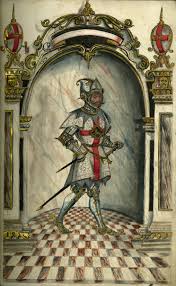
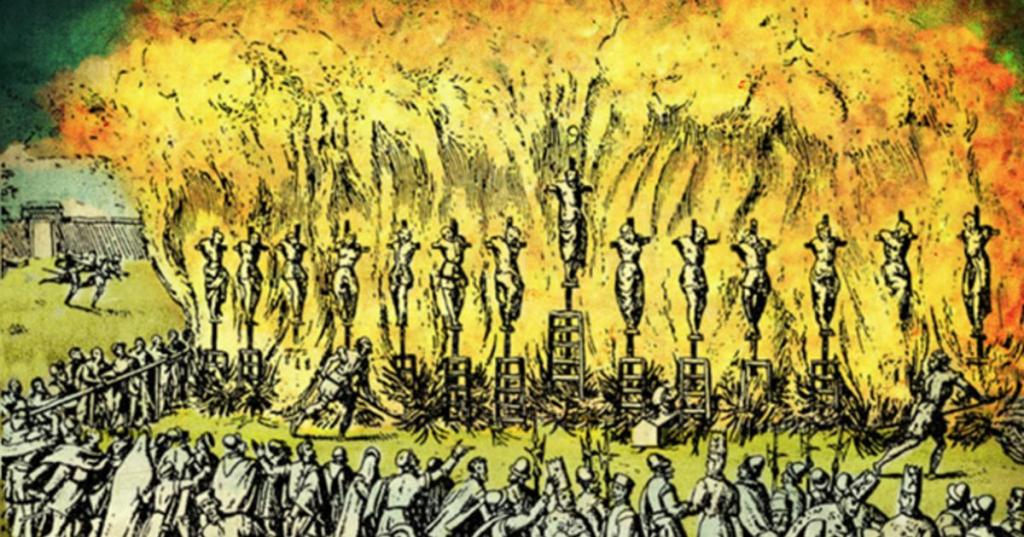
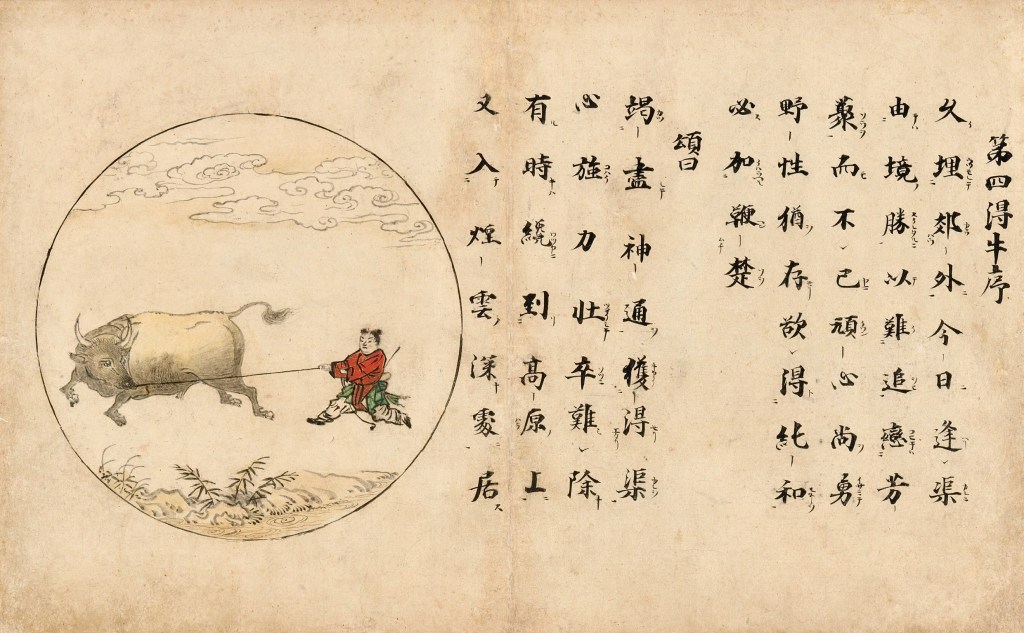

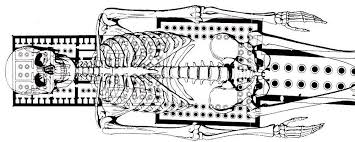
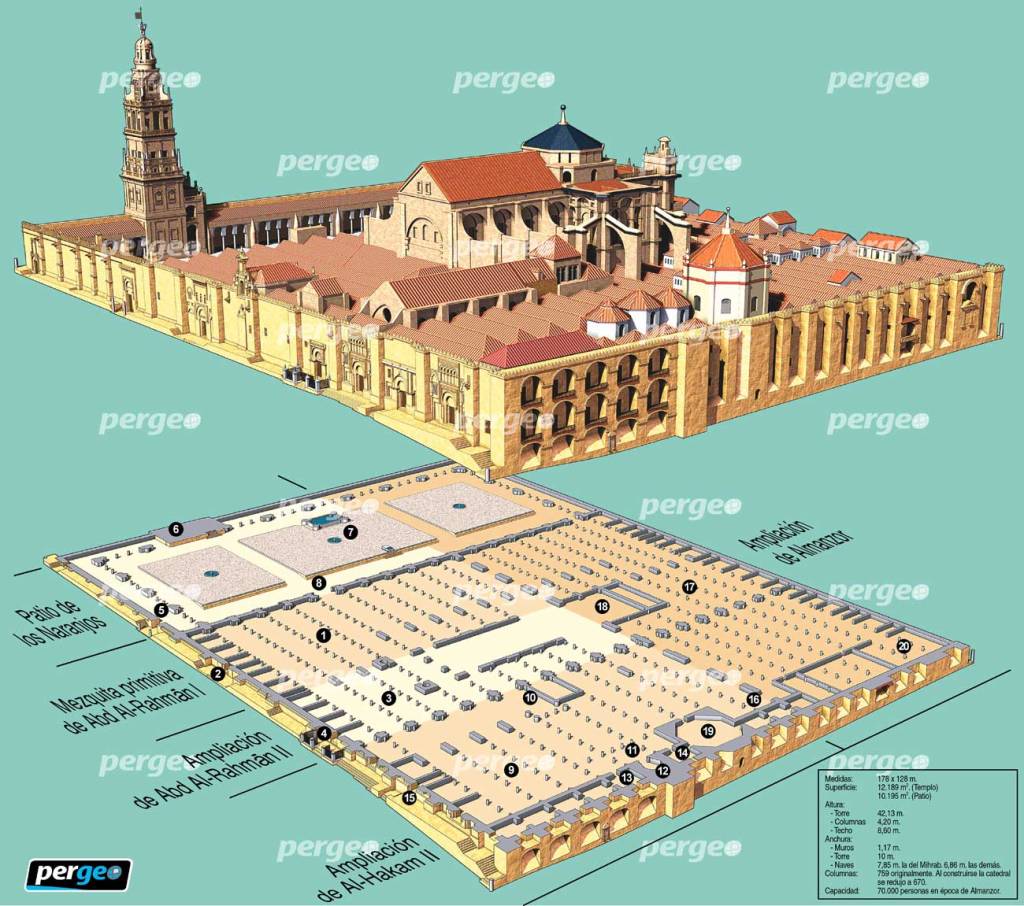
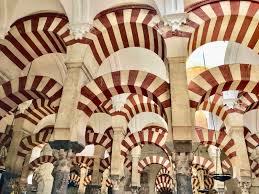
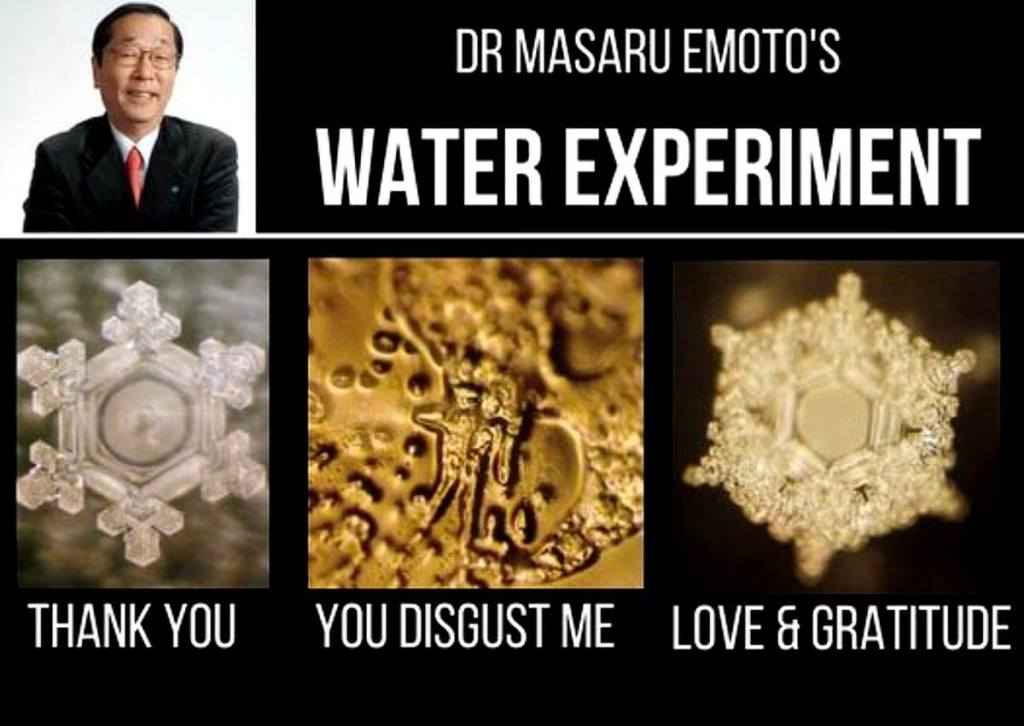
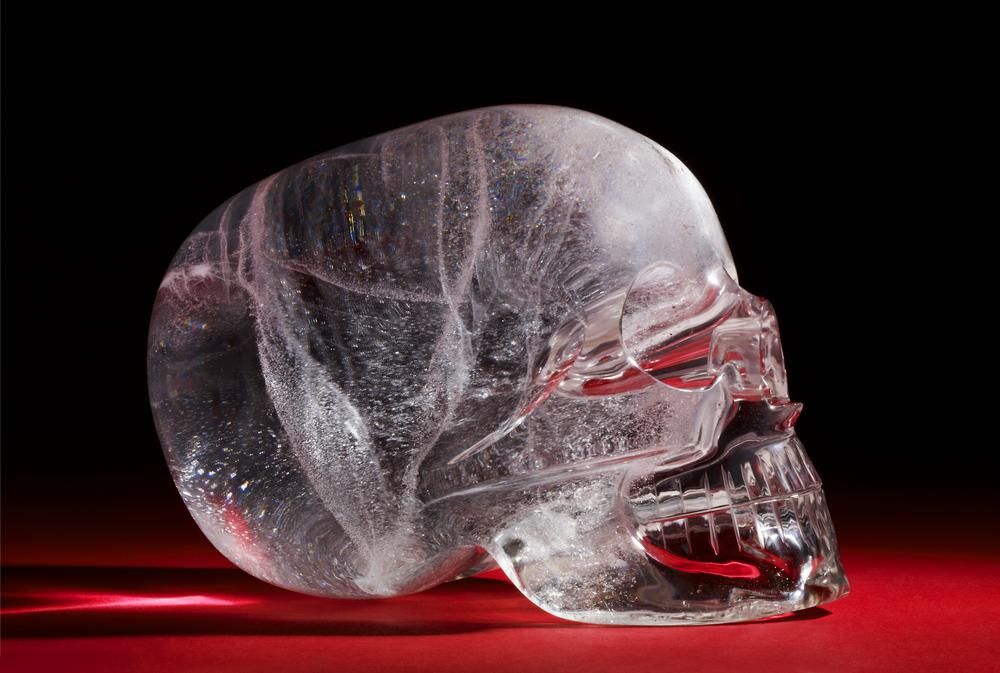
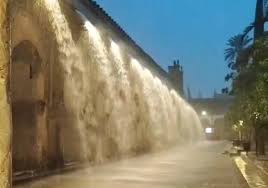
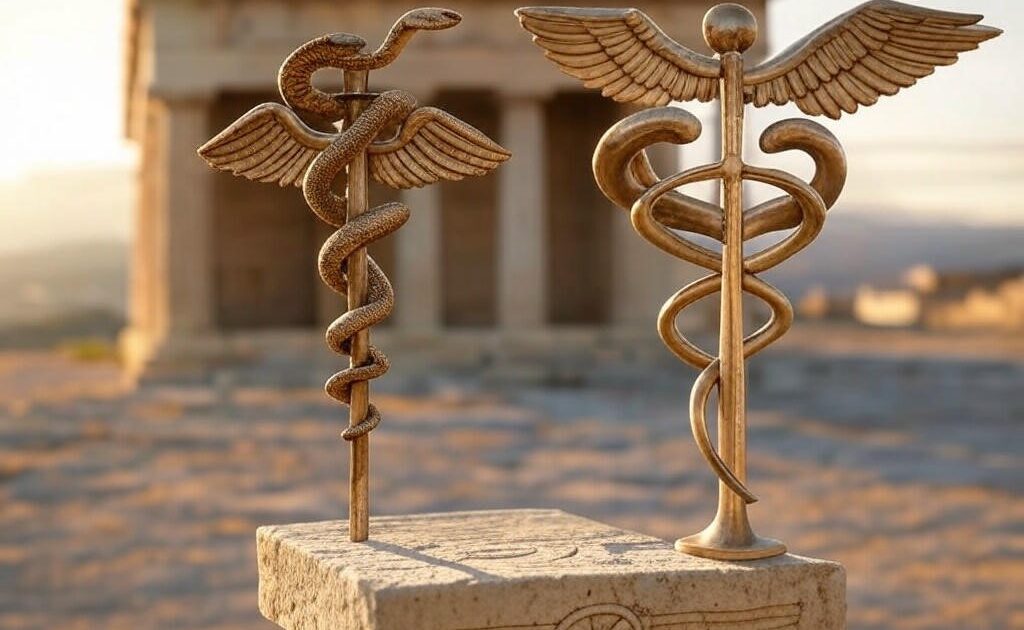
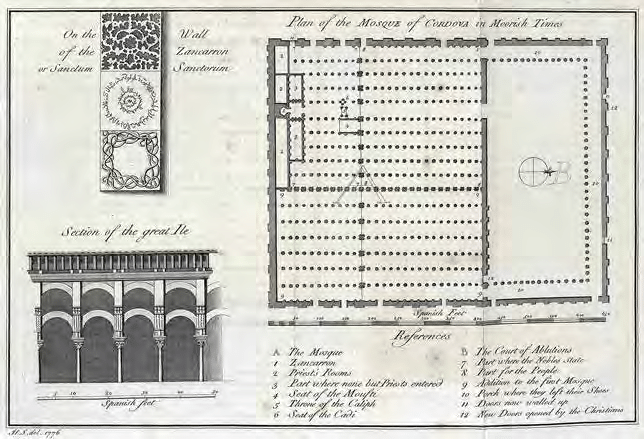

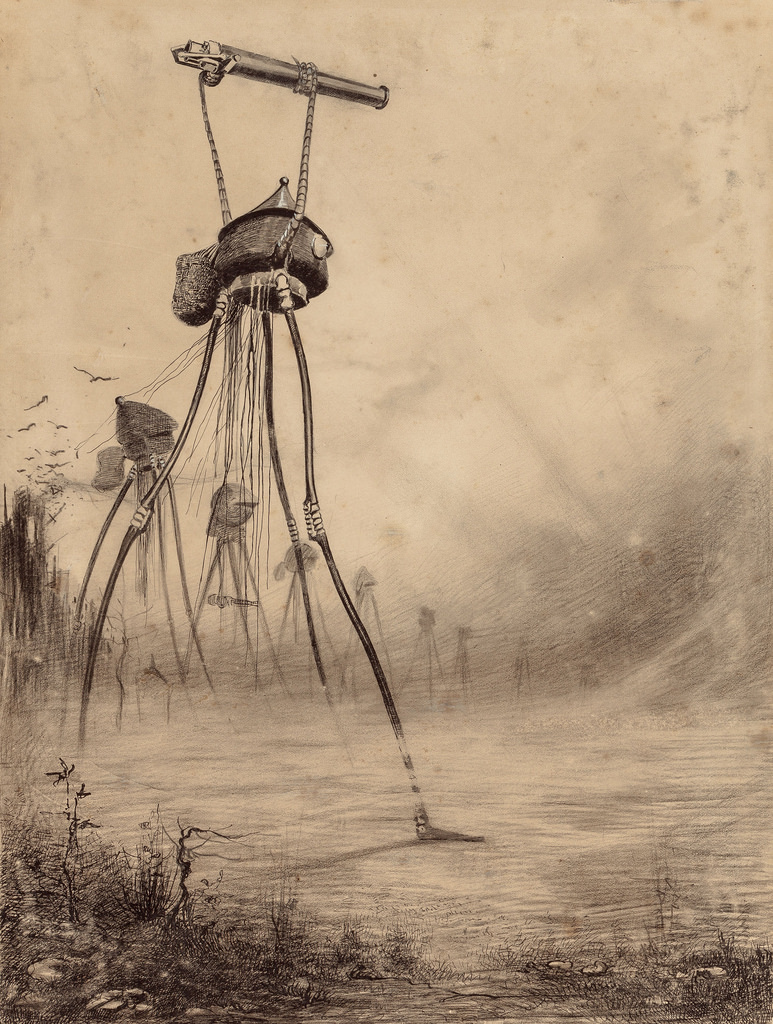
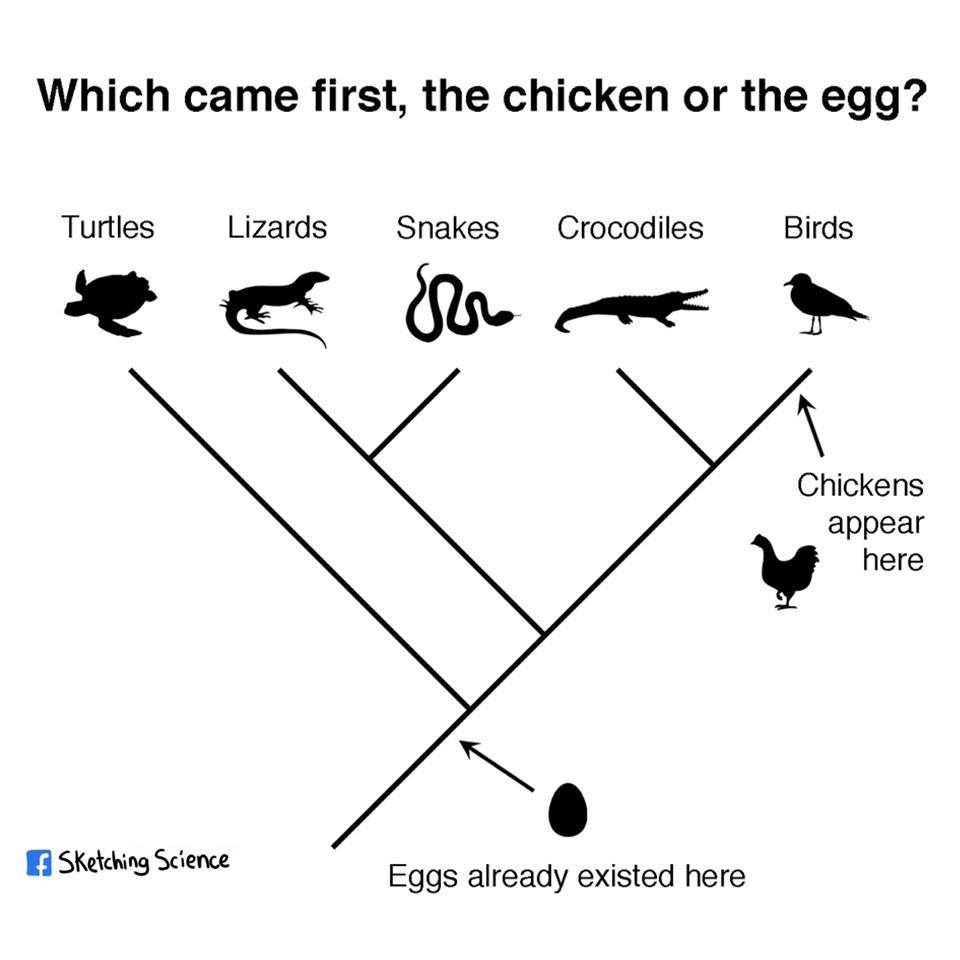


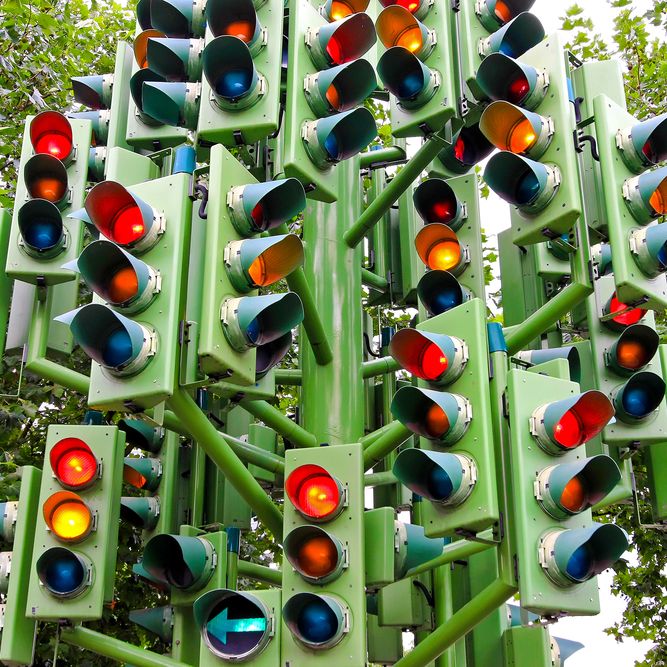


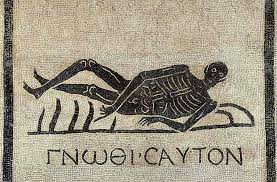

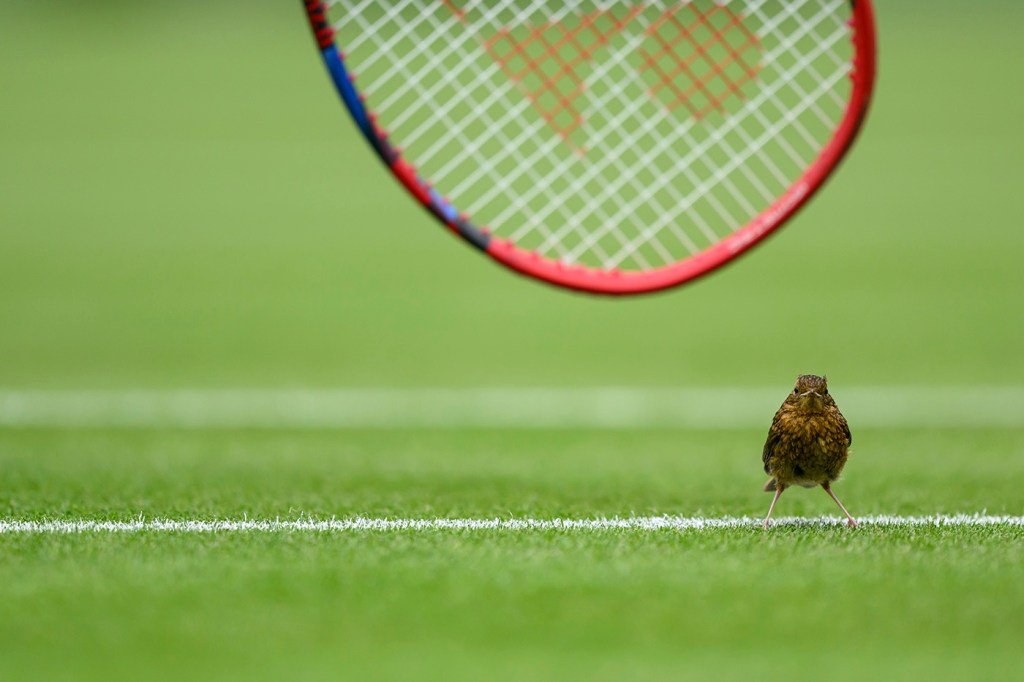
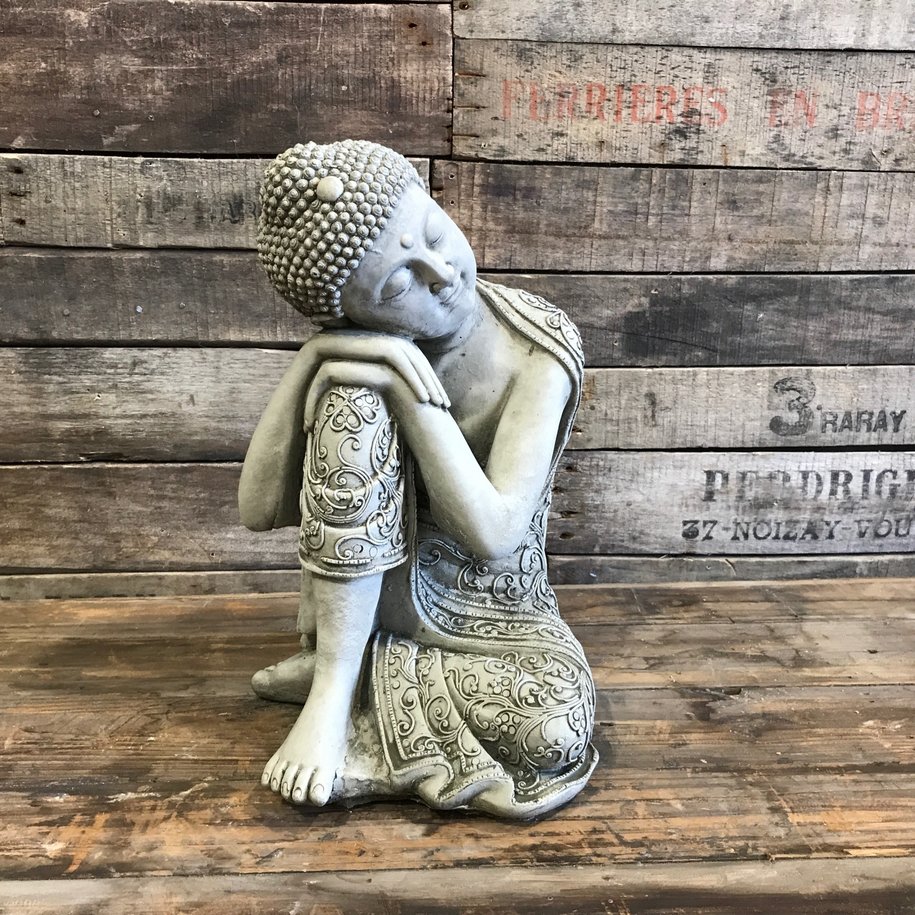



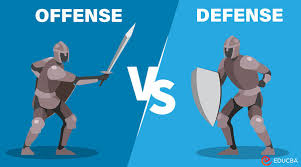


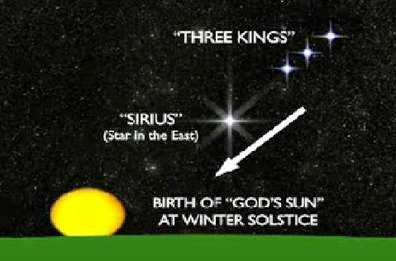
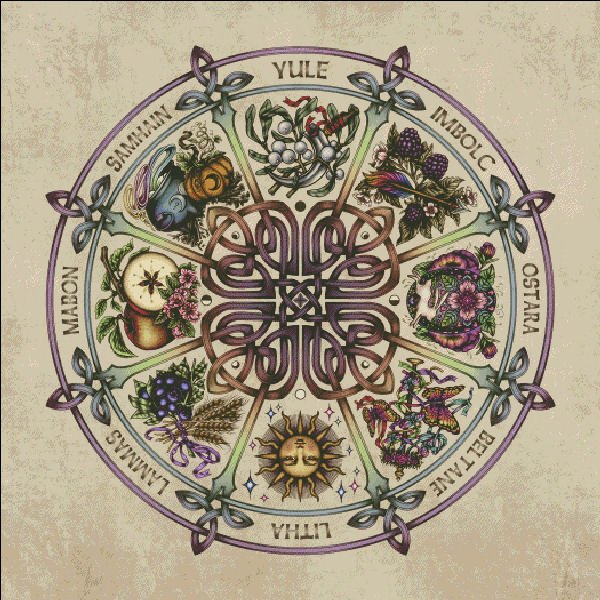


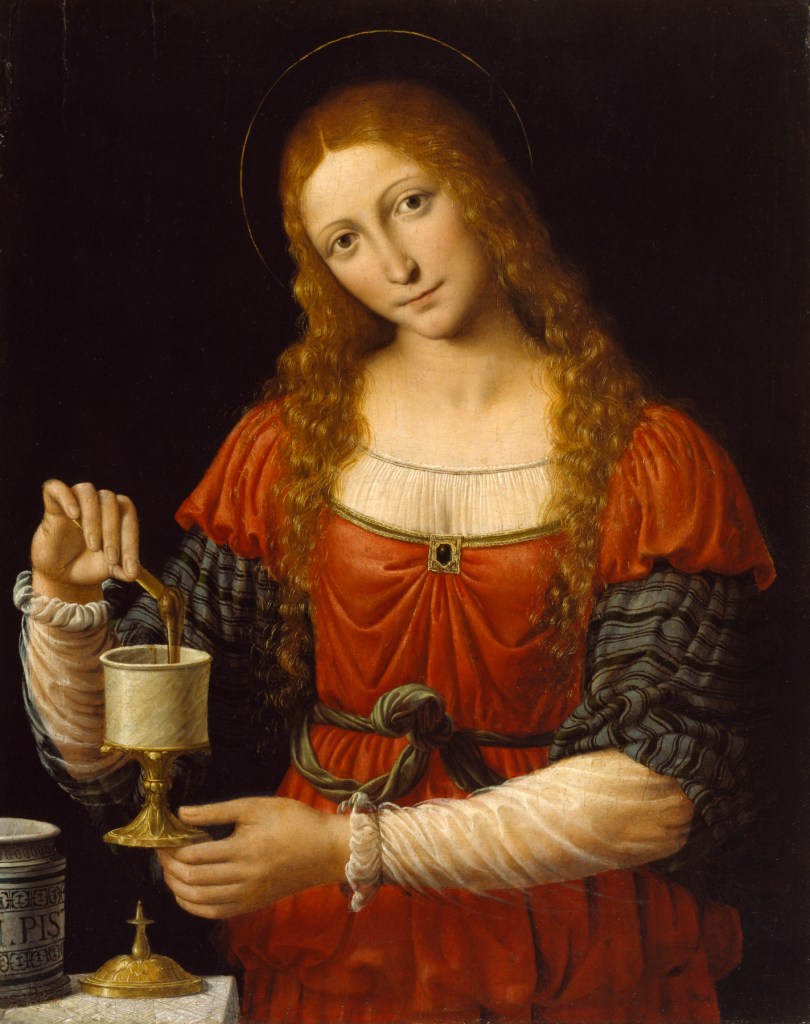




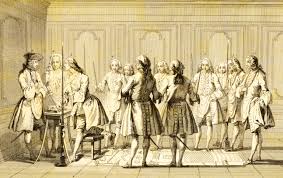
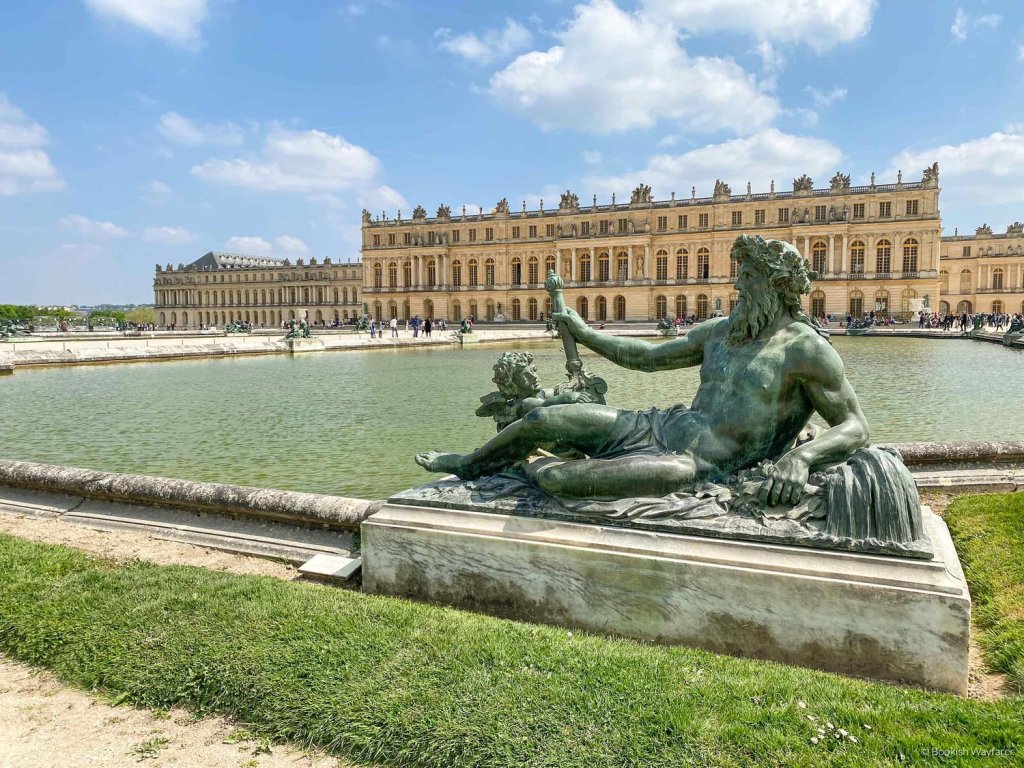
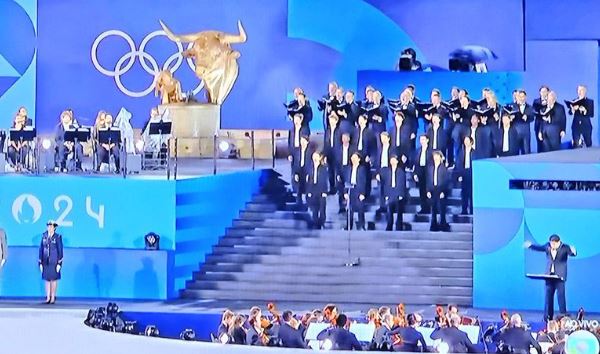

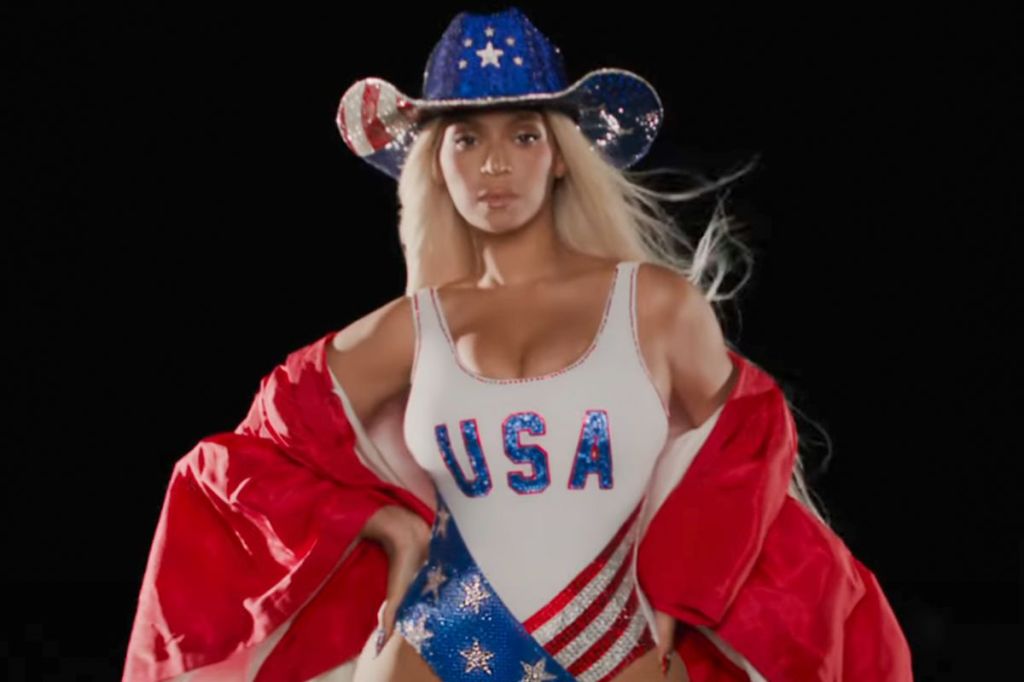





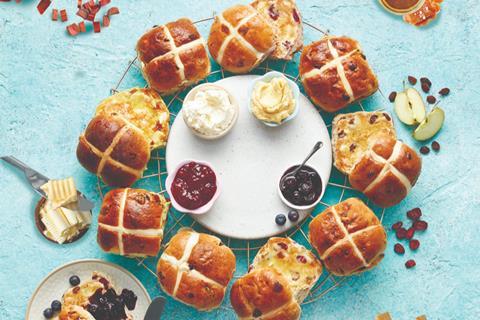



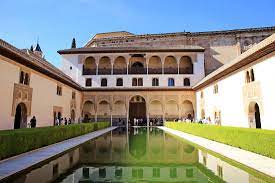

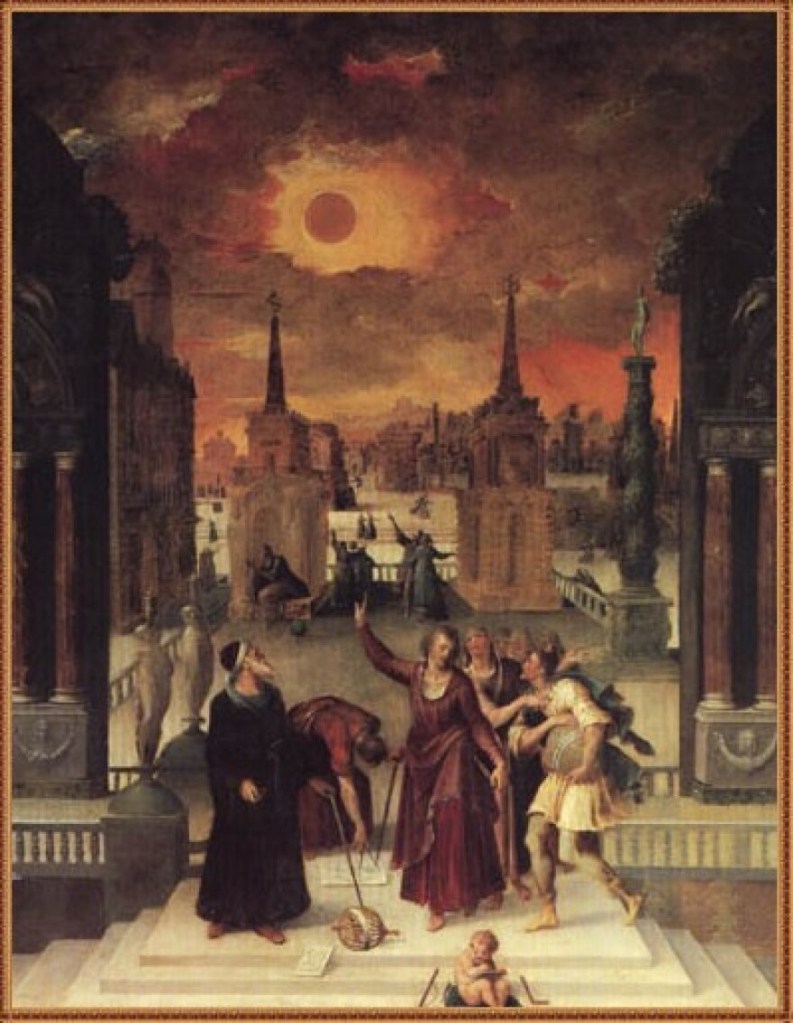
 Matters Blog