A Light to Lighten the Gentiles

I personally think Christianity would be a better religion if it recognised itself as a clever patchwork of beautiful stories arranged in a questionable order.

When Jesus was alive, there were many self proclaimed prophets, any of whom might have been chosen to be the ‘true’ prophet; not least of whom was the also immaculately conceived, John the Baptist. He has a following even today who are known as the Johannites. It is said he was the secret prophet of the Knights Templar and such Renaissance notables as Leonardo de Vinci. So who made Jesus – the Christ?

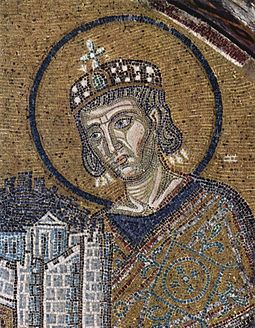
The Roman Emperor Constantine became a follower of Christianity and through the Roman Empires in the East and West at that time, Christianity became the State religion.

Constantine the Great: picture credit Wikipedia

Constantine the Great

In the process of change and at the Council of Nicaea in 325 AD, various books, were not included in the New Testament. In modern journalistic parlance, a ‘hatchet job’ – but a clever one. Clever because it contained the best of the old and the best of the new. It had to be good to have survived to the present day.

This Council meeting also sought to agree on the principle of a universal date for Easter, although it stopped short of setting down a method for this date to be calculated. After much disagreement this date became established according to the lunisolar calendar. No need to go into detail on this complicated subject here, but bear in mind that it is related to the 21st March in the Julian calendar; that is the vernal equinox.

Most religions are based on ancient ideas, but sometimes opportunities for improvements from new knowledge and reflection are missed.

If you asked a young child about the seasons, you would get a reply that spring is about birth and winter death. Despite this simple truth of natural cycles, Christians are given the story that Jesus died in the spring and was born in the winter. The Bible does not tell us this. Only copying other ancient religions have determined these dates. At the time, when Christianity was seeking dominance as a religion, resemblance to old ways was important in convincing people to adopt the new ways.

So, let us reflect on the story of the birth of Christ and see if it fits best into spring or winter.

picture credit: Pinterest

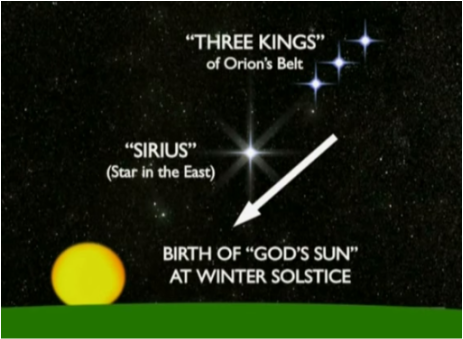
Three Kings and God's Sun

The Magi followed a star in the East. These astrologers would have known the difference between a star and a planet, but there are theories that in 7 BC in 4th April the planet Venus appears to stop in one place at it’s brightest, due east. Alternatively, Venus is the brightest object in the sky and the three Kings may be an astronomical metaphor.  What we do know is that the new prophet was the ‘sun of god’, a bringer of light and love, a new era, who later told us, ‘I am the light of the world.’

In Ancient Egypt the months were determined by the arrival of known stars on the horizon. There were twelve of them, from which our modern months are derived. We have kept the solar calendar of the ancients. When Herod interrogated the Magi, he ‘enquired of them diligently what time the star appeared.’ He wanted to know when the prophet was to be born and the answer they gave was only accurate to within two years (as Herod later ordered the killing of children under that age). Even these astrologers were unclear on when Jesus was to be born.

Joseph and Mary were responding to an edict to go to Bethlehem for a census and pay taxes. This was unlikely to have been arranged in the middle of winter when nights are cold and days shortest.

Mankind’s new spiritual era is symbolised by the birth of Jesus in a cave (not a stable as in some versions of the story). This cave was a well known symbol to the Ancient Greeks, such as Plato, of the human skull and therefore mind. The birth of a child of light in the brain represents a new level of consciousness and the opportunity for mankind to raise their understanding and experience of life. Historically, this is exactly what Christianity achieved, although it could be argued many other religions might have done the same equally well such as Buddhism in the Far East. 

Should we ask, why were shepherds were in their fields at night? Any country person will tell you that the time of year when shepherds are working around the clock is in the lambing season – the spring.

Common to many solar and Pagan religions, there are four important landmarks in the calendar. These are the summer and winter solstices and the spring and autumn equinoxes. Most churches face the spring equinox, for the sun rises due east on 21st/22nd March. The Sphinx which turns it back to the pyramid of Cheops in Egypt (and faces all four of these points exactly) faces due east.

So fundamental are these seasons and the new consciousness of light and love to the message of Jesus, that he is even crucified on a form of compass; the cross. That remains his symbol, although many other symbols could have been chosen.

Ishtar

The goddess Ashtaroth or Ishtar of the Babylonians was a fertility goddess. The word ‘Easter’ is probably derived from her name. The conflation of the word ‘east’ into ‘Easter’ should not be overlooked. Her symbol was also a rabbit, on account of their love of procreation, – but Jesus had no connection with rabbits!

Easter is all about looking to the east, for it’s wisdom, it’s new light, new hope and it’s rising sun. It is clear to me that the birth of Christ in the spring of each year represents a message of the dawn of love.

Ressurection with Rising Sun: picture credit Raphael

Resurrection-oil-Christ-wood-panel-Raphael-Sao-1502

If any of the above is likely to be true, then it would be more convincing if the death and rebirth of Christ fitted the narrative of the winter solstice. I have taken up enough of the reader’s time, so let me suggest that you explore this possibility with an open mind and form your own opinion. To compare the dying and re-birthing winter sun with the dying and re-birthing son of the Father, I found to be a light to enlighten the Gentiles.

Don’t Fence Me In

This the title of a wonderful old song sung, I think by Bing Crosby. It’s all about the exploration of the west in nineteenth century North America. After millennia of humans and animals roaming free, cattle ranching introduced ‘ownership’. The Native American Indians didn’t understand it and gave away their lands before they realised they would have to fight and ultimately die for the ‘reservations’ that were left for them.

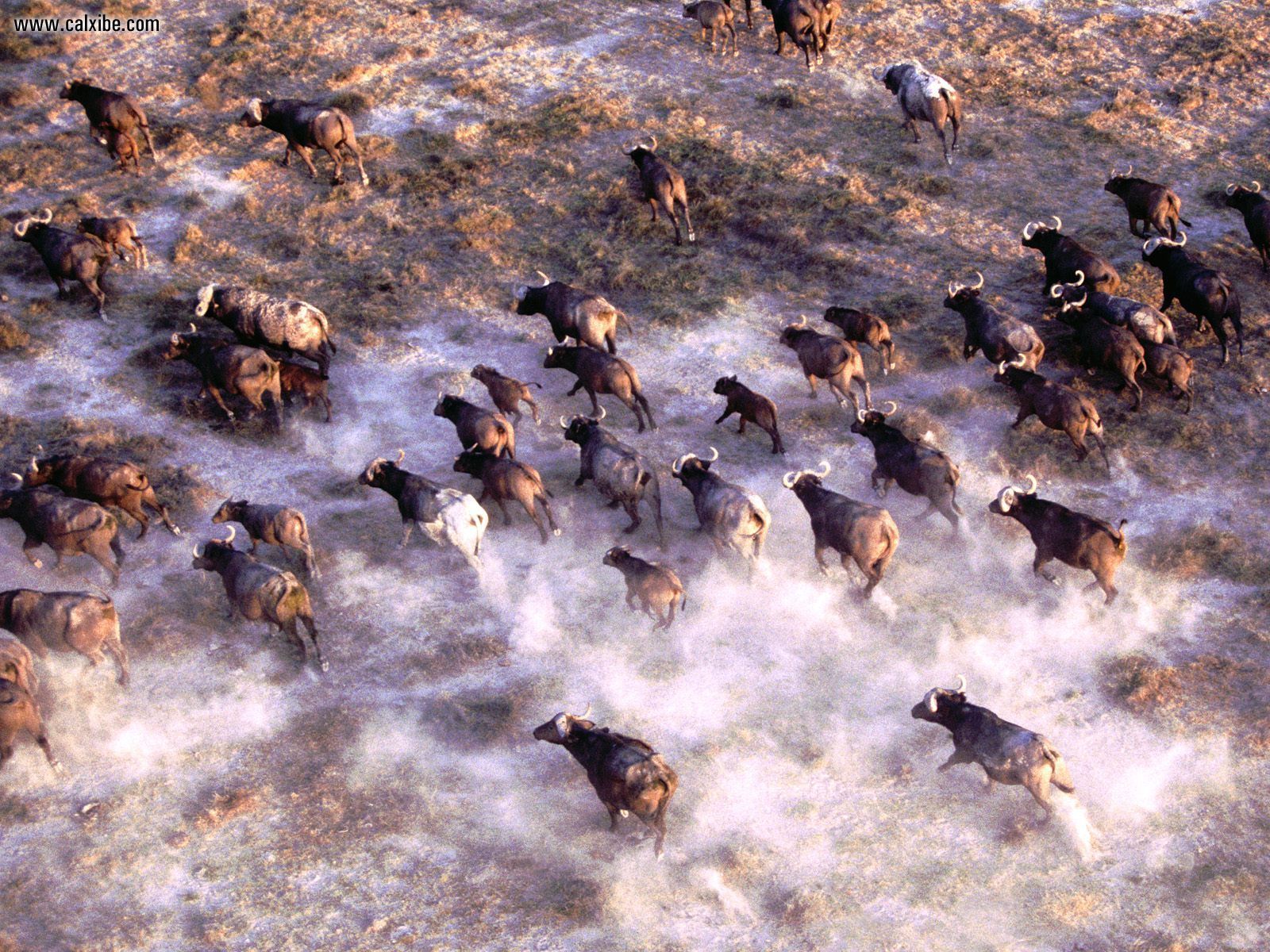
picture credit; WallpaperWeb.com

Stampede_African_Cape_Buffalo_Herd

It is an paradox that man craves freedom but loves boundaries. Astronauts report on viewing earth from space, that it appears as one planet. There are no political boundaries that we are so used to see on global maps. Boundaries are ultimately arbitrary. They serve only the tribal mentality of ‘them and us’ present in early man and persisting, almost unconsciously, to the present day.

The poet Robert Frost wrote a poem which included the line, good fences make good neighbours. This concept, at one end of the spectrum of possible combinations of freedom and enclosure, works – but only temporarily. Eventually, because of tribalism and greed, a fight breaks out.

When the British realised the rule of India by a distant Queen of England was over, they were faced with the problem of handing over a sub-continent to self rule. A problem because the Muslims and Hindus were at each others’ throats. If the British left there would be a blood bath. So they drew an arbitrary border on a map and created a new country, Pakistan. Like the creation of the Berlin walls, it divided families, created mass migration, a loss of homes and livelihoods and riots and slaughter. Tribalism, whether under religious or any other banner, is never good for all. Today India and Pakistan face each other with tolerant hostility, with a hundred nuclear missiles each, ready to wipe out each other and the rest of us. As an afterthought little Kashmir remains a flashpoint where this could happen. When you draw political maps, you had better know what you are doing for now and the next thousand years.

When the UK made the minority vote decision (only a quarter of the population voted in favour of Brexit ) to leave it’s partners in Europe, it had not considered the effects this would have on Northern Ireland and Scotland. The border in Eire was created centuries before to create a ‘non catholic’ portion of Ireland that could be controlled from England. The political reasons for it’s connection with United Kingdom are changing, and a likely consequence of the UK seeking ‘independence’ is losing Northern Ireland to the Irish and Scotland to the Scots.

Virus’s, and all the malign forces that nature unleashes on humanity; virus’s do not respect political boundaries. It takes two weeks for a virus to travel around the globe. The only way to extinguish a virus is for each person to crawl into their own cave and stay there. They may die or they may survive. In this situation one is not even aware that one’s neighbours, also potentially dying, are on the other side of the wall.

When this current Covid-19 pandemic is over, as it will be, the nations of the world should take stock. They need to seek to understand the lessons that come from such a pandemic, for virus’s are a greater problem than terrorism and extremism and wars and all our man made horrors. In 1919 the second wave of Spanish Flu killed everyone who caught it.

Surely, world leaders must learn that humanity has more to gain from co-operation and tolerance towards all living beings, whether animal or human. There are no boundaries in nature except those created by habitat and when there is enough habitat to go around, everyone is happy. When large populations move to escape political or natural upheavals, these people are ourselves coming in the other direction.

In Europe, the European Parliament and non-governmental organisations like the WHO, have failed to create a strategy to cope with immigration. Countries on the edges of Europe such as Greece and outside such as Lebanon are full to bursting point. Now Greece is shooting warning shots into the sea at immigrant boats.

In the United States, the solution to immigration from Southern American failing states, is of course ‘a wall’. As if we had not learnt from history how the Berlin wall was pulled down and how Palestine was shrunk into walls – good walls rarely make good neighbours.

Mankind craves to be free and this moment in history is a time for humans to come out of their caves and obeyance to tribal rules. Instead of hating and fighting each other, we are in a position to see the greater picture from above, where barriers do not exist. There is only humanity, and the sooner we treat the planet and each other with humanity, the sooner we will lose the feeling of being ‘fenced in’.

Jesus Loves Computers

The following events are entirely fictional and set in modern Palestine where an enlightned Spanish chap called Jesus, is giving a group of his friends and followers a piece of his wisdom.

An early computer

J an Early Computer

And it came to pass that some of the disciples were mystified by the whole thing around ‘computers’, for much of Palestine was then buzzing about them and their unique qualities.

So they said unto Jesus, one Sunday afternoon when it had begun to rain and all around had gathered together in someone’s house,

‘What about computers?’

And Jesus replied, ‘Oh, ye of little understanding. Don’t you know nothing?’

And those who heard this looked at each other in a quizzical fashion and were confused by the double negative in the question which believe me makes no sense in Spanish any more than in English.

John, who considered himself a bit of a computer expert, stood up amongst them and cried, ‘please tell these ignoramuses Lord, so that I no longer have to ‘fix things up’ for them for I am weary of their attention seeking and quizzing.

And Jesus was compassionate towards John for he was also ‘up to here’ with quizzingness but knew it was just his Father having a bit of a joke so he asked those who were then gathered together and enjoying a round of hot drinks,

‘What is it you want to know?’

And one man who was a shepherd from the hills all his life asked, ‘tell us how a computer has a RAM, for I have a Ram and am confused.’

Jesus thought for a minute or so, making a pattern of little dots in the sand with his finger and then looked up. ‘The RAM is like unto a Juggler who stands in the market place. He has in his pockets sixteen sponge balls whose colour is red.’

Jesus eyed his audience and saw that so far they understood.

‘And he starteth juggling with three balls and the crowd is amazed that he can keep them all in the air at once, until he picketh another from his pocket and continues with four balls.’

‘And so the juggler keeps his concentration sufficient that soon he has extracted all sixteen balls from his pocket and is keeping them in the air by throwing them higher and moving as fast as he possibly can.’

The disciples and a few other goat herders who had heard about the hot drinks and had slipped in to get dry and warmed up, looked at each other and saw that no one knew what Jesus was on about. So one of them stood up and said,

‘Eh?’

Then John, seeing the vexation on the face of his Lord, and the gnashing of his teeth and clenched fists and all the signs of high blood pressure, did turn to this ignoramus and said, ‘Look, it’s simple, the computer has to make many tasks work at the same time and that is the Random Access Memory which is limited but can be expanded simply with a larger RAM card in the  RAM card slot or an additional card if there is space, making the users computing experience faster and smoother.’

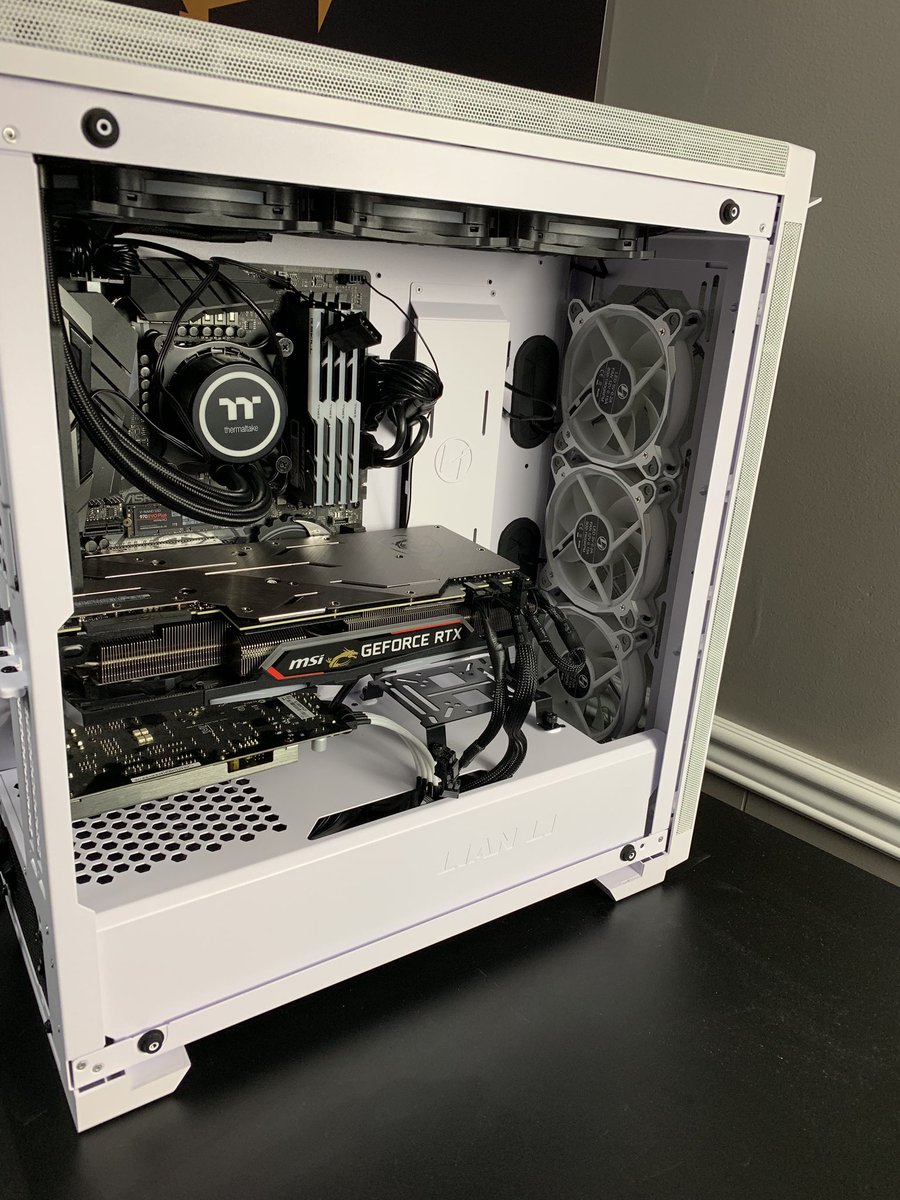
Looking into the heart of a computer does not need to be confusing;

J Inside a computer

Jesus looked around at the glazed-over eyes in the room and implored John to not confuse the situation further, and John sat down mumbling to himself and grabbing his hot chocolate that someone else had been holding for him.

The Lord continued, ‘And if you are in pain to understand about other parts of a computer fear not, for all shall be explained unto you.’

‘What about CPU’s then?’ came a voice from the back of the room and prompting a sustained mumbling of approval at the question and some nodding of heads.

‘Mine’s 1.6 Ghz dual core. What does that mean?’

Jesus looked like he knew the answer to this question and rubbed his hands together.

‘The CPU is like unto the heart and lungs of a camel.’

‘Mine isn’t!’ came a shout of surprise from amongst them. ‘A camel? Bloody ridiculous. Why’s he on about juggling and cam…’

‘Look, it’s a parable you numbskull. Jesus is explaining using an extended metaphor to help dispel the mystery of something which defies understanding in ordinary language.’ John was always quick to defend Jesus’s teaching technique.

‘Creep!’ came a muffled response but it was not heard by all, for they were anxious to learn more. Jesus continued, ‘And if a camel has a small heart and lungs, when it is asked to carry a heavy load at a high speed, it creates much heat. This heat might be dispelled by a camel rider holding a large palm leaf acting as a fan or perhaps throwing a bucket of water over the camel…’

‘Where do you get a bucket of water in a desert!’ heckled a disbeliever.

Quoth John instantly ‘It’s a parable donkey brain!’

Jesus lifted his arms up and continued, ‘and if that camel had a larger heart and lungs, like if it had a better central processing unit, it would be able to run up sand dunes at great speed with heavy loads and be only slightly overheated and out of breath at the top of the dune.’

Jesus saves

The next course of sweet things made of pastries and dates was passed around and Jesus sat down for a while, for he was in need of a sugar boost.

At length, when the final course of wine and cheese had been enjoyed and all assembled were nicely relaxed and leaning against, on, or in improvised pieces of furniture and things scattered in the room like storage urns and camel saddles…someone asked, ‘What about Operating Systems?’

Jesus stood up and looked down amongst them as if the room was circling around his head, although it was not.

‘I’ll tell you about Operating Systems, for they are like unto a system of rules and beliefs that form a religion. These rules are given by Divine command, from someone like William Pearly Gates who started in a mates garage and now owns most of Palestine. He looked out of the window and saw a Window and called his inspiration, Windows 4AD. And he formed a series of commands and programmes that were readily understood by the computer and made an interface between the Father, William and ordinary people like yourselves gathered in this room.’

‘What, all of us?’ came a gasp.

‘Yes, even the most humble amongst you, who has had little education past nursery level, and perhaps is unable to even read or write due to some incurable incapacity like dyslexia or ADHD leading to anxiety and behavioural problems…Ye are those who will be first to understand exactly how to open documents and save them properly.’

And all in the room were moved because they thought computing was for the educated and rich who sat around in Palaces and hobnobbed with the senior military ranks in their secluded villas with pools and fine Sea of Galilee views that turned out to be rather too distant to truly impressed but looked good in the sales literature and sold houses quickly…they realised that such people would be the last to understand how to use computers because their heads were all in a muddle…whereas, the most stupid members of society like themselves were in line to be first to enter the Pearly Bill Gates because of their humility and frankly, lack of fear, and understanding of how computers could change their lives from simple peasants to men and women of wisdom and high ethical standing.

And the angels stood around in the room and applauded those now gathered there asleep, for their fear and anxieties about computers had been destroyed once and for all eternity.

J Gates-of-Heaven

Is God King?

Alan Watts recounts the following anecdote in one of his erudite lectures entitled ‘The Nature of God and Death’;

An astronaut was asked on returning to earth, ‘did you see God?

‘Oh, yes,’ was the reply.

‘Tell us more about what you saw.’

‘She was black.’

When the Pilgrim Fathers sailed over the horizon, their great mission was to escape the rule of monarchy. Things from which we try to escape however, have an unnerving habit of following us around. So it was for the first settlers in the green and pleasant shores of eastern North America. Without a ‘lord and master’ or ‘father’ figure, everything would be much better, right?Pilgrim-Fathers-painting-Mayflower-Bernard-Gribble

The irony, in their religious beliefs, was that their metaphor for the Divine was a King. If it is odd that the Divine is restricted to being conceived as the masculine principle, we can forgive Biblical writers for being restricted by their own language. There are few words ascribed to neutral or ‘combined’ genders in most languages and unfortunately this has narrowed the way we think. ‘God the Queen’ would have been a very strange concept to Christians of most ages although they only had to refer back to ancient Egypt to broaden their views. The King Osiris was married to Queen Isis, who is often depicted with their infant son, Horus on his mother’s knee. The ‘Holy Family’ represent an all inclusive metaphorical Deity who is active and present throughout the entire biological process of pro-generation, as well as present throughout the entire cosmic process of creating the Universe. The origins of Judeo -Christian beliefs in the religion of Ancient Egypt, are preferred to be ignored despite clear paths of provenance.

It is a fact that religions per se, do not thrive on original thought. The Pilgrim Fathers were accepting of the fact that no one had thought to include the Pilgrim Mothers in the title of their congregation. They were also content to worship a ‘God the King’ even though the autocratic system of government was so abhorrent to them. Monarchs have a power over their subjects which ranges between the benign and malign, depending on the character, mood and carbuncles of the monarch. In a way, the freedom sought by the Pilgrim Mothers and Fathers, was a philosophical freedom as well as a temporal one. They felt justified in asserting their own free will over any other will.

Face-of-God-

But since the Christian God is one that has given ‘free will’ to his and her subjects, it is open to debate as to whether they were escaping God or a religious restriction of the concept of the Divine pedalled by an all powerful Church, usually in temporal cahoots with a monarch.

For political rather than religious reasons, the Constitution of the United States of America was written with precisely this abhorrence of the ‘all powerful King’ in mind. Judges and Representatives of the people were given tripatied power. No one person should wield political power over the people. For this reason the people were given the free to bear arms and form militias should the politically powerful become malign – in their view.

If government on earth is a mirror of celestial politics you have to wonder whether Angels are similarly empowered to zap their superiors with cosmic ray guns?

This did, of course, happen in the leaves of the Old Testament and the dualistic nature of even Angelic creatures is contained in the story of Beelzebub and his rebellious angelic army challenging the Divine ruler. The rest, as they say, is history.

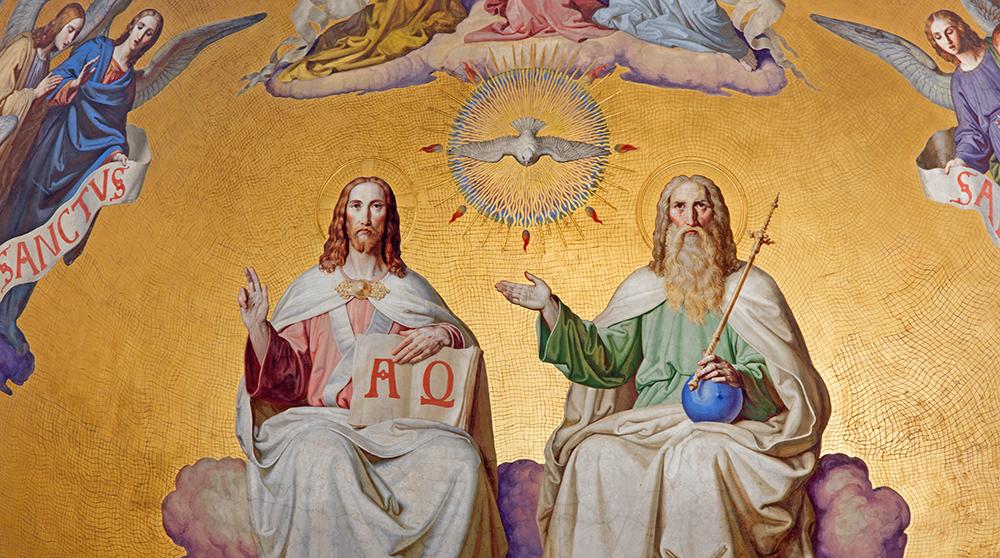
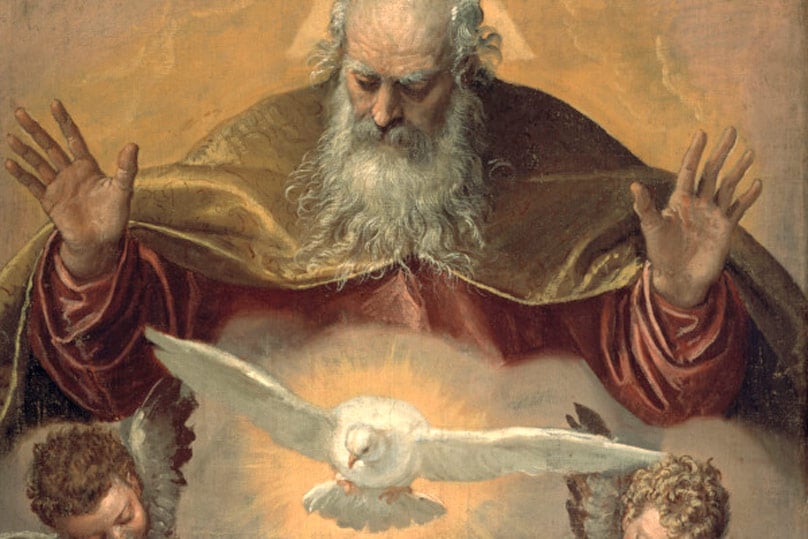
God with grey beard and dove

So to return to the question of whether the Divine Being is a white Anglo Saxon male, the answer is, clearly – doubtful. Long white beards aside, human kind has created the monotheistic God in his own image, and since King James and the other chroniclers of the good book were egotists, God has always been what psychologists call a ‘projection’.

This is fitting since much of the Universe is no more than an projection of the Universal consciousness. In this the Divine Feminine and Masculine principles interplay as a sort of fantasy dance – the gyrations of Kali and Shiva – who create and destroy in equal measure.

Eve and Godess

We depict any Godhead as male at our peril. If Jesus used the metaphor ‘Father’ it was not an implication of gender that was intended but the figure of the pro-generator. Jesus was fond of metaphors since mystics find the language of the market place appropriate to use to describe higher concepts. The parables he told contain metaphors which strongly describe unspeakable ideas in the sense that words are not enough. The return of the Prodigal Son to his father is describing the process of individuation within a maturing human being – the path which if followed leads to a union with the Divine. The ‘fat calf’ which we are all in danger of becoming during our easy lifestyles on earth, has to be slain and consumed.

When you eat remember this of me.

The errant son evolves to become a father. An errant daughter evolves to become a mother. An errant non-gender specific person becomes a vother*.

(*Using the principle of ‘ the infinite abundance of thought’ to make up words where missing – Vother is a neutral person.)

Light through clouds

So, no, God is not King, nor even a humble father. These were always crude metaphors, crudely carved by restrictive words and dualistic thought. The ancients and the religions of the Far East such as Buddhism and Hinduism, have no difficulty conjuring up ambiguous and contradictory Godheads who break and write as many rules as they can. Reality is not polarised, with one half favoured over the other. Neither does an authority figure ‘reign in heaven’ or anywhere else. Such prosaic concerns are respected by mystics but dismissed as irrelevant to higher task of the search for Divine Union.

Render unto Caesar the things that are Caesar’s;

The ( perhaps ) unpalatable truth to many, is that we the people are king, if only for a day or our humble fifteen minutes of fame. Even if only glimsped once in this lifetime it is my belief that;

Ours is the Kingdom, for ever and ever, Amen.

Whilst it is unfair to criticise the Pilgrim Fathers with the benefit of a good deal of hind sight, one has to wonder what would have happened if they had re-assessed their religion as well as their politics. If their aim in leaving Europe was to seperate from the percieved corruption of the Church of England they had an oppurtunity to wipe the slate of indoctrination clean completely. As unlikely as it was in 1620 for such a shift in belief, if the early church leaders had met and discussed universal outlooks with the native people and their holy men, they might have made some radical philosophical discoveries. At least it is possible for a present day comparison to be made.

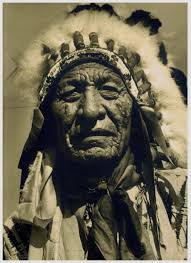
black elk

The Holy Man of the Oglala Sioux, Black Elk, is described as understand God in the following way;

‘Black Elk learned that whoever found a centre also became the centre of the universe and that is where God dwells…By placing himself at this centre which is simultaneously physical, spiritual and metaphorical, he encountered the Great Mysterious One…the centre of oneself becomes the centre of the universe. The centre of the earth and the centre of the person are one and the same.’

‘Finding All Things in God’ by Hans Gustafson published by Lutterworth Press

Love Your Brother and Sister Humans

Once again the lawyers and politicians are going around in circles.

For in the United Kingdom a cross party group of MPs have had a go at defining Islamaphobia ( a word not contained in my Word spell check!)

Before looking at this definition it is worth thinking back a year or so when we were treated to the spectacle of Teresa May and advisers thinking up a definition of Anti-Semitism. This at a time when hatred of Muslims was a far more important problem.

Perhaps the group of MP’s missed a trick. A school child might think that to define Islamaphobia you substitute the word ‘Islam’ for ‘Hebrew’ in the Anti-Semitism definition.

Not a moment too late has the spot light now moved onto our Muslim brothers and sisters who are suffering hatred in the UK and other countries, in a way that the Jews were targeted in Nazi Germany.

It is good someone has the intelligence to write a definition of what is the problem. This is the first step to the review of existing laws and any supplementary or new UK legislation.

Here is what the cross-party group came up with;

‘Islamaphobia is rooted in racism and is a type of racism that targets expressions of Muslimness or perceived Muslimness.’

Here is the first test of the statement. Let’s change the religion in question.

‘Christianaphobia is rooted in racism and is the type of racism that targets expressions of Christianness or perceived Christianness.’

So the attack on the congregation in Christ Church New Zealand was racist? I think not.

Consider for a moment what racism is, since it is being included in the definition in question.

It appears that there are numerous definitions; made more confusing the ‘ethnicity’ being considered the same as ‘race’.

My contribution to this word play would be to suggest that there is only one race, the human race. This is split by ethnic difference based on environmental, genetic, cultural, linguistic and other fundamental factors.

So here is what the UN Convention on the Elimination of All Forms of Racial Discrimination said;

The term “racial discrimination” shall mean any distinction, exclusion, restriction, or preference based on race, colour, descent, or national or ethnic origin that has the purpose or effect of nullifying or impairing the recognition, enjoyment or exercise, on an equal footing, of human rights and fundamental freedoms in the political, economic, social, cultural or any other field of public life.

If this definition were adopted into UK law then the signs at airports instructing EU Members to queue here and all the rest to queue there – would be illegal.

Fortunately gender and race are universal constants and in my view, nothing to do with prejudice based on ethnicity or religion.

Taking a step back from what we are discussing here is the unpleasant aspect of being ‘human’ – hatred of ‘the other’.

As members of the human race to our shame we have a long history of dividing ourselves up into tribes or villages or clans or nationalities or supporters of a football team and seen this as reason enough to wage war on ‘the others’.

All the prejudice in the world is an expression of intolerance towards other humans.

It’s expression ranges on a scale from minor to major. Football hooligans are at the pathetic end of the scale and fascist government leaders at the other. In between is all the prejudice – hidden and open – that we carry within ourselves.

Hatred based on religion is therefore simply another expression of intolerance ranging between sour looks to beheading.

My definition of Islamaphobia would be;

Hatred of Muslims

Now can we get down to the real problem? Because until a child steps forward to take over the role of Prime Minister, no single person appears to see the problem with any clarity.

The head of the National Police Chiefs Council, Martin Hewitt, is dismayed at the vagueness of the definition. He believes it will cause confusion and hamper the effectiveness of the police against minor and serious crimes motivated by religious hatred.

In law, precise definitions produce laws which are executable.

If I had any advice for the devout of any religion, it would be to remove all cultural affectations in dress and any other public signification of your personal beliefs. Put these items on in the place of worship if it makes you feel more comfortable.

Hitler had to identify Jews by ordering the placing of a yellow star of David on their dress. To preserve your dignity and safety – I would advise not to make it easy for the biggots.

When the time and place is right – in a tolerant society – freedom of religious expression will be protected.

To base new laws on eliminating hatred is in my view to start at the wrong end of the stick. I believe the best way to introduce tolerance is to introduce love, as well as eliminate hatred. One cannot exist without the other but we can at least set the balance straight. So this debate is not just for the law makers, it is for all the humans.

Raise a hand if you are a human!