Let Me In – part two

Most European countries have at least one land border with another country. But the UK is an island and this proved a great strategic advantage for the British, stopping intending visitors like Napoleon and Hitler. The English Channel is now one of the busiest shipping lanes in the world so you might think that crossing it without being noticed and at least avoided, would be difficult.

This makes you wonder how seriously the borders of the UK are watched when rubber boats arrive who could be invaders from a hostile country. Dorset Police went out and bought three boats, which doubled the patrol capacity for the whole of the UK. Interestingly the Royal Navy have become involved…but only recently.

This essay is not principally about the UK. The plight of those wishing to enter it, is merely intended as an example of similar situations all over the world, such as Cubans wishing to enter the USA.

With climate change, scarcity of food, water and raw materials, wars, disease, corruption, rogue governments and other factors, the world needs to apply a united strategy to those affected. The mass movements of populations needs to be handled co-operatively and competently.

So let us re-focus the problem in the English Channel and consider how a strategy can be formulated and implemented rather than narrowed to a single issue.

Le Manche – as seen from France

Firstly there needs to be a ‘triage’ of emigrants who turn up at the in French sea ports and coastal towns. They will either be in the ‘criminal’ group (5) or one of the other groups listed in Let Me In – part one, and it is of primary importance to identify them in the interests of all countries.

They may well be pretending to be seeking asylum in the UK and will have worked carefully on a fictitious cover story. If and when known criminals are identified by security services, it is imperative that they are dealt with. Those who are known to be linked to crime, war crimes, terrorism, extremism etc. may already have international warrants for their detention enabling their immediate extradition to other countries. In doing harder, what governments should already be doing, there is no longer a temptation or excuse to treat the greater majority of genuine migrants, as criminals.

The ‘people trafficking gangs’ and their leaders clearly, also need to identified and put on trial. Good police work should be capable of locating and monitoring them by using surveillance and sting operations to infiltrate their organisations and make arrests. If this has ever happened it has not hit the headlines. Do more resources need to be aimed towards identification of the gang leaders? They may be linked to other organised crime such as drugs, sex trafficking, terrorism and the rest. This is just bread and butter policing and yet it does no appear, at least, to happen.

The sale of the boats and safety equipment which takes place in the Calais markets and Marine supply shops, could be licensed and stricly monitored by CCTV, forcing traffickers to transport this equipment from elsewhere. This will not stop them, but it will increase the risk of being caught in possession of it and having to spin improbable yarns to police.

Security services have teams scanning the dark web for extremists, terrorists and their associated criminal networks. Little is made public about this work; no doubt for good reason, but there needs to be some publicity if only to reassure the public on both sides of the channel that there is a raft of measures operating to close what is happening down. Why is it so difficult?

Post Brexit, the French north coast became a border of the European Union. As such it will have been given substantially greater security measures than the internal borders within the EU. If 440 people leave the coast in one day and there are 20 people on each boat, then that is 22 boats! The English Channel crossings are made in broad daylight from busy coasts. Do the general public, commercial and leisure users of ports and marine facilities report suspicious activity? Is there a Coastguard hotline to report such craft? If you ask Google this question the answer is yes; 1-888-373-7888, but it’s in the United States of America.

If we consider new technologies then it has become practical and effective to search for and monitor suspicious activity using drones. These will provide real time intelligence and enable land and sea based patrols to investigate in a timely manner. They can also be used to verify reports from the general public before allocating resources. Drones could be used on both sides of the English Channel. It is likely that members of the public with an interest in using drones, could work alongside coastguard officers; reducing costs and releasing officers for duties that require their legal powers and skills. (There will also be a spill over benefit help catch smugglers and other illegal activity.)
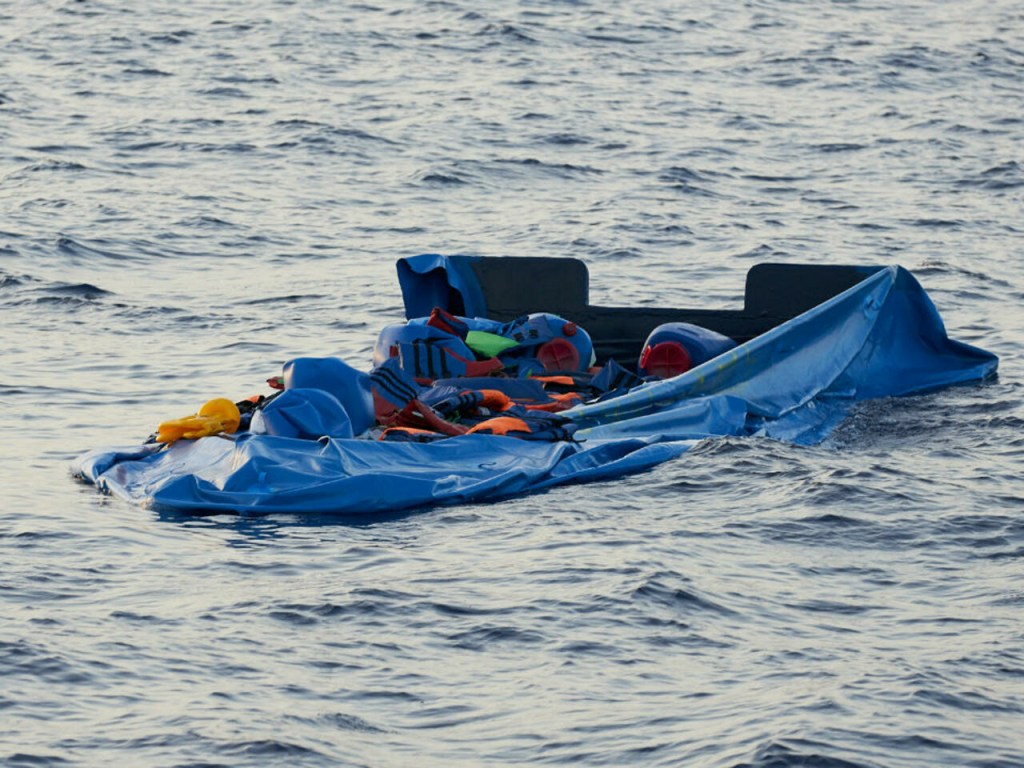
Migrant Boat – picture credit France 24

Crossing the Dover Strait from Calais depending on, wind and tides, speed of vessel etc. is going to take at least three to four hours. Crossing the shipping lanes is fraught with danger as all sailors know. This means that it is important to intercept emigrant boats before leaving the relative safety of the inshore waters. Maritime law requires interception of a such a vessel to be taken directly to the nearest safe place. If emigrant boats are allowed to stray too far towards the centre of the Channel this can become an issue between UK and French authorities. Should boats be turned around as they approach the other side of the channel (as the USA Coastguard does to Cuban refugees) or should a border be enforced in the centre of the Channel? Is this idea remotely practical in any case when emigrants dangle their children over the water as a threat to intercepting authorities or simply just jump into the water. At one point the Home Secretary Priti Patel wanted boats physically turned around, not appreciating or perhaps caring, how dangerous confrontations at sea are.

Newspaper articles and even presidents of countries will try to persuade the public that all or most emigrants are all criminals but statistically, the majority will fall into one of the other four groups already described.

Many will probably be without documentation often through no fault of their own. This issue could be solved by the often suggested policy of ‘creating safe routes’ and simply issuing temporary documentation. These can include biometric identification as is reasonably required by the UK government. (Scanning finger prints is part of process of identification of the known or wanted criminals and will already have been done. It takes a few minutes, not months, to do for each person.) The Prime Minister has lauded the idea of ‘safe routes’ in debate, but in reality the only safe routes the UK has set up are for Ukranian Nationals and a restricted number of Afghans.

My principle point, as I have almost certainly missed out many details and parts of a more general strategy simply because I am just writing this as a lay observer, is that controlling the mass movements of undocumented people is a complex issue. Enormous co-operation between nations is required, the sort of relationships that the European Union was partly set up to achieve.

There is an ‘elephant in the room’ however and they is why the UK is a honey pot to emigrants. Why do individuals and families wish to come to the UK so very badly they will risk their savings and their lives to get there? Perhaps the answer includes the facts that English is a lingua franca for many, it has given out UK passports following it’s Empire days (e.g. Hong Kong), it has a free health service based solely on residency and has a generous welfare system into which there is no immediate requirement to pay, in contrast to most other European countries.

picture credit: AA Milne and Walt Disney

The UK public might be proud of these humane and welcoming promises but it is cruel to dangle the carrot without letting go of it just as the donkey has finally completed the journey and this is precisely the strategy of the present government in most cases. In my view this is a slippery slope to the UK losing it’s reputation for fairmindedness.

This essay has been long and covered at lot of ground. This has been deliberate and well done if you have reached this far! My aim has to be to outline only the broad spectrum of issues around the mass movement of people around the globe, using the UK as a sorry example of ineptitude.

Governments ignore complexity at their peril. It is always tempting for policticians who often are vastly under qualified for the roles they attempt to do and say as little as possible. This is all very well for the ordinary person who knows they have no idea about international polictics, but leaders are expected to be better than this. The detail is most often where policies go wrong and ignoring detail is much the same as devil worship, for does he not love the same?
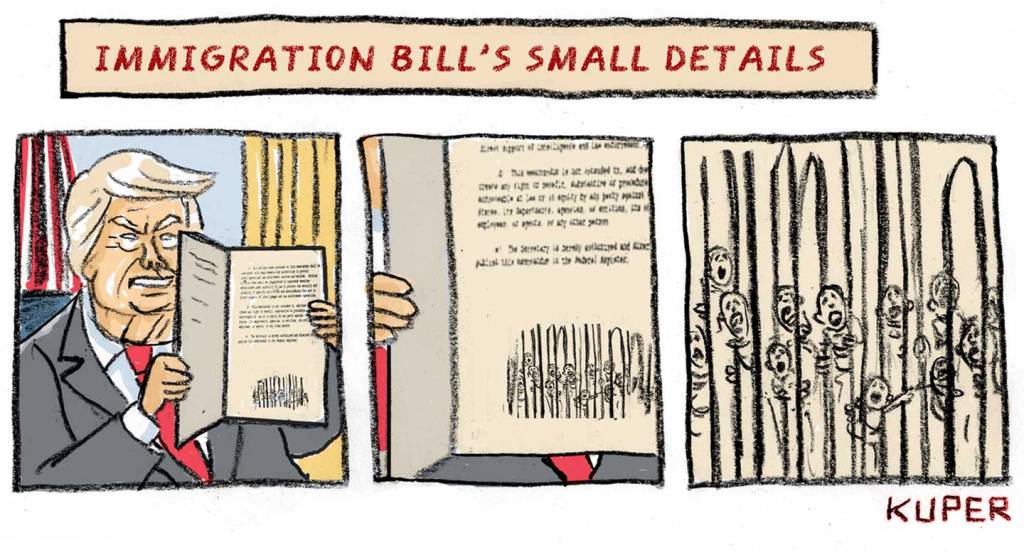
Let Me In – part one

Governments have to identify goals which are desired by their supporters and decide the means by which these goals can be achieved.

This simple statement makes sense, until the details and the means are examined in depth. Specifically, the means may not either be effective, or worse, they bring about unintended consequences which may cause harm.

An example of this is happening in the United Kingdom right now over the issue of immigration.

Voters in the Brexit referendum of 2014 had many concerns and one was a perception (stoked up by the media over inadequate public services and poor town planning rather than economists) that immigration into the UK was a problem. Brexit was posited as a means to ‘take control of our borders’. Unfortunately the ‘problem’ was incorrectly perceived in my view and I will explain why.

Economist promote immigration as it promotes growth and prosperity. The Tory governments of the last decades have known this and Home Secretaries such as Teresa May, did little to control immigration. Why would you when you need foreign workers? But after Brexit voted against the free movement of people within the European Union, unemployment in the UK now stands at 1.3 million.

picture credit; I Volunteer International

The present argument by the Johnson government, is that the ‘problem of immigration’ is the number of people who die on inadequate boats whilst trying to cross the English Channel. This emotive argument correctly demonises the illegal traffickers but fails to approach the problem from a strategic perspective. If they used safe boats would that be okay? Is this a sea worthyness of boats problem?

The absurdly narrow focus on what the problem is and how to solve it, only satisfies voters who are content with a simplistic problem / solution statement. To gain a full grasp of the problem, I shall outline as best I can, the breadth of the issue of mass movements of people into the UK and how improved ‘control’ of the borders of the UK could be achieved.

Firstly, there are five types of emigrants;

  1. Those escaping hardship in their own countries through famine, war, climate change through no fault of their own.
  2. Skilled and unskilled economic emigrants who are seeking work and higher remuneration.
  3. Political emigrants who are escaping persecution by their own government because of their political views and acts and seek political asylum.
  4. Emigrants who are seeking to be re-united with their families; a group that includes children travelling alone.
  5. Those outside of the law in any country involved in subversive and or illegal activities, either in the interests of their own government or for criminal motives.

For each of these groups, there has to be a specific solution to their desire to emigrate to another country to live and work. But before I examine these, there is one further beneficial general approach.

The conditions in countries which people are seeking to leave own a large part of the problem. You might expect diplomats from countries likely to become unwilling hosts to emigrants to spend a large part of their time and resources in working on this problem with other governments. I personally suggest this should include processing asylum claims in local embassies (excepting when appropriate, political emigrants) and issuing temporary visas on ’emergency passports’ to enable safe travel using conventional means. Buying a 50 euro airline ticket instead of paying people traffickers, is no financial burden on the UK government and puts illegality out of business. It is certainly less than chartering an aircraft for 500,000 pounds to take the unwilling to Rwanda, but who am I to point this out?

But let us assume that all the targeted aid and supportive diplomatic steps have been taken and people are still desperate to leave their own countries. What interventions are available and appropriate for each of the five types identified above?

Group 1. Escaping hardship;

  • In the short to medium term, build refugee camps.
  • Identify suitable locations for these and provide appropriate support.
  • Have international protocols and means in place to be ready for the next global catastrophe, through non-political global organisations that are trusted by those seeking help.

Group 2. Economic migrants;

  • Maintain physical border controls so that border crossings can be managed and legal crossings enabled.
  • Put in place means to screen those with and without documents to confirm identity, purpose, ability for self support and seek work opportunities or evidence offers of employment.

Group 3. Political emigrants;

  • These should be identified by host countries only, as they will not wish to be intercepted by the countries they leave.
  • They may be oblidged to cross borders by illegal means in order to remain safe.

This group is likely to be used by group 5 (criminals) so particularly high security measures and screening methods will have to be used by potential hosting countries.

Group 4. Seeking family re-union;

  • Set rules for family members to be able re-unite after non-self imposed trauma legally and permanently.
  • Have facilities and protocols in place to process unaccompanied children.

This group would benefit from being able to apply for a visa and /or residency before leaving their own country.

Group 5. Criminals; This is the group that makes it necessary to have strict controls on all the rest.

  • They need to be identified at the earliest opportunity and dealt with according to international law and extradition agreements, much of which may need revue and extending in scope to fit the present movement towards a ‘global community’ rather than nationalist self interest.

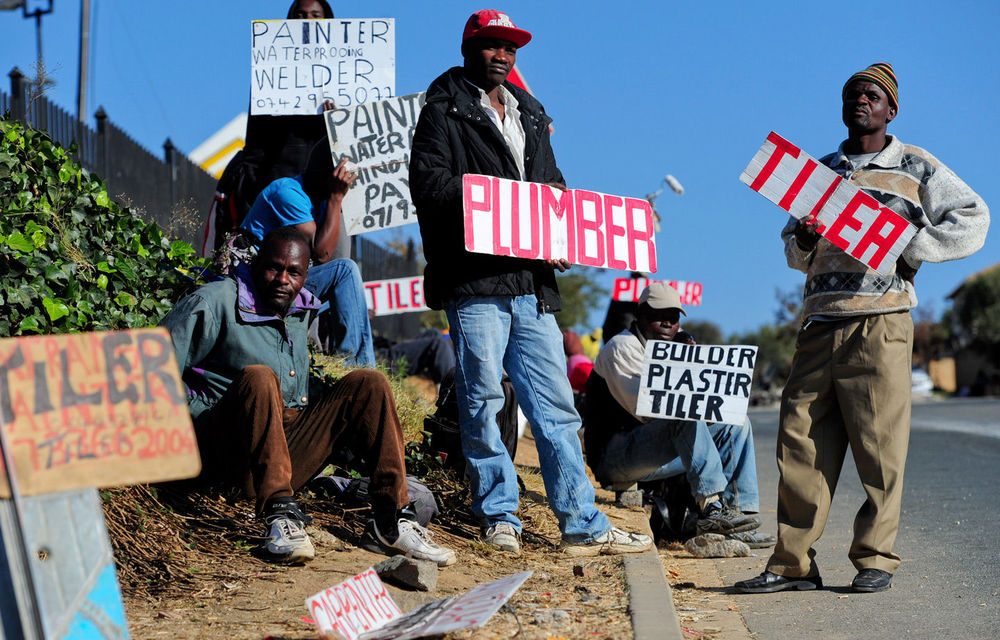
You can appreciate that these principles apply to most emigration and immigration, and examples abound in today’s current affairs. To keep this essay focused I shall use just the example of immigration into the UK and the policy that the government believes will stop people crossing the English Channel in unsuitable craft.

My first point is a fault in the government’s argument. They state that the aim is to stop people drowning in the English Channel. Clearly no person is going to be against this. However their method is to deter people getting into unsafe boats and how strong a deterrent this is going to be, is unproven. The counter argument suggests the policy is ineffective and costly, at which point government ministers will accuse those against the policy of being ‘in favour of allowing people to drown in the English Channel’.

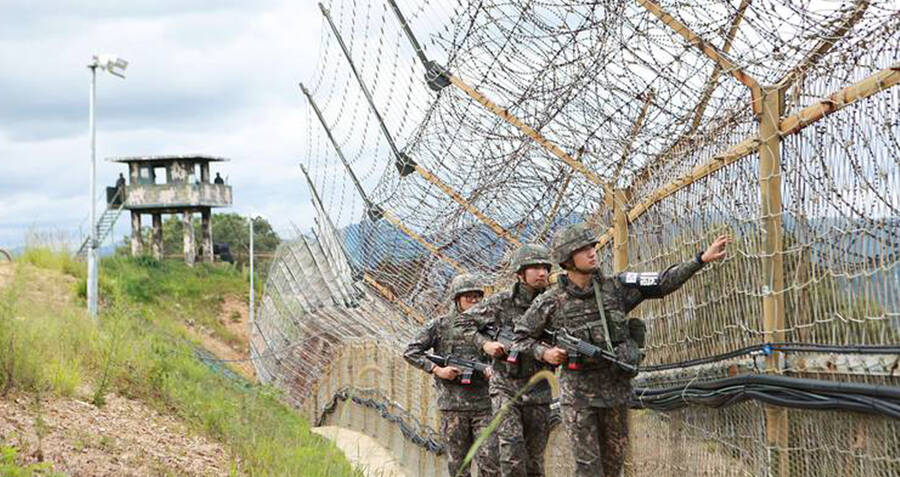
Unfortunately this extremely poor level of debate and problem solving has been carried over from the Brexit referendum in 2014. The focus of the ‘benefits’ of Brexit was on immigration, stating a desire to reduce numbers entering the UK. Not surprisingly, by being no longer a part of Europe the interests of the Mayor of Calais became no longer aligned with the UK. The solution for the French to the problems around refugee camps in Calais, was to do as little as possible to stop migrants leaving for the UK. For this reason they expressed no interest in accepting UK money for extra police and border controls on French territory. Such measures are popular with voters but are again ineffective. Emigrants who have already made long journeys are expert at avoiding detection. Effective ‘strong borders’, require measures in place similar to those between North and South Korea and it is unreasonable for Calais to accept machine gun posts, razor wire and mine fields along it’s beaches.

picture credit; All That is Interesting

So after the UK government has stopped accusing France of being ‘uncooperative’ rather than understanding the points about motive and means just made, the brutal ‘one size fits all’, send-emigrants-to-Rwanda solution is put in place. The British public – who have traditionally been internationally respected for being fair minded – are expected to accept that denying the human rights of desperate men, women and children will deter others from entering the UK illegally.

On the first day that this policy started the plane carrying eight emigrants, was grounded by the European Court of Human Rights and 440 people crossed the English Channel successfully in the other direction. Even after a year of this policy in operation – is it really likely that there will be fewer people crossing the English Channel in boats and if so how many fewer? Is denying human rights as a deterrent really acceptable?

In my view the government’s problem solving ability would hardly be accepted in a school debating society.

to be continued

The Oldest Profession

The Prime Minister of Spain, Perdro Sanchez, has announced his intention to make prostitution illegal as it ‘enslaves’ women. There certainly is no monetary benefit for the government to do this;

Prostitution was decriminalised in Spain in 1995 and in 2016 the UN estimated the country’s sex industry was worth €3.7bn (£3.1bn, $4.2bn). ( Source BBC News )

I live in Spain and when I first saw the ‘clubs’ on the edges of towns, I thought how sensible to make brothels legal, healthy and safe places. In the UK they are illegal and of course driven underground means illegal, unhealthy and unsafe. An estimated one in three Spanish men use them.

I am surprised that Snr. Sanchez uses such a crude approach to problem solving. The technique he is applying is commonly known as ‘throwing the baby out with the bath water’. In other words he has over simplified the problem and in doing so, lost the good as well as the bad.

Clearly a better approach to problem solving is to examine the detail first.

Prostitution is often referred to as ‘the oldest profession’. In ancient Egypt, Rome and Greece sex for money or sex without consent with slaves (or rape), was a social norm. Thankfully we have moved beyond slavery today, or have we?

Most people are aware that ‘sex slaves’ are imported into modern rich countries against their will. The organisers and pimps will attract young women with promises of a visa respectable job, a plane ticket, accommodation and a wage. Spurred on by a wish to get a better life for themselves, the victims eventually realise they have been trapped into slavery. A ‘debt’ has to be repaid for setting them up as a prostitute in another country. They are paid so little, if at all, that their prospects ever to move on are hopeless.

It should not be hard for a prime minister to focus his resources on finding such ‘sex slaves’ in his own country. A simple help line, a Facebook page and a team of volunteers giving support and passing intelligence to enforcement agencies is an obvious way forward. Slavery, rape, imprisonment, human trafficking and illegal immigration require no new laws.

The size of the problem should not be underestimated.

The Spanish police freed 896 women being exploited as sex workers in 2019 and estimate that over 80% of those working as prostitutes are victims of mafias. (source BBC News)

896 is a small proportion of the estimated 300,000 sex workers in Spain and the question should be asked of the police why only 896?

Whatever the mix, there are two types of prostitutes. Those who see themselves as legitimate ‘sex workers’ who demand and get respect and support from society and the state and those who are prostitutes against their will.

The second variety are really those who Mr Sanchez has legitimate concerns for but to fudge these concerns with ‘respect for women’ is to lose focus. The example I have given of sex trafficking and slavery, demonstrates that the Mafia is not interested showing respect to anybody. Strict enforcement of the law is absolutely necessary to protect sex workers and give modern slaves their freedom.

However, if a women chooses to become a sex worker and feels good in themselves for their free choice of occupation, who are we to judge? Some claim that this is economic co-ersion but by any measure is not a factory worker a victim of needing money to live?

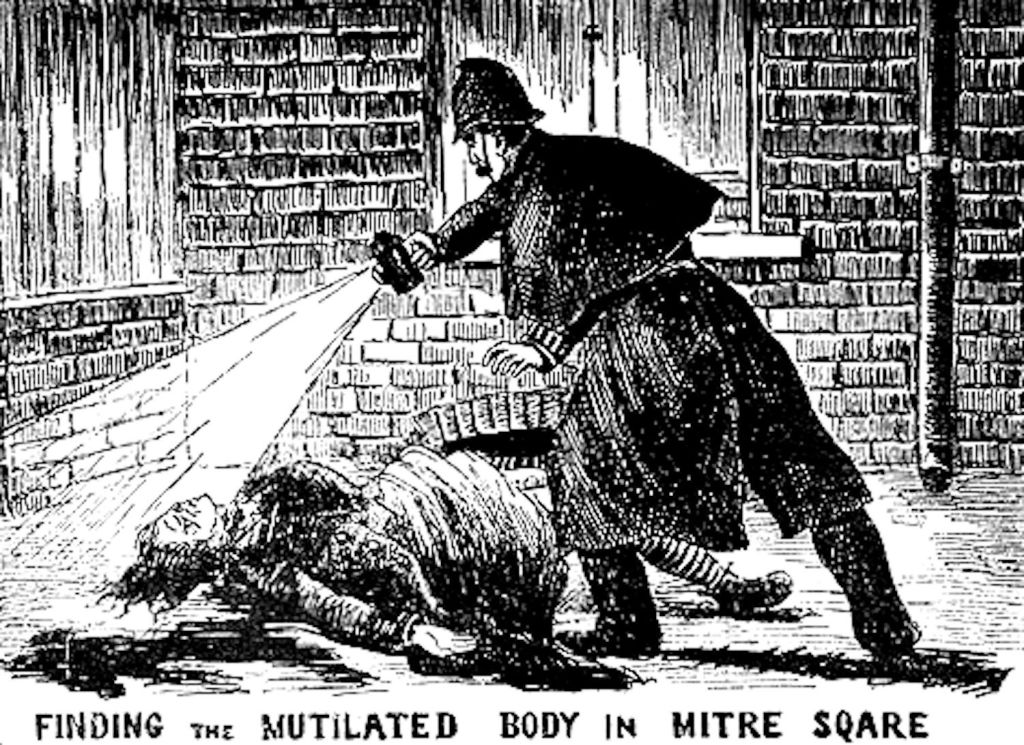
Judgment opens the gates to hypocrisy at the most extreme level. The Victorians in 19th century Britain were against all sorts of things based on religious dogma. This did not prevent them committing mass murder during colonisation and non-consensual sex. ‘Jack the Ripper’ was a sort of emblem of how hatred of women can emerge as acts of pure horror.

picture source New York Times

Clearly laws did not prevent Jack from committing his fowl acts. A new law in the 20th century in Spain is not going to change behavior and it’s causes either. The whole profession is going to be moved out of the benign influence of health workers, social workers, immigration officers, police… into an underworld where ‘respect’ is seen as weakness.

In my view Spain is already a flag ship for showing respect to men and women working in the sex industry. Is the ‘high moral ground’ of ‘respect for women’ a disguise for old fashioned prudery?

All humans need to express their sexuality, whether we like it or not. Marriage used to be the means of making such feelings ‘sacred’ and approved by God no less, but as communities have at least half of their population enjoying a single life, making sex illegal between consenting adults (even if one party is being paid) is opening the path to hell. History tells us that just as history tells us slavery is wrong.

Understanding the problem before reaching a solution, is a skill not taught in schools, churches or political science degrees. In my view, generalised slogans such as ‘respect women’ and ‘black lives matter’ create well intentioned feelings without knowing what is wrong and how to fix it.

The Bill

picture credit: usanewshunt

There is presently being considered in the UK parliament a ‘Police, Crime, Sentencing and Courts Bill’. It is wide ranging in it’s intended effects. So much so that citizens are worried and they are asking questions are;

Are these new legal powers necessary and if so are stricter legal powers the best way to achieve the intended result?

In other words, is shooting the cockerel the best way to have a lie-in?

It is coincidental that the timing of these proposals coincided with a public vigil for a murdered woman, Sarah Everard. Sarah was tragically murdered, allegedly by an off duty police officer, whilst walking home.

The vigil was held in Clapham Common in South London. Unfortunately there were ugly violent scenes when police enforced the Covid regulations, which ban such public events. The confrontation had been foreseen. Prior to the vigil, an organisation called ‘Reclaim These Streets’ approached the police and then the High Court. The High Court told the organisers to sort it out with the police.

The question has to be asked, how ‘negotiations’ failed to find a solution that eliminated the risk of confrontation and violence.

picture credit: thedailymail
comment: how the media encourage dualistic thinking

People with an iota of problem solving sense and mediation skills, will know that if you set up two sides with conflicting agendas, they will always disagree with each other.

The BBC News webpage comments; For almost a year, the ambiguities and omissions within the coronavirus restrictions have left both the police and the public grasping for answers as to what is possible in public. It’s so complex we’ve even seen people fined for walking while holding a cup of tea.

The Covid ‘regulations’ are already a cause for antagonism between the public and the police. The police are having a hard time maintaining public confidence in their impartiality and fairness. The Police are currently lumbered with issuing Enforcement Notices, fines of £200, under the Covid Regulations.

Personally, I can see good reason to remove the police from the enforcement of Covid rules.

Police are principally responsible to protect the public from those breaking criminal law. They stopped being responsible for lost dogs and parking on double yellow lines long ago, so why are they involved with Covid rules?

One possible solution would be to create a new temporary role of ‘Covid Enforcement Officers’. This process of specialist enforcement officers has already been successfully with non-criminal offences, such as parking fines. Police used to issue parking fines decades ago. Then Traffic Wardens were created for this purpose and currently used ‘Parking Enforcement Officers’ have the role.

The Home Office might be able to recruit volunteers to enforce Covid Rules, given the large number of community spirited citizens who have already put their names forward for public service during the emergency. Alternatively, or as well as, the Home Office could pay CEO’s in the full time role. Alternatively or in addition, the Home Office might use the services of those currently paid to ‘furlough’ at home. This at least would be a better use of tax payers money. The role might also be given to a strictly selected portion of those ‘homeless’ and living in hotels at public expense and even released prisoners. Both groups who might well rise to the being awarded public trust and benefit for the rest of their lives for some experience of employment. My point is that there are many avenues to explore before dismissing the role of CEO.

Let us next examine the subject of public protests during the Covid state of emergency. It cannot be denied that where there is a public protest planned over an issue of current high public interest, there is good reason for respecting public feelings. If the government restricts the human right of protest it runs the risk of appearing draconian. When the government and rule of law is perceived by citizens to lose the high moral ground, ‘policing by consent’ becomes difficult to impossible. We see this in Hong Kong and Myanmar at the moment where protest has effectively been made illegal.

The problem for the British government that the vigil in Clapham Common posed, was for a potential ‘mass Covid spreading event’ to take place. This was the fear and Police had a duty to prevent such an outcome. They would be sure to be blamed for not using their powers should there be a subsequent localised outbreak of Covid infection.

The problem solving method used was for both sides to line up against each other like in a medieval battle. Even the High Court ran from this confrontation. All were victims in my view of the process of dualistic thinking or ‘either or’ solutions.

The way I would look at this problem is that it is not only a ‘police’ responsibility. In most problem solving processes, problems will be found to be widely shared. Who might the other stake holders be?

Just of the cuff I would suggest that the problem was owned by the organisers, those attending, the Park Authorities and the by-laws, the National Health Service (local hospitals), Human Rights organisations, the Courts, scientists of the health and social variety, the local MP and London Mayor’s Office, Legislators and the Home Secretary.

The only intervention the government could conceive was a new law, because that is what governments do; a classic case of ‘digging the hole deeper’. This is how they intend to make the present police powers more stringent;

The Bill being proposed wishes to prevent public protest that creates “serious public disorder, serious damage to property or serious disruption to the life of the community”.

The lack of any nuance to this ‘nail – hammer’ thinking was, in my opinion, is woeful. If the complexities of solving a problem are embraced, then solutions are abundant.

For instance in the case of this public vigil by, say one thousand people, it can be be managed to achieve the clearly set out objective…to let people have their moment of remembering peacefully and without disproporthionate harm to themselves or others. After all, if strangers mix inside a supermarkets without creating mass Covid spreading events each day, then a single outdoor event is considerably less risky. Experience of public gatherings outdoors, including when not socially distanced, has shown that mass Covid events do not take place afterwards. This was shown to be the case at recent public protests in the USA such as the Black Lives Matter marches or the infamous storming of Capitol Hill.

Aside from the spread of infection it is hard to see why any peaceful outdoor protest should culminate in;

“serious public disorder, serious damage to property or serious disruption to the life of the community” if managed properly.

There are clear Covid rules of social distancing, mask wearing and hand washing and the attendees would willingly follow such rules as they Sainsbury’s where public disorder is not considered an imminent threat.

A vigil by definition, is a passive affair where people sit or stand with candles and placards to express their feelings of solidarity, sadness and, in this case, discontent that a young woman’s public murder makes many women feel unsafe.

Imagine how a Problem Solving / Protest Management Meeting that I am envisaging, might have taken place. There would be numerous attendees with multiple points of view but with a overlapping and shared desired outcomes. The aim of the meeting will be to express and examine all views in a spirit of co-operation to solve a shared problem. The fruit of such meetings is that solutions can be just as impactive as force, but in a subtle and almost invisible way.

So if you were the Superintendent of Parks, would you not be a good person to involve in how to make this peaceful event as safe as possible whilst supporting the Human Right to protest? You could provide detail maps of the park showing entrances and exits, toilet facilities, how previous public events had been managed, first aid and other emergency considerations (normal for large gatherings), catering etc. etc. in as much detail as you need and that’s just the Park Keeper.

The Fire Service say they could provide sand bags for people to sit on at the required distances…good idea…and safe bins to dispose of used candles. The local press and police might hire a drone to take photographs from above. The police use it to monitor events and the press get some great photograhps. Those attending are told that by staying on their sandbags they images will be spectacular visually, whilst respecting privacy and not spying on indiviuals. Instead of a grid, an local artist might design a shape for the sandbags and candle holders, like a flower of rememberance. You get the idea. It’s soft management designed to delight not draw battle lines.

The Covid Enforcement Officers might have produced some posters which will be clearly displayed at the entrances to the Vigil Arena, reminding attendees of the Covid safety rules and the fines for infringement.

I could list the inputs of each party but you get the picture. Towards the end of the meeting the person representing the local police, shares that there is intelligence that the an anarchist organisation are planning to attend. There is a history of them creating public disorder and damage to property. A few mug shots are shared.

Are These People Mourners or Political Activits?

The Police therefore commit to having 200 riot trained officers on hand but out of view, in case of “serious public disorder, serious damage to property or serious disruption to the life of the community”. They confirm that there are existing laws under the Public Order Act, Criminal Damage Act and Breach of the Peace to make arrests and allow the vigil to continue peacefully.

Dame Cressida Dick, Metropolitan Police Commissioner, is at the meeting and says that she intends to take part in the Vigil. Everyone applauds. Apparently, several other celebrities and leaders of Human Rights and Women Safety organisations are also going to take part. There is decided to be a VIP area next to the area designated for the Press.

In this hypothetical scenario the event takes place and the Anarchist ‘rent-a-mob’ do make an appearance. They are ‘kettled’ away from the vigil into an area that the Park Superintendent recommended which is surrounded on three sides by high fences. Flood lights had been secretly positioned their and their switching on allows for CCTV surveillance to begin and the press to get some good pictures. The police keep them there until the vigil has ended and the park is clear. Two anarchists are arrested are, both for previous offences using outstanding warrants.

My conclusion is that any public protest with warranted public interest and sympathy, should be allowed to take place under Covid regulations, and the Regulations should be amended to permit this. It is for the committee of interested parties to decide what level of public interest and support exists, not the courts or the police.

In summary, when the only parties involved are cast as protagonist and enforcer, the result will tend towards the violent scenes sadly witnessed on Clapham Common. Giving the enforcers more powers to enforce is no solution, and leads to the very thing purported to avoid, that is;

“serious public disorder, serious damage to property or serious disruption to the life of the community”.

So in answer to the question at the top of this essay which was;

Are these new legal powers necessary and if so are they the best way to achieve the intended result?

…my answer is no. The existing laws were sufficient for the nine arrests made at this vigil. Next time, organisers should seek the help of the ‘partnership approach’ to public protest event planning. Use it or ignore it at your peril.

Space Wars

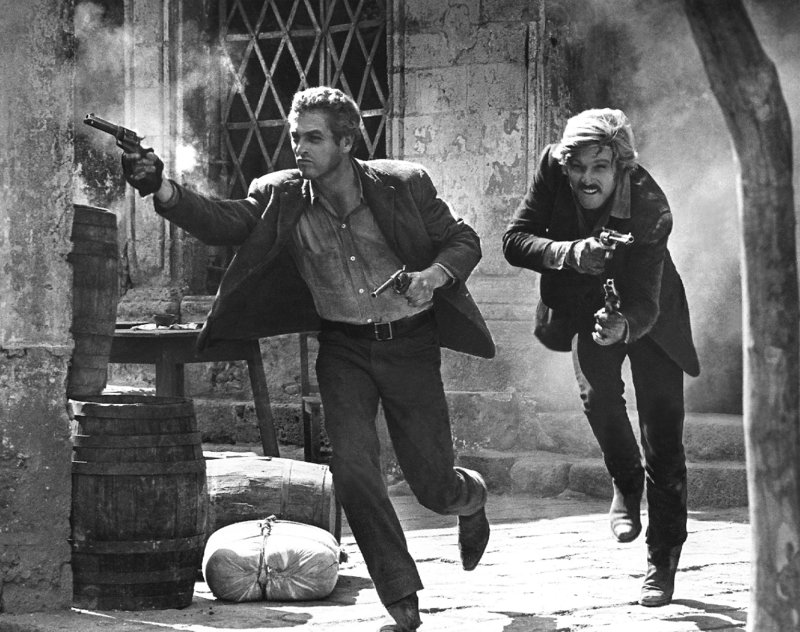
Butch Cassidy and the Sundance Kid is an enduring story of two bank robbers in the Wild West. In the film of the same name they are played by the good looking duo of Paul Newman and Robert Redford. They swagger through the film to a jolly accompaniment by Burt Bacharach (including Rain Drops Keep Falling on my Head) from one fruitful explosion to another. Inevitably the Federal authorities catch up with them and they manage to escape over the border into Mexico by the length of a horses tail. In Mexico they make a resolution never to rob a bank again, such has been the horror of their last experience. They realise they now have a clean slate to start their lives again. What happens next has always fascinated me. They start robbing banks in Mexico. A few bank robberies later, they die in a hail of Mexican army bullets.

butch_cassidy_and_the_sundance_kid1

The moral of this story in my view, explains a lot about the worst side of human nature. Remember that these are bad men even though they are played by a couple of smoothies. Humans find it very difficult to change their inner motivations, methods and objectives.

At present humans are plundering planet earth of her wealth. They have been doing it for a long time but now the scale and speed of the robbery is unprecedented. The villains have a plan;

‘Let’s start robbing again in space’.

China, Russia, the USA, Europe, even India have space programmes.

Why does India have a space programme when many of it’s rural villages don’t even have one flushing toilet and a sewer? The answer is complicated of course but one reason has to be the promise of new sources of raw materials; what in Klondike in the Wild West was nicknamed the ‘gold rush’. True to human greed for natural resources, these countries and others are not unaware of the promise of minerals ripe for harvesting from other planets and moons.

Without a World Government with an enforcement arm, it is hard to see how this rush into space and the allocation of unclaimed resources, will not turn into a laser gun fight.

On the 1st July 2019 the United States of America declared a new arm in it’s Defence Services; the Space Development Agency. Will the USA move itself into the role of World Government Peace Enforcement in space – like it has tried to enforce the non-proliferation of weapons of mass destruction on Earth? Will the USA being armed in space be accepted by those being told they cannot do the same? Bear in mind the present difference of opinions between the USA and North Korea and Iran.

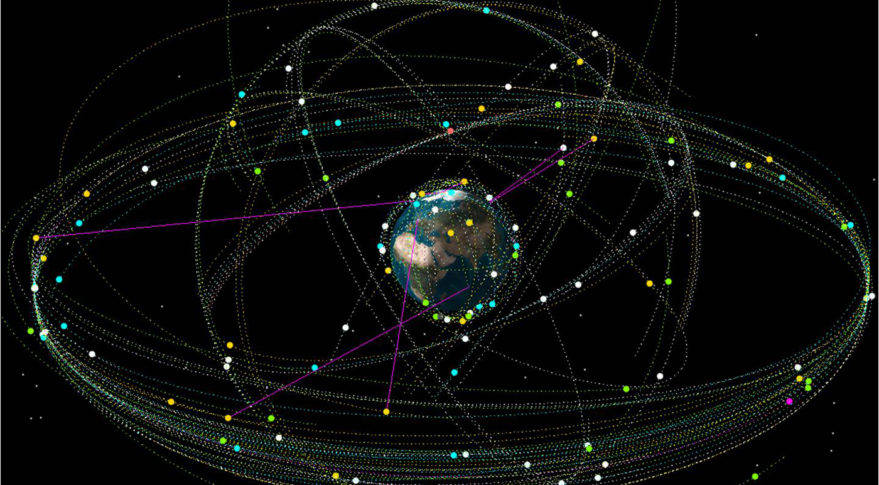
The USA may or has assumed a role of Sheriff or ‘protector’ of the valuable scientific, communications and defence satellites already in orbit around the earth. This role is enhanced by the prospect of the new 5G satellites being privately launched – over 2000 in number – to provide fast internet to rural communities around the globe. Who asked for 5G is a subject for another blog. In democracies, no one votes for what private enterprise decides needs doing for profit. Arms manufacturers usually lobby for war.

It just happens because science and technology get the smell of cordite and can’t stop themselves blowing a few banks, and a few more and a few more. Ethics committees don’t carry.

The hugely wealthy entrepreneurs, Elon Musk (BFR) and Jeff Bezos (Blue Origin) both have their own visions for space exploration and travel. Will they be taking pot shots at each other across the craters on the moon or work together?

The space exploration of the 1960’s was famously driven by bitter competition between the Soviet Union and the USA. The latter likes to think it won the race but in the end what came out of those missions was a desire to monitor the earth from space, not keep going to the moon. This mutual desire and pooling of resources and know-how, evolved into a co-operative project which is the International Space Station.

Not surprisingly today, Russian and China want to co-operate in space and ban space weapons and they both signed a treaty in 2008 on the Prevention of the Placement of Weapons in Outer Space.

On 21st October 2017, the first committee of the United Nations discussed the non-placement of weapons in space. 122 countries voted in favour of such a ban and five against, which included Georgia, Israel, the USA, Ukraine and France. 48 countries abstained, including the European Union.

The reasons for co-operation disarmament in space are obvious so let us consider reasons for having weapons in space.

There may be attempts by rogue states or state sponsored dissident groups, to interrupt or destroy or threaten to do this to civilian or military satellites.

positions of satellites at time of publishing were correct but may have moved now

satellites

The problem with this argument is that a rogue state, or state sponsored dissident group, is being lawful in it’s actions in one view and unlawful in another. Robin Hood was by some definitions, a terrorist. Black and white hats are for cowboy films. The hats in space wars are multi-coloured and nuanced.

For instance, a GPS satellite is used for civil purposes and military. So is the mobile phone network and satellites and direct satellite communications used in those areas where there is no mobile telephone network.

You can describe the action as good or bad depending on which facts you select to present. The criticism is that the ‘threat’ that the threat on which the military base their plans and actions, can be exaggerated for funding approval reasons and, or just plain politics. A government likely to declare war on false intelligence on earth is just as likely to do the same in space. Different place, same gunmen.

There is also a non-military threat; namely asteroids. These are objects that enter the earth’s solar system from outer space and may be on a collision course with earth. The possibility is that a weapon of some kind may be able to alter the course of the asteroid. Comparing the then with now, money would be better spent on protecting the earth from humans rather than asteroids in my view, that threat being more immediate.

The last Hollywood blockbuster myth is one that has appeared on cinema screens since movies were invented – alien invasion. I call this a myth since my belief is that any civilisation that has found and is watching us for malign reasons would have acted by now. Because they have not I conclude that they are benign and waiting for humans to become spiritually aware enough to stop wanting to destroy the planet and each other.

Little Blue Men (and perhaps some ladies)

kind aliens

This is Butch and Sundance story yet again. The question for governments and billionaire entrepreneurs in search resources and a life boat for planet earth is;

Should we spend our time and money on fighting each other in space, or on protecting the earth and building a sustainable future?

I know what my answer would be because I have seen the statistics about life on Mars and in my view, it’s a hell not worth visiting.

I hope and expect we will forget Mars as an objective in the next decade, as future space based telescopes spy out so called, exo-planets. Astronomers now believe it likely that most stars have a system of orbiting planets based on observations of light from those stars. The new generation of telescopes will find new exo-moons. With so many new places to visit that are in the ‘Goldilocks‘ range of environmental factors similar to earth, man in the future will be spoilt for choice for places to colonise.

Those who choose to live in such places will have one important choice above all others. Shall we take guns to these places? My advice,based on Butch and The Sundance, is don’t.

Every Breath You Take

For about eight years now I have been driving a 2.2 litre diesel estate Toyota. The ‘Top Gear’ television presenters drove a selection of similar cars across Europe to see which went the furthest. Jeremy Clarkson found that his diesel Jag used so little fuel that he ran the air-con and anything else he could to use more fuel. Large cars have space for large fuel tanks, so their range can be phenomenal. Mine will drive from southern Spain to the north coast of Spain without stopping – a journey of 1000km.

Last week I hired an ultra small Toyota Aygo car in the UK; a nice little automatic with a petrol engine. When I came to fill up the tank I was disappointed to find that it had travelled about 45mpg whereas my trustee diesel gives me over 55 mpg.

So why are diesel cars getting such a bad press at the moment? Diesel engines were preferred in 1997 by the European Union as a response to the Tokyo Climate Change Protocol. These engines produce on average 120g of CO2 per km whilst petrol engines reach 200g of CO2 per km. This is because diesel engines cold burn and so use less fuel. These figures do not include the energy used to make and dispose of the vehicle most of which will come from fossil fuels. It makes sense to make cars that last several decades in order to stretch out the environmental impact of production and disposal.

But the problems with just the emissions from internal combustion engines, has been re-defined. Whilst CO2 emissions must continue to be reduced, it has been recognised that the toxic gases and particulates from engines are causing a serious health risk – especially for children.

So when you examine these two types of engines, the toxic gas produced by older diesel cars is Nitrogen Oxide, in various compounds. Petrol cars can reduce this with a catalytic converter whilst diesel cars require particulate filters that are regularly maintained. If they are maintained then the NO gases gases from diesel cars can be reduced by 90%.

Governments have been victims of their own ‘political’ thinking; putting problems into compartments rather than viewing the whole issue and how each aspect of it interconnects.

Complexity challenges even those minds with an expensive private education (i.e. politicians). The lazy solution is to reduce the problem to something people can understand – especially voters.

The bottom line is that neither petrol nor diesel engines should be in use in the 21st century. There should already be ‘electric only’ zones in all urban centres with buses and taxis leading the way.

Cars do not need to be scrapped on account of their motive power source becoming a problem. New zero carbon, zero particulate engines can be retro-fitted – even into fondly maintained ‘classic’ cars. Friends of the Earth believe we need to achieve this in less than a decade, whilst the UK government thinks 2050 acceptable.

When I was a student in London in the 1970’s, I hung a sign under my bicycle saddle with the words;

No Noise, No Fumes’

I didn’t buy a car until I was 30. Was I ahead of my time? No.

Fritchie Early Electric Car

Electric cars had been the brain child of inventors in the 1830s. By 1900, New York City had a fleet of electric taxis. The electric car designed by an American, Oliver Fritchie, could travel 100 miles between charges but it could not compete with the Model T Ford on price or range. The rest, as they say, is history, because in those times governments were oblivious to the consequential problem they were leaving their ancestors – us.

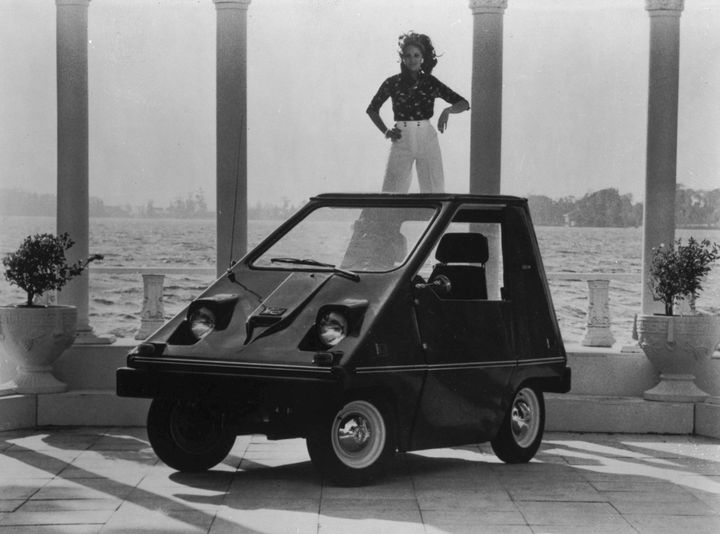
1970’s Electric Car – with only a 40 mile range and apparently you had to stand on the roof.

1974 Electric Car

Today governments spend considerable time and resources in a phoney ‘war’ against terrorism. ‘Phoney’ because conventional troops cannot overcome guerilla tactics – as was proved to be the case in Northern Ireland.

The massive expenditure of public money on this ‘war’ is justified because terrorism grabs the imagination and emotions of voters – by it’s very nature as a font of repeated horrors.

You might be forgiven for wondering which is the greater issue – millions of citizens  (especially the young) dying of lung related diseases caused by internal combustion engines or citizens dying in terrorist related incidents?

When that question is considered statistically – resources should be allocated to each problem in proportion to amount of human misery and suffering it generates. They should not be allocated on the basis of which problem gets most votes and the most media coverage.

Regrettably terrorist acts will generally sell more newspapers than children dying silently in hospitals of lung diseases or adults with heart problems.

Newspapers  inflict the final blow of horror and despair on behalf of the terrorists into the hearts and minds of  victimised populations. Margaret Thatcher knew this and ordered a policy of non-reporting of terror related stories in Northern Ireland.

To his credit, the Mayor of London, Sadiq Khan, has identified the toxic air of his city as a very real and serious contemporary problem. He has made small steps to reduce it – such as charging motorists of the most polluting vehicles to enter the centre of London. The European guidelines on air pollution were exceeded within the first two months in 2018 in London. Is this another reason for the UK to leave Europe? No more awkward tests of the atmosphere in our cities?

When the United Kingdom first became a member of the European Union one of the directives from the European Parliament was for the UK to clean up it’s bathing beaches.

This was duly ignored for the first year. Why should the UK not continue to send it’s children to play on filthy polluted beaches? But the following year the EU reminded the UK of it’s obligation in law. The UK reluctantly (one expects) began to clean up it’s inshore waters; beaches are now awarded Blue Flags for water quality and facilities.

Now in 2019 the River Thames in London has been transformed from a toxic environment in which nothing could live, into a clean river with fish and mammals such as seals – on view from the Houses of Parliament.

So why now should clean air be such an difficult objective for successive governments?

If the problem is short term planning on account of the four year term of office for elected representatives in parliament – then perhaps politicians need to start to deal with the complexity of uniting long term and short term objectives.

The current air pollution problems in the UK are not local – just look at Mombai and Beijing. There has to be consideration – however complex- on how to integrate solutions within complementary European and global strategies and policies.

Clean air has to be one of the most fundamental of human rights. If we cannot wish it on ourselves, how is it likely to ever happen for our long suffering environment?

Love Your Brother and Sister Humans

Once again the lawyers and politicians are going around in circles.

For in the United Kingdom a cross party group of MPs have had a go at defining Islamaphobia ( a word not contained in my Word spell check!)

Before looking at this definition it is worth thinking back a year or so when we were treated to the spectacle of Teresa May and advisers thinking up a definition of Anti-Semitism. This at a time when hatred of Muslims was a far more important problem.

Perhaps the group of MP’s missed a trick. A school child might think that to define Islamaphobia you substitute the word ‘Islam’ for ‘Hebrew’ in the Anti-Semitism definition.

Not a moment too late has the spot light now moved onto our Muslim brothers and sisters who are suffering hatred in the UK and other countries, in a way that the Jews were targeted in Nazi Germany.

It is good someone has the intelligence to write a definition of what is the problem. This is the first step to the review of existing laws and any supplementary or new UK legislation.

Here is what the cross-party group came up with;

‘Islamaphobia is rooted in racism and is a type of racism that targets expressions of Muslimness or perceived Muslimness.’

Here is the first test of the statement. Let’s change the religion in question.

‘Christianaphobia is rooted in racism and is the type of racism that targets expressions of Christianness or perceived Christianness.’

So the attack on the congregation in Christ Church New Zealand was racist? I think not.

Consider for a moment what racism is, since it is being included in the definition in question.

It appears that there are numerous definitions; made more confusing the ‘ethnicity’ being considered the same as ‘race’.

My contribution to this word play would be to suggest that there is only one race, the human race. This is split by ethnic difference based on environmental, genetic, cultural, linguistic and other fundamental factors.

So here is what the UN Convention on the Elimination of All Forms of Racial Discrimination said;

The term “racial discrimination” shall mean any distinction, exclusion, restriction, or preference based on race, colour, descent, or national or ethnic origin that has the purpose or effect of nullifying or impairing the recognition, enjoyment or exercise, on an equal footing, of human rights and fundamental freedoms in the political, economic, social, cultural or any other field of public life.

If this definition were adopted into UK law then the signs at airports instructing EU Members to queue here and all the rest to queue there – would be illegal.

Fortunately gender and race are universal constants and in my view, nothing to do with prejudice based on ethnicity or religion.

Taking a step back from what we are discussing here is the unpleasant aspect of being ‘human’ – hatred of ‘the other’.

As members of the human race to our shame we have a long history of dividing ourselves up into tribes or villages or clans or nationalities or supporters of a football team and seen this as reason enough to wage war on ‘the others’.

All the prejudice in the world is an expression of intolerance towards other humans.

It’s expression ranges on a scale from minor to major. Football hooligans are at the pathetic end of the scale and fascist government leaders at the other. In between is all the prejudice – hidden and open – that we carry within ourselves.

Hatred based on religion is therefore simply another expression of intolerance ranging between sour looks to beheading.

My definition of Islamaphobia would be;

Hatred of Muslims

Now can we get down to the real problem? Because until a child steps forward to take over the role of Prime Minister, no single person appears to see the problem with any clarity.

The head of the National Police Chiefs Council, Martin Hewitt, is dismayed at the vagueness of the definition. He believes it will cause confusion and hamper the effectiveness of the police against minor and serious crimes motivated by religious hatred.

In law, precise definitions produce laws which are executable.

If I had any advice for the devout of any religion, it would be to remove all cultural affectations in dress and any other public signification of your personal beliefs. Put these items on in the place of worship if it makes you feel more comfortable.

Hitler had to identify Jews by ordering the placing of a yellow star of David on their dress. To preserve your dignity and safety – I would advise not to make it easy for the biggots.

When the time and place is right – in a tolerant society – freedom of religious expression will be protected.

To base new laws on eliminating hatred is in my view to start at the wrong end of the stick. I believe the best way to introduce tolerance is to introduce love, as well as eliminate hatred. One cannot exist without the other but we can at least set the balance straight. So this debate is not just for the law makers, it is for all the humans.

Raise a hand if you are a human!


Looking Through the Glass

OK, look out of the window and tell me what you see.

I see some fields and trees and a couple of cows.

Think carefully. Tell me what is the first thing you see.

The fields.

Wrong. The first thing you see when you look out of any window is glass.

This little exchange may sound pedantic but it crudely illustrates how we ignore the way we perceive the world. Sweeping short cuts are made during the process of perception in order to to establish some sort of certainty of what is out there, for our deaf and blind brains.

The next logical step in this line of thought, is to consider how many other things we do not see, whether they be ideas or physical things.

I would argue that there are many more than we believe.

Take technological ‘evolution’. I avoid the word progress because there are examples of new technologies that were a step backwards rather than forward. The release of energy from matter in nuclear fission for instance, creates as many horrors as quick fixes for warfare or the provision of electrical power.

Nobody votes for new technology. One day you are sitting on the sofa eating your dinner when, on the news, they are demonstrating a car that drives itself. Or you are a farmer in nineteenth century England and suddenly you hear you neighbour starting up his new tractor.

These changes to our lives come about as if by stealth. Generally they are considered benign – that is the benefits out weigh the problems. The fact that all new technology is by definition ‘untried’ is something that neither proves nor denies a problem exists, in the present or future. So it is allowed to be produced.

The mobile phone, for instance, has revolutionised many people’s lives. Even children as young as three are given them. And yet there remains a question mark over the emission of microwave energy and the effect it has on young and adult brains. At present the young are thought to be particularly at risk because their brains are developing. Making a phone call in a car for instance, is the same as putting food in a microwave cooker, only it’s not food being cooked – it’s you and your family. Because this background energy has been with us for over a generation, it is not possible to establish a ‘control group’ to measure the development of brains. There are no humans alive now, who have lived without a constant background of microwave energy.

Of course there are checks and balances at work in various committees in Universities where research is done. Also government organisations monitor and grant licences to new technologies. The ethical concerns, the effect on other systems such as the environment, sustainability, disposability, carbon footprint etc. are just a few of the concerns applied to new technological developments.

The problem is not all countries judge new technology in the same way. If there is a political, monetary or social ‘quick gain’ to be made through say, shale gas fracking, then some country somewhere is going to do it.

And if in the eighteenth century what happened on the other side of the world didn’t matter because it was too far away; this century has no choice but to think global.

The trails of diesel exhaust from ships crossing oceans can be seen from space. Imported goods do not arrive without an environmental price tag.

It is as if technology has a mind of it’s own – and in the next few decades it will quite literally– using 5G and the ‘internet of things’.

But without innovative technologies, the planet would not be supporting the present human population. The number of people pre-industrial revolution, was small. England had about four million citizens when horses ploughed fields. Now there are over seventy million.

But new technology is not the only object seen in the window. Remember the glass.

Glass in Wroclaw

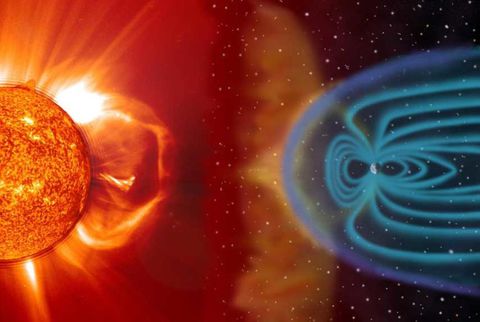
And it might not be a new technology that is about to alter the course of your life fundamentally. There are numerous ‘low balls’ that could change everything tomorrow. For instance there might be a series of powerful solar mass ejections, bombarding earth with cosmic rays so strong that the earth’s protective magnetosphere gives way. Computer systems go down, power grids and machinery of all kinds are cooked.

Solar Super Storm

Trusted technologies, reveal that they have been trusted too much. The impossible or ‘once in a thousand year event’, happens. Then mankind realises it had not seen the glass in the window.

The earth is a space craft and like all complex systems they are fine until they break down. Then back up systems have to be activated and emergency plans initiated…if they exist.

In the case of planet earth they do not. A ‘survivalist’ shelter designed for two weeks, two months or even two years, will eventually either be discovered or run out of supplies before the re-population even begins. Mad Max doesn’t even come close to the post apocalypse chaos.

The question for the present generation and for those yet to be born is;

‘what are the blind spots in our modern lifestyle that could leave human population exposed to near elimination and what is the back up plan to each eventuality?’

Governments, committees,  industrialists, academics  scientific researchers and technological inventors and innovators are our modern day ‘dictators’. You won’t be voting whether to survive disaster or not. Your trusted leaders just won’t have seen it coming because they too were looking through the glass, like Alice.

The Idiots Guide to Fast Driving

The Idiots Guide to Fast Driving

Readers may remember my personal definition of a ‘slow driver’ as someone who drives at or just below the maximum permitted speed limit. These drivers are a curse to those who for whatever reason have set off on a journey without enough time to reach their destination. By an unmeasured observation I would estimate that at least eight or nine out of ten drivers fall into the latter category. For these these drivers, there is good news and bad news.

First the good news. Here are a few pointers to driving fast like an idiot. Tailgating is a favoured driving technique for idiots on the road. When asked if they drive faster when they are close to the vehicle in front or when including a gap to allow for breaking, fast drivers believe that being close is the faster option. This is presumably because they intend to message the ‘slow driver’ in front to speed up even though this is not something they are comfortable with. If there is a ‘speed trap’ ahead, it is not the tailgater who will be awarded a speeding fine. If fast drivers who tailgate need to improve their driving skills then they may wish to learn to overtake.

Tailgater’s are of two types. Those who overtake and those who do not.

I will include a personal story here of a lady driver who tail-gated me for a considerable number of miles including a long straight downhill in which it was safe to overtake. Because of she seemed unable to leave a breaking gap or overtake, I decided to abandon my normal route and take a left into a minor road. To my horror the lady tailgater did the same! Looking in my rear view mirror I indicated my intention to stop with my left indicator and gently slowed down to a stop. To my amazement the lady driver had done exactly the same and was positioned a few yards from my rear bumper. I watched as she was forced to engage reverse gear, stop, indicate and manoeuvre around my stationary vehicle. This is an extreme example of a non-overtaker.

The other affect of non-overtaker tailgaters on other road users is that they prevent other vehicles from overtaking. In the event of say a slow moving lorry travelling under the legal speed limit with a tailgater locked into it’s slipstream, there are now two vehicles to overtake instead of just one. This is considerably more dangerous for those behind the lorry and tailgate but is the only option. If the overtaker behind the tailgater suddenly has an oncoming vehicle appear the overtaker must pull into the safety gap between the tailgater and slow moving lorry. This usually infuriates the tailgater who feels that they have a right to not leave a gap in front of their car to allow others to overtake.

However tailgaters, can be over takers, and this is the second type. To them a slow moving vehicle (usually travelling just under the legal speed limit) is a hinderance to their journey, to be overcome at any cost.

Their first manoeuvre is to tuck in close behind the vehicle in front. If this is a lorry or van or caravan, they will become invisible to the driver in front. The rear view mirrors are unable to view the blind spot extending several car lengths behind. Any emergency stop by the forward vehicle will not take account of any vehicle behind. Any turning left or right at junctions or even an overtake will not be done whilst aware of the tailgater. This is particularly dangerous for motorcyclists who I have rarely seen tailgating, probably for this reason. The ultimate danger is of course the emergency stop or sudden change of speed by the vehicle in front, for which the tailgater will have no warning. Drive into the back of a lorry at your peril.

You would not think that it is not necessary to tailgate on a motorway when the overtaking lane is clear. But the ‘idiot’ driver often finds it necessary to do just this, particularly drivers of lorries and vans. Having driven for hundreds of thousands of miles just a few feet from the vehicle in front, why should anything untoward happen? I have watched vehicles stop on a motorway because two swans have landed and settled down ( later to both appear on Channel 4’s Breakfast show after a rescue by the two presenters in a sports car). I have followed at a safe distance a driver having an epileptic fit. The expression of the two young boys in the rear window as the door handles flew off because of hitting the safety barrier was nothing you want to see. The head on collision into two oncoming lanes of traffic under a bridge when the safety barrier stop, was also something you never want to see.

Lastly, fast drivers have ‘their own’ lane on motorways. It is the outside land. When positioned in this lane and travelling considerably in excess of the legal speed limit, all other vehicles have to give way to you. They cannot pull out in front of you as you approach, and those travelling the same lane but more slowly, they have to pull over to allow you to continue to break the law and pose a risk of a violent death to yourself and others.

So fast drivers, whoever you are, what horrors do you have to experience to make you want to slow down to the legal speed limit? The good news is you may not have to. European Legislation in four years time will mean that new cars will be fitted with technology that will make it impossible to drive above the legal speed limit. I remember this idea being common in Japan several decades ago. An annoying alarm sounded in cars when they went over the maximum permitted speed limit. Now with cameras and automatic breaking, the option of the driver to kill themselves and others by driving too fast is to be taken away.

Some may abhor this idea, as many did when wearing seat belts was made legally compulsory. ‘Why is my civil liberty to kill or injure myself being taken away?’

Those who voted against the power of Brussels to change UK legislation may have also voted against this removal of ‘liberty’, by voting to leave Europe. Why would any self respecting citizen of Great Britain and Northern Ireland want legislation ensuring Human Rights, Protection of the Environment, Animal Welfare and Food Hygiene standards, Consumer Rights, Manufacturing Standards, Food and Fishery Standards and Protection…for themselves and their children’s children? (What did the Romans ever do for us?)

So here comes the ‘bad news’ for fast drivers. In the longer term all cars will become driver-less. All cars will be driven at legal speeds and at safe distances between each other. The reason is that ‘freewill’ has enjoyed itself for too long. Ten people dying on the roads in the UK each day is not acceptable to me, and I suspect neither to the loved ones and relatives of road deaths.

There are plenty of ways a person can enjoy the wind in their hair. Walking up a hill on a windy day is one of them. Face the sun, close your eyes and breath.

I recommend it.