Cosmic Chickens and Cosmic Eggs

Which came first, God or the Universe? This is a question for which philosopher scientists in the West, have no answer.

Steven Hawking in ‘The Brief History of Time’ put the problem like this;

So long as the Universe had a beginning, we could suppose it had a creator. But if the universe is really completely self contained, having no boundary or edge, it would have neither beginning nor end: it would simply be. What place then, for a creator?

The so called ‘Big Bang’ theory is seriously under review by scientists. They have no proven model on who started the Big Bang, and who started the starter. Steven Hawking is quite rightly asking how a universe without limits could have been created.

The problem, it seems to me is one of thought patterns and in particular logic anomalies. Such an anomaly is simply the notion of infinity. Even mathematics cannot contain the concept. It just describes numbers that keep getting closer to zero but never quite being small enough to be zero; clearly nonsense.

It is easy to demonstrate infinity in a three dimensional shape as a ball (or for space travel, a torus). The infinity experienced, say as a sailor going around the world, is indeed without boundary…but only for the sailor. In an infinite universe there are an infinite number of balls because not everyone is a sailor.

It is interesting that Steven Hawking chooses to describe the Creator with a small ‘c’. It subtly gives away what he thinks the answer is. As a scientist he cannot sign up to the improbable and even less so the impossible. He doubts there is a God.

But in my humble opinion, what we are discussing here is our own perception created by the phantoms that logic sometimes produces. The most famous example of this is the old question; which came first, the chicken or the egg?

Just as the circumnavigating sailor fails to introduce ‘space’ into his world view, so observers of chickens are limited by the time it takes to make a chicken. If we accept Darwinian ‘natural selection’ as the creeping process of improving the DNA of living beings, we can understand living things a little better.

We accept that chickens were one time flying birds and before that dinosaurs. Dinosaurs also reproduced by laying eggs, so at some point in the DNA mutation, the bird family split from dinosaurs and became egg laying birds. We must therefore change our question to; ‘which came first, the dinosaur or the egg?’

Are we now approaching the point of mutation? Possibly, but like the differential equation, dinosaurs became dinosaurs infinitely slowly.

If you are still following, let me introduce a counter intuitive observation on how nature works. They say that in the plant kingdom, the first plants had no flowers, just leaves and plenty of them, presumably for dinosaurs to eat. Then one extraordinary day something made a flower appear on a plant – just like that! Evolution sometimes takes giant leaps. Instead of the minute steps in evolutionary change, nature takes a giant risk and does something completely new. Evidence of this willingness to take a completely new track are the rare and often unique animals found on islands like the Galapagos Islands, Madagascar and Australia.

With this idea in mind, evolution does not have to be by micro steps, although most of the time is clearly is. One day, there are no plants without reproduction by the production of spores, then there is a whole new system of stamens and pollen and receptors.

If we can accept that at one time dinosaurs or their predecessors or their predecessors, went from non-egg / sperm reproduction to the full Monty, then we can see that the baffling question is using false logic.

There never was a first egg or first dinosaur. There does not have to be, as the process leading to this mode of reproduction is a combination of imperceptibly small most of the time, plus one or more inspired leaps.

This whole question is a useful metaphor for the more philosophical question about who created the Creator?

In my view, when modern scientists propose the theory that the universe is infinite in space and time, then the question of how it started is a logic fallacy. At the same time the question of who created the big bang is also irrelevant, as no one did.

This is where I express a view, in favour of spelling Creator with a capital. In my view, the model of an infinite space time universe is correct. There never was ‘nothing’ in the same way as there never was an egg before the chicken. It is impossible for a universe or even a chicken to appear without a cause. As Shakespeare says in the character of King Lear; ‘Nothing comes from nothing, speak again’.

So here I am expounding the cause for the Creator who is contained within, rather than without the Universe. Such a Creator can be as large as the Universe and as old as the Universe. Such a creator can make things within the Universe without contradiction, because it is simple for an infinite creative intelligence to exist in an infinite universe or even multiple universes!

Ancient Hindu scriptures describe the universe as an Ocean which is being churned by a giant snake being stretched by two opposing teams in a tug of war. One team are devils and the other team, humans. The movement of the snake in one direction is the expansion of the universe and visa versa. Scientists know the observable universe is expanding and accelerating in it’s expansion, so no contradiction there.
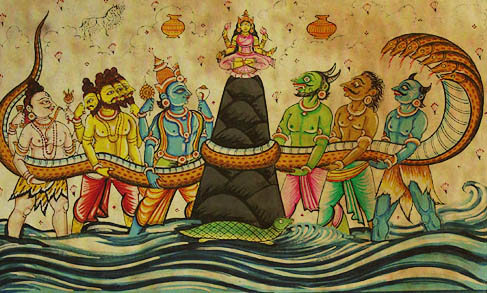
At some point the motion of the churn will stop and change direction. Then the universe will shrink, but never down to nothing. The notion of ‘singularity’ proposed by the Big Bang theorists, stretches or rather shrinks one’s logical understanding to absurdity.

It is impossible for the universe to shrink into an infinitely small space. What does it even matter how small or how large the universe gets? The question is similar to the chicken and egg question because it is playing with words, not realities.

Just because the question can be asked, does not mean there is an answer. This is the essence of the understanding koans give in Zen Buddhism.

The Old Testament has an interesting take on ‘how the world began’. All human cultures ask this question and come up with various ideas. The Old Testament however is uncannily parallel to the modern scientific view of the stages of the evolution of the ‘world’ or universe. Once you realise that ‘day’ in old Testament terms means an infinitely long era, you can examine the stages more thoroughly. I shall not go into these here and leave that journey to the reader. However if we start with the universe being no more than an infinitely large cosmic cloud – we have travelled long before dinosaurs and eggs.

Intelligent energy in the form of light was introduced into the void;

1:2 And the earth was without form, and void; and darkness was upon the face of the deep. And the Spirit of God moved upon the face of the waters.

Place in every particle of this cloud a Divine intelligence, and you get the idea of how ‘stuff’ started.

1:6 And God said, Let there be a firmament in the midst of the waters, and let it divide the waters from the waters.

Interesting to note that light was introduced (a transverse wave form) and then sound (a compression wave form).

The waves started to ‘sift’ the cloud and ‘islands’ of matter appeared amongst the ‘waters’ or what I am calling ‘the cloud’.

The intelligence is very much part off the creation process, the spirit of God moved upon the face of the waters, is not a separate intelligence operating from afar.

Such a belief in the ‘separateness’ of God is a problem for many people today.

The old Renaissance idea of ‘God on high’ floating around in the sky has permeated this ‘otherness’ into modern human assumptions.
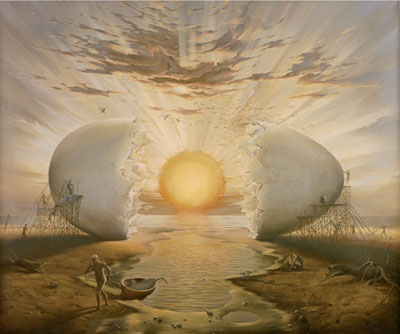
There is no chicken that makes eggs, like cars coming out of a factory, when it comes to trying to understand the Universe. Our thinking has to be so precise that it includes the biases within the observer’s observations. Scientist have also come to the understanding that we ‘change what we observe’ just by being. What is extraordinary and not generally realised, but this capacity, is exactly the same capacity of a Creator. But then I am a believer in a Creator contained in every essence of the creation the hearts of each one of us. Call me radical.

Cuckoo Cats

There is something very strange about cats. Now don’t get me wrong, I am one of the half of the population who adores furry felines – the other half giving allegiance to cuddly canines. Like Brexit, this is disunity within the United Kingdom, is unlikely to ever go away.

However, let me explore the enigma of cats. I am going to express an opinion that some may find absurd, but I crave their indulgence as I describe the facts as I choose them to be.

Firstly, isn’t it odd that cats turn up in large numbers in Ancient Egypt – getting on for 5000 years ago?

‘Get in you basket – Bastet’

cat-statue-Bastet

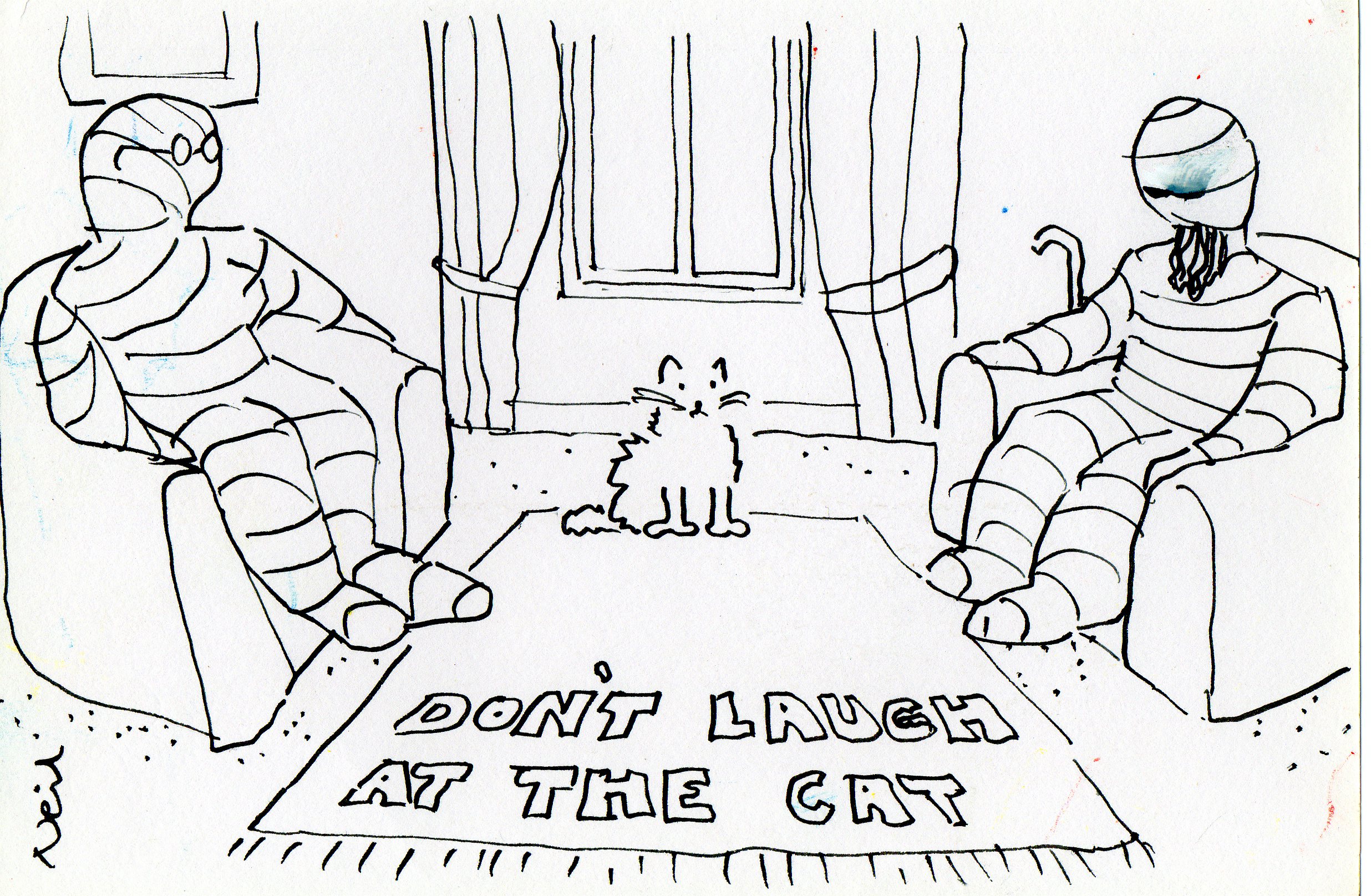
So many were mummified, that their swathed remains were once used as a form of domestic heating. There was even a minor god who was a cat – see above. Being a cat in Egypt in those days was probably a pleasant incarnation – provided you kept away from the embalming and mummification factory.

Don't Laugh at the Cat 001

But it is odd that prior to the rule of the pharaohs, domestic cats even existed. Some how the ‘big cats’ of Africa, had been genetically engineered to become ‘small cats’ or ‘pussy cats’. Were lions somehow persuaded to model for the famous Sphinx ( a lion before it was repurposed as a blokes head ) ?

Did big lions take up sitting around the camp fire at night with the nomadic tribes? Were these lions engineered through unnatural selection to become – small, domesticated lions?

What is also interesting is how small they did not become. There are no mouse size cats. Such a creature would have to put up with a fair fight with the mice – rather than the easy kills the cats enjoy today. Yes, cats were decided to be the size of a human baby – almost exactly – a small mature cat weighing in at around eleven pounds. Picking up a cat and supporting the hind legs by cradling the arms, is exactly how human babies are carried. Cats and babies look up at you and then around the room from a this new view, in exactly the same way.

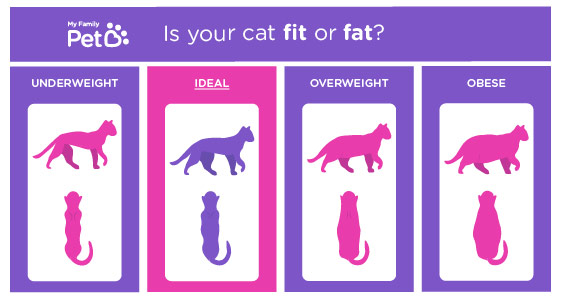
Warning to cat owners how cats explode if on the wrong diet

cat-weight

It gets more odd. Cats and human babies make the same high pitched screaming sound when requiring attention. Any one who has been accompanied by a cat in a car, on the way to the vets or next ‘forever home’, will know how deeply unsettling the cat will make the car occupants. The whining will be near enough constant and totally disproportionate to the level of comfort the cat is being afforded by the air conditioned, smooth, silent ride. ‘What is your problem!’ you will hear people say both to their babies and their cats. Ultimately, both species get their way, whatever the time of day or night.

Then I realised what was going on with cats. All of this ‘babyishness’ is a deliberate ploy to make humans think, unconsciously, that they are not cats, but babies. It’s a brilliant stroke of unnatural selection, to force humans to ‘take in’ cats – whether welcome or not.

My own experience of cats is that there is no system of choice or purchase when becoming a cat owner. A cat, somehow – from somewhere – turns up and demands entry into your home. Very soon the game starts where it explains to the besotted human that the price of stroking it’s fur is food – regularly and plenty of it.

And in this way, I extend the parallel between cats and babies (who also want food regularly and in vast quantities) to birds. Not just all avians but one species in particular. Can you guess?

‘Doesn’t he look just like his Mum?’

Cat Cuculus_canorus_chick1

Yes, it’s the cuckoo. Well the clue was in the title I know but you might have forgotten it by now. Yes, cats operate in the same way as cuckoos. The name for this technique of seeking foster parents for spare eggs is an ‘obligate brood parasite’. And the cuculos canorus is not the only one playing this game-for-the-innately lazy.

Mother cats push their brood out at some point; into the big wide world. Kittens on Facebook have unaturaly selected to look both frail and fanciable – a kind of Marilyn Monroe come hither look. ‘You want to prrrrrrrrotect me – Mr. Prrrrrrrrrresident’ delivered in husky tones before the high screaming begins in the kitchen post coitus.

No, I am not saying MM was a cat – although ‘pussy cat’ might be the right badge of honour – no, I am saying the kittens / ergo cats, are full on con-merchants, checking out every nook and cranny before calmly adopting a pre-dinner sleeping position in what was once, your private home.

I have four cats whom I adore, and every one of them – I now realise – has obligated itself into my home with the natural charm of a film star come used car salesperson. Thanks to the Ancient Egyptians or whoever first thought up ‘baby sized lions’ – half of the human race has become cat crazed.

The other half of humans? Well they have to own up to the fact that they have adopted a baby sized wolf-monster, that uses every trick in the book -like ‘undying loyalty’ to get the human to obligate as well.

Woof! woof!

The Man in the Moon

The Anthropomorphic Universe

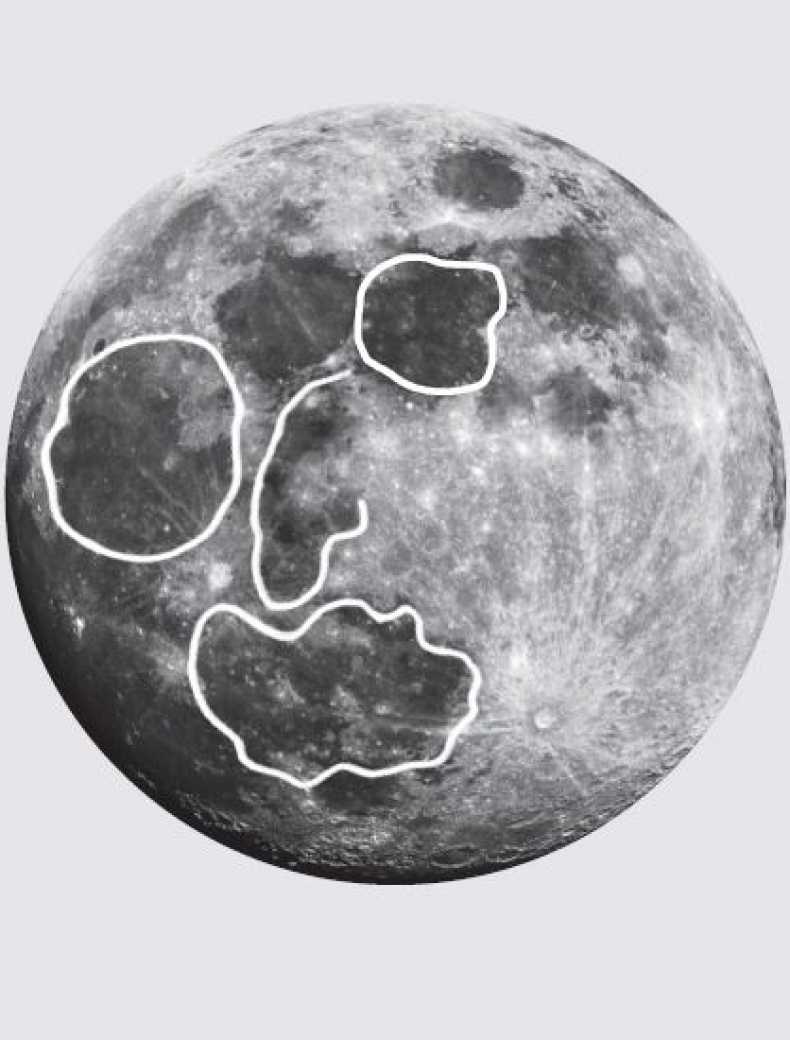
Who believes in the man in the moon?

man-in-moon-crop

For centuries, so called sophisticated societies have continued traditions, superstitions, folk tales and festivals inherited from rural ancestors. Much will certainly have been lost, as modern man’s connections with nature have been severed. But mothers still point out the face in the moon to their children who stand open mouthed at the mystery. Our companion animals are named and loved as if they were our children who never grow up; Peter Pan style.

Even the star map itself is full of the figures of gods and animals, a continuous tradition going back to the Ancient Egyptians and Sumeria.

Many cultures across time and the world have seen animal and human faces in rock formations and considered the effect significant.

rock as a face

Modern urban man likes to think that these are all in the realm of ‘myth’ – that is, stories that have no meaning any longer.

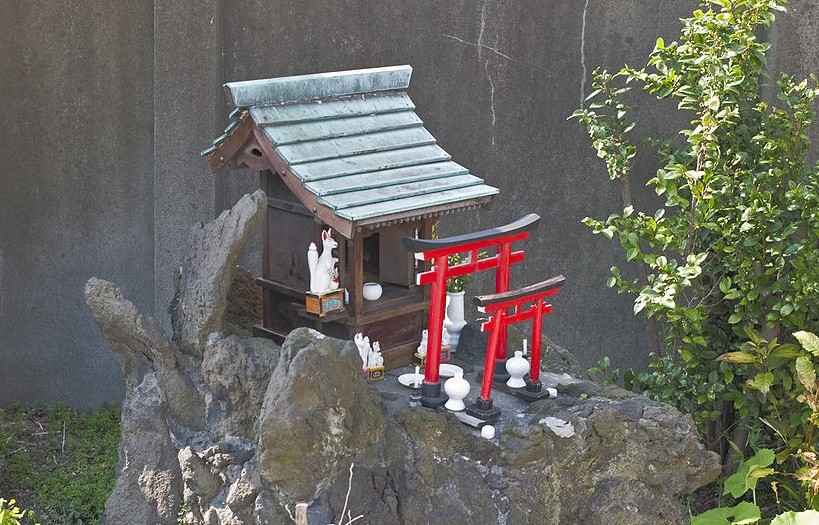
When I was in Japan with my Japanese girlfriend many years ago, she took me to her grandmother’s beautiful traditional home. In one room was a Shinto shrine. Megumi knelt before this shrine to pray and invited me to join her. I politely declined thinking myself a monotheist and forbidden to worship idols. But I now realise that Shinto is a religion of worship of nature and not idols. Each tree, rock, flower; is seen as a manifestation of living spirit just as we are manifestations of living spirit.

Shinto Shrine

In Pagan Britain before the Roman invasions, people lived by the cyclic laws of nature. Natural features, fauna and flora were also a living presence on the physical and spiritual planes. Such living things acquired names and often magical properties. To kill or take away was done with a blessing for the spirit which was being released.

Now that scientists have persuaded us from viewing the world as sentient, we are expected to consider industrial methods of rearing and killing animals and plants as a necessary evil. But if you want to know the truth, ask a cow in line to enter the red doors of the abortoir.

Such practices which many now view as abhorrent, are likely to become questioned more in the future because modern man is on the brink of extinction.

So brutally has the scientific materialism ethical view damaged the world and it’s creatures that ecosystems are being destroyed faster and in greater areas than ever before.

Already people in so called ‘civilised’ societies are realising that there is only one way to live with a rain forest and that is to live in it. The indigenous people of the Amazon basin have practised a closeness to nature that has retained the forest in it’s glory for many generations. This generation however is having to watch as loggers, farmers and prospectors rape the mother who has protected and fed them. Nature hits back by releasing viruses in the populations of city dwellers – but need it come to this? Perhaps mankind will come to realise that all nature is sentient, before it is too late.

Walt Disney hit on an idea to make cartoon stories using talking animals. As ludicrous as this may have seemed to his contemporaries, who were making films about humans, Walt Disney was digging into the gold mine of imagination.

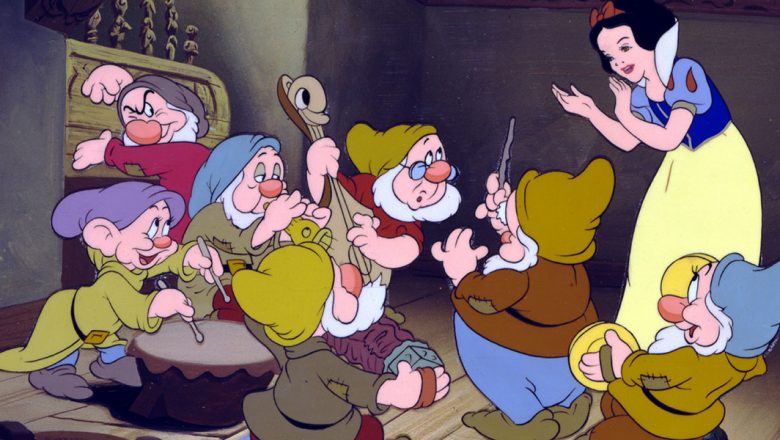
Despite or perhaps because of being ‘sophisticated’ children in particular needed to view the world in the old way of our rural ancestors. Stories in which animal and magical characters could speak and interact with each other like humans – gripped the imagination. Science may not like it, but humans are complex and deep in their needs and this foaming ocean of stories such as the Cinderella and Snow White and the Seven Dwarfs, are archetypal stories for thousands of years ago (Isis and Osiris if you are curious).

Snow white

Modern men, women and children naturally engage with nature. We have a deep physical and psychological need to be nourished by nature and allowed to bloom, as flowers do.

There is a young gecko in my bathroom whom I have seen a couple of times now. He looks at me and does not move and I look at him. Yesterday I named him, BR, which stands for ‘bathroom’. We have a relationship – of sorts.

Humour aside, this is the direction that humans in the 21st century must go if they wish to maintain their present numbers. They have to understand the sanctity of all life, whether it is in rocks, vegetation or animals.

Practises such as ‘whaling for scientific purposes’ should be and will be seen as relics of a shameful past when scientific materialism ruled the brain waves.

header-illegal-whaling

There have been extraordinary studies between humans and primates already, from which lessons are still to be understood. Chimpanzees have been taught to use tokens to buy food in one study. This is remarkable in itself until it was found that they also understood many more principles of economics, like ‘best price’.

I predict that in the next twenty years man will be speaking with marine mammals as fluently as Google Translate serves us today. These steps are more important than interplanetary exploration at the moment in my view, because they will lead modern man into an honourable way of relating with nature, as did our forefathers.

Once this is accomplished, the further step will be to communicate with sentient beings who are not of this planet. If the E.T’s observe that humans are not responsible enough to inhabit a planet without damaging it, they may introduce themselves first.

And if that thought fills you with dread, then you have been the victim of a misrepresentation of alien beings through propaganda. Be assured that they will not use violence to persuade. Such methods for them and perhaps one day for us – are history.


Kicking Over the Sandcastle

One main issue stood out during the campaign in favour of the UK leaving the European Union; restricting the free movement of people, meaning immigration.

Enoch Powell was a politician back in the 1970’s who was strongly opposed to immigration into the UK and warned at that time that entry into the European Economic Community would be a slippery slope into being UK being controlled by Europe.

Economists however will tell you that immigration, the availability of cheap labour, is fundamental to economic prosperity and will site the United States of America as an example. They are not concerned with social integration and interaction however, as are the communities who live with immigrants.

The UK is about half way down the league table of EU countries accepting immigrants

s Immigration bar chart

To solve a ‘problem’ you have to first define it which means asking what an immigrant actually is. Is a person with a British passport an immigrant for instance? The answer is yes, so citizens from dual national parents, are allowed to live and work in the UK. British citizens from ex-colonies across the world were awarded British passports, such as those fleeing Uganda and Hong Kong and economic migrants from the West Indies. These movements of British citizens were in the 1970’s are now generally socially integrated into the UK and have been important in creating the prosperity and diversity of today. There was public concern over these immigrants taking jobs and houses and using public services and much of this concern is reflected in the speeches of the right wing politicians at the time such as Enoch Powell.

Was this source of immigration as a result of the UK connections with Europe? The answer is no, since the colonies and returning ex-patriots from countries like Ian Smith’s South Africa were nothing to do with Europe. Two thirds of immigrants to the UK today come from around the world not Europe so any attempt to restrict immigration will need to cast a net wider than Europe.

Even if you just focus on European immigrants into the UK there needs to be a working definition of what an immigrant is. A tourist on a two week holiday is not an immigrant, however they can enter a country legally and ‘overstay’ to work in the ‘underground’ economy i.e. not paying tax and being exploited. More extreme rouses are used such as landing on remote beaches with no papers.

One strand of solving this problem would be government ordering authorities to round up those living in the UK illegally. This would include involving the beleaguered National Health Service who will treat anybody on production of a electricity bill with a name and address. Within this group are criminals involved in people smuggling and modern slavery and sex trafficking – nothing to do with the EU but certainly a problem resulting from lamentably poor UK enforcement of it’s borders.

Students are presently given visas to stay for the duration of their studies and until recently, were given three months to leave after the end of their courses. Somebody in government realised that this was a nonsense, since graduates are highly employable and there is little reason to send them home so quickly. So the law was changed allowing them to remain in the UK for a longer period.

One of the largest movements of immigrants from Europe are migrant workers. These are seasonal workers who travel within Europe to where the wages are highest. They are ‘unskilled’ but vital to farmers and fishing to pick and process fruits of the land and sea. This type of work is not preferred by UK citizens who prefer not to for various reasons, hence a dependence on EU nationals to work in the UK. Even good old British ‘fish and chips’ needs someone to lift potatoes from the flat fields of East Anglia.

None of these types of immigration have yet highlighted how the EU is responsible for a problematic level of immigration into the UK. Indeed people wanting to come and work in your country is an indication of it’s success as an economically and socially prosperous place to live. Unemployment in the UK is very low, compared to 25% for instance in Southern Spain.

The ‘solution’ to the ‘problem’ being offered by the present Tory government is to introduce a points based system of immigration.

Whether this is a solution that fits a problem is open to analysis and debate. If low paid workers are vital to farming and fishing, how will a system favouring highly educated applicants pick potatoes from the fields?

Farmers growing vegetables today want to know from the government how the free movement of migrants is going to work at least by September 2020. If there is no decision and ‘no deal’ then it is not worth farmers planting crops that cannot be harvested in the winter and spring of the following year. Similarly the fishing boats, seeking expansion of their industry following the retaking of UK international waters, will not catch fish that cannot be gutted and frozen on the port side because there are no migrant workers to do it.

The European Union was never a club that gives out free money to it’s wealthy members. It is a club that gives free money to it’s poorest members however and many parts of the poorest parts of Europe such as the Mediterranean nations in the south, have benefited hugely from membership. The EU operates more as Robin Hood than the Sheriff of Nottingham and that is a principle which you would not expect would create an issue for right minded people. However the British people have been persuaded that it is somehow wrong to share their wealth. Being the fifth wealthiest country in the World is not a position that you can use to hide from moral arguments of supporting the poor and weak.

sinking-ship-cartoon

The EU (mainly Germany) went to huge lengths to support Greece when it was about to crash out of the European Union. The newly joined member countries from Eastern Europe are pleased to join as there are not only economic benefits but also gateways out of the social and economic memories of Soviet and Russian styles of government.

With leadership comes responsibility and just on this single issue, of immigration as an indication of lack of national sovereignty, the UK has not taken responsibility but simply blamed Brussels. That argument chimed with voters who we know are generally in favour of being governed by institutions as close to them as possible. Where Brussels is exactly and why millions of British soldiers died fighting two world wars in Belgium is not necessarily something voters are going to consider. Do they know that Ostende and Zeebrugge are about the same distance from London and Westminster as is Birmingham?

ships talking

They argue instead that the elected members of the European Parliament are unelected and non representative of their views. This despite the fact that only on 5% of all occasions to vote on European policy and law has the UK voted against what was being proposed. In other words, what has been good for the EU is also good for the UK.

Could it be that the present prosperity of the UK, in social, economic, culture, research, security and concern for the environment is largely a result of it’s membership of the European Union?

Could there be a massive slight of hand taking place by the Conservative governments of the last decades, to blame Europe for problems rather than deal with them themselves? Who cares that British children are suffering from poor physical and mental health in numbers which should shock most of the British public?

Who cares about the physically and mentally ill unemployed and homeless occupying the empty town centres of the United Kingdom? Who cares that the public services in the United Kingdom which used to be the envy of the world are now failing? Why does the UK spend one of the lowest proportions of it’s GDP in Europe on public health?

Even just these three problems might been seen as more important that the ‘problem’ of being a member of the European Union.

I fear that the public have been manipulated by a clever slight of hand into facing the wrong issues and blaming the wrong causes.

Any problem with Europe could have been solved within Europe as a full and respected member. Since that proved too difficult for such as David Cameron who spent two weeks prior to the referendum in June 2016 ‘battling for Britain’ – how can we expect Tory governments to introduce policies to protect the weak within it’s own borders, even?

Has anyone projected the consequences of Brexit in the near and distant future – a list that should be under two headings of intended consequences and unintended consequences?

Politicians such as Teresa May held her cards very close to her chest when drawing up her infamous ‘Withdrawal Agreement‘. She argued that she could not let out her plans before negotiation starts, which meant that she received no guidance or feedback on her ‘red lines’ and ideas until it was too late.

You would however expect a ‘Conservative and Unionist Party’ to be comfortable with the strategy of ‘union’. Is there not a blatant contradiction between what they do and how they think. Why would a Unionist party dis-approve of Union within Europe? Is there not evidence of double dealing here? If they argue that the Union within the shores of British Isles and Eire is to what the name refers then is that not again a double standard. And given that Northern Ireland and Scotland voted overwhelmingly to remain in Europe, what is expected happen next in these two countries? Surely the people of these countries are going to want to have their say, including using the Tory ‘referendum’ tool now that it has been used to beat ‘Remainers’ into submission? One unintended consequence of leaving Europe could well be that England and Wales becomes the only working Union left within the United Kingdom – within the next five or ten years.

One in four people in the United Kingdom voted to leave Europe – all 17.4 million of them. But three out of four have not had their preferences and understanding of what the problem is, heard and acted upon. Some of them were too young to vote, some of them didn’t bother to vote, some of them were too old to vote, some of them were too ill to vote, some of them were not meant to be in this country, so did not vote, some of them are ‘foreigners’ so cannot vote and some of them did – just not enough. If you wonder why they didn’t vote it might just be that they didn’t think that European Membership was a the main problem. Perhaps they could see how inept Tory government policies were and that is why a second confirmatory referendum was blocked as an option by the Tories. If you want to win you need to fudge issues and the General Election of 2019 did that in spades against a disunited collection of opposition parties.

Kicking over the sand castle is easy. Just wait until 31st December this year when the Trade and other Agreements between the UK and European Union have not been finalised, and the Tory government will knee jerk into to what it does best, kick over the sand castle again and leave ‘no deal’ on the beach.

Sand Castle and flags

And is it just me or why is this process of leaving broken into two parts? Now we have agreed the terms of leaving we have to decide everything else (as if negotiating both at the same time is too difficult). How can you formally leave an organisation without having agreed the terms and conditions of what happens afterwards? This is like taking delivery of a new car, paying in full, receiving the key and log book, registering filling the tank and then sitting down and deciding what colour it should be and what extras should be fitted and what the price is.


Legally Addicted

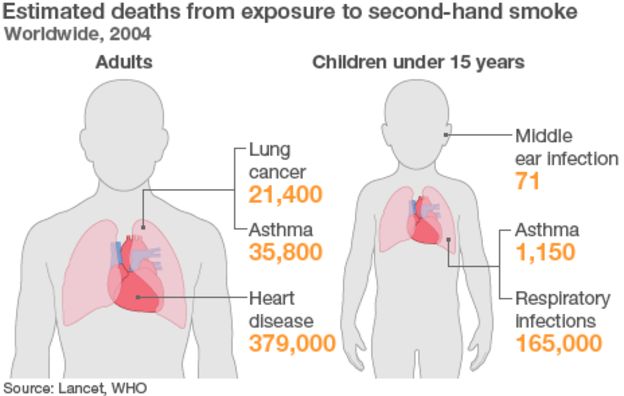
It would not be correct to say that you have ‘never smoked’. Even the most abstemious person has inhaled the exhaled smoke from a third party smoker. It is impossible not to, even with the European anti-smoking laws in place. It used to be a lot worse for non-smokers. I took a plane trip to Australia in the 1990’s when the cabin was divided between smokers and non-smokers. The row of non-smoking seats which I occupied, was directly in front of the smokers. Every exhalation sent a cloud of despair and chemicals into my lungs. The theory was that fresh air enters the cabin from the cockpit end and goes out at the back. But even if you were not enjoying the clouds coming from behind in a boundary seat, most of a plane’s air is recycled.

Smoke can even come out of your ears

passive-smoking in a car

If Jesus was alive, and perhaps he is, he would say, ‘smokers on the left and non-smokers on the right.’ But even his best intentions would not help non-smokers delay that long haul flight to heaven that we all eventually take.

I went to a restaurant in Southern Spain recently and chose to sit on the terrace over looking the sea. My satisfaction in finding a comfortable table was soon replaced by despair. A man came to the table next to mine, sat down, pulled out a packet of cigarettes and lit up.

I did the only thing I could do was to pick up my drink and bags and clumsily move indoors. I am a committed non-smoker, but it is not easy and the smokers rarely realise why you are moving. Smokers are generally indifferent to those who are devoted non-passive smokers. When they are the exchange goes like this, as it did last year between myself and a smoker in a restaurant.

‘Oh, you are eating. Do you mind if I sit here and smoke?’

Since the man was polite enough to ask I gave him the answer he had probably never heard.

‘Yes, I do mind.’

Despite a pronounced injury causing him to limp, to his credit, he heard me and staggered away.

I wasn’t quite sure what the eating had to do with anything. Do some people object to the carcinogenic smoke changing the taste of food. Are they really so fixed on the idea of protecting flavour from smoke rather than staying in good health?

It is not that I am unsympathetic to nicotine addicts. Despite the fact that no one is forced to smoke and most people have been and are made aware of the risks of smoking, it is not common knowledge that nicotine is probably the most addictive drug known, meaning more than heroine and cocaine.

Those with low will power and or looking for an instant ‘high’ or ‘release’ or ‘relax’ or whatever it is…are likely to experiment first with the drugs society deems legal.

Picture credit: iStock

Smoke comes out from a man's cigarette which pulls a lady

This despite the fact that for almost one hundred years, the toxicity of cigarettes has been known. Gone today are the Marlboro adverts featuring tough cowboys seated in tough Jeeps on tough roads with tough cowgirls peering quizzically at a nonchalantly balanced cigarette on the tough lower lip of the hero. In those days girls had not attended autopsy’s and viewed the hideously blackened lungs or the tough guys. Today those girls are our Doctors and they have little time for patients who self inflict disease, unless you have private health insurance of course.

There was a time when the National Health Service of the UK spent as much on trying to cure diseases caused by smoking as the chancellor of the exchequer reaped from taxes.

The coil of smoke from a lit cigarette is like the genii who haunted Aladdin. The spirit has escaped from the bottle or lamp and once out, is never going to return. If governments banned tobacco tomorrow the whole business would pass into the criminal underworld, blowing smoke rings around law enforcement as in the days of ‘prohibition’ in New York.

Education might appear to be a better way than legislating but what effect has that had? The citizens of Europe today have had ample information about the harm smoking tobacco causes. Even the packet is defiled with a gruesome medical photograph of the innards of a being with low will power. Still the addicted reach for the packet for the uplift which a chemical is telling them they need and still the governments collect the tax revenues from sales.

It is still the passive smokers like myself I feel sorry for. Should we really have to hold our breath as we walk behind a smoker in a crowded street. Who says that ‘public places’ are just fine for indulging in a habit you wouldn’t really want your very young children to know about, let alone inhale.

passive_smoking in children

Fifty Shades of Green

Since 1990 the world has produced as much carbon dioxide in the atmosphere as in all the previous years. The world has a problem from the unrestrained burning of fossil fuels for average temperatures are rising despite the environmental strategies of government and international agreements.

If you replaced one power station burning fossil fuels everyday until 2100 with 1500 wind turbines you might stop the problem. As this is unlikely to happen, the extinction of current civilisation has begun. New ways of removing carbon from the atmosphere is the only technology that will reverse this process. Technology at present has no such solution.

Why are is technology failing us? Consider the partial solution of transport powered by electricity.

electric car workings

I have to expose the myth that electric vehicles are good for the environment.

This may come as a shock to those who have invested in a hybrid car so reach for a box of tissues as it gets worse.

Perhaps I am being a little harsh on what is a welcome prospect for the future of personal transport but it has to be said. I do not anticipate that the luxury of personal transport is going to go away in the future what ever form it will take. Certainly populations in countries like China, India and Africa feel resentment when those countries who have created the problem require them to forgo the benefits of owning a car.

Efforts to eulogise public transport as the future are futile because people know how good it is to control their own transport. This is not to say that public transport has no place in the future. On the contrary, it should be spearheading the technology that drives vehicles without causing air pollution and greenhouse gases. Sadly in most modern cities it is not. Taxis, buses and trains are still burning fossil fuel in all but the most innovative urban centres.

Decades ago, buses in Amsterdam were running on compressed gas. Cylinders like divers use were positioned under the floor of the bus and charged with compressed air overnight. During the day, the engine turned over using the kinetic energy from the compressed air. The discharge from the exhaust was of course pure air. What happened to this idea, I do not know, but it shows how many technological advances have been left in the urban gutter.

Part of the drive to promote electric vehicles, has been the demonisation of cars using the infernal combustion engine. Whilst these engines are clearly a remnant of the past, they exist and continue to be mass produced. The transition to the new technologies needs to be managed. Most government strategies however, are well intentioned but ineffective.

For instance, in Spain the police write to the owners of cars which are ten years old or above and suggest they get a petrol engine car. Whilst we must admire the green agenda of the government the manner in which it is being promoted is clearly misguided. Firstly, any such agenda should be European wide and not just promoted by one country. The desired outcome should be measured and confirmed as achieving what is intended. Ending the life of any vehicle after just ten years is wasteful because one third of the energy used by a vehicle in its’ lifetime is used in the manufacturing process. So whatever the motive power, cars should be designed to be in use for several decades, if they are to be considered as green.

The impasse that scientists have met when designing batteries for cars is yet another inhibitor to any mass take up of electric motive power. I own an electric bicycle and after four years I had to buy a new battery at about one quarter of the cost of the original bicycle and battery. Present day lithium ion batteries require rare earth elements that will only become more expensive to obtain in the future. Their mining and processing in African states is not environmentally managed. Some electric cars are sold without the batteries as they are provided with the car under a leasehold arrangement. The cost of the battery for my bicycle per mile is about the same as if I had a motor bike and had been buying petrol. I expect electric cars which are touted as being run for a few pence per mile are actually more expensive to run than vehicles running on fossil fuels. Batteries do not last as long as the Duracell bunny would have you believe.

It’s the same lie that is used to promote nuclear power stations as providers of cheap electricity. It is cheap if you discount the astronomical cost of building and decommissioning the power stations, costs which normally governments pay presumably in order to promote the industry and hidden agendas of manufacturing weapon grade uranium. The political games between Iran and North Korea and the USA are a current example of these smoke and mirror politics in which no citizen is the winner.

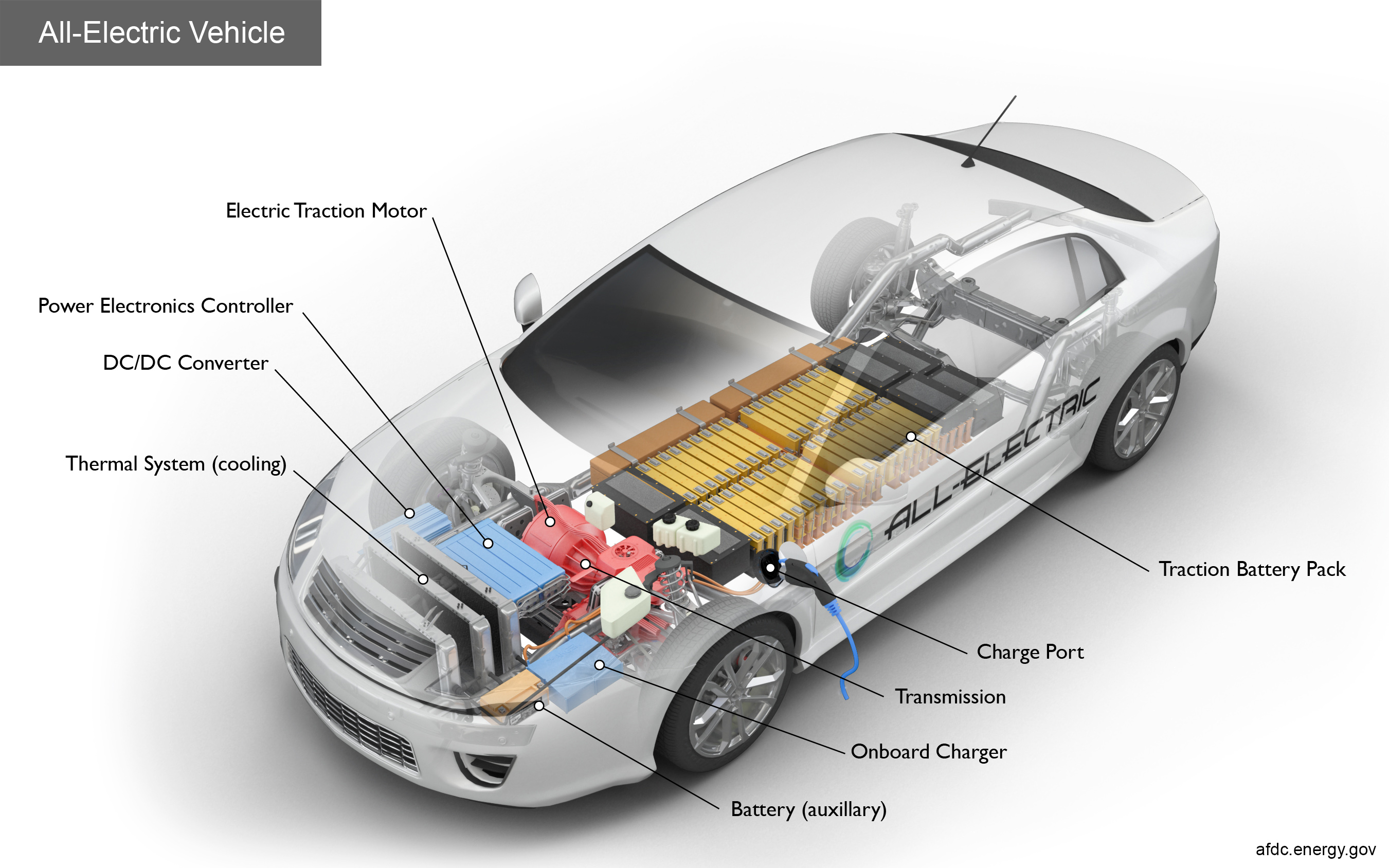
Faith in the ‘electric car’ as the future of personal transport is misguided for this reason. A car that needs a battery is still being run on fossil fuel, just one step removed. I refer to oil, gas and coal fired power stations that produce the majority of the electricity in most European countries. A car which is plugged into a national grid, is merely acquiring energy made from burning fossil fuels.

If a householder has a contract with an electricity supplier claiming to provide electricity from renewable sources only, then that would be the ideal. But as things stand, local and national governments are in the process of providing charging points right across their respective countries. They fail to see the lesson from the beginning of the twentieth century where electric cars could not compete with the new internal combustion engine when it came to range of travel. It was then and is still, a problem.

As I write this the battery for my bicycle is being charged from the photo voltaic panels attached to my house. Not only dirty electricity but the whole idea of ‘national grids’ is wasteful and expensive. In the future, electricity will be generated locally and stored in ‘gravity batteries’ and similar solutions.

Hybrid electric vehicles are still causing pollution and therefore not a solution for the zero carbon future. Totally electric vehicles being recharged from recharge points in towns is impractical and the hunt for even a parking space is proof of that. Charging by induction when stationary for long periods is possible but waiting times need to be considerable as the process is slow. Roads, car parks and even railway tracks with photo voltaic cells as the road structure and surface will produce electricity locally even when the sun is not shining but charging batteries from these sources is just impractical as already stated.

There is and has been for decades, a better alternative to battery driven vehicles. The hybrid cars being manufactured and subsidised by governments today require a grid of charging points. Should the very large cost of these be paid or subsidised by governments? Who ethically should pay? Those rich enough to be able to afford current electric cars or tax payers who are going to get little or no return.

The question is similar to the quandary faced by consumers in the 1980’s when Video Recorders were appearing in the shops. Which is better, VHS or Betamax? Although the latter was a better quality product, VHS won.

So to all those early adopters looking at battery driven vehicles, I suggest they hold on for the next generation of hydrogen fuel cell powered cars. The energy from these hydrogen is green and relatively very cheap. Used in conjunction with the high torque electric motors like those developed by Tesla and motor racing engineers, these vehicles will provide every comfort and convenience currently enjoyed by the generation who were brought up with fossil fuels.

electric car hydrogen-fuel cell

As has happened many times before with new technology the wrong decisions (for the nation and environment) are made by governments to promote agendas popular with voters instead of just letting the best patent win. So my advice is keep your present car on the road for as long as you can. In five to ten years, new technology will be available at a reasonable price. There will be cars designed to last a whole life with little maintenance. Just don’t expect to be allowed to drive it.

That pleasure will be a thing of the past as well!

Referendumb

On 2nd August 1934 the president of Germany, Paul von Hindenburg died. Seventeen days later Chancellor Adolf Hitler declared a referendum. The question to the people was…should the posts of president and chancellor be merged? According to Wikipedia there was intimidation of the public to obtain the vote Hitler wanted and got. It gave him absolute power and the rest as they say is history.

This is not to say that all referendums are bad. You could have one asking whether all kittens should wear pink or blue bows. I’m not suggesting you should, but you could. Switzerland for instance has four referendums a year. Direct democracy suits the Swiss, although I suspect in many countries, voters would fail to turn out on account of being ‘bored’ with referendums. This was a common complaint in the UK following the referendum in June 2016.

kittens with blue and pink bows

The fact that many politicians and civil servants distrust referendums as a route to policy decisions, is hinted at in the fact that they are only ‘advisory’. In the UK Brexit vote, the main parties promised to abide by the result in their manifestos, something they later probably regretted.

Socrates was against voting by uneducated people on the grounds that they could not possibly understand the issuesin the same way that you go to the Doctor for advice on your health, not the person sweeping the street. What we know, is different for each person and there is a concept called ‘the wisdom of the crowd’. In this the understanding comes not from the individual but the collective and on some matters it works. People en mass can get it right.

However, as the late Dr Hans Rosling has shown, even experts (15% correct) can perform worse than monkeys (30% correct) when asked questions about population growth.

Making complex decisions based on multiple variables, sources, probably outcomes, threats, subsequent strategic objectives etc can just be impossible. So hold in the back of your mind the idea that perhaps, Socrates was right.

Referendums have to follow an organised routine in order to be regarded as fair. This is why the rules of a referendum are vitally important. They must be agreed, practised precisely and officiated (the last being to make sure they are followed).

When children go to school, they are given the opportunity to play team sports. Let us take the example of cricket. The PE teacher will sit down the eager children, all dressed in their whites, and explain the rules of cricket. What will not happen for sure is that a small child at the back will lift a hand and ask, ‘why?’

The teacher will explain that these are the rules and have been for a very long time and that is just the way it is. A pretty poor answer in my view. The rules for games are, after all is considered, also only advisory and if you want to have four stumps at each end or play with a different shape bat or ball, run backwards…why not? Rules are arbitrary and exist only if they are followed.

So let us examine the rules that govern referendums.

I suggest that referendums fall into a similar category of ‘game’ with rules that are just ‘made up’. I can substantiate this proposition as follows.

1. The referendum issue can arise from a single issue party or individual with plenty of money to donate to party funds. For instance, Rupert Murdoch owns a string of UK newspapers such as the Daily Mail and the Sun, neither of which would win prizes for balanced reporting. Sir Clive Goldsmith donated to Conservative Party funds and was a keen anti-European. His influence, I believe, got the Brexit question into the Tory manifesto. This process was not particularly democratic but followed the rules.

2. The referendum rules need careful consideration and adjustment so that the result does not split a government and a nation down the middle. In other words, democracy is not held to ransom by a minority of ‘swing voters’. Similarly, a insignificant margin in favour of one side leaves a strong minority to contest. This minority is practically the same as a half way split as both sides are constantly at war. The spirit of democracy is only served when a substantial majority of voters want the same thing. In government this may occur as a coalition. In referendum rules, this is termed a super majority and it can be a minimum of 60% or higher. The UK is currently split almost down the middle over Brexit and the lack of a requirement for a super majority, meant the infighting in the parties and the people was not solved or quietened, even after the referendum.

3. Who votes? Generally the most motivated voters are those who have strong views. They might be misguided, ill informed or ignore the question, but what counts is that they will get themselves to the voting booths, no matter what. Those who expect the vote to go one way or the other and therefore they don’t need to vote, stay at home. These are called the silent majority. Some will vote because they value their vote as a democratic right fought for in two world wars. Some will not vote because they have lived outside the UK for over 15 years and are therefore not invited to vote. Others may post a vote which is either sent out too late to be returned in time or is lost in the post.

In all of these scenarios, the democracy that is held up to the high altar by the winners, has not functioned as a true reflection of the wishes of an overwhelming majority, but a function of unregulated and random and inhibitors and motivators. Is this democracy?

4. How do voters obtain their information? In the twenty first century, the availability of information on any subject, is something undreamed of thirty years ago. Because the internet (in it’s light and dark theatres) is largely unregulated and operates outside national boundaries and legal jurisdiction, anything can be claimed by anybody, as true. If you can make the same claims in multiple virtual places and repeatedly it seemingly becomes more true. Russia, allegedly, has rooms of computer operators who are filling chat rooms and newsfeeds and social media pages with misinformation.

As Mark Twain said, ‘when Truth is putting it’s boots on, the lie is half way around the world.

Adolf Hitler was an unashamed liar knowing that the majority don’t attempt to refute. A minority might but under the rules of democracy, their views can be ignored. Activists risk recrimination from the authorities. Witness the events in Hong Kong today.

The President of the United States is a regular liar, rarely reading books and just making things up, presumably to wrong foot those wishing to have an informed debate.

In the UK referendum in June 2016, Boris Johnson and Michael Gove, presented a collection of very dubious ‘facts’ to voters persuading them to vote to leave the European Union. This is corroborated in the recently published memoirs of the resigning Prime Minister, David Cameron. There were also campaigns using social media to spread unsourced information. This is not democracy

5. Why would you not vote?

The silent majority have a lot to answer for. They have the vital ability to challenge the highly motivated minority who do vote.

You will sometimes hear the view expressed that each citizen has a right vote and because this right was defended in two world wars, each person is honour bound to vote. This is a strong argument and yet the majority don’t think this way. Why not? Well here are some common ‘self justifications’.

If you believe the vote is one hundred per cent certain to go in a particular direction, you might justify not getting the car out of the garage and watch the TV instead on voting day. Certainly in the UK referendum of 2016, there was a general assumption that the Remain vote would win easily.

Some people in the UK express total distrust of politicians and the processes of parliament. They sight the expenses scandal where some MP’s were less than honest over their expenses. They say that this is the reason they don’t vote. Whether they would prefer a dictatorship, like the reinstatement of the Monarchy or a prime minister who closes down parliament, you have to ask them.

If you don’t need parliament you are cooked, you will have a dictatorship. That is what it will be

Margaret Atwood : Author

In a referendum a question is asked. Not surprisingly, considerable time is spent in deciding what this question should be. Statisticians know this is a cardinal rule of their science. Who writes the question is largely in control of what the answer will be. For instance, if the question is specifically on a lesser issue, the colour of kittens bows, the question is easier to understand and the answer specific. As the question becomes more general the scope for not understanding the issues grows. So a very general question such as whether the UK should leave the European Union is so broad that few will clearly understand the issues. The question could have been, for instance, should the UK reduce immigration? as that was the issue that many voters at the time had strong feelings and differences about.

What happened was many voted in a way that expressed their anti-establishment views. You therefore have a referendum result for one question which in a substantial number of voters minds, was another question. In school examinations pupils are reminded repeatedly to ‘answer the question’ because humans often lose track of the issues and move into emotionally driven concerns.

Referendums give irrational results for many reasons. Analysts and commentators know that on voting days when the weather is bad, fewer people will vote. Other practical reasons for not voting are not having transport, being ill, at work or living in another country. That last reason was ironically about a vote affecting those ex-pats living EU the most. If anyone should be allowed to vote it should be them, you might argue.

6. How many referendums?

There has been much debate on whether there should be another referendum following the first in the UK in June 2016. Those who argue against it say that the suggestion they did not understand the issues in full, is condescending. They are certain they did understand all the issues and they just want their wishes to be carried out. They also suggest that if there were a second referendum this would justify a third and a fourth and there is a principle that you should not keep asking a question until you get the answer you want.

On the first point, I would argue that no one really understood the issues and consequences of the question. Even politicians (who are paid to know) are divided in their views. So it is not condescending to suggest that the question was too broad.

On the second point, three parliamentary votes on the same issue, were employed by Teresa May in parliament to try to get her Withdrawal Agreement made into law. So no Tory can argue that repetition of the same question is wrong. She had three goes at this before the Speaker ruled she should change the question in some way.

A referendum is only a snapshot of public opinion on one day. The next day, the next year, the facts will have changed and opinions. To have a second referendum three and a half years after the first, with a different question is sensible. Elections are held at similar time intervals and each election replaces the government of the country in a way acceptable to most.

There is a strong argument that the terms and conditions of the question to leave, were never agreed with Europe before the vote and they should have been, as in previous referendums. For the same reason ‘thorny issues’ such as the border in Ireland should have been resolved before any referendum. These pitfalls in the method and application of the referendum have contributed hugely to the unsightly events in Parliament since.

Statisticians will be fully aware of the changes in the structure of the demography of the United Kingdom in those three years. If old people tended to vote leave, some of these good folk will have died. Their votes will be replaced by young first time voters who are estimated to be about 3 million. Most people can see that if there was a second referendum the result could swing in favour of remaining in Europe for this reason alone. Stopping these voters having their say on a matter affecting them more than the elders, is not democratic but strategic.

Finally, a second referendum would not ask the same question. It might give more options than yes or no. It might be based on national interest rather than UK interest as independence parties in Scotland and Northern Ireland have interpreted the first referendum in that way.

Overall, the above examples above describe the fact that little in the referendum process resembles democracy. This is a sad reflection on a country that prides itself on it’s unwritten constitution and parliamentary procedures as a ‘beacon of democracy’. Referendumbs have been the route to create chaos out of a kind of order.

The next step has to be ‘return to Go and collect £200’, or in other words, cancel Article 50. Then sort out the island of Ireland to make it ‘Brexit’ proof and any other issue that inhibits agreement with Europe, agree a new Agreement with Europe and then go to the people in a general election on and ask the question whether these terms of leaving are desirable.

Horse / Cart – Cart / Horse.

Head for the Hills!

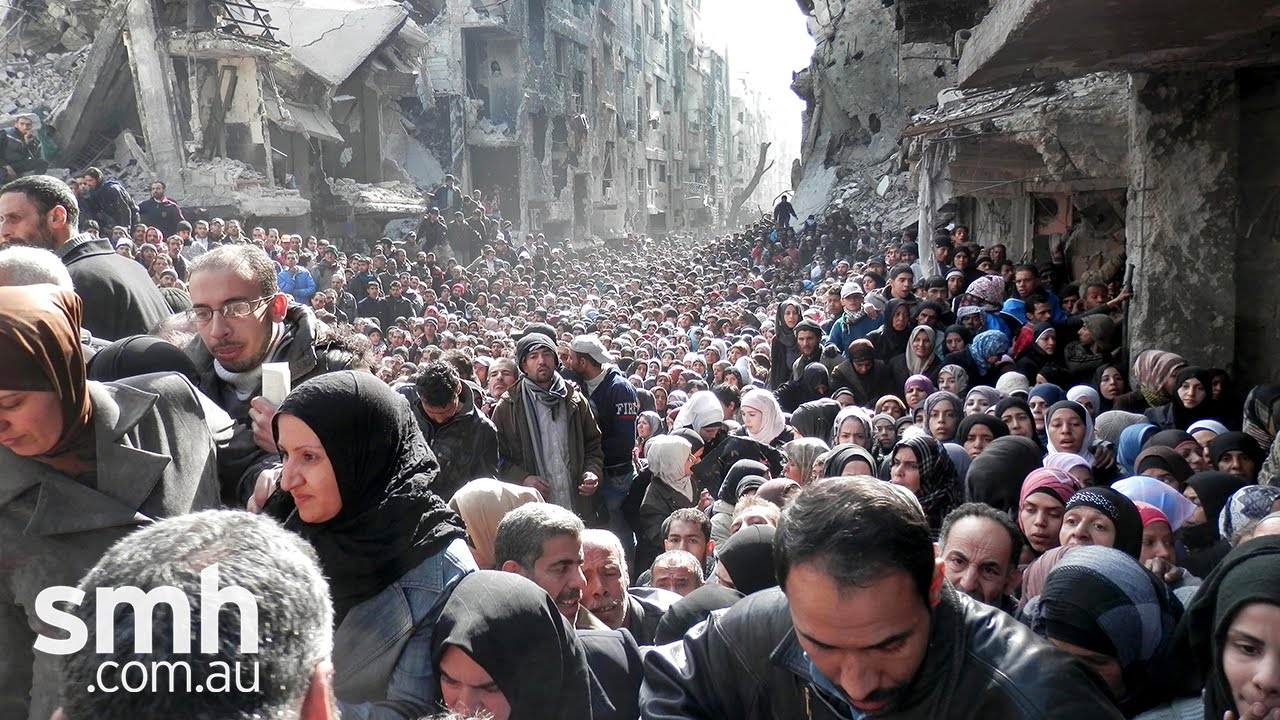
Suppose for a moment you lived in an unstable African state. You might one day receive a threat from a ‘warlord’ or drugs cartel or terror group. You round up your family, grab a few possessions, kick the pets out onto the street and run. Where are you going?

Most wealthy and privileged people would head for the airport, wouldn’t they? A couple of suitcases, a fistfull of currency for a hurriedly purchased air ticket to ‘anywhere the next flight is going to,’ and a passport is all you need.

If you are a citizen of that state from which you now wish to flee and you don’t have a passport, what are you going to do? No passport at the airport and they won’t let you on the plane… international law says so. It’s only a hundred dollars to the next State so money isn’t the problem. The Government stole your passport, or some thief stole it, or it expired and you didn’t renew it, or it was burnt with the rest of your belongings when your house was burnt down – which is why you have to flee.

Asylum Seekers 2

It’s a kind of Catch 22. If you are in trouble and you have nothing, you can’t get on the plane. If life is normal and you just need a holiday…you can get on the plane.

Many people and politicians are wondering why people are taking a one in six risk of drowning and fleeing by unsuitable boat. They think the problem is the cause of their flight and the people smugglers who ‘help’ them and the failed State fighting itself.

And yet there are working International Airports even in Libya. Why do not those fleeing the country take a plane?

The answer is of course this passport law. Understandably air lines don’t want passenger lists with a lot of question marks. USA airlines are providing passenger lists to the NSA before the plane even lands in the USA.

Yet with thefts of passports and help from those able to alter passports illegally, obtaining a new passport is not impossible. It might be enough to get someone on the plane even if they are detained on landing. They can then claim political asylum and sit out a few months in a detention camp. At least the food and bed is free.

The majority of emmigrants don’t have passports though and no means to get one. That is why they are taking their children and climbing into rubber boats that wouldn’t make it across a river, let alone a sea.

Clearly the problem is being created by the inability of emmigrants to get through an air or sea port. The air port staff at the check in desks are performing the task of ‘border control’ on behalf of governments. The question has to be ‘is this right?’

It’s wrong to believe too much in the a document like a passport. Even with passports, people are passengers on planes who have hidden their identity. These are the individuals most likely to have criminal backgrounds and or intent and they will be allowed to enter the country ‘for a holiday’ without being challenged.

If a person reaches the check out and falls on their knees in tears with a baby in their arms, begging to be allowed to leave the country as men with guns followed them there – should their be a compassionate process to allow them to get on the plane?

I would suggest their should. An asylum application is an international right and it matters little in which country it is made. What I mean is why can’t you be in Libya and apply for asylum in Europe? Why can’t you be in Calais and apply for asylum in the United Kingdom? Why can’t their be Embassy Offices in every airport and staff to process ’emergency’ applications? Every application for asylum is someone’s emergency even if it isn’t the airline’s or the Abassador’s. Why can’t an Emergeny Asylum Application allow a person or family to pass through a border control?

At present there is an argument that ‘undocumented passengers’ should not be allowed on planes for security reasons. They might be international terrorists pretending to be asylum seekers. That is true although, as already described, terrorists are going to pose as holiday makers or business staff before they pretend to be seeking asylum. Even then, if you wanted to be sure that a person or family were not carrying a bomb onto a plane; you send them through ‘security’ as you do every passenger. If you want enhanced security checks – a strip search for instance – and luggage examined in fine detail – then do it.

If you had a long enough queue of asylum seekers at an airport, you could start chartering aircraft for them or use military aircraft.

In my view there is an alarming lack of a strategy, certainly in Europe, that adresses immigration, front on.

You might have thought that there would have been agreement as to how many applicants should be allowed to work and for how long, and a quota arrangement allocating people to countries. Processing applicants for asylum could be achieved in any European or neighbouring country – providing the government staff have wi-fi!

Thinking globally should be second nature to the international men and women who take up positions of government whether in Europe or the United States of America. Both have different immigration demands but the basics are the same.

President Trumps response to build a wall on the Mexican border is the same as Italy’s prime minister who stops rescue boats entering Italian ports. Both strategies are looking at the tail end of the problem rather than the front.

The front view is that there is no humane process in place to accept or reject asylum seekers.

Both Union’s could seek the support of the United Nation’s Refugee Council active player’s in a global strategy or relocation.

People in distress clearly must and will pick up a suitcase and run. People in search of economic benefits will do the same but these will not pass the asylum questions – hopefully! So if populations are willing to leave all they have, governments should have strategies to deal with them with compassion and fairness.

Because it is not just war and rogue governments that cause populations to move en mass. Factors such as climate change – floods, flames and famine – should also be in the mass migration plans of the emergency planners.

Sea level changes alone will become a cause of massive movements of populations in the next decades to come. Volcanic activity and earth movements will destroy cities as they have done in the past and people will evacuate islands and vulnerable seismic locations and new deserts in large numbers.

It’s a huge problem for which non-government agencies should not be leaned on too hard to ‘sort out’.

A good place to start however in the present is to change the question at airports from ‘can I see your passport?’ to ‘how can I help you?’ The rest is common sense.

Strictly Come Democracy

Twelve men and their captain leap into the life boats. The timber ship has broken her back on rocks and they have seconds to save themselves. They manage to reach the beach through the crashing waves, pull up the boats and huddle together, shivering. The place is the Antarctic and the man faced with the problem of survival, Captain Ernest Shackleton. The choice is either escape in the boats, or stay and wait for help. They vote. The result is six/six. Captain Shackleton decides that six should camp there under an upturned boat and the rest take the other boat to get help. The outcome of this decision, in which one half of the crew did save the lives of the others, was not divisive but mutually rewarding.

Democracy doesn’t work that way. With a 50 ½ to 49 ½ result, the majority win. In Shackleton’s case, all would have been morally forced to make the perilous journey in an open boat.  The minority clique would moan all the way and constantly demoralise everyone.

The elephant not in the room, during the parliamentary election process, are those who chose not to vote. If you ask them why the replies are;

‘I don’t trust/like politicians’

‘What is the point, the ****** Party will get in anyway’

‘It’s all a load of rubbish’

‘I’m too busy to vote’

‘It’s raining’

‘I walked the dog already so I am not going out again’

We are all familiar with the responses of those asked why they do not exercise their democratic right. Where would Captain Shackleton have been if one third of his men decided not to vote?

How can democracy engage all it’s citizens, as surely it should?

You can enforce voting by law, as in some countries, but this is too close to autocracy for many.

What can you do to voters who decide not to vote on account of the weather? A large part (sometimes the majority) are so disengaged with politics that the winning party are sometimes a minority of those legible to vote. Democracy in the UK has a problem but there is an alternative.

There is another form of democracy which avoids the voting for representatives. It is called ‘direct democracy’.

In Plato’s time the democratic city consisted of no more than 1008 people. This is the number who can stand in a circle and listen to a single speaker. This is direct democracy; no representatives. By removing the ‘middle man’, who is often the cause of the disgruntled not voting, voters are empowered in a directly personal way.

As a side issue, you might also think it odd that in the twenty first century, we vote by making a mark on a piece of paper with a stubby pencil in a makeshift polling booth at the local library. Isn’t that rather old fashioned in an age of global communication? How is it that viewers can vote for their favourite couple on ‘Strictly Come Dancing’ but can’t vote on whether there are too many immigrants or whether to declare war on another country?

I do not know but I expect there are boffin s in the Civil Service working on an Application that is completely secure and personal to each citizen. With it, citizens can vote on political issues, both local and national, regularly. How regularly? Well Switzerland already has four referendums a year and this system is generally praised across Europe for it’s success in engaging it’s citizens in political choice.

And perhaps an Application is not the solution either. After all, not every citizen has a cell phone and we must wait for the ‘My Vote App‘ to appear on everyone’s voice controlled television

Another method of voting for the present, is not to vote for party’s, policies or people. These are all fraught with over simplification and all that brings. Instead a citizen will be empowered to decide how their personal taxes are divided for different government departments. The tax form will have a box for each department ; education, defence, food and fisheries, health etc. Voting for policy is conducted in fine detail through an existing system; annual tax returns.

A citizen ticks only the boxes to which he or she wishes their taxes to be allocated. Three ticks means your tax goes three ways, six ticks separates it six ways…simple. As a result the different government departments might receive a surge in funding to empower them to address issues that citizens tell them deserve money. Not only the cause but the strength of their belief and desire is acknowledge.

Whilst it may be true that money does not solve problems how often in response to criticism have you heard a Prime Minister defend policy by saying how much money has been spent and how this will be increased?

So particularly in a period of ‘austerity’, allocating money to the NHS proportionately to the will of the people would be a huge step forward for Democracy and calm discontent with central government.

It may not be perfect and perhaps there is another way. Living in an age where artificial intelligence is making the decisions that hold the Stock Market together, isn’t it time for AI to help us voice our political choices?

The Platonic city will live again and instead of dropping black or white stones into a container or scribbling on a bit of paper – citizen democracy will move into the age of technology making the impossible, possible. In doing so it will bring together all citizens instead of just those who happen to own an umbrella or need to walk the dog.

Who Owns Knife Crime?

Should the citizens of the United Kingdom be afraid? Reading the headlines of the ‘red top’ newspapers – you should be. Because stories involving public violence sell newspapers and whip up politicians.

Why is a branch of violent death suddenly deemed unacceptable, when ten people die in motor vehicles in the UK every day? Clearly there is a tendency for the press and media to focus a spot light on stories that appear as fresh and ‘in the public interest’ i.e. exciting. Statistics showing an increase in knife crime need to interpreted by statisticians and explained to the public intelligently because we all know they often give a false picture of what is going on.

Crime is something most people have an opinion on but few understand. They call a burglary a robbery and a robbery a theft. Journalists often confuse the legal terminology and I expect the man on the omnibus would have trouble as well.

When children are murdering each other there certainly needs to be a debate. I would start that debate on whether the law needs another word for a child on the verge of adulthood. Should a seventeen year old be treated legally as a child when they can join the army and or get married?

Murder using a knife is a specific crime. It is however no different to murder using any other implement in it’s effect. Because firearms are hard to obtain in the UK, it is likely that a similar weapon will be preferred. A knife is certainly the weapon of the bully who uses it to cause intimidation and or cause injury or death. Rarely do cases emerge of a knife fight in which both parties use knives. This shows that those who carry a knife wish to intimidate and win a conflict rather than meet anyone on equal terms. This is bullying at it’s most extreme and behaviour pattern often learnt in the school environment and carried over into adulthood.

So when politicians are asking their civil servants who is responsible for stopping knife crime the answer is not as simple as ‘the police’. Policing is always the last resort. As Police Commissioner Cresida Dick said, ‘we cannot arrest our way out of this problem’.

Police presence as a deterrent does work but only under very specific circumstances. I once asked an ‘old time copper’ how many burglaries he had witnessed in the thirty years he spent walking the streets, he replied, ‘two’. Crimes are not generally omitted in front of the police neither do they tend to ‘come across’ them.

The mayor of New York became famous for reducing crimes on the streets at a time when violent crime was a problem. He did it simply by placing a police officer on each street corner. This had a significant effect on reducing crime in the area where crimes had previously been common. Perhaps they were moved elsewhere – deflected – some like shop lifting would be. This model however cannot always be copied and used elsewhere. It’s matter of police numbers.

So for once in my view, the UK Prime Minister, Teresa May is correct. There are many reasons for a spate in knife crime and all those with a handle on the problem need to get together. More police on patrol might have an effect in the short but random patrols – even targeted patrols – are modelled on military tactics and not part of a long lasting solution.

Who then are the owners of the ‘knife crime’ problem?

Parents

Relatives

Friends

Peers

Teachers

Social Workers

Youth Workers – Sociologists and Academic Researchers

Faith Leaders

Drugs Councillors

Mental Health Professionals

Prison Officers

Public Transport Operators and Staff

Entertainers – e.g. Rap Performers

Social Media Service Providers

Architects, Planners and Developers

Local Councils – Town Centre Managers, Retailers

Local Councils – Youth Services, Educational Establishments, Sports e.g. Martial Arts Teachers

The General Public – potential witnesses

Politicians

Police

The list is probably too short. You might think of others but my point is that the strands of the problem are complex and no single action will contribute to a reduction of the problem.

In each murder there will be some parties and partners who had the chance to impact on the likelihood of an individual child committing a murder. Parents probably top the list because of their intimacy in a family environment and ability to monitor the influences, moods, thoughts, companionship, peer demands, social freedoms and restrictions and every other aspect of their children’s lives.

The topic is considerably more complicated than focusing on gang culture and the use and supply of drugs – but these factors are certainly a part of the problem.

In the last few decades, Youth Services such as Youth Clubs and Sports Centres have been decimated by successive governments. I heard an interview with a man who lived in an area of London where gang culture ruled the streets for young people. He cited the start of the problems with the closure of the Youth Club and annual outings out of the city in which young people came together.

He had brought several warring gangs together through music. Young people who hated each other for reasons no more scary than geography i.e. territory came together to play music, sing and dance. It worked. He should be given a medal.

Drugs are inevitably a significant factor in the power and control of the gangs over their members. They are forced to operate in Mafia style battles over territory and people. Laced through this nightmare are the selling and consumption of illegal drugs that perpetuate the horror and force drug users and gang members into an downward spin.

Just because drugs are hard to control does not mean they are not part of the problem. This is an area where police do hold a significant strand and their powers to stop and search suspects need to be encouraged and used to the full. Local residents usually know exactly where drug dealing and users operate and good intelligence will empower police.

The fact that the victims and perpetrators are often under the age of eighteen is something for society to be deeply shamed about, for they have access to educational facilities and some sort of home lives which children in many poorer countries do not have.

There is not room to discuss even a small aspect of this problem here. One can only expect that the consensus amongst politicians is to do something other than spend money on knee jerk solutions.

Problems that evolve slowly with social change usually require slow time remedies. The public need to be told this and reminded of their duty to step up to their own responsibilities as shared owners of the problem.