How to Survive the Greatest Fortune

I felt sorry for the couple featured on the news the other night. They had just won sixty million pounds on the National Lottery in the United Kingdom. They were filmed shaking the ritual bottle of carbonated liquid and spraying the contents into the cosmos. Smiles wrapped around bony faces that did not like they were used to being stretched. These were working people who were just not used to good luck.

I am disappointed by the popular expectation of lotteries by the general public in Europe, which is to make them wealthy beyond their dreams.

I don’t enter lotteries because the odds of winning are ludicrously infinitesimal. I would rather have a thousand times larger chance of winning 60,000 than win 60,000,000. And although popular opinion would not agree with me, I think that the lesser prize would bring greater contentment.

I remember hearing how one lottery winner declared that he would buy a new washing machine but otherwise his life would not change. I wonder how he got on? Did he survive the unexpected consequences of extreme and sudden wealth? So concerned are the lottery companies around the bad publicity from winners who encounter ‘problems’, that they set up a support network of advisers. Not for the winner’s well-being but to avoid any bad publicity for the lottery.

Because spending money wisely is not a skill many of us have. I live next door to some lottery winners who after ten years have reportedly, spent the lot. Their house and it’s garden could hardly be described as aesthetically pleasing and is patrolled by three large and ill disciplined dogs. The high metal boundary fence keeps the dogs in and the world out. They have never emerged and walked the five hundred metres to introduce themselves to their neighbour. I have never wanted to shake their locked gates whilst being barked at by dogs and introduce myself.

There is an assumption in the wealthy nations of the world that happiness is found through wealth and lost in poverty. Inhabitants of the poor countries aspire to this same goal thus making the yellow brick road more real. But most who have lived in Europe since birth with only moderate resources, know that it a ‘high standard of living’ does not make you ‘happy’.

To be happy is like a child at a birthday party. It knows that tomorrow life will be back to normal, but for the time being, various fantasies and pleasure fulfilments can be enjoyed.

Such fantasies follow us into adulthood and for some, end only at death.

I went to a children’s party once in the early 1960’s and at the end, all the children were given a stick of rock. One boy however didn’t get a stick of rock and I remember my annoyance with my parents who insisted I break my stick of rock and give one half to him. Their act of compassion was intended as a learning opportunity for me, for which I was not grateful but now am. For I must have learnt that the happiness shared, brings the greater contentment.

Therefore if I was on that team of advisers supporting our lucky lottery winners my pitch would be something like this;

‘Put aside the amount you need to keep you at the level of comfort you are accustomed to, for the rest of your life. Perhaps buy one thing for yourself that you have always dreamed of owning. The remainder you should give away. Now let’s think how we are going to give away so much money.’

In my view, a lottery with thirty or sixty thousand pound prizes, is far easy to manage. Winners will continue to work, if they are working age, and keep those friendships and daily routines which make them content. They can pay off part of a mortgage or accumulated loans that have been a financial burden and feel lighter in themselves. Or if they are natural savers, put the money in the bank.

Perhaps the problem really has nothing to do with money but what we expect from life. I have sat on a beach in Bali, Indonesia chatting with local people who told me that I was very lucky because I have possessions. I told them they were more wealthy because they could enjoy the best sunsets.

Somewhere in-between I guess is the place where contentment with life lies. If you want to find it, take my advice and spend your two pounds for a lottery ticket on a bus ride to somewhere beautiful.


The thief left it behind,

the moon at the window.


Basho, Zen Master on discovering a thief had taken his only possession; a begging bowl.

Teresa May Not


How ironic. David (disappeared without trace) Cameron nobly handed over the chalice to the new PM TM, so that the party and country, could Brexit in a seemly fashion. The resignations yesterday of the Brexit and Foreign Secretary’s show that Brexiting her way, was not what they expected.

One has to wonder (and chuckle a little), thinking that the Brexit cart was put before the Brexit horse on purpose, or perhaps through pure folly. What do I mean? Well the last referendum on Europe, debated and agreed the plan before the vote. It was in October 1974 when the nation was asked to vote on whether to accept the terms of accession to the (then) European Communities, or not.

The labour party (who were in power under Harold Wilson) was split, as are the Tories now. The principle difference is that in 2016 the referendum was a broad question, which meant many things to many people.

The old adage, ‘ask a stupid question and you get a stupid answer,‘ applies.

In contrast to 1974 when there was a substantial majority in favour of joining the EC under the terms being proposed of 67%, only a negligible majority swung the referendum vote in 2016. And we predicted with foresight and now mourn with hindsight, the chaos that ensues from any majority that is hopelessly weak.

Add to this Teresa’s Mays’ Lady Macbeth like ambition to be Prime Minister and you have a cauldron containing a good mixture of hubble and bubble and toil and trouble.

Cameron probably switched off the television news and weather forecast this evening and poured himself another gin and tonic, muttering how pleased he was he resigned. He at least, could see that the chalice in the Tory Manifesto that brought him to power, was poisoned with something similar to Novichok, only more deadly.

Is Boris now going to turn his hand to political murder to fulfil his own ambition for the Tory throne? He will probably deny wanting to be PM continuously until the time is right and then announce he has changed his mind. That trick is perhaps the only thing he learned from Trumpy Towers.

In the meantime, what will happen to the United Kingdom? Will it drift towards Brexit aimlessly?

Surely it has been evident to all, that the devil has always be waiting to be roused by questions of detail?

TM has leant on the dispatch box repeatedly over the last couple of years issuing platitudes of broad intent to the party opposite. Meaningless statements are a sure way to wrong foot someone intent on confronting details…and she has used them to good effect.

Before the referendum question entered the Tory manifesto, a wise Home Secretary would have objected. ‘What will be the effect on the Good Friday agreement?’ ‘Surely we cannot risk the peace that has taken so long to achieve?’

The Trade Secretary should have asked similar pertinent questions about Tariffs and Trade deals in a post Brexit lah lah land?

Surely the Home Secretary should have asked cutting questions about the effect on immigration, post Brexit?

Surely the Employment Secretary should have asked about how skilled and unskilled labour will be recruited from abroad for much needed employment post Brexit?

Surely the Defence Secretary should have been very interested in knowing where the UK would stand with it’s allies in Europe post Brexit?

‘What,’ might have asked the Minister for Agriculture Fisheries and Food, ‘will become of farmers and fisher folk, post Brexit? Who is to pay the CAP subsidy – if anyone?’

The list could no doubt be extended with a little more research on my part, however I hope I have suggested enough to support my point. The list of ‘unintended and unforeseen’ consequences is as long as TM’s speeches to parliament have been short.

She has expected the Rt. Honourable David Davies to tackle the difficult questions for her whilst she slides down in her seat behind the despatch box. She thought she could flatter Boris Johnson into submission by giving him responsibility.

Now these stratagems have exited stage left, she is left centre stage with blood on her hands.

Out, damned spot! out, I say!—One: two: why,
then, ’tis time to do’t.—Hell is murky!—Fie, my
lord, fie! a soldier, and afeard? What need we
fear who knows it, when none can call our power to
account?—Yet who would have thought the old man
( F’king Brexit) to have had so much blood in him.

Authors parenthesis; apologies to the Bard.

Announcing the Arrivals at the Lumberjack’s Ball


Ladies and Gentlemen please welcome;

Mr and Mrs Lumber and their son Jack

Mr and Mrs Saw and their son Buzz

Mr and Mrs With-an-axe and their son Andy

Mr and Mrs Ber and their son Tim

Mr and Mrs A Lumberjack and I’m alright and their son Ian

Mr and Mrs Need Sharpening Soon and their son Axel

Mr and Mrs Jones and their son Keith. (he doesn’t have a amusing name – he is just a good feller.)


As Big As It Gets

For some time now I have been frustrated by the persistence of the western myth of the origin of the universe.

It was about forty five years ago that I wrote to the then prominent astronomer, Sir Fred Hoyle, and proposed the idea that the universe didn’t begin. Astronomers at that time were using the idea of a ‘big bang’ to hang their theories on.

Since we observe stuff in the physical world being made, that is a pattern of thought that we have adopted. One day you go down to the car showroom and you have a look around and choose one you like the colour of and say, I’ll have that one. And you read the documents that come with the car and it tells you where and when it was made.

But that isn’t the case – even for a car, it was made from other things. Some clever chap pulled together all sorts of stuff in an original way, as if from nowhere, and made a car.

This is compelling notion from which Judea, Christian and Islamic religions base their premise on the origin of the universe; Jehovah, God or Allah made it. And that was a convincing enough answer, until scientists started asking awkward questions in the eighteenth century. Sir Isaac Newton pulled out the idea that the universe was some sort of enormous clock that was put together in such a way that it ticked. And that fooled everyone enough to last a few centuries until scientists started talking about a big bang.

But that idea, as clever as it is, denies the questions about what was there before the origin of the universe and introduces the next question which is; what is there after the universe?

In Hindu mythology they have a story which they call the churning of the ocean. You have two opposing / complimentary forces lined up holding a huge snake like two ‘tug of war’ teams. They pull hard against each other and sometimes the snake is pulled in one direction and sometimes in the other. In this way the Ocean, which scientists call Space (although it is nothing of the kind) is churned, so sustaining matter and movement from one eternity to the next.

This was the meat from which I gained my sustenance to write to Sir Fred and suggest that the Universe doesn’t need to have a beginning or an end; why would it? He wasn’t convinced.

In recent times we have been presented with the image derived from mathematics called ‘fractals’. These present to me very clearly how the Universe is made. It is not stuff or the spaces between stuff but pattern. If you observe atoms and electrons under a microscope you see an image which might as well be a picture of suns and planets, or suns and galaxies, or galaxies and universes, or universes and …

You see if you think it through eventually you run out of words because language runs out of the ability to fit your thoughts. That is why the Zen Masters and Sufi Masters described the universe in poems, because poetry is a kind of verbal fractal. It can describe matter and movement at one level in order to describe a similar process in infinite levels, infinite universes.

So for me the ‘big bang’ was a whisper, not a bang. It was just a changing of direction of everything that already was and always will be. It was what you might call ‘a cosmic breath’ that keeps existing because it changes state, changes direction.

Because we were once ‘born’ and had our little bottoms smacked to put air into our lungs for the first time, we think the universe came into being in the same way. But we think like this because we use scientific materialism as our model of thought, especially at an unconscious level from where we obtain our ideas.

Because we imagine ourselves to be the development of a ‘me’ inside a bag of skin, we separate ourselves from the universe in a most fundamental way.

Astronomers will tell you that your body is made up of ‘star dust’ that is elemental matter from the origin of the universe. And this is a fractals way of telling you that not only is our body the universe, but our spirit as well.

We are no more separate from the universe than a newspaper is from it’s readers. What I mean is that a newspaper is at one level skins of paper which is really nothing, it’s just something to read or light the fire with. A newspaper only exists in the minds of it’s readers.

So do we come alive when we stop thinking of ourselves as a bag containing organs and bones. Instead we should see ourselves as part of the churning ocean, the ocean from which we evolved, are evolving and will evolve into something else…not dust to dust, but star dust to star dust to star dust to star dust ad infinitum.

Immigration and the European Union


Strengths

Europe has the potential to act as one nation. With a population of 500 million and its standing as ‘First World’ states, it is strong compared to many other players in world politics. Two world wars were fought to make it so, at the cost of the lives of millions of it’s citizens and allies from other countries around the world.

In my view, Europe shames their selfless contribution to peace, if it does not work as one for the greater good of it’s citizens and the world.

There is a Parliament in Brussels bristling with highly paid politicians and civil servants, who are responsible for policies. This parliament could have made a strategy to deal with immigration and have passed it into law. This would have controlled immigration by quotas, processing visa and asylum applications and closing down the illegal business of trafficking migrants.

Weaknesses

Europe has a large number of member states making it difficult to have unanimous agreement on policy.

Instead each state has ‘done it own thing’. Germany opened it’s doors to migrants weakening the strong government, other states like the United Kingdom accepted limited quotas, and some states like Italy and Malta closed their ports.

Immigrants have waited in camps in questionable conditions for their claim for a right to residency to be considered. One can only presume that too few resources have been allocated by the EU to process claims within a humanitarian time scale.

The whole business of trafficking of migrants has flourished at the cost of thousand of lives and human suffering.

Migrants are forced to use unseaworthy vessels to travel to Europe because the land borders are closed. At the airports, airlines themselves are at risk of being fined if they allow passengers without papers, to fly. So instead of paying 60 Euros for a flight to safety, they pay 1000 Euros to a criminal gang.

The risking of their own and their children’s lives, acts as a form of moral blackmail on European states to ‘do something’. Failure to act is seen as contrary to the Human Rights legislation each country is signed up to, including Italy and Malta who are now refusing to take migrants for rescue ships like the Aquarius.

Failing to stop migrants using unseaworthy vessels, has given moral cause to these humanitarian ships, to come to the rescue of drowning immigrants. But they inadvertently allow the traffickers to prosper because it gives hope to those setting out. There is a case (yet to be proven), to prosecute those aiding migrants on the grounds of aiding and abetting illegal trafficking

Opportunities

If there are wars on ‘terror’ and ‘drug trafficking’, why is there not a ‘war on immigrant trafficking?’ This would involve gathering intelligence within the states from where the traffickers operate, arrest and extradition of traffickers through sting operations and raids, removal of asserts likely to be used by traffickers such as unsafe inflatable boats, unsafe life jackets etc.

In an age when technology is able to monitor the entire north African coast and Mediterranean sea by the use of real time satellite images and drones, it is strange that unsafe vessels are not intercepted early and made to return to the port they came from. This policy would have a devastating effect upon the businesses of the traffickers who rely on never seeing their clients again – dead or alive.

Dealing with the human traffickers will potentially uncover and or deter terrorists and other criminals trying to enter Europe illegally.

Within those who chose to leave their countries, there are many who are educated and able to contribute to the country that accepts them. At a time of falling birth rates in much of Europe, it’s economic prosperity depends on a growing work force. It is possible to process applications for asylum at their country of origin or neighbouring states offering temporary asylum whilst processing takes place.

Threats

There is an opinion that the large influx of persons of the Muslim faith is designed to destabilise European governments, some of which have showed a strong prejudice against Muslims, perhaps following the lead of the USA president and Brexiteers . Such a prejudice would not be acceptable towards Jews and yet it is left unchallenged by Europe when directed at Muslims.

The cultures of the countries from which migrants are from are very different to the European way of life. Language, religion, social and family values, law and religious jurisprudence, community values ( sometimes tribal in nature ) prejudice, misinformation and unrealistic expectations – all place a large burden on migrants and their potential host European nations. European nations have to be flexible and realistic enough to allow the assimilation process to take several generations. Their citizens must be  informed and educated so that they view the process in the same way, otherwise their expectations will be unrealistic, leading to anger and dissent.

Right wing nationalist views are being expressed by many political parties in Europe. If such views and the effects of the economic recession gain dominance amongst the people Europe, there is a risk of some European countries falling under the control of fascist dictators. Dealing with immigration ineffectively gives the power to persuade to these parties and spreads their influence amongst the people of that country.

The bottom line for the European Union is this; if it cannot control it’s borders to deal with the arrival of desperate souls in rubber boats and prevent their deaths en-route, how can it be successful at anything?

POPE on a Rope

It is the year 2050 and we are witnessing the annual conference of the World Organisation of Flight Safety (WOOFS). At the podium is Mr Carlos Sanchez having just finished a rather long speech. He is handing over the Medal for Preservation of Human Life to a short man in his fifties. Uncomfortable in a oversized grey suit, the man is a software engineer and part time inventor from Boston, Massachusetts. He flats down his greying hair with one hand and holds the gold plated statue of a heart in the other. The photographers from the world press shout at him to lift it above his head. He does so and the audience raise the level of their applause.

If you missed the speech it went something like this. Mr. Peter Striker, employee at MIT, conceived of something that has revolutionised aviation safety. That claim is no exaggeration. In the year 2049 to 2050 there were no fatalities as a result of civil plane crashes. None.

He achieved this single handedly by conceiving of a way to bring passengers and crew safely to earth, in the event of a catastrophic system or structural failure of the plane, or that old chestnut, pilot error.

With his ‘inventor’s hat’ on Peter conflated several design solutions that bring heavy objects safety to earth. The first was watching the lunar module deploy a parachute as it plummeted into the Pacific Ocean. The footage was a rather fuzzy black and white video from the 1960’s but the image locked in his mind. The other inspiration came from the joke about sitting near the Black Box flight recorder if you want to survive a plane crash. Peter wondered how you could put passengers and crew in a literal ‘black box’ and how you could extract it from the plane before it crashes, not after.

He came up with the idea of a sort of ejector seat, as has saved the lives of many military pilots. But instead of a seat, the cockpit and passenger compartment can be pulled out of the plane by large parachutes. This pod came to be known as the POPE or the Protection of Passengers in Emergencies.

The engineers came up with a ‘double skin’ concept for the aircraft. Using the latest composite materials including mass produced spiders web filaments in structural polymers, they were able to reduce the weight of the outer skin. The effect was a minimal increase in weight gain and thus fuel consumption.

Their designs produced a long pod which was on runners and bearings and locked into the fuselage until an emergency.  The pilots were able, for the first time in the history of aircraft design, to make a decision to ‘abandon ship’. Instead of looking forward to a freezing dip wearing a plastic life preserver with a whistle and light, the passengers would all remain in their seats. The parachutes would deploy from the end of the plane and pull out the POPE. As it comes out further parachutes deploy along it’s entire length making it level off in a few seconds.

The rest is up to gravity and the wind. Balloon pilots look for a safe landing zone and this is something the pilots would have considered before deployment. The POPE descends either onto land or sea.

In the event of landing on land, it is strong enough to withstand impact, partly due to it’s curved outer shell and the reinforced frame under the passenger seats. Like a balloon, impact does not involve a direct collision. Lateral forces drag the pod until the parachutes collapse. Much of the kinetic energy is used up dragging the POPE and thus reducing stresses from impact which would otherwise cause damage and injury.

In a desert or forest or farmland, the passengers and crew can stay with the POPE until rescue arrives. Various advanced beacons send out messages containing vital information enabling a swift and successful rescue mission.

Whereas older planes were not designed to float on water for very long, the POPE is designed to remain afloat indefinitely. The parachutes are jettisoned and sea anchors deployed to prevent it moving to a less safe location. Again the pilots will aim to land the POPE away from danger.

As now all passenger aircraft contain POPE’s, there were three deployments in 2049. Two of these were overland. One in the Syrgarya Desert in Kazakhstan and in Oman near the Arabian Sea. In the latter case the pilots brought the POPE down fifty kilometres south of the city of Muscat. Emergency services reached the POPE in under thirty minutes and apart from minor injuries, nobody was hurt.

One critical advantage to this system is that the cockpit voice recorders and flight instruments recorders are preserved within the POPE. A full investigation is able to start straight away, with or without the fragments of the rest of the plane the search for which is costly and time consuming.

Military aircraft have adopted designs similar to POPE but ejecting the whole of the pilots cockpit only. Pilots no longer have to take the risks of injury and mental stress associated with the ejector seat!

After the photographs Peter Striker gave a short speech of thanks to those organisations who had helped him and a gibbe at those who had derided his concept. He noted that not everyone is born with the ability to make things better for others. When we see someone trying to do this, we should at least, listen.

He sat down and placed the trophy on the table beside him. His toes pointed slightly inwards and the public nature of his predicament obviously made him uncomfortable.

Blessed are the Meek

Thinking in Colour

The most simple image to produce for early photographers was in tones of sepia. As techniques improved, colour photography took over. The same transition occurred with television. In each example the process was from simple, to complex.

The same can happen to the way we think. As children we are introduced to ideas and skills starting simply. As adults we have the opportunity to develop our thinking skills.

So if you were outraged about my previous blog concerning the difference between artists and art technicians, I will admit to being tongue in cheek – deliberately to introduce this subject.

The point I was making was not that there is no art to playing the piano or any other technique of an artist. Clearly there is. The debate is around how much art.

It was Albert Einstein who said that science is one percent inspiration and ninety nine percent perspiration. I expect he would agree that artists have to perspire to produce too. The question is again, how much?

If I were to give an opinion, I would say that artistic technicians vary in the art content of their performances between ten and one percent. My view of the artist is that they put in between fifty and ninety percent art. The remainder is the technique of the artist, varying conversely.

The point I am trying to illustrate is that decisions are rarely yes or no; that is polarised between two opposites. Each yes contains a no and each no contains a yes.

Consider a court of law. There the only possible outcome is a polarised decision, guilty or not guilty. And yet, it might be that the victim bears a little of the guilt, albeit a fraction of the guilty party. If this is believed then why should not both parties be punished in proportion to their share of the guilt.

I once witnessed a road collision. I had a good clear view from a distance from start to finish. Both drivers pulled into a car park and I joined them to leave my details as a witness. In my view both parties had broken the Highway Code and their driving had fallen below an acceptable standard – known as driving without due care. The day came when the court was due to hear the case. I waited outside to be called. After a while both drivers appeared with their solicitors. The one who had been least careless had been let off and the other fined. I wasn’t even called in as a witness. But I did notice the look of exasperation on the face of the driver found ‘guilty’. He couldn’t understand how the other driver, who had also been careless was being treated as the innocent complainant. I didn’t speak to him but I sympathised with his frustration.

Because of the need for a decision in a court to be polarised, the court could not find both parties guilty.

Part of the problem is vocabulary. In English we use numerous terms that express opposites – black / white – hot cold – yes / no.

Apply the first couplet to this argument in terms of race. Negroes are not black – they are different shades of brown. Caucasians and not white – they are different shades of pink. Regrettably there are no words for these shades other than exaggerations, from which prejudice can develop. In Apartheid South Africa under Prime Minister Ian Smith, Chinese people were black and Japanese white! That proved a problem for bus conductors on the ‘white only’ buses.

Is a bath hot or cold? A mother will test the temperature with her elbow before placing a baby in a bath. Somewhere between hot and cold is the correct temperature, but alas it has no name.

The sparsity of language blinkers our ability to discriminate the finer points of anything. Most of us are familiar with the ability of Inuit people to describe snow in forty different words. This is because they need to know the difference as it will affect how they travel, hunt, predict weather, what to wear etc.

So when language lets us down we have to create in our minds the space between the meanings of words. If we do not then decision making becomes over-simplified. We start to ignore complexity in favour of ‘keeping it simple’.

Beware the effects of ‘dumbing down’. In our present society, politicians, entertainers, journalists have to be wary how they communicate with the population. Perhaps it is time adults went back to school, to brush up on thinking skills?

Perhaps it is time to teach our children how to think as well.

I firmly believe that we should teach them not to think in black and white – but to think in colour.

Art and Art Technicians

The first match of the 2018 World Cup is about to start. On one side are the team representing artists and the other side, technicians.

In their fine new strip of red and orange, the colours of fire and inspiration, are the artists. They represent the fields of fine art, sculpture, architecture, landscape architecture, musical composers and songwriters, writers and poets, choreographers and screen and playwrights

Their opponents sport a new strip in green, the colour of growth and regeneration. They include the fields of art critics and historians, art and sculpture reproducers, builders and architectural technicians, musical instrumentalists and conductors, cover bands, literary critics and historians, dancers and actors.

The whistle blows and Vincent Van Gough kicks the ball skilfully to the left centre forward, William Shakespeare who, almost immediately, is taken down in a foul tackle by Gwyneth Paltrow.

You can imagine how the game continues for yourself. The point I am trying to make is to distinguish between those who create art and those who are proficient at the technical reproduction of art. The reason for this is that I am tired and frustrated of the trend for the technicians to adopt the mantle of ‘artist’. They may have artistic feelings about their interpretation of the artists work, as do critics and historians, but the real artist is always the originator.

An extreme example of a technician, would be a person who produces forgeries of paintings by famous painters. They have the same technical skills as the originator (sometimes greater) but appear to have no access to the muse of their imagination. They usually end up in prison.

When I was a young architect embarking on my career, I worked under an architect called ‘Les’ for six months as part of my work experience. Les designed everything in the style of the nineteen fifties and was not a cutting edge designer. I don’t know what he thought of me but one day one of the technicians ( who produce technical drawings ) came over with some design of his own. Les could see it the design was third rate, as could I. Afterwards I made the remark, ‘Knowing the language, doesn’t make you a poet,’ which caused Les’s eyes to light up with surprise. He had not expected such an insight to come from this inexperienced student.

Later in life I had a similar experience when I took part in a concert in the town I lived in, as a ‘performance performing my original poems. There were a couple of pianists, singers, other musicians. I remarked to the pianists quite innocently how refreshing it was to have some original work in the evening, meaning myself. I had not meant this vainly but just as it says. They appeared quite shocked at the suggestion that their contribution was not of supremely high value. They walked away and avoided a debate with me that probably would have made them uncomfortable. I might have been tempted to point out that you could train a monkey to play the piano.

Learning by rote through repetition and honing technique are the give away s for someone who is an art technician. Take a mediocre ‘boy band’ from any pub or club and spend a lot of money re-branding them and voice training – to produce a ‘media sensation’.

The difference to the false ‘musical artists’ of today and the originators of popular music, is that the originators have careers. The boy band members of today are the supermarket shelf stackers of tomorrow. The ‘Madonna’s’, ‘Bob Dylan’s’ and ‘Beatles’ will be remembered and repeated by the art technicians for eternity. If eternity strikes you as an exaggeration, then consider the works of Mozart, Bach, Shakespeare, the Renaissance painters and architects, the architects and painters and sculptures or ancient Greece.

So please let us not devalue art by giving an over generous pay packet and praise to the art technicians. Let us value those amongst us who are connected to ‘The Muse’ and one day will live for ever in the museums as Artists.

Pyramids of Fire

Conv_IMG_2130There has been much exploration of the Pyramids of Cheops, Giza Plateau, Cairo; both the buildings and in thought.
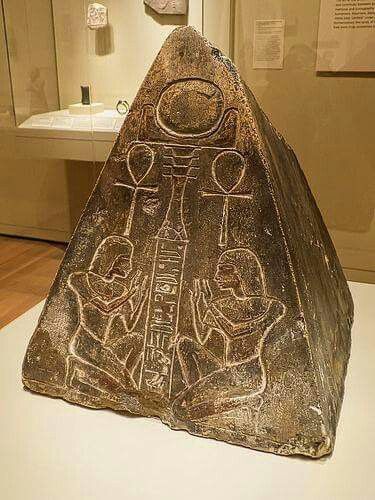
Conventional archaeology focuses on a material explanation, a reflection of the scientific materialism of the present and recent ages. But many enquirers are now proposing explanations of the purposes of these great buildings more holistically; as matter and energy. It is the energetic aspect of the pyramids that I wish to explore.

The type of energy we are considering is electromagnetic. We know that the pyramid of Cheops is aligned perfectly with the magnetic north pole. Like many ancient monuments it is more likely this was deliberate than chance.

We also know that the type of electricity in question is static electricity as found in the earth tellurgic currents and the human body.

A story describes a visit to the Great Pyramid by Sir W. Siemens, a British inventor. Accompanied by a local guide he climbed to the summit; something not permitted now! He was instructed to raise his hands and raise one finger. He did so and noticed that he could feel an irritating prickling sensation in that finger. When he took a drink from a bottle of wine he had brought along, he received a slight shock as the bottle touched his lips. On wrapping wet newspaper around the bottle he created a crude Leyden Jar which converted energy emanating from the pyramid into static electricity.

Recently I sat outside in a thunderstorm facing the storm and taking photographs  (see above). My digital camera was set to take multiple images in fast sequence. As well as some dramatic pictures of lighting, there were several photographs of an electric blue, wavy column of light ascending towards the overcast sky. These images intrigued me and I discovered that they are known to science as ‘streamers’. They are produced by proximity of the positive ions in the earth to negatively charged, thunder clouds. These positive ions build up until the charge leaps towards the clouds overhead. This process appears as a blue streak of positively charged plasma. It dramatically connects with lightning in the clouds and discharges. Not all lightning discharges in this way, the more common variety discharging within the same clouds (sheet) or directly to earth (forked).

Observing this phenomenon fitted another piece into a puzzle I have been contemplating for some time.

In my youth I visited many of the prehistoric sites in southern England. The round mounds known as Barrows line the summits of rounded hills often linked to stone circles via straight ‘avenues’. They are constructed in a manner that makes then function as simple batteries, storing positive energy collected by the stones. Where there are large concentrations of standing stone structures such as at Avebury, Wiltshire, there are correspondingly large artificial mounds. The one close to the stone circles at Avebury is considerable and has never been understood by archaeologists. A BBC film crew once gained permission to excavate it. This set off electrical storms in the sky above regarded at the time as coincidence.

Silbury Hill

Silbury Hill

A Pyramideon

A Pyramideon

How Lightning is Created

Lightning Science

I know believe that the function of pyramids was to build up massive positive charges within. In most pyramids this charge naturally emanated from their tips into the clouds. It must be remembered that even as recently as Roman times, North Africa had a much wetter climate where thunderstorms no doubt occurred. During these storms the Pyramideons ( micro scaled pyramids on the tip) let out huge amounts of energy.

If comparison is made with the tower created by Nicola Tesla in Shoreham, New York there is an intriguing similarity in construction and functional electrical processes. He created electrical storms directly from the top of his machine, much to the concern of his neighbours! Tesla saw this energy as being able to provide electrical power to the world. Remember this was the man who gave us alternating current and wireless communication, so is not to be dismissed as a fantasists.

This unproven similarity with the Pyramid of Cheops is incomplete, until further clues are considered. The first clue for me, was that the Pyramids of Cheops had no Pyramideon when built, or after. This distinctive design feature provides a large clue to it’s function.

Directly below it the tip of the pyramid, is the so-called ‘Kings Chamber’. Lower and to the south side more is the so-called ‘Queens Chamber’. Both chambers were never used for burials, as no evidence of this has ever been found. There are however two narrow passages that extend north and south from both chambers. They are described most often as ‘air passages’, unusual in a supposed tomb!

Sherlock Holmes is credited with saying that all possibilities should be eliminated and what is left is the truth. If we follow this rule then the ‘air shafts’ that lead north and south out of these chambers, were not for air. They are blocked by exactly fitting stones which have two metal rods inserted through them. If we consider the water below the pyramid as a source of positive ions rising through the stones and into the pink granite lined chambers, it is easy to visualise this energy leaving the pyramid as ‘streamers’ through these shafts. The air inside them would turn to plasma which would escape from the shafts and seek negative ions in the clouds forming lightning.

Each shaft has been calculated to point to certain stars in the year 2500BC when the pyramids were in use, such as Sirius. How accurate these facts are I am not in a position to verify, but whichever star it might eventually be received a pulses of electromagnetic energy. This is pure speculation but if a reason is needed then possibly there was information encoded in it, much like our modern use of radio waves.

The story has many more intriguing possibilities. As the Kings Chamber contained no burial, the granite box without a lid, is the right dimensions to contain the Arc of the Covenant. As an Egyptian priest, the biblical Moses would have known about this and it’s esoteric function. Whatever these were, he valued the Arc’s properties so highly that he stole it when he escaped from Egypt with the Israelites. The Egyptians valued it so highly, that they chased him with an army to retrieve it.

We can speculate that it’s function in the pyramid as an energy store, may have been used for initiation ceremonies and / or part of the mummification process. The two gold angels with almost touching wings on the top of the Arc could have created an ‘arc’ of electricity; the box and the metal covered stone tablets it contained, acting as a capacitor. This would explain why so many contemporary references, describe it as ‘dangerous’.

The picture of the true function of the pyramids is still incomplete. We can speculate and find possible reasons for facts that previously have been incorrectly ‘explained’. The real truth requires more evidence, more access to areas of the pyramids and Sphinx as yet undiscovered.

One last tit pit though. Energy produces heat when discharged and there is apparently scaring to the pink granite and so called ‘air passages’. Something was hot inside this pyramid, which would explain the term ‘pyramid’ . Translated it means, ‘fire in the middle’.

Grammarians from Outer Space

Two creatures from a solar system in a galaxy far, far, far away, approached the planet earth. They were slowing down from six thousand times the speed of light and were ready to deploy their rather small parachute as the final phase of descent.

Before landing it is routine to ‘have a little listen’ to the inhabitants of the target planet. To this end, they activated their sound receiver, a sort of giant ear. It was pointing at a place called Marble Arch in the centre of London, England. They were anxious to see if they understood the language they had been taught in Exploration Command – English.

The creatures leant forward and listened with full attention. Two inhabitants of the planet were out for a bit of shopping. As they stood on the kerb of Oxford Street, poised with a lethal substance known to them as coffee, in their hands, they could be heard talking.

‘Here! Er, the thing is, in terms of feeding, how often do you feed your dogs?’

‘So, you know, my dogs, to be honest with you, is fed twice on a daily basis.’

The two distant life forms looked at each other quizzically. Had they both misunderstood their intensive English language learning induction? Surely, the sentences they had just heard should have sounded like;

‘How often do you feed your dogs?’

‘Twice a day.’

They had been warned to suspect that this race that call themselves ‘human’ were becoming regressively more stupid. This short ‘eaves dropping’ – as their colloquialism plug in put it- was unexpected, but confirmed their worst fears.

They looked at the date on their English Language induction programme. It had been produced fifty rotations of the earth around it’s star ago. Was it possible that language could devolve so suddenly? Their own language was not permitted changevelopment. It was known that poor language discipline lead to losing thinking skills. When life forms, begin to forget how to think, the first indications are stuttering and meaningless appendages to and within, sentences. The process develops until the speaker is unaware of the control unnecessary words have over their thoughts. Left unchecked, this decline will contribute significantly to the downfall of civilisation.

On similarly declining planets it had been observed that no individual understands another, just treats others as an extension of themselves. There is either a match, which was good, or a mismatch, which leads to criticism and hatred. This was well documented across the Universe. ‘In the beginning was the word‘ spirals downwards into it’s corollary, ‘in the end was the word‘.

After a short communication with Exploration Command they were given permission to terminate their Earth Regeneration Mission. Fortunately, their journey was not wasted. Another solar system had been chosen as a secondary mission objective; in case of just this eventuality.

The two unfortunate creatures hopped back to their floatation chambers and activated the learning experience language module for their next destination. By evening they would be fluent in Andromedish.

The beautiful blue planet was shrinking into almost nothing. They both felt a deep regret that yet another civilisation was going to fail due to the inability of it’s inhabitants to think and communicate clearly.

The taller of the two leant over to his colleague just before lowering the chamber lid. In the background they could hear the computer supervising the storage of the planet cleansing and regeneration equipment. Frictionless motors moved heavy weights with ease. The space craft was soon to be silent again.

The taller one spoke;

‘I was so looking forward to sitting on our pyramids again.’

‘Yes, I believe the earth inhabitants have not worked out that the pyramids we left in Egypt were nothing more than chairs for you me and the little one.’

‘I am full of regret for their lack of thinking skills. Least of all is their idea that we are dangerous! How can they think creatures from civilisations such as ours, have any reason to fight! They are the species who continue to have wars!’

They lay in the iridescent floatation fluid and waited for the lids to close. The smaller of the two creatures looked across at it’s mate and closed one eye briefly in the manner they understood humans did as a gesture of fun.

‘Yeah Dave, the thing is, you know, what have we got to lose? In’it?