The Dark Side of Me

The sky is at times full of aeroplanes. Modern culture encourages ‘travel’ and ‘escape’ as a kind of adventure in which we must indulge. Like many wonders gifted to this generation, there comes with it, a compulsion for more and more of everything…like a billionaire who is never satisfied with living like Royalty. Previous generations have left us another type of wealth; hidden in stories which we call ‘fairy tales’.

“Ladies and gentlemen, please make sure your seat backs and tray tables are in their full upright position ready for take off;”

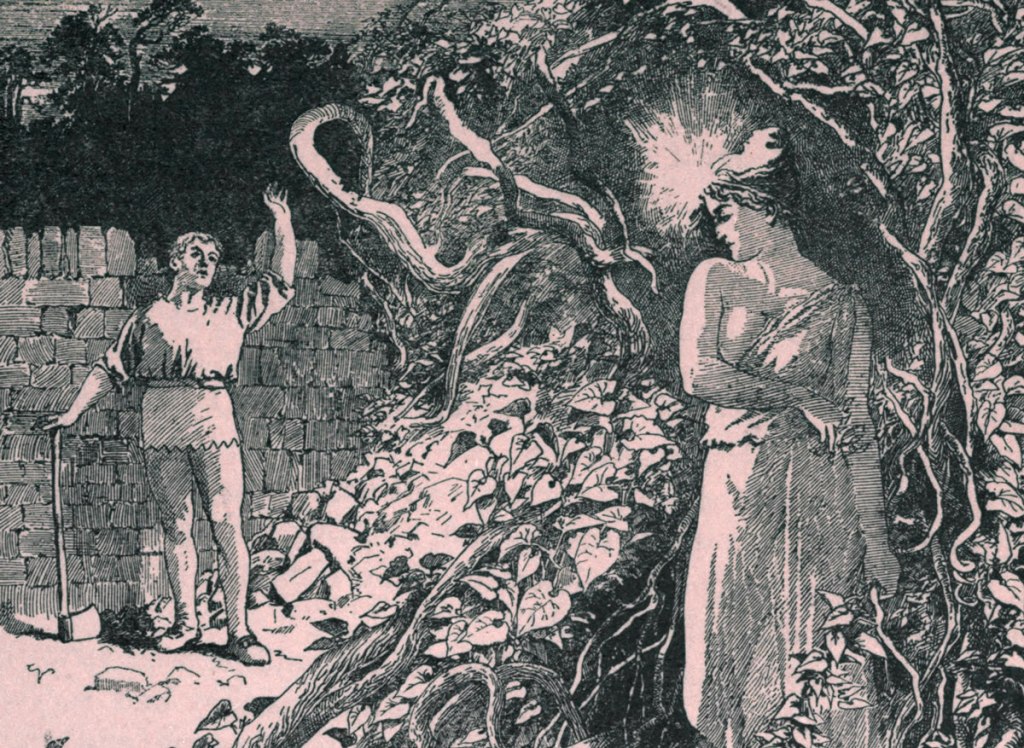
The Frog Prince

In the forest, a selfish princess accidentally drops her golden ball into a well. A frog offers to retrieve it in exchange for her friendship. She agrees but goes back on her word after getting the ball back and runs to her castle. The next day, she is eating with her father when the frog knocks on the door and requests to be let in. The king tells his daughter that she must keep her promise and she reluctantly obeys. The frog sits next to her and eats from her plate, then desires to sleep in the princess’s bed. She is disgusted at the idea of sleeping with the frog, but her father angrily chastises her for loathing someone who helped her in a time of need. She picks up the frog and places him in the corner of her bedroom, but he hops up to her bed and demands to sleep as comfortably as the princess. Furious, she throws the frog against the wall, but as he falls to the floor he has transformed into a handsome prince. He explains that he was cursed by a wicked witch and the spell could only be broken with the princess’s help. The next day, the two go to the prince’s kingdom where they will be married. (text credit: Wikipedia)

In modern versions, the transformation is triggered by the princess kissing the frog (a motif that apparently first appeared in English translations). In other early versions, it was sufficient for the frog to sleep for three nights on the princess’ pillow. There is more;

The frog prince also has a loyal servant named Henry (or Heinrich) who had three iron bands affixed around his heart to prevent it from breaking from sadness when his master was cursed. When the frog prince reverts to his human form, Henry’s overwhelming happiness causes the bands to break, freeing his heart from its bonds.

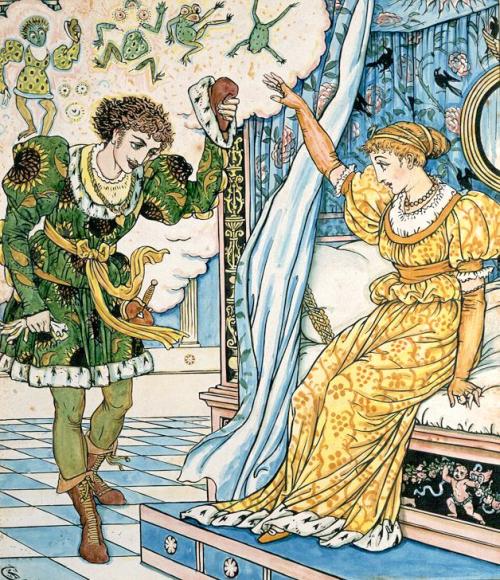
The adventure in this tale is the greatest of all – the inner journey. It is told from the point of view of a young princess. She is confronting herself in this story, and her eventual marriage to a prince shows her success in overcoming her unconscious destructive traits; that part of both men and women which Carl Jung called, the dark shadow. Note the contrasting floor tiles in the above illustration symbolising the union of ‘opposites’.

The forest and deep well symbolise that part of the princess’s psyche with which she is not familiar. She possesses a golden ball which symbolises perfection, something we all possess at birth but at some time in our lives will roll down a well.

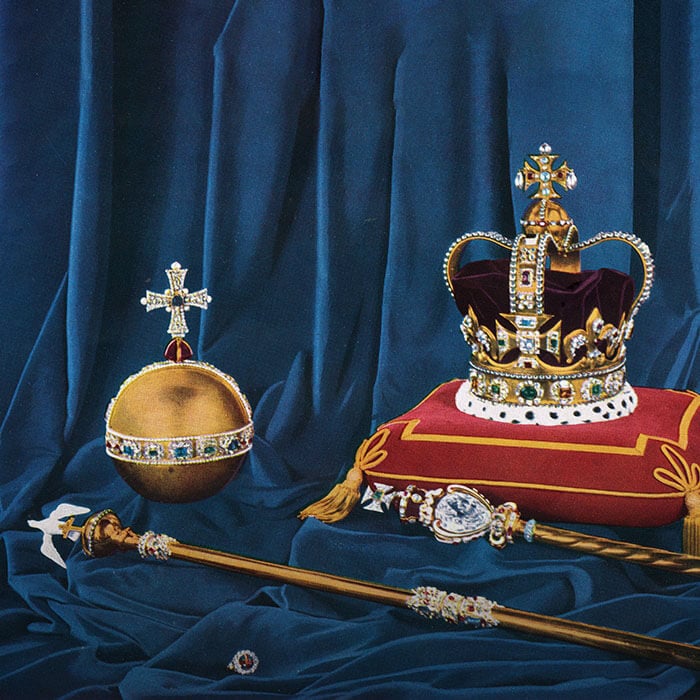
The Royal Orb and Sceptre: picture credit The Royal Mint

We have to experience this traumatic loss and in the story it is the cold, wet, male, instinctual, shadow side of the Princess that undertakes to retrieve her social position and inner perfection – a frog.

Like all psychic work it comes at a price. The princess makes a promise to her male shadow, that she quickly wants to forget. Her wiser and more honourable male animus, represented by the King, forcefully commands her to keep her promise.

The frog is equally insistent, knowing of the final goal of perfection if he can persuade the princess to overcome her inner loathing of her suppressed ‘maleness’.

The prince ‘frog’ is imprisoned in the Princess’s unconscious, a product of prejudice, fear, ignorance, and other self-destructive emotions. Another aspect of the male persona in women is symbolised by the frog’s servant Henry. He is also constricted by ‘supernatural’ powers with the three iron rings around his heart. Three is a symbolic number as in the Trinity meaning ‘wholeness’ or ‘oneness’. The number reoccurs when the frog spends three nights on the princesses pillow – a position suggesting psychic work of transformation through dreams.

The Four Alchemical Humors

In Alchemy, there are four humors representing ‘the chemical systems that regulate human behaviour’. The prince is changed from his false external appearance of being cold and wet to the warm and dry world of the Princess and her palace.

In older versions of the story the Princess throws the frog against the wall of her room in disgust, but the character of the servant and his ‘heart centred’ problem indicates that the coming together of the prince and the princess is from an emotional change leading to love for each other.

Psychologically, this is self understanding and love, and Jung named the process ‘individuation’. The male and female principles achieve perfection in union. (By the way, all gender references in this story can be reversed and the meaning is the same.)

The Princess’s inner work – so accurately described in this ancient tale – is partly why ‘fairy tales’ and ‘myths’ could not be banished from children’s books. Children have a great appetite for and demand these ancient tales. Their unprejudiced minds intuitively recognise the symbols and the true picture of the mind they represent.

They know that as well as walking and eating and drinking and sleeping and all those skills that a new body requires to be learnt – understanding Mind, is just as important.

The tourist planes one might cynically suggest are bursting at the doors with adult children from Neverland who, like J.M. Barrie’s Peter Pan, have never grown up; never moved out of their body into Mind; never kissed a frog.

The Earth’s moon has always symbolised femininity and the mystery hidden in all things feminine. It is ‘tide locked’ with our planet so that one side of her always is hidden. For many years this was referred to as the ‘dark side of the moon’ and as a metaphor for the hidden, the metaphor of ‘darkness’ fits. But in reality, the moon has phases and when she is ‘new’ her shadow faces Earth and we cannot see her. Her reverse side is then full of light and naturally, orbiting probes and satellites from Earth have photographed what is going on there.

When Apollo 8 flew around the moon for the first time and mission control waited nervously for their reappearance, the crew reported hearing haunting sounds. Rationalised as ‘feedback’ from instruments, one might be more curious; as the best scientists have always been.

A Golden Ball from the Moon: credit Meister Drucke

When a partial view of the moon is visible from Earth, the place between shadow and light reveals most detail. Professional and amateur astronomers have recorded seeing unexplainable lights, EAP’s and their shadows on the moon’s surface, buildings and roads and Spaceports with huge cigar shaped craft entering and leaving craters. In previous decades NASA redacted (shadowed) these images from it’s photos, but today there are photographs and video recordings of these phenomena in the public domain, some of which may be real.

The First Men in the Moon: H.G. Wells picture credit the Library of Congress

What is interesting is that the public have been ‘persuaded’ that the notion of extraterrestrial intelligent life is an unbelievable ‘fairy story’. Revealing the truth would cause ‘widespread public unrest’ (disgust at the sight of non-humans). They are therefore not prepared to reveal the truth and hide evidence; a kind of ‘curse’ on modern humans.

We are still in denial that we owe anything to this ‘Frog Prince’ and continue to live spoilt and shallow lives like immature princesses.

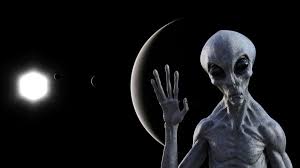
When an ‘alien’ frog comes along one day and demands a kiss, we must overcome our collective unconscious fears and invite it onto our pillow. In my view, this will happen in our lifetimes, and cannot remain repressed and hidden. It will be a process of personal and collective social development involving hatred, denial, and anger. Lasting integration and cooperation between species will only happen when there is a higher emotional collective bond between humans – love. The frog is watching and waiting.

“Make sure your seat belt is securely fastened and all carry-on luggage is stowed underneath the seat in front of you or in the overhead bins. Thank you.”

The Problem Problem

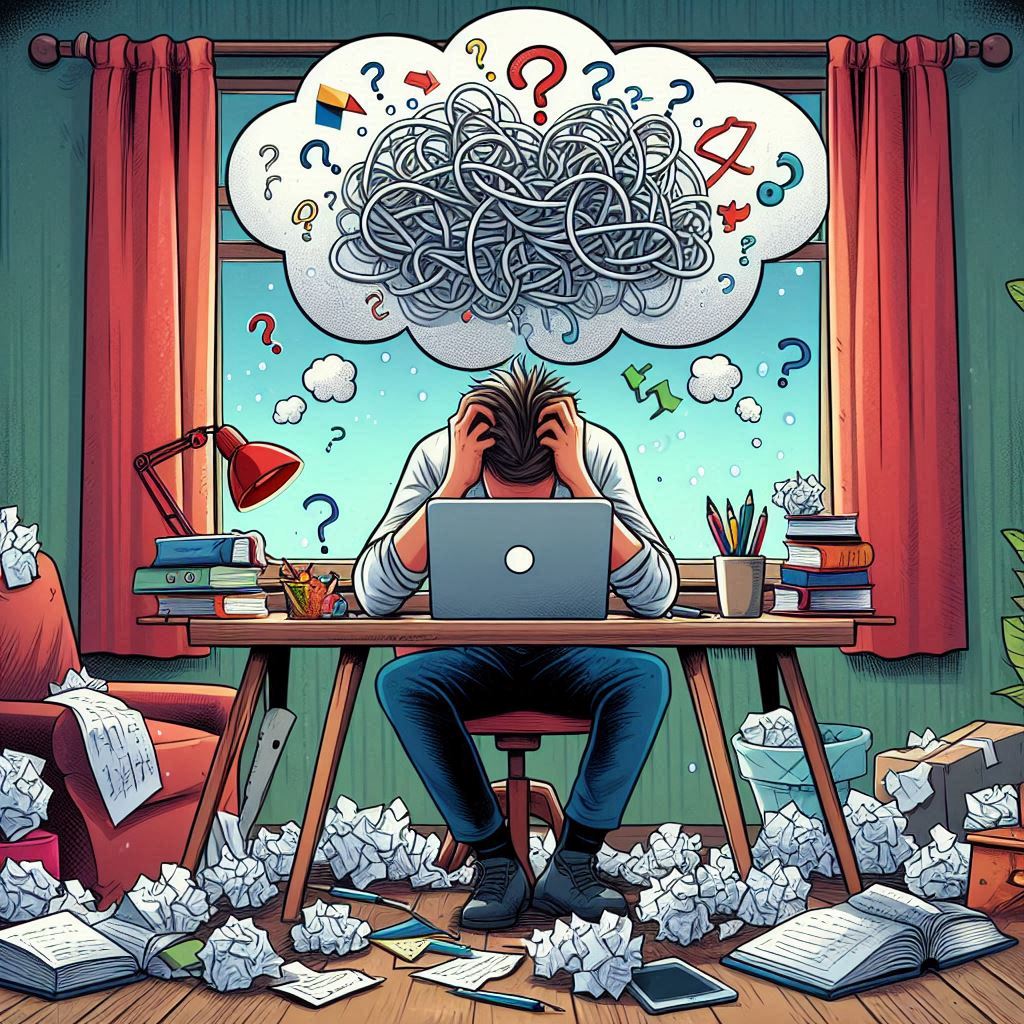
The problem with problems is that their solution requires skilful analysis and creativity.

This is obvious except – who teaches problem solving? Overcoming difficulties is something we expect children to ‘pick up’, as learnt behaviour. By the time we reach adulthood, overcoming complex challenges is assumed to have been mastered. Yet, the problems that we encounter through life, if not solved properly, can have just a devastating effect on our lives as a metaphorical bomb. It is the same for those in charge of large corporations and governments who are known to rely on learning from failure as a somehow justifiable, problem solving technique. The joker advises, ‘try everything until something works’.

There is a story which you are likely to know, about a group of people in a dark room describing an elephant. Each holds and touches a different part of the elephant, which stands patiently; wondering where the light switch is. At the end of their examination each describes the unique part of the elephant that they have examined. None of the participants has an overview of what the whole elephant looks like, so they are all wrong.

It’s a wise story. What it tells us is that everything is not as it appears. Many things are extremely complex and far larger than our expectations and experience and greater than our abilities to interact with them constructively.

As we go through a physical life on planet Earth, we are constantly challenged. The material world is in a constant state of entropy, causing repeated and unexpected disruption, such as your car breaking down or your body ageing.

Because we are human, our ego’s present us with a story about ourselves which says optimistically, ‘I can cope’ or pessimistically ‘I have to die sometime’. If we took a step back and looked at the problems humans suffer, our sense of ‘everything’s alright’ would be replaced humility without pessimism.

Religions have picked up on this and many require the congregation to fall to their knees in the face of that elephant that sits in our minds; vanity.

Yet, is it not courageous to look adversity in the face and smile? There is an archetype of this model which is ‘the hero’. He or She is a humble human who manages to overcome all sorts of impossible problems and captures the prize! Whether this is Odysseus on his epic voyage or Superman defending New Yorkers; heroes have super natural knowledge and powers.

Or do they?

In native communities, education of children consists of physically showing them the problems of bush-life and how to overcome them. An Australian First Nation child will be shown how to collect honey from trees without being attacked by bees and leaving enough for the colony to survive.

But in modern fast changing societies, complex problems are expected to be solved by those who have no prior instruction or experience. Government ministers frequently display an extraordinary naivety when it comes to their principal role, which is to allocate resources and make laws that solve society’s problems.

The examples are numerous. In the UK and many other nations, people are landing on beaches and demanding asylum; as is their right in most countries. The ‘sticks and carrots’ that have led them there are numerous and complex.

Attempts by nation states such as Spain, Greece, Italy and the United Kingdom to ‘stop the boats’, take hold of merely the elephants tail whilst imagining the little tassel on the end is the elephant. One government suggested that a threat of deportation to a third country will stop people reaching their shores in unsafe boats. Another political party takes hold of the metaphorical elephant’s leg and suggests that putting the organisers in jail will stop the problem; which again will not be ineffective because the elephant is not a leg.

In the Middle East, you have to ask what problem Israel’s government is currently trying to solve with open hostility against it’s neighbours. Problems of the people of the tribe Judea go back millennia, yet the Zionist government repeatedly tries to argue that the present problems started on 7 October 2024. Were it so simple to be true. Were the whole truth be known.

When the Sars-2 Covid virus was ‘mysteriously’ released in 2021/22, the problem was not examined in full, and when a solution was required, the pharmaceutical companies were able to react almost immediately. Inquiries into the response to the pandemic uncover ineffective, wildly expensive responses. Countries that did almost nothing like Sweden, and much of Africa came out the best.

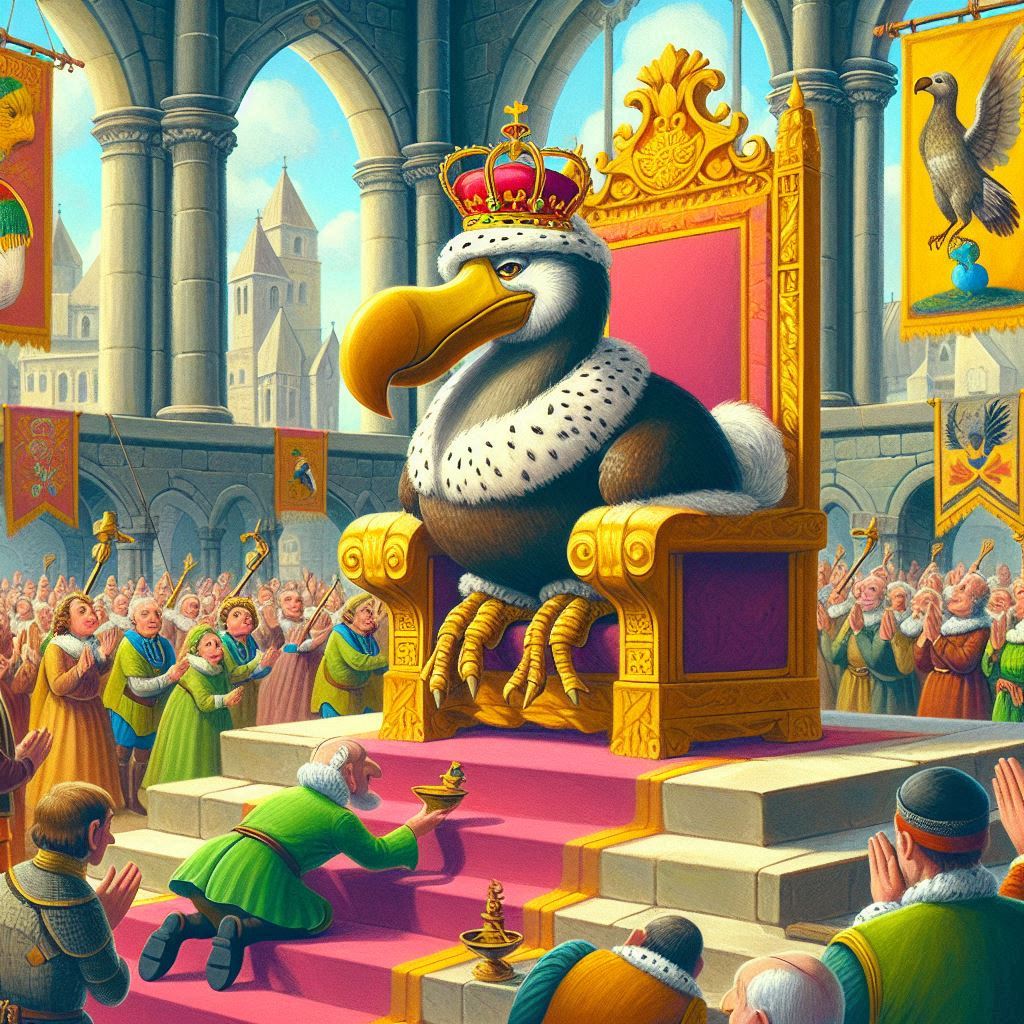
The ‘Do Do’ was a bird that flourished on the island of Mauritius until humans appeared in wooden sailing ships. The hapless birds wandered around in a dream, not expecting to be eaten by hungry sailors. The flightless birds had failed to solve their problem. The Portuguese word ‘do do’ means ‘stupid’ which the birds were not, but victims of those who should have understood sustainability.

Today, humans are facing similar population collapse or even extinction from multiple directions.

In my view, oligarchs and corporations, secret societies, media moguls, ‘big pharma’, the military industrial complex, and international criminal organisations exploit human weakness of poor problem solving by deliberately making problems. Interference in elections, rumour and propaganda, distortion of truth, psychological warfare, hacking, negative suggestion, assassination by ‘dirty tricks’, creating riot and unrest, reducing and disrupting food supplies, and many other techniques, are deployed against unwary populations. All whilst any government that genuinely cares for it’s citizens, is running to catch up.

Understanding the causes of problems is the first step to find a solution. The problem must be understood in every aspect of it’s nature and origin, in a unbiased and factual manner. Then a tested solution that is ‘cost benefit’ proven, has to be found and implemented in a timely manner.

When examining the many problems today, all over the world, you might expect a supposedly neutral and unbiased organisation such as the United Nations to have a department that is expert in defining and solving problems. The Secretariat, the Economic and Social Council and the General Assembly are ideally placed to work in this way, and yet world problems continue to cascade out of control. The United Nations has bravely spoken out early about the genocide in Palestine, but has not stopped it.

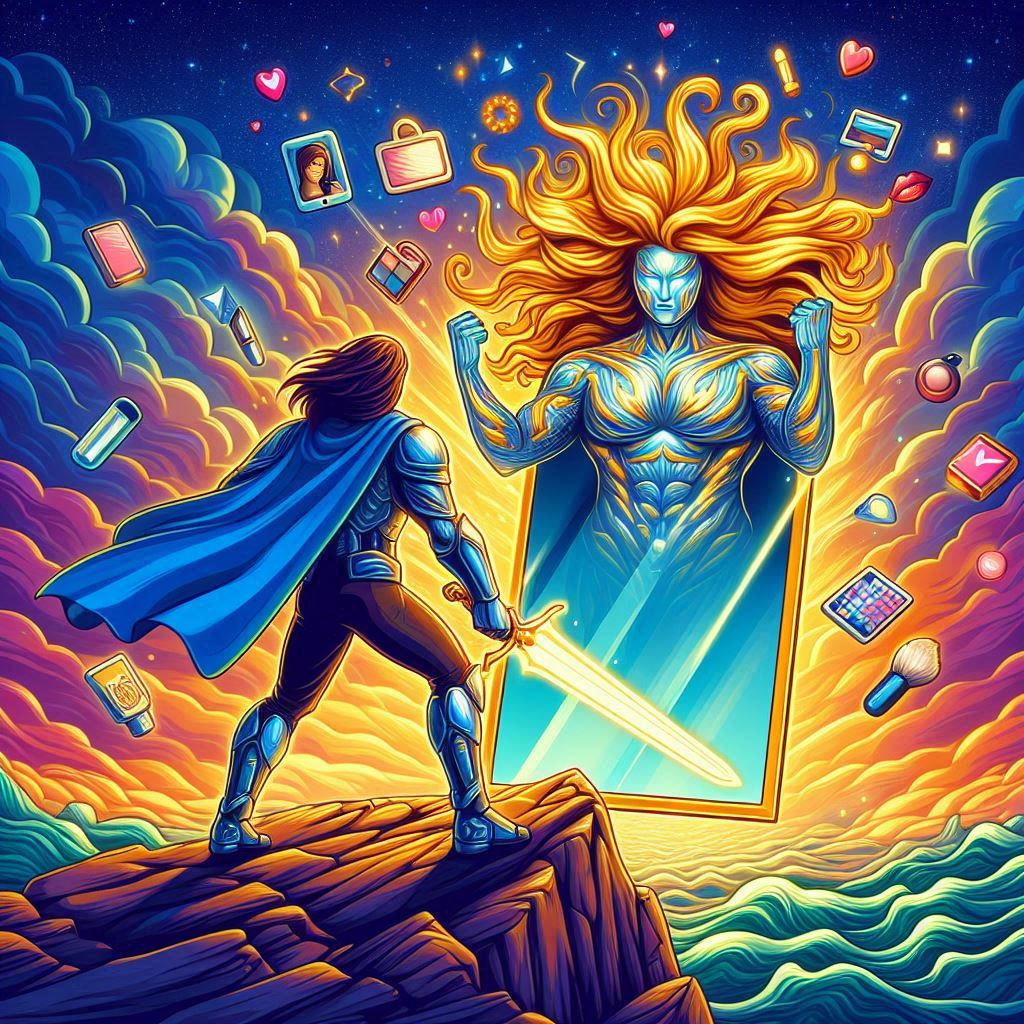
Stopping a descending spiral of harm, characteristic of weak problem solving, becomes a battle with a Giant, that even global organisations with their huge resources can not win.

Have we put the Do Do’s in charge?

The Ki Key
The Hidden Energy of Life

Western science has many new discoveries to make. The key to unlock the unknown is the simple question; ‘what do we not understand?’

For example; ‘we do not understand energy that is not electromagnetic.’

Such energies must exist as biological energetic processes called ‘life’, have no explanation. We do not have to look far into history and the present day to find indicators of knowledge of another type of energy. In ancient India it was called Prana, in Ancient China – Chi and in Ancient Japan -Ki. In the West it was named ‘Orgone’ by Wilhelm Reich.

This biological energy is commonly linked to healing such as Acupuncture and Reiki but it’s uses are more varied than that.

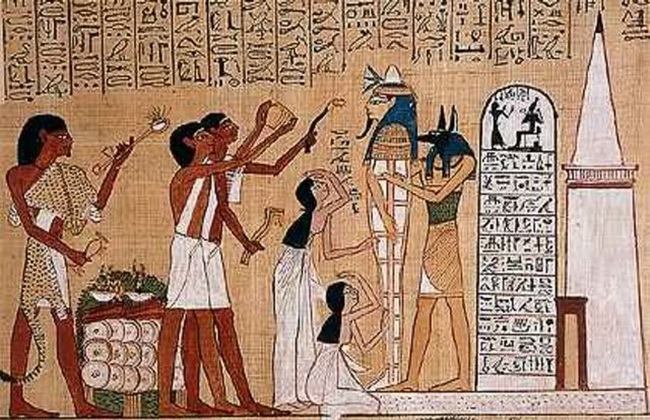
If we start with the human body, we have evidence that the Ancient Egyptians regarded the body as a receiver of energy from the sun as shown in this image.

The Ankh is a symbol of life and is being held up to absorb the solar rays. Today we are familiar with aerials receiving radio and television in a similar manner.

This biological energy is mapped as pervading the entire human body by Acupuncture practionitioners. The cause of the healing was not understood beyond the concept of ‘Chi’ energy, but the effects were, and it is so effective, it is still in use today.

If we follow the idea of the solar energy as associated with a biological energy from the Cosmos, then the seven planets of ancient times, also affect life on earth through their energetic characteristics. In ancient Greece they were deified as minor gods or archetypes, whose influence as precise ‘qualities’, pervaded every aspect of individual and collective behaviour on Earth. Today we call this astrology.

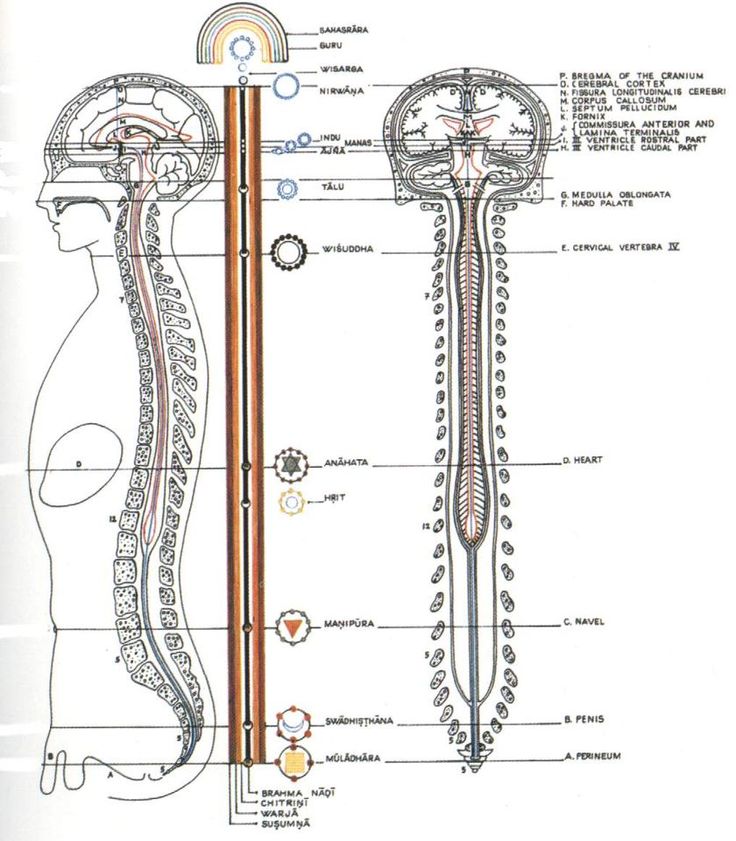
The energy from the planets affects each of the seven life energy nexuses in the human body known in ancient India as Chakras. Our consciousness as human beings is firmly linked with the ‘heavens’ in this way; obeying the Hermetic principle of ‘as above so below, as below so above.’

The Ancient Chinese combined heaven and humans with the planet earth, represented by the pictogram similar to the capital letter E. The evidence for ‘Ki’ is greatest in the form of the ancient structures built all around the globe.

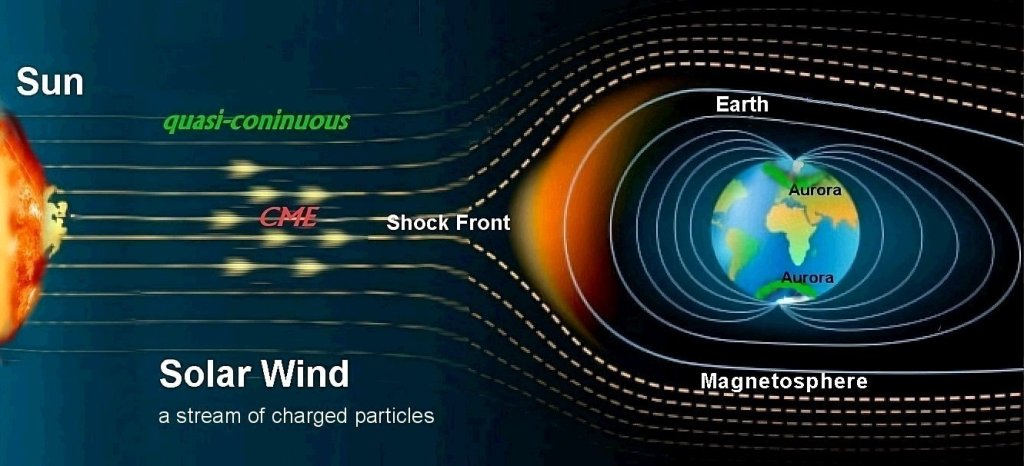
There is increasing interest in the ‘energetic’ characteristics of megastructures such as pyramids, temples, churches and cathedrals, earthworks, roads, earthworks, hill figures, artificial cave networks and megaliths. All across the ancient world these structures were intricately aligned with and connected to this subtle energy associated with the movements of the sun, moon and the planets, earth and water. Modern water diviners are sensitive to the energy associated with underground water and can tell the water’s volume, depth and speed accurately.

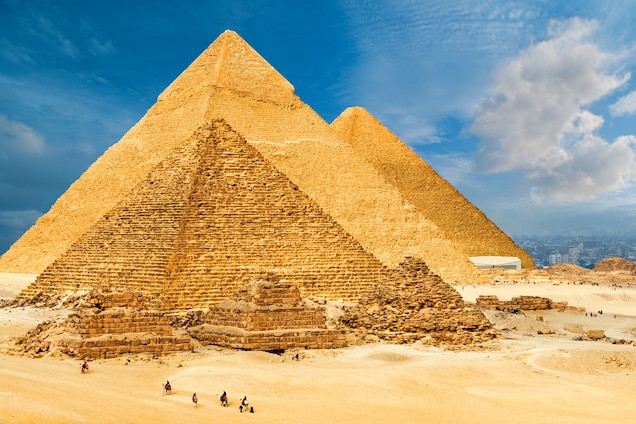
Pyramids are found on every continent of the world (including Antarctica) and it is likely they were connected as a global network to balance and share this subtle energy globally; including sharing information. The present ‘world wide web’ is an analogous modern version of the same form and function.

Examination of the physiology and anatomy of the earth shows that this subtle ‘earth energy’ is associated locally with faults and fissures, springs and wells, water falls which were recognised by local indigenous tribes and cultures as ‘sacred’ with supernatural powers.

They were places where the physical third dimension met other dimensions and acted as ‘portals’ for other entities to interact with humans. In ancient times this was more common as humans were conscious of these subtleties and gods such as Athena would appear in human form to give advice, as recorded in ancient Greek legends. These entities overlap with the experience of so called ‘extra terrestrials’ today; more likely inter-dimensional intelligences who have never left planet Earth.

There was and is a mechanical reality to the generation, manipulation and storage of this subtle energetic system. Pyramids, barrows, dolmens and stone circles are a few of the centres of power used to interconnect and store energy for many purposes such as healing and initiation. The burials that took place at the end of civilisations have been incorrectly focused upon by modern archaeologists. If evidence is needed consider relatively modern Gothic cathedrals which were built for the living, not the dead.

This subtle energy was recorded by the psychiatrist Wilhelm Reich and he named it ‘orgone’. He saw that it accumulated in the human body and was discharged in the orgasm. Orgone is attracted to orgone and does not dissipate like heat energy. Nature can be seen to operate in the same cycle of build-up and discharge. The most familiar would be the accumulation of negative and positive ions in the earth and atmosphere, and the electrostatic discharge of lightning.

The ancient megastructures worked in harmony with nature in this way to regulate the natural flow of energy through the landscape in the same way as a capacitor and resistor in an electric circuit.

Weight and the pressure it creates was known by ancient builders to amplify this subtle energy. In a similar manner, quartz and other crystals build up and discharge piezo-electricity when compressed. The lintels over the uprights at Stone Henge and the T-shape upright stones at Gobleki Tepe in Turkey, performed this function as do the pyramids. It is clear that temples in Ancient Egypt, Greece and Italy have too many columns just to support the roof. Their precise orientation to the magnetic flux of the planet, matching proportions with the golden mean and phi geometry of human body, indicate a primary function of sacred edifices as centres for healing, heightened awareness and initiation.

Finally, to experience this energy within one’s own body, there is a Yogic principle known as ‘kundalini’. This is depicted as a snake (or modern static wave form energy ) and is associated with the spinal column; also in wave form. In my view, the subtle energy which the Yogis call ‘prana’ is in a constant state of build up and discharge, before, throughout and after one’s life. There is no single ‘awakening’ moment when the Kundalini rises up the spine as is sometimes described. Rather the motion of the snake is as seen in nature as a perpetual ascension through the energetic nexuses (chakras). The accumulation purges and cleanses each chakra in turn until discharged naturally in sexual union or used for the process of ‘enlightenment’. For this reason and purpose, many mystics were and are, celibate.

The importance of subtlety of this primal ‘life energy’ awaits formal ‘discovery’ and scientific experimentation and explanation. We can be sure at this moment in history that human beings have forgotten what was once known and drove much of human spiritual evolution for thousands of years.

In my view, now is a good time to re-discover what we have lost, particularly as modern archaeology unearths new evidence almost daily. All that is necessary for archaeologists to advance their theories to another level, and replace ‘grave robbery’ with an understanding of esoteric energy; known once as key to the general advancement of human spirituality, but long ago forgotten.

picture credit: Life Sloka

White Hat Black Hat

In conversation with a friend of mine whose ethical values follow Buddhist philosophy, I was challenged with the idea of killing the mosquitoes in my bedroom at night with a pungent insecticide! ‘It is wrong to kill anything and I should be using a mosquito net to defend myself, not attack’.

To me, if I kill a mosquito, I am preventing it from attacking another person or animal with it’s uncomfortable sting and potential disease transmission, including malaria, dengue fever, Zika virus, chikungunya, yellow fever, West Nile virus, and Eastern Equine Encephalitis. The virus, bacteria or parasite with the disease varies with location in the world of course, however with climate change and species of mosquito: do you feel lucky?

The instruction to preserve life at all costs and in whatever guise, is of course, a dogma contained in many religions but not all. In Christianity the Holy Bible includes the Old Testament describing a blood bath of unholy wars. In the last two hundred years or so, ‘civilised’ humans interpreted Genesis 1,

( And God said, Let us make man in our image, after our likeness: and let them have dominion over the fish of the sea, and over the fowl of the air,)

– -as a licence to kill sentient creatures for sport, vanity and greed.

Even today, western ‘civilisations’ are in the same process of destroying the planet with great efficiency and little conscience. There is a possibility that the translators of the Old Testament should have used ‘steward’ of nature instead of ‘dominion’.

Historically, the planet was not seen as a benign mother in the nineteenth century, except by those who lived close to nature such as the North American First Nation People who were regarded as ‘savages’ by European invaders. Ironically, self styled ‘settlers’ regarded themselves as benign and entitled to lie, break treaties, enter sacred land and commit genocide through war and starvation – all whilst insisting they have moral superiority.

Does this remind you of anything happening today by countries who consider themselves beyond reproach for their actions?

In the ancient Hebrew Ten Commandments we find the instruction not to kill. This was probably meant to refer to human v human – but does it? Could this include insects and small mammals? Like all simplifications, it loses import through lack of detail.

Buddhist teachings could be interpreted that one should have no ‘intention’ to kill. If we kill a virus with our anti-bodies or an ant on the path where we walk without even knowing or controlling this, we are not at fault. To kill to prevent disease or disease spreading is not so plain. We venture then into the quandry of the lesser of two evils.

Because of contradiction and complexity or perhaps, despite of it, religious dogma encourages the following of rules ad absurdum. An example would be nuns of the Jaine religion who spend their days walking and sweeping the path in front of them lest they tread on an insect.

Whilst there is a continuum of intent between conscious and unconscious killing, we have to agree that conscious killing raises the ethical questions. Those who refuse to fight in a national army might agree to become stretcher bearers or another ‘non-combatant’ role. This even though their actions are supporting those who are fighting and killing. ‘Thou shalt not kill, directly or indirectly’ would have been a more relevant commandment to conscientious objectors in any war in my view.

Why would any country seek to start a war, and feel justified morally, is a very relevant question for today. A common cause and justification is the belief that a moral duty of ‘doing good’ is being fulfilled. The irony of this is when both or several parties in a war all use this excuse. Who wears the white hat?

The answer can generally be found through the actions rather than words such as ‘treaties’ and ‘ceasefires’. It used to be that soldiers would fight soldiers and civilian populations were only indirectly affected by war. But since the second World War, technology such as aerial bombardment from the air; drones, rockets and heavy artillery, civilians have become targets.

picture credit: Rocket Guest Hosting

Both or all sides will see themselves as the wearers of the ‘white hat’. Their next ethical choice is to decide the target. Should it be military or civilian? Although the choice is obvious to all but the most morally challenged, much of the warfare we see today is aimed at civilian populations. The offending side continue to lie and break treaties and ceasefires, enter sacred land and commit genocide as if they were actors in the nineteenth century ‘Wild West’ in which religious or any kind of law, did not exist.

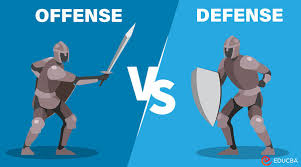
To do this they use words in order to confuse themselves and their followers. Military terms such as ‘offence’ and ‘defence’ sound as if their meanings are simple. But take an example from the Roman Army in ancient times. They carried large shields which are technically, purely defensive. But one of their fighting techniques was to use the shield to rush at the enemy and push them off balance, opening their guard and going for the kill. The short sword or gladius was used principally as a weapon of offence, and yet again, a sword fight includes using the sword in defence, as a shield.

picture credit: ECUCBA

Defence and offence therefore overlap and at times – become one. Politicians can over rule moral objections by calling this one something and the other something else. It is called ‘propaganda’. In this way offence using defence is called defence and defence using offence is called defence. Making use of this confusion in minds who do not question, they argue that since ‘defence’ is allowed in international law, every action is a ‘defence’ even when attacking unarmed women and children.

Leaders today deny or are complicit in targeting civilians, just as the Soviet Union did under the absolute dictator, Joseph Stalin in the Second World War.

After that war, Winston Churchill, the Franklin D. Roosevelt wanted to replace Stalin’s ‘white hat’ (Russia had been an important ally) with a black one under ‘Operation Unthinkable’. They wanted to return Poland to the Polish people as that issue had started the war but Stalin refused and the country became part of the Soviet Union.

History has the ability to make sense of current events as world politics has usually been played out before and the consequences of actions do not have to be learnt through experience. The main variable is of course, new technology. But fundamentally, ethical values should not change and there is not reason why an aversion to violence should not be universal. This has been attempted through the United Nations and International Law but these voices are weak today.

‘War crimes’ being allegedly committed are investigated by those committing the crimes. Permanent members of the UN Security Council are allowed vetoe criticism of their actions on the grounds that they are ‘defending’ someone or something. Detail is avoided.

International Laws are dismissed by countries that have not signed the convention. So external rules, which should embody the highest ethical values, are ineffective.

Where civil laws and natural law fail to be applied, religious and spiritual rules, potentially have a greater influence by bringing about change within each individual. The rule supporting non-violence is the well known, ‘do unto others as you would have them do unto you.’ It’s an uncomplicated way to behave but, with this injunction as guidance and followed, the world today would be a very different place.

Stones and Plants

Having reached what is known in common parlance as ‘a ripe old age’, there occurs to me certain insights about the nature of human beings.

Principally, one is given to conclude that human souls, during their own short but sweet personal evolution, consist of two types;

The first might considered to be ‘stones’; that is having as much knowledge and personal charm as a stone. This is not to ‘put down’ the mineral kingdom through comparison with those who are more obviously ‘alive’ and ‘should know better’. Indeed I have personally a great regard for stones of all kinds, as a result of my scientific theoretical understanding of ‘geology’ and ‘geomorphology’ and an artistic appreciation of the significant contribution of stones to the beauty of landscapes. Indeed I have in my possession companion stones, exhibiting curious colours, shapes, sizes, weights etc., as well as natural crystals of miraculous hues and geometries, precious minerals derived from 0res, and indeed a house made entirely of stones giving me shelter from whatever the weather and life is inclined to throw at me. Stones, in short, rock.

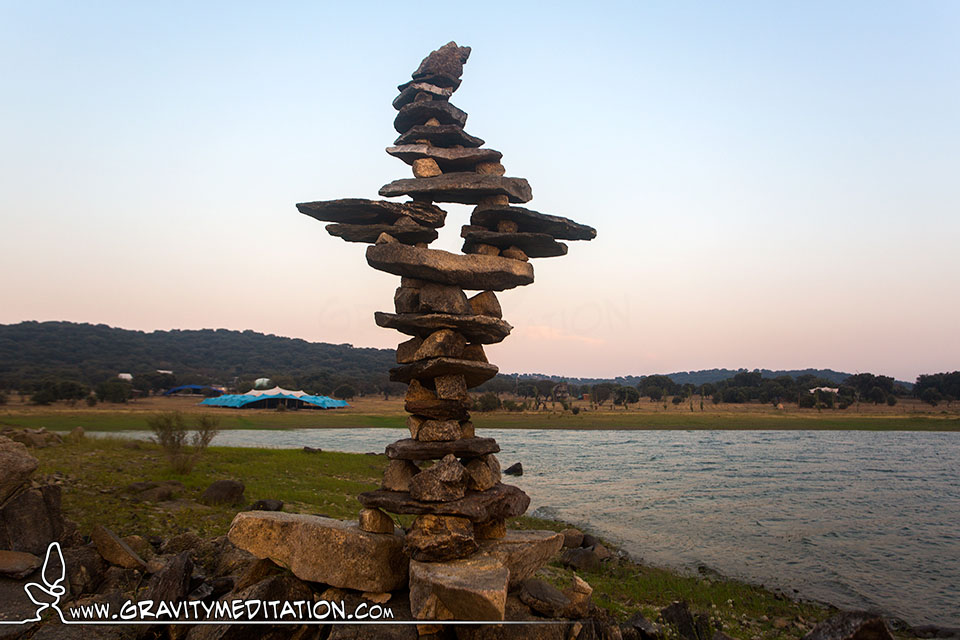
http://www.gravitymeditation.com

More metaphysically, I am one of those stark-raving-mad-nics who regard the mineral kingdom as having a complete social structure. This comprises of a noble King and Queen, courtiers and other ‘hangers on’ who are likewise, to be found in the human realm, where matters of high office and rank are ‘out for grabs’. It is true for me, and no doubt certain other ‘cranks’ party to ‘outlandish persuasions’, that the entire earth’s crust and what is below, goes about it’s business in a most conscious, caring and controlled manner. What I am trying to say is that the whole mineral kingdom is as much alive as you or I, but slower…look at a geological time chart to see how aeons pass by as stones do, in short, very little. As one who is a mere butterfly in comparison to the length of life of minerals, I believe that conscious evolutionary changes are almost impossible to observe in stones due to their considerable slow rate of change in all aspects of their lives. From another perspective, we to stones are no more than a spark lifted out of a metaphorical camp fire, which exhausts itself on oxygen in less than a second.

It is this particular quality of stones that brings them to mind as an apt metaphor for the subject of this essay; which I promise I shall come to when the twinkle of the moment is ‘right’. You see, in my unique and therefore unusual opinion, there are certain human beings who are born, live and die with much the same enthusiasm, as a stone. Their brief nascence appears to be a complete quandary to them; to and about which they show little curiosity or even care. They probably are not conscious that ‘existence’ is, in contrast, an issue of considerable fascination for others in their society. As a result, their life consists of certain fixed stations and ideas, about all and nothing, with which they bore those who are unfortunate enough to be within earshot of them. The aspirations of these ‘stone people’, one might conclude, are summarised in the word, horizontal.

Such stones are not the type with whom you wish to spend time in awkward situations, such as ‘stuck-in-a-lift’ or ‘drifting-in-a lifeboat’, following the occurrence of a power cut or submersion of a poorly navigated ocean liner.

picture credit: The Belfast Telegraph

Least of all to be desired, is the idea of forming a relationship with them if you any have a regard for wonder in life; with all it’s twists and turns and curiousnesses. Should you mention in polite conversation or correspondence to one of these mineralised munchins, a matter of considerable interest to yourself, you can certainly expect a glazed expression in place of an informed response, followed by a ‘passing on or over’ your interests in order to talk about something more agreeable to themselves, such as the price of cheese or cucumbers.

On the other hand, patient reader, as you probably are, up until now, eagerly anticipating information about the alternative human type; ‘champ at the bit’ no more. For there is a type of homo sapien sapien who exhibits a completely opposite metaphorical disposition to life than stones; these are ‘plants’. In a sustainably organic way, these merry souls plough through life, planting seeds, irrigating fields, de-pesting, fertilising and generally invigorating life’s very soil, in extremis. Naturally they pass on this envigoration to all fellow humans with whom they come into contact.

Theirs is a life exhibiting a general compulsion to explore ever aspect of their inner self as well as the eminently curious and absorbing exterior world. If change of direction is needed, they will mentally and emotionally transform themselves upwards, in order to enjoy new vistas and ways of seeing, much as in the manner of a broad bean plant escaping the humdrumness of ‘root consciousness’. One is reminded of the wisdom of Jack and his fabled ‘Stalk of a Bean’ through the ascent of which, he returned with a notable harp and a hen that laid solid 24 carat gold eggs.

picture credit: Jack and the Beanstalk – a silent film – (1902)

Being ‘rooted’ is no more an insurmountable challenge for humans of the plant-like nature, than it is for a physically disabled person to overcome their ‘limitations’ and discover wonderful gifts, that otherwise would have been unknown or unavailable to them.

In summary, plant people are eminently the best to grow with, and if you let them, they will lift you out of any circumstance in which you might find yourself ‘rooted’. They will always find out about some thing or matter if they do not know the answer, because they are aware of the fluid nature of knowledge and the fact that ‘not knowing’ carries no shame or closure of opportunities, but is eminently instructive and a ‘good moist and shady spot to start’. In an entirely organic manner, a plant person will carry you along with a skip in their step and a smile on the tips of their leaves, waiting to respond to a challenge, good or bad, and in so doing, gaining the attitude and skill of being able to overcome anything.

With a small amount of reflection and observation of future meetings and relationships with those whose nature is enclosed in a homo sapien sapien animal body, you should, I advise you; be acutely in remembrance of these two human types.

The magic of Mother Earth and Plants meeting;
Spherical Plasma Information Vortexs’s at work in Wiltshire, England this month.

picture credit: fr.news.yahoo.com

Perhaps this knowledge begins some self reflection as to in which corner you reside? If it does, then it is my personal understanding and belief that we are all to different extents and purposes, sometimes a rock and sometimes a plant and sometimes neither; the latter, from which, nothing good will happen.

picture credit: Pinterest

Whirled Without End

The beginning of now

When we look at the art of ancient times it is striking how the world is represented in two dimensions. From the beautiful court scenes from Mogul India, Japanese and Chinese evocations of nature, the wall paintings of Egypt and Mayan and Aztec relief sculptures of Central America.

At the same time and for too long, the world was conceived as a flat plain. If you travelled too far you would fall off. It’s an understandable world view, yet the believers in this theory never questioned how deeply a well could be dug before a hole appeared.

This perceptual paradigm was founded in a vague adherence to the dominion of the Divine Male. The Old Testament God was a man – naturally. Animals marched into Noah’s perfectly measured Ark, 2×2 and cells have been splitting that way ever since.

Roman armies marched in two step time and in battles formed orderly squares allowing all round defence.

Sacred buildings were rigidly formal and measured, such as the Parthenon in Ancient Athens. The Ancient Egyptians were equally inspired by formal and exact right angled geometry.

This male principal permeated the theory of design and practice and in doing so formed a reliable and solid ground work for our modern era.

When I became a student of architecture the tutors ask us on our first day what we would bring to architecture. Somewhat naively and immodestly I said I would bring the curve back to architecture. Even headlights on cars in the 1970’s, headlamps on cars were changing from being round to square.

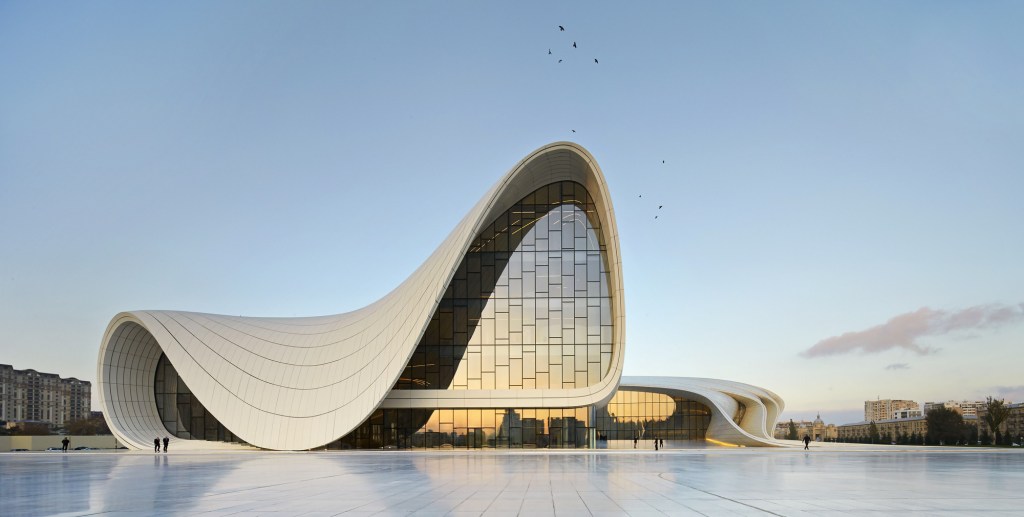
I had a feeling of a ‘brave new world’ which indeed has happened even if I had to let the brilliant Iraqi architect Zaha Hadid, steal my thunderbolts.

picture credit: Arch Daily

As a boy I used to cycle down to the south coast of England where the land meets the sea in tall chalk cliffs. Creeping along the grass to perch on the precipice to look down at the black pebble beaches far below, I was like a seer peeping over the edge of a flat world, into a third dimension.

Whether we see it or not, we are also now creeping warily into a fourth dimension represented by the principal of the ‘sacred feminine’.

This has nothing to with ‘Votes for Women’, a movement that swelled at the beginning of the nineteenth century perhaps as a natural protest against the male principled dominance of society since for ever. The First world war was perhaps, the last breath of that male principal. It briefly stopped the feminine protests and sent women to factories to build the instruments of war, but the corner had been turned. Women drove buses and ambulances and had tasted freedom from domesticity.

Mothers watched their sons march into the sunset, over the horizon and would never forgive the folly of the male Generals and politicians.

If you hold a ball in front of a child and ask, ‘where does this ball begin?’ the child will look at you as if you only have half a brain and explain that a ball has no beginning.

The question is a Koan and like all koans, challenges the rational, logical and formal pathways of thought.

Many dogmatic religious thinkers hold to the notion that the world could possibly end and proponents of this will present you with a date. Presently it is 13th August 2025 ‘according to Nostradamus’ and this date will, no doubt, pass without incident just as did the Christian Calendar’s year 2000 BCE.

Learning about the sacred feminine is a ‘learning curve’ upon which we still struggle, like young penguins sliding ungracefully up the steep slopes of an iceberg.

Ask an Astrophysicist when the Universe began and they will generally reply based on the so called ‘Big Bang’ theory. Yet the question is as absurd as guessing when and how the Universe will end. Anticipating the common sense of children observing the universe, I would expect they will say it never began and will never end.

That is the beauty of the child’s mind. It still retains the influence of the Divine Mother, before it is sent to the (male) military styled regime of education.

Yet I feel the influence of the Divine Feminine is more influential in modern Western societies than ever before. Parliaments and Judge’s benches are becoming equally filled with women as men.

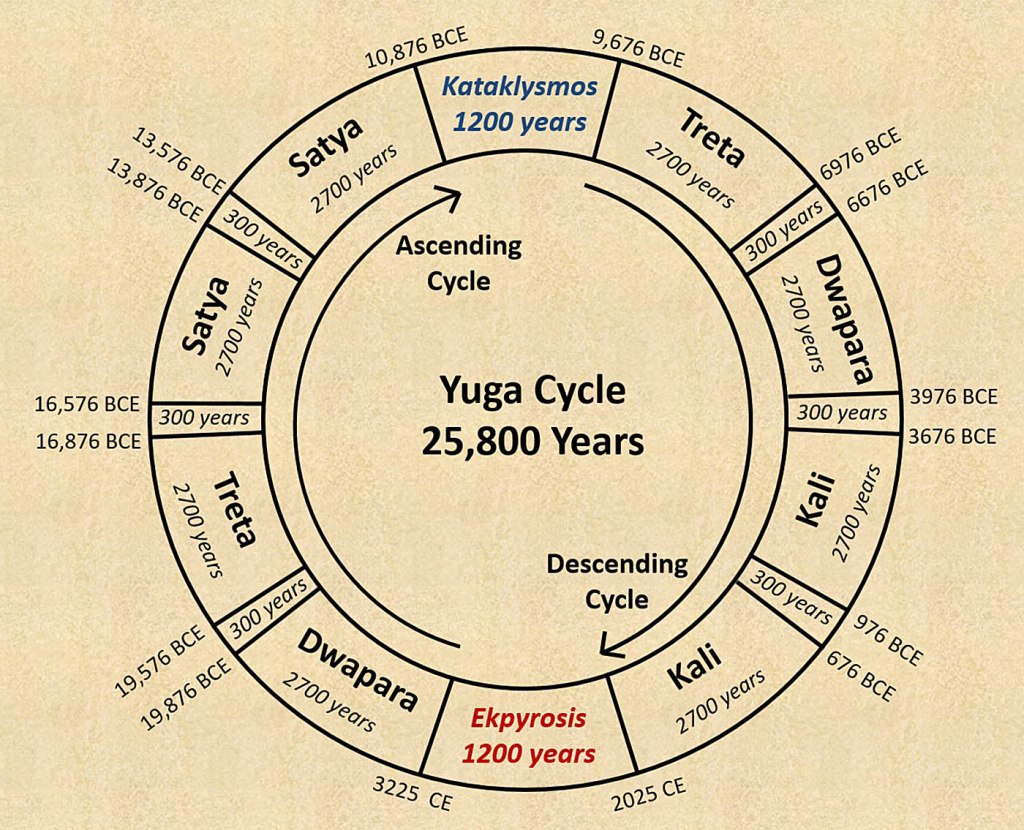
From Ancient India we are given the map of the idea of the cyclic Yugas; eras circling around 25,000 years in which the world is alternately destructive and creative.

picture credit: Ancient Inquiries

In the view of many, the Age if Aquarius is happening now and introducing the Feminine Principal into all areas of life and knowledge. Exceptions abound of course, as the process is gradual and takes two steps back for each three forward.

The benefit for humankind will be to realise when the pendulum is suspended equally between the two Divine Genders. Modern Feminism becomes flawed when and if it tips the balance too far and unnaturally dominates the male principal.

In Ancient times there are a limited number of symbols that appear in wall paintings and petroglyphs literally, around the world. One of them is the spiral. This remains one of the most easy to comprehend illustrations of an idea that defies logic; infinity. A spiral apparently starts from nowhere and disappears into nowhere.

If something were an mass moving through a void, it would need a circular motion combined with a constant, weak tangental vector, nudging it ever off a circular orbit out of sight.

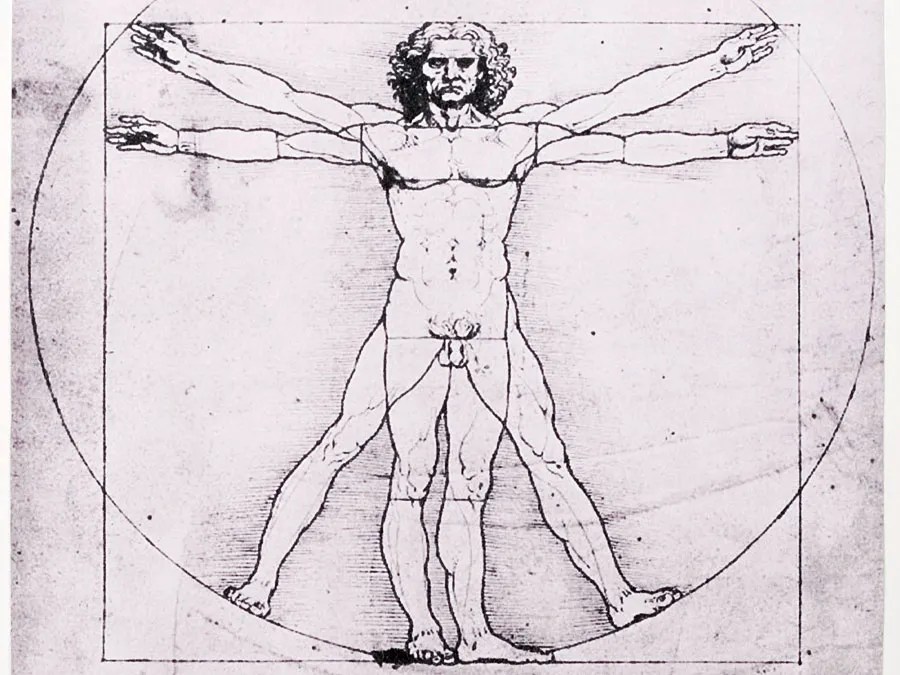
For a time in history, philosophers were perplexed with the puzzle in geometry of ‘squaring the circle’; famously illustrated by Leonardo de Vinci in his depiction of the ‘Vitruvian Man‘.

picture credit: Britannica

Yet in my view the spiral is a better symbolic representation of that state in matter and spirit, where the feminine is truly in harmony with the male.

In every aspect of nature, from the principals of the growth of the fractal tree and sea shores, to the spiralling movements of the moons, planets, stars, galaxies and universes, we can measure in observation the wonder of creation by two complementary Divine potter’s hands; one male, one female.

Humans were made from clay on the spinning potter’s wheel and the principal known as the anima mundi, is the final result of Divine genius – the Soul of the Whirled.

Peace Begets Peace

Most people hate war, especially soldiers, so why does it happen?

The problem is that war is an option of last resort. Ideally, all other options have been explored before war happens, but from then on, ‘the continuation of politics by other means‘, to paraphrase Carl von Klauswitz.

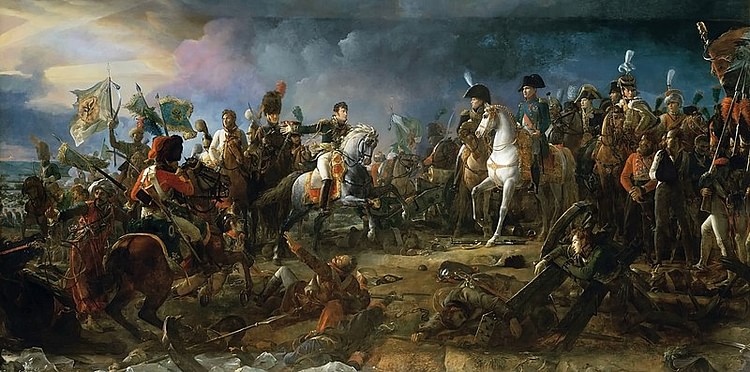
picture credit: World History Encyclopaedia

War will persist until it is possible to stop it; a process far harder to achieve than starting a war. Each conflict is a set of unique circumstances and different ways to reach a peace. At worst the war will become one of attrition and it becomes impossible for both sides to continue. Alternatively, political and public support for a war wanes or perhaps an overwhelming third force appears that compels surrender.

You would like to think that ‘how to stop a war’ is taught in military academies, but such executive decisions are more likely made my politicians rather than military leaders and politicians usually have no experience of ‘conflict resolution’ at this scale. Even in wars which have been wars of attrition, the conclusion of war requires considerable diplomatic skill. For if one side is forced into conditions of surrender that are too onerous and dishonourable, the process of recovery becomes excessively hard and national pride will almost certainly wish to seek redress sometime in the future.

The world might have learnt this lesson at the conclusion of the first world war, which was a spiral of attrition requiring the intervention of a third party; the USA to make it stop. The armistice terms demanded by the Allies, were so severe that they left a ticking time bomb, which exploded as the second world war.

The present war in Ukraine has been described by some as the beginning of the third world war, but there is another view. It could be argued that what is happening in Ukraine since 2004, when Russia annexed parts of Ukraine and later the Crimean peninsula, is an after shock of the second world war .

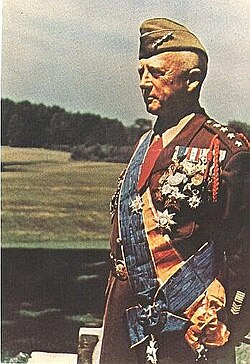
In that war, an American General raced against the Russians to roll his tanks into Berlin ; General George Patten.

The politicians tolerated his outspoken gaffs, because he was a superb military leader. Patten was of the opinion that the allies should continue to Moscow and finish the war for good.

The politicians ignored his advice and the United States spent the next few decades ‘fighting communism’ in what became known as, Mc Carthy era. Countries such as Cuba, Korea, China, Russia and Vietnam caused considerable headaches for the American politicians and military; feeding a neurotic culture of suspicion of called;  ‘reds under the beds’.

There is an argument that the present war in Ukraine is the continuation of the communist expansionism in Europe that immediately followed the conclusion of the second world war. President Putin justified invading sovereign Ukraine to the Russian people, by stating that his strategic aim is to defend Russia against an expanding NATO threat but less blatantly to fight ‘Nazis in Ukraine’. For Putin the ‘Great Patriotic War’ fighting fascism did not finish.

The technology of war inevitably played it’s part in this conclusion. The use of the Atomic bomb by the USA in the Japan, brought the conflict there to a sudden halt. Communist sympathisers within the Allies, gave the secrets of the atom bomb to the Soviet Union, who speedily test fired an exact copy of the American atomic bomb, shocking the world. Perhaps as intended by the ‘traitors’ who leaked the secrets of the atom bomb, this mutual threat has forced ‘the Cold War’ and an unsteady world peace ever since. Nine or so countries now have them and others want nuclear weapons despite the efforts of the International Atomic Weapons Agency, set up to prevent their proliferation.

It is important to realise that after the fall and fragmentation of the Soviet Union, Ukraine was left with fifteen pressurised water reactors of Russian VVER design, and importantly Soviet era strategic nuclear weapons.

Three of these ex-Soviet countries were persuaded to give up their nuclear weapons in the Budapest Memorandum on Security Assurances. Belarus, Kazakhstan and Ukraine agreed to give up their nuclear weapons between 1993 and 1996. The nuclear powers overseeing this process were the Russian Federation, the United States and the United Kingdom. They  agreed not to use military force or economic coercion against these three countries unless for self defence or in accordance with the Charter of the United Nations.

The diplomats and lawyers who wrote the Budapest Memorandum were perhaps, not clear about what constitutes ‘self defence’. Most strategists and tacticions, know that the principle of striking the enemy before they hit you, creates an element of surprise that can be construed as ‘defence’. Putin’s original ‘Special Military Operation’ was justified as ‘self defence’ but, unfortunately for him, it didn’t knock out his opponent with the first punch. The surprise was Putin’s. He thought Ukraine would be easy to take.

Putin constantly cites NATO as a growing threat, especially after the fall of Viktor Fedorovych Yanukovych, Ukraine’s president from 2010 to 2014. Yanukovych had promised the Ukrainian people in his election manifesto, that Ukraine would apply to join the European Union or at least set up special trade agreements which would lead to this. But after a phone call from the Kremlin, he enraged on this promise and there were riots in the streets. These were violently suppressed by the government leading to over 100 deaths. Yanukovych fled to Russia and Volodymyr Zelenskyy was elected president on the promise of European integration. Europe responded with indirect support.

Ukraine is an important buffer state for NATO because it has arguably, prevented World War III. It has so far, been a narrow escape for all, provided Trump isn’t elected and gives in to the Russians. The USA has not been good the diplomacy of war and should have learnt some important lessons, such as from the war in Vietnam.

An indignant generation of young people in the United States rebelled against the war in Vietnam as it was played out graphically on their television screens. Newspaper reporters photographed the horror of war; photographs which stunned Americans and the world alike. Young men angrily burnt their call up papers in front of crowds of anti-war protesters as four successive Presidents presided over an unwinnable war. In a way, the protesters against this and later wars (such as the invasion of Iraq by the US and coalition forces in 2003) stuck their flag in the moral ‘high ground’. War was wrong.

Awakenings of conscience and consciousness happen at the individual level long before  parliamentarians hear and reflect the ‘mood of the nation’. If war is going to be rejected as a method of ‘problem solving’, there has to be a global realisation of the immorality and futility of using violence against a fellow human being. It would be idealistic to suggest that this could happen in the near future but perhaps there is, a greater possibility for change than now, than there ever has been.

In my view, change will only happen with the introduction of a ‘third force’ which might be a charismatic world leader from this or another solar system, new technology or a third force with the means to eliminate humans, shared global problems of a catastrophic nature or just a spiritually and / or morally inspired realisation that violence is wrong.

The reference to ‘another solar system’ may have surprised readers! But the presence of advanced beings on earth is hardly a secret any more. The problem is that they are being characterised as violent and a threat to mankind. The narrative of ‘global security’ by successive U.S administrations, introduced ‘Star Wars’ under the Reagan and a whole new defence wing under Trump called the Space Development Agency. Hollywood has aided and abetted a global fear of invasion of ‘beings from outer space’ who wish humans harm.

The reality as described in Dr. Steven Greer’s film, ‘Close Encounters of a Fifth Kind’, is that highly evolved beings are watching and guiding us until we wish only peace for each other. World religions have been advocating this for centuries so humans cannot claim ignorance.

picture credit: Screen Space

Such a change of morals and consciousness is not a vain hope. There have been historical precedents. The crucifixion of one man in Roman Palestine, started a new religion based on love and compassion for all other people, including enemies. The election of a Pope gives some hope to the world that ethics may now take more of a role in international politics.

The demand for a planet where there is no war, is now in the hands of the politicians, lawyers, military leaders, religious leaders, industry. But the arms industry has been more interested in shareholders than ploughshares. The only possible novel outcome to being a victim of unrestrained violence, is for individuals to peacefully protest.

Mahatma Gandhi used non-violent protest to British rule in India. Peaceful overwhelming presence is an extraordinary power.  When it fails, it makes powerful martyrs but when won, makes lasting peace.

Beyond Good and Evil

Genesis gives us the key to opening the door to everything. All we have to accept is that stories in Holy books almost certainly operate at many different levels beyond what is taught to children in Sunday School.

In the story of the original humans in the Garden of Eden, God ‘opens the eyes’ of Adam and Eve as punishment for Eve eating the forbidden fruit of the Tree of Knowledge. For in doing so their eyes are opened to the concept of ‘good and evil’, but we should not be side tracked by wondering what good and evil are. What is being revealed here, in my view, is that the Unity Consciousness of the blissful Garden, split into binary consciousness. If the reader overlooks the reference to newly realised binary opposites, then the message is repeated for reinforcement.

When Adam and Eve see each other naked, for the first time, their consciousness moves from being one, to two. This ‘same but different’ paradox between men and women is the same for all binary thoughts and words. Carl Jung suggested that the minds of men and women differ as metaphorically expressed by the nuanced differnces of their bodies.

The message in Genesis, is not about ‘good’ or ‘evil’ or ‘man’ or ‘woman’; it’s about binary thought; a fataly flawed characteristic.

But thinking in opposites creates an illusion of understanding. This is whispering serpent’…the one that slides down the ladders of thought.

In physics, nothing is black and white; there is just light and an absence of light and everything in between. But using opposites as a sort of ‘algebra’ for thought has enabled modern scientists to deconstruct nature and use it’s methods to make technology.

Batteries consist of negative and positive poles. The brain consists of left and right hemispheres. Breath goes in and out. Humans are born and die. Chromosomes are X and Y.

This is how have un-zipped the polarities that keeps atoms spinning, but there is a catch!

Our thoughts attach to the oversimplified opposites. Left and Right political views are a prime example of extremist views plunging the world into chaos. Edward de Bono introduced the non-binary word Po in his book Beyond Yes and No to express infinite possibility and a practical key to freedom of thought.

Opposite ideas should only ever be a mere framework for rational thought, otherwise the space in between disturbs ‘certainty’, leading to confusion and conflict. Consider a recent example;

In the United Kingdom, the Supreme Court has just ruled that a woman is a person who was born a ‘biological woman’. In other words, a ‘biological man’ cannot become a woman. This rule provides clarity for the lawyers; but is it true?

I would argue that the model does not fit neatly over reality. When it comes to the provision of public toilets, there will need to be a ‘third space’ for those with particular needs, for instance, those who feel different to their biological gender.

Is not an impossible problem for many ‘third spaces’ already exist as a ‘disabled toilet’. All that is needed now is a gender neutral sign on the door. Something that is not ‘men’ or ‘women’.

We see here that humans are not as simple as the rule of two ‘opposite’ biological genders. Consider the complexity of the body. We have a brain with left and right hemispheres. Each half has a nuanced contrast of functions; rational and creative respectively. Psychologically, each woman has an unconscious animus and each man has an unconscious anima. One in ten of us are left handed; the rest right. In some cultures, left is ‘evil’ and right ‘good’. There have been libraries written on the complexities of gender differences.

But we also experience a range of emotions, almost involuntarily, which can be categorised as ‘expansive’ or ‘passive’ in nature. Anger and valour are expansive and ‘male’, sadness and tenderness are ‘female’ emotions, for example. Of course, men and women have the whole range of emotions in varying degrees beneath the fig leaf.

Finally, the subtlest human characteristic that guides mind, heart and body is ‘intuition’. Albeit a peaceful, almost silent, internal voice, it has a function to guide us when we are lost. Another name for intuition is Soul, and yes, souls can be ‘good’ and ‘evil’ as illustrated in the Old Testament. There is a Bible story in which Joseph experienced wise, prophetic dreams. His soul’s ability to describe the future intuitively through the pathway of dreams is symbolised by his ‘coat of many colours’. Dream messages are not black and white, but as subtle as a colour from the subtle spectrum of light.

This level of subtlety is desperately needed today, in my view, if humankind is ever going to recreate the Garden of Eden on earth through deep compassion and understanding. If we do not, a Wasteland awaits.

Who is the third who walks always beside you? When I count there are only you and I together, but when I look ahead up the white road, there is always another one walking beside you, Gliding wrapped in a brown mantle, hooded. I do not know whether a man or a woman – but who is that on the other side of you?

What the Thunder Said (from line 359) from The Wasteland by T.S. Eliot

Francinsense, Gold and Err

Who Stole Christmas?

PREMISE

The Church Fathers have had considerable ‘editorial control’ over what to put in and what to leave out of the Holy Bible. So much was ommitted and added, so should new ‘adjustments’ not be accepted?

OBSERVATION

In 1872 a scholar named George Smith found something remarkable in clay tablets from Nineveh. He was reading in cuneiform the Epic of Gilgamesh in which is described the great flood, God’s punishment for mankind. The suggestion that the Great Flood described in Genesis was just a retelling from ealier Mesopotamian texts, shook Victorian society. They gave Mr. Smith a hard time, as if he was the problem.

Today there is considerable proof that many of the stories in the Old and New Testaments have been subject to editing. We accept that the dates for the Christmas and Easter festivals are not in the Bible. They have been made up. The date for the birth of the Christ child was decided to be December 25th but why?

The Infant Horus: picture credit World History Encyclopedia

Previous gods had been born on this date. There was Horus (Ancient Egypt), Mithra (Persian), Krishna, Zarathustra (Iran), Hercules, Babylonian god Bal (Nimrod), Heracles, Dionysus (Greek), Thammuz (Babylonian) Hermes (Greek) Adonis (Phoenician) and others. All were born of virgins.

If such a clear plagarism of ancient gods is disturbing, there is a logical explanation based on astronomy. December 22nd is when the sun disc halts its annual progression northwards along the horizon. It then pauses for three days and rises anew on December 25th. This natural phenomenon supports neatly the story of a solar god being born; not dying and miraculously resurrecting but being born at least. Perhaps the birth of Jesus does not fit the story and date of how the ancient gods had been born.

If we investigate the ‘blasphemous’ notion that the Christ child was not born at Christmas then we should be able to find another meaningful astronomical date in the solar year relating to birth. After all, should a Christian festival be based on the Pagan festivals and superstition? The church fathers did, we should remember, hate and demonise Paganism, although Pagans did no worse than love nature and each other.

SUGGESTION

I suggest that the birth of Jesus was in the springtime; the lambing season, when shepherds watched their flocks by night. Consider afresh, the Christian nativity narrative.

The three Kings or Magi seeking Jesus were astrologers. So excited by and certain of their prediction were they, that they set off to find him, I argue, in the spring. They ventured eastwards towards the star Sirius, which rises in the east in March in the northern hemisphere. With their learning they probably knew of the goddess ISHTAR from Babylonia who represented Sirius and was associated with fertility, love and war. Another clue for us today is that in the English language is the word Easter which breaks down into two words; EAST STAR. It also is remarkably similar to the word ISHTAR.

If we dig deeper into pre-Christian gods, we find that in Ancient Egypt the star Sirius was represented by the goddess SOPDET meaning ‘skilled woman’. She was important because her appearance signalled the inundation of Nile and the beginning of their new year. She was sometimes portrayed as a large dog.

picure credit: Tarot Aotearoa

Sopdet was associated with ISIS who was the wife of OSIRIS. Their son HORUS just happened to be born on 25th December; a holy family uncannily resembling a later one. They watch over us even to this day as Sirius (ISIS) in the constellation Canis Minor and her husband OSIRIS, the constellation ORION.

These curious facts add up to support the possibility that the Nativity occurred in the spring and the death and resurrection of Jesus the Christ in mid-winter. Certainly, Bible scholars are unable to qoute verses that deny this, as is anyone to confirm it. The Christian practice of using the festivals and stories of the hated Pagan gods, appears to be the only reason for Christmas and Easter being where they are today.

We cannot deny the association in popular modern culture of ISHTAR and Easter. As a nature godess, she is depicted with with hares and rabbits (famed for their procreative success) and eggs (product of the female hormone Oestrogen). Eggs and Rabbits were omitted from the Holy Bible and yet survive as symbols of birth happening at the time of the great initiator, Aries. Perhaps, some archetypes are too strong to supress.

ENDING

At this time of Easter, instead of celebrating the joys of spring, Christians mourn. Then, in midwinter they celebrate birth.

One wonders whether these important festivals, reversed for the wrong reasons, have unknowingly undermined the modern world? Knowing the basics of life and death, ending and beginning, should support rather than undermine what it is to be a human, whose life is dependent on natural cycles.

I cannot expect anyone to agree with my view but for me, this fundamental reversal of ancient truths has led to our misunderstand and abuse not only of nature, but ourselves.

The mystic Hildegard of Bingham wrote ‘wisdom awakens to wetness and greeness and flowing waters. Wisdom says I am the rain coming from the dew that causes the grasses to laugh with the joy of life’.

Pagan Wheel of the Year: picture credit Friends of the Forest

Happy Christmas!

True or Not True?

That is the question

picture credit: Australian Academy of Humanities

The world is experiencing mental chaos in the present; not knowing what to believe. The news media is full of reports that appear to contradict even what was said the day before.

It is important therefore, for our thoughts to be as precise as we can and also our words.

As in the title of this essay, ‘truth’ is causing the confusion and we now longer know who to believe.

Numerous politicians are being routinely accused of ‘lying’. If we consider the meaning of the word then is ‘a statement intended to deceive’. Then there are are false ‘facts’ from unreliable sources, which may not be intended to decieve but do.

The famous Dunning Kruger effect states that amateurs are less concerned about understanding a subject than professionals, who have pondered on it for years. The less you know, the easier everything appears to be. The present administration in the United States of America has more than it’s far share of sufferers of this effect, who simplify complexity to below any standard of professional opinion.

There are also things openly ‘fictional’. These may contain some truth but are largely a product of imagination. Novels and films based on truth will declare that names and events are fictional for artistic and legal reasons. What is important is that we are not deceived into believing in fiction. The World’s religions and cults are particularly prone to this absence of adherence to truth, often for no other reason than there are based on the fog of ancient history and managed so as not to embrace the present.

The civil laws of most countries try to be based on ‘the truth, the whole truth and nothing but the truth’. Judges attempt to distinguish between true evidence and false evidence until something is believed to be ‘beyond doubt’. It still makes mistakes even after the most rigorous processes to remove doubt. Dictators who control the judiciary can get away, literally, with murder, using fabricated evidence or just no evidence at all.

What this shows us is that even after the most challenging and examination, ideas can turn out to be mere theory. In science, theories are subject to ‘peer review’ – critical examination by equally well qualified scientists. As the Ancient Greeks understood, theories should not be confused with facts. The present irrational dismissal of a theory because it suggests a ‘conspiracy’ (intent to cause harm) is irrational. To not investigate an accusation for emotional reasons is a clear divergence from truth, but convinces crowds.

‘Facts’ are illusive and can be the product of distortion. A satellite’s instruments may be malfunctioning or incorrectly calibrated. An individual politician may have an unconscious or deliberate bias. The process of believing that ‘climate change’ is true has taken decades, largely because it was contrary to the interests of companies that extract and sell fossil fuels. As with many complex issues, the theory was too large in scope for the general public to understand. Those who should lead opinion, politicians, often use distraction, omission, obfuscation, irrelevance, obstruction and discontinuity to align facts and fictions with political ideas.

Even when we believe something is true, it can still only be ‘relatively’ true. It might be an oversimplification that just happens to work. Basing the worth of money or tokens on gold reserves was just one such ‘truth’ that reassured governments and populations. Today physical or virtual tokens of ‘worth’ are less and less dependable.

Finally, philosophy has an angle on ‘truth’ and how to find it. If science and religions regard truth as constants and dogma, philosophers understand truth as malleable. There is no ‘fixed law’, other than the law that everything changes.

In Zen Buddhism, truth is whittled down to an individual regarding life’s purpose as no more or less than being present and observing; a formula much needed in our present times; especially when things go wrong!

Oh Bush warblers!

Now you have shit all

over my rice cake on the porch. Basho