Art and Art Technicians

The first match of the 2018 World Cup is about to start. On one side are the team representing artists and the other side, technicians.

In their fine new strip of red and orange, the colours of fire and inspiration, are the artists. They represent the fields of fine art, sculpture, architecture, landscape architecture, musical composers and songwriters, writers and poets, choreographers and screen and playwrights

Their opponents sport a new strip in green, the colour of growth and regeneration. They include the fields of art critics and historians, art and sculpture reproducers, builders and architectural technicians, musical instrumentalists and conductors, cover bands, literary critics and historians, dancers and actors.

The whistle blows and Vincent Van Gough kicks the ball skilfully to the left centre forward, William Shakespeare who, almost immediately, is taken down in a foul tackle by Gwyneth Paltrow.

You can imagine how the game continues for yourself. The point I am trying to make is to distinguish between those who create art and those who are proficient at the technical reproduction of art. The reason for this is that I am tired and frustrated of the trend for the technicians to adopt the mantle of ‘artist’. They may have artistic feelings about their interpretation of the artists work, as do critics and historians, but the real artist is always the originator.

An extreme example of a technician, would be a person who produces forgeries of paintings by famous painters. They have the same technical skills as the originator (sometimes greater) but appear to have no access to the muse of their imagination. They usually end up in prison.

When I was a young architect embarking on my career, I worked under an architect called ‘Les’ for six months as part of my work experience. Les designed everything in the style of the nineteen fifties and was not a cutting edge designer. I don’t know what he thought of me but one day one of the technicians ( who produce technical drawings ) came over with some design of his own. Les could see it the design was third rate, as could I. Afterwards I made the remark, ‘Knowing the language, doesn’t make you a poet,’ which caused Les’s eyes to light up with surprise. He had not expected such an insight to come from this inexperienced student.

Later in life I had a similar experience when I took part in a concert in the town I lived in, as a ‘performance performing my original poems. There were a couple of pianists, singers, other musicians. I remarked to the pianists quite innocently how refreshing it was to have some original work in the evening, meaning myself. I had not meant this vainly but just as it says. They appeared quite shocked at the suggestion that their contribution was not of supremely high value. They walked away and avoided a debate with me that probably would have made them uncomfortable. I might have been tempted to point out that you could train a monkey to play the piano.

Learning by rote through repetition and honing technique are the give away s for someone who is an art technician. Take a mediocre ‘boy band’ from any pub or club and spend a lot of money re-branding them and voice training – to produce a ‘media sensation’.

The difference to the false ‘musical artists’ of today and the originators of popular music, is that the originators have careers. The boy band members of today are the supermarket shelf stackers of tomorrow. The ‘Madonna’s’, ‘Bob Dylan’s’ and ‘Beatles’ will be remembered and repeated by the art technicians for eternity. If eternity strikes you as an exaggeration, then consider the works of Mozart, Bach, Shakespeare, the Renaissance painters and architects, the architects and painters and sculptures or ancient Greece.

So please let us not devalue art by giving an over generous pay packet and praise to the art technicians. Let us value those amongst us who are connected to ‘The Muse’ and one day will live for ever in the museums as Artists.

Pyramids of Fire

Conv_IMG_2130There has been much exploration of the Pyramids of Cheops, Giza Plateau, Cairo; both the buildings and in thought.
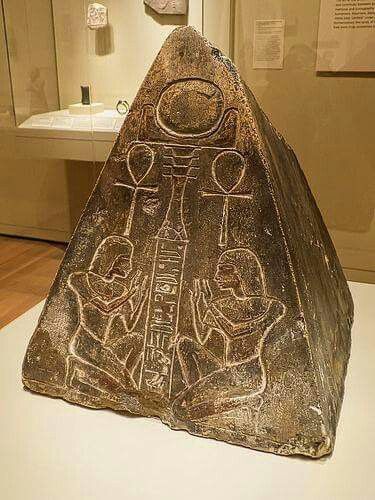
Conventional archaeology focuses on a material explanation, a reflection of the scientific materialism of the present and recent ages. But many enquirers are now proposing explanations of the purposes of these great buildings more holistically; as matter and energy. It is the energetic aspect of the pyramids that I wish to explore.

The type of energy we are considering is electromagnetic. We know that the pyramid of Cheops is aligned perfectly with the magnetic north pole. Like many ancient monuments it is more likely this was deliberate than chance.

We also know that the type of electricity in question is static electricity as found in the earth tellurgic currents and the human body.

A story describes a visit to the Great Pyramid by Sir W. Siemens, a British inventor. Accompanied by a local guide he climbed to the summit; something not permitted now! He was instructed to raise his hands and raise one finger. He did so and noticed that he could feel an irritating prickling sensation in that finger. When he took a drink from a bottle of wine he had brought along, he received a slight shock as the bottle touched his lips. On wrapping wet newspaper around the bottle he created a crude Leyden Jar which converted energy emanating from the pyramid into static electricity.

Recently I sat outside in a thunderstorm facing the storm and taking photographs  (see above). My digital camera was set to take multiple images in fast sequence. As well as some dramatic pictures of lighting, there were several photographs of an electric blue, wavy column of light ascending towards the overcast sky. These images intrigued me and I discovered that they are known to science as ‘streamers’. They are produced by proximity of the positive ions in the earth to negatively charged, thunder clouds. These positive ions build up until the charge leaps towards the clouds overhead. This process appears as a blue streak of positively charged plasma. It dramatically connects with lightning in the clouds and discharges. Not all lightning discharges in this way, the more common variety discharging within the same clouds (sheet) or directly to earth (forked).

Observing this phenomenon fitted another piece into a puzzle I have been contemplating for some time.

In my youth I visited many of the prehistoric sites in southern England. The round mounds known as Barrows line the summits of rounded hills often linked to stone circles via straight ‘avenues’. They are constructed in a manner that makes then function as simple batteries, storing positive energy collected by the stones. Where there are large concentrations of standing stone structures such as at Avebury, Wiltshire, there are correspondingly large artificial mounds. The one close to the stone circles at Avebury is considerable and has never been understood by archaeologists. A BBC film crew once gained permission to excavate it. This set off electrical storms in the sky above regarded at the time as coincidence.

Silbury Hill

Silbury Hill

A Pyramideon

A Pyramideon

How Lightning is Created

Lightning Science

I know believe that the function of pyramids was to build up massive positive charges within. In most pyramids this charge naturally emanated from their tips into the clouds. It must be remembered that even as recently as Roman times, North Africa had a much wetter climate where thunderstorms no doubt occurred. During these storms the Pyramideons ( micro scaled pyramids on the tip) let out huge amounts of energy.

If comparison is made with the tower created by Nicola Tesla in Shoreham, New York there is an intriguing similarity in construction and functional electrical processes. He created electrical storms directly from the top of his machine, much to the concern of his neighbours! Tesla saw this energy as being able to provide electrical power to the world. Remember this was the man who gave us alternating current and wireless communication, so is not to be dismissed as a fantasists.

This unproven similarity with the Pyramid of Cheops is incomplete, until further clues are considered. The first clue for me, was that the Pyramids of Cheops had no Pyramideon when built, or after. This distinctive design feature provides a large clue to it’s function.

Directly below it the tip of the pyramid, is the so-called ‘Kings Chamber’. Lower and to the south side more is the so-called ‘Queens Chamber’. Both chambers were never used for burials, as no evidence of this has ever been found. There are however two narrow passages that extend north and south from both chambers. They are described most often as ‘air passages’, unusual in a supposed tomb!

Sherlock Holmes is credited with saying that all possibilities should be eliminated and what is left is the truth. If we follow this rule then the ‘air shafts’ that lead north and south out of these chambers, were not for air. They are blocked by exactly fitting stones which have two metal rods inserted through them. If we consider the water below the pyramid as a source of positive ions rising through the stones and into the pink granite lined chambers, it is easy to visualise this energy leaving the pyramid as ‘streamers’ through these shafts. The air inside them would turn to plasma which would escape from the shafts and seek negative ions in the clouds forming lightning.

Each shaft has been calculated to point to certain stars in the year 2500BC when the pyramids were in use, such as Sirius. How accurate these facts are I am not in a position to verify, but whichever star it might eventually be received a pulses of electromagnetic energy. This is pure speculation but if a reason is needed then possibly there was information encoded in it, much like our modern use of radio waves.

The story has many more intriguing possibilities. As the Kings Chamber contained no burial, the granite box without a lid, is the right dimensions to contain the Arc of the Covenant. As an Egyptian priest, the biblical Moses would have known about this and it’s esoteric function. Whatever these were, he valued the Arc’s properties so highly that he stole it when he escaped from Egypt with the Israelites. The Egyptians valued it so highly, that they chased him with an army to retrieve it.

We can speculate that it’s function in the pyramid as an energy store, may have been used for initiation ceremonies and / or part of the mummification process. The two gold angels with almost touching wings on the top of the Arc could have created an ‘arc’ of electricity; the box and the metal covered stone tablets it contained, acting as a capacitor. This would explain why so many contemporary references, describe it as ‘dangerous’.

The picture of the true function of the pyramids is still incomplete. We can speculate and find possible reasons for facts that previously have been incorrectly ‘explained’. The real truth requires more evidence, more access to areas of the pyramids and Sphinx as yet undiscovered.

One last tit pit though. Energy produces heat when discharged and there is apparently scaring to the pink granite and so called ‘air passages’. Something was hot inside this pyramid, which would explain the term ‘pyramid’ . Translated it means, ‘fire in the middle’.

Grammarians from Outer Space

Two creatures from a solar system in a galaxy far, far, far away, approached the planet earth. They were slowing down from six thousand times the speed of light and were ready to deploy their rather small parachute as the final phase of descent.

Before landing it is routine to ‘have a little listen’ to the inhabitants of the target planet. To this end, they activated their sound receiver, a sort of giant ear. It was pointing at a place called Marble Arch in the centre of London, England. They were anxious to see if they understood the language they had been taught in Exploration Command – English.

The creatures leant forward and listened with full attention. Two inhabitants of the planet were out for a bit of shopping. As they stood on the kerb of Oxford Street, poised with a lethal substance known to them as coffee, in their hands, they could be heard talking.

‘Here! Er, the thing is, in terms of feeding, how often do you feed your dogs?’

‘So, you know, my dogs, to be honest with you, is fed twice on a daily basis.’

The two distant life forms looked at each other quizzically. Had they both misunderstood their intensive English language learning induction? Surely, the sentences they had just heard should have sounded like;

‘How often do you feed your dogs?’

‘Twice a day.’

They had been warned to suspect that this race that call themselves ‘human’ were becoming regressively more stupid. This short ‘eaves dropping’ – as their colloquialism plug in put it- was unexpected, but confirmed their worst fears.

They looked at the date on their English Language induction programme. It had been produced fifty rotations of the earth around it’s star ago. Was it possible that language could devolve so suddenly? Their own language was not permitted changevelopment. It was known that poor language discipline lead to losing thinking skills. When life forms, begin to forget how to think, the first indications are stuttering and meaningless appendages to and within, sentences. The process develops until the speaker is unaware of the control unnecessary words have over their thoughts. Left unchecked, this decline will contribute significantly to the downfall of civilisation.

On similarly declining planets it had been observed that no individual understands another, just treats others as an extension of themselves. There is either a match, which was good, or a mismatch, which leads to criticism and hatred. This was well documented across the Universe. ‘In the beginning was the word‘ spirals downwards into it’s corollary, ‘in the end was the word‘.

After a short communication with Exploration Command they were given permission to terminate their Earth Regeneration Mission. Fortunately, their journey was not wasted. Another solar system had been chosen as a secondary mission objective; in case of just this eventuality.

The two unfortunate creatures hopped back to their floatation chambers and activated the learning experience language module for their next destination. By evening they would be fluent in Andromedish.

The beautiful blue planet was shrinking into almost nothing. They both felt a deep regret that yet another civilisation was going to fail due to the inability of it’s inhabitants to think and communicate clearly.

The taller of the two leant over to his colleague just before lowering the chamber lid. In the background they could hear the computer supervising the storage of the planet cleansing and regeneration equipment. Frictionless motors moved heavy weights with ease. The space craft was soon to be silent again.

The taller one spoke;

‘I was so looking forward to sitting on our pyramids again.’

‘Yes, I believe the earth inhabitants have not worked out that the pyramids we left in Egypt were nothing more than chairs for you me and the little one.’

‘I am full of regret for their lack of thinking skills. Least of all is their idea that we are dangerous! How can they think creatures from civilisations such as ours, have any reason to fight! They are the species who continue to have wars!’

They lay in the iridescent floatation fluid and waited for the lids to close. The smaller of the two creatures looked across at it’s mate and closed one eye briefly in the manner they understood humans did as a gesture of fun.

‘Yeah Dave, the thing is, you know, what have we got to lose? In’it?

The Foxbridge English Dictionary

Dictionaries are constantly changing. Here are some of the new meanings for the 2018 edition of the Foxbridge English Dictionary;

Fabrics – a high quality wall

Wombat – a litter collecting bat

Rocket – a small rock

Womble – a litter collecting bull

Patent – a hired tent

Treatable – being kind to bulls

Trump – a dinosaur with a large backside

Stable – instructions from a Toreador

Infer – a place to find fleas

Amble – a bull that is best in the morning

Tame – instruction from a Yorkshire shooting instructor

Amiable – a bull that likes you

Transport – women’s races run by men

Reasonable – a bull with a good understanding of logic

Safety – tea that isn’t dangerous

Shambles – bulls that aren’t really bulls

Krakatoa – an excellent motorway recovery man

Feeble – a bull with a good head for business

Tweet – planning a meal in Yorkshire

Forest – what a seat is for

Bible – what to do when bulls are cheap

People Carrier – a thing for carrying poles for your peas

Rambling – gaudy jewellery for rams

Pizza – Zhar Peter

Sit Down Quickly Everyone!

Come along children! Find your places quickly. All sitting down; I am waiting…

Now today we are going to be doing something very important. We are going to be the Houses of Parliament. That is why the chairs are different this morning.

Well there aren’t any houses in the houses of parliament, Boris. It’s just a name. I don’t know why they are called houses. Just imagine it to be one big house.

…with a garden?

No, Boris, there is no garden. Well because they don’t like flowers.

Now if you remember we need someone to be prime minister. Put your hand up if you would like to be prime minister!

Well there must be someone wants to be prime minister. Come on what about you Teresa? You will? Oh thank you very much. Make a space for Teresa so she can sit in the middle behind the pile of boxes.

Well, Boris those boxes are called the despatch box. It’s where people speak from. No not from inside a box. Outside.

Now we have a prime minister, so we need a leader of the opposition.

You would like to be one Jeremy? Thank you. You can sit opposite Teresa. No don’t make faces at her that’s not very nice.

Who is making that humming noise? Stop it please.

Who else do we need children? Any ideas.

Father Christmas! Well that would be funny wouldn’t it? No, I don’t think we need a Father Christmas. Nor, a tree, nor presents, you are just be silly Jeremy! Settle down everyone! Sit up straight!

Thank you. What a silly idea that was. Anyone else with a sensible suggestion.

We need a Phoney Secretary do we Amber? I think you mean Home Secretary. Yes, you can be one. Move up next to Teresa. Nicely! Good.

And a Fun Secretary! Well what a funny name! No, that’s a Foreign Secretary we need, though I expect we could all do with a Fun Secretary.

He would give out free sweets would he Jeremy? I think politicians have to have better ideas than that. Well, because I do. Well because the country would quickly run out of sweets.

No you can’t put up taxes to pay for the sweets. No you can’t. Not today, or any day. Because you are the leader of the opposition Jeremy that’s why. You are not in power.

You know who is. Yes you do. Who can help Jeremy remember who is in power children?

Yes Teresa, you and your party are in power. They are called the Conservative party.

Who is whistling? Come on. Oh it’s you Boris! Why are you whistling Happy Birthday? Because there is a party. No, it’s not that kind of party. You like party’s do you? I expect we all do but let us remain focused. Concentrate on what we are doing.

So now we have a government and an opposition, what are we going to do? Any ideas? Oh, what a lot of hands up!

Okay, Jeremy, what would you like to say?

That’s not a good policy. Keeping out the Jews has never worked Jeremy. Well because it’s prejudice. Well that means, not liking someone without any reason. No I do like the head teacher. Yes, I do. The provision of parking spaces to junior members of school staff is not what we are going to debate, Jeremy. No I am not a Jew either.

We want a nice policy. Teresa, do you have any ideas?

Not really. Oh. What sort of prime minister has no ideas!

Jeremy, that kind of language can go into the toilets and be flushed out! Off you go. Sit in the toilets until you have cleaned out your mouth. Now!

Oh you have thought of something have you Teresa? More Grammar Schools! Well with so many things going on the world, I wonder why you think that is important?

So you can have a better chance of getting into one next year? Well that is some sort of a reason.

Who has a better idea for a policy? You have one Boris do you?

Hating Russia! Oh dear. We do have a lot of prejudice in our class this morning. No we are not going to have a vote on it Boris. Well because it is a stupid idea. And hating the North Koreans, and the Chinese…we are not going to vote at all unless someone has a sensible policy!

I am waiting.

I am waiting.

Is your hand up Teresa? It is. What is your policy?

Britain should leave Europe and the rest of the world and head off into space.

Oh dear.

There goes the bell. After break it’s reading skills so bring your reading books. Go nicely out of class now and don’t run in the corridors!

Just think readers. One day, these children could well be in charge of the country!

Blame then Bomb

Sergei Skripal was the latest in a series of ‘blame Russia’ scenarios. Relations with Western Europe have deteriorated decade after decade. Certainly Russia has it’s domestic difficulties – but that is not the business of other states. It has also been in the background and benefited from the ‘invasion’ or ‘repatriation’ of satellite states like Ukraine and Crimea. In ‘retaliation’ Western Europe has imposed sanctions and frozen asserts held in the West.

But is Russia the problem it has been made out to be by the western media? How have British, French, German citizens suffered or has their national security been threatened by Russia? Probably not. The West appears to become interested when it can adopt the role of ‘moderator’ or ‘high moral ground’ or ‘defender of freedom’ or ‘not tolerating weapons of mass destruction’. It tries to go through the United Nations with complaints against Russia of this nature, only to be vetoed by, well Russia.

The Second World War did not end well. It did not end well if you perceived future world peace to depend on something more than the defeat of Fascism. At the time, it was natural to see the aim of the war was to defeat Fascism. Few had the vision of General George S Patton, who declared that the West should carry on the fight to the doors of the Kremlin. Why? Because he saw that Europe was about to be divided down the middle, East and West.

So, for no more noble a reason than ‘the enemy of my enemy is my friend‘ Churchill and Roosevelt, found themselves sat at the negotiating table with one of the most evil dictators, Joseph Stalin. The resulting negotiations didn’t go well. The Soviet Union grabbed land. A lot of land, including half of Berlin, the jewel in the devil’s crown.

So the war ended in division rather than unity – and the price? The creation of the state of Israel. Why was that so important? The very influential Jewish lobby, in the States and Europe, were perhaps the only beneficiaries from the war.

The post war years have been held in a state of military limbo by technology, rather than statesmanship. That technology was the practical application of nuclear energy, as an ultimate weapon of war and a source of energy.

Beneath this culture of mutual fear and respect, the two ‘sides’ have co-existed peacefully. The Soviet Union has undergone change with the collapse of communism, because of it’s own short fuse.

On the positive side, countries that had had their infrastructure demolished, like Germany and Japan, were able to rebuild. Ironically, war is a good thing for the economy of the world. New inventions, social change, opportunities over stagnation, contribute to a ‘leap forward’ on a scale that might have taken decades without war.

If you felt that the time is ripe for more catastrophic destruction, for more ‘reinvention’ of society and technology, then you might be right. The traditional ways of the post war years, have brought about great social benefits but failed to settle national conflicts or appease petty nationalism. So real or imaginary, a more ‘united and free‘ world awaits those who survive the next world war.

With a seriously deplete world population following a nuclear, biological and chemical war, human kind will be forced to come together just to survive. What will be left of the biosphere will be regarded as far more precious, than it is now. Our survival depends on the planets survival.

So, what do these people (dubbed the ‘Deep State’) do? They have been drip drip dripping hate and disharmony amongst nations for the last fifty years. Why has the United States of America chosen to fight so many foreign wars from which it’s citizens did not benefit and when there was no threat to the national security of their country? Soldiers died because their leaders told them there was a problem that needed solving.

Why have the Palestinians been treated with Aparthied and Genocide by those who pretend to know better? 

When Sergei Skripal and his daughter are attacked with a nerve agent on the streets of a county town in the United Kingdom, ‘who done it?’

We all enjoy detective stories. We are particularly pleased when the obvious villain turns out not to be the murderer. The real murderer has remained in the background as the least likely villain. The murderer places clues to mislead the detective. Yes, we all know the format.

When we look for a motive for attempting to murder Comrade Colonel Skripal in Salisbury with a nerve agent, why do we leap to the conclusion the writer intends us to?

Why can we not see that there could be several other persons in the country house who also have a motive for murder. Perhaps Colonel Skripal had upset some members of the Russian Mafia? Perhaps Colonel Skripal was being punished by third parties for someone he killed or double crossed in the past? Perhaps Colonel Skripal was used as a pawn by the Deep State to make the Western powers blame Russia?

Great calm and benefit would be had by Western leaders to look at this and past ‘hate’ stories reported about Russia, and ask whether Russia is a real problem to the West, or not.

In 1949 it was thought not. But throughout the cold and largely phoney war, the Soviet Union and then Russia, has been portrayed as ‘the enemy’. But listen to it’s leaders and watch it’s actions. It knows that going into Afghanistan was a mistake. It knows that it does not have the material wealth of the West and is a relatively small player in world politics and in world trade. Only the weakness of the West will allow it to become a grizzly bear instead of a teddy bear. Only by demonising it relentlessly will the West persuade it’s own citizens that Russia is the problem and justify the devastating war which may happen in Northern Syria very shortly.

The Russians are Europeans, like it or not. Europe does not benefit from being divided by cultural, nationalistic, militaristic, social, economic, religious, technological and aspirational differences. Instead of falling apart, Europe needs to aim to come together, because of, not despite it’s differences however uneasy that may feel. If it does not – if there are no statesmen or women, big enough to see the world picture, then the world picture will have to emerge from the ashes of all out war, just as it did before, but far more quickly and over far larger an area.

Brexit or Ukexit?

Brexit or Ukexit?

The group of islands up above the 51st parallel or there about, has taken millenium to get itself together. It has spent much of it’s time being totally disparate and weak. The Romans exploited this and had a relatively easy time invading and colonising. Then the Normans were able to exploit confusion over who was king and who was not, and seized the throne from Harold, who was out of breath from fighting the Vikings ‘up north’.

The Normans built some very nice castles to prevent the locals thinking about things for themselves. Then followed some extremely nice cathedrals, giving work to masons and keeping general labourers off the streets.

This very French version of order settled things down amongst the disparate Nations, who previously had not believed they had anything in common.

The Welsh were subdued to English rule, as were the Picts in Scotland. Even the Irish felt okay until religion raised it’s ugly mitre. But after much time arguing about which version of Christianity was the better, a line separated the protestant counties of Ireland in the north from the cat’olics in the south.

Everything was going so well, that the British set about subduing much of the world and helped themselves to payment in return.

The British Empire was based mainly on the way it had been divided and ruled by foreigners. They just did the same to the rest of the world. So successful were they had they decided to call themselves, ‘Great Britain’.

At some later point, the protestant provinces of Northern Ireland gate crashed the party, and  added to ‘Great Britain’, you get the United Kingdom of Great Britain and Northern Ireland.

I have summarised the history of the last two thousand years for the sake of the politicians who continue to use the conflated word ‘Brexit’, thinking they describe the process of leaving the European Union.

Whilst we all enjoy these conflations, one small matter should be considered before they are used. They should mean what they say. I am not sorry for being pedantic and spoiling what superficially sounds like a jolly good new word, but using this term shows an alarming misunderstanding of history and the referendum of June 2016.

The question was whether the United Kingdom of Great Britain and Northern Ireland should leave the European Union. I know that various nationalist politicians have made their own interpretations of who voted what – Scotland for instance voted to remain. But the question on the ballot paper did not ask whether Scotland should leave the European Union. As the examiners at school say, ‘read the question before you answer it’.

Neither London (remain) nor Wales (leave) nor Northern Ireland (can’t remember) voted as nationalists but internationalists – that is, United Kingdom citizens.

If we wonder why it is necessary to talk down this petty nationalism, perhaps the issue is that the UK has never become united. The simple geography of the nation having a capital in the south of the country, has enabled those with a geographical view to complain about the government being ‘far removed’ – geographically and by inference, politically.

If you stand on a cliff in Northern Ireland, on a clear day you can see a cliff in Scotland. The two countries are separated on by a narrow fetch of water and yet politically, this schism causes a disproportionate amount of angst.

So these disparate nations, joined together by history more than geography, have entered the national psyche so deeply that not even the most politically correct pedant in parliament has objected to the use of the new word, Brexit.

But, Britain is not exiting. The United Kingdom is exiting. It’s that simple. And you have to start using Ukexit because it should be offensive to the good souls of Northern Ireland and Gibraltar not to. I say this conscious of the illusion of authority I gain by making a complaint on behalf of a third party – known as ‘political correctness’. I live in neither place so cannot speak on their behalf. But wouldn’t it be thrilling is someone somewhere spotted this almost Freudian use of Brexit? Are we frightened to face the shadows of the past?

Think bubble emerges from head of prime minister Teresa Darling Buds, of May – so much simpler if we didn’t have to include Northern Ireland and Gibraltar in these negotiations. We are not sure how they voted in the 2016 referendum and we don’t think it significant any way. By the way how many people are there in Gibraltar? Is there a parliament at the moment in Northern Ireland? Who are the DUP and what do they think? Should we include the Falkland Islanders? Do they use the Euro as a currency like the French ex-colonies do? Could we get the Mexicans to build a wall between Eire and Northern Ireland? Oh! I can’t bear all these questions! Let’s just forget everywhere else except Britain. Brexit is a good word. We will only think and say Brexit.

Simple is Beautiful

Oversimplifying can create an untrue picture lacking in important detail. However there are times when the opposite is true. Sometimes if there is too much detail, the overall picture is lost.

One particular example is the description ‘Accident and Emergency’ departments at hospitals. The Health Service in the United Kingdom is often overwhelmed with patients, particularly in the winter. Significant resources have been put into trying to direct patients away from Accident Emergency. Many could be dealt with at their doctor’s or even self help using the internet. Another simple option, is to change the name ‘Accident and Emergency’ to ‘Emergency’.

Desperate calls went out to the public recently, imploring patients to only attend ‘A and E’ if it is an emergency. How much easier this request would be if the department is simply called, ‘Emergency’, because that is what it is.

The adage of the word ‘Accident’ is probably historical going back to the days when professionals like solicitors and doctors used strings of meaningless words to baffle and impress. But when you examine what an accident is, it could be all sorts of things – of varying urgency. A child may fall over accidentally and graze a knee; not urgent. Or a farmer may fall into a combined harvester; urgent. Accident is a redundant word because it allows the non-urgent through the doors, with the urgent. This criticism does apply to the use of the word ’emergency’ as it is just what it says and is exactly what the department is set up to deal with.

So to save a bit of departmental cash, reduce the trolley waiting, reduce the queues of ambulances, reduce the pressure on health service staff, and present patients more speedily with an appropriate outcome – let’s have ‘Emergency Departments’ in hospitals. It’s  a small change but it might help focus the minds of the public who are at present either confused or trying to exploit the system and get treatment more quickly than seeing a local Doctor.

I have a similar suggestion to offer to the ‘Fire and Rescue’ service in the United Kingdom. I think this is another example of using two words when one would do. Again, the verbiage evolved historically from what was originally a service to put out fires. Residents would take out insurance and place a disc on the front of their house representing their insurance provider. When the house caught fire, the company sent along a carriage and men equipped to extinguish the fire.

In the present day, I would argue it is time to re-assess what the ‘Fire Service’ does. Most of it’s call outs are to road traffic collisions. It’s task is to help cut out victims from the wreckage, put out or prevent fire and explosion and contain any hazardous material.

But if a vehicle enters a river or lake, the Fire and Rescue service have no means to swim or dive. They have been known in the past to use their breathing apparatus designed to prevent smoke inhalation to go under water, but I expect this is no longer allowed. What this means is that the rescuers cannot rescue.

Similarly, persons needing help in extreme environments, like mountains or coastlines, have to be dealt with by specialist teams like Mountain Rescue, Coastguard and RNLI lifeboats. These organisations are partially governmental and part run by volunteers. Surely, it is time for all of the organisations involved in rescue, to pool resources and work together.

Most firemen and women are young and fit and quite able to walk up a mountain with a stretcher and carry a casualty off the mountain – with appropriate leadership skills and persons with detail local knowledge working in the rescue team.

I once asked a senior fire officer how many fires he had attended in a year. His area of responsibility was an average sized town in Surrey, England. The answer was four! For this reason many fire stations are manned by ‘retained’ personnel, who work part time.

The retained fire station in the town I used to live in, burnt down because it did not have a fire alarm system!

I think it is time for the Fire and Rescue Service to be given greater scope and responsibility. No more long breakfasts, Playstation marathons and night shifts spent in bed. Time to rewrite the aim of the service. I believe that there is no better word to describe it’s broadest function which is  ‘rescue’.

We have all enjoyed watching Thunderbirds operating ‘International Rescue’. Any rescue, anywhere and the puppet team were deployed in a suitable rocket to deal.

If the United Kingdom had a national ‘Rescue Service’, the disparate teams of specialists would be brought together. Their remit will be to rescue, whether from a burning building, a lake, a mountain, underground, at the scenes of civil disaster like earthquakes or shipping disasters. In the latter case teams could even be offered to help other nations at times of extreme and urgent need.

In this process, the skills and courage of present Fire and Rescue personnel will be challenged to reach new heights and create full time, full-on employment. The voluntary organisations will work with them as attachments to the Rescue Service teams with their specialist skills.

Here then are two examples where the ‘job title’ of organisations is holding them back from what they do best. With shorter names and sharper aims, more will be achieved by professionals and volunteers, doing what they do best.

Disputin’ Putin

What level of proof do you need to accuse a state of murder?

If you are the leader of a state, you will want to discourage your intelligence agents from defecting. It’s always been a problem when you employ individuals because they have the ability to act duplicitously. They can bite the hand that feeds them and start taking food from another hand. They will play one state against another for a variety of motives. It might be blackmail, monetary gain, vengeance, political or other motives. What ever the motive these are not individuals either side can trust. They are insincere, loose canons with low or no morals – the opposite of the fictional James Bond if you like!

A state should then be glad when double agents are discovered and run to the side they upset least. Kim Philby was such an agent for the USSR and fled the UK to live in a communist style block of flats. Not so glamorous.

Sergei Scripal defected to the UK and ended up in a semi on a dull looking housing estate in Salisbury. A slightly more salubrious end to a shabby career. He made no attempt to change his identity and walked around in public as if he deserved nothing less. There is now a police investigation into his attempted murder. Perhaps it will come to light who he upset when living in Salisbury. Had he become a keen rose gardener and supporter of Salisbury United football team, or had the leopard retained his spots? You have to really upset people to make them risk murdering you. So who and how many other countries, organisations, people had he upset since his defection, as well as Russia before his leap to ‘safety’. 

It’s like a detective novel in which numerous characters have means, motive and opportunity and the plot moves from one to the other. Each time, the reader thinks the murderer is discovered, another character is introduced, also with means, motive and opportunity.

We should all know by now, that a murder investigation takes time. How often has a senior police officer been interviewed after a high profile, public interest murder to announce that the investigation is ‘on going’ and ‘all leads are being followed’ and ‘we appeal for witnesses to come forward’. Investigations are slow and painstaking because there has to be enough evidence to convict the suspect in a court of law beyond any doubt. Until then, the suspect is considered innocent.

Compare this well understood scenario with the present accusations against Russia and it’s leader, Vladimir Putin. He asks to see the evidence that Russia was involved. Not an unreasonable request, surely?

Initially he declined to comment, when asked by Prime Minister Teresa May if he did it, or knows how the nerve agent left Russia. The ‘no comment’ answer he gave is what most solicitors advise their clients to do. Perfectly legal and not an admission of guilt. Yet the UK government and it’s press, seem to be applying a lower standard of proof that in a criminal court – even though what happened was criminal. If the gun was made in China, this proves the Chinese government committed the murder? Well no! Where a gun or nerve agent is made, does not prove that country is guilty.

But perhaps I am missing the point. Perhaps there is a political agenda here, where accusations are made to suit a general mood of distrust, disapproval and condemnation by the UK towards Russia. Perhaps that agenda is more important than things like facts, in which case you have to ask, why?

Remember that the first world war was started with an assassination of the Arch Duke Ferdinand by a Serb. Austria and Serbia strutted around each other with the backing of their respective European allies. After the first shot, the hell which was to be the ‘war to end all wars’, was almost inevitable. So could there be anything more important than being certain of your facts before starting the next world war? Should we go to war based on evidence or a catalogue of assumptions and prejudices? Even if there will be no hot war, the cold war was no holiday – for those who remember or know their history.

It is as if we have not learnt, as a human race, that history has a way of repeating itself when change does not rectify mistakes.

When we remember the Prime Minister Tony Blair, telling parliament that Sadam Hussein has to be removed and his weapons of mass destruction destroyed, we should remember how most believed him or gave him the benefit of the doubt. Very simplisticly we had been told that Sadam Hussein was a ‘bad guy’ and by inference everyone who opposed him was a ‘good guy’. This some how justified the Allies to commit the evil Sadam was accused of.

Now the United Kingdom has a foreign secretary who wishes to stylise Russia’s hosting of the World Cup as Nazi Germany’s hosting of the Olympic games in 1936. The logic of the metaphor is plain. ‘Bad guy’ and ‘sporting event’ are the same. But isn’t that, well, over simplistic! Does the metaphor really fit? Should heart rule head or head rule heart when it comes to war making?

I am not suggesting Mr Putin is a nice guy…I don’t think even he, would want that name. But he is as cunning as an Arctic fox, an actor with as many faces as suits his need, a master strategist and – look out Boris – a world statesman.

When he asked for the evidence that Russia attempted to kill Mr Scripal, it was a moment he had planned for. For certain he has answers for the events of the next six months because the politicians of the United Kingdom, excepting Jeremy Corbin the labour leader, have reacted exactly as they were meant to react by somebody or some agency. That person or agency is very likely to be behind the attack in Salisbury.

If you don’t follow me, then watch Sergio Leone’s ‘A Fist Full of Dollars’ and take notes. It’s what the British used to be good at – divide and rule – but obviously, now our politicians are divided and being ruled.

The disunited of the United Kingdom, have to get used to the idea that they are now pawns on the world black and white board, not a King or Queen.

(At least that is, until the scaffolding comes down from the control tower of the air craft carrier I saw parked in Portsmouth harbour last week. And when the air craft arrive in 2020 and the software integration problems are solved – Britain will be out of Europe and ‘great’ again – Putin permitting.)

The Politics of Misery

Communism

The Workers Committee of the United Peoples Party (UPP) orders; everyone must be equally miserable. Those who fail to conform will find extra helpings of misery in a labour camp. By the way, labour camps do not exist and anyone who challenges this will be sent to one.

Socialism

We, the brothers and sisters, say; The rich have the least amount of misery and the poor have the most misery. We support the most miserable in their oppression by the least miserable and demand some of it; that is not being miserable, we think, or is it the other way round. Anyway, we want MORE!

Liberalism

The government has decided that research shows; If you are miserable that’s fine, but we need to find out why. All the others, must support those less miserable with a few coffee mornings, knitting marathons and bring and buy sales. Ten pounds could buy beer, mobile phone minutes and cigarettes for a miserable family for a day.

Conservatism

The government would like you to know that; Your money that you see us spending would not have dragged you out of your misery. Everyone knows that you can’t buy happiness, but persevere with those high hopes and tell us when you have dragged yourself out of your misery. Until then, you are on your own and get used to it.

Fascism

The Propaganda Ministry have produced this happy music and colour movie about how you are not miserable, which you must watch, or you will be detained for questioning and possible deportation to an undisclosed destination, with your family, friends and companion animals.

Anarchy

We the people say; Whatever. Either way it doesn’t matter because we are all going to die!