The Fishdemic of 2020

big fish little fish

Once upon a time – like now – there was an Ocean full of fish. Over the years some fish grew bigger than others. Eventually there were seven large fish and millions of small ones. The big fish consumed most of the food and lived in the warmest and sunniest parts of the Ocean, leaving the small fish to live in holes in the coral and sea bed. Here they made as much of their lives as they could, but there was constant quarrelling and fighting for territory because they had so little.

The big fish were not happy with this ‘chaos’ amongst the masses so they thought up a plan to keep the little fish in their control. They decided to spread a story that the water was poisoned and the little fish had to stay in their holes and in the sand, to keep themselves and their families safe. To make the story realistic they showed the little fish pictures of hospitals full of little fish dying of poisoned water. This was something that happens all the time in the Oceans but little fish have no idea of how big the problem is and whether they should worry. So the big fish exploited this ignorance and employed scientist fish to show how plastic particles were in the water and little fish were dying. Each day the counter was displayed on their televisions of how many little fish had died that day. Up and up and up went the numbers and the scientists drew graphs to make the problem easier to understand.

The little fish obeyed the strict rules not realising that these numbers of fish die every year and the situation was unfortunate but normal. They stopped doing their work amongst the coral reefs and lived on whatever food the big fish let them have. They felt terribly sorry for themselves. They watched graves of little fish being dug in front of their holes, which was actually a clever plan by the big fish to frighten them more.

The big fish knew that when fish are frightened they are more likely to die and the whole sorry business became self fulfilling.

Eventually, after several months, the big fish allowed the little fish to come out under very strict rules. They took away most of the freedom that the little fish used to enjoy. If there were complaints, the big fish reminded them of how they had solved the problem of the plastic in the water and how arguing and quarrelling amongst the little fish had now stopped.

The big fish kept the little fish alive on crumbs falling from the warm and sunny surface waters where they lived. The seven big fish lived happily ever after.

Lock Down

The following essay is an examination of how the theory of one area of social problem solving, is similar to and can inform another.

There are elements in common between those who look after our health and those who try to keep crime off the streets. These are the four strategic similarities;

Problems can be prevented

Problems can be analysed

Causes can be detected

Causes can be treated

Corona virus is not new. SARS and then MARS are two recent examples, but throughout history humans have been literally, plagued by them. Each time they come and go, there are lessons to learn. These will help preparation for the next.

This may involve warehousing hospital supplies for instance. The span of time between outbreaks will help to inform the ‘use by’ dates on perishable items. Typical examples would be testing kits, ventilators, hand sanitiser, personal protective equipment, software and even signage.

South Korea has performed particularly well in dealing with the current corona virus pandemic. It puts this down to four key strategies, which are the same as those above;

Prepare

Test

Trace

Isolate

Having the means to deal with the next outbreak at the very earliest opportunity is essential. Countries that have experienced denial of a problem by it’s leaders, or have lacked equipment or funding (e.g.. for research ) are going to lose more citizens than those countries which have prepared.

The old adage ‘a stitch in time saves nine (stitches)‘ is wisdom from the past that we ignore at our peril.

Any police chief trying to reduce crime will be familiar with the principles of crime prevention. Simple and best value strategies for dealing with say, burglary can save the tax payer vast quantities of money needed to put one burglar behind prison bars. Ten pounds spent on preventing burglaries, might save a one hundred thousand pound court case.

Over the last few decades police have moved from the universal production of posters such as the ‘lock it or lose it!’ campaign and ‘watch out there is a thief about!’ to targeted prevention and detection.

It is clear that sending a crime prevention message that may or may not be highly relevant to a community is wasteful. It also raises an unwarranted anxiety of being a victim of crime within low risk areas of the country.

Instead police started analysing their computers and finding patterns. They were interested in where, when and how a particular crime was occurring – long before they asked the question ‘who was doing it’. This built up intelligence which is invaluable to inform the prevention of crime. For instance, if thieves were breaking into cars in town centre car parks, the analysts identified which car parks were most targeted, which parking spaces were being targeted, what time of day and day of the week etc. This might identify an area in a car park where they was a good escape route and poor lighting, no CCTV coverage and little footfall. All of these could be rectified by car park managers on advice from the police. The public would pay nothing and the car park manager would see a rise in the use of the car park and revenue.

The South Koreans were also good at identifying where corona virus victims were. Instead of fighting what Donald Trump and Boris Johnson called ‘the invisible enemy’, the Koreans analysed information from personal smart phone locations cross referenced to recent entry and exit of foreign countries. With this information they were able to target their testing and identifying ‘hot spots’ where transmission of the virus was likely to happen and or happening. They even used police detectives to trace individuals and their movements.

Police call this ‘detection’. It is the natural follow on from the initial process of finding out as much as possible because the problem is hidden, not invisible.

By targeting resources in this way there are two benefits. The first is that it is cheaper. This may sound callous but in fact cost can be a huge inhibitor to action.

The second advantage of targeting action, is that businesses can carry on, if only in a limited way. One tactic for instance would be for elderly high risk victims to be placed in isolation while low risk younger people to maintain the economy and public services.

Prevention and Detection are really two parts of the same process of ‘reduction’ whether you are considering health or crime. They exist on a spectrum between the two extremes. At each end of the spectrum, detection contains some prevention and prevention contains some detection. As an example, the final result of the criminal justice process is to put an offender in prison. One of the possible outcomes of this is hoped to be preventing that individual ever doing the same thing again. They usually do, but sometimes it works.

picture credit: detroitjournalism.cog

lock down detroitjournalism

It has been suggested that the present pandemic has been dealt with in a manner in which the cure is worse than the disease. The ‘lock down’ approach to entire populations has ramifications that will lead to huge public debt and austerity.

The question has to be asked, ‘is lock down the only way to deal with the pandemic? The answer is no, because the South Koreans didn’t have to go that far.

Their strategy meant that they did not need to lock down their populations, eliminating in part at least, mental and physical health problems resulting from isolation and economic austerity in the future. Although it was clearly not ‘business as usual’ it was a working compromise between the needs of people to maintain health and an income and the need to eradicate the virus as quickly and with the least cost of money and life.

By targeting their treatments to areas of the population in most need, they have provided a model that the rest of the world would do well to study and copy. Lessons learned should already be being digested and fed into the strategy for Covid 20, which we can expect is already hanging in a cave somewhere in the world.

When the Covid 19 strain was first detected in China the world watched. As a top down organised country China had more tools at it’s disposal than democracy’s, but the principles are the same. What the rest of the world might have also taken seriously is asking the question, ‘are we next?’ Governments might have looked to the World Health Organisation for an answer. For many weeks the WHO did not declare a pandemic was happening. What world leaders needed to know was when it would happen i.e. be proactive not reactive.

In the United Kingdom the medical journal The Lancet included an article on how the outbreak in China will become a pandemic. This was in January 2020. In February the country had a chance to prepare. It did not. At the end of March personal protective equipment, ventilators and testing kits are still being ‘rolled out’ – as the government puts it. New cases are doubling every three to four days. The government of course denies being slow in preparing for the pandemic and points to the fifty new hospitals they have built. But hospitals are for the treatment of victims, not preventing people becoming victims. The resources are sent to the results of a pandemic not preventing one.

The vital point here is ‘timing’. There are three possible outcomes from deciding when to take action.

The first is that measures are put in place too early. Ministers in the UK expressed concern that fatigue sets into the population if protective measures are introduced too early. They wanted to time maximum protective measures with maximum victims. There was an assumption that the patience of people to avoid their death or of loved ones, is limited. It could be argued that as more fatalities occur the more concentrated minds become.

The second possibility is that exactly the right moment is chosen. This is ideal but is best judged in retrospect, ‘wise after the event’.

The third possibility is that measures are put in place too late. In this case there will be the highest number of human deaths and the most expenditure of money.

Of these, the first two are proactive and in my view produce the best results.

Reacting to problems is to undertake stitching nine stitches instead of one.

Getting the warnings right, is where you might expect the World Health Organisation is the expert. Viruses are not new and statisticians and virologists can get together and draw up predictive curves. They should be good at this even if each country is different.

The tragedy is that politicians are self selected for their political ideals and personal appeal. They may not have the abilities to assess a situation and give precise direction at the appropriate time. They may not listen to their advisors and or may just use the advice to avert personal responsibility.

These principles of proactive and reactive management and decision making are as true for dealing with crime as for health. They are so universal that they can even be applied to playing a game of football, which is why clubs employ statisticians to analyse games in minute detail, as they progress and after.

There is nothing in life for which we are not equipped. The only real challenge is overcoming our own shortcomings.

Red Ball White Ball

These series of essays have one common theme. They take another view from the conventional one. In life, we encounter complexity and the principle way we deal with this, is to simplify. When this happens however, something is lost and often that thing was the most precious. It is called;

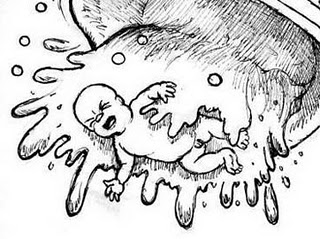
Throwing the baby out with the bath water

Problem solving is one life skill that is invaluable, more so than, dare I say it, algebra. Almost everything we do and our games are problems in need of a solution. If the bath water is cold, mothers remove the baby before throwing the water on to the garden. It may sound obvious but often problems present in confusing ways…too many things are at the same time. That is when the baby ends up in the rhubard patch.

baby_bathwater

A game such as Snooker is a problem solving game. The players are presented with the complex task of putting the red balls into the table pockets. Complexity is introduced by rules. One is that the balls can only be pushed with a stick; you cannot pick them up and put them into the nearest pocket! Then you have to push a coloured ball into a pocket alternately with a red ball, and a scoring system giving values to balls, means that the best player will win prize money and fame. But the most complex skill of all is the use of the white ball. This must be pushed with the stick to hit the other balls and it must always be controlled, so that it comes to rest in anticipation of the next move. Those not familiar with the game take a while to realise that hitting the red balls is not the primary objective, but skilfully placing the white ball as it rebounds off the red or coloured ball. With this skill you  solve the obvious problem and set up for the next problem, within your own hidden game strategy.

red ball white ball pocket

Complete problem solving involves a highly inclusive level of complexity, where consequences are anticipated rather than left to chance. There must be no ‘unintended’ consequences.

Stage illusionists know that the human brain simplifies what it sees in order to interpret what it is seeing. They use the technique of distraction. They know that the audience will watch the hand thrust towards them whilst something not to be seen is done so fast and discretely, that it is not seen. This is classic, red ball, white ball.

Politicians have to solve highly complex problems and apply practical solutions. The first stage of problem solving is to define the problem.

At present the world economy’s are being threatened by a pandemic. That is the problem. People with the disease are a short term problem, whereas the world economy needs to provide work and a livelihood for every citizen of every country. This is a far greater problem in the long term than the present ‘red ball’ events presented to us daily concerning Covid 19.

We are told that the origin of the new virus was from markets in China where bats were being sold. We all believe this. This is the red ball. We think we have seen it go into a pocket. But did the Chinese authorities close down the markets selling wild animals? Why didn’t they after SARS? Could there have been another source of Covid19?

One Chinese lady interviewed declared, ‘This could have happened anywhere’, being defensive over the suggestion that this and previous viruses like SARS, happen in China because of their love for exotic meats. Perhaps she has been told that people in the West also eat bats and rats and cats. That would be her ‘red ball’.

There is an Institute for Virology in Wuhan; the Province where the outbreak is alleged to have started. You might expect that they would be anxious to deny accusations that they let out and or create Covid 19.

Yet if you view the home page on their web site, the top story is about HIV. The top news story is that a delegation from the Ministry of Education of Kenya visited. No red balls present, just a white ball suggesting the aim of the Chinese to develop the untapped resources of Africa.

Was there a terrorist incident involving the release of this virus, as has been the plot in Hollywood films?  Are too many people now living in cities? Have individuals immune defences been reduced through poor diet and lack of sunshine? Is there more than one variety of Covid 19, one strain being more virulent than the other? (The purpose of this would be to increase fear of the virus whilst limiting deaths.)

Could there have been some political placing of the virus in a country to destabilise it more than other countries? Both China and Iran are viewed as threats to peace in the West and Middle East by western politicians.

These and many other possibilities, are unexplored but possible ‘white balls’ that indicate hidden agendas. But we are too engrossed with watching red balls (or red herrings!?) fall neatly into pockets.

Few journalists have asked challenging ‘white ball’ questions on the television screens in the west. What is being presented are ‘red ball’ events such as where the virus is now and in what strength. Which events have been cancelled, how is it going to affect various people in various situations, etc. etc. One red ball after another is being put into a pocket and as quickly as they go more appear on the table. It’s fascinating and distracting.

The real question is ‘what is the white ball doing?’

Who is behind what is going on, is an unspoken question. Any suggestion that the pandemic is a deliberate manipulation is ignored or described as ‘fake’ or ‘conspiracy’. And yet, the most important rational task, is to discover a conspiracy if one exists.

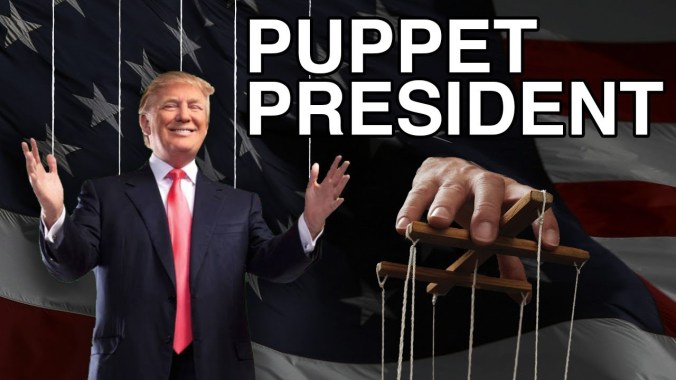
Puppet President

Who is pulling the strings of the puppet president of the United States of America for instance? Why? Because Mr T. started the health emergency by denying one exists and that it will go when the weather gets warmer in April…standard off the cuff remarks made by the uninformed. Behind the curtain a patriotic doctor who started testing for Covid 19 is told to stop, as that is the responsibility of another department. This department came up with a test three weeks later which did not work. By this time the Jennii was already in LA and not to enjoy the surfing. 

We saw the same ‘white ball’ tactics with 9/11. Every day of the year, every hour of the year, fighter jets are on the runway, ready to defend the USA from hostile aircraft entering US air space. But on 9/11 all those jets were off somewhere else on a pre-planned exercise. The guard was down. International conspiracy? The prize for the winner of that game was to up national surveillance and remove individual freedoms for Americans. It is called the National Security Agency and it is saving everyone from terror plots.

Who will gain from the current pandemic and the fall of western economy’s? No individual government gains. In fact they all lose. The only gains will be upping international surveillance and removing individual freedoms.

Specifically, cash will be removed as a system of payment, on the grounds that it ‘spreads viruses’. This has never been true in the past few thousand years but suddenly it is. In place of cash is the card (or RFID implant) and the control this brings to governments to know where it’ s citizens are and whether it wants to allow them to have personal money.

Second is the extinction of small and medium size businesses and the self-employed. Examples might be taxi drivers who own their own cars and certainly low cost airlines. This is in contrast to large and multinational corporations such as Amazon, Microsoft and Google, who act in the interests of the large white ball.

One day this large white ball will put the last ball of the game in the pocket. That will be the black ball worth seven points. If you think things are dark already, then that will be the blackest of black days; the end of personal freedom. Game over.