
or “Duw y Digon” ; an ancient Welsh Druid Motto

The first authority over our personal truth that we encounter is within the family. Losing power to others is an experience that we mainly survive, but should this loss influence us beyond childhood?
Most social organisation, whether it be for religion, employment, education, health, defence or politics, consists of submitting to the will of others; what is termed ‘the greater good’.
It’s a system that Western societies inherited from their forefathers. Consequently, most forms of government rely on the obsequence of the masses; the most extreme example being communism where the interest of the State trumps individual rights.
Even in democracies, the majority is granted authority over the minority; however small the difference. The assumed ‘unchallengeable constant’ is, that all people have the same intelligence, education achievement and wisdom. Socrates was at odds with such a premise two millennia ago!
The question is not whether to submit to authority or not. Someone, somewhere will have a hold over you. The question is not then, how clever are they? The challenge for all of us is not to give away all of our freedom but just to ‘render to Caesar what is Caesar’s’ (Matthew 22:21).
Authority manifests itself in social systems most commonly as a pyramid shaped hierarchy. In politics there will be an ‘overlord’ such as a President or Prime Minister, Chancellor or Chairman or Monarch.
Below the ‘head of government’ there are layers of middle ranking politicians. Unelected bureaucrats disseminate and legislate the strategies of the politicians. The general population occupy the lower part of the pyramid believing they are represented by those above and give away their power.
The military use an undemocratic system of organisation. There is a self organising ‘pyramid of power’. The organisation discourages individuals from thinking for themselves, requiring unquestioning obedience to orders from those higher in rank.
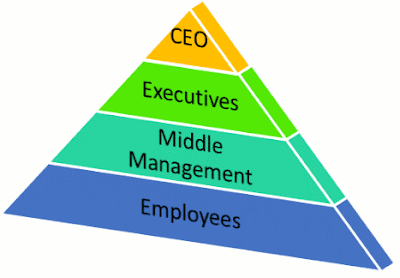
Take this ‘pyramid organisation’ model and transfer it to other social organisations and we see control by a minority of leaders;
Religions – Popes, Priests, Rabbis, Imams, Shaman
Companies – Managing Directors, CEO’s, Owners and Oligarchs
Education – Ministers of State, Head Teachers, Professors, Chancellors
Health – Ministers of State, Hospital managers, General and Specialist practitioners.
There have been exceptions to this ‘hierarchy of merit’. Google, for instance, practised an egalitarian approach to management for a while. At meetings, no individual oversaw proceedings. Each had a theoretical ‘equal say’. What happened in reality was that the person with the strongest personality and loudest voice controlled the meeting, rather than the person or persons with the best ideas.
So far we have considered how hierarchical organisations function. Now let us view the issue from another angle. Is it not the case that there have been in history, two types of leaders; good ones and bad ones?
This may sound trite, but it is an important distinction!
High ranking politicians for example, make promises about what they will do in government if elected. Few discuss the means by which they will achieve this objective. In this way, ‘making America great again’ fails to include a description of what greatness is, how it is going to be achieved and who is going to benefit. It even fails to describe what is meant by ‘America’. Does that include Canada, Greenland, Mexico and South America? Or does it just mean U.S. (us)? Such vague leadership is historically the breeding ground of disappointment at best and catastrophe at worst.
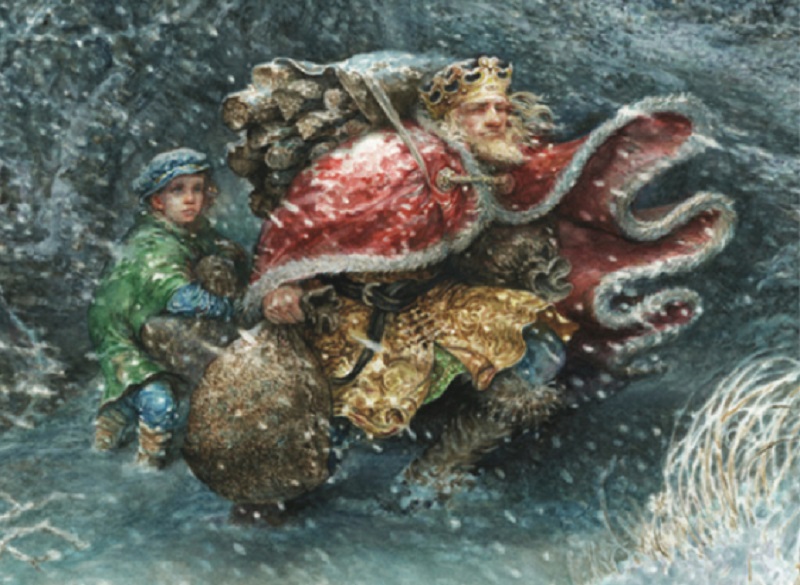
We know in Europe there have been good monarchs and bad monarchs. The last good monarch in England is said to have been King John of England (1166 – 1216). He was persuaded to give his royal power to his Barons. ‘Good King Wenceslas’ was good but European Kings and Queens were too often flawed by greed, anger, adultery, criminality such as murder, drug dependency, jealousy, war warmongering, excess tax demands, madness, religious dogma and bigotry, black magic and worse.
Good and bad are of course not always simple to define. In modern times political ideologies have split voters between the right and left. This is true in both the United States of America and an increasing number of European countries.
To summarise; in democracies people they to vote for who they regard as good leaders. The definition of ‘good leaders’ is unlikely to be agreed upon!
A creative thinker might desire moving power away from this divided collective schizophrenia.
A stabilising element of this unstable social organisation, is truth. For millennia, humans have obeyed whatever ‘truth’ those to whom they have given their personal power. They have been obliged to trust those who claim to be their superiors but in fact they are just acting out their weaknesses and lies! Hans Christian Anderson’s literary folk tale entitled ‘The Emperor’s New Clothes’ mocks the absurdity of delusional leaders and describes the masses failing to speak the truth to power.
Eventually, authority without truth, declines and falls. The Roman Empire is one of the best examples of this. So is there benign alternative to the many shades of autocracy?
In the North American indigenous tribes there was an interesting alternative form of leadership and wise counsel. People of the tribe would sit in a circle to debate important decisions on equal terms. To prevent them all speaking at once, a single feather was handed around in turn and whoever held the feather was permitted to say their truth without interruption. This was called ‘goose leadership’ after the manner of geese in flight that take turns to hold the point position at the front of the flocks V formation.
The legendary King of Britain, King Arthur, declined autocratic rule. He changed his throne into a round table for himself and his knights. In doing so he showed he was prepared to listen to others. Debate was valued for the truth of others, independent of their rank. Perhaps this was Arthur’s metaphorical sword of truth, ‘Excalibur’; released from stone hard systems of government.
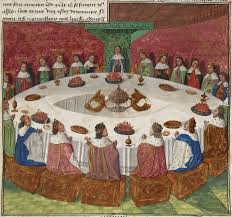
As the internet today spreads it’s influence around the globe (another Round Table), disparate individuals try to speak their truth, honestly without fear or favour; so called ‘free speech’.
Humans of all races, have more in common than differences and thrive when not divided by powerful ruling minorities. Even the languages that once divided, are now being instantly translated by artificial intelligence. The ‘wisdom of the crowd’ is the ability of large groups of people to come to a benign consensus of how life is best lived.
A recent survey was made in the United Kingdom asking young people for their favourite word in 2024. It was not ‘artificial intelligence’, but ‘kindness’. The fact that the coming generation have this truth already in their hearts is good news for the population of the world in 2025…and world leaders would be wise to graffiti this word across their round tables.
Authority over Truth or Truth over Authority?
 Matters Blog