I have to admit that I am one of those passengers who watches ‘Air Crash Investigation on television as a form of religious experience. I have become initiated into the tinniest detail of what can go wrong for the one million passengers curving through the stratosphere at any one time. It is my greatest and proudest dream to put my hand up eagerly when a nervous steward announces the sudden death of both pilots and asks if anyone has any idea how this thing works. I imagine the admiring and astonished stares of fellow passengers as I make my way down the aisle waving and making mock crash landing gestures as I make my way to the cockpit. ‘Air Crash Investigation’ for anyone who has never indulged in an episode, explains more or less how rubbish pilots are, and or how rubbish air craft and those who maintain them are.
Does anyone speak French?
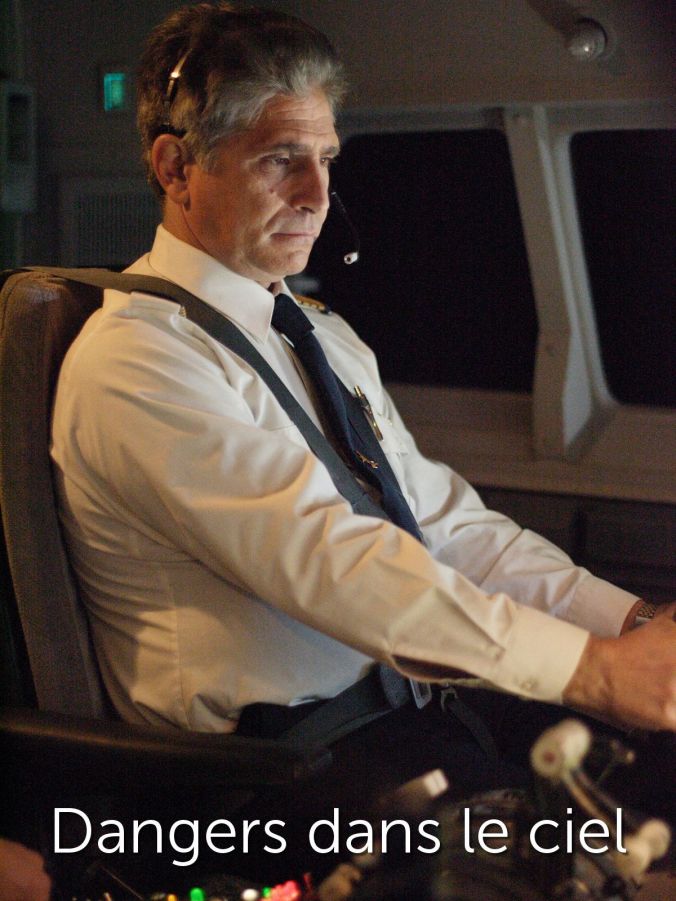
They always end on a so called ‘high’ note on how lessons have been learnt about aircraft that no one over the last hundred years of cutting edge aircraft design, had ever thought about. You have spent the last 59 minutes shouting to the investigators the obvious cause of the crash which they eventually discover by mind numbingly slow logic.
What I get out of the programmes is a sort of ‘remote’ course in how to fly most of the popular commercial aircraft and what to do when the pilots forget what they are doing or have eaten too much of the crème brulee.
It makes me the sort of passenger who frankly should be given a free seat (and a loaded firearm so that I can be an air marshal). Can you imagine how heroic it would be to shoot your way to the cockpit over the bodies of dead hi-jackers and slip into the dead pilots seat as an admiring air hostess hands you a coffee and a free Twix bar?
Of course if the problem was more mechanical, like an engine on fire then I am all for someone else having a go at slipping through an emergency exit at 700 knots and minus 40 C, with a soda syphon gaffer taped to each hand. I do know that those little yellow sticky up things on each wing near the exits are for ropes to hold people onto the wing during such emergencies, so would be available to shout that from inside the cabin if need be.
I have to admit to being one of those passengers who stops what I am doing on every flight when the in-flight safety briefing is given. Yes, you may wonder why any one except a pessimist peeps over the head rest in front to watch professional adults make synchronised fools of themselves. I mean they do not appear to have considered why the exit lights are hidden on the floor when they should clearly be in the ceiling and pointing in all directions, not just one.
Then there is the issue of landing in water and having that funny yellow thing strangling you as you hurdle over the seats ( the proven way to exit a burning / sinking aircraft before anyone else ). Is it likely that rescue aircraft setting off from far away lands and making a wide grid search over an approximate thousand square mile crash site, are going to hear your whistle on the life preserver. Note that this is a whistle that I have never heard convincingly blown during a safety briefing so may not even work. The same goes for the in built light which may or may not come on when in contact with water. What are you expecting to see? ‘Oh, in the beam of this powerful 1.5volt LED I can see a flotilla of rescue craft on a heading towards me?
This man remarkably survived an air crash caused by smoking his pipe!

Frankly, the whole business of surviving an air crash is laughable – if it weren’t so serious. Even the so called ‘black box’ is positioned at the back of the aircraft away from passengers, where it is most likely to survive a catastrophic failure during a journey. If passengers were more valuable than black boxes, why don’t they put all the passengers around the black box?
As an aside and to show how confusing the whole subject is, a black box is in reality orange in colour so that, you guessed it, it is easy to see. The early aircraft black boxes were probably never found on account of being painted black, and so orange one’s were introduced. That’s how designers work. It goes to show how much of aviation in the twenty first century can be summarised as trial and terror.
I also have strong doubts about using phones and computers in ‘flight mode’. I notice that when the flight attendant asks passengers to check their mobile devices are in this mode, nobody gets up and switches off the phones in the overhead lockers. Clearly there are going to be some phones with SIM cards from the country they just left, projecting out messages into outer space and the odd tablet with Wi-Fi left on. And yet, no plane disaster has ever been attributed to the passenger in seat 21C whose phone was not in ‘safe’ mode. So is it not time to remove the guilt from embarrassed or forgetful passengers and let these little critters chunter away quietly amongst themselves?
Have you ever been a passenger on an aircraft and wondered how many journeys you are going to have to take before you finally get a chance to breath the pure oxygen the flight crew keep going on about?
It’s just that I am still getting over a cold that I am certain came from recirculated air breathed whilst being a passenger on recent flight. I have to wonder why, just for a bit of fun and health giving properties, we aren’t all given a chance to breath some lung expanding oxygen? All those masks are just tucked away above our heads and we don’t use them! Why?
Should not ‘oxygen’ be offered as a healthy option to the sugary and alcoholic cauldrons on drinks trolley? In polluted cities like Tokyo, oxygen bars are making a great trade from customers who come in barely able to breath, blue lipped and semi-conscious to breath oxygen. They return to the streets twenty minutes later as bright as berries. I know the oxygen in planes only last eight minutes for each passenger but couldn’t they change that?
Aircraft pilots are funny people. They select themselves for the task on the basis of the quality of their eyesight. The test is basically whether they can read the small print on the labels of the instantly forgettable knobs and dials. Given that planes are flown by auto-pilot because it is more reliable, you have to wonder why pilots are on huge salaries and endless free hotel and expense account indulgences.
What is interesting and shows the real nature of airlines and their priorities is how little consideration is given to disabled and child passengers. If you arrive at an airport in you wheel chair, paralysed from the neck down after an unfortunate air crash from a previous trip with same airline, you will be asked to get up out of your wheel chair and walk to your seat.
I can imagine the reply being ‘who do you think you are mate, bloody Jesus!’ If I could walk that far I wouldn’t need a bloody wheel chair would I!
But joking aside there was a wonderful woman in America, who was dismayed at not being allowed to take her disabled adult child on an aircraft. She petitioned them to remove a seat and allow her daughter’s wheel chair to be strapped to the floor. The airline refused on the grounds of needing a safety licence from such and such safety body for a modification to the aircraft. The mother set about raising money to pay for such a test, passed, obtained a certificate and was able to fly with her daughter.
Passengers wearing full personal safety equipment are more likely to survive a crash.

You might also have noted how when you drive to the airport, you children must be in appropriate child safety seats or face a fine. When you sit those same sized children on an aircraft with their feet kicking the lumbar spinal region of the passenger in front, there is no requirement of provision of a child safety seat. Not only that but the seat belt on an aircraft just goes over your lap, not lap and chest like a car. If the ‘brace brace’ position is so critical when crashing in an aircraft, why do we prefer to crash in cars in an upright seated position? Could somebody explain?
Flying is clearly risky. Military aircraft align their passengers either sideways or backs onto the direction of travel. The reason is, it’s safer. Why do not civil aircraft offer the same option when choosing a seat?
Military passengers have the additional option to use a parachute should the plane catch fire or run out of duty free or other emergency. One civil aircraft there is no such option. The yellow thing under your seat is for after you have landed in a stormy seat at 140 mph into the wind on a dark night in the middle of an unknown Ocean, should you be unfortunate enough to survive the in-flight meal and lightning strike enforced ditching.
When you throw in the environmental damage that a Boeing 747 creates by burning four Imperial gallons of fuel every second, you realise why the inspirational young lady Greta Iceberg chose to go to the USA to address the United Nations by luxury yacht. A yacht has already landed in the sea and is dealing with the situation a lot better than an aircraft is ever likely to.
Bon voyage.
 Matters Blog