Finding Oneself

Spiritual Love

How ironic that this present and looming war, is centred on the so called ‘Holy Land’. This small corner of the world has been the centre of spiritual love for millenniums.

What we should remember however is that those who wear religion as a mask, commit crimes against both humanity and themselves.

‘To thine own self be true.’

When the media use the names of the Abrahamic faiths of Judaism, Christianity and Islam, we should be fully aware that anyone can pick up this badge and wear it. It does not mean that a person represents that religion. Only by their actions will their true character and beliefs be revealed. Then we can make up your minds whether we are watching the work the Divine or the Devil.

I have written before about how weak the English language defines and describes ‘love’ (see my blog above called ‘Fifty Shades of Love’). A primary colour in the many shades of ‘love’, is ‘spiritual love’.

It is easier to define spiritual love by what it is not rather than what it is. Certainly it is not romantic love between humans. This is held in high regard by many societies and often rightly so, but when it fails it does so cataclysmically. The union of two ‘selves’ is tainted by projection of one’s anima or animus onto another, hidden bias, false expectation, unfounded optimism, lust and many other aspects of ‘being human’. These have played out in our theatres and cinema screens since the beginning of time.

To understand spiritual love it is essential to be able to see oneself as four components. The acronym BAHAMAS formed in my mind in a dream the other night and this is what it means;

Body:- most people confuse themselves with their body. The Buddhists cleverly ask that if you lose a leg are you not still yourself? Clearly, we are contained in a body, but are not one.

Heart:- this implies the emotional centre of ourselves which scientists observe is far more important in decision making than we give credit for. It achieves a high level of understanding through empathy and non verbal intelligence.

Mind:- again another place that people believe is where their ‘self’ resides. Certainly the brain is a sophisticated organic centre of consciousness but ‘Self’ can exist outside of the body as proved by many who are conscious post mortem, and return to tell the tale.

Soul or Spirit:- however you define these terms ( and many philosophers and religions differ) there is an overwhelming conscious feeling in most people of a power and intelligence within that is not us, but at the same time is us.

With these four categories it becomes slightly easier to understand what ‘be true to oneself’ means. For the ‘Self’ with a capital S (and the ego ‘self’ with a lower case s), is where spiritual love enters and emerges from within the experience we call ‘ourself’.

It is that part which the ‘crown chakra’ (in the Hindu description of the energetic human ‘body’) plays an important part. Along with the Pituitary and Pineal brain centred glands, it is the anatomical equivalent of the modem and microwave dish!

Energy (of the non-electromagnetic debased kind) containing information is universally present for all humans. The benign aspect of this is known as ‘Divine Love’ and my previous blog ‘The Poetic Universe’ attempts to describe this process. The destructive aspect of this is simply an ineffectively weak aspect of Divine Love which is known as ‘The Devil’. Remember that Hell is full of angels. This characteristic of ‘ineffective weakness’ is being played out in the Middle East at the present time and historically is how all quarrels begin; by weak or absent energetic characteristics such as compassion and respect for self and others. Such weakness can also be viewed as the absence of Divine Love or more precisely, a disasterous weakening of that Love which in good times brings happiness and fulfilment to all creatures on Earth and the planet itself.
Seen through the reverse end of this telescope, humans appear very small. But in reality we contain the Universe and this contradiction is evident in the truth already mentioned; ‘that we are not our bodies’. The only part of ourselves for which there is evidence (near death experiences and past life regression) of being eternal, is our Soul or Spirit. This is despite not being able to see it, in the same way we cannot see our head. Logically one should deny the invisible, or change perspective, or imagine what it is and this is what people do – but it does not help.

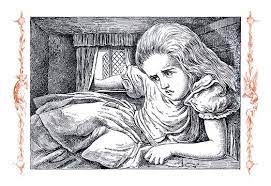
The human experience, physically and metaphorically, grinds down most of us and some end up as dust sooner than they may have liked. It is all part of being this illusionary entity which changes depending on from which angle it is viewed or imagined. Like Alice in Wonderland, we also can become hopelessly inflated (consider ‘celebrity culture’ and how these souls deal with fame or not) or hopelessly deflated; known presently as mental illness and depression.
Only by overcoming this Tsunamic wave of illusionary experience can humans identify with the ‘still small point’ of spiritual love which they contain. This is the Divinity within them and ironically, is not the ‘small self’ they once believed themselves to be.

What is left after the destruction of the ego by this wave is nothing and something. That something is a small light that somehow avoided being smothered. It has the quality of eternity because it reveals itself as indestructible. It is the ‘love of God’. English expresses this very well because ‘love of God’ implies a two way love between the lover and the beloved. In human love (which is a faint copy of spiritual love) this is known as ‘requited love’.

When human love goes wrong is when the love is not reciprocated. Many stories and enactments on stage and screen, feature this most heart breaking of human conditions.

The golden lining to this cloud however, is that it casts light on how spiritual love is free of the entitlement, judgment and placing of conditions (the marriage contract for instance) that stifles many romances.

Fifty Shades of Love

If the Inuit have multiple words for ‘snow’ then you might think that there are many words in English for ‘love’. Language has the ability to enable mutual understaning, even for the most mundane thing;

qanuk: ‘snowflake’kaneq: ‘frost’kanevvluk: ‘fine snow’qanikcaq: ‘snow on ground’muruaneq: ‘soft deep snow’nutaryuk: ‘fresh snow’pirta: ‘blizzard’qengaruk: ‘snow bank

So why does the word ‘love’, in all languages, fail to identify the spectrum of feelings it could and should represent?

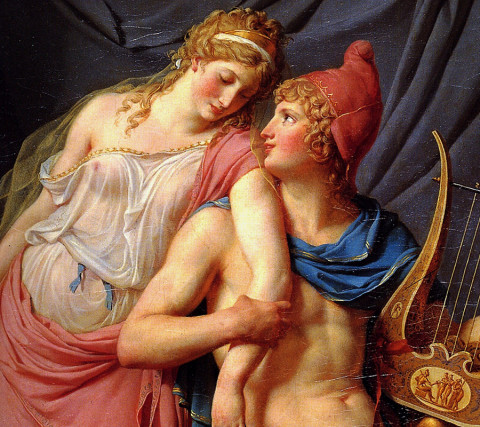
Before we start, let us agree that the word ‘feeling’ affirms love is an emotion. It is not the instinct ‘lust’ although the two may often be confused! As it can with the love of beauty and attraction that is only ‘skin deep’. Perhaps these errors once ‘launched a thousand ships’ to enable Paris to seduce Helen of Troy, or was an epic love story?

Lust has been crystallised in the English language by the phrase ‘to make love’. But clearly, animals ‘make love’; if all that is meant is to have sexual intercourse. When looking up ‘roll in the hay’ in a thesaurus, there are twenty seven synonyms for this expression. Clearly, westerners are as interested in sex as the Inuits are snow.

But we are going to pass over lust and concentrate on it’s more sublime incarnation and affirm that love is one of the most sublime emotions that humans ever experience. Although not easy to find, It too has many shades if we can find words to ‘nuance’ it into sub-categories.

So if we think of how we ‘love’ in our daily lives we can identify several ‘objects’ for our love to directed.

Romantic love should be our first choice as here we find the core of the word and it’s associated feeling. Romance sends humans into true and false expectations that are sometimes completely out of character. In youth this feeling is unknown and untested. But we are already on a collision course with that special person who will come into our lives. The emotional ‘volcano’ that erupts can leave one without thought and speech so paralysing is the impact of the explosive force. And just as in the making of volcanic mountains, the results of the experience last forever; impermeable to all later hurricanes and earthquakes.

The greatest romantic love involves a kind of electronic circuit, where both ends of the battery connect in what is called ‘requited love’. It’s corollary, unrequited love has spawned many an ancient Saga such as Sir Lancelot’s love for King Arthur’s wife, Guinevere.

Then there is love which has a different character; more calm and assured. When we think of how we love members of our family, we use the same word ‘love’ although there is no sudden ‘falling in love’. We learn to love our parents and siblings from birth to grave, a process that is not one necessarily of our own making. It is like a cosmic ‘arranged marriage’ where a soul is placed into the intimate company of strangers, it’s family. What we call ‘paternal’ and ‘maternal’ feelings of love are curiously blended with their equivalent instincts of unconditional parental protection; in the same way that ‘romantic love’ depends, in subtle ways, upon instinctual drives.

When children are old enough to leave the ‘love nest’ they call home and go on their own way, their connection with ‘family members’ falls more to a purely emotional attachment instead of one based on physical dependence. But when parents have bad characters and the process of childhood has involved abuse by parents towards their children, the detachment of a child to the family home becomes a ‘release’.

In that situation we have moved to the opposite end of the scale of the ‘fifty shades of love’ and discover the word ‘hate’. Hate after all, is the same as love only destructive in it’s effects rather than constructive. But the emotions come from the same source.

Romantic lovers and family members sometimes find themselves in the space of mutual emotional hate at the beginning and or end of relationships. In Shakespeare’s play ‘Much Ado About Nothing‘ the principal characters of Benedict and Beatrice cannot stand the sight of each other. Through the play their characters develop towards a deeper understanding of their similarities rather than their differences. The English language deserves a word for the ‘love / hate’ relationship!

We find the same scarcity of words when we describe ‘love’ in the context of religion and the concept of ‘loving God’. Those religions founded on monotheism, place intermediaries between the Divine and ourselves such as the prophets and the saints, their disciples and the self elected clergy who claim to be able to understand what was going on in the lives of the characters in the holy books.

There are those who have a direct relationship with the Divine with no intermediaries. Their relationship with God is greater than any love for any human and many retreat to monasteries and nunneries to play out and understand these feelings. Is such a feeling irrational? Again we need another word for ‘love of God’ because without it, we can cancel without due consideration the possibility that prophets and mystics can unconditionally love God.

As we scan these ‘shades of love’ we find next a rather prosaic category of ‘love of places, activities and things’. These I place together as they are generally dismissed by the aforementioned mystics as being ‘illusions’ at worst and ‘not of benefit to the soul’ at best.

And yet ninety nine percent of human activity is centered on the places, activities and things that we love. People who express in exceptional and imaginative ways are the artists in society. They choose things that inspire a love, such as nature in it’s many forms and people in their many activities, that they wish to share with others.

Certainly artists are able to observe and understand their feelings of love and passion in a focused and controlled way. Just as the person smelling blends of tea in a tea factory, artists are able to savor their deepest emotions, such as love, and present their inspiration in a way that is agreeable to others.

An example might be the Moghul mausoleum, the Taj Mahal in Agra (picture credit Smarthistory). It was famously built by the Shah Jahan to express his eternal love for his favourite wife Mumtaz Mahal. This leads us into the idea that love between human beings can be regarded as limited by society (monogamy) or plural (bigamy). With such dilemmas we can observe how ‘uncontrolled’ our emotions can become in the eyes of ‘society’ and again many great works of literature and art have been inspired to explore how this plays out among the humble and the great.

We should not overlook one of the most extraordinary aspects of love between humans; that we have an infinite capacity for love. Our hearts are wells that do not run dry, circulating love as effeciently as blood. Which is why many religions extorty Universal love for all things. As Jesus the Christ said, ‘love thy neighbour’.

The subject of love is indeed an immensely contradictory and complex; partly because of a lack of words to describe it’s many faces and flavours but also because of what today is identified as ’emotional intelligence’. If the ‘e’ in emotion represents the ‘energy’ that causes feelings to erupt as if from nowhere, the ‘motion’ part of the word describes how feelings are constantly changing. If we form fixed beliefs in our minds and accomplish specific skills in our bodies that do not change, can we extrapolate this to the idea that emotions are the same?

It would be good to believe this and allow our emotions, thoughts and bodies to constantly learn ‘new tricks’ throughout our lives. Our minds may wish to give the appearance that they are ‘in control’ but our emotions can overrule mind and the decisions it makes.

‘Don’t believe a thing just because you thought it.’ Groucho Marx.

What differentiates love from mind and body, in my view, is that emotions can understand what we might term, ‘truths’. A woman for instance may take a dislike for a person who her husband admires for no explainable reason, just a feeling. And years later the husband arrives at the same conclusion using the circuitous route of logic and deduction.

At the most sublime level the words of the prophets and saints express eternal truths when they experience a direct and immutable Divine command. Since such commands are always based on love and light, all who follow these words will benefit.

We can conclude then that love has multiple incarnations and pushes and pulls us simple humans, in the way that asteroids and meteors dance with solar systems. There are irresistible forces at work that can propel us further and faster as well as sometimes, cause us to crash.

What appears to be important and yet missing, is the ability to use language in subtle and, yes, exquisite ways, to direct our course of destiny. If nothing deserves better attention, I would contend that what, who, how, where and when we submit our very own ability to love; then we have learned the greatest trick of all.

White Lies Matter

When I was a boy I had an aunt who had been a Baptist missionary in, what was then, the Belgium Congo and is now the Democratic Republic of Congo.

This gives you a clue that this was the 1950’s and Africa was still largely in the hands of European countries. She and her husband were captured and managed to escape prison and return to England. I remember her telling me once, that ‘black people are not as intelligent as white people’. Fortunately I had never seen a black person at that age. But it was one of many ‘white lies’ I have heard.

I use this anecdote to show how the morality of generations evolve and change. After the second world war and the fight against fascism, opinions of others based on their race, religion, disability, sexuality were liberalised. The Nazis and to some extent Victorians, believed in eugenics and the creation of a ‘master race’ – completely opposite of what today we call ‘respect for diversity’.

My own skin colour I will not reveal here, as it changes with my exposure to the sun and is therefore of little relevance, and my race is – human.

The permission to abuse another human being, on account of their perceived inferiority must go back to ancient Sumer, Abyssinia, Egypt, Greece and Rome. Throughout the Middle East and the Classical world, people were either royal, free or slaves. This was a ‘perfectly normal’ set up and no doubt solved the problem of what to do with prisoners from conquered lands, as well as deciding who was going to do the washing up.

A Chain Gang in Ancient Rome

B Ancient-Rome-Roman-Slave-1024x682

When Europe adopted Greek and Roman classicism in the Renaissance they stole and copied statues of gods and Emperors; more as decorative pieces of sculpture, rather than because they admired the shameful behaviour of minor gods and Emperors.

But this model undoubtedly had an effect on the human consciences. How else could slavery have remained legal until the eighteenth century? When Europe was exploiting the West Indies and needed slave labour, Africa was convenient for it’s ships to pick up more slaves, and yes, sometimes from Africans ready to sell their enemies.

In those times much of the riches of the Western cultures came from the sweat, blood and tears of slaves. We know this, so – have we changed?

I personally think that we have, but not totally. I see people from all over the world living and working in European cities. There are high achievers and low achievers in any society, depending on how you measure ‘achievement’. But more importantly, people all over the world today are better fed, more likely to survive birth, and more likely to be educated and have access to health care. There are obviously exceptions to all of these but I am describing a trend. There are graphs produced by physicians and social scientists like the late Swedish academic Hans Rosling, that tell us this.

There is room for everyone on the planet according to the Professor

B hans rosling

But the devil is, as always, in the detail. Racism endures in the minds of people of all races. There is a saying ‘birds of a feather stick together’ and as a description of human social behaviour, this remains largely, true.

The European collective unconscious has a lot of skeletons in it’s museum vaults and these continue to rattle to the present day.

Clearly, national institutions continue to exert power that is prejudicial towards it’s citizens on account of race, religion, gender, sexuality, disability – despite the introduction of many laws, certainly in Europe, to correct this.

Personally I do not think new laws change societies of themselves, there has to be more. Even after the late Martin Luther King Jnr. gave his inspirational speeches in the 1960’s; sixty years later there are still statues of slave traders in European cities and military bases in the southern states of the USA named after confederate generals.

Head of Martin Luther King Junior in MLK Park, Buffalo, New York State

B Head in MLK Park

Whilst it is correct to record and preserve the facts of history and heritage, much of what our forefathers thought was ‘acceptable’ is nothing to be proud of today. Museums and history books must be  trusted and treasured so that they enable future generations to learn from the past. This will, at best, inspire an imperative to practice compassion towards one another today, because we got it wrong in past.

Therefore it is clearly the responsibility of those with the power to do so, to make regular assessments of local and national institutions and weed out any ‘honouring’ of the past, of which we should be ashamed, without hiding truth.

The African Americans and many allies, are presently leading the charge against their prejudicial treatment, but the lesson has global implications.

There is not a single human being on the planet including myself, who would not benefit from keeping a constant check on personal behaviours towards others that reveals some irrational prejudice, and immediately correct it.

Some argue that doing nothing is also acting with prejudice and perhaps they are right. Laws can be broken by act or omission, so can our personal integrity. The saying goes something like; ‘evil thrives when the good guys do nothing’.

And it is a fact that people of all colours, creed, tribe and what ever distinction you choose, have done nothing for a very long time. The history of post colonial Africa contains many shameful periods of genocide.

For example, in the Democratic Republic of Congo between 1997 and 2003, five million people were killed. If you read an article in the Guardian Newspaper website entitled ‘Wars Will Never Stop’ it quotes a young fighter who was dying in hospital of his shocking injuries from a local skirmish with a rival faction of his rebel group;

I was just a foot soldier so I don’t really know why we were fighting,” he said. “There are lots of reasons I think …. I don’t think the wars here will ever stop. They will probably get worse.”

The question has to be asked, where were the protests of outrage from people of African heritage in their adopted countries all over the world?

Who did nothing when 800,000 people were slaughtered in Rwanda in just one hundred days in 1994?

Rwandan Genocide

B rwanda-genocide

 We all have to be careful that they are not being stirred up and manipulated for political reasons. In Rwanda the principle tool for the stirring up of hatred was the public radio.

All societies have to guard against the publication of false information or the abscence of true information. For instance, it is curious that the size of the problem of ‘deaths in police custody’ is not published, despite a law in the United States of America requiring them to be so. The Death in Custody Reporting Act of 2013 went into effect in December 2014, but official figures have never been made public. The reason is either that these figures will prompt national outrage and shame, or lead to a conclusion that the problem is much smaller than it is being made to seem.

Clearly, one death is too many, but national figures covering 500,000,000 people have to be published openly, especially when feelings are running high as they are now.

The core problem is contained in the hearts of those who nurture hatred towards other human beings, for whatever reason. It does not matter if the hatred is black against black or white against black or black against white or white against white. The issue, in my view, is not an identification with a race or class, or creed, but the level of willingness of each human being to allow their love for all of humanity, to rise above everything else.

‘Hate cannot drive out hate, only love can do that.’  Dr. Martin Luther King Junior

Love Your Brother and Sister Humans

Once again the lawyers and politicians are going around in circles.

For in the United Kingdom a cross party group of MPs have had a go at defining Islamaphobia ( a word not contained in my Word spell check!)

Before looking at this definition it is worth thinking back a year or so when we were treated to the spectacle of Teresa May and advisers thinking up a definition of Anti-Semitism. This at a time when hatred of Muslims was a far more important problem.

Perhaps the group of MP’s missed a trick. A school child might think that to define Islamaphobia you substitute the word ‘Islam’ for ‘Hebrew’ in the Anti-Semitism definition.

Not a moment too late has the spot light now moved onto our Muslim brothers and sisters who are suffering hatred in the UK and other countries, in a way that the Jews were targeted in Nazi Germany.

It is good someone has the intelligence to write a definition of what is the problem. This is the first step to the review of existing laws and any supplementary or new UK legislation.

Here is what the cross-party group came up with;

‘Islamaphobia is rooted in racism and is a type of racism that targets expressions of Muslimness or perceived Muslimness.’

Here is the first test of the statement. Let’s change the religion in question.

‘Christianaphobia is rooted in racism and is the type of racism that targets expressions of Christianness or perceived Christianness.’

So the attack on the congregation in Christ Church New Zealand was racist? I think not.

Consider for a moment what racism is, since it is being included in the definition in question.

It appears that there are numerous definitions; made more confusing the ‘ethnicity’ being considered the same as ‘race’.

My contribution to this word play would be to suggest that there is only one race, the human race. This is split by ethnic difference based on environmental, genetic, cultural, linguistic and other fundamental factors.

So here is what the UN Convention on the Elimination of All Forms of Racial Discrimination said;

The term “racial discrimination” shall mean any distinction, exclusion, restriction, or preference based on race, colour, descent, or national or ethnic origin that has the purpose or effect of nullifying or impairing the recognition, enjoyment or exercise, on an equal footing, of human rights and fundamental freedoms in the political, economic, social, cultural or any other field of public life.

If this definition were adopted into UK law then the signs at airports instructing EU Members to queue here and all the rest to queue there – would be illegal.

Fortunately gender and race are universal constants and in my view, nothing to do with prejudice based on ethnicity or religion.

Taking a step back from what we are discussing here is the unpleasant aspect of being ‘human’ – hatred of ‘the other’.

As members of the human race to our shame we have a long history of dividing ourselves up into tribes or villages or clans or nationalities or supporters of a football team and seen this as reason enough to wage war on ‘the others’.

All the prejudice in the world is an expression of intolerance towards other humans.

It’s expression ranges on a scale from minor to major. Football hooligans are at the pathetic end of the scale and fascist government leaders at the other. In between is all the prejudice – hidden and open – that we carry within ourselves.

Hatred based on religion is therefore simply another expression of intolerance ranging between sour looks to beheading.

My definition of Islamaphobia would be;

Hatred of Muslims

Now can we get down to the real problem? Because until a child steps forward to take over the role of Prime Minister, no single person appears to see the problem with any clarity.

The head of the National Police Chiefs Council, Martin Hewitt, is dismayed at the vagueness of the definition. He believes it will cause confusion and hamper the effectiveness of the police against minor and serious crimes motivated by religious hatred.

In law, precise definitions produce laws which are executable.

If I had any advice for the devout of any religion, it would be to remove all cultural affectations in dress and any other public signification of your personal beliefs. Put these items on in the place of worship if it makes you feel more comfortable.

Hitler had to identify Jews by ordering the placing of a yellow star of David on their dress. To preserve your dignity and safety – I would advise not to make it easy for the biggots.

When the time and place is right – in a tolerant society – freedom of religious expression will be protected.

To base new laws on eliminating hatred is in my view to start at the wrong end of the stick. I believe the best way to introduce tolerance is to introduce love, as well as eliminate hatred. One cannot exist without the other but we can at least set the balance straight. So this debate is not just for the law makers, it is for all the humans.

Raise a hand if you are a human!