The Problem Problem

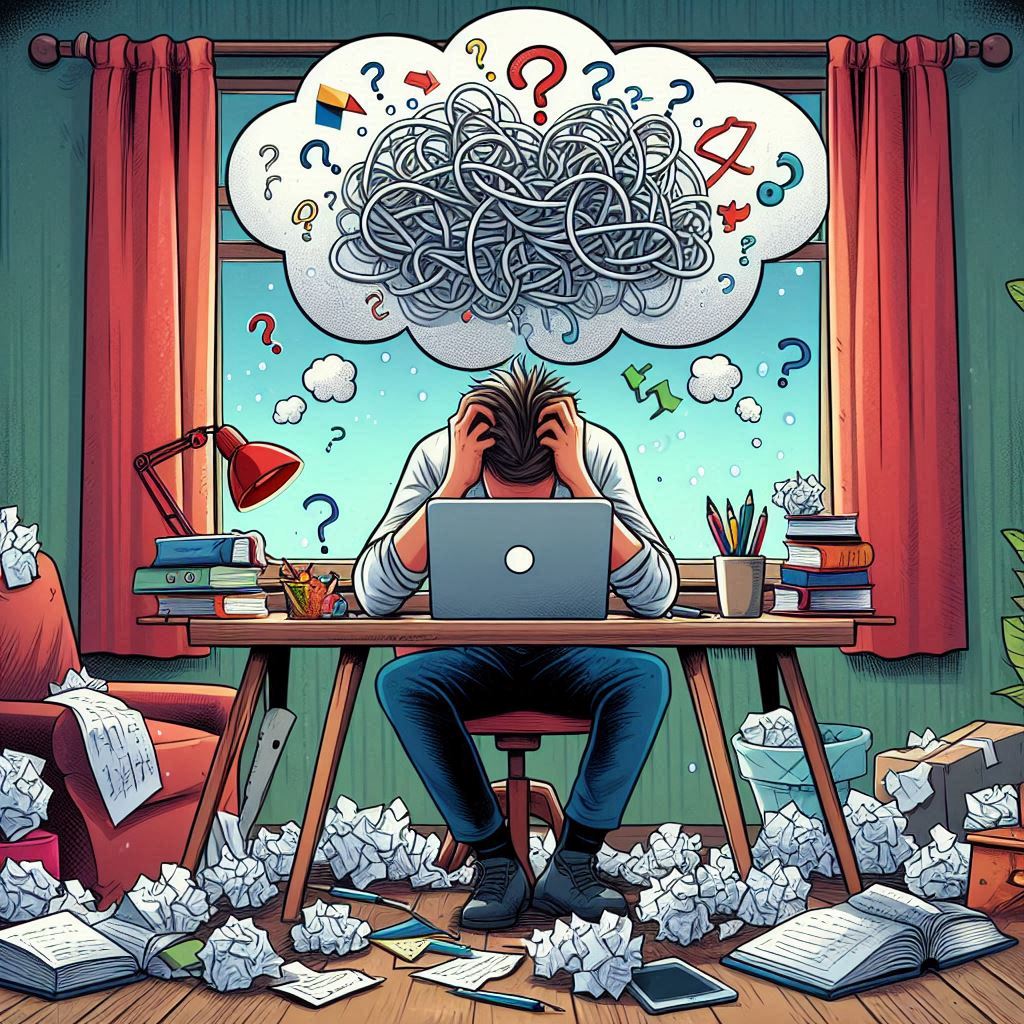
The problem with problems is that their solution requires skilful analysis and creativity.

This is obvious except – who teaches problem solving? Overcoming difficulties is something we expect children to ‘pick up’, as learnt behaviour. By the time we reach adulthood, overcoming complex challenges is assumed to have been mastered. Yet, the problems that we encounter through life, if not solved properly, can have just a devastating effect on our lives as a metaphorical bomb. It is the same for those in charge of large corporations and governments who are known to rely on learning from failure as a somehow justifiable, problem solving technique. The joker advises, ‘try everything until something works’.

There is a story which you are likely to know, about a group of people in a dark room describing an elephant. Each holds and touches a different part of the elephant, which stands patiently; wondering where the light switch is. At the end of their examination each describes the unique part of the elephant that they have examined. None of the participants has an overview of what the whole elephant looks like, so they are all wrong.

It’s a wise story. What it tells us is that everything is not as it appears. Many things are extremely complex and far larger than our expectations and experience and greater than our abilities to interact with them constructively.

As we go through a physical life on planet Earth, we are constantly challenged. The material world is in a constant state of entropy, causing repeated and unexpected disruption, such as your car breaking down or your body ageing.

Because we are human, our ego’s present us with a story about ourselves which says optimistically, ‘I can cope’ or pessimistically ‘I have to die sometime’. If we took a step back and looked at the problems humans suffer, our sense of ‘everything’s alright’ would be replaced humility without pessimism.

Religions have picked up on this and many require the congregation to fall to their knees in the face of that elephant that sits in our minds; vanity.

Yet, is it not courageous to look adversity in the face and smile? There is an archetype of this model which is ‘the hero’. He or She is a humble human who manages to overcome all sorts of impossible problems and captures the prize! Whether this is Odysseus on his epic voyage or Superman defending New Yorkers; heroes have super natural knowledge and powers.

Or do they?

In native communities, education of children consists of physically showing them the problems of bush-life and how to overcome them. An Australian First Nation child will be shown how to collect honey from trees without being attacked by bees and leaving enough for the colony to survive.

But in modern fast changing societies, complex problems are expected to be solved by those who have no prior instruction or experience. Government ministers frequently display an extraordinary naivety when it comes to their principal role, which is to allocate resources and make laws that solve society’s problems.

The examples are numerous. In the UK and many other nations, people are landing on beaches and demanding asylum; as is their right in most countries. The ‘sticks and carrots’ that have led them there are numerous and complex.

Attempts by nation states such as Spain, Greece, Italy and the United Kingdom to ‘stop the boats’, take hold of merely the elephants tail whilst imagining the little tassel on the end is the elephant. One government suggested that a threat of deportation to a third country will stop people reaching their shores in unsafe boats. Another political party takes hold of the metaphorical elephant’s leg and suggests that putting the organisers in jail will stop the problem; which again will not be ineffective because the elephant is not a leg.

In the Middle East, you have to ask what problem Israel’s government is currently trying to solve with open hostility against it’s neighbours. Problems of the people of the tribe Judea go back millennia, yet the Zionist government repeatedly tries to argue that the present problems started on 7 October 2024. Were it so simple to be true. Were the whole truth be known.

When the Sars-2 Covid virus was ‘mysteriously’ released in 2021/22, the problem was not examined in full, and when a solution was required, the pharmaceutical companies were able to react almost immediately. Inquiries into the response to the pandemic uncover ineffective, wildly expensive responses. Countries that did almost nothing like Sweden, and much of Africa came out the best.

The ‘Do Do’ was a bird that flourished on the island of Mauritius until humans appeared in wooden sailing ships. The hapless birds wandered around in a dream, not expecting to be eaten by hungry sailors. The flightless birds had failed to solve their problem. The Portuguese word ‘do do’ means ‘stupid’ which the birds were not, but victims of those who should have understood sustainability.

Today, humans are facing similar population collapse or even extinction from multiple directions.

In my view, oligarchs and corporations, secret societies, media moguls, ‘big pharma’, the military industrial complex, and international criminal organisations exploit human weakness of poor problem solving by deliberately making problems. Interference in elections, rumour and propaganda, distortion of truth, psychological warfare, hacking, negative suggestion, assassination by ‘dirty tricks’, creating riot and unrest, reducing and disrupting food supplies, and many other techniques, are deployed against unwary populations. All whilst any government that genuinely cares for it’s citizens, is running to catch up.

Understanding the causes of problems is the first step to find a solution. The problem must be understood in every aspect of it’s nature and origin, in a unbiased and factual manner. Then a tested solution that is ‘cost benefit’ proven, has to be found and implemented in a timely manner.

When examining the many problems today, all over the world, you might expect a supposedly neutral and unbiased organisation such as the United Nations to have a department that is expert in defining and solving problems. The Secretariat, the Economic and Social Council and the General Assembly are ideally placed to work in this way, and yet world problems continue to cascade out of control. The United Nations has bravely spoken out early about the genocide in Palestine, but has not stopped it.

Stopping a descending spiral of harm, characteristic of weak problem solving, becomes a battle with a Giant, that even global organisations with their huge resources can not win.
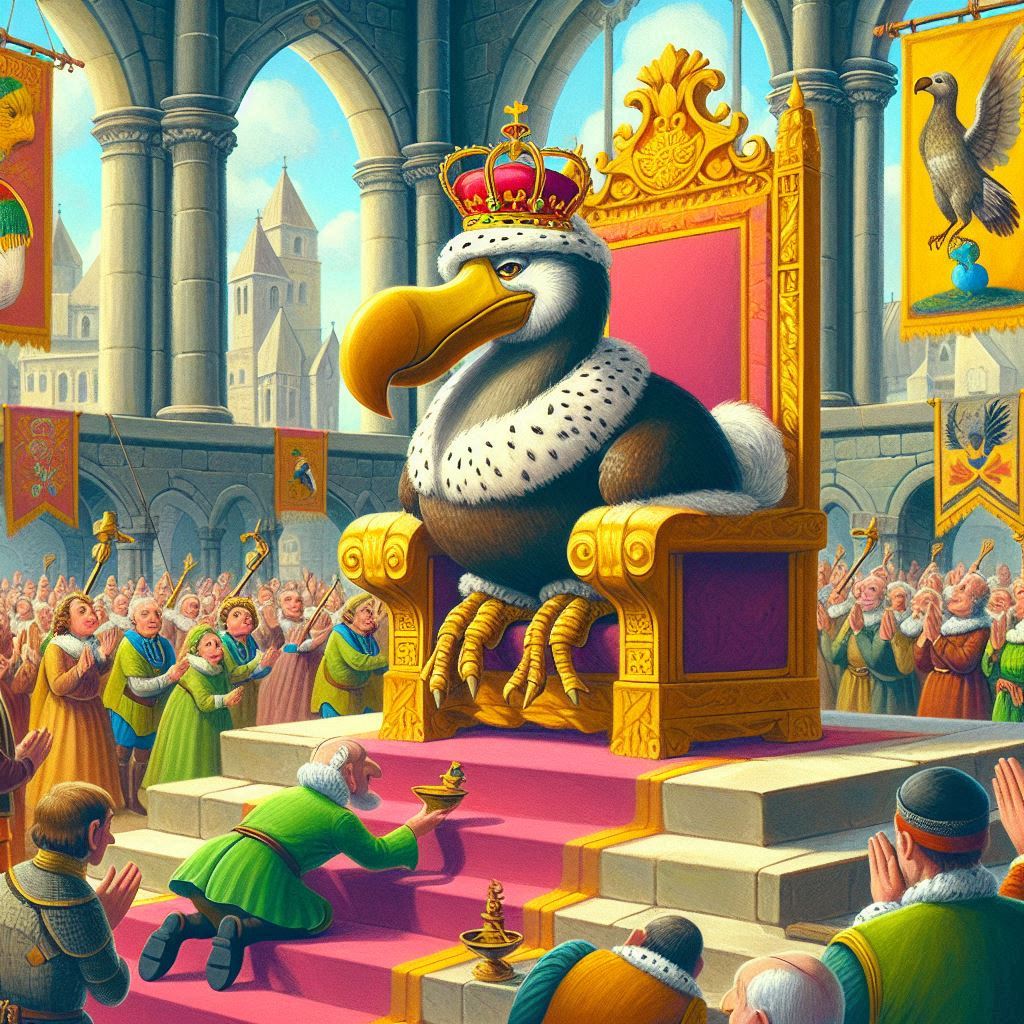
Have we put the Do Do’s in charge?

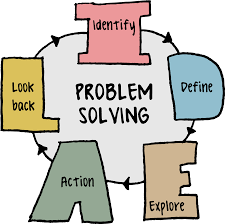
Solutions Without Answers

Give a fool a hammer and the problem is a nail

Surely, your leaders and politicians must excel in one thing above all others; problem solving. I suggest this because all aspects of life are eventually about solving problems. It does not matter if you are trying to look after a home or a country, the principles of good management using skilled problem solving, are the same.

Astoundingly, the study of ‘problem solving’ is not freely available. In the academic world it is assumed that the skills learnt in schools and places of higher education are transferable to the ‘real world’. Well in my experience, I can say that most of those skills are not transferable, which is a problem in itself. Theory and practice should be salt and pepper, but they are not.

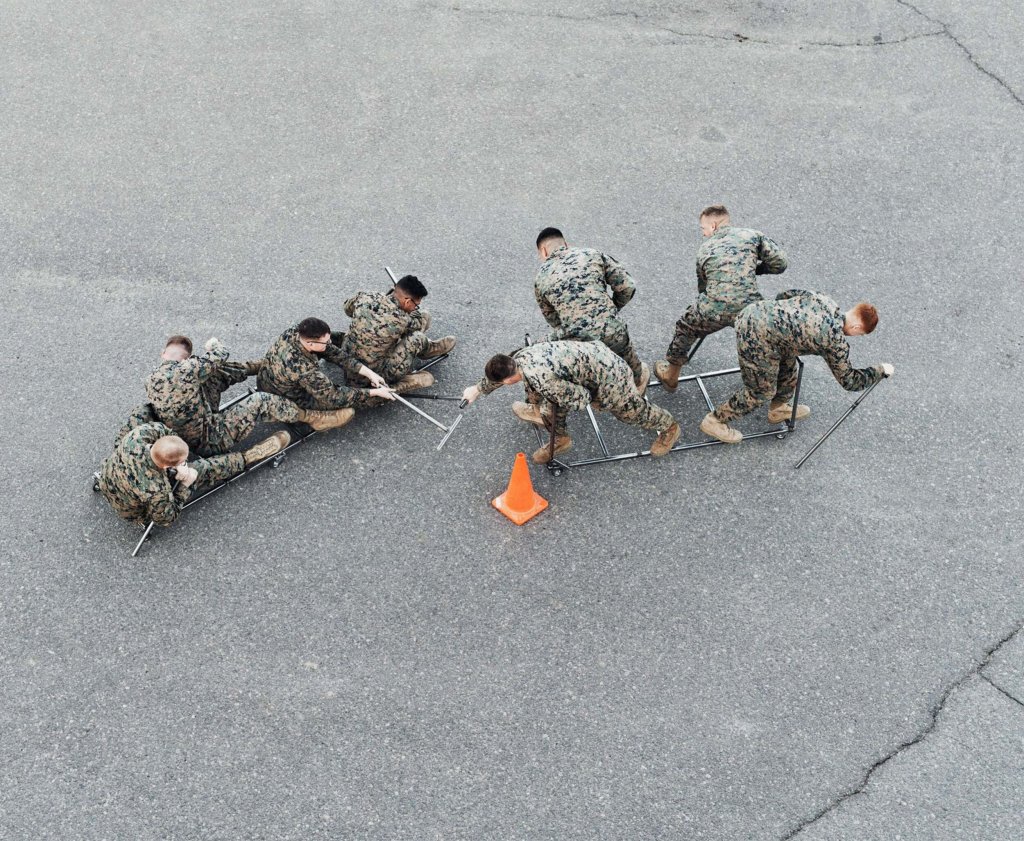
To solve a practical problem takes a special kind of thought process. Most importantly there must be a consistent intention aimed at a fruitful result. Technicians and those who learn practical ‘trades’ such as building walls with bricks or carpentry, become great problem solvers very quickly. If they make a mistake, it is plainly on view and has to be taken down and attempted again. Generally, the selection process for soldiers will involve problem solving. Recruits become part of a small team arranging logs and ropes and other props to overcome an obstacle. Real work in real time.

It is said rather cynically that ‘doctors bury their mistakes’; but it is true. It is unfortunately also true of many of today’s politicians and leaders who are entrusted with the welfare of the State and it’s citizens. If they make a wrong policy decision or invent a plan for some new project or public works that goes wrong, the failure is forgotten. Money is wasted on projects that any ordinary person would say is a waste of time and money (just read my earlier blogs on the UK High Speed train project predicting failure). Why, you might ask, does India have a Space Programme when there are thousands of villages in India without proper sanitation? I am only using India as an example. Avoiding and/or mismanagement of real and urgent problems happens in every country run by politicians with their own agendas, not the people’s

If a race of intelligent beings came down from the Planet Problemsolving, they would certainly be appalled at the ignorance of humans in a skill the PP inhabitants are taught from birth.

If humans cannot learn from present times, we can learn from history. In the Biblical era, when Herod heard there was a child to be born who would one day be King, his solution was simple and brutal. To kill all male babes under the age of two years. The solution to his problem was immoral, self centred, and ineffective. Have we improved?

Giovani: The Slaughter of the Innocents

Today, the State of Israel is being led by a person with Herod like, problem solving hypothesis. Because there are fighters who are against the State of Israel (as a consequence of decades of ill treatment towards Palestinians) Israel is using genocide to prevent further problems, just like Herod. And just as Herod assumed a massacre would get every child, so it is assumed that the Israeli government actions will eliminate every fighter who is against the Israeli State. But history tells us that using starvation, disease, killing and maiming, stopping fuel supplies in winter and stopping safe escape routes, will be condemned by world organisations like the United Nations. South Africa has emerged from apartheid in the last century and has been the loudest voice of condemnation. They have learnt from their history.

Hitler is perhaps one of the greatest despots in modern times, who used similar problem solving techniques indiscriminately. He constructed concentration camps with impregnable exterior defences, then filled them with people of direct and indirect Jewish blood. We know the rest. Indeed, the people who know this best are living in the State of Israel today.

Let us examine a less emotionally charged problem being played out over the English Channel at the moment. The problem always requires a definition and for voters in the 2016 referendum it was identified as ‘immigration’. The ‘Vote Leave’ champagne and UKIP party championed the idea that ‘immigrants are a problem to the country’, in the run up to the referendum. Whilst most economists would disagree with this concept ( the USA is a prime historical example of immigration creating prosperity ) the problem was described in emotional terms. We know that rational debate stops when emotions are stirred, if we have lived life at all! Emotional beliefs do not use constructive thinking patterns based on analysis of facts and figures. ‘Solutions’ were expressed as three word slogans such as ‘Take Back Control’, ‘Brexit means Brexit’ ‘Get Brexit Done’.

Broadcaster James O’Brien on LBC said: “I’m looking for a chronology of the meaningless slogans Brexiters used to give people an excuse not to actually look at any detail, evidence or do any thinking.”

As the supposed ‘problem’ of immigration, moved from fringe to mainstream politics, the ‘final solution’ became leaving the European Union. The principle of ‘understanding the problem’ by using statistics for instance, was ignored since only one third of UK immigrants actually came from the European Union. Many of those who did were short term immigrants, such as students and migrant workers. As the fish and chip shop owner said to me on the day of the Brexit vote in June 2016, ‘Who is going to pick my potato’s?’

But the emotions of hatred and fear were exploited using false facts by those in power (just as did the leaders of Nazi Germany) and the UK left the European Union in 2020. Since then, the ‘problem’ of immigrants has not gone away. For no obvious reason the ‘problem’ has be re-defined to be the three per cent of immigrants who enter the country without proper documentation.

Under international law these fall into three basic camps; asylum seekers escaping persecution, economic migrants and the criminal underworld. These categories however require time consuming investigation on a case by case basis.

You Can Use Old Slogans

Far simpler for the government to stir public emotions using a three word slogan which is ‘stop the boats’. Chillingly, the ‘solution’ is steered away from creating safe routes and tackling criminal gangs to being one of ‘deterrent’ or fear. By ‘fear of being sent to Rwanda’ the UK government intends to stop people from risking their lives crossing the English Channel.

The horror of this solution and all ‘final solutions’ is not characteristic of any country that wishes to hold it’s head high in the European Courts of Human Rights and the United Nations. Similarly, the government of Israel is prepared to ignore the Article 2 of the Genocide Convention. The false logic of ‘the end justifies the means’ convinces only the emotions.

The complexity of statistical analysis and testing and proof finding and ethics and morality and compassion and common sense and lessons learnt from history and comparing alternatives and cost benefit analysis, should be the bread and butter for problem solving by those who lead nations.

But complexity is ignored because it does not invite the answer, ‘yes’ or ‘no’. These two words are fundamental to what is the basis of the referendum method of problem solving.

  • Shall I kill all the male children under two years of age? Yes or no?
  • Shall I get rid of the Jews? Yes or no?
  • Shall I destroy Palestine and it’s people as a method to destroy their militant leaders? Yes or no?
  • Shall we leave the European Union? Yes or no?
  • Shall we ‘stop the boats’ by making it illegal to do so? Yes or no?

Each time the question assumes a problem with which the man on the proverbial omnibus, may not agree is a reasonable question to be asked. The question is too simple to answer for the complex mind, but easy for the simple mind.

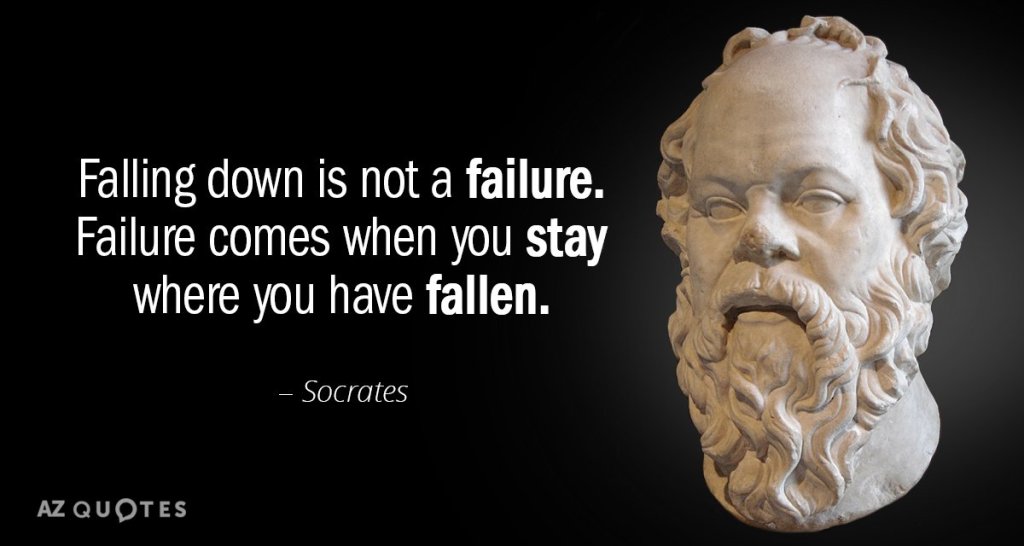
The so called ‘wisdom of the crowd’ is not something that history proves. Wisdom is unfortunately a rare commodity – whether two thousand years ago or the present day. We only have to listen to Socrates (470-399 BC) opinion about the ‘common man’…

Hammering in the Screw

Readers of this blog will know that the author is fascinated by the science and art of problem solving. Problem solving is a daily occurrence and yet is rarely taught or even considered as a subject worthy of study.

Problem Solution Success

The brain can acquire an commanding attitude that sometimes dismisses objectifying a problem. Either from previous experience or acquired behaviour – a solution ‘comes to mind’ that is promoted without question. This idea is regarded and defended as the only possible solution and perceived as unquestionably better to any alternative.

Let us take an example from the world of sociology, ethics, law, health and politics. The example I am using is ‘drugs’.

The ‘normal’ response to the problems created by citizens who take drugs, has been for the State to make them illegal.

Avid problem solvers will already have noticed that when the problem has a stack of layers already listed;

Social stability

Economics and Taxation

Ethics and Religion

Law

Health

Politics

– then the solution has to apply at every level of the problem.

It is not difficult to appreciate that the ‘make it illegal’ or ‘bang-em-up’ solution, only addresses one layer of the problems associated with drug taking.

In the 1930’s recession in North America a law against the consumption of alcohol was introduced known as ‘prohibition’. We are probably all familiar with the unintended consequences of this law in handing over the production and supply of alcohol into the hands of criminals. The government lost the taxes associated with the sale of alcohol and little benefit was gained by anyone except the criminal gangs. The law was repealed because it didn’t solve the problem – if there ever was a defined problem!

But even today the Indian States of Bihar, Gujarat, Bagaland are today places where alcohol is banned. Despite this alcohol consumption in India has risen 72.5%* in the last twenty years (*source Wikipedia).

In the United Kingdom in 1971 an act of parliament was passed called the Misuse of Drugs Act. This was heralded as a so called ‘war on drugs’. But because the problem was only considered at one level, the laws have failed to the extent that contemporary analysts are proposing more inclusive solutions to the problem.

Instead of examining these alternative solutions the more general point here is that they need to be wide ranging in their origins and effect. Just taking a narrow attitude such a s ‘law making’ is ineffective.

Therefore a problem solver might examine ‘what is a drug?’ first. In the religion of Islam, a drug is categorised as an ‘intoxicant’ and believers are forbidden to become ‘intoxicated’. This is clever because it does not attempt to list all drugs that are harmful, in the present and future, (as lawyers did in the UK and other Western countries) – it just bans the consequences of any drug. It does not even define the point at which a person becomes ‘intoxicated’. The clerics and interpreters of Sharia law have erred towards ‘zero tolerance’ – and gets a bad press in liberal democracies.

However, it has to be recognised that religious laws can be considerably more effective than  criminal law and overcome the problems associated with criminalising drug addicts.

But even this strand of a solution to drug taking is not completely effective; some Muslims drink alcohol. Therefore a problem solver might attempt to define what degree of success in reducing the consumption of drugs is being aimed at. In a competitive world it is natural to attempt a one hundred per cent success rate, but a reality check is usually needed on what can really be achieved. Is a person ‘intoxicated’ after one beer?

Like all ‘genies’ and malign inventions – once set free they can never be completely put back into the bottle. Perhaps for this reason, in western liberal democracies at least, an increasing level of tolerance is being given to drug use and users.

There is clearly a sliding scale defining drugs, with mild drug taking at one end (coffee, tea, medicines) to hard drug taking at the other (heroine, cocaine, alcohol). Societies assess the positive effects of drugs against the negative such as in the production of medicines. Desired consequences of medicinal drugs are balanced against the side-effects, some of which may be worse than the symptoms of the problem!

Some European countries such as Portugal are treating drug addicts as patients with an illness rather than criminals who will change as a result of punishment. The statistics on the success rates between the two approaches would make interesting comparison. What is of interest for this essay, is how a change of direction and depth in the problem solving process, may be more successful than the previous direction and depth.

Clearly the politicians and law makers (with an knowledge of changing social attitudes) need to be on board with the idea of such changes , as do health and social workers and the criminal justice system.

Any lasting solution has to know what it is trying to achieve and how to measure that goal. It must also take into account how to change and how to control the various strands of the solution involving the multiple agencies within society.

Many people in power like to think they know the solution by some sort of divine gift of seer-ship. This makes them blind to whether the measures they propose will work and by what measure they can be considered effective in their goal.

Reluctance to change is familiar in problem solving and is characterised as a person engaged in digging a hole in the wrong place. When the error is pointed out ‘you won’t find water here mate!’ the digger just digs deeper.

Or when the carpenter only has one tool in the workshop, this tool is used for anything that it can hit. No question is asked whether the metal thing sticking up is a nail or a screw. The problem is a ‘metal thing’ and the solution is the only tool in the workshop.

This type of thinking is clearly insane when viewed analytically – and yet whole societies and national systems of government appear to be digging holes deeper and hitting screws with hammers.

What do you think is the solution?

Problem Solving