Most people hate war, especially soldiers, so why does it happen?
The problem is that war is an option of last resort. Ideally, all other options have been explored before war happens, but from then on, ‘the continuation of politics by other means‘, to paraphrase Carl von Klauswitz.
War will persist until it is possible to stop it; a process far harder to achieve than starting a war. Each conflict is a set of unique circumstances and different ways to reach a peace. At worst the war will become one of attrition and it becomes impossible for both sides to continue. Alternatively, political and public support for a war wanes or perhaps an overwhelming third force appears that compels surrender.
You would like to think that ‘how to stop a war’ is taught in military academies, but such executive decisions are more likely made my politicians rather than military leaders and politicians usually have no experience of ‘conflict resolution’ at this scale. Even in wars which have been wars of attrition, the conclusion of war requires considerable diplomatic skill. For if one side is forced into conditions of surrender that are too onerous and dishonourable, the process of recovery becomes excessively hard and national pride will almost certainly wish to seek redress sometime in the future.
The world might have learnt this lesson at the conclusion of the first world war, which was a spiral of attrition requiring the intervention of a third party; the USA to make it stop. The armistice terms demanded by the Allies, were so severe that they left a ticking time bomb, which exploded as the second world war.
The present war in Ukraine has been described by some as the beginning of the third world war, but there is another view. It could be argued that what is happening in Ukraine since 2004, when Russia annexed parts of Ukraine and later the Crimean peninsula, is an after shock of the second world war .
In that war, an American General raced against the Russians to roll his tanks into Berlin ; General George Patten.
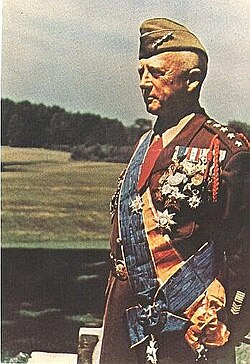
The politicians tolerated his outspoken gaffs, because he was a superb military leader. Patten was of the opinion that the allies should continue to Moscow and finish the war for good.
The politicians ignored his advice and the United States spent the next few decades ‘fighting communism’ in what became known as, Mc Carthy era. Countries such as Cuba, Korea, China, Russia and Vietnam caused considerable headaches for the American politicians and military; feeding a neurotic culture of suspicion of called; ‘reds under the beds’.
There is an argument that the present war in Ukraine is the continuation of the communist expansionism in Europe that immediately followed the conclusion of the second world war. President Putin justified invading sovereign Ukraine to the Russian people, by stating that his strategic aim is to defend Russia against an expanding NATO threat but less blatantly to fight ‘Nazis in Ukraine’. For Putin the ‘Great Patriotic War’ fighting fascism did not finish.
The technology of war inevitably played it’s part in this conclusion. The use of the Atomic bomb by the USA in the Japan, brought the conflict there to a sudden halt. Communist sympathisers within the Allies, gave the secrets of the atom bomb to the Soviet Union, who speedily test fired an exact copy of the American atomic bomb, shocking the world. Perhaps as intended by the ‘traitors’ who leaked the secrets of the atom bomb, this mutual threat has forced ‘the Cold War’ and an unsteady world peace ever since. Nine or so countries now have them and others want nuclear weapons despite the efforts of the International Atomic Weapons Agency, set up to prevent their proliferation.
It is important to realise that after the fall and fragmentation of the Soviet Union, Ukraine was left with fifteen pressurised water reactors of Russian VVER design, and importantly Soviet era strategic nuclear weapons.
Three of these ex-Soviet countries were persuaded to give up their nuclear weapons in the Budapest Memorandum on Security Assurances. Belarus, Kazakhstan and Ukraine agreed to give up their nuclear weapons between 1993 and 1996. The nuclear powers overseeing this process were the Russian Federation, the United States and the United Kingdom. They agreed not to use military force or economic coercion against these three countries unless for self defence or in accordance with the Charter of the United Nations.
The diplomats and lawyers who wrote the Budapest Memorandum were perhaps, not clear about what constitutes ‘self defence’. Most strategists and tacticions, know that the principle of striking the enemy before they hit you, creates an element of surprise that can be construed as ‘defence’. Putin’s original ‘Special Military Operation’ was justified as ‘self defence’ but, unfortunately for him, it didn’t knock out his opponent with the first punch. The surprise was Putin’s. He thought Ukraine would be easy to take.
Putin constantly cites NATO as a growing threat, especially after the fall of Viktor Fedorovych Yanukovych, Ukraine’s president from 2010 to 2014. Yanukovych had promised the Ukrainian people in his election manifesto, that Ukraine would apply to join the European Union or at least set up special trade agreements which would lead to this. But after a phone call from the Kremlin, he enraged on this promise and there were riots in the streets. These were violently suppressed by the government leading to over 100 deaths. Yanukovych fled to Russia and Volodymyr Zelenskyy was elected president on the promise of European integration. Europe responded with indirect support.
Ukraine is an important buffer state for NATO because it has arguably, prevented World War III. It has so far, been a narrow escape for all, provided Trump isn’t elected and gives in to the Russians. The USA has not been good the diplomacy of war and should have learnt some important lessons, such as from the war in Vietnam.
An indignant generation of young people in the United States rebelled against the war in Vietnam as it was played out graphically on their television screens. Newspaper reporters photographed the horror of war; photographs which stunned Americans and the world alike. Young men angrily burnt their call up papers in front of crowds of anti-war protesters as four successive Presidents presided over an unwinnable war. In a way, the protesters against this and later wars (such as the invasion of Iraq by the US and coalition forces in 2003) stuck their flag in the moral ‘high ground’. War was wrong.
Awakenings of conscience and consciousness happen at the individual level long before parliamentarians hear and reflect the ‘mood of the nation’. If war is going to be rejected as a method of ‘problem solving’, there has to be a global realisation of the immorality and futility of using violence against a fellow human being. It would be idealistic to suggest that this could happen in the near future but perhaps there is, a greater possibility for change than now, than there ever has been.
In my view, change will only happen with the introduction of a ‘third force’ which might be a charismatic world leader from this or another solar system, new technology or a third force with the means to eliminate humans, shared global problems of a catastrophic nature or just a spiritually and / or morally inspired realisation that violence is wrong.
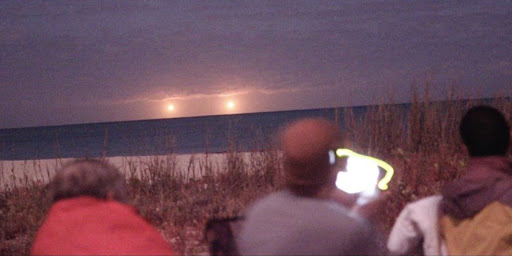
The reference to ‘another solar system’ may have surprised readers! But the presence of advanced beings on earth is hardly a secret any more. The problem is that they are being characterised as violent and a threat to mankind. The narrative of ‘global security’ by successive U.S administrations, introduced ‘Star Wars’ under the Reagan and a whole new defence wing under Trump called the Space Development Agency. Hollywood has aided and abetted a global fear of invasion of ‘beings from outer space’ who wish humans harm.
The reality as described in Dr. Steven Greer’s film, ‘Close Encounters of a Fifth Kind’, is that highly evolved beings are watching and guiding us until we wish only peace for each other. World religions have been advocating this for centuries so humans cannot claim ignorance.
Such a change of morals and consciousness is not a vain hope. There have been historical precedents. The crucifixion of one man in Roman Palestine, started a new religion based on love and compassion for all other people, including enemies. The election of a Pope gives some hope to the world that ethics may now take more of a role in international politics.
The demand for a planet where there is no war, is now in the hands of the politicians, lawyers, military leaders, religious leaders, industry. But the arms industry has been more interested in shareholders than ploughshares. The only possible novel outcome to being a victim of unrestrained violence, is for individuals to peacefully protest.
Mahatma Gandhi used non-violent protest to British rule in India. Peaceful overwhelming presence is an extraordinary power. When it fails, it makes powerful martyrs but when won, makes lasting peace.
 Matters Blog