The Twin Towers of Babel

Those who remember the transition from the 20th to the 21st century will remember what was then dubbed, ‘the millennium bug’. Nobody quite knew how it would manifest itself. Would it crash the world’s computers because their clocks had not been told about centuries? Would aircraft be stranded in the sky until they run out of fuel and fall like stricken angels?

As it happens, nothing happened…or did it? Perhaps we should have been more prudent because on September 11th 2001, something momentous and unexpected did happen. The two towers of the World Trade Centre and two other buildings were attacked using hijacked aircraft.

picture credit: Esquire.com

Was this the millennial disaster foreseen in Mayan calendars? Perhaps the millennial bug laid an egg at the end of the year 2000, which hatched nine months later? Whatever the timing, stay with me, because this speculation becomes more intriguing.

In the murder scene on a theatre stage, a door opens and the victim enters. The other actor on stage raises a gun and shoots the victim dead. All eyes are on the murderer and the rest of the play runs it’s course. However, the play would have been a lot shorter, if the detective had shrewdly asked this question;

Who opened the door to let the victim-to-be in?

This is a sure fire way to investigate tragic events and find the conspirators supporting the shooter. In the case of the twin towers, the door was opened by whoever ordered the fighter jets to be on exercise hundreds of miles from the city they normally protected. In the case of the death of the Princess of Wales, the door was opened by whoever ordered the CCTV cameras to be disabled and the ambulance to stop on the way to the hospital.

Whoever conceived and executed these and similar tragic events is not the subject of this essay. What interests me here is the question of what happened to the collective consciousness of mankind after 9/11, that is, as we pivoted into the new millennium?

Suddenly, the United States of America changed status from being free from the horrors of global terrorism to being a perceived victim of global terrorism. Whatever you believe happened what is more important here is what is perceived to have happened, on the world stage. The revenge game that followed was then ‘justified’. Certain countries and their dictators were delivered a dose of ‘shock and awe’ by the mighty USA armed services and their allies. This of course, continues in Afghanistan and several countries to this day.

How ironic, it seems to me, that Saddam Hussein’s summer palace looks out over the present ruins of Ancient Babylon.

Looking back in time, you might still be wondering what has been achieved by the various USA and coalition invasions of sovereign states? Suddenly the cowboy in the white hat is doing things only the black hats try to get away with. Who are the good guys and who the bad guys? Why is Saudi Arabia, (a state run by medieval Wahhabi clerics with the nod of royals) still an ally of the USA? We all know the reason for that question but see little offered in answer.

The world has tipped on it’s head. Shadows have been filled with light and light has filled with shadows. Everything and nothing can be believed as ‘true’. We don’t trust each other any more.

It is the area of ‘communication’ that this confusion is most evident today. The Tarot card from the Major Arcana depicts an uncanny picture of the Tower;

picture credit: Crone Confidence

Think back briefly to the story in the Old Testament when man developed new technology. In ancient Babylon the early mighty towers or Ziggurats were built from unbaked mud bricks. Then something extraordinary was discovered. The verses specifically state;

‘and they said to one another, go to, make brick and burn them thoroughly. And they had brick for stone and slime had they for mortar.’

This new technology was specifically conceived by human rather than Divine consciousness. This was a fatal transgression from God’s will. God conceived that an already proud human race would become uncontrollably self centred and conceited, or as Flavius Josephus put it in the 1st century A.D, man committed the deadly sin of pride.

The Tower of Babylon was proposed by academics to be an attempt to connect humans with Heaven, but in my view the opposite is more likely. Towers, or pyramids were built by corrupted nations in order to commit ritual sacrifice of humans, as in the Mayan and Aztec civilisations. The towers were for black, not white, magic. The smell of blood was to attract power from other dimensions in the same way sharks converge on a meat feast in water.

This evil was countered by the Almighty very subtley, so the Bible tells us. Before the building of the Tower of Babel humans spoke and thought with ‘one voice’. They understood each other using a common language for the common good. The ‘correction’ for the sin of pride delivered to humanity by God, was for them no longer to understand one another.

Start examining our recent history from the same perspective. What happened after 9 September 2001? The new technology of computing and it’s changeling*, artificial intelligence, has introduced multiple forms of communication to the common man. Whether in the grasslands of central Africa or the underground stations of New York, people can talk to each other using micro computers posing as telephones.

Note: *definition of changeling; ‘in pre-modern European folklore an infant or magical creature that was secretly exchanged for a human infant…the exchanged infants were thought to be those of fairies, sprites or trolls…demons, devils or witches’.

The potentiality of this freedom of communication however, has not lead to a ‘greater good’ in my view.

The rise of rival messaging, speech and video communication applications is changing humanity radically. Young people are checking their phones on average every ten minutes. Their ‘reality’ is entering syberspace.

Typed messages replace face to face communication between friends over a relaxing cup of coffee. Misunderstandings on a colossal scale now haunt humanity every second of the day. You cannot switch off your phone even when you asleep.

‘I sent you a message, didn’t you see it?’

‘Where was that? A text?

‘No’

‘An email?’

‘No’

‘Oh, Messenger?’

‘No’

‘WhatsApp?

‘Did you check your answer phone?’

‘I have two phones, which one?’

‘The one in my contacts…I can’t be sure.’

Compounding this floundering potential for constructive communication is it’s opposite, so called ‘fake news’. Not only pictures and speech can be altered for malign purposes, but now videos of well known figures talking, can be convincingly created using artificial intelligence. Who is telling the truth?; is the question on everyone’s lips. AI just smiles devilishly at the camera.

The result of all of this, is a level of stress and anxiety probably never experienced before… except perhaps after a large construction project in ancient Babylon was reduced to rubble by a freak thunder storm.

Thunder bolts descended from anvil shape thunder clouds turning fired clay bricks into dust. From that time, people entered a thought scape of confusion.

Today, are our small voices more powerful than the technology that is overtaking us? Are we all currently being churned into dust by the real Millennium Bug?
Whose’s Afraid of the Big Bad Conspiracy?

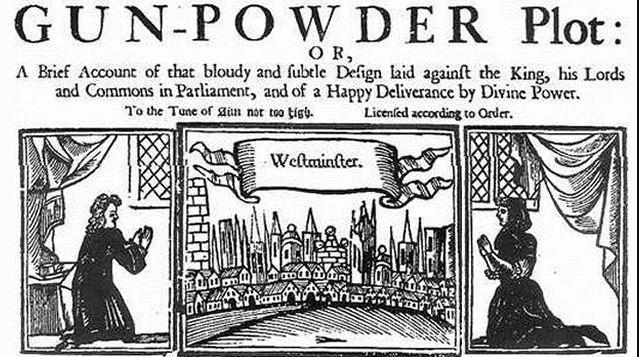
The Gunpowder Plot was possibly conceived and attempted by a group of provincial Catholics in England against King James I. They met secretly to plan an execution of the protestant King by blowing up the House of Lords. The plot was thrawted on the 5th November 1605.

The Cambridge English Disctionary defines a ‘plot’ as;

‘a secret plan made by several people to do something that is wrong, harmful, or not legal

We might then define a plot as; ‘a plan with evil intent’. But in the 1960’s a new word was used to define a plot; ‘conspiracy’.

The Cambridge English Dictionary now defines ‘conspiracy’ as;

‘the activity of secretlyplanning with other people to do something bad or illegal: ‘

The difference between a plot and a conspiracy is not clear from these simple definitions.

Please bear with the writer for one final definition as this essay is building up to something which affects us all. What is meant by the term ‘conspiracy theory’ and should we dismiss such theories as ‘conspiracies’?

The Cambridge English Dictionary definition of a theory is;

‘a formal statement of the rules on which a subject of study is based or of ideas that are suggested to explain a fact or e7*-89vent or, more generally, an opinion or explanation: ‘

A conspiracy theory is therefore not a description of truth, although some may take it to be so. It is a ‘suggestion’ which is being applied to explain facts. This may be in a way previously discounted as new facts emerge or are reinterpreted.

Conspiracy theorists are easy prey for derision because of this confusion between a theoretical and and accurate description of an event. Wikipedia describes this well;

‘The term (conspiracy theory) has a negative connotation, implying that the appeal to a conspiracy is based on prejudice or insufficient evidence.’

The notion of a conspiracy theory has itself become the subject of biased logic, when it is derided out of hand without a fair hearing. An example might be it’s use as a term of derision by the United States CIA. They used and perhaps coined it, to discredit disbelievers in the findings of the Warren Commision. This was set up to investigate the assasination of President Robert Kennedy.

The use of the term as an emotional form of ‘mud slinging’ by those convinced to be on the side of rational argument, shows how the accusers can sometimes be as misguided as those they accuse of bias.

When bad things happen, such as a plane crash, there is often ambiguity due to the absence of information from a thorough investigation. Theorists have to match a set of facts with a most likely explanation of what happened.

During the sequential investigation process, various theories will adapt to facts. Eventually investigators will propose a theory that fits the facts more closely than previous theories.

Scientists produce theories which are reviewed by their peers and proven beyond doubt before being adopted as a scientific ‘law’. Einstien’s Special Theory of Relativity is a good example of a theory that could not be proven in his time. Einstien used mathematics to determine the proof of his theories but because the technology of the era was not able to test the theory by experiment, it was long after his death before his theories were proven.

Is it fair that conspiracy theories are given a reputation for being innacurate merely for being supposed to be conspiracy theories. The use of the term as derision is in itself troubling because logically, there is only ever one correct interpretation of events and a so called ‘conspiracy theory’ may be that one. Just as aircrash investigators reach a logical explanation of events so may conspiracy theories, eventually be revealed as true.

The State, or organisation within a State, which attempts to deny events that the theorists are getting right, puts loses trust.

Conspiracy Theories gain considerable credence by focusing on events for which there is no evidence to disprove the theory. For instance, you might suggest that Aliens are already on the planet Earth and have been for a very long time. The subject is so ‘taboo’ in modern societies that governments conspicuously share very little of what they know. Rationalisations are made to ‘explain away’ what witnesses have observed as being something else. For instance a moving light in the sky is explained to be a ‘weather baloon’. If the serving press officer admits on You Tube decades later that this was what he was told to say rather than the truth about a real crashed Alien craft, who are the public to believe?

We live in a time when information is being smoke screened as ‘fake’. We do not know what to believe. It used to be that books and newspapers, that is the written word, were trusted to report the truth. Authors and journalists would lose their reputations and careers if they printed as facts, something which was not from mulitiple, trusted sources. Since the rise of the internet and the general ease of access to all kinds of ‘information’, it is hard to determine between the real, the fake and the absurd.

This phenomenon has been compounded by a growing public distrust in ‘experts’. This is despite the fact that the training and experience of experts means they are right most of the time. After a small amount of research, it is possible to believe you have discovered a truth. What is commonly discovered is that after a large amount of research, you begin to doubt.

Conspiracy theories suffer from this ‘instant expert’ phenomenon and exploit the doubt of reasonably minded people. Complex events, such as the events of 9/11, require observers to be air traffic controllers, communication experts, pilots, air force strategists, architects, engineers, demolition experts, emergency reponse planners and practioners, intelligence officers, politicians, journalists and investigators. There are certainly more areas of experties than these but the point is that investigating the event and it’s motives are highly complex and require meticulously unravelling. Complexity can itself become a smokescreen to baffle the casual observer.

Even simple questions such as, ‘how could two aircraft be used to bring down three buildings?’ are ignored. When there is a pronounced silence from people who should and might know, or worse they start disappearing, citizens should become suspicious.

Fortunately the so called ‘free world’ is open to scrutiny at many levels and Freedom of Information Acts in countries like the USA and UK testify to this. However when clauses are written into these Acts that prevent the release of information publicly for ‘reasons of national security’ there is a window for suspicion to open.

The whole story around ‘Wikileaks’ is a testament to how there will always be room for alternative intepretations of facts or what is termed, ‘my version of the facts’.

picture credit The Westar Institute

If your government derides conspiratorial theories just for being ‘conspiracies’, ask yourself the question, who is hiding what? Perhaps by hiding the truth harm is being caused to citizens of that country? If your government acts in secret and causes harm to it’s populations by an act or ommission or failure to be timely in either or both, is that a plan, plot or a conspiracy?

For instance:why is the Gunpowder Plot so called? Gunpowder is inanimate and does not plot. Surely this was a conspiracy planned by the Spanish Catholic monarchy against the Protestant English monarchy? Or are we not meant to say that?

Is There Anybody There?

A ghost walks into a bar and asks, ‘do you serve spirits?’

Humans have currently been obliged to believe in invisible beings, viruses. We believe that the Corona virus is everywhere as if it were a spirit. The only difference is that with a microscope you can see viruses and know that they exist.

The similarity of this belief to the ancient understanding of the spirit world is uncanny. Modern science has not been able to prove ‘spirits’ exist, therefore we are encouraged to believe that they do not. But logically, not being able to prove something exists, does not prove it does not exist. Perhaps the observer has the wrong sensing equipment or it is not sensitive enough, or too sensitive?

If we take a more rational approach, based on the acceptance that what the ancients believed, may still be true today, we can explore the existence of spirits further.

A friend of mine found himself, many years ago, in a monastery in Tibet. He casually opened a cupboard and was shocked to be staring at a human skull. He closed the door hurriedly and moved on. He returned the next day but the skull had been removed. Had he been seen by a spirit in the skull? The Sumerians of 3250 B.C kept a spirit in their homes, tempted there to occupy a statue, figurine or sometimes – a human skull.

I recently watched the ‘Magic Flute’ by the Master Mozart. The music is wonderful but my principle interest is the story. The first scene in Act One shows three witches destroying a serpent that has captured the hero, Tarantino. The opera sends him through an initiation process from darkness into light. He is able, when necessary, to annul the influences of evil spirits by playing a magic flute.

My own interpretation of the flute is that it symbolises the energy centres of the human body known as seven chakras. The flute plays a seven note scale by vibration of a column of sound and is similar to the hollow human spine in it’s construction.

Such control of energy within the human chakras affects our moods, feelings, physicality and state of mind. When mastered the adept in Tantric Yoga completes the journey from darkness into light.

Tarantino’s companion is a humble bird catcher. He represents the ‘ordinary’ man who goes through live mechanically. He fails the initiation tests preferring wine, women and bird song.

Let us move on to consider spirits outside of the story book, real live spirits. They love to do human things and are generally envious of the joys humans have from living in a physical world. The ancient Greek gods appeal to us because they behave as badly as humans. Lepricorns and other nature spirits adore dancing in rings in the moonlight to fairy fiddles. They look into our dimension with envy for they too enjoy nothing more than ‘wine women and song’.

Just as the ordinary human is enslaved by the five senses, so are spirits enslaved to us. The Genii in the story of Aladdin is in service, not a master. But secretly they long to occupy our living bodies for the same reason that God created the physical world – experience of physicality.

Sometimes they do – when someone is intoxicated for instance; which is the esoteric reason for alcohol being forbidden to Muslims. An intoxicated person often changes character quite noticeably and their bodies have super human strength, causing the North American Natives to name alcohol ‘fire water’.

Carl Jung concluded at the end of his life, that psychological complexes were outside of the human mind. When someone is ‘not themselves’ we should take this quite literally. Many Shamanistic rituals such as Voodoo, concern the removal of malign spirits or the placement of unwanted spirits for malign effects. Even modern Christianity has continued belief in the efficacy of exorcism and certain sensitive priests are trained in it’s practice. If it did not work, surely it would not have continued into the present day.

When a spirit is invited into a body as a Faustian ‘pact with the Devil’, the human party assumes magical powers. They may use these powers for entertainment as a magician or more worryingly, to gain political power. Should we accept the extraordinary rise of Adolf Hitler in 1930’s Germany as at least in part, being due to his thirst for occult powers? Why else did he send expeditions into Tibet and Antarctica, if it was not to gain occult power?

You might wish to believe that the modern psychiatric view that external beings are manifestation of our own minds. A vision of an etheric being by a single observer may occur when there is a conflation of the inner and outer worlds in that persons perception.

‘That way madness lies’

To which my reply is both yes and no. Yes, because all of our perceptions are no more than stimulus, decoded by bodily senses, into electrical pulses which are streamed into the brain. They are no more real than the images on our television sets are real. No, because the Universe is so large that there must be consciousness outside of human minds.

Part of the vanity of humans is the conscious or unconscious belief that we are alone. If we have never seen a spirit then it does not exist, is the false logic. It is false because there are many things we do not see that we use everyday. Our eyes only perceive a small part of the electromagnetic spectrum. We use infra-red ovens in the kitchen without a thought of whether infra-red energy exists. We use the effect and that is proof enough.

So it will come as a shock to humans when beings from other planets in our galaxy, appear on Earth, shaking the hands of heads of State. In doing so they will also shake the belief systems of every society, family and individual to the core. Present dogmas of belief whether in religion or politics or science, will be realised to have been at fault all along. For this reason governments seek to manage the time and place of this information. But it must be revealed and I sense that the present pandemic is building a global consciousness of cooperation that has never existed in history.

Accepting that consciousness exists outside of the human body, whether in spirit form or in another corporeal body, is the next step for humans.

The Old Testament describes how our forefathers experienced gods thousands of years ago but like the magic of the micro wave oven, they did not understand the causes of the manifestations.

Ping

Instant Experts

As knowledge expands through the centuries and decades, one might be forgiven for believing that, eventually, all that is possible to be known, will be known. It might be as a new dam which, after much rainfall, is full.

But like all oversimplified analogies, this one is flawed. As scientists discover more, they discover an infinity of new things. They have a job for life, for their subject reveals more, the further they explore. Hikers experience the same as they approach the apparent crest of a hill, only to discover more peaks beyond, what they call ‘false horizons’.

So, why are modern societies so confident? Well it is my contention that there is a part of the human psyche that is uncomfortable with the idea that it has only partial knowledge. I am referring to the ‘ego’ or ‘small self’. Ego’s have a tendency to take the easy route in life. They are for ever looking for the reward which requires little or no effort. Even dedicated scientists have been known to falsify their observations to promote their theories.

The present adulation of ‘celebrities’ in modern cultures is an example. An ordinary person, as we all are, may become celebrated for winning a competition or race or athletic achievement or something as banal as singing a song. The media and social glitterati turn on this flash of ‘success’ like sharks triggered by the scent of blood. The sometimes reluctant but usually eager victim, is propelled into a new world of abundance and admiration. Parties, limos, sex, money, drugs, interviews and media celebration all describe a voyage from the ordinary into an inflated fantasy world.

The truth behind this ‘yellow brick road’ is that this ‘celebrities’ are no different to any one of us. The only way out of ‘celebrity’ has sometimes sadly, been suicide.

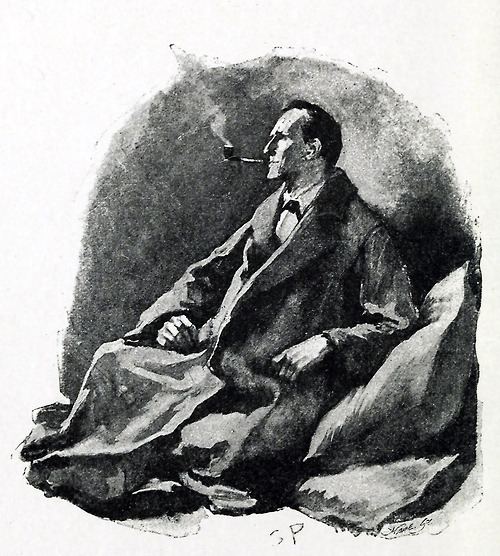
Many fictional characters encapsulate the myth of ‘knowing all’ and the power that brings. A well known example is Arthur Conan Doyle s detective, Sherlock Holmes. Mr Holmes has a super human gift of observation and deduction which puts him way ahead of those not so empowered. Holmes is what today is called a ‘super hero’ because he wins every fight, whether physical or mental. He represents an aspect of the ego that all egos aspire towards; to triumph in every endeavour. When Holmes succeeds again and again, we are programmed to believe that this ‘hero’ is indomitable, all knowing, all conquering.

But Conan Doyle was clever enough to make the character of Holmes in some way, fatally flawed. Holmes lacked emotional intelligence and perhaps compensated for this by using drugs. Even the Ancient Greek heroes such as Achilles, demonstrate after many victories that no person is perfect and die at the hands of their adversaries.

We would do well to remember this today as we observe a new cult of ‘knowing all’ emerging. The true experts in a subject, such as academics and professional practitioners are being degraded as fast as the fools are being upgraded.

Whether you are talking about Presidents or Street Cleaning Operatives, people are being persuaded that they possess the super human powers normally reserved for ‘the experts’.

This illusionary level of confidence has even infiltrated the curriculum in schools. Children are being promised elevated careers way beyond their abilities. The premise appears to be that anybody is capable of anything. If this were true then only the top jobs would be good enough for young people. Filled with false expectations, they go willingly to University and pay for the privilege. At the end of the course, as their application forms are returned from the promised ‘top jobs’, they finally are given a spoonful of reality.

It is an old adage that ‘a little knowledge is a dangerous thing’ and yet this truth is forgotten or ignored today. Persons are deciding to build their own houses and argue with their architects. They diagnose their illnesses and argue with doctors. They become international Statesmen based on bluster and the blood of others.

The origins of this illusion are those employed by the ego when things begin to go wrong; deceit, threats, grabbing, bullying and other methods of gaining power over others. Many dictators today have achieved their position through these means. They continue to use them to remain in power for an indefinite period with extraordinary self delusion that the people like them. Any challenges are fought with a ferocity of a cornered animal for indeed, such people have cornered themselves by taking a false and harmful path.

The was a study by two academics which observed what is termed the ‘Dunning Kruger Effect’. The crux of this study is that people do not understand that they do not know things. It is the nature of how humans acquire knowledge and associated skills that in the beginning they find the subject rather easy. It is not until much later that say, a surgeon, realises the hidden risks, false avenues and areas of the unknown in their specialisation.

People who are not trained initially acquire a false confidence simply because it is impossible for them to know their short comings. A couple building a house might proceed with crayons and a cornflake packet to design their ‘dream house’. They sink their entire savings into the project. As the build progresses they make mistakes that are hugely costly and are driven into deep despair. These mistakes are of course well known pitfalls to professionals and would have known how to avoid making them.

Life teaches us the hard way for the arrogance of the ego by cutting us ‘down to size’. False pride and self confidence built on self deception, succeed in the beginning but slowly the mistakes and falsehoods creep in.

In life we learn that there are no true heroes. We are all vulnerable in our weaknesses and only become strong when we realise this. Instead of being a ‘know all’ we are better advised to ‘know how little we know’ in other words, adopt humility in everything we do.

Until our prizes, awards, honours, celebration, adulation, high office in affairs of state, are given to the meek rather than the bold, society will have the ‘instant experts’ and flawed heroes of that it deserves.

Real heroes are those who work within their limitations and admit mistakes or ignorance. They may not even achieve very much but what they have done has been done honestly.

Listen carefully to your politicians and leaders and see how often they express realistic aims tempered by humility. When a leader promises all and rarely delivers or admits to mistakes, use your vote.

Leaving the Union

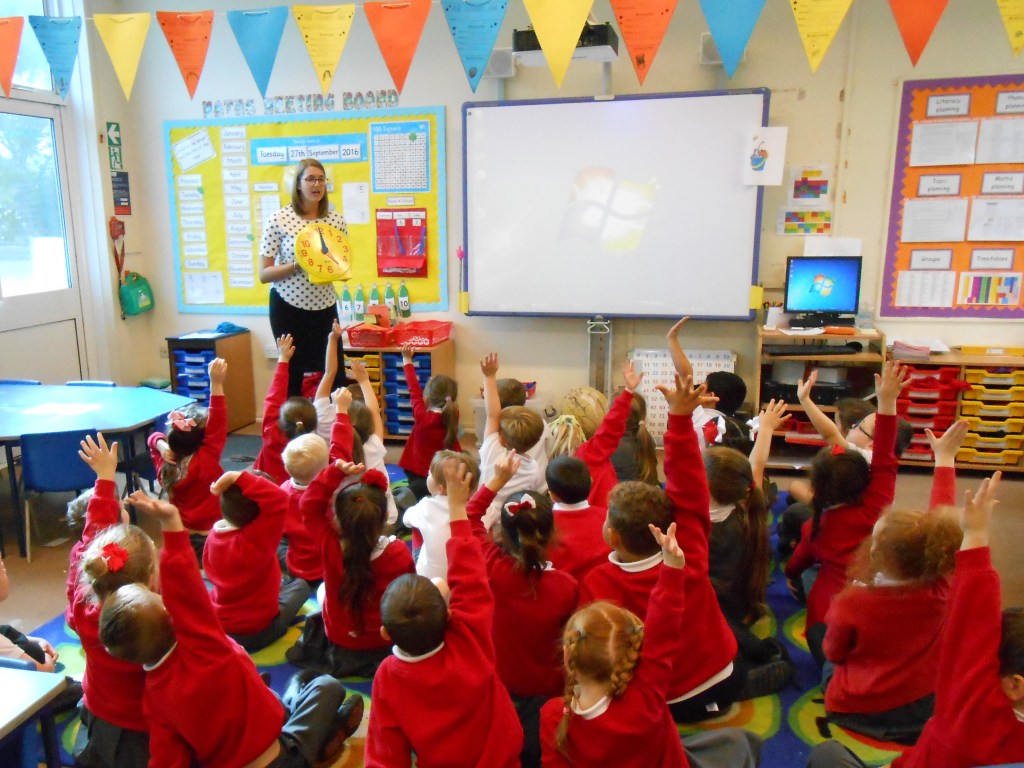
Ms. Smith stands before her Primary School class in an English State school on a very special day.

picture credit: Mathematics Mastery

“Good morning boys and girls! Now quiet please. Quiet. That’s better.

This morning we have a very special visitor who is going to listen to what WE think. This is instead of Nature Table which we will do tomorrow. No Peter, it is fair because the nature table with still be there tomorrow and the Prime Minister will not.

So I want you to welcome the Prime Minister of the United Kingdom, Mr Boris Johnson. Yes, you can clap if you want to children. Oh, you don’t want to, alright.

Mr. Johnson, you asked to listen to the adults of the future. Well here they are!”

“Wha, Wha, Wha, good morning Ms. Smith and good morrow boys and girls. I am really really interested in what you think about stuff.”

“Jimmy, why is your hand up?”

“What’s this bloke mean stuff Miss?”

“Ah! wwwwwell that’s a good question. You see being vague is a great way not to be specific but, but, but I see that may work in the House but not here. So I shall focus, robustly. Firstly, we have left that great monster known as the European Union in which you would have found opportunities for travel, education and work. So I want to know – from YOUR happy faces – what opportunities you believe have opened up for your futures, from Independence.’

A small girl waves a hand energetically.

‘My Dad says the UK has its sovereignty back but I cannot see that the UK has ever lost it’s sovereignty. Surely sovereignty is really Nationalism made to sound more respectable, is it not? No, don’t interrupt please Prime Minister that was a rhetorical question. Look at the evidence. What is the national flag of the United Kingdom? The Union flag, of course, not the EU flag. What is the currency of the United Kingdom? The pound, not the Euro. When we go on holiday, all the European cars have registration plates from their own countries, not European plates. Cars are insured in their home countries and are inspected annually in their home countries, and taxed in their home countries. The rules of the road are set nationally – we drive on the right, Europe on the left. It is true that passports were standardised by Europe but that streamlines free movement of people and increases border security. If you want another coloured cover with the UK crest on, you can buy one. There is no ‘identity card’ in the UK whereas most EU countries have one. All countries do things differently. Nationalism in Europe is alive and well, in my view.’

‘Thank you Marlene, that was very interesting wasn’t it Prime Minister?’

‘Bah bah, yes, bah, factually correct but my point is, dah, wouldn’t it be nice not to have to buy a new passport cover. £4 in Smith’s mine was. Many households cannot afford that.’

A small boy next to the water cooler stands up to speak.

‘I would like to bring up the subject of free trade. If the Germans sell cars to China within the EU rules, why can’t we? The EU has spent decades agreeing trade deals from the strong negotiating position that politically aligned block commands. These trade deals are largely responsible for making the UK wealthy and in a position to share it’s wealth and know how. The latest trade deal with South America is something the UK is now going to miss out on. By leaving the EU we will lose the benefits of hundreds of good trade deals all over the world and replace them with fewer deals on similar or worse terms. The new deal with the Japanese is an example. We already traded with Japan from within Europe. This new ‘deal’ greatly favours the Japanese. Individual trading countries like the UK’s now is, never negotiate from a position of strength.’

‘That is most interesting Nigel, wasn’t it Mr Johnson? I see you are speechless. So, Penny you have your hand up dear?’

‘I want to say that I want to work in Europe when I grow up.

Now if I even want to search for a job in France, I will not be allowed to for more than three months without returning to England, I will need medical insurance, will have to pay to exchange my money into euros and back again, pay high charges to phone my parents a few hundred miles away and my UK qualifications will not be considered valid. Am I destined to stack supermarket shelves in Calais?’

‘Wow, wow, wargh…just get a job in Blighty little girl. They speak English here!’

‘As do most Europeans. It’s a universal second language in Europe, excepting Estonia, Latvia and England, Dumbo.’

‘Penny, politeness is a classroom rule, please.

Ms. Smith moves on the questioning. ‘Can I ask you a question Prime Minister which is about taxation, health care, service industries, the Royal Family, national and European security, policing, defence, foreign aid, research and projects all of which are governed in law at a general level, by Westminster. What is left that is governed by Brussels?’

‘Are well, Brussels, ugh, is at the root of the problem because our views are not represented there…’

Bobby by the fish tank piped up. ‘Not true! What are MEP’s for if not to represent the UK? Why has the UK agreed to 95% of new European laws if it didn’t agree with them? I want to play with toys that are safe because EU law has made them safe. Not some dangerous toy from a third world factory.’

Another child stands up and leans forward taking an aggresive debating stance, ‘Yes, and I want my human rights protected by the European Court of Human Rights, not by a national government of any political persuasion!’

‘…werg, werg, what what I mean is that some of our laws are made in Brussels and some of those are very bad for us indeed. Very bad.’

Girl with plaits in the second row. ‘Which laws?’

‘Erg well, let me see, the Common Agricultural Policy for instance hands out money to farmers for nothing. We want to pay farmers for looking after birds and bees. Isn’t that what you want for your futures?’

‘Modern industrial farming methods have driven the wildlife to the edges of extinction not by European law. Organic, sustainable farming costs less than fertiliser guzzling intensive farms. Coupled with the public’s expectation of cheap food, as is the American farming model and you have a perfect storm against the environment. We don’t need laws, we need farmers with who produce food ethically and affordably.

Johnson points a finger meaninglessly and retorts, ‘Ah, yes, well what does the apple in your lunch box cost little boy? Eh?’

‘It costs the lives of fewer bees because the EU has banned the pesticides that kill bees and other insects. Without EU laws which protect the environment our futures would be bleak – factory farmed food from the USA will flood domestic markets. Lamb producers in the Welsh mountains will be priced out of business. Where is the independence in that?’

‘Yes, yes, yes, well since you like farming young man you can get a job as a picker all over the UK, anywhere you want because there will be no Europeans in our fields picking.’

The young child is not convinced. ‘Picking is seasonal and the climate in the UK means one must travel south in the winter for work. To move around the EU freely without borders.’

A tall and slim girl who until now has been looking out of the window raises and arm, stands and begins…

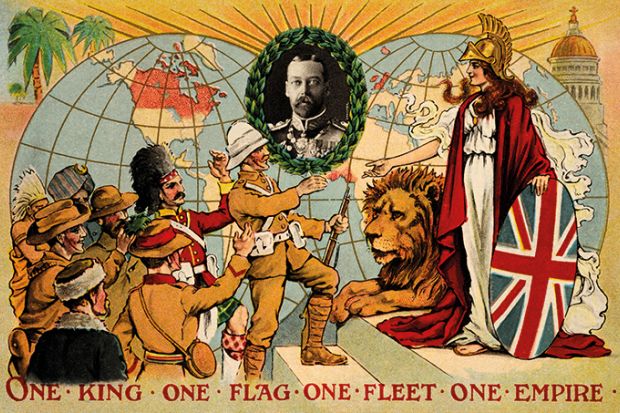
‘Prime Minister. There are clearly many areas where the UK is now going to struggle without the benefits of close partnership with it’s nearest neighbours. Australia for instance looks to the Pacific Rim countries for it’s trade and service industries. Historically the old Commonwealth loyalties went out of the window when the UK joined the EEC. That was a strategic decision made then and we cannot call upon ‘loyalty to the Empire or Commonwealth any longer’. The UK like Spain and Japan and many other European countries have moved on from the values of Empire for realistic, modern ethical reasons. Empire for the UK was an episode of shame. If we now claim to value sovereignty, we have to show respect for the sovereignty of other countries. Take Scotland, Ireland and Wales as an example. If we follow your argument to ‘take back control’, is this not a green flag for the break up of the United Kingdom?’

‘Bbbbblimey. How old are you?’

‘Please answer my question.’

‘Well of course not, we are a Unionist party and we want the United Kingdom to stay firmly together as one great nation. We shall do this by not allowing the Scottish people to have a referendum on their future. That’s the Scots out of the way. What’s the other place? Ah! Wales, well, we still have lots of castles in Wales don’t we, hah, hah! Joke! Just kidding! Wales voted to remain in the United Kingdom, I mean in the European Union so yes, we might expect trouble there but nothing I cannot overrule. And then there is the thorny question of Northern Ireland and the Good Friday Agreement that those Yanky Doodles seem to take a high moral stand about. Well, I think my brilliant idea of an underwater border making Northern Ireland AS IF it was part of the EU should not be taken as an indication it should join it’s friends, family, partners and Unionists IN Europe. Union of an island is not a good idea…when it’s Ireland you are talking about, I mean…not us.’

As if he was wondering what he had just said, the PM pauses, then restarts as if inspired,

‘…and unless you are talking about uniting a continent…whereas union of our island of Britain is because our passports are now blue and we intend to remain blue and British…with Northern Ireland that is, unless they vote otherwise…’

The Prime Minister turns to Ms. Smith and hisses in her ear not very discretely…’vargh, it’s so unfair these children asking difficult questions. You told me it would be easy, I came unprepared. Eton is not all it’s cracked up to be you know, just because I sound posh doesn’t mean I know what I am talking about. It’s not like State schools where there is a common aim of high academic standards and creating descent human beings. No, I mean I was bbbbullied you know and that Latin teacher… I mean horrible things went on…’

He is interupted by a boy bouncing eagerly on his seat and waving his arm in the air.

‘Miss, miss, miss can I ask a question about border control and how countries only control their borders in one direction and how Eire may make their UK border harder, undermining the Good Friday Agreement?’

‘No, Simon I am afraid we would love to ask that question but we are out of time and the Prime Minister is a busy man.’

‘Thank you children for this morning. Just remember that channel tunnel links us with the whole of Europe and beyond, as does Dover, so we are not going to forget our friends over there.’

‘And the channel tunnel links the whole of Europe and beyond with four small countries, who cannot agree…’ piped in Simon.

The PM stood up uncomfortably from his rather small chair and turned eagerly to Ms. Smith as she gestured him to step out of the room first.

‘What’s for lunch then Ms. Smith? Fish? Thank heavens we didn’t get any questions about fish eh! (laughs) Especially since UK cod comes from Greenland and Norway. I bet they would have known that, and that herring and lobster and scallops that we fish, are mostly sold to Europe. My they are well informed your children, at least we got education right. Is it this way? I shall just follow my nose. Bah!

Cosmic Chickens and Cosmic Eggs

Which came first, God or the Universe? This is a question for which philosopher scientists in the West, have no answer.

Steven Hawking in ‘The Brief History of Time’ put the problem like this;

So long as the Universe had a beginning, we could suppose it had a creator. But if the universe is really completely self contained, having no boundary or edge, it would have neither beginning nor end: it would simply be. What place then, for a creator?

The so called ‘Big Bang’ theory is seriously under review by scientists. They have no proven model on who started the Big Bang, and who started the starter. Steven Hawking is quite rightly asking how a universe without limits could have been created.

The problem, it seems to me is one of thought patterns and in particular logic anomalies. Such an anomaly is simply the notion of infinity. Even mathematics cannot contain the concept. It just describes numbers that keep getting closer to zero but never quite being small enough to be zero; clearly nonsense.

It is easy to demonstrate infinity in a three dimensional shape as a ball (or for space travel, a torus). The infinity experienced, say as a sailor going around the world, is indeed without boundary…but only for the sailor. In an infinite universe there are an infinite number of balls because not everyone is a sailor.

It is interesting that Steven Hawking chooses to describe the Creator with a small ‘c’. It subtly gives away what he thinks the answer is. As a scientist he cannot sign up to the improbable and even less so the impossible. He doubts there is a God.

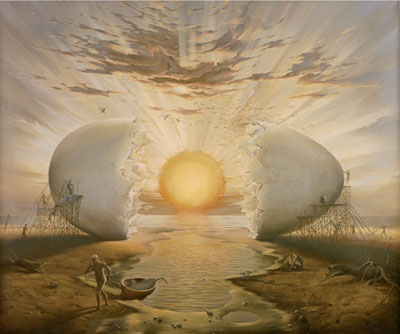
But in my humble opinion, what we are discussing here is our own perception created by the phantoms that logic sometimes produces. The most famous example of this is the old question; which came first, the chicken or the egg?

Just as the circumnavigating sailor fails to introduce ‘space’ into his world view, so observers of chickens are limited by the time it takes to make a chicken. If we accept Darwinian ‘natural selection’ as the creeping process of improving the DNA of living beings, we can understand living things a little better.

We accept that chickens were one time flying birds and before that dinosaurs. Dinosaurs also reproduced by laying eggs, so at some point in the DNA mutation, the bird family split from dinosaurs and became egg laying birds. We must therefore change our question to; ‘which came first, the dinosaur or the egg?’

Are we now approaching the point of mutation? Possibly, but like the differential equation, dinosaurs became dinosaurs infinitely slowly.

If you are still following, let me introduce a counter intuitive observation on how nature works. They say that in the plant kingdom, the first plants had no flowers, just leaves and plenty of them, presumably for dinosaurs to eat. Then one extraordinary day something made a flower appear on a plant – just like that! Evolution sometimes takes giant leaps. Instead of the minute steps in evolutionary change, nature takes a giant risk and does something completely new. Evidence of this willingness to take a completely new track are the rare and often unique animals found on islands like the Galapagos Islands, Madagascar and Australia.

With this idea in mind, evolution does not have to be by micro steps, although most of the time is clearly is. One day, there are no plants without reproduction by the production of spores, then there is a whole new system of stamens and pollen and receptors.

If we can accept that at one time dinosaurs or their predecessors or their predecessors, went from non-egg / sperm reproduction to the full Monty, then we can see that the baffling question is using false logic.

There never was a first egg or first dinosaur. There does not have to be, as the process leading to this mode of reproduction is a combination of imperceptibly small most of the time, plus one or more inspired leaps.

This whole question is a useful metaphor for the more philosophical question about who created the Creator?

In my view, when modern scientists propose the theory that the universe is infinite in space and time, then the question of how it started is a logic fallacy. At the same time the question of who created the big bang is also irrelevant, as no one did.

This is where I express a view, in favour of spelling Creator with a capital. In my view, the model of an infinite space time universe is correct. There never was ‘nothing’ in the same way as there never was an egg before the chicken. It is impossible for a universe or even a chicken to appear without a cause. As Shakespeare says in the character of King Lear; ‘Nothing comes from nothing, speak again’.

So here I am expounding the cause for the Creator who is contained within, rather than without the Universe. Such a Creator can be as large as the Universe and as old as the Universe. Such a creator can make things within the Universe without contradiction, because it is simple for an infinite creative intelligence to exist in an infinite universe or even multiple universes!

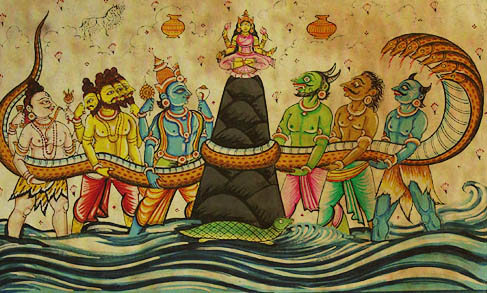
Ancient Hindu scriptures describe the universe as an Ocean which is being churned by a giant snake being stretched by two opposing teams in a tug of war. One team are devils and the other team, humans. The movement of the snake in one direction is the expansion of the universe and visa versa. Scientists know the observable universe is expanding and accelerating in it’s expansion, so no contradiction there.

At some point the motion of the churn will stop and change direction. Then the universe will shrink, but never down to nothing. The notion of ‘singularity’ proposed by the Big Bang theorists, stretches or rather shrinks one’s logical understanding to absurdity.

It is impossible for the universe to shrink into an infinitely small space. What does it even matter how small or how large the universe gets? The question is similar to the chicken and egg question because it is playing with words, not realities.

Just because the question can be asked, does not mean there is an answer. This is the essence of the understanding koans give in Zen Buddhism.

The Old Testament has an interesting take on ‘how the world began’. All human cultures ask this question and come up with various ideas. The Old Testament however is uncannily parallel to the modern scientific view of the stages of the evolution of the ‘world’ or universe. Once you realise that ‘day’ in old Testament terms means an infinitely long era, you can examine the stages more thoroughly. I shall not go into these here and leave that journey to the reader. However if we start with the universe being no more than an infinitely large cosmic cloud – we have travelled long before dinosaurs and eggs.

Intelligent energy in the form of light was introduced into the void;

1:2 And the earth was without form, and void; and darkness was upon the face of the deep. And the Spirit of God moved upon the face of the waters.

Place in every particle of this cloud a Divine intelligence, and you get the idea of how ‘stuff’ started.

1:6 And God said, Let there be a firmament in the midst of the waters, and let it divide the waters from the waters.

Interesting to note that light was introduced (a transverse wave form) and then sound (a compression wave form).

The waves started to ‘sift’ the cloud and ‘islands’ of matter appeared amongst the ‘waters’ or what I am calling ‘the cloud’.

The intelligence is very much part off the creation process, the spirit of God moved upon the face of the waters, is not a separate intelligence operating from afar.

Such a belief in the ‘separateness’ of God is a problem for many people today.

The old Renaissance idea of ‘God on high’ floating around in the sky has permeated this ‘otherness’ into modern human assumptions.

There is no chicken that makes eggs, like cars coming out of a factory, when it comes to trying to understand the Universe. Our thinking has to be so precise that it includes the biases within the observer’s observations. Scientist have also come to the understanding that we ‘change what we observe’ just by being. What is extraordinary and not generally realised, but this capacity, is exactly the same capacity of a Creator. But then I am a believer in a Creator contained in every essence of the creation the hearts of each one of us. Call me radical.

Carrying the Sky

Question: how many stars can you see in the daytime?

Answer: One

That star is, of course, our sun and yet sometimes we overlook it’s splendour and magnificence. It becomes one of those many blessings that we take for granted when we consider ourselves poor.

The thief left it behind

The moon at the window

Basho

This poem was written by a mendicant monk in Japan after a thief took his only possession from his cave – his begging bowl.

Both the sun and moon represent powerful forces in our lives. They dominate our lives and loves in the most subtle of ways.

If you live in a part of the world where the appearance of the sun is unusual, then a ‘nice sunny day’ is one for being outside, perhaps even ‘sunbathing’. Deep in our beings we have a natural dependency and love of the healing rays of the sun that we wish only to be in it’s presence.

So strong was this connection in ancient times, that the Sun was regarded as a god by many cultures. The ancient Egyptians named him ‘Ra’. In their paintings and hieroglyphs, Ra is depicted spreading rays down to human figures, usually the Pharaoh. At the end of each ray is a hand sometimes holding an ‘Ankh’ or symbol of life.

One pharaoh called Akhenaten, ordered that the old Egyptians gods should no longer be worshipped expect for ‘Aten’. He referred to himself as the ‘son of God’ and is depicted with his wife, Nefertiti and children as a ‘holy family’, a theme later echoed by Christianity. Akhenaten even moved the capital city called Akhentaten. The temples had no roofs to allow in Aten’s rays.

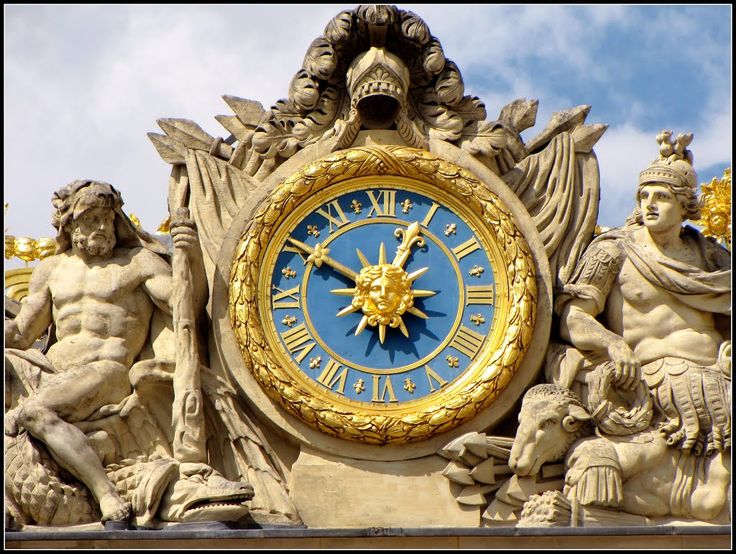
He was not the last to conceive of a ‘sun city’. Louis 14th bathed in the name of ‘The Sun King’ and adopted the sun as a symbol of his reign. He moved his royal court and government to the Palace of Versailles in 1682, from where his presence shone for all the gaze and wonder, at least until the solar eclipse which was the French Revolution.

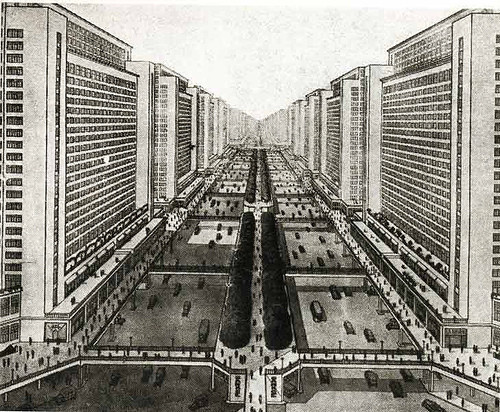
The tradition continued into modern times when the French-Swiss architect, Le Corbusier designing a ‘radiant city’ or ‘Ville Radieuse’.

He too was had Utopian ideals but this time it was the common man who would bath in the all powerful rays of the sun. High rise buildings would be aligned in straight lines and wide spaces to allow light to spill into living spaces through large windows. All rooms were designed according to the proportions of the human body, as did the Ancient Egyptians, evidenced in the works of the mystic and scholar, Schwaller de Lubiz.

My point is that the Sun God has shone on mankind for thousands of years and it should not be hidden in ‘plain sight’.

If mankind needed a reminder, then the moon makes a perfect counter balance to the sun’s majesty. It has no light of it’s own yet can reflect with great brilliance in the night sky. The moon has an enduring power over humankind as a symbol of our ability to ‘reflect’ on ideas. This enables us to absorb and process ‘light’ as what we call ‘inspiration’ and underpins most of human development.

At some point in time, after the belief of Royalty being the sun God’s representative on earth, modern humans accept the reality that they, ordinary people, can do this as well.

Not only have we internalised the moon, but so may we swallow the sun.

‘The sun is in my heart

and I am ready for love,’

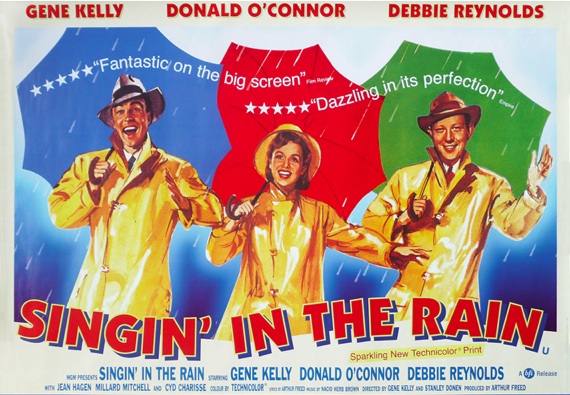
So sang Gene Kelly in the famous film, ‘Singing in the Rain’.

The place of abode for the sun is traditionally in the heart. The Indian Hindu mystics place the sun just below the heart in the ‘solar plexus’ chakra and it’s proximity is significant. The essence of ‘life’ is contained in the chambers of the heart muscle. It’s protein molecules are designed never to stop working – like the nuclear fission process in the sun; at least for the length of life of the human body. If a heart ever stops it can be powered back to life with a large charge of electricity from a defribilator.

Go sweep out the chamber of your heart.
Make it ready to be the dwelling place of the Beloved.
When you depart out,
He will enter it.
In you,
void of yourself,
will He display His beauties.

Mahmud Shabistari

I have quoted this beautiful verse before in my blogs as these lines, in my view, give humans all the information they need. They tell us that something is wrong in our hearts; they need to be swept out. Just as the skies fill with clouds and obscure the sacred sun the sacred moon, so too our hearts become obscured.

We get an idea of the size of the cleansing required in the psychological story of Hercules and his fifth labour;

The fifth labour (0f Hercules) was to clean the stables of King Augeas. This assignment was intended to be both humiliating and impossible, since these divine livestock were immortal, and had produced an enormous quantity of dung. The Augean stables (/ɔːˈdʒiːən/) had not been cleaned in over 30 years, and over 1,000 cattle lived there. However, Heracles succeeded by re-routing the rivers Alpheus and Peneus to wash out the filth.

Excerpt from Wikipedia

Note how the livestock are described as having ‘divine’ and ‘immortal’ qualities normally reserved for Kings. It is clear that even the cattle knee deep in their own dung, can aspire to being divine. Naturally, the cleaning takes place using the power nature, in this case water, a symbol of clarity, purity and power. Would it be too speculative to suggest they are the powerful arteries and veins of the human heart?

The Ancient Egyptians believed that Ra, the sun, was present in the heart of every human being; each human contained a small sun. They carried this divine power until death when the soul or Ra, departed the earthly body and returned to heaven and the afterlife.

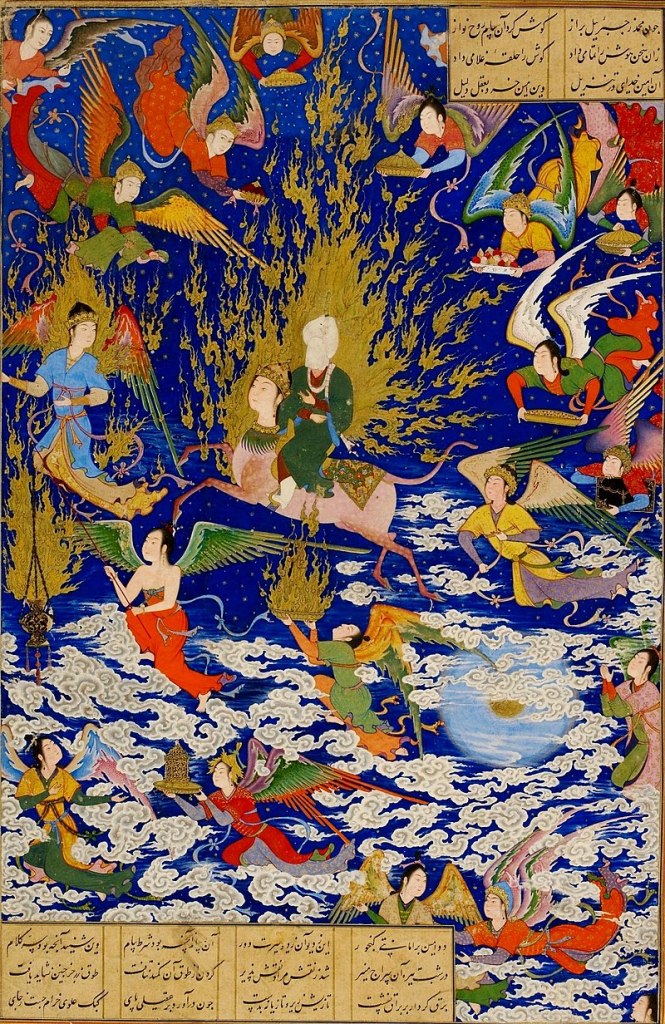
This tradition is remembered in the Christian tradition as the ‘resurrection’ and in Islam as the ‘Mi raj’ or ascent of the Prophet Mohammed (s.a.s.) to heaven.

Note in this early painting the human headed horse on which the prophet (s.a.s.) sits. It is called the Buraq which means in Arabic ‘lightning’ or ‘bright’ with thanks to Wikipedia.

So we may reasonably conclude that we have revered the sun and the moon as symbols of our interior lives. We sometime express these divine principles in our buildings, our cities and our environment.

The sky is the most unchangeable, immutable presence in our lives and deserves contemplation and absorption where it can spin and shine for ever, if we let it.

Bring me sunshine
In your smile
Bring me laughter
All the while
In this world where we live
There should be more happiness
So much joy you can give
To each brand new bright tomorrow

lyrics by Sylvia Dee for Morecombe and Wise’s theme song

Symbols – unlocking the key

When human beings learn the language of symbolism, a great veil will fall from their eyes

Manly P. Hall

At the end of October each year, there is a flurry of excitement. The night of the 31st October is when the veil between the apparent physical world and the spirit world, opens wide. Across much of the western world the people are encouraged to make light of it. Children dress in demonic costumes and roam the streets knocking on stranger’s doors. This one night is when the ‘stranger danger’ thought bomb does not explode in parent’s minds. Local neighbourhood spirits offer treats to entice and draw children in. It’s viewed as all ‘quite normal’, by people who see the world through the great veil to which Hall refers.

‘Good Christian families’ ( or at least those millions in the United States of America who label themselves so ), engage in this most Pagan of all festivals as if they were celebrating a night with Mickey Mouse.

Few people pose the question, ‘what if All Hallows Eve is real?’.

I use Halloween as an example of the state of consciousness of our current civilisation in the West. Whilst it is true that many Hindus and Tibetan Buddhists for instance, have a powerful understanding of symbology, in the West ancient symbols are ‘not real’ and are treated at best as fantasy and at worst, entertainment.

In the present day, many people have retreated into a safety zone of ‘agnosticism’. They just do not believe in gnosis or ‘union with God’. The gods they trust are thier senses. There is no question when demon possessed magicians achieve the impossible on their television screens. People stare in disbelief as if, for the first time, they cannot trust their own eyes. Scientific reasoning has a lot of undoing to do, for it denies us thoughts beyond the information received from the senses. Western education has worked hard to achieve this.

In an hypnotic ‘Dance of Shiva‘ the technologies of information have built a wall between the soul and senses. To be ‘sensible’ in the English language means to be straight cut – down to earth, whilst also meaning, able to use the senses. So strong is this blockage, that thoughts of the collective soul remain a distant social memory. It is not that the memory is forgotten, although some politcal regimes desire that, it is that our perception is deceived so that reality becomes merely a fantasy and explained away as ‘just a bit of fun’.

We are educated to believe that every effect has a cause; to be rational. From childhood, westerners have been taught that coincidences happen for no reason, ghosts are tricks of the imagination and objects do not move on their own; if you tread on a crack in the pavement the bear will not really eat you…it can all be explained. Sigmund Freud wrote an essay called ‘Determinism, Belief in Chance and Superstition’ in which it was claimed rational explanations cleared the unconscious mind of irrational interpretations of the world and life. According to June Singer in her book Boundaries of the Soul, this view has changed the course of education – a process which aims beningly to turn the light on in a darkened mind.

Freud’s belief that rational explanations clear the unconscious, in the words of June Singer, ‘translated into psychological term the voices of the Enlightenment that called for the elimination of superstitions, the mystical and the non-rational in the Western intellectual tradition.’ As a Jungian psycologist Singer is sceptical to this view and I would agree. Where will we be when we have explained away everything in conclusions that are just interpretations? If you are prepared to believe in the power of the unknown you will never ‘educate away’ the unconscious and the irrational. When symbols link us to these ‘Neverlands‘, our spine should tingle.

David and Goliath retold centuries later

A trip to an ancient Egyptian temple by a group of Europeans straight from breakfast on the Nile river cruise ship, enters world for the merely curious. The guide will lead them through heavy doors into a new world where extraordinary people, long ago once trod. More than that they left for us beautifully designed and constructed buildings encoded from floor to Heaven with cartouches and pictures in relief. The entry into the Holy of Hollies in Karnac’s great halls will make them pause merely to check their camera settings and what time the taxis pick them up for the boat.

Of course this small group should be given credit for making the effort to be there but how sad they make little effort to ask ‘what went on here and what is left of it now?’ Few will entertain the idea that Temples represent a journey for mortals into their body, soul and spirit.

picture credit: Flying Carpet Tours

There is a temple in a New York museum which was transport block by block from Egypt. A modern mystic, Lorna Burne who is familiar with angels from early childhood, reports that there is a spirit in this temple in great anguish. The spirit circles in endless frustration that the temple has been moved and needs to be returned. Tell archaeologists that and they are likely to do little more than laugh.

Just as Halloween is reduced to a social joke, so are most experiences of those who make sense of things without using their senses. It’s as if modern cultures need a way of holding off the forces which they distrust, like an ancient DNA memory of a fear of spiders, rats and snakes. It is as if we have repressed our fears into two rationalisations labelled good and bad, then explore one but not the other.

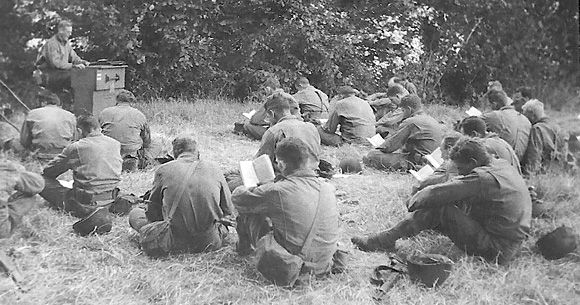
Many modern religionists express this dichotomy firmly with descriptions of the works of Satan on one hand and the love of Jesus on the other as if it was that simple. All mystics get to know Satan very well so as to overcome those elemental forces. Even when countries are at war, such as during the First World War, each hold their field services imploring favour to the same God! No contradiction is acknowledge since ‘the other side are Devils’, not us. Then both sides engage in mass slaughter, explained in their own minds as being on behalf of God. The killing is certainly not the work of the Devil. This is ignorance at it’s most extreme and most harmful.

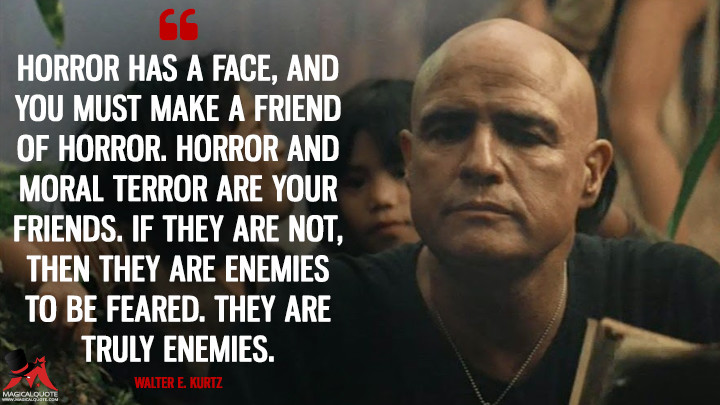
Soldiers returning from war find it incredibly difficult to face ‘civilian life’ after this madness. Sometimes their families and that world have become so alien to them that many choose never to return, like the character of Colonel Kurtz in Heart of Darkness by Joseph Conrad. Soldiers have their eyes opened by Mars, the God of War and enter a reality that has been skinned of fantasy. It is truely horrific, but is more real than anything ever experienced.

I firmly believe that by getting to grips with the ancient mythical descriptions of ‘mind’ and the human condition through the powerful symbols of the past and present, the possibilit open now for western culture to embrace our personal and collective unconscious.

A series of books by the author Dan Brown bears testament to this popular mood to understand symbols and the hidden worlds to which they allude. Albeit he shrouds his messages as ‘entertainment’, he perhaps knows or hopes that many an ‘agnostic’ might be moved by the power of the non-rational. In an age when even the scientists are building their theories of the contradictory laws of quantum physics, we should at least be open to the wealth of knowledge contained in the improbable.

Symbols are a massively important language for the mind. In a subtle way, the power of poetry is the same as symbols. Poets hint sideways at realities with few words, just as symbols point us to new understandings with no words.

Carl G. Jung was perhaps the most famous psychologist who opened up symbols as a reputable field of study and in particular dream interpretation. He used the study of his own dreams as well as patients, to gain insight into the personal and the collective psyche, the latter which he termed the ‘collective unconscious’.

Symbols dig deep into this unconsciousness, of which modern man was once most fearful but today, in my view, needs to be less so. Symbols not so much ‘explain’ as knock down row after row of balanced dominoes in an unexpected way to produce unintended effects that you might call ‘realisations’.

The plots of the Dan Brown novels are just such a cascade of ‘clue solving’. Through the broad knowledge of symbols by the character Professor Robert Langdon, mysteries are revealed in rapid twists and turns of the plot.

If psychosis is a surfacing of unconscious fears, then symbols enable that to happen as well. Perhaps the fear of that is the process most inhibiting understanding today. Ancient wisdom is wrapped up and scurried away by people of religion, so that it’s power is denied the possession of the people. We are told how damaging such knowledge is and how it is ‘the work of the Devil, aliens and Satanic cults, not for popular consumption and well past it’s sell-by date’.

The Vatican Secret Archives are themselves a symbol of this sublimation of sacred wisdom deemed never to surface into the minds of the common people. Beyond the political secrets and records of shameful past and present actions, you would like to think that mankind will benefit more, that be caused harm, by revealing the archive’s contents to the public.

Unfortunately, the battle between the Angels and the Demons takes place right before all of our eyes, if we looked. Even such things scientifically real as the present Covid virus is demonic in character. Viruses are hidden and not understood but powerful and with the ability to kill innocent humans. In this description we can see the description of the malign demi-god of ancient myth, the dragon that inhabits the cave and eats villagers, Count Dracula who enters a country and seeks it’s vulnerable female victims blood, Sleeping Beauty who falls under the spell of the witch and is put in a coma like a hospital patient.

The V1 and V2 rockets of Nazi Germany were powerful killing machines and inspired by the occult secrets of the ancients, as much as by likes of team of rocket scientists.

All of these encounters with demons and angels are happening and as real today, in my view, as they were in the past. The ancient Greeks saw the sun and the moon just as we do. The only difference is that we see them as a nuclear explosion and an empty rock rather than giving them respect for the way they command our every waking moment. The joy of life is dependent entirely on the gift of the sun’s rays depicted by the ancient Egyptians as a straight line from the sun, with an Ankh symbol at the end of each life giving ray of light.

Such symbols may never totally be understood by modern man because historical cycles move in spirals, not circles, but we do have symbols of our own that echo insignts from our ancestors. Understanding our own selves and our environment is key to the sustainability of our technological societies. Modern life is an Odyssey into a world of Sirens and Whirlpools, just as real as it ever was for Odysseus. Hold tight!

Centre

The Beautiful Centre

The Centre is a special place that contains as many mysteries as explanations…but what kind of centers do I mean? Well, the center is in our body-mind unity and extends between the centre of the Earth and infinity. Let us start with ourselves.

We are born with a placenta connected from the centre of our bodies, to our mother. This physical centre remains true for the rest of our lives, yet our mind also has a centre as does our spiritual being. The centre of our consciousness is not necessarily in our heads. Acrobats, gymnasts, martial artists will all give you an explanation derived from their experience. To turn and tumble under complete control, our consciousness needs to be somewhere other than our heads. For the Karate adapt, the Hara is again the navel or the sacral chakra from where the body finds it’s centre. Control of the Hara fixes the practitioner to a single axis or centre of gravity and from this position a balanced and grounded attack can be made, or a defense.

The Dervish in the Sufi tradition spins on the left rotating foot whilst pushing with the other. The experience is to be removed from the visible world or ‘dunya’ and moved vertically on the axis of turning into another realm. The analogy is that the dervishes become like planets as they spin around the Sun, who is the guide, the Sheikh.

Psychologically, the process of becoming adult is similar. As children we tend to run out of control, wobble and fall, like spinning plates left too long. We need adults to check what we do when we edge close to the metaphorical cliff. We are not centred. In maturity we find our balance and with balance a centre. Unlike a pair of scales, the centre is in three or more dimensions, but the analogy works.

If we become too absorbed in a particular activity, such as work or family, or leisure, we neglect other parts of our lives. We indeed neglect our full potential as human beings because the art of being balanced is more important than excelling in one particular area of life. This is contrary to what modern societies tend to expect. We are encouraged to specialise and repeat patterns until we can execute a skill perfectly. This is the process taught to factory workers, concert pianists, teachers, parents or any other career or social position. Time spent on these activities usually is at the cost of other responsibilities. So it is that modern managers will consider the work and life ‘balance’ of employees. It is recognised that becoming a grand master at chess is all very well but creates a lesser human if other simple tasks are not understood, such as working the washing machine or understanding another human’s emotions.

picture credit: KCP International

One technique for becoming ‘centered’ is found in both Eastern and Western spiritual practice. The former emphasises the importance of concentration when awake and alert and not becoming distracted by day dreams. Concentration is sometimes taught by training the body before the mind. Students of Zen Buddhism will sit in Za Zen for hours whilst supervised by a master. No movement or involvement in a mental or physical distraction is tolerated. If an earth quake occurred the class should remain motionless. The point is that all that occurs in the world is an illusion that must not be taken seriously, even when catastrophe is imminent. Some deaths cannot be avoided by running, therefore sitting is taking ones noble and inner strength with one into Paradise.

In the West, monks and nuns will sit in contemplation, having already put themselves outside of the world. Although less emphasis is placed on ‘illusion’ the seeker is directed to concentrate on the Divine. The ‘God Head’ is and represents a fixed point, to which the seeker becomes attached in their whole being. By this process all attachment to the outer perceived world falls away as unimportant. The contemplative becomes centred by fixing consciousness to an unmoving presence.

This apparent ‘stillness’ is characteristic of the part of the mystery of the centre. The geographic poles on the spinning earth are not moving at one thousand miles per hour as is the case at the equator. They are the still place which encompasses all directions whilst being themselves directionless.

Throughout time and place humans have found it necessary to identify ‘centers’ outside their bodies.

As the word suggests, the ‘hearth’ in the home is both the centre of the ‘earth’ and the ‘heart’. It generally contains fire as a loyal servant to social well being and survival. It cooks food, warms water and the space around it, giving the householders good reason to gather around.

The village or town containing these homes, will also have a designated ‘centre’. It may deserve that title as a spiritual centre, an administrative centre, a social centre, a business centre, a defensive centre from invaders and other functions.

In ancient times the centre was marked with a significant natural feature such as the Dome of the Rock in Jerusalem. So sacred is this ‘centre’ that three major religions revere it ‘s significance as the place where God created the world and the first man ‘Adam’.

In even earlier times societies were sensitive not only to the ‘spirit of the place’ but to a ‘cosmological order’. The ancient Egyptians had a canon of harmonies which Plato referred to in Laws which kept Egyptian society consistently for thousands of years. John Michell refers to this order in his book ‘At the Centre of the World’ p165;

‘The occurrence at different times throughout the world of similarly organised twelve-tribe societies, focused upon a rock, a sanctuary and a sacred king, can only be due to the influence of a common prototype, which must be that traditional code of number and proportion which constitutes the best possible more rational and inclusive image of essential reality’.

In other words, the centre of the sovereign nation is determined geometrical according to harmonious proportions. Stonehenge in Southern England is a good example of a centre conceived as a circle with twelve divisions. It connects visually with the Universe by alignment with the sun and moon, stars and planets placing the observer / worshiper, firmly at the centre of all things.

The supreme example of a geographic centre is the pyramids on the Giza Plateau which occupy the exact centre of the landmasses of the continents at 30 degrees north.

The geometry of Divine symbolism is a large subject if little understood in the modern world. Towns and cities are conceived for rational reasons of economy and function. If there is a sacred centre to a town it is because it’s ancient forefather conceived it so. In the United States of America the city of Washington is such an example of the application of sacred principles and geometry in city planning, but such examples are rare in the land that built according to ‘the grid’.

In not caring to create sacred centers in our buildings, towns, cities and countries, we are not caring to be ‘centred’ in ourselves. For we are intimately connected with the spaces we occupy whether they are inside buildings, inside the spaces buildings create or within the landscape and cosmos.

As an architectural student in the 1970’s some of my tutors disliked my use of geometry, symmetry and proportion in my designs. Organic shapes were also ‘taboo’. I was told very strongly to design using only right angles and grid patterns, presumably because they had been taught that themselves. They respected only maximising the performance of materials, ignoring the third of Vitruvian principles of architecture which are durability, utility and beauty.

As citizens of the modern world we have learnt only function and forgotten, or care not, to make our buildings and public spaces beautiful.

The change that has to come is for us to enter the centers of ourselves. When we speak from our hearts our social fabric will evolve to transform those places that we hold precious. That is, in my view, the direction for the citizens of the 21st century, but first we must start within ourselves.

‘Go sweep out the chamber of your heart.
Make it ready to be the dwelling place of the Beloved.
When you depart out,
He will enter it.
In you,
void of yourself,
will He display His beauties.

Mahmud Shabistari 14th century Sufi poet

1+2=3

Science and philosophy are contrary subjects yet strangely complimentary; after all, they are both exploring the same thing…the Universe.

If philosophers are generalists then scientists study detail. Building up on detail, philosophers gain a knowledge and understanding of the way ‘things work’ based on ‘all and everything’. Inspired by generality, scientist drill down into new unexplored places.

But it does not have to be so polarised as that. We can be more ‘nuanced’ about their relationship. History shows us that science sometimes makes great leaps when scientists turn philosophers. Einstein’s General and Special theories of Relativity are an example of that. Innovators in the scientific community are often those whose interests and hobbies include the arts. Look out for the professor with the vivid bow tie and red shoes. He or she is the one most likely to be able to peep over the fence into the garden containing all things ‘artistic’. They may even have the key to the connecting gate.

Some of the greatest minds who ever lived are celebrated as both artists and scientist. Perhaps the best known example is Leonardo de Vinci and his stable mates in the Renaissance. To look after a forest you sometimes have to look down on it from the mountain top, whilst other times tending the specific needs of each tree, branch and twig.

Such a way of working is the way of a wise person. They will have seen a lot of life and understand that trees are trees, from whatever distance you view them. This ‘third place’ or trintessence, is the sacred child of both art and science. It is unique and special and often has no name and does not enter thought for that reason.

But it is vital to take notice of the fact that frequently there is a magic third element springing from the fusion of two complimentary opposites.

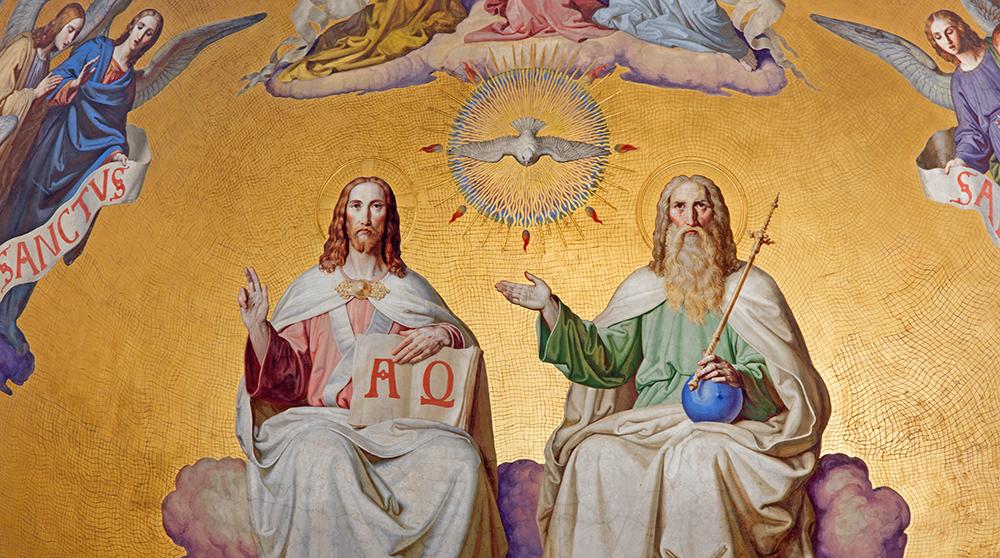
One only needs to refer to Christian theology and the coming together of the concept of the Trinity. It obeys the phenomenon that two ‘opposite’ forces conflate to produce a third mysterious new entity.

I remember my rather sanctimonious aunt leaning over from the pew behind me when I was a boy and asking what parts made up the Trinity. I replied parrot fashion; ‘Father, Son and Holy Ghost’.

But then I was the boy who drew a parrot on the chalk board in the class room with a speech bubble containing religious words. I have always had a problem with those who repeat words without understanding. Now in old age I can see that how the Trinity is created in not just Christianity but in the many mystical traditions that underpin religions.

The Father and Son are two huge archetypes from which all of creation emanates. The son sits on the right hand of God and the two make a very special SWAT (special weapons and techniques) team. Because God cannot enter the gross material world physically, he sends his ‘go to’ helper. Whatever incarnation the son may appear in (Apollo, Hermes, Ra and so on) he is always the same perfected entity who returns to earth on a mercy mission.

But the ‘double act’ needs something else, some other essence that ‘makes things move’. Examine the equation e=mc2. The energy (e) could be understood as the infinitely expansive Creator of all things including and especially ‘thought’. The material element (m) is the ‘Redeemer’ who comes to a physical Earth on a mission. The spectacular mystery is that both energy and matter obey a third rule and constant – c, or the ‘Holy Spirit’.

The Holy Spirit is represented as a dove. She is an untransmutable bird who visits all of those in need, as a helper and producer. Without the aid of the holy spirit, stuff would just not change and move on. Noah would still be in a flood.

She is the flux element that stabilises and goes beyond the relationship between matter and energy. It can do this because it is their product. How apt that the United Nations chose to have a dove on their flag. They brought together the energy and matter of warring nations in peace.

Pre-Christian theological and philosophical ideas encapsulated the same Trinity of archetypes, only using different names.

Plato realised that matter and energy combine in a third essence which was named the ‘aether’ or ‘ether’. This mysterious third element persisted throughout the centuries. It was embraced by the Alchemists as being the ultimate symbol and tool of perfection, the philosopher’s stone. Without this ancient concept of an invisible third element that pervades all things – even outer space – then early scientists like Sir Isaac Newton (an avid Alchemist) may never have germinated the seeds of modern scientific thought.

Today scientist’s view the ether as belonging to and explaining the existence of ‘dark matter’ and ‘dark energy’. We are told that the former occupies 4% of the Universe we can perceive with our senses and instruments. The rest cannot be perceived or measured.

When philosopher’s understand that scientists are ‘in the soup’ over where the Universe is i.e. where dark energy lives, they can be excused for not offering an explanation. All that is dark as ‘e’ and ‘m’ exists in the area of their product as a constant. It is neither matter nor energy but a mathematical / geometrical immutable mystery.

To continue the list of ancient ‘trinities’, Osiris and Isis inhabited the Temples of Ancient Egypt. In their story that have a son who is Horus – a divine child sometimes depicted on the knee of his nursing mother as a baby. The infant child is a accurate depiction of the product of two energies. They produce an asexual, passive being without transgression, action or thought. It is the constant that held together successive dynasties in the land of Egypt for thousands of years. Horus the Divine child – inspired the constructions of matter such as the pyramids in such a way and as such supreme manifestations of thought and understanding, that their presence in the material world has an ‘eternity’ about them. That eternity is most purely expressed in mathematics, which is why the Pyramid of Cheops in Gaza is built with such precision. It is truly aligned to the points of the compass, particular stars including the sun, underground tellurgic currents and stands in the physical centre of the land masses of the globe. This is as close to being ‘constant’ as is ever likely to be achieved on this earth.

Perhaps the greatest two archetypes ever to unite, with their product being a ‘trinity’ is the Hermetic law of male and female. The Hermetics believe that not only does this duality exist on Earth but in every parallel dimension. We see nature using these subtly similar yet different archetypes to the full, not merely for sexual reproduction but at emotional, intellectual, and behavioural levels of existence. All animals such as mammals depend on their parents in their conception, incubation and infancy but eventually they ‘fly the nest’ and become a free independent entity. They are the same as their genetic parents and yet – as Charles Darwin observed – they are empowered by an improvement on their parents.

We are therefore each an expression of the ‘third essence’ in our own uniqueness as a being. Fired by the holy constant ‘c’, we each of us contain the possibility to transcend our material (body) and energetic (spirit) limitations. As infinite souls (c) we will never experience death and will move gently into perfection at the right hand of God. Human bodies are not designed for longevity but give just enough time for experience and reflection on what does not change in life; what is constant. That is why Zen masters feel the ecstasy of a falling leaf. In every Universe, leaves fall.

The tri-essence knows that it has a future greater than it’s individual parts, and for this reason has a good chance at realising perfection. This perfection is the great mysterious tunnel that souls follow into the constant realm of the ‘after life’.

It is a bourne from where most travellers do return, just to get one more bite of the forbidden fruit; one more chance to become greater than the sum of it’s parts.

0

00

000

0000

The Platonic Pyramid (above) is decimal. The top half of the pyramid is the Trinity. The lower part (7) is also sacred and another subject!

The Alchemical Trinity

soul (c)

body (m) spirit (e)