Lock Down

The following essay is an examination of how the theory of one area of social problem solving, is similar to and can inform another.

There are elements in common between those who look after our health and those who try to keep crime off the streets. These are the four strategic similarities;

Problems can be prevented

Problems can be analysed

Causes can be detected

Causes can be treated

Corona virus is not new. SARS and then MARS are two recent examples, but throughout history humans have been literally, plagued by them. Each time they come and go, there are lessons to learn. These will help preparation for the next.

This may involve warehousing hospital supplies for instance. The span of time between outbreaks will help to inform the ‘use by’ dates on perishable items. Typical examples would be testing kits, ventilators, hand sanitiser, personal protective equipment, software and even signage.

South Korea has performed particularly well in dealing with the current corona virus pandemic. It puts this down to four key strategies, which are the same as those above;

Prepare

Test

Trace

Isolate

Having the means to deal with the next outbreak at the very earliest opportunity is essential. Countries that have experienced denial of a problem by it’s leaders, or have lacked equipment or funding (e.g.. for research ) are going to lose more citizens than those countries which have prepared.

The old adage ‘a stitch in time saves nine (stitches)‘ is wisdom from the past that we ignore at our peril.

Any police chief trying to reduce crime will be familiar with the principles of crime prevention. Simple and best value strategies for dealing with say, burglary can save the tax payer vast quantities of money needed to put one burglar behind prison bars. Ten pounds spent on preventing burglaries, might save a one hundred thousand pound court case.

Over the last few decades police have moved from the universal production of posters such as the ‘lock it or lose it!’ campaign and ‘watch out there is a thief about!’ to targeted prevention and detection.

It is clear that sending a crime prevention message that may or may not be highly relevant to a community is wasteful. It also raises an unwarranted anxiety of being a victim of crime within low risk areas of the country.

Instead police started analysing their computers and finding patterns. They were interested in where, when and how a particular crime was occurring – long before they asked the question ‘who was doing it’. This built up intelligence which is invaluable to inform the prevention of crime. For instance, if thieves were breaking into cars in town centre car parks, the analysts identified which car parks were most targeted, which parking spaces were being targeted, what time of day and day of the week etc. This might identify an area in a car park where they was a good escape route and poor lighting, no CCTV coverage and little footfall. All of these could be rectified by car park managers on advice from the police. The public would pay nothing and the car park manager would see a rise in the use of the car park and revenue.

The South Koreans were also good at identifying where corona virus victims were. Instead of fighting what Donald Trump and Boris Johnson called ‘the invisible enemy’, the Koreans analysed information from personal smart phone locations cross referenced to recent entry and exit of foreign countries. With this information they were able to target their testing and identifying ‘hot spots’ where transmission of the virus was likely to happen and or happening. They even used police detectives to trace individuals and their movements.

Police call this ‘detection’. It is the natural follow on from the initial process of finding out as much as possible because the problem is hidden, not invisible.

By targeting resources in this way there are two benefits. The first is that it is cheaper. This may sound callous but in fact cost can be a huge inhibitor to action.

The second advantage of targeting action, is that businesses can carry on, if only in a limited way. One tactic for instance would be for elderly high risk victims to be placed in isolation while low risk younger people to maintain the economy and public services.

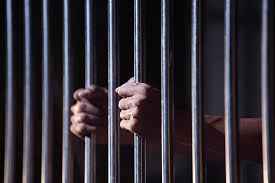
Prevention and Detection are really two parts of the same process of ‘reduction’ whether you are considering health or crime. They exist on a spectrum between the two extremes. At each end of the spectrum, detection contains some prevention and prevention contains some detection. As an example, the final result of the criminal justice process is to put an offender in prison. One of the possible outcomes of this is hoped to be preventing that individual ever doing the same thing again. They usually do, but sometimes it works.

picture credit: detroitjournalism.cog

lock down detroitjournalism

It has been suggested that the present pandemic has been dealt with in a manner in which the cure is worse than the disease. The ‘lock down’ approach to entire populations has ramifications that will lead to huge public debt and austerity.

The question has to be asked, ‘is lock down the only way to deal with the pandemic? The answer is no, because the South Koreans didn’t have to go that far.

Their strategy meant that they did not need to lock down their populations, eliminating in part at least, mental and physical health problems resulting from isolation and economic austerity in the future. Although it was clearly not ‘business as usual’ it was a working compromise between the needs of people to maintain health and an income and the need to eradicate the virus as quickly and with the least cost of money and life.

By targeting their treatments to areas of the population in most need, they have provided a model that the rest of the world would do well to study and copy. Lessons learned should already be being digested and fed into the strategy for Covid 20, which we can expect is already hanging in a cave somewhere in the world.

When the Covid 19 strain was first detected in China the world watched. As a top down organised country China had more tools at it’s disposal than democracy’s, but the principles are the same. What the rest of the world might have also taken seriously is asking the question, ‘are we next?’ Governments might have looked to the World Health Organisation for an answer. For many weeks the WHO did not declare a pandemic was happening. What world leaders needed to know was when it would happen i.e. be proactive not reactive.

In the United Kingdom the medical journal The Lancet included an article on how the outbreak in China will become a pandemic. This was in January 2020. In February the country had a chance to prepare. It did not. At the end of March personal protective equipment, ventilators and testing kits are still being ‘rolled out’ – as the government puts it. New cases are doubling every three to four days. The government of course denies being slow in preparing for the pandemic and points to the fifty new hospitals they have built. But hospitals are for the treatment of victims, not preventing people becoming victims. The resources are sent to the results of a pandemic not preventing one.

The vital point here is ‘timing’. There are three possible outcomes from deciding when to take action.

The first is that measures are put in place too early. Ministers in the UK expressed concern that fatigue sets into the population if protective measures are introduced too early. They wanted to time maximum protective measures with maximum victims. There was an assumption that the patience of people to avoid their death or of loved ones, is limited. It could be argued that as more fatalities occur the more concentrated minds become.

The second possibility is that exactly the right moment is chosen. This is ideal but is best judged in retrospect, ‘wise after the event’.

The third possibility is that measures are put in place too late. In this case there will be the highest number of human deaths and the most expenditure of money.

Of these, the first two are proactive and in my view produce the best results.

Reacting to problems is to undertake stitching nine stitches instead of one.

Getting the warnings right, is where you might expect the World Health Organisation is the expert. Viruses are not new and statisticians and virologists can get together and draw up predictive curves. They should be good at this even if each country is different.

The tragedy is that politicians are self selected for their political ideals and personal appeal. They may not have the abilities to assess a situation and give precise direction at the appropriate time. They may not listen to their advisors and or may just use the advice to avert personal responsibility.

These principles of proactive and reactive management and decision making are as true for dealing with crime as for health. They are so universal that they can even be applied to playing a game of football, which is why clubs employ statisticians to analyse games in minute detail, as they progress and after.

There is nothing in life for which we are not equipped. The only real challenge is overcoming our own shortcomings.

The Good Life

There is a remarkable pair of photographs on the BBC website today. They show satellite images of eastern China, Hong Kong and Japan. The images are filtered to show the intensity of air pollution. The January 2020 image shows ‘business as usual’ and the principal cities and urban conurbations are highly coloured from yellow to high risk, red. The February 2020 image shows no coloured areas at all! The air is clean because production in the factories has stopped. Ironic that such a gift to the populations, of sunshine and clean air occurs when millions are in quarantine.

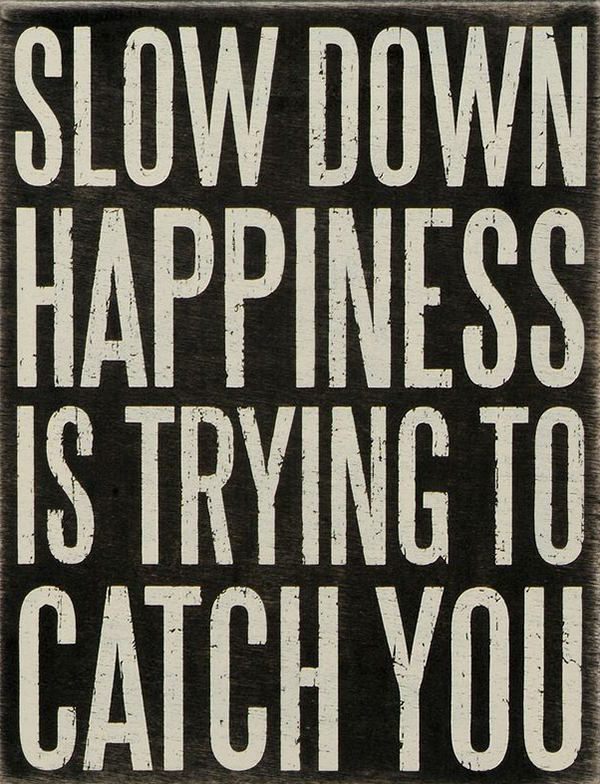
The message we can draw is not how contagious viruses are – we know that. No, the message so plain to see is ‘slow down and stop!’

slow-down poster

The industrial tenets of, ‘more and faster’ for profit and a promise of prosperity for all, are also familiar to us. Humans deserve a good life so the growth of benefits from industrialisation, cannot be denied. Over one hundred and fifty years ago people started to leave the land and live in cities. This process means that now about half the populations of most countries live in cities.

In response industrial production is speeding up, as robots and AI are literally taking over from humans. The only question is; at what point is ‘a good life’ reached?

A casual observer in a modern metropolis, might perceive a collective sadness in the faces of passers by – anxious to reach their individual destinations. If asked if their life is a ‘good life’ – I wonder how they would reply?

picture credit: WithPause.com

Snail credit With Pause

When I was a student in London in the mid-70’s, I took part in a ‘slow walk’. A collection of willing volunteers met at the north end of Hammersmith Bridge and lined up across the wide pavement. We set of in a bunch like marathon runners, only it took us three or four hours to reach the south side of the bridge – a distance of maybe three hundred metres.

Slow walking took discipline at first, but soon became strangely normal. My mind felt completely relaxed. I might as well have been in meditation – in fact, I was.

picture credit: Londr.com

hare and tortoise credit Londnr

That was part of my ‘good life’ when I had time to be fast or slow and chose the latter. There are in the present day, many experiences of ‘slow living’ available as an alternative to the human ‘race’. There is slow food, slow travel, slow cities, slow schools, slow books, slow living and slow money. See www.slowmovement.com and tell your friends!

In 2020 humanity is crossing the threshold where too much – too fast – too wrong – is damaging the planet and as a consequence, ourselves. Whether it is air pollution, sea level rising, food shortages, water shortages – industrialisation is ‘biting back’ the hands that turn the handle.

Sloww-Slow-Living-Synonyms-Infographic

This latest virus Covid 19, is amongst other things, a firm message for humans to ‘slow down and stop!’ Perhaps those confined to a room for two weeks, will draw a positive from the experience. ‘Not doing’ can alter expectations significantly. If ones normal expectations are unrealistic then the distress that comes from failure to satisfy those expectations, will never be encountered. Success or shall we say, contentment, comes from watching a spider cross a floor or a raindrop slide down the window; experiences usually never observed and enjoyed.

We will inevitably all discover that less and slower is more!

Somewhere between the extremes of fast and slow, is where humans can find the ‘good life’ they seek. How close to ‘slow’ do you dare to go?

Space Wars

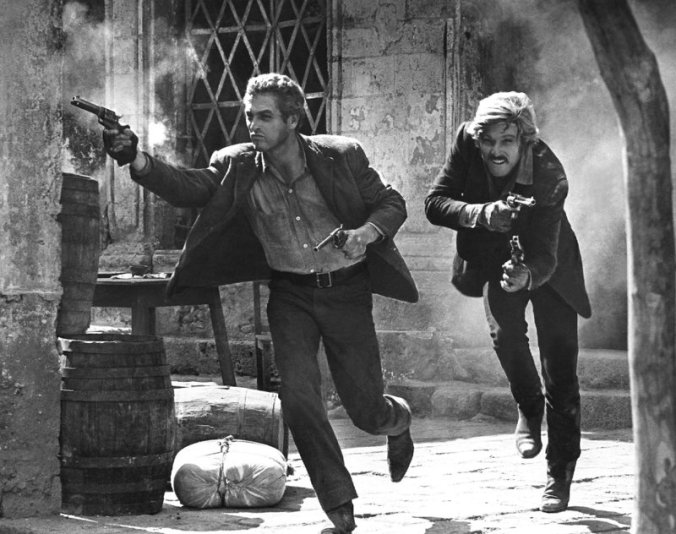
Butch Cassidy and the Sundance Kid is an enduring story of two bank robbers in the Wild West. In the film of the same name they are played by the good looking duo of Paul Newman and Robert Redford. They swagger through the film to a jolly accompaniment by Burt Bacharach (including Rain Drops Keep Falling on my Head) from one fruitful explosion to another. Inevitably the Federal authorities catch up with them and they manage to escape over the border into Mexico by the length of a horses tail. In Mexico they make a resolution never to rob a bank again, such has been the horror of their last experience. They realise they now have a clean slate to start their lives again. What happens next has always fascinated me. They start robbing banks in Mexico. A few bank robberies later, they die in a hail of Mexican army bullets.

butch_cassidy_and_the_sundance_kid1

The moral of this story in my view, explains a lot about the worst side of human nature. Remember that these are bad men even though they are played by a couple of smoothies. Humans find it very difficult to change their inner motivations, methods and objectives.

At present humans are plundering planet earth of her wealth. They have been doing it for a long time but now the scale and speed of the robbery is unprecedented. The villains have a plan;

‘Let’s start robbing again in space’.

China, Russia, the USA, Europe, even India have space programmes.

Why does India have a space programme when many of it’s rural villages don’t even have one flushing toilet and a sewer? The answer is complicated of course but one reason has to be the promise of new sources of raw materials; what in Klondike in the Wild West was nicknamed the ‘gold rush’. True to human greed for natural resources, these countries and others are not unaware of the promise of minerals ripe for harvesting from other planets and moons.

Without a World Government with an enforcement arm, it is hard to see how this rush into space and the allocation of unclaimed resources, will not turn into a laser gun fight.

On the 1st July 2019 the United States of America declared a new arm in it’s Defence Services; the Space Development Agency. Will the USA move itself into the role of World Government Peace Enforcement in space – like it has tried to enforce the non-proliferation of weapons of mass destruction on Earth? Will the USA being armed in space be accepted by those being told they cannot do the same? Bear in mind the present difference of opinions between the USA and North Korea and Iran.

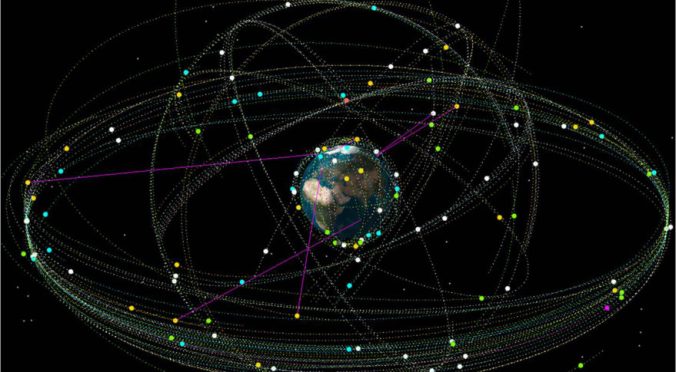
The USA may or has assumed a role of Sheriff or ‘protector’ of the valuable scientific, communications and defence satellites already in orbit around the earth. This role is enhanced by the prospect of the new 5G satellites being privately launched – over 2000 in number – to provide fast internet to rural communities around the globe. Who asked for 5G is a subject for another blog. In democracies, no one votes for what private enterprise decides needs doing for profit. Arms manufacturers usually lobby for war.

It just happens because science and technology get the smell of cordite and can’t stop themselves blowing a few banks, and a few more and a few more. Ethics committees don’t carry.

The hugely wealthy entrepreneurs, Elon Musk (BFR) and Jeff Bezos (Blue Origin) both have their own visions for space exploration and travel. Will they be taking pot shots at each other across the craters on the moon or work together?

The space exploration of the 1960’s was famously driven by bitter competition between the Soviet Union and the USA. The latter likes to think it won the race but in the end what came out of those missions was a desire to monitor the earth from space, not keep going to the moon. This mutual desire and pooling of resources and know-how, evolved into a co-operative project which is the International Space Station.

Not surprisingly today, Russian and China want to co-operate in space and ban space weapons and they both signed a treaty in 2008 on the Prevention of the Placement of Weapons in Outer Space.

On 21st October 2017, the first committee of the United Nations discussed the non-placement of weapons in space. 122 countries voted in favour of such a ban and five against, which included Georgia, Israel, the USA, Ukraine and France. 48 countries abstained, including the European Union.

The reasons for co-operation disarmament in space are obvious so let us consider reasons for having weapons in space.

There may be attempts by rogue states or state sponsored dissident groups, to interrupt or destroy or threaten to do this to civilian or military satellites.

positions of satellites at time of publishing were correct but may have moved now

satellites

The problem with this argument is that a rogue state, or state sponsored dissident group, is being lawful in it’s actions in one view and unlawful in another. Robin Hood was by some definitions, a terrorist. Black and white hats are for cowboy films. The hats in space wars are multi-coloured and nuanced.

For instance, a GPS satellite is used for civil purposes and military. So is the mobile phone network and satellites and direct satellite communications used in those areas where there is no mobile telephone network.

You can describe the action as good or bad depending on which facts you select to present. The criticism is that the ‘threat’ that the threat on which the military base their plans and actions, can be exaggerated for funding approval reasons and, or just plain politics. A government likely to declare war on false intelligence on earth is just as likely to do the same in space. Different place, same gunmen.

There is also a non-military threat; namely asteroids. These are objects that enter the earth’s solar system from outer space and may be on a collision course with earth. The possibility is that a weapon of some kind may be able to alter the course of the asteroid. Comparing the then with now, money would be better spent on protecting the earth from humans rather than asteroids in my view, that threat being more immediate.

The last Hollywood blockbuster myth is one that has appeared on cinema screens since movies were invented – alien invasion. I call this a myth since my belief is that any civilisation that has found and is watching us for malign reasons would have acted by now. Because they have not I conclude that they are benign and waiting for humans to become spiritually aware enough to stop wanting to destroy the planet and each other.

Little Blue Men (and perhaps some ladies)

kind aliens

This is Butch and Sundance story yet again. The question for governments and billionaire entrepreneurs in search resources and a life boat for planet earth is;

Should we spend our time and money on fighting each other in space, or on protecting the earth and building a sustainable future?

I know what my answer would be because I have seen the statistics about life on Mars and in my view, it’s a hell not worth visiting.

I hope and expect we will forget Mars as an objective in the next decade, as future space based telescopes spy out so called, exo-planets. Astronomers now believe it likely that most stars have a system of orbiting planets based on observations of light from those stars. The new generation of telescopes will find new exo-moons. With so many new places to visit that are in the ‘Goldilocks‘ range of environmental factors similar to earth, man in the future will be spoilt for choice for places to colonise.

Those who choose to live in such places will have one important choice above all others. Shall we take guns to these places? My advice,based on Butch and The Sundance, is don’t.