The Good Life

There is a remarkable pair of photographs on the BBC website today. They show satellite images of eastern China, Hong Kong and Japan. The images are filtered to show the intensity of air pollution. The January 2020 image shows ‘business as usual’ and the principal cities and urban conurbations are highly coloured from yellow to high risk, red. The February 2020 image shows no coloured areas at all! The air is clean because production in the factories has stopped. Ironic that such a gift to the populations, of sunshine and clean air occurs when millions are in quarantine.

The message we can draw is not how contagious viruses are – we know that. No, the message so plain to see is ‘slow down and stop!’

slow-down poster

The industrial tenets of, ‘more and faster’ for profit and a promise of prosperity for all, are also familiar to us. Humans deserve a good life so the growth of benefits from industrialisation, cannot be denied. Over one hundred and fifty years ago people started to leave the land and live in cities. This process means that now about half the populations of most countries live in cities.

In response industrial production is speeding up, as robots and AI are literally taking over from humans. The only question is; at what point is ‘a good life’ reached?

A casual observer in a modern metropolis, might perceive a collective sadness in the faces of passers by – anxious to reach their individual destinations. If asked if their life is a ‘good life’ – I wonder how they would reply?

picture credit: WithPause.com

Snail credit With Pause

When I was a student in London in the mid-70’s, I took part in a ‘slow walk’. A collection of willing volunteers met at the north end of Hammersmith Bridge and lined up across the wide pavement. We set of in a bunch like marathon runners, only it took us three or four hours to reach the south side of the bridge – a distance of maybe three hundred metres.

Slow walking took discipline at first, but soon became strangely normal. My mind felt completely relaxed. I might as well have been in meditation – in fact, I was.

picture credit: Londr.com

hare and tortoise credit Londnr

That was part of my ‘good life’ when I had time to be fast or slow and chose the latter. There are in the present day, many experiences of ‘slow living’ available as an alternative to the human ‘race’. There is slow food, slow travel, slow cities, slow schools, slow books, slow living and slow money. See www.slowmovement.com and tell your friends!

In 2020 humanity is crossing the threshold where too much – too fast – too wrong – is damaging the planet and as a consequence, ourselves. Whether it is air pollution, sea level rising, food shortages, water shortages – industrialisation is ‘biting back’ the hands that turn the handle.

Sloww-Slow-Living-Synonyms-Infographic

This latest virus Covid 19, is amongst other things, a firm message for humans to ‘slow down and stop!’ Perhaps those confined to a room for two weeks, will draw a positive from the experience. ‘Not doing’ can alter expectations significantly. If ones normal expectations are unrealistic then the distress that comes from failure to satisfy those expectations, will never be encountered. Success or shall we say, contentment, comes from watching a spider cross a floor or a raindrop slide down the window; experiences usually never observed and enjoyed.

We will inevitably all discover that less and slower is more!

Somewhere between the extremes of fast and slow, is where humans can find the ‘good life’ they seek. How close to ‘slow’ do you dare to go?

Agro Soap and Shampoo

What is it with Hotels? I have to admit to having a problem with them, however hard I try explain what I expect and need when booking.

A great big sleeping thing called a BED

q hotel corridor and bed

The clue is in each hotel room. Central to the arrangement of most hotel rooms is a bed and a bed is generally, for sleeping in. And there we have the crux of where I find most hotels get it wrong.

The whole notion that their guests basically just want to comatose, appears to be foreign to them. Because of this fundamental misunderstanding, much of what hotels provide becomes a waste of effort and money for all parties. People who want to sleep and or are asleep, do not require a conference suite, a swimming pool, a spa, a restaurant, a dining room, a cinema, a grand view of the city, an entertainment programme, a stage, a discotheque, wide screen television for sports coverage etc. etc.

We just want a bit of peace, a toothbrush and a razor.

Instead, you get aggravation, a piece of soap and shampoo.

The problem with so called ‘facilities’, is generated in part by the hotel star system, which awards stars not on the quietness of the hotel and politeness of its staff, but on the breadth  and extent of it’s facilities.

I can well imagine there are many families and business travellers who intend to spend days and weeks within the confines of the hotel and need these things, in which case these quests should be directed to hotels which are not focused on providing an environment for guests to sleep.

If I were head of Tourism in the United Nations International Peace on Earth Mission (if they don’t have one they should) I would categorise hotels between places of rest and unrest. I would award ‘bed’ symbols for quietness rather than ‘stars’ for what ends up being sources of disturbance.

The clue that you don’t have to be Sherlock Holmes to notice

quiet-please

Perhaps it is time to give some examples of what I mean about a hotels lack of sympathy to some guest’s needs and expectations. I think back to earlier last year when I went with friends to a charming town in the Alpujarras in Southern Spain. The hotel where we stayed the night had a central courtyard around which corridors accessed private rooms. The floors and walls of the corridors were tiled which meant that every footstep reverberated ten fold depending on the quality of the steel in toe caps. Even worse, my friends in the morning complained that they had to endure a woman talking for two hours on her mobile phone in the corridor, before they could get to sleep.

Last month, I booked a hotel on line seeking quietness above all other features. After as extensive a search as possible in a holiday town full of hotels and hostals of all descriptions, I decided upon a hotel. When I arrived I discovered it faced a busy main road, a feature no included in the photographs or descriptions. Worse than that, there were only five rooms and these were directly above a restaurant and bar.

When I asked the owner for a quiet room I was told that they were all quiet and if I didn’t want to listen to the traffic I only have to close all the windows. I said I liked fresh air, just to put myself amongst a minority of guests. She informed my that no noise would come from the bar except that tonight there was a Liverpool football game on and it might get noisy.

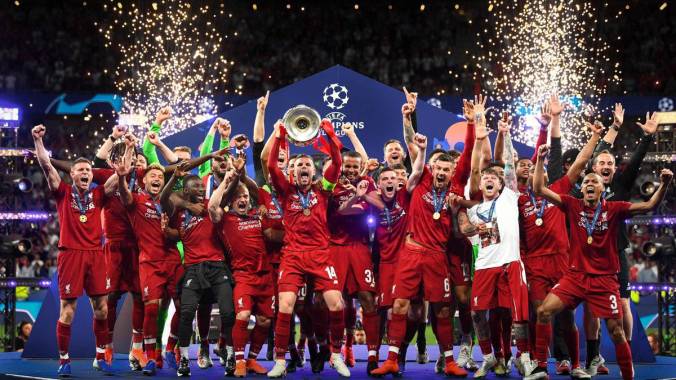
Leeeeeverpoool!

q Liverpool football

Later that evening as the game started, I wandered down to look for the source of the excitement. The door between the boisterous football fans and the corridor to the sleeping guests had been propped open, as if there was no issue at all for those in the restaurant. I had to ask the owner to close the door – which I suspected should be closed under fire regulations in any case. The owner was obliging but I had to wonder why it was necessary for me to ask. What is going on in the heads of people who rent out rooms for people to sleep in?

I abandoned this hotel as quickly as I could and appeared at another in the same town, that I had booked on line. It was the right time and day but the hotel stood adamantly closed.

I telephoned and knocked repeatedly but nothing I could do could help me. So, dragging my suitcase along the paving slabs I set off to find another. I was fortunate to find one open and rang the reception bell. I explained that I was tired and just wanted a quiet room at the back of the hotel.

The male receptionist said this was no problem and lead me key in hand, to a room at the front of the hotel overlooking the road. I was too tired to argue and eager to get an early night under the thick duvet and crisp white sheets. It was probably an hour before the problem began. Somebody started practising the piano in my room. Well, it was so loud it sounded as though they were in my room, or at least in the corridor. I peeked into the corridor expecting to see a smiling child on a piano I had not noticed earlier. Nothing. So I had to dress and bang the reception bell once more. I explained my problem of not being able to sleep. The receptionist said that it was not late in his view and that there was an apartment in the hotel. I reminded him that I had asked for a quiet room and suggested he give me another one. He quickly retorted that the hotel ( which appeared empty of guests ) was full and there was no question of having another room. He tried to compromise by promising that the piano practice would end in half an hour. Here he was giving me a clue, that he knew more about the mysterious piano than he was letting on. I suspected the apartment was occupied by his family, one of whom was learning to play the piano and had been told to practice vigilantly. I reluctantly agreed to listen to the piano for one half of an hour, returned to my room and hid under the bed clothes.

Within a few minutes there was a knock on the door. I dressed again and opened it and there was the receptionist who said that the piano would now stop in a few minutes. He had arranged this reluctantly though for he reminded me that, ‘this is Spain’, meaning that noise of all kinds is acceptable, even in hotels. I said that I knew it was Spain but that this was also a hotel where people were invited to sleep and I had never been in a hotel before where there were apartments with music practise taking place.

Sure enough, the piano quickly stopped and I was able to finally, sleep.

I have to wonder whether I am being unreasonable and have a false expectation of hotels? Am I in a minority of guests whose main priority is not to be woken to the refuse lorry collecting at two in the morning and the recycling lorry collecting at five in the morning?

Obviously I am not alone

quiet-hotel pentagram

If I am, then I am willing to pay for the privilege of uninterrupted sleep at a five bed hotel. Let the party goers and sports event fans, boogey on in the hotel down the road – if for them a hotel is a mini version of Las Vegas.

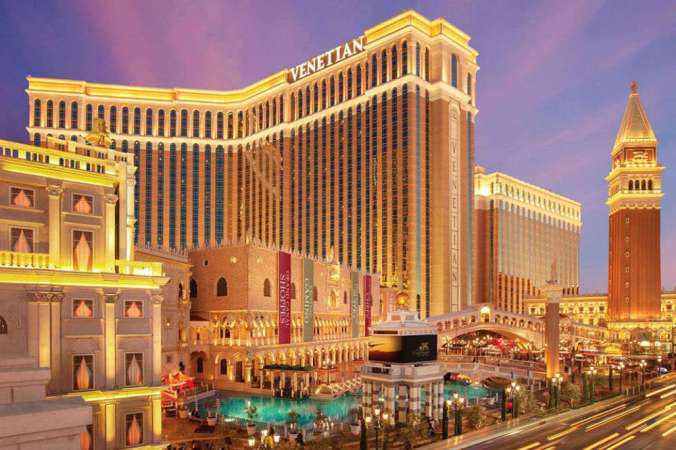
A quiet night in the Venetian

q las vegas hotel

I would give those hotels one bed in my scoring system, indeed, if it provided no beds at all, I expect there are many who would not care. Think how much more money hotels could make if guests were never allowed to sleep!

Is God King?

Alan Watts recounts the following anecdote in one of his erudite lectures entitled ‘The Nature of God and Death’;

An astronaut was asked on returning to earth, ‘did you see God?

‘Oh, yes,’ was the reply.

‘Tell us more about what you saw.’

‘She was black.’

When the Pilgrim Fathers sailed over the horizon, their great mission was to escape the rule of monarchy. Things from which we try to escape however, have an unnerving habit of following us around. So it was for the first settlers in the green and pleasant shores of eastern North America. Without a ‘lord and master’ or ‘father’ figure, everything would be much better, right?Pilgrim-Fathers-painting-Mayflower-Bernard-Gribble

The irony, in their religious beliefs, was that their metaphor for the Divine was a King. If it is odd that the Divine is restricted to being conceived as the masculine principle, we can forgive Biblical writers for being restricted by their own language. There are few words ascribed to neutral or ‘combined’ genders in most languages and unfortunately this has narrowed the way we think. ‘God the Queen’ would have been a very strange concept to Christians of most ages although they only had to refer back to ancient Egypt to broaden their views. The King Osiris was married to Queen Isis, who is often depicted with their infant son, Horus on his mother’s knee. The ‘Holy Family’ represent an all inclusive metaphorical Deity who is active and present throughout the entire biological process of pro-generation, as well as present throughout the entire cosmic process of creating the Universe. The origins of Judeo -Christian beliefs in the religion of Ancient Egypt, are preferred to be ignored despite clear paths of provenance.

It is a fact that religions per se, do not thrive on original thought. The Pilgrim Fathers were accepting of the fact that no one had thought to include the Pilgrim Mothers in the title of their congregation. They were also content to worship a ‘God the King’ even though the autocratic system of government was so abhorrent to them. Monarchs have a power over their subjects which ranges between the benign and malign, depending on the character, mood and carbuncles of the monarch. In a way, the freedom sought by the Pilgrim Mothers and Fathers, was a philosophical freedom as well as a temporal one. They felt justified in asserting their own free will over any other will.

Face-of-God-

But since the Christian God is one that has given ‘free will’ to his and her subjects, it is open to debate as to whether they were escaping God or a religious restriction of the concept of the Divine pedalled by an all powerful Church, usually in temporal cahoots with a monarch.

For political rather than religious reasons, the Constitution of the United States of America was written with precisely this abhorrence of the ‘all powerful King’ in mind. Judges and Representatives of the people were given tripatied power. No one person should wield political power over the people. For this reason the people were given the free to bear arms and form militias should the politically powerful become malign – in their view.

If government on earth is a mirror of celestial politics you have to wonder whether Angels are similarly empowered to zap their superiors with cosmic ray guns?

This did, of course, happen in the leaves of the Old Testament and the dualistic nature of even Angelic creatures is contained in the story of Beelzebub and his rebellious angelic army challenging the Divine ruler. The rest, as they say, is history.

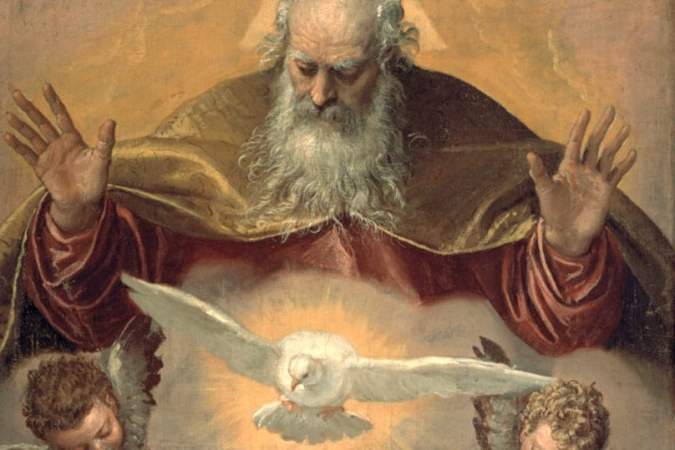
God with grey beard and dove

So to return to the question of whether the Divine Being is a white Anglo Saxon male, the answer is, clearly – doubtful. Long white beards aside, human kind has created the monotheistic God in his own image, and since King James and the other chroniclers of the good book were egotists, God has always been what psychologists call a ‘projection’.

This is fitting since much of the Universe is no more than an projection of the Universal consciousness. In this the Divine Feminine and Masculine principles interplay as a sort of fantasy dance – the gyrations of Kali and Shiva – who create and destroy in equal measure.

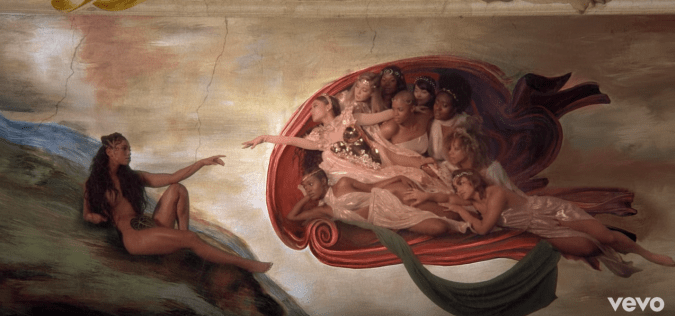
Eve and Godess

We depict any Godhead as male at our peril. If Jesus used the metaphor ‘Father’ it was not an implication of gender that was intended but the figure of the pro-generator. Jesus was fond of metaphors since mystics find the language of the market place appropriate to use to describe higher concepts. The parables he told contain metaphors which strongly describe unspeakable ideas in the sense that words are not enough. The return of the Prodigal Son to his father is describing the process of individuation within a maturing human being – the path which if followed leads to a union with the Divine. The ‘fat calf’ which we are all in danger of becoming during our easy lifestyles on earth, has to be slain and consumed.

When you eat remember this of me.

The errant son evolves to become a father. An errant daughter evolves to become a mother. An errant non-gender specific person becomes a vother*.

(*Using the principle of ‘ the infinite abundance of thought’ to make up words where missing – Vother is a neutral person.)

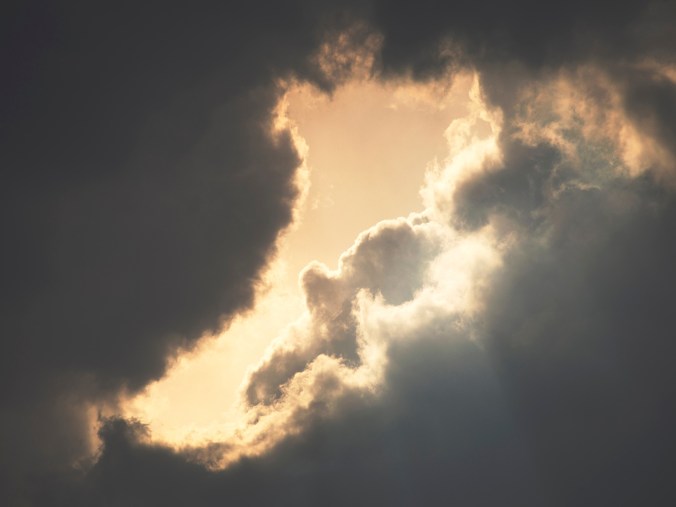
Light through clouds

So, no, God is not King, nor even a humble father. These were always crude metaphors, crudely carved by restrictive words and dualistic thought. The ancients and the religions of the Far East such as Buddhism and Hinduism, have no difficulty conjuring up ambiguous and contradictory Godheads who break and write as many rules as they can. Reality is not polarised, with one half favoured over the other. Neither does an authority figure ‘reign in heaven’ or anywhere else. Such prosaic concerns are respected by mystics but dismissed as irrelevant to higher task of the search for Divine Union.

Render unto Caesar the things that are Caesar’s;

The ( perhaps ) unpalatable truth to many, is that we the people are king, if only for a day or our humble fifteen minutes of fame. Even if only glimsped once in this lifetime it is my belief that;

Ours is the Kingdom, for ever and ever, Amen.

Whilst it is unfair to criticise the Pilgrim Fathers with the benefit of a good deal of hind sight, one has to wonder what would have happened if they had re-assessed their religion as well as their politics. If their aim in leaving Europe was to seperate from the percieved corruption of the Church of England they had an oppurtunity to wipe the slate of indoctrination clean completely. As unlikely as it was in 1620 for such a shift in belief, if the early church leaders had met and discussed universal outlooks with the native people and their holy men, they might have made some radical philosophical discoveries. At least it is possible for a present day comparison to be made.

black elk

The Holy Man of the Oglala Sioux, Black Elk, is described as understand God in the following way;

‘Black Elk learned that whoever found a centre also became the centre of the universe and that is where God dwells…By placing himself at this centre which is simultaneously physical, spiritual and metaphorical, he encountered the Great Mysterious One…the centre of oneself becomes the centre of the universe. The centre of the earth and the centre of the person are one and the same.’

‘Finding All Things in God’ by Hans Gustafson published by Lutterworth Press

Vote Me!

The day is approaching this December 2019 when the good citizens of the United Kingdom of Great Britain and Northern Ireland will have the opportunity to vote in a general election.

The outcome is being described as the most significant for a generation, so you would expect the process to be fair. Certainly, whoever wins is going to perch on the moral high ground of victory and fight off all criticism for a very long time indeed. Whether they will be entitled to be so smug, I suggest, is open to debate.

You see, I have a problem which is; how democratic is the voting system? My quandary as a voter, is that I approve of some of the policies of most of the parties. It should be explained that in the UK there is a left wing party, Labour and a right wing party, Conservative and Unionist. The middle ground is occupied by the Liberal Democrats and Greens. Other nationalist parties represent Wales and Northern Ireland and Scotland.

In the United States of America, the choice is more polarised between the Democrats and Republicans. Let us take this as an example. What if, as a US citizen, you decided that the choice was too small. Who do you vote for if you want to stop climate change but encourage industry? Who do you vote for if you want the state to pay for health care and a prosperous arms industry?

In a Spin About Voting?

Voting in Laundrymat

My point is that with polarised choices, there is no room for ambiguity that emerges from personal political perceptions and priorities. Worse still the politics of voting reduces to personality rather than policies.

Even in the UK, where the choice is greater, the democratic options are more confusing. Many voters now just spoil their ballot papers by writing ‘I don’t agree with any of this.’ They are being asked to vote for a leader they didn’t take part in selecting – unless they were the tiny minority of party members.

They might distrust all the candidates on offer and feel ambiguous about their policies.

Each party writes a manifesto prior to an election stating their political motives and means. This works to an extent but has the problem for some voters that their may be slipped in controversial motives that the voter does not want to happen. For instance, the Conservatives slipped in having a referendum on continued membership of the European Union. Suddenly it became an issue even though the majority did not think it worth consideration.

Worse still, when parties fail to win a majority in elections, coalitions have to be formed. Italy, Spain, possibly the UK next week, have this problem. Two parties may come together for the sake of forming a government at the price of compromise on their manifestos.

The public will have no choice over how these mixed manifestos will be prioritised. Which policies and method will be forgotten or ignored and which prioritised? Coalition manifestos are not published before an election if considered at all. This can lead to unrealistic expectations by voters when coalition governments are formed, as in the Liberal and Conservative Government in this decade. The direction of the ship will be decided by the Captain and officers, not the crew and certainly not the passengers.

No provisional consideration is given to coalition prior to an election as all parties have to perform the pretence that they are going to win even if it is clear to all that they will not.

The dangerous consequence of this for democracy, that occurs all too often, is that a minority party gains disproportionate power by owning the swing votes. This happened in the present Conservative government who allied with the Democratic Ulster Party and much of the muddle of mixed motives over Brexit has resulted.

In recent elections we have seen and or suspected that the over emphasis on the personality of candidates has given leverage to foreign governments and fake or real ‘whistle blowers’ and ‘news vendors’ questioning the reputations and ethical principles of candidates or even parties. Democracy as we know it is easily undermined by misinformation, view the Nazi propaganda news in 1930’s Germany, if you think this is a new phenomena.

Even the date of an election day can be manipulated to support a particular party in a manner which is clearly not in the interest of fairness. In the present UK election the Conservative government chose the day in which the students from Universities will end term and be returning home for Christmas. Informed young voters are not likely to support the Tories even though the election and it’s issues mostly affects their generation.

Young Voters in the USA Choose Not to Vote

  V I Dont Vote Badges.

Even such a consideration as ‘is it raining’ has been measured to be significant on election days. Sending people to village halls to scribble on a piece of paper has to be reviewed as the majority of citizens in the UK rarely turn out to vote. Some living abroad for over 15 years lose their right to vote.

Lone Voter

Voting Lone Voter

These then, are some of the problems for Democracy. Some people say, ‘well that’s the system we have got’ or ‘it’s the best of a bad lot’ but you have to wonder if the country that prides itself in it’s democratic systems is not kidding itself, it’s citizens and the world.

I am not suggesting that Democracy should be replaced with the pedantic and often corrupt systems of power like Communism or Autocracy. I am suggesting that with the aid of computers and the internet, a more democratic process is available to elect representatives. This is my idea.

Firstly, the party system is out. The in-fighting of politicians instead of their countries best interest, is something most voters are tired of.

Instead, all candidates will put themselves up for election as ‘Independents’. Radical, yes, but read on because they can form parties after election, not before.

They will state their personal political views by placing ten stars against a list of important areas of government. This will be shown to voters as something like this ;

Education *

Health **

Defence ***

Transport *

Law and Order **

Business and Industry *

Farming and Fisheries *

Environment    nil stars

Social Housing and Homelessness    nil stars

In this list each aspect of legislation and distribution of taxes is prioritised by the candidate, according to their own personal views. They are not under any party pressure to support policies with which they feel awkward about or strongly disagree. They can be honest; a quality in politicians which many voters express their suspicion about.

The candidate has, say, ten stars with which to indicate how which issues they prioritise and the amount of funding they would give in comparison to others.

Now here’s the clever part. Each citizen is given the chance to indicate their priorities and how strongly they feel funding should be allocated to each on their ballot papers. Instead of one cross or tick for a party – which in the twenty first century has to seen as a crude political choice – each voter has the same number of stars as the candidate.

The last piece of this process would have to be constructed from new but it’s not impossible. What I am envisaging is on-line voting from a phone, personal or public computer. In an age when personal internet banking, shopping, even gambling! – is managed with a high degree of security and reliability, it must be possible to create a secure on-line voting application.

Ten issues are listed either as broad areas for consideration or narrow ones. The voter can either ignore these as being worthy of state support ( such as health care in the USA) or indicate a need for state intervention. The strength of these feelings can be indicated by allocating some of the ten stars used to vote with.

It will be impossible to use up more than ten stars or whatever number is allocated to each citizen, but ten is an easy number for most people. Their choice can be re-adjusted until the voter is ready before selecting the ‘VOTE’ button.

For a population familiar with the internet, voting will be accessible, timely, considered, representative and accurately describing personal views.

The final phase of the voting process is for computers to match exactly the views of voters to those of independent politicians. It is already established what the views of the candidates are and matching a set number of candidates (say 300 ) to the views of the citizen public, will be doable for a computer.

The result will be a selection of representatives who will accept office and be fairly representative of public opinion. Being politicians they will almost certainly form party cliques (birds of a feather flock together) but at least the system by which they obtained power, will have been representative.

This could be a sea change for how populations choose those who represents them. With the emphasis moved to policies and issues rather than personalities and power politics, a higher level of honesty and fairness will be achieved.

We have the technology already to achieve this. We just need the thinkers to describe how it can be done – as I have just done. Vote me!

Space Wars

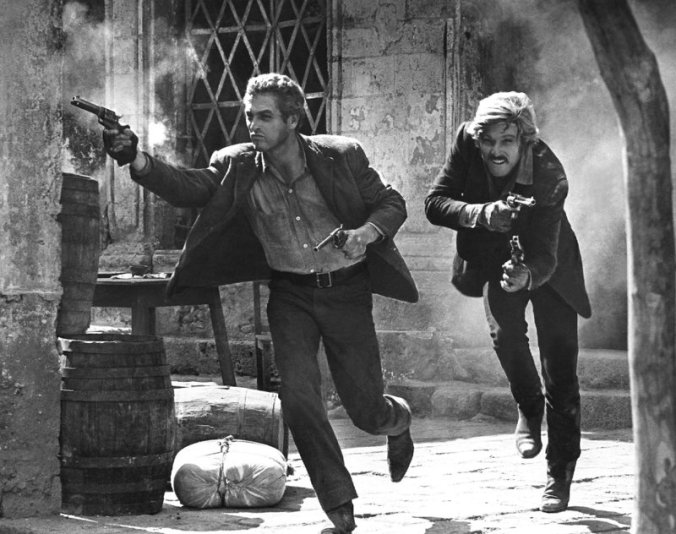
Butch Cassidy and the Sundance Kid is an enduring story of two bank robbers in the Wild West. In the film of the same name they are played by the good looking duo of Paul Newman and Robert Redford. They swagger through the film to a jolly accompaniment by Burt Bacharach (including Rain Drops Keep Falling on my Head) from one fruitful explosion to another. Inevitably the Federal authorities catch up with them and they manage to escape over the border into Mexico by the length of a horses tail. In Mexico they make a resolution never to rob a bank again, such has been the horror of their last experience. They realise they now have a clean slate to start their lives again. What happens next has always fascinated me. They start robbing banks in Mexico. A few bank robberies later, they die in a hail of Mexican army bullets.

butch_cassidy_and_the_sundance_kid1

The moral of this story in my view, explains a lot about the worst side of human nature. Remember that these are bad men even though they are played by a couple of smoothies. Humans find it very difficult to change their inner motivations, methods and objectives.

At present humans are plundering planet earth of her wealth. They have been doing it for a long time but now the scale and speed of the robbery is unprecedented. The villains have a plan;

‘Let’s start robbing again in space’.

China, Russia, the USA, Europe, even India have space programmes.

Why does India have a space programme when many of it’s rural villages don’t even have one flushing toilet and a sewer? The answer is complicated of course but one reason has to be the promise of new sources of raw materials; what in Klondike in the Wild West was nicknamed the ‘gold rush’. True to human greed for natural resources, these countries and others are not unaware of the promise of minerals ripe for harvesting from other planets and moons.

Without a World Government with an enforcement arm, it is hard to see how this rush into space and the allocation of unclaimed resources, will not turn into a laser gun fight.

On the 1st July 2019 the United States of America declared a new arm in it’s Defence Services; the Space Development Agency. Will the USA move itself into the role of World Government Peace Enforcement in space – like it has tried to enforce the non-proliferation of weapons of mass destruction on Earth? Will the USA being armed in space be accepted by those being told they cannot do the same? Bear in mind the present difference of opinions between the USA and North Korea and Iran.

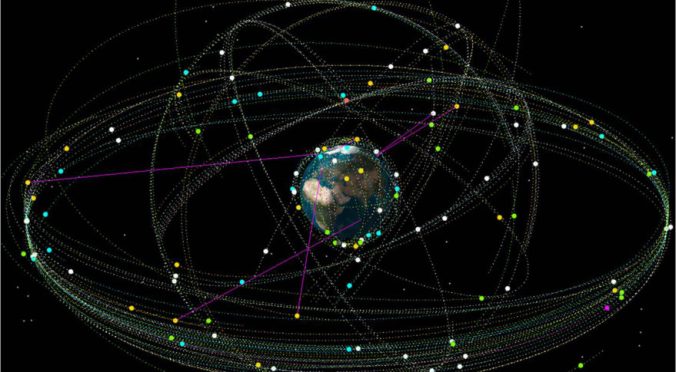
The USA may or has assumed a role of Sheriff or ‘protector’ of the valuable scientific, communications and defence satellites already in orbit around the earth. This role is enhanced by the prospect of the new 5G satellites being privately launched – over 2000 in number – to provide fast internet to rural communities around the globe. Who asked for 5G is a subject for another blog. In democracies, no one votes for what private enterprise decides needs doing for profit. Arms manufacturers usually lobby for war.

It just happens because science and technology get the smell of cordite and can’t stop themselves blowing a few banks, and a few more and a few more. Ethics committees don’t carry.

The hugely wealthy entrepreneurs, Elon Musk (BFR) and Jeff Bezos (Blue Origin) both have their own visions for space exploration and travel. Will they be taking pot shots at each other across the craters on the moon or work together?

The space exploration of the 1960’s was famously driven by bitter competition between the Soviet Union and the USA. The latter likes to think it won the race but in the end what came out of those missions was a desire to monitor the earth from space, not keep going to the moon. This mutual desire and pooling of resources and know-how, evolved into a co-operative project which is the International Space Station.

Not surprisingly today, Russian and China want to co-operate in space and ban space weapons and they both signed a treaty in 2008 on the Prevention of the Placement of Weapons in Outer Space.

On 21st October 2017, the first committee of the United Nations discussed the non-placement of weapons in space. 122 countries voted in favour of such a ban and five against, which included Georgia, Israel, the USA, Ukraine and France. 48 countries abstained, including the European Union.

The reasons for co-operation disarmament in space are obvious so let us consider reasons for having weapons in space.

There may be attempts by rogue states or state sponsored dissident groups, to interrupt or destroy or threaten to do this to civilian or military satellites.

positions of satellites at time of publishing were correct but may have moved now

satellites

The problem with this argument is that a rogue state, or state sponsored dissident group, is being lawful in it’s actions in one view and unlawful in another. Robin Hood was by some definitions, a terrorist. Black and white hats are for cowboy films. The hats in space wars are multi-coloured and nuanced.

For instance, a GPS satellite is used for civil purposes and military. So is the mobile phone network and satellites and direct satellite communications used in those areas where there is no mobile telephone network.

You can describe the action as good or bad depending on which facts you select to present. The criticism is that the ‘threat’ that the threat on which the military base their plans and actions, can be exaggerated for funding approval reasons and, or just plain politics. A government likely to declare war on false intelligence on earth is just as likely to do the same in space. Different place, same gunmen.

There is also a non-military threat; namely asteroids. These are objects that enter the earth’s solar system from outer space and may be on a collision course with earth. The possibility is that a weapon of some kind may be able to alter the course of the asteroid. Comparing the then with now, money would be better spent on protecting the earth from humans rather than asteroids in my view, that threat being more immediate.

The last Hollywood blockbuster myth is one that has appeared on cinema screens since movies were invented – alien invasion. I call this a myth since my belief is that any civilisation that has found and is watching us for malign reasons would have acted by now. Because they have not I conclude that they are benign and waiting for humans to become spiritually aware enough to stop wanting to destroy the planet and each other.

Little Blue Men (and perhaps some ladies)

kind aliens

This is Butch and Sundance story yet again. The question for governments and billionaire entrepreneurs in search resources and a life boat for planet earth is;

Should we spend our time and money on fighting each other in space, or on protecting the earth and building a sustainable future?

I know what my answer would be because I have seen the statistics about life on Mars and in my view, it’s a hell not worth visiting.

I hope and expect we will forget Mars as an objective in the next decade, as future space based telescopes spy out so called, exo-planets. Astronomers now believe it likely that most stars have a system of orbiting planets based on observations of light from those stars. The new generation of telescopes will find new exo-moons. With so many new places to visit that are in the ‘Goldilocks‘ range of environmental factors similar to earth, man in the future will be spoilt for choice for places to colonise.

Those who choose to live in such places will have one important choice above all others. Shall we take guns to these places? My advice,based on Butch and The Sundance, is don’t.

Green Gold

Once upon a time there was a human baby. It grew and became strong and healthy. Then, after about sixteen years, an extraordinary thing happened to the body. A great cloud of poisonous smoke filled the lungs. Toxins began to flow around the body and various organs responded with panic. Unfortunately, there was also an amount of ‘satisfaction’ associated with this smoke. The organs argued with the brain telling it to stop allowing breathing smoke.

The body continued to breath smoke and rumours spread that the lungs were turning black at the edges and in a few years they would become diseased and not function at all.

The organs decided to challenge the lungs and were astounded by the reply. The lungs said that the rumours were all ‘lies’ and that they should mind their own business. The organs could see that the health of the whole body was there business, but the toxin had spread and the name of the toxin was ‘stupidity’.

Picture copyright credit: Ranger Rick

Dec-2015-Rainforest

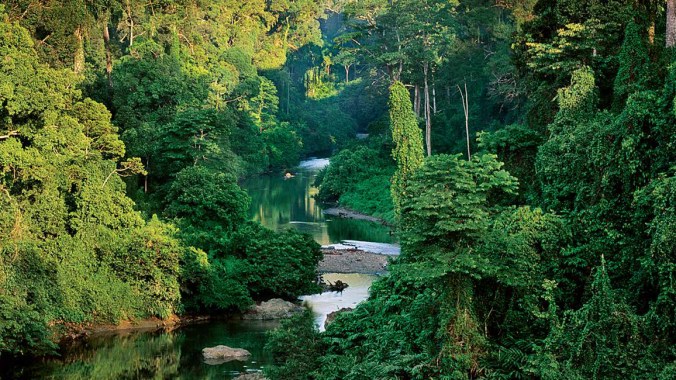
Today, in August 2019 the ‘lungs of the world’, being the Amazon rain forest, are on fire. The country with the largest number of fires is Brazil. There are over 25,000 according to the BBC News website, which has little reason to misreport the problem and used the National Institute for Space Research as their source. The President of Brazil, Mr. Jair Bolsonaro, has responded with a volley of denials and obfuscation, of the type that we hear so often from right wing leaders today. But he, does have an interest in denying the size of the problem and that no other countries have a right to be concerned. He sees the forest as a resource for mining and logging and agriculture, which from a purely economic development point of view, it is. The problem for the ‘rest of the world’ is that the blinkered thinking that accompanies ‘national interests’ is in the wrong century. In a world where sharing global opportunities and problem solving is becoming ‘normal’, the attitudes from the nineteenth industrialist capitalist governments and entrepreneurs, prevails in Brazil. Interestingly Mr Bolsonaro accused the President of France Mr Macron, of being just such a ‘colonialist’ while the reverse if true. Mr Bolsonaro is ripping the heart out of his own country in just the way the colonialists used to do in their greed for natural resources.

The Amazon rain forest contains many layers of richness. Not least are the million or so indigenous people who’s very lives depend of the forest. When I was in school we were taught that the forest people practised a technique of farming known as ‘slash and burn’. Tiny pockets of forest would be cleared and crops planted for one or two seasons before the thin soil could produce no more. Then the people moved on and the forest and it’s animals were able to re establish the ecosystem.

What is happening now is the early stages of desertification.

picture copyright credit: straitstimes.com

rain forest desert

The world cannot allow it’s lungs to die. Although much well intentioned re-afforestation has taken place in the northern hemisphere, the small scale and the type of trees planted means that the effect on the rise of carbon dioxide in the atmosphere is not enough. The Amazon rain forest is the only place where the carbon dioxide can be absorbed on the scale needed to prevent a rampant rise in the average temperature of the planet.

So what is the solution? Clearly the rain forest has to be saved for current and future generations. The Brazilian government are only responding to the promise of economic prosperity for their country and citizens. They might be persuaded to change their short term destructive policies if they made more money by not destroying the forest.

I suggest then that it is sold, square metre by square metre to the rest of the world. Who would buy it? Well not governments but ordinary people. I believe that people would willingly purchase a few square metres as they can at present buy micro land on Scottish estates to gain the legal title of ‘Lord’.

The area of the rain forest in Brazil is 477 698 000 hectares (source: brazil.org.za). One hectare equals 1000 square metres, so if you sold one hectare to 1000 buyers at 100 US dollars each, you make 100,000 dollars per hectare. This is 47,769,800,000,000 US dollars! Even if only ten per cent of the rain forest is sold in this way, that is 4,776,980,000,000 US dollars. I expect that is more than miners, loggers and farmers are going to pay in tax to the government in a thousand years!

The process to purchase your piece of rain forest could be standardised and completed as any legal process of acquiring land title; either as an owner or tenant. The only extra clause / covenant purchasers would be required to agree to is that they will permit the land to remain pristine or allowed to ‘re-wild’ as much as that is possible. Each individual would be limited in the number of square metres they could buy to prevent devious exploitation. The price of the land might be double or even triple what a logging company or beef farmer is going to gain in the few years the land would be productive. Any tenancies could be renewed every ten years or so, if not sold freehold and the Brazilian government will be able to spend the money on the prosperity of it’s citizens as it wishes.

Picture copyright credit: Rainforest Foundation

rainforest mining

Attempts to ‘mine’ or exploit the forest on a large scale would be a legal nightmare on account of the number of owners or tenants whose location and consensus would be difficult to obtain!

In this way however, the business of Brazil would become the business of the rest of the world. By keeping the rain forest from becoming a desert, Brazil maintains it’s indigenous population, fauna and flora and become a gate keeper on the world’s increasing need to store carbon dioxide. It is likely in the future that these will become of greater economic value to Brazil than the nineteenth century approach of logging, mining and ranching. Perhaps shares could be bought in each tree for the carbon it absorbs to enable ‘carbon neutral’ deals to be made with polluters like air lines and industry.

Brazil has a unique and irreplaceable resource to benefit all it’s people, indigenous and settlers. There is a fable about a goose and a golden egg, that President Bolsonaro would be wise to inform his economic advisers to integrate into national policy before the land is worthless to anybody for anything. 

The All Seeing I

There are quite a number of theories as to why an all seeing eye above a pyramid, appears on the dollar bill.

dollar bill eye

Clearly there are masonic connections with the originators of the United States of America and the original intention. There may have been as many as twenty one signaturees of the American Constitution who were Freemasons.

They largely reflected anti monarchist views and promoted European Enlightenment ideals of liberty and self governance. God was not encapsulated in a ‘religion’ but seen as an entity who largely left humanity to it’s own devices, whilst keeping a benign watch on things.

Also, the ‘eye’ on the dollar bill is clearly disembodied; without the arms and legs. This ideal of the Creator is more akin the gnostic view, than the Christian.

The symbol shows rays coming from the eye in all directions. This is important. Firstly the rays are coming from the eye, not into it. It is therefore akin to the sun and akin to the Ancient Egyptian deity Ra.

Whilst the human eye is perfectly adapted to receive and focus electromagnetic energy in the wavelength of light, modern science does not support the idea that eyes emit light. Yet in Ancient Greece, Plato and Socrates believed the eye was an organ that emitted a ‘fire’ to produce a ‘visual touch’ sensation. This reversal of what is today ‘the norm’ is not as nonsensical as it may seem. In ancient times the physical world was seen more as a system of energies, rather than the solid physical forms of today. Given that perception then it is quite possible that a human can feel with the eyes by emitting energy. We have all probably had the experience of someone watching us from behind or from a distance whom we cannot physically see.

The other symbol is the truncated pyramid above which the eye floats. The pyramid has thirteen courses and this number is repeated in other symbols present. It’s significance to the designers was clearly important and probably has several interpretations. Personally I would view it as a unification of the numbers one and three, one being the Godhead and three the Holy Trinity – in Christian symbolism which the Freemasons were most likely to use. At another level one interpretation I find interesting is by Swaller de Lubicz who said that thirteen is ‘the manifestation of the good or bad generating power’.

Swaller de Lubicz is a renowned investigator of the sacred sites of Ancient Egypt whose theories were unorthodox but very interesting. His book ‘The Temple in Man‘ is recommended.

In the Old Testament of the Bible and Torah, God is just such an energy that passes judgement and destroys that which it does not approve. Although this image of the Creator is at odds with the New Testament, for the Jews and many other societies, God is not just ‘Mr. Nice Guy’.

In science, the physical universe is in a constant process of decay known as ‘entropy’ and creation; with entropy ultimately being the winner. Even our own bodies reflect this state, and one day our bodies will expire, despite constant renewal processes.

So the eye at the top of the pyramid is more likely, in my view, to be an ‘Old Testament’ eye. Whilst man has freewill to make mistakes and good judgements, so does the Creator. Divine intervention does not, in theory, take place however in a contradictory way is does. God permit cities to be destroyed as does man.

The all seeing eye of God is not just protection, as worn by many as a symbol in the Middle East and known as the ‘evil eye’ or more accurately – protection from evil.

So, why a pyramid and why one without a point? Most pyramids are pure representations of the geometric pyramid form. To do otherwise is rare but there is one and it is well known. It is the so called Pyramid of Cheops on the Gaza Plateau in Egypt. This was one of the first to be built and many of the latter pyramids were pale imitations. There has never been a ‘pyramidion‘ stone and it was constructed to have a flat platform at the summit.

pyramidion1

In my personal researches, I have come to the notion that pyramids were constructed to accumulate electromagnetic energy (amongst other reasons). This was done using rock which conducts ions and between anodes and cathodes. In the base of the pyramid are underground water courses associated with the river Nile. These bring in positive ions to the pyramid to be draw upwards through the centre. They were never intended to be emitted from the point of the pyramid as most others do, because other uses of the energies were being made in the chambers.

Suffice to say that I believe most pyramids were constructed to emit a steady stream of electromagnetic energy, from a height and in all directions, to other pyramids. This was a world wide network as evidenced by the presence of ancient pyramids on all the continents, including Antarctica!

A Pyramid and Tesla Tower with similar construction

Pyramid and Tesla Tower

The concept of ‘mobile phone’ masts as a network of transmitters and receivers of information encoded microwaves, is something most a familiar with in the modern world. It should not be so extraordinary to imagine such a network existed in the past using more primitive materials but with sophisticated, intuitive software.

The pyramids were transmitters and receivers between computers. If you wonder how computers existed so long ago, I am of course referring to the human brain, a computer so multi complex that it will be several decades, perhaps never, when it is replicated by scientists.

A form of ‘telepathy’ is plausibly existent between people such as twins or even husbands and wives, who finish each other’s sentences.

The ‘all seeing eye’ or ‘all knowing eye’ is therefore quite plausibly something contained not only in the mind of God but also His construction, humans.

The Ancient Egyptians denoted the Eye of Horus as in the diagram below. There is a convincing connection between this stylised image of the eye and the cross section of the human brain. This includes the pineal gland where our ‘extrasensory perception’ originates and is known as the ‘third eye’ – another illusion to the number three.

eye of horus

The ‘eye’ is also at a poetic level the ‘I’ or feeling of individual identity within the multiverse symbolised by the number 3 or the Trinity. I and 3 is of course code for, 13. The American Constitution protects the political and human rights of the individual and was fundamental to the creation of a free state which the USA has enjoyed for centuries, (at least in it’s imagination, when such issues as slavery are concerned.)

You can see, therefore that the information contained as they say in ‘plain sight’ on such a lowly item as a bank note is the perfect place to maintain a profound cognisance intended by the ‘Founding Fathers’, never to be forgotten.

Boris Gump

The End Game for Brexit

Only a vain fool would want to be prime minister of the United Kingdom today. Teresa May was greatly flattered when she was asked to take the poisoned chalice of leadership. Today, 22 July 19 is her last day of holding that chalice.

There was little democracy in the process of electing the new prime minister of the United Kingdom today. Only members of the conservative party were eligible to vote – almost 160,000 of them which is just 0.000625% of the population of the United Kingdom. This process was preferred to a general election for what reason? Could there have been a fear of losing the majority of two seats in the House of Commons and therefore power?

This absence of a sizeable working majority, an apparent inability to consult with like minded partners and her private belief in ‘remaining’, was what ultimately brought down Teresa May, as I see it.

So having decided that the country has no right to choose their next prime minister, ‘they’ decided to pitch a ‘remainder’ against a ‘leaver’ as candidates to – well – leave. Which one do you think was expected…no…intended to win? Yes, the leave campaigner was always going to win.

boris_2877536a

Unfortunately for Boris Johnson, he will have to act out his dreams of being a right honourable politician whilst facing an impossible situation. It’s like arriving at five in the morning at the Glastonbury music festival after an all night concert in which all the bands were booed off stage. Only a single cleaner is to be seen sweeping up debris from the back of the stage.

Come on Boris, get your ukulele out and give us a number!

shouts someone from the crowd. They are not quite sure how he got there but they are willing to sit through one more act before the stage is dismantled.

Vanity makes you so thick skinned you find yourself being handed a battered ukulele (called the Withdrawal Agreement) and tuning it’s three remaining strings. You can now say you have been in a band at Glastonbury 2019, when your grand kids ask you Boris.

But he is not so poor a politician that he has forgotten to organise a bus to take him home. It sits at the back of the stage with the engine just ticking over. The driver leans against an open door dragging on cigarette. This bus has written on the side; ‘no deal’.

Many politicians cringe at the thought of a ‘no deal’ with the danger of a catalogue of unintended consequences emerging from it like the Monty Python one ton weight descending from above. The EU commissioners are expecting the £39 billion pound debt to be paid by the United Kingdom. Failure to do this would leave the UK’s reputation as an honourable nation in tatters, the pound would crash and investors rush to remove capital and businesses from the nation.

Yet Boris has cleverly wrapped up this ‘no deal’ option in a transparent tissue of lies paper. ‘This is on the table so that we have bargaining power’ the public are told. But of course the mere presence of this option means that there would be no deceit if it were decided to be used. After all, the problems faced by Boris Johnson are so unmanageable that ‘throwing the baby out with the bath water’ is an appealing Party ploy.

And when the unexpected consequences start appearing one by one, he can say that none of this was his fault. Third parties such as the EU commissioners and Teresa May and all the other political parties, were the cause of the chaos now falling from the skies.

One such cloud burst, in my view, will inevitably be the countries that make up the United Kingdom seeking independence. I expect Northern Ireland to vote to become part of Eire (and Europe) first. That will pave the way for Scotland to seek independence and perhaps even the north of England!

Boris will be like the male lead in a farce that ends with his trousers around his ankles and a chicken on his head – but then – I expect he would rather like that look.

I am disheartened when I listen to people asked for their views on Brexit on TV. They expect there to be some sort of change after Brexit but rarely state what that might be. The ‘end game’ is lost in the excitement of the ‘present game’.

I am reminded of the ‘independence’ parties held in countries in Africa as the colonial powers withdrew in the 1950’s. The national exuberance and excitement lasted several days. New national flags were flown from windows and vehicles, horns blaring. People danced in the streets all because they were ‘free’ without pausing to think what that meant.

I make no excuse for colonialism which was clearly wrong. But when the European countries left Africa there was a political vacuum. Despots and power hungry ‘leaders’ filled the parliaments and military top jobs. Corruption and victimisation of populations became normal. People found the end game was no better than before – sometimes worse.

I wonder what will be the ‘end game’ for Brexit, once the bunting has been taken down from the streets parties.

Nigel Farage will disappear from the scene because his great ‘oversimplification of the facts’ will be over.

All that will be left will be a resounding silence, little direction in the shape of cleverly managed new prospects.

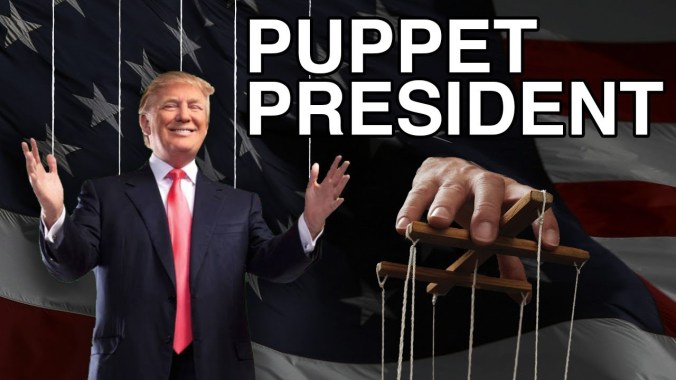
The EU will treat the UK as positively second class; why shouldn’t they? And America will not save the UK from nasty Europe this time round – unless you think President Trump is a very very good person… very loyal and trustworthy person who loves British Trump…Boris Gump.

Lunar Madness – Apollo ll

On the fiftieth anniversary (20th July 1969) of the first lunar mission and landing on the moon – I dedicate this blog to all explorers.

Has it ever occurred to anyone that the name given to the American space programme to reach the moon, was a bit odd? Apollo is the Greek and Roman god associated with the sun – not the moon. Was it used because the mission to send men to the moon was totally male dominated? The mission objective clearly stated, in the words of President John F Kennedy :

I believe that this nation should commit itself to achieving the goal before this decade is out, of landing a man on the moon and returning him safely to the Earth.

Indeed, there were no female astronauts at that time, apparently on account that they were considered not to have the physical strength and willingness to take risks that men do. Ironically, today female astronauts are known to be physically more suited to space travel and averse to risk taking for the benefit of the entire crew.

The First Astronaut – Apollo (about to launch a thunder bolt)

Apollo_of_the_Belvedere

It is also curious that earth’s Moon is not the only moon in the solar system. All the other moon’s are given the names of gods (except for Uranus which has moon named after characters from Shakespeare plays). The word moon is strangely containing two adjacent spheres! But more importantly Moon or Menses has proto-Indo-European linguistic roots and is older than Lunar which is Latin. Moon is closer to menses and month relating to the female cycle.

It being 1969, the male symbolism prevailed. Apollo had a bow and arrow and was the god of archery – if that is sufficient imagery for a the masculine principle seeking and penetrating the feminine circular target.

A British rocket of the 1960’s for launching satellites was named the Black Arrow. An even more curious historical eponymy is that Stevenson’s 1829 railway engine was also named The Rocket. A symbol Sigmund Freud could also have written a chapter about.

Whatever the reason’s for naming the Apollo mission, the shallowness of the venture is evidenced by the fact that fifty years on no nation has repeated it. The reason is clear. There was no material benefit in going to moon – effectively a desert. Instead in the 1960’s there was a ‘cold war’ between the Soviet Union and the United States of America. The Soviets were ahead of the Americans with the launching of the first unmanned and then a manned earth satellite. The ‘land of the free’ was out to prove its technical, economic and political superiority and they did.

The Scientist’s at the time preferred space missions to be unmanned and crammed full of scientific experiments. Robotics and remote communication meant that manned missions were scientifically speaking – a waste of payload.

But the politicians wanted pictures and pictures / film had to contain an all American explorer laying claim the moon by planting the stars and stripes flag.

As an aside, there is a conspiracy theory that the entire Apollo 11 mission was faked. This was achieved by using a Hollywood film studio to recreate a believable lunar landscape on which actors could land and leap about. Personally I expect there was a ‘back up plan’ to the real lunar landing – given that the mission was highly risky. If the American astronauts crash landed then the political fallout would be as damaging as a successful mission, rewarding. So it is highly likely, in my view, that there was a plan to fake the landing if necessary in the National interest. It is these films and images that are referred to by the conspirers as evidence of a fake landing.

As it turned out, the final descent in the lunar Lander was almost a disaster. There was only another three seconds of fuel in the tank for Buzz Aldrin to land ‘The Eagle’ lunar module.

Buzz Buzz Buzz Busy Busy Busy B

260px-Aldrin_Apollo_11_original

But why did these men risk their lives so publicly and for so little scientific benefit? Clearly as patriots and explorers from a gene pool of risk taking ‘settlers’ – the chosen crew were dedicated to their mission. These were not humans landing on the moon, this was America – The Eagle.

Another great irony was the ‘elephant in the moon’, which was that the destination could hardly be more adverse to human survival. It was known that the Moon was a ball of dust and rock with extreme temperatures and no means to sustain human life. It was and is, more deadly than ‘Death Valley’ in California.

Hardly surprising then that the picture from Apollo missions that brought most gasps from the crew and earth dwellers alike, was the view of the blue planet itself. Seen for the first time from a considerable distance the earth looked both majestic and fragile. A lonely jewel in a forbidding black landscape.

We know today from subsequent unmanned missions to the planets, that the earth remains the only place on which human life can exist without technological reliance. If the reason behind the moon mission was partly to find a suitable ‘life boat’ to use to escape a dying earth – then what we know now gives little hope for the perpetuity of mankind.

Only one of the moons of Uranus will be a suitable place to land when our sun expands and swallows earth in a few billion years time.

For now only Mars appears sufficiently similar to Earth to sustain colonies – but a fragile existence this would be with the need to grow food on a large scale to sustain just a few ‘settlers’. It will be a long while before there is a Mars Mc Donalds and they probably won’t sell burgers.

There is another lesson to learn from history and that is ‘possession’. Traditional declaration of ownership on behalf of a nation by explorers such as Captain James Cook, was the raising of a national flag. No teams of lawyers were necessary historically to defend the rights any indigenous people, who were usually shot if they caused dissent.

Even if no Martians line up to defend Mars from future settlers, there will need to be teams of international and interplanetary lawyers to deem who owns what. Treasures such as mine-able water ice will be precious enough for significant sums of what ever is used for money in the future. If Earthlings continue their war-like ways on other planets, as they do on their precious earth, then there will be a giant step backward for mankind, instead of one forward – a type of lunar madness from whose bourne no man returns.

M – OO – N

Ap – O -11 – O

Every Breath You Take

For about eight years now I have been driving a 2.2 litre diesel estate Toyota. The ‘Top Gear’ television presenters drove a selection of similar cars across Europe to see which went the furthest. Jeremy Clarkson found that his diesel Jag used so little fuel that he ran the air-con and anything else he could to use more fuel. Large cars have space for large fuel tanks, so their range can be phenomenal. Mine will drive from southern Spain to the north coast of Spain without stopping – a journey of 1000km.

Last week I hired an ultra small Toyota Aygo car in the UK; a nice little automatic with a petrol engine. When I came to fill up the tank I was disappointed to find that it had travelled about 45mpg whereas my trustee diesel gives me over 55 mpg.

So why are diesel cars getting such a bad press at the moment? Diesel engines were preferred in 1997 by the European Union as a response to the Tokyo Climate Change Protocol. These engines produce on average 120g of CO2 per km whilst petrol engines reach 200g of CO2 per km. This is because diesel engines cold burn and so use less fuel. These figures do not include the energy used to make and dispose of the vehicle most of which will come from fossil fuels. It makes sense to make cars that last several decades in order to stretch out the environmental impact of production and disposal.

But the problems with just the emissions from internal combustion engines, has been re-defined. Whilst CO2 emissions must continue to be reduced, it has been recognised that the toxic gases and particulates from engines are causing a serious health risk – especially for children.

So when you examine these two types of engines, the toxic gas produced by older diesel cars is Nitrogen Oxide, in various compounds. Petrol cars can reduce this with a catalytic converter whilst diesel cars require particulate filters that are regularly maintained. If they are maintained then the NO gases gases from diesel cars can be reduced by 90%.

Governments have been victims of their own ‘political’ thinking; putting problems into compartments rather than viewing the whole issue and how each aspect of it interconnects.

Complexity challenges even those minds with an expensive private education (i.e. politicians). The lazy solution is to reduce the problem to something people can understand – especially voters.

The bottom line is that neither petrol nor diesel engines should be in use in the 21st century. There should already be ‘electric only’ zones in all urban centres with buses and taxis leading the way.

Cars do not need to be scrapped on account of their motive power source becoming a problem. New zero carbon, zero particulate engines can be retro-fitted – even into fondly maintained ‘classic’ cars. Friends of the Earth believe we need to achieve this in less than a decade, whilst the UK government thinks 2050 acceptable.

When I was a student in London in the 1970’s, I hung a sign under my bicycle saddle with the words;

No Noise, No Fumes’

I didn’t buy a car until I was 30. Was I ahead of my time? No.

Fritchie Early Electric Car

Electric cars had been the brain child of inventors in the 1830s. By 1900, New York City had a fleet of electric taxis. The electric car designed by an American, Oliver Fritchie, could travel 100 miles between charges but it could not compete with the Model T Ford on price or range. The rest, as they say, is history, because in those times governments were oblivious to the consequential problem they were leaving their ancestors – us.

1970’s Electric Car – with only a 40 mile range and apparently you had to stand on the roof.

1974 Electric Car

Today governments spend considerable time and resources in a phoney ‘war’ against terrorism. ‘Phoney’ because conventional troops cannot overcome guerilla tactics – as was proved to be the case in Northern Ireland.

The massive expenditure of public money on this ‘war’ is justified because terrorism grabs the imagination and emotions of voters – by it’s very nature as a font of repeated horrors.

You might be forgiven for wondering which is the greater issue – millions of citizens  (especially the young) dying of lung related diseases caused by internal combustion engines or citizens dying in terrorist related incidents?

When that question is considered statistically – resources should be allocated to each problem in proportion to amount of human misery and suffering it generates. They should not be allocated on the basis of which problem gets most votes and the most media coverage.

Regrettably terrorist acts will generally sell more newspapers than children dying silently in hospitals of lung diseases or adults with heart problems.

Newspapers  inflict the final blow of horror and despair on behalf of the terrorists into the hearts and minds of  victimised populations. Margaret Thatcher knew this and ordered a policy of non-reporting of terror related stories in Northern Ireland.

To his credit, the Mayor of London, Sadiq Khan, has identified the toxic air of his city as a very real and serious contemporary problem. He has made small steps to reduce it – such as charging motorists of the most polluting vehicles to enter the centre of London. The European guidelines on air pollution were exceeded within the first two months in 2018 in London. Is this another reason for the UK to leave Europe? No more awkward tests of the atmosphere in our cities?

When the United Kingdom first became a member of the European Union one of the directives from the European Parliament was for the UK to clean up it’s bathing beaches.

This was duly ignored for the first year. Why should the UK not continue to send it’s children to play on filthy polluted beaches? But the following year the EU reminded the UK of it’s obligation in law. The UK reluctantly (one expects) began to clean up it’s inshore waters; beaches are now awarded Blue Flags for water quality and facilities.

Now in 2019 the River Thames in London has been transformed from a toxic environment in which nothing could live, into a clean river with fish and mammals such as seals – on view from the Houses of Parliament.

So why now should clean air be such an difficult objective for successive governments?

If the problem is short term planning on account of the four year term of office for elected representatives in parliament – then perhaps politicians need to start to deal with the complexity of uniting long term and short term objectives.

The current air pollution problems in the UK are not local – just look at Mombai and Beijing. There has to be consideration – however complex- on how to integrate solutions within complementary European and global strategies and policies.

Clean air has to be one of the most fundamental of human rights. If we cannot wish it on ourselves, how is it likely to ever happen for our long suffering environment?