A Christmas White House Carol

picture credit BET.com

It is Christmas Eve in the Whitehouse. The view across the famous lawns sparkles in the street lamps. Squirrels hop playfully from tree to tree in the thick snow and at the front door, a line of limousines wait patiently.

If we approach one of the snow hung windows we can look in and observe the scene. Bedecked with all kinds of seasonal decorations, the long mahogany table is encompassed by seated guests. At the head of the table is President Biden. His calm manner brings a sense of peace to the room and his family and guests converse quietly to one another. In the distance we hear the faint clash of kitchen ware as staff prepare to bring in a most special meal.

Suddenly there is a commotion on the steps of the Whitehouse! A tall cloaked figure is gesticulating frantically and pleading with the Secret Service to let him in.

‘Oh come on! Let me in, please. This used to be my home! Let me speak to Joe. I want to apologise for everything. I have been a bad, bad person but no more! Tell him I am here to see him…pleeease.’

Could this be Donald Trump? He is bent down on one knee with his hands together, as if in prayer.

If we quickly move back to look through the dinner scene window, we can see an aide whispering in the Presidents ear. Joe Biden’s jaw drops and his eyes stare into space. Without hesitation, he pushes back his chair and rushes out of the room.

For a few minutes nothing happens. The hooded figure on the steps, which is indeed, Donald Trump, has been allowed to step in out of the cold.

The guests sit bemused looking at each other before two embracing figures burst into the room. When Mr Trump sees the assembled guests he falls to his knees and sobs.

We must press our ears to the glass and listen carefully for he is talking, not in his loud manner, but softly.

‘Oh friends, dear sweet friends. Hear me just for one moment and then throw me out if you want to. I am nothing. I have been a bad, bad boy I know and I am so, so, so sorry. But since that awful Corona Virus thing which almost killed me, and the First Lady and had us both in our graves, which is all we deserved I must say, I have seen the light!

A gasp went around the room and then subsided.

I know I upset a lot of people. I know I did. But I didn’t know what I was doing because I only cared for one person all the time. I am ashamed to say that was not my beautiful wife Meliana. No, no, it was worse than that. It was me. I was proud, deceitful, ingratiating, ignorant, manipulative, vengeful, greedy…why am I telling you all my secrets? Because I was also stupid and I didn’t see you could see all those bad characteristics of my bad character.

But you know what? When I was lying in my hospital bed with tubes going into my lungs, an angel came to me.

There was a pause for dramatic effect and Donald looked blankly at the window as if deeply moved by the memory. He continues;

Well two actually and they sat at the end of my bed looking at me as if to say, ‘we know what you are like and we want to help you change.’ I listened to them for hours. They showed me lots of things, terrible things that I have done, there on the hospital ward ceiling like a movie. I behaved so badly. I hurt everyone including this beautiful – sooo beautiful – planet by not listening to those climate change scientists. And the way I put down the great President Obama and the wonderful – so kind – Obama Care plans he had for poor sick people which I just trashed all the time and promised to get rid of. I was so unkind. Even to the tax collector of the United States of America, I thought I could pull the wool over everyone’s eyes and have more money for myself. Money, yes, money and lots of it.

Well tonight that has all finished. I have just come from meeting all the staff who work for me in Trump Tower. I gave them all wonderful amazing presents and new clothes for their children and theatre tickets and anything they asked for, because they worked for a monster, yes they did, who didn’t even know their names or shake a hand and say thank you, ever. Well that has all gone. I am telling you now that that Tower of Babel is going to be sold and the proceeds given to the sick children of America. Every single one of them so help me God!’

You could see from the shocked, but caring expressions on the faces in the candlelight, that the speech had affected each of them to the core. President Biden called for another chair and a new place was laid at the table. A rather stooped figure sat on the chair and smiled in a way no one had seen him do before.

It was a happy smile straight from the heart of a man who had come to value truth and the simple virtue of being himself and loving all other beings, more than himself.

The Puppet That Pulls the Strings

One of the seven principles of Hermetic philosophy, is the law of cause and effect. Sir Isaac Newton was strongly influenced in his development and application of the scientific method, by this law. It appears in one of his universal laws of thermodynamics as ‘to every action there is an equal and opposite reaction’.

Can life be reduced to a sort of cosmic Newton’s Cradle, where impact at one end of a line of suspended spheres, sends kinetic energy invisibly through the line and appears miraculously at the other?
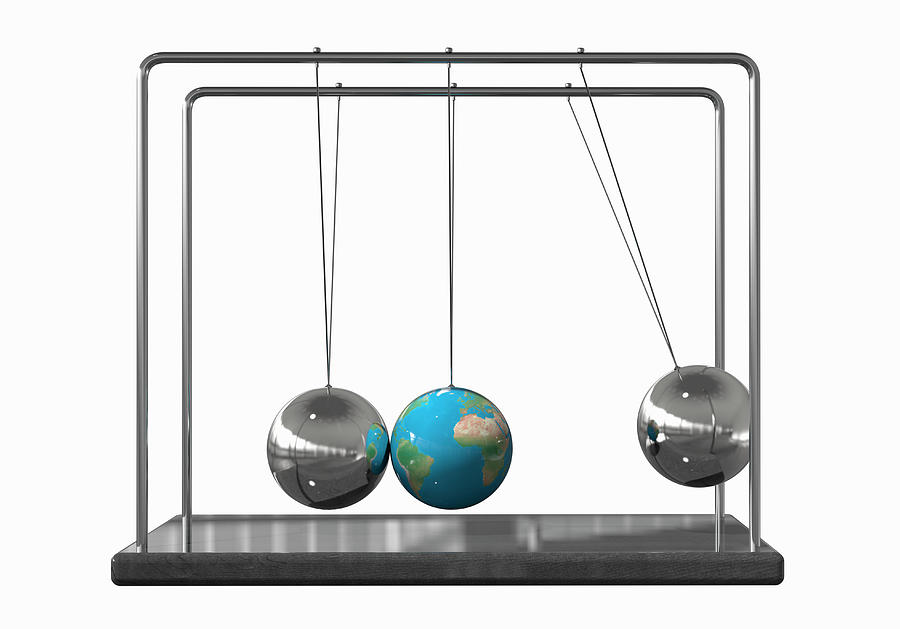
globe-as-ball-on-newtons-cradle

Surprisingly, in some respects, it can. When social groups are examined on a large scale, one psychologist found that they are highly susceptible to manipulation, ethically or not. His name was Edward Bernays and he was the nephew of Sigmund Freud.

Edward Bernays: would you buy a second hand car from this man?
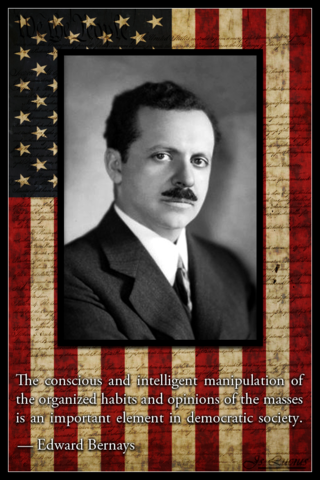
Edward Bernays

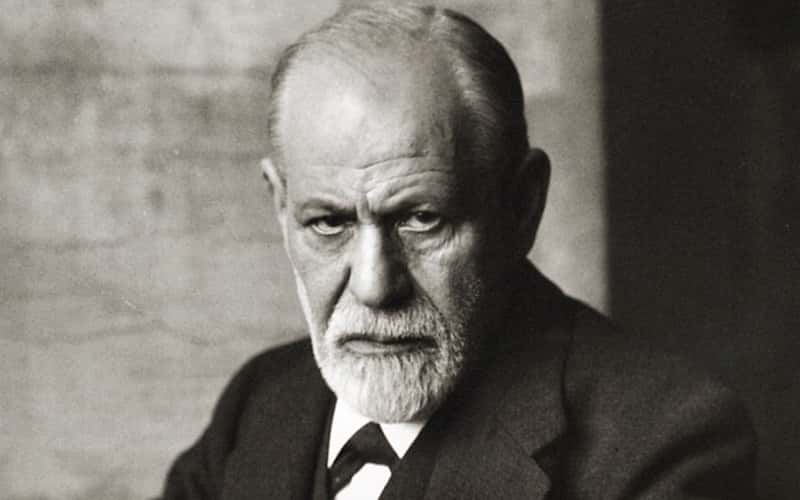
Sigmund Freud – are you happy?

sigmund-freud_800

Freud wrote a book entitled ‘Group Psychology and the Analysis of the Ego‘. In this he examined how individuality and consciousness of the ‘I’ can be subsumed when a person identifies with a group. The larger ‘group’ consciousness becomes dominant to the extent that individual’s will acts in a way that they would not on their own.

Examples are everywhere, such as the group identity of the supporters of a football team. They will dress in the colours of their team and occupy a part of the stands where they can appear as a powerful group both visually and through by tribal chants. The power gained by the players when they score goals and win, is shared through this identification by the supporters. A normally disempowered ‘ordinary’ man will feed off the power gained by the group, causing extreme elation.

At it’s most benign this effect can be used in sports, advertising and public relations. At it’s most dangerous, it can be used in political propaganda to influence the minds of the masses to behave in accordance with the aims of a small group.

Examine the the governments of countries and institutions and you may discover a sleeping monster. On a whim, leaders are fully capable of influencing the mental processes and social patterns of the citizens of that country, without them being aware.

The roots of how this is possible lie in our ancestors, who organised themselves in tribes and hunting groups in and be more successful; especially when hunting large animals such as Mammoths. Although modern man has morphed away from this psychology into separate individuality, there are times when we regress.

Individuals will identify readily with various social classifications that can be exploited to divide the populace. Examples are race, class / cast, politics, education, religion, sexuality etc. The motives for doing this might be as ordinary as making them choose a particular type of soap bar, or as extraordinary as bringing them out onto the streets to protest and or riot.

Edward Bernays was interested in how governments could rise or indeed fall by this phenomena. He wrote in his book Propaganda;

If we understand the mechanism and motives of the group mind, is it not possible to control and regiment the masses according to our will without their knowing it?

and…

They systematic study of mass psychology revealed…the potentialities of invisible government of society by manipulation of the motives which actuate man in the group.

Sigmund Freud attempted to explain why people engage in group identification. He proposed the idea that the thoughts and feelings of an individual are in some way compensatory for suppressed desires.

‘A thing may be desired not for it’s intrinsic worth of usefulness, but because he has unconsciously come to see in it the symbol of something else, the desire for which he is ashamed to admit to himself.’

In other words, our actions are spurred on by thoughts that come from our shadow selves, rather than for any conscious, considered reasoning. The conscious mind in most people, has a conscience which prevents negative behaviour through the emotion of guilt.

Whatever it is you are thinking, don’t do it!

sleeping monster

But unconsciously there may be ‘commanding’ thoughts which dominate decisions and actions. In this way we are like children who have not learnt to filter information coming from the outside world. We just absorb impressions and later act out what is good or not. In this way a government could move it’s people to adopt ideas such as the mass slaughter of a minority population, which would be abhorrent to the conscious mind but unconsciously fulfil unexpressed desires.

It is extraordinary to think that these theories were created at the end of the nineteenth century. If proof was needed, the next century provided glaring examples such as the rise of the Nazi Party in Germany and the genocides in Rwanda, Cambodia and other countries.

Joseph Goebbels: Wimp turned bully                 picture credit: BBC.com

Goebbels

The leaders of the Third Reich used propaganda ingeniously. Joseph Goebbels produced films as a key means of engeneering the minds and thereby, opinions, of the population. He understood that in cinemas and theatres audiences can drop their individual critical faculties. They connect unconsciously with powerful messages that feed off repressed emotions and ideas, such as in this case the ‘problem’ of the Jews.

In Rwanda, the radio became a powerful tool for government propaganda which described the minority tribe as ‘cockroaches’ who needed to be eliminated. The old instincts of tribal mutual hatred, suppressed through the adoption of modern social norms, were allowed to become dominate and so powerful that neighbour would kill neighbour with a machete.

Freud wrote in his book Group Psychology and the Analysis of the Ego;

‘A group is extraordinarily credulous and open to influence, it has no critical faculty.’

recruiting in WW1

The actions of the young men in the First World War is another clear example. Thousands signed up without hesitation to enlist in a war that would ‘be over by Christmas’. With hindsight this uncritical and unfeeling mass psychopathy across Europe and beyond, was absurd. Even the mitigating influence of the closely related European royal families of that time, were sucked into the mass psychosis of hatred and fear.

If we take these ideas and fast forward to the present day, many suggest that there is a small group focused global social manipulation, that has had over one hundred years to perfect it’s dark arts.

The, once hidden, now overt aim is to establish a world government and a disempowerment of it’s citizens through draconian laws and the use of new technologies such as artificial intelligence, mass surveillance, cyber robotics and enforced compliance with the State through removal of individual choice.

To achieve this requires deceit on a global scale. The internet and international media is the modern propaganda tool to achieve what one hundred years ago was unthinkable by peaceful means.

Does a secular society fear dying more than a devout society?
fear of dying

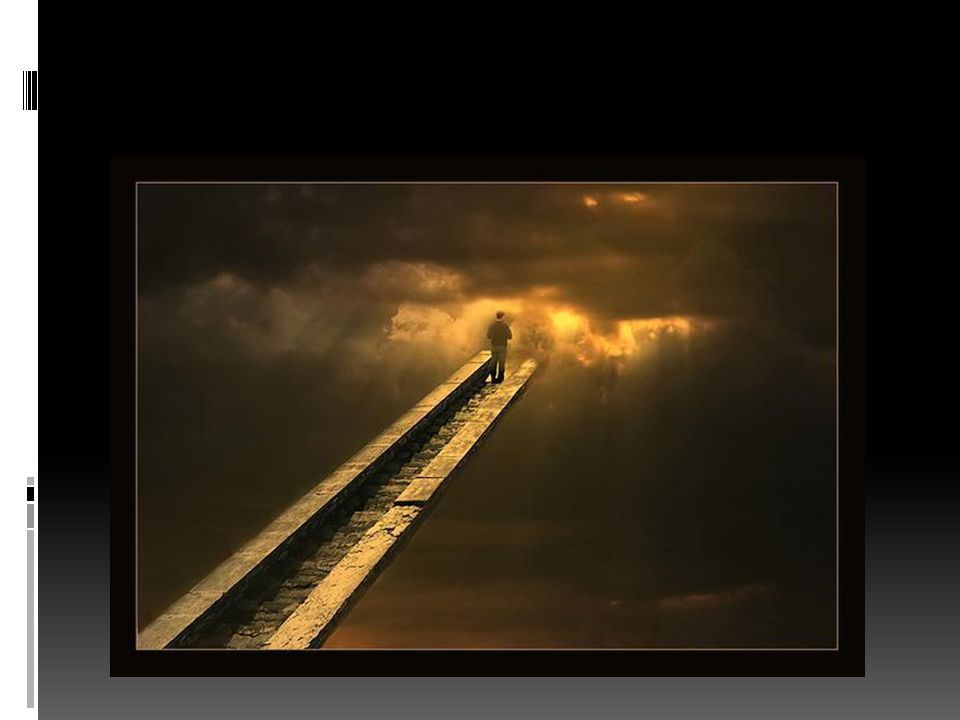
The repressed fear which is being exploited in 2020, is the fear of dying. Each person feels this fear whether they admit it or not. Death is something not understood today. It makes those left behind uncomfortable and deaths of loved ones are dealt with expediently. It is taboo to discuss death in anything but the most trivial way, with meaningless platitudes such as ‘he passed away’.

Death by natural causes is far more socially and politically acceptable than death by warfare. The appearance of a new virus, whether by fair means or foul, is something all governments expect and plan for. The Covid 19 virus was foreseen and plans were in place to use it as a means to suppress and perhaps cull populations. The smartest way to disempower people is to ruin the black economies and other economic enterprises that are not global. Then introduce technology based solutions that remove the last vestiges of personal choice, such as the cash-less society which has been happening in China.

You might have expected the citizens of Communist societies to adapt readily to strict government controls and sure enough, the Chinese leadership spearheaded the practice of the ‘lock down’ with ruthless efficiency. The Western societies had little choice but to follow the same solution even though it is opposite to their social freedoms.

Whilst isolation is clearly the correct way to deal with an individual case of viral infection, there is a logical argument that not all citizens need to be locked down at once. This was done to protect inadequate health services, not individuals.

Freedom is a hard won prize, but when the option is presented as ‘death’, freedoms have been handed over without a fight.

picture credit: CNN.com

statue of liberty

This is how I personally see the end of 2020 and most of 2021. We will see a ramping up of the ‘problems’ substantiated by rising lines on graphs. 

This will occur as the vast quantities of government ‘free’ money will begin to run dry. The problems of unemployment have only been postponed, not solved. The consequence will be an impossible situation for previously law abiding families. We can expect to see large scale public unrest driven initially by hunger. Looting and civil urban warfare, even in countries that have not armed their citizens in the way the United States has, will become a problem. The governments of the world will claim to have little choice other than to take away personal freedoms even more.

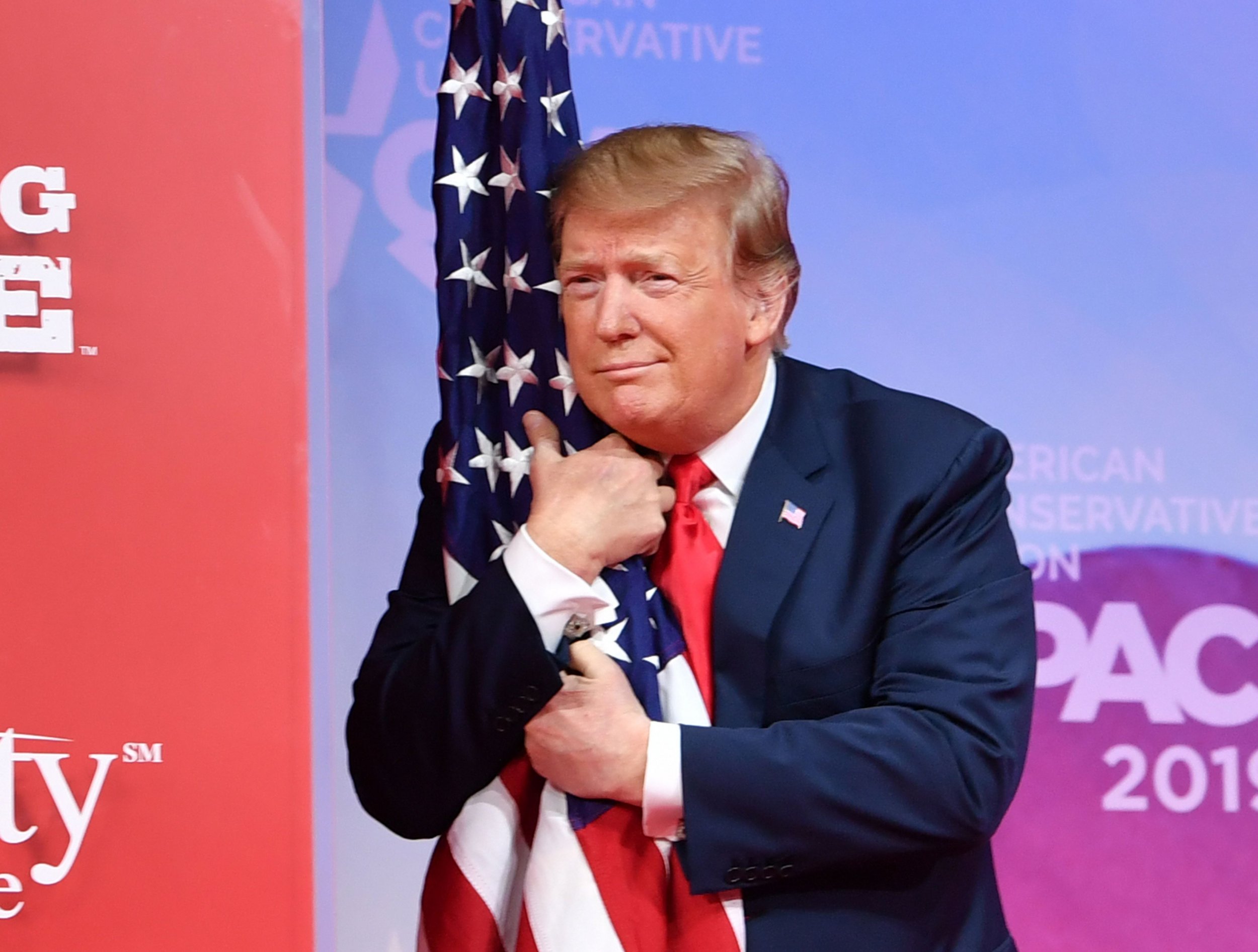
The United States runs an extra risk as it approaches it’s elections in November 2020. President Trump is also about to hit the railway buffers and he will bend the rules of democracy to remain in power, in the way he has shown America he can many times already. In doing so, citizens aware of the threat to their democracy and using their rights under the Founding Fathers Constitution may legally form militias and take on the government forces.

Would you buy a second hand car from this man?                     picture credit Newsweek.com
donald-trump-2020-election

Whoever is controlling the puppet that you are, will be pulling your strings to make you jump as they want, not as you want. All you can do is pull back on the strings, and collectively that could be powerful.

Individuals will identify readily with various social classifications that can be exploited to divide the populace. Examples are Race, Class, Politics, Education, Religion, Sexuality etc. The motives for doing this might be as ordinary as making them choose a particular type of soap bar, or as extraordinary as bringing them out onto the streets to protest and or riot.

Did Condaleezza Rice start Black Lives Matter? Probably not.                              picture credit: AZ quotes

Obama on democracy

Edward Bernays was interested in how governments could rise or indeed fall by social manipulation. He wrote in his book ‘Propaganda’;

‘If we understand the mechanism and motives of the group mind, is it not possible to control and regiment the masses according to our will without their knowing it?’

and…

‘The systematic study of mass psychology revealed…the potentialities of invisible government of society by manipulation of the motives which actuate many in the group’.

If we take these ideas and fast forward to the present day, many suggest that there is a small group focused global social manipulation, that has had over one hundred years to perfect it’s dark arts.

The, once hidden, now overt aim, is to establish a world government and a disempowerment of it’s citizens through draconian laws and the use of new technologies such as artificial intelligence, mass surveillance, cyber robotics and enforced compliance with the State through removal of individual choice.

To achieve this requires deceit on a global scale. The internet and international media is the modern propaganda tool to achieve what one hundred years ago was unthinkable by peaceful means.

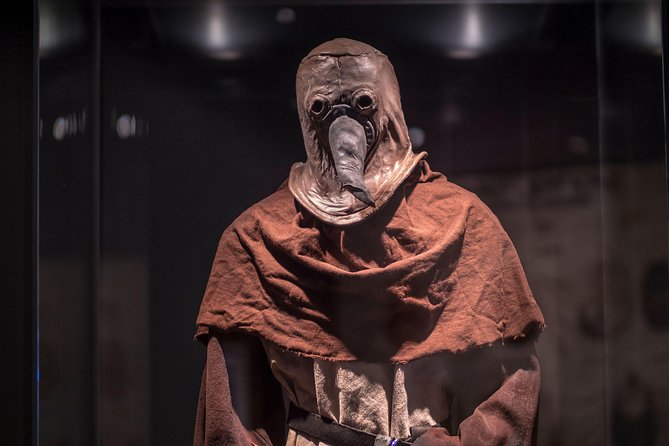
picture credit: Houston Museum of Science, Death by Natural Causes Exhibit
Death

Previous pandemics have wiped out half the populations of each town and village. When that is happens today, there is indeed a problem deserving the solution being offered.

Whoever is controlling the puppet that you are, is pulling your strings. Now is the time to start pulling back. You might be surprised to find out who is on the other end of the string!

White Lies Matter

When I was a boy I had an aunt who had been a Baptist missionary in, what was then, the Belgium Congo and is now the Democratic Republic of Congo.

This gives you a clue that this was the 1950’s and Africa was still largely in the hands of European countries. She and her husband were captured and managed to escape prison and return to England. I remember her telling me once, that ‘black people are not as intelligent as white people’. Fortunately I had never seen a black person at that age. But it was one of many ‘white lies’ I have heard.

I use this anecdote to show how the morality of generations evolve and change. After the second world war and the fight against fascism, opinions of others based on their race, religion, disability, sexuality were liberalised. The Nazis and to some extent Victorians, believed in eugenics and the creation of a ‘master race’ – completely opposite of what today we call ‘respect for diversity’.

My own skin colour I will not reveal here, as it changes with my exposure to the sun and is therefore of little relevance, and my race is – human.

The permission to abuse another human being, on account of their perceived inferiority must go back to ancient Sumer, Abyssinia, Egypt, Greece and Rome. Throughout the Middle East and the Classical world, people were either royal, free or slaves. This was a ‘perfectly normal’ set up and no doubt solved the problem of what to do with prisoners from conquered lands, as well as deciding who was going to do the washing up.

A Chain Gang in Ancient Rome

B Ancient-Rome-Roman-Slave-1024x682

When Europe adopted Greek and Roman classicism in the Renaissance they stole and copied statues of gods and Emperors; more as decorative pieces of sculpture, rather than because they admired the shameful behaviour of minor gods and Emperors.

But this model undoubtedly had an effect on the human consciences. How else could slavery have remained legal until the eighteenth century? When Europe was exploiting the West Indies and needed slave labour, Africa was convenient for it’s ships to pick up more slaves, and yes, sometimes from Africans ready to sell their enemies.

In those times much of the riches of the Western cultures came from the sweat, blood and tears of slaves. We know this, so – have we changed?

I personally think that we have, but not totally. I see people from all over the world living and working in European cities. There are high achievers and low achievers in any society, depending on how you measure ‘achievement’. But more importantly, people all over the world today are better fed, more likely to survive birth, and more likely to be educated and have access to health care. There are obviously exceptions to all of these but I am describing a trend. There are graphs produced by physicians and social scientists like the late Swedish academic Hans Rosling, that tell us this.

There is room for everyone on the planet according to the Professor

B hans rosling

But the devil is, as always, in the detail. Racism endures in the minds of people of all races. There is a saying ‘birds of a feather stick together’ and as a description of human social behaviour, this remains largely, true.

The European collective unconscious has a lot of skeletons in it’s museum vaults and these continue to rattle to the present day.

Clearly, national institutions continue to exert power that is prejudicial towards it’s citizens on account of race, religion, gender, sexuality, disability – despite the introduction of many laws, certainly in Europe, to correct this.

Personally I do not think new laws change societies of themselves, there has to be more. Even after the late Martin Luther King Jnr. gave his inspirational speeches in the 1960’s; sixty years later there are still statues of slave traders in European cities and military bases in the southern states of the USA named after confederate generals.

Head of Martin Luther King Junior in MLK Park, Buffalo, New York State

B Head in MLK Park

Whilst it is correct to record and preserve the facts of history and heritage, much of what our forefathers thought was ‘acceptable’ is nothing to be proud of today. Museums and history books must be  trusted and treasured so that they enable future generations to learn from the past. This will, at best, inspire an imperative to practice compassion towards one another today, because we got it wrong in past.

Therefore it is clearly the responsibility of those with the power to do so, to make regular assessments of local and national institutions and weed out any ‘honouring’ of the past, of which we should be ashamed, without hiding truth.

The African Americans and many allies, are presently leading the charge against their prejudicial treatment, but the lesson has global implications.

There is not a single human being on the planet including myself, who would not benefit from keeping a constant check on personal behaviours towards others that reveals some irrational prejudice, and immediately correct it.

Some argue that doing nothing is also acting with prejudice and perhaps they are right. Laws can be broken by act or omission, so can our personal integrity. The saying goes something like; ‘evil thrives when the good guys do nothing’.

And it is a fact that people of all colours, creed, tribe and what ever distinction you choose, have done nothing for a very long time. The history of post colonial Africa contains many shameful periods of genocide.

For example, in the Democratic Republic of Congo between 1997 and 2003, five million people were killed. If you read an article in the Guardian Newspaper website entitled ‘Wars Will Never Stop’ it quotes a young fighter who was dying in hospital of his shocking injuries from a local skirmish with a rival faction of his rebel group;

I was just a foot soldier so I don’t really know why we were fighting,” he said. “There are lots of reasons I think …. I don’t think the wars here will ever stop. They will probably get worse.”

The question has to be asked, where were the protests of outrage from people of African heritage in their adopted countries all over the world?

Who did nothing when 800,000 people were slaughtered in Rwanda in just one hundred days in 1994?

Rwandan Genocide

B rwanda-genocide

 We all have to be careful that they are not being stirred up and manipulated for political reasons. In Rwanda the principle tool for the stirring up of hatred was the public radio.

All societies have to guard against the publication of false information or the abscence of true information. For instance, it is curious that the size of the problem of ‘deaths in police custody’ is not published, despite a law in the United States of America requiring them to be so. The Death in Custody Reporting Act of 2013 went into effect in December 2014, but official figures have never been made public. The reason is either that these figures will prompt national outrage and shame, or lead to a conclusion that the problem is much smaller than it is being made to seem.

Clearly, one death is too many, but national figures covering 500,000,000 people have to be published openly, especially when feelings are running high as they are now.

The core problem is contained in the hearts of those who nurture hatred towards other human beings, for whatever reason. It does not matter if the hatred is black against black or white against black or black against white or white against white. The issue, in my view, is not an identification with a race or class, or creed, but the level of willingness of each human being to allow their love for all of humanity, to rise above everything else.

‘Hate cannot drive out hate, only love can do that.’  Dr. Martin Luther King Junior

The Tunnel at the End of the Light


There used to be a car, in the 1950’s called the Ford Popular, endearingly known as the ‘Ford Pop’.

If the model T industrialised the manufacture or cars, it was still only affordable for the middle classes of America.

But the Ford ‘Pop’ bridged that class divide and provided a ‘people’s car’. Germany had done this in the 1940’s with the Volks Wagon Beetle, but Britain took a while to catch up due to a short ‘intermission’ called the second World War.

The greatest car ever built – Ford Popular 1954

picture credit: carandclassic.co.uk

Light Ford Pop 103e 1954 carandclassic

What do you expect from a people’s car? Certainly it is not going to have a chilled drinks cabinet and cigar lighter. Everything was basic, functional and appealing to the common denominator of public taste, availalbe in black, black or black. It was, naturally, very popular and it transported families in comfort from city to beauty spot in large numbers. If you wanted anything other than a can of baked beans, you had to get a pay rise.

Fast forward to today and you can draw a parallel between the dumbing down from ‘the good life ‘ for a few, to ‘dull and ordinary’ for all. The middle classes in both the UK and USA lost their grip on political dominance, because the workers have come out in larger numbers to vote.

In the last decades of the 20th century, politics was complicated. Whilst you didn’t need a degree in political science to understand what was going on – it helped. The whole process of electing representatives on multiple – often contradictory – manifestos, parliamentary debate, Sovereignty, national priorities, international relationships and above all, law amending and making – was baffling to most. So it was left to the ‘Toffs’ from elite universities to speak down to voters in election campaigns to make promises everyone could understand – even if they were expected to forget them later.

Enter the internet in the 21st Century. Whilst you could write the equivalent length of Nelson’s Column on how this availability of information has changed societies across the world, there must be changes.

The most obvious of these is, in my view, the ‘citizen scientist’. In a stealth move worthy of the Great Harry Houdini, ordinary people who never understood science at school, are suddenly ‘on to it’.

If we  regard science as a way of thinking logically about anything – using the ‘scientific method’ to prove or disprove propositions – then everything is up for change and challenge.

Call a friend?

Light NHS Direct

Suddenly people were empowered to not believe their medical Doctors. You look up your symptoms on the internet and then go and tell your Doctor what the problem is how you want to be cured providing it does not involve vaccination. The UK National Health Service even encourages this by creating NHS call centres. The staff follow algorithms in the same way G.P.’s do – perhaps even quicker and certainly without having to catch another disease in the Waiting Room.

The same process has crept into most other areas of professional expertise; people design their own houses, people cook and bake, people make art, play musical instruments, make astrological predictions, indulge in puppy care and kitten care – you name it people do it – and the walls of Jericho surrounding the professional classes have fallen.

Great, you might think. This is democracy at it’s best. People power!

The problem is the obvious one and why even Socrates, warned against empowering the masses.

The problem is that people do not access and use information, knowledge and wisdom in the way that professionals have been painstakingly trained to do. As always it remains true that, things are more complicated than they seem.

It is easy to reduce areas of knowledge to ten ‘top tips’ – how to build your own house- and make it look easy. Speak to anyone who has built their own house and they will describe the most stressful time of their lives, going over time and over budget and still the roof leaks.

Socrates warned that ordinary people did not have the education to be trusted in such things as – voting. Perhaps this is one reason why women in the UK at the turn of the 19th century were still denied a university education and a vote – why this particular prejudice was suffered for so long.

Even with a university education, young men and women in the twenty first century are finding it hard to get a job. When the Blair government in the UK declared an aim to give a top class education to fifty per cent of young people, the ideal appeared noble. But the reality was that ‘degrees’ became so common that they were no longer the doorway into top jobs.

Worse still, with the introduction of University fees in the UK, young people were enslaved into a life time of paying off a high interest debt – all on the promise of ‘earning more’. And governments too are unlikely to get their ‘pound of flesh’ from the deal. Grants to the few worked better in my view.

In primary schools the children of the first decade of the twenty first century were told how clever they are and one day they might be Prime Minister. It was of course a lie told be people who had only become teachers who took holidays at home.

Only a few people ever become Prime Minister- as if we need telling.

The president of the United States for instance, has been described by psychologists as ‘adolescent’. Although he boasts of a ‘very, very, good education indeed’ – he didn’t listen in school and learnt very little. Add to being academically dumb, other short comings which doubters love to list, then you have a candidate appealing to those who are fed up with being talked down to because they are ‘very, very good people indeed’. Fortunately in America there are plenty of these in the southern states.

Trump uses short phrases to plug home a message easy to understand and remember for the masses;

Make America Great!’ ‘America First!’

Johnson does the same; ‘No Deal Brexit!’ ‘Project Fear!’

Their close advisers are no longer civil servants or even elected politicians. They are media savvy individuals who know how to change how voters and party members think. In the UK now there is not even a deputy Prime Minister the PM can discuss strategy with. Instead their is an unelected ‘close adviser’ to whom the PM remains loyal – at least until Brexit is over – despite protests from his own party back benchers.

But the patients have not completely taken over the Mental Health Institution. There is today a swing back towards trusting the middle class professionals. Self build houses leak, Mr Kipling’s cakes taste better, art is not easy. But particularly at this time of crisis, people have seen the highly trained men and women in the health services, battling away for little personal reward and realise, ‘I could not do that’.

Suddenly, the science of Virology is laid out like a patient etherised upon a table, and no one except the professionals understands.

picture credit newseu.cgtn.com

light Neweu cgtn Virology Lab

Because it’s difficult to ‘do the right thing’, science is emerging as a wise advisor to governments. When Boris Johnson gives press briefings he is flanked by non-elected scientists who give ‘advice’. This appears to be a correct and ethical process until you realise that there as many views on a subject as there are scientists. Scientists often disagree with each other’s ‘version of the facts’. They will say that more studies are needed, larger samples, more vigorous methodologies, new measuring instruments and technologies – innovation and discovery!

(A particularly cynical pundit will suggest that governments are setting up someone to blame, when the strategy is seen to have killed thousands because the government policy was late and or wrong.)

This dark secret of science is not so dark and we should demand to know it. Should President Harry Truman have been persuaded to build the Atomic bomb – ending one war and starting a cold one that sits like a dripping glacier, to the present day?

picture credit: atomicheritage.org

Is that a nuclear weapon or are you just pleased to see me?

Light Harry Truman atomicheritage org

Who voted for the Atomic bomb? Certainly plenty of people protested against it in hindsight but knowledge, once out of Pandora’s Box, never wants to get back in.

Suddenly ‘the people’ see the scientists as doubtful holders of solutions to problems. Science has mucked things up just as often as it has created a better world.

And if you can’t trust the scientists surely you have to trust the politicians? Unfortunately there are as many political view points are there are sea gulls behind a fishing boat and the only thing you can be sure about is the direction of the boat.

So societies trundle into the twentieth century lead on by TV and radio personalities with regional accents – commoners who you can understand. Everything has been reduced to guessing games that requires no skill because the people tried science and it was even more difficult than at school.

If our politicians are also guessing their way along – without scripts, experience and the wrong pick of scientific views – is this the end of the light?

picture credit: author – unfortunately God moved.

Light through clouds

Lock Down

The following essay is an examination of how the theory of one area of social problem solving, is similar to and can inform another.

There are elements in common between those who look after our health and those who try to keep crime off the streets. These are the four strategic similarities;

Problems can be prevented

Problems can be analysed

Causes can be detected

Causes can be treated

Corona virus is not new. SARS and then MARS are two recent examples, but throughout history humans have been literally, plagued by them. Each time they come and go, there are lessons to learn. These will help preparation for the next.

This may involve warehousing hospital supplies for instance. The span of time between outbreaks will help to inform the ‘use by’ dates on perishable items. Typical examples would be testing kits, ventilators, hand sanitiser, personal protective equipment, software and even signage.

South Korea has performed particularly well in dealing with the current corona virus pandemic. It puts this down to four key strategies, which are the same as those above;

Prepare

Test

Trace

Isolate

Having the means to deal with the next outbreak at the very earliest opportunity is essential. Countries that have experienced denial of a problem by it’s leaders, or have lacked equipment or funding (e.g.. for research ) are going to lose more citizens than those countries which have prepared.

The old adage ‘a stitch in time saves nine (stitches)‘ is wisdom from the past that we ignore at our peril.

Any police chief trying to reduce crime will be familiar with the principles of crime prevention. Simple and best value strategies for dealing with say, burglary can save the tax payer vast quantities of money needed to put one burglar behind prison bars. Ten pounds spent on preventing burglaries, might save a one hundred thousand pound court case.

Over the last few decades police have moved from the universal production of posters such as the ‘lock it or lose it!’ campaign and ‘watch out there is a thief about!’ to targeted prevention and detection.

It is clear that sending a crime prevention message that may or may not be highly relevant to a community is wasteful. It also raises an unwarranted anxiety of being a victim of crime within low risk areas of the country.

Instead police started analysing their computers and finding patterns. They were interested in where, when and how a particular crime was occurring – long before they asked the question ‘who was doing it’. This built up intelligence which is invaluable to inform the prevention of crime. For instance, if thieves were breaking into cars in town centre car parks, the analysts identified which car parks were most targeted, which parking spaces were being targeted, what time of day and day of the week etc. This might identify an area in a car park where they was a good escape route and poor lighting, no CCTV coverage and little footfall. All of these could be rectified by car park managers on advice from the police. The public would pay nothing and the car park manager would see a rise in the use of the car park and revenue.

The South Koreans were also good at identifying where corona virus victims were. Instead of fighting what Donald Trump and Boris Johnson called ‘the invisible enemy’, the Koreans analysed information from personal smart phone locations cross referenced to recent entry and exit of foreign countries. With this information they were able to target their testing and identifying ‘hot spots’ where transmission of the virus was likely to happen and or happening. They even used police detectives to trace individuals and their movements.

Police call this ‘detection’. It is the natural follow on from the initial process of finding out as much as possible because the problem is hidden, not invisible.

By targeting resources in this way there are two benefits. The first is that it is cheaper. This may sound callous but in fact cost can be a huge inhibitor to action.

The second advantage of targeting action, is that businesses can carry on, if only in a limited way. One tactic for instance would be for elderly high risk victims to be placed in isolation while low risk younger people to maintain the economy and public services.

Prevention and Detection are really two parts of the same process of ‘reduction’ whether you are considering health or crime. They exist on a spectrum between the two extremes. At each end of the spectrum, detection contains some prevention and prevention contains some detection. As an example, the final result of the criminal justice process is to put an offender in prison. One of the possible outcomes of this is hoped to be preventing that individual ever doing the same thing again. They usually do, but sometimes it works.

picture credit: detroitjournalism.cog

lock down detroitjournalism

It has been suggested that the present pandemic has been dealt with in a manner in which the cure is worse than the disease. The ‘lock down’ approach to entire populations has ramifications that will lead to huge public debt and austerity.

The question has to be asked, ‘is lock down the only way to deal with the pandemic? The answer is no, because the South Koreans didn’t have to go that far.

Their strategy meant that they did not need to lock down their populations, eliminating in part at least, mental and physical health problems resulting from isolation and economic austerity in the future. Although it was clearly not ‘business as usual’ it was a working compromise between the needs of people to maintain health and an income and the need to eradicate the virus as quickly and with the least cost of money and life.

By targeting their treatments to areas of the population in most need, they have provided a model that the rest of the world would do well to study and copy. Lessons learned should already be being digested and fed into the strategy for Covid 20, which we can expect is already hanging in a cave somewhere in the world.

When the Covid 19 strain was first detected in China the world watched. As a top down organised country China had more tools at it’s disposal than democracy’s, but the principles are the same. What the rest of the world might have also taken seriously is asking the question, ‘are we next?’ Governments might have looked to the World Health Organisation for an answer. For many weeks the WHO did not declare a pandemic was happening. What world leaders needed to know was when it would happen i.e. be proactive not reactive.

In the United Kingdom the medical journal The Lancet included an article on how the outbreak in China will become a pandemic. This was in January 2020. In February the country had a chance to prepare. It did not. At the end of March personal protective equipment, ventilators and testing kits are still being ‘rolled out’ – as the government puts it. New cases are doubling every three to four days. The government of course denies being slow in preparing for the pandemic and points to the fifty new hospitals they have built. But hospitals are for the treatment of victims, not preventing people becoming victims. The resources are sent to the results of a pandemic not preventing one.

The vital point here is ‘timing’. There are three possible outcomes from deciding when to take action.

The first is that measures are put in place too early. Ministers in the UK expressed concern that fatigue sets into the population if protective measures are introduced too early. They wanted to time maximum protective measures with maximum victims. There was an assumption that the patience of people to avoid their death or of loved ones, is limited. It could be argued that as more fatalities occur the more concentrated minds become.

The second possibility is that exactly the right moment is chosen. This is ideal but is best judged in retrospect, ‘wise after the event’.

The third possibility is that measures are put in place too late. In this case there will be the highest number of human deaths and the most expenditure of money.

Of these, the first two are proactive and in my view produce the best results.

Reacting to problems is to undertake stitching nine stitches instead of one.

Getting the warnings right, is where you might expect the World Health Organisation is the expert. Viruses are not new and statisticians and virologists can get together and draw up predictive curves. They should be good at this even if each country is different.

The tragedy is that politicians are self selected for their political ideals and personal appeal. They may not have the abilities to assess a situation and give precise direction at the appropriate time. They may not listen to their advisors and or may just use the advice to avert personal responsibility.

These principles of proactive and reactive management and decision making are as true for dealing with crime as for health. They are so universal that they can even be applied to playing a game of football, which is why clubs employ statisticians to analyse games in minute detail, as they progress and after.

There is nothing in life for which we are not equipped. The only real challenge is overcoming our own shortcomings.

Red Ball White Ball

These series of essays have one common theme. They take another view from the conventional one. In life, we encounter complexity and the principle way we deal with this, is to simplify. When this happens however, something is lost and often that thing was the most precious. It is called;

Throwing the baby out with the bath water

Problem solving is one life skill that is invaluable, more so than, dare I say it, algebra. Almost everything we do and our games are problems in need of a solution. If the bath water is cold, mothers remove the baby before throwing the water on to the garden. It may sound obvious but often problems present in confusing ways…too many things are at the same time. That is when the baby ends up in the rhubard patch.

baby_bathwater

A game such as Snooker is a problem solving game. The players are presented with the complex task of putting the red balls into the table pockets. Complexity is introduced by rules. One is that the balls can only be pushed with a stick; you cannot pick them up and put them into the nearest pocket! Then you have to push a coloured ball into a pocket alternately with a red ball, and a scoring system giving values to balls, means that the best player will win prize money and fame. But the most complex skill of all is the use of the white ball. This must be pushed with the stick to hit the other balls and it must always be controlled, so that it comes to rest in anticipation of the next move. Those not familiar with the game take a while to realise that hitting the red balls is not the primary objective, but skilfully placing the white ball as it rebounds off the red or coloured ball. With this skill you  solve the obvious problem and set up for the next problem, within your own hidden game strategy.

red ball white ball pocket

Complete problem solving involves a highly inclusive level of complexity, where consequences are anticipated rather than left to chance. There must be no ‘unintended’ consequences.

Stage illusionists know that the human brain simplifies what it sees in order to interpret what it is seeing. They use the technique of distraction. They know that the audience will watch the hand thrust towards them whilst something not to be seen is done so fast and discretely, that it is not seen. This is classic, red ball, white ball.

Politicians have to solve highly complex problems and apply practical solutions. The first stage of problem solving is to define the problem.

At present the world economy’s are being threatened by a pandemic. That is the problem. People with the disease are a short term problem, whereas the world economy needs to provide work and a livelihood for every citizen of every country. This is a far greater problem in the long term than the present ‘red ball’ events presented to us daily concerning Covid 19.

We are told that the origin of the new virus was from markets in China where bats were being sold. We all believe this. This is the red ball. We think we have seen it go into a pocket. But did the Chinese authorities close down the markets selling wild animals? Why didn’t they after SARS? Could there have been another source of Covid19?

One Chinese lady interviewed declared, ‘This could have happened anywhere’, being defensive over the suggestion that this and previous viruses like SARS, happen in China because of their love for exotic meats. Perhaps she has been told that people in the West also eat bats and rats and cats. That would be her ‘red ball’.

There is an Institute for Virology in Wuhan; the Province where the outbreak is alleged to have started. You might expect that they would be anxious to deny accusations that they let out and or create Covid 19.

Yet if you view the home page on their web site, the top story is about HIV. The top news story is that a delegation from the Ministry of Education of Kenya visited. No red balls present, just a white ball suggesting the aim of the Chinese to develop the untapped resources of Africa.

Was there a terrorist incident involving the release of this virus, as has been the plot in Hollywood films?  Are too many people now living in cities? Have individuals immune defences been reduced through poor diet and lack of sunshine? Is there more than one variety of Covid 19, one strain being more virulent than the other? (The purpose of this would be to increase fear of the virus whilst limiting deaths.)

Could there have been some political placing of the virus in a country to destabilise it more than other countries? Both China and Iran are viewed as threats to peace in the West and Middle East by western politicians.

These and many other possibilities, are unexplored but possible ‘white balls’ that indicate hidden agendas. But we are too engrossed with watching red balls (or red herrings!?) fall neatly into pockets.

Few journalists have asked challenging ‘white ball’ questions on the television screens in the west. What is being presented are ‘red ball’ events such as where the virus is now and in what strength. Which events have been cancelled, how is it going to affect various people in various situations, etc. etc. One red ball after another is being put into a pocket and as quickly as they go more appear on the table. It’s fascinating and distracting.

The real question is ‘what is the white ball doing?’

Who is behind what is going on, is an unspoken question. Any suggestion that the pandemic is a deliberate manipulation is ignored or described as ‘fake’ or ‘conspiracy’. And yet, the most important rational task, is to discover a conspiracy if one exists.

Puppet President

Who is pulling the strings of the puppet president of the United States of America for instance? Why? Because Mr T. started the health emergency by denying one exists and that it will go when the weather gets warmer in April…standard off the cuff remarks made by the uninformed. Behind the curtain a patriotic doctor who started testing for Covid 19 is told to stop, as that is the responsibility of another department. This department came up with a test three weeks later which did not work. By this time the Jennii was already in LA and not to enjoy the surfing. 

We saw the same ‘white ball’ tactics with 9/11. Every day of the year, every hour of the year, fighter jets are on the runway, ready to defend the USA from hostile aircraft entering US air space. But on 9/11 all those jets were off somewhere else on a pre-planned exercise. The guard was down. International conspiracy? The prize for the winner of that game was to up national surveillance and remove individual freedoms for Americans. It is called the National Security Agency and it is saving everyone from terror plots.

Who will gain from the current pandemic and the fall of western economy’s? No individual government gains. In fact they all lose. The only gains will be upping international surveillance and removing individual freedoms.

Specifically, cash will be removed as a system of payment, on the grounds that it ‘spreads viruses’. This has never been true in the past few thousand years but suddenly it is. In place of cash is the card (or RFID implant) and the control this brings to governments to know where it’ s citizens are and whether it wants to allow them to have personal money.

Second is the extinction of small and medium size businesses and the self-employed. Examples might be taxi drivers who own their own cars and certainly low cost airlines. This is in contrast to large and multinational corporations such as Amazon, Microsoft and Google, who act in the interests of the large white ball.

One day this large white ball will put the last ball of the game in the pocket. That will be the black ball worth seven points. If you think things are dark already, then that will be the blackest of black days; the end of personal freedom. Game over.

Don’t Fence Me In

This the title of a wonderful old song sung, I think by Bing Crosby. It’s all about the exploration of the west in nineteenth century North America. After millennia of humans and animals roaming free, cattle ranching introduced ‘ownership’. The Native American Indians didn’t understand it and gave away their lands before they realised they would have to fight and ultimately die for the ‘reservations’ that were left for them.

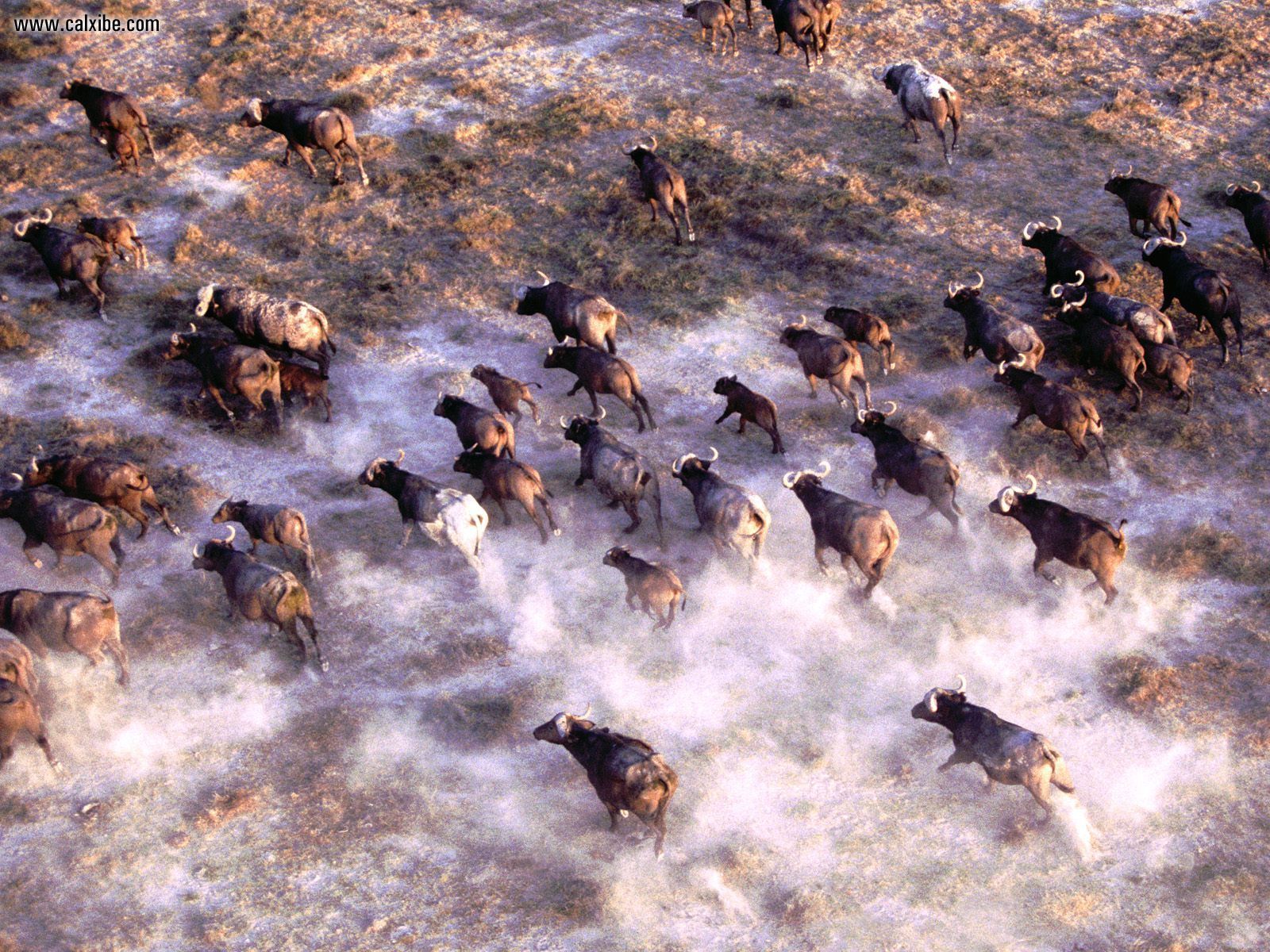
picture credit; WallpaperWeb.com

Stampede_African_Cape_Buffalo_Herd

It is an paradox that man craves freedom but loves boundaries. Astronauts report on viewing earth from space, that it appears as one planet. There are no political boundaries that we are so used to see on global maps. Boundaries are ultimately arbitrary. They serve only the tribal mentality of ‘them and us’ present in early man and persisting, almost unconsciously, to the present day.

The poet Robert Frost wrote a poem which included the line, good fences make good neighbours. This concept, at one end of the spectrum of possible combinations of freedom and enclosure, works – but only temporarily. Eventually, because of tribalism and greed, a fight breaks out.

When the British realised the rule of India by a distant Queen of England was over, they were faced with the problem of handing over a sub-continent to self rule. A problem because the Muslims and Hindus were at each others’ throats. If the British left there would be a blood bath. So they drew an arbitrary border on a map and created a new country, Pakistan. Like the creation of the Berlin walls, it divided families, created mass migration, a loss of homes and livelihoods and riots and slaughter. Tribalism, whether under religious or any other banner, is never good for all. Today India and Pakistan face each other with tolerant hostility, with a hundred nuclear missiles each, ready to wipe out each other and the rest of us. As an afterthought little Kashmir remains a flashpoint where this could happen. When you draw political maps, you had better know what you are doing for now and the next thousand years.

When the UK made the minority vote decision (only a quarter of the population voted in favour of Brexit ) to leave it’s partners in Europe, it had not considered the effects this would have on Northern Ireland and Scotland. The border in Eire was created centuries before to create a ‘non catholic’ portion of Ireland that could be controlled from England. The political reasons for it’s connection with United Kingdom are changing, and a likely consequence of the UK seeking ‘independence’ is losing Northern Ireland to the Irish and Scotland to the Scots.

Virus’s, and all the malign forces that nature unleashes on humanity; virus’s do not respect political boundaries. It takes two weeks for a virus to travel around the globe. The only way to extinguish a virus is for each person to crawl into their own cave and stay there. They may die or they may survive. In this situation one is not even aware that one’s neighbours, also potentially dying, are on the other side of the wall.

When this current Covid-19 pandemic is over, as it will be, the nations of the world should take stock. They need to seek to understand the lessons that come from such a pandemic, for virus’s are a greater problem than terrorism and extremism and wars and all our man made horrors. In 1919 the second wave of Spanish Flu killed everyone who caught it.

Surely, world leaders must learn that humanity has more to gain from co-operation and tolerance towards all living beings, whether animal or human. There are no boundaries in nature except those created by habitat and when there is enough habitat to go around, everyone is happy. When large populations move to escape political or natural upheavals, these people are ourselves coming in the other direction.

In Europe, the European Parliament and non-governmental organisations like the WHO, have failed to create a strategy to cope with immigration. Countries on the edges of Europe such as Greece and outside such as Lebanon are full to bursting point. Now Greece is shooting warning shots into the sea at immigrant boats.

In the United States, the solution to immigration from Southern American failing states, is of course ‘a wall’. As if we had not learnt from history how the Berlin wall was pulled down and how Palestine was shrunk into walls – good walls rarely make good neighbours.

Mankind craves to be free and this moment in history is a time for humans to come out of their caves and obeyance to tribal rules. Instead of hating and fighting each other, we are in a position to see the greater picture from above, where barriers do not exist. There is only humanity, and the sooner we treat the planet and each other with humanity, the sooner we will lose the feeling of being ‘fenced in’.

The Good Life

There is a remarkable pair of photographs on the BBC website today. They show satellite images of eastern China, Hong Kong and Japan. The images are filtered to show the intensity of air pollution. The January 2020 image shows ‘business as usual’ and the principal cities and urban conurbations are highly coloured from yellow to high risk, red. The February 2020 image shows no coloured areas at all! The air is clean because production in the factories has stopped. Ironic that such a gift to the populations, of sunshine and clean air occurs when millions are in quarantine.

The message we can draw is not how contagious viruses are – we know that. No, the message so plain to see is ‘slow down and stop!’

slow-down poster

The industrial tenets of, ‘more and faster’ for profit and a promise of prosperity for all, are also familiar to us. Humans deserve a good life so the growth of benefits from industrialisation, cannot be denied. Over one hundred and fifty years ago people started to leave the land and live in cities. This process means that now about half the populations of most countries live in cities.

In response industrial production is speeding up, as robots and AI are literally taking over from humans. The only question is; at what point is ‘a good life’ reached?

A casual observer in a modern metropolis, might perceive a collective sadness in the faces of passers by – anxious to reach their individual destinations. If asked if their life is a ‘good life’ – I wonder how they would reply?

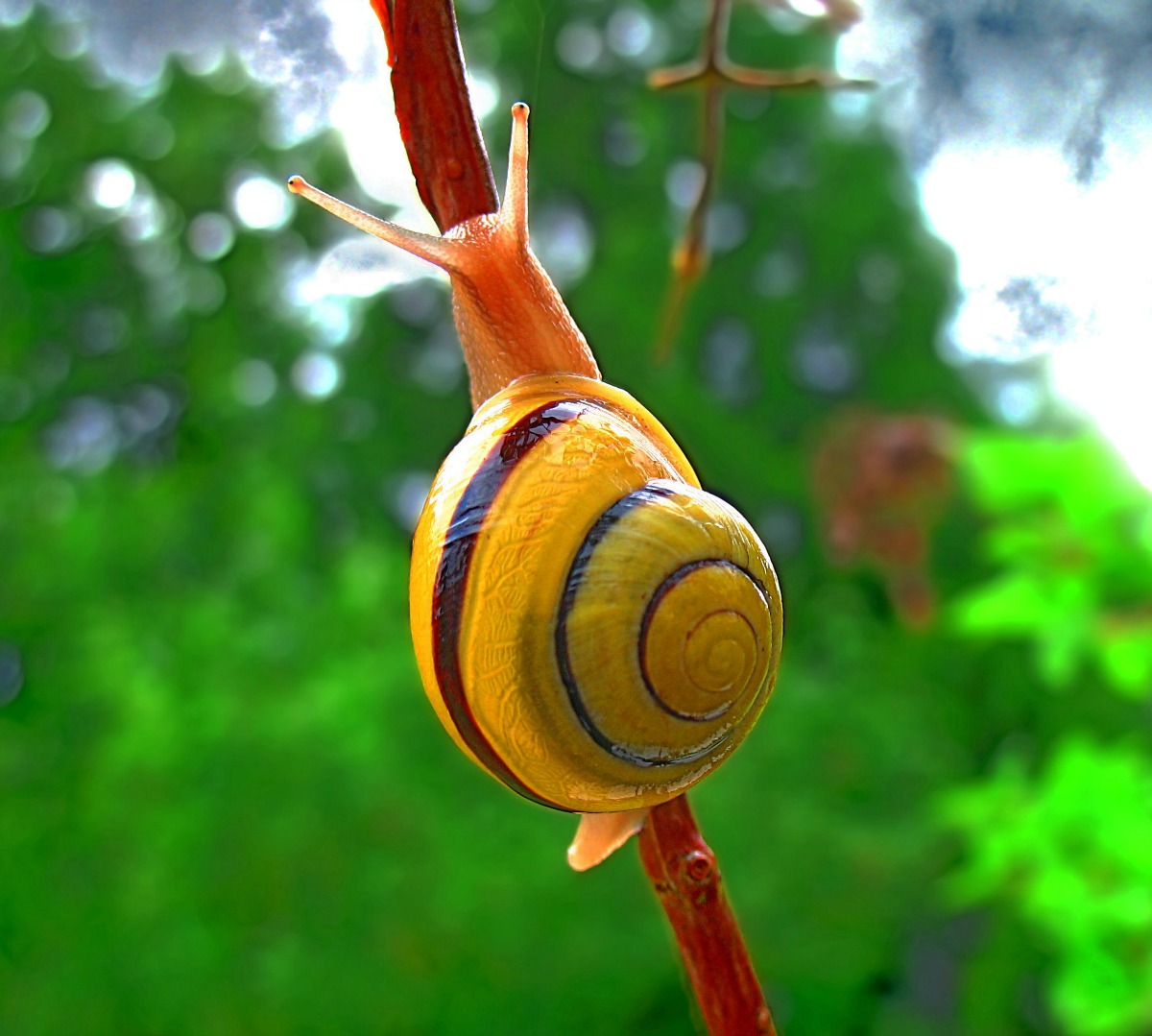
picture credit: WithPause.com

Snail credit With Pause

When I was a student in London in the mid-70’s, I took part in a ‘slow walk’. A collection of willing volunteers met at the north end of Hammersmith Bridge and lined up across the wide pavement. We set of in a bunch like marathon runners, only it took us three or four hours to reach the south side of the bridge – a distance of maybe three hundred metres.

Slow walking took discipline at first, but soon became strangely normal. My mind felt completely relaxed. I might as well have been in meditation – in fact, I was.

picture credit: Londr.com

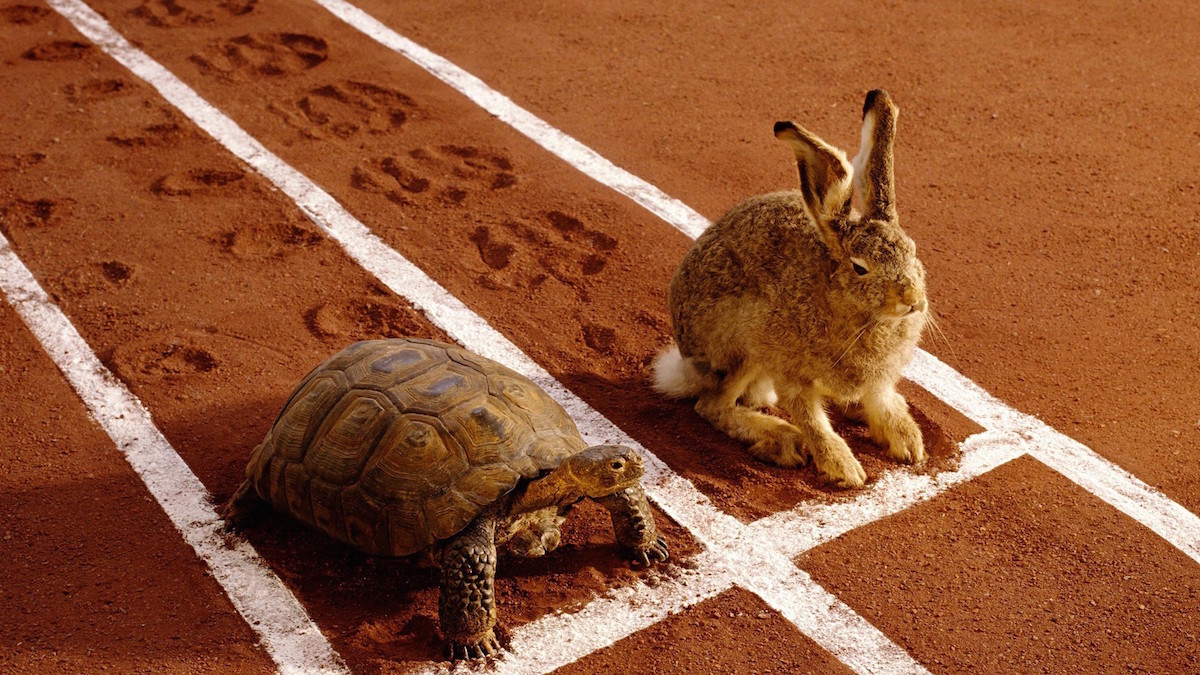
hare and tortoise credit Londnr

That was part of my ‘good life’ when I had time to be fast or slow and chose the latter. There are in the present day, many experiences of ‘slow living’ available as an alternative to the human ‘race’. There is slow food, slow travel, slow cities, slow schools, slow books, slow living and slow money. See www.slowmovement.com and tell your friends!

In 2020 humanity is crossing the threshold where too much – too fast – too wrong – is damaging the planet and as a consequence, ourselves. Whether it is air pollution, sea level rising, food shortages, water shortages – industrialisation is ‘biting back’ the hands that turn the handle.

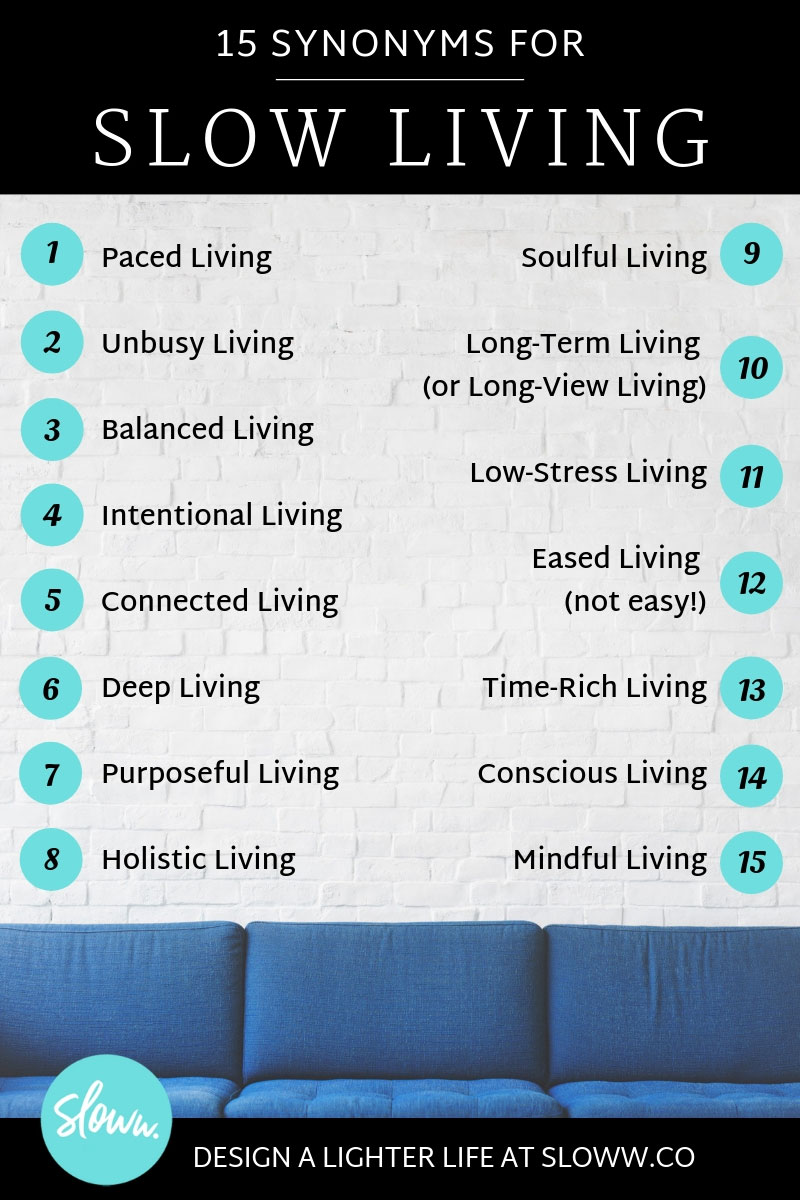
Sloww-Slow-Living-Synonyms-Infographic

This latest virus Covid 19, is amongst other things, a firm message for humans to ‘slow down and stop!’ Perhaps those confined to a room for two weeks, will draw a positive from the experience. ‘Not doing’ can alter expectations significantly. If ones normal expectations are unrealistic then the distress that comes from failure to satisfy those expectations, will never be encountered. Success or shall we say, contentment, comes from watching a spider cross a floor or a raindrop slide down the window; experiences usually never observed and enjoyed.

We will inevitably all discover that less and slower is more!

Somewhere between the extremes of fast and slow, is where humans can find the ‘good life’ they seek. How close to ‘slow’ do you dare to go?

Vote Me!

The day is approaching this December 2019 when the good citizens of the United Kingdom of Great Britain and Northern Ireland will have the opportunity to vote in a general election.

The outcome is being described as the most significant for a generation, so you would expect the process to be fair. Certainly, whoever wins is going to perch on the moral high ground of victory and fight off all criticism for a very long time indeed. Whether they will be entitled to be so smug, I suggest, is open to debate.

You see, I have a problem which is; how democratic is the voting system? My quandary as a voter, is that I approve of some of the policies of most of the parties. It should be explained that in the UK there is a left wing party, Labour and a right wing party, Conservative and Unionist. The middle ground is occupied by the Liberal Democrats and Greens. Other nationalist parties represent Wales and Northern Ireland and Scotland.

In the United States of America, the choice is more polarised between the Democrats and Republicans. Let us take this as an example. What if, as a US citizen, you decided that the choice was too small. Who do you vote for if you want to stop climate change but encourage industry? Who do you vote for if you want the state to pay for health care and a prosperous arms industry?

In a Spin About Voting?

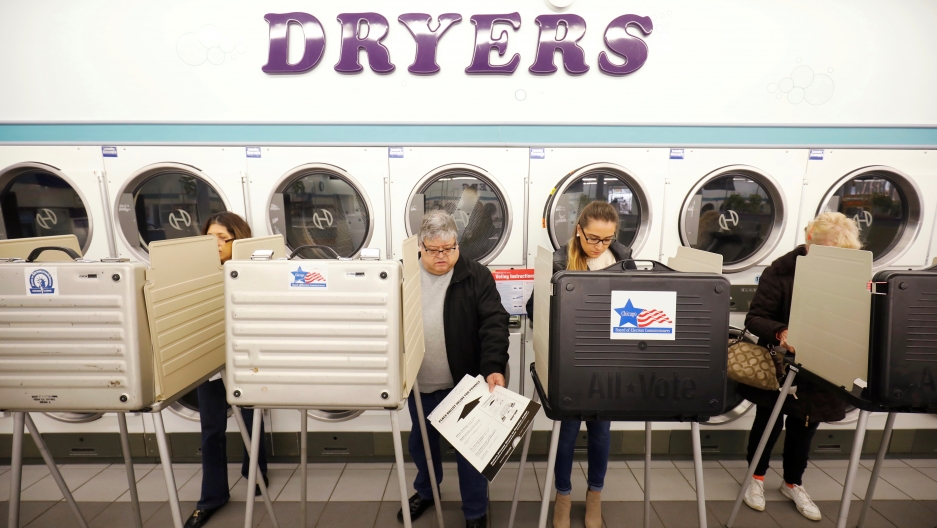
Voting in Laundrymat

My point is that with polarised choices, there is no room for ambiguity that emerges from personal political perceptions and priorities. Worse still the politics of voting reduces to personality rather than policies.

Even in the UK, where the choice is greater, the democratic options are more confusing. Many voters now just spoil their ballot papers by writing ‘I don’t agree with any of this.’ They are being asked to vote for a leader they didn’t take part in selecting – unless they were the tiny minority of party members.

They might distrust all the candidates on offer and feel ambiguous about their policies.

Each party writes a manifesto prior to an election stating their political motives and means. This works to an extent but has the problem for some voters that their may be slipped in controversial motives that the voter does not want to happen. For instance, the Conservatives slipped in having a referendum on continued membership of the European Union. Suddenly it became an issue even though the majority did not think it worth consideration.

Worse still, when parties fail to win a majority in elections, coalitions have to be formed. Italy, Spain, possibly the UK next week, have this problem. Two parties may come together for the sake of forming a government at the price of compromise on their manifestos.

The public will have no choice over how these mixed manifestos will be prioritised. Which policies and method will be forgotten or ignored and which prioritised? Coalition manifestos are not published before an election if considered at all. This can lead to unrealistic expectations by voters when coalition governments are formed, as in the Liberal and Conservative Government in this decade. The direction of the ship will be decided by the Captain and officers, not the crew and certainly not the passengers.

No provisional consideration is given to coalition prior to an election as all parties have to perform the pretence that they are going to win even if it is clear to all that they will not.

The dangerous consequence of this for democracy, that occurs all too often, is that a minority party gains disproportionate power by owning the swing votes. This happened in the present Conservative government who allied with the Democratic Ulster Party and much of the muddle of mixed motives over Brexit has resulted.

In recent elections we have seen and or suspected that the over emphasis on the personality of candidates has given leverage to foreign governments and fake or real ‘whistle blowers’ and ‘news vendors’ questioning the reputations and ethical principles of candidates or even parties. Democracy as we know it is easily undermined by misinformation, view the Nazi propaganda news in 1930’s Germany, if you think this is a new phenomena.

Even the date of an election day can be manipulated to support a particular party in a manner which is clearly not in the interest of fairness. In the present UK election the Conservative government chose the day in which the students from Universities will end term and be returning home for Christmas. Informed young voters are not likely to support the Tories even though the election and it’s issues mostly affects their generation.

Young Voters in the USA Choose Not to Vote

  V I Dont Vote Badges.

Even such a consideration as ‘is it raining’ has been measured to be significant on election days. Sending people to village halls to scribble on a piece of paper has to be reviewed as the majority of citizens in the UK rarely turn out to vote. Some living abroad for over 15 years lose their right to vote.

Lone Voter

Voting Lone Voter

These then, are some of the problems for Democracy. Some people say, ‘well that’s the system we have got’ or ‘it’s the best of a bad lot’ but you have to wonder if the country that prides itself in it’s democratic systems is not kidding itself, it’s citizens and the world.

I am not suggesting that Democracy should be replaced with the pedantic and often corrupt systems of power like Communism or Autocracy. I am suggesting that with the aid of computers and the internet, a more democratic process is available to elect representatives. This is my idea.

Firstly, the party system is out. The in-fighting of politicians instead of their countries best interest, is something most voters are tired of.

Instead, all candidates will put themselves up for election as ‘Independents’. Radical, yes, but read on because they can form parties after election, not before.

They will state their personal political views by placing ten stars against a list of important areas of government. This will be shown to voters as something like this ;

Education *

Health **

Defence ***

Transport *

Law and Order **

Business and Industry *

Farming and Fisheries *

Environment    nil stars

Social Housing and Homelessness    nil stars

In this list each aspect of legislation and distribution of taxes is prioritised by the candidate, according to their own personal views. They are not under any party pressure to support policies with which they feel awkward about or strongly disagree. They can be honest; a quality in politicians which many voters express their suspicion about.

The candidate has, say, ten stars with which to indicate how which issues they prioritise and the amount of funding they would give in comparison to others.

Now here’s the clever part. Each citizen is given the chance to indicate their priorities and how strongly they feel funding should be allocated to each on their ballot papers. Instead of one cross or tick for a party – which in the twenty first century has to seen as a crude political choice – each voter has the same number of stars as the candidate.

The last piece of this process would have to be constructed from new but it’s not impossible. What I am envisaging is on-line voting from a phone, personal or public computer. In an age when personal internet banking, shopping, even gambling! – is managed with a high degree of security and reliability, it must be possible to create a secure on-line voting application.

Ten issues are listed either as broad areas for consideration or narrow ones. The voter can either ignore these as being worthy of state support ( such as health care in the USA) or indicate a need for state intervention. The strength of these feelings can be indicated by allocating some of the ten stars used to vote with.

It will be impossible to use up more than ten stars or whatever number is allocated to each citizen, but ten is an easy number for most people. Their choice can be re-adjusted until the voter is ready before selecting the ‘VOTE’ button.

For a population familiar with the internet, voting will be accessible, timely, considered, representative and accurately describing personal views.

The final phase of the voting process is for computers to match exactly the views of voters to those of independent politicians. It is already established what the views of the candidates are and matching a set number of candidates (say 300 ) to the views of the citizen public, will be doable for a computer.

The result will be a selection of representatives who will accept office and be fairly representative of public opinion. Being politicians they will almost certainly form party cliques (birds of a feather flock together) but at least the system by which they obtained power, will have been representative.

This could be a sea change for how populations choose those who represents them. With the emphasis moved to policies and issues rather than personalities and power politics, a higher level of honesty and fairness will be achieved.

We have the technology already to achieve this. We just need the thinkers to describe how it can be done – as I have just done. Vote me!

Space Wars

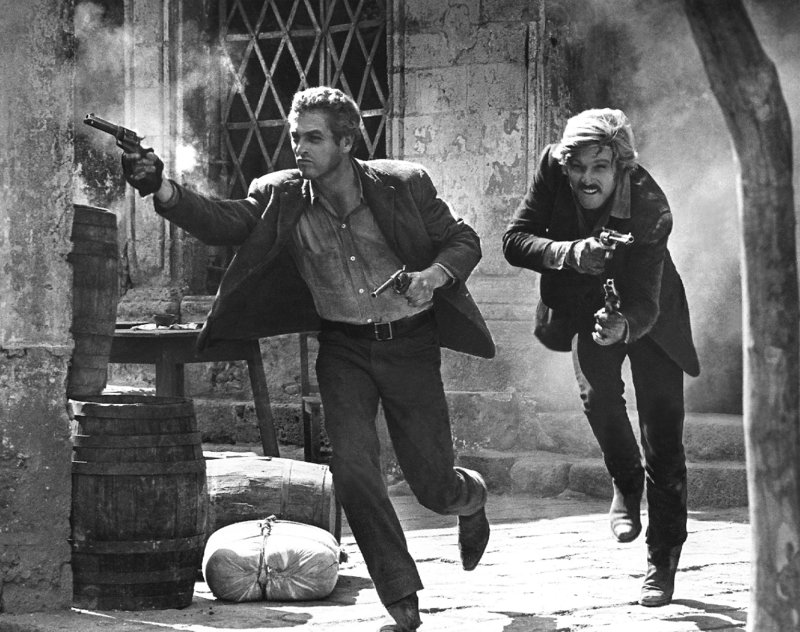
Butch Cassidy and the Sundance Kid is an enduring story of two bank robbers in the Wild West. In the film of the same name they are played by the good looking duo of Paul Newman and Robert Redford. They swagger through the film to a jolly accompaniment by Burt Bacharach (including Rain Drops Keep Falling on my Head) from one fruitful explosion to another. Inevitably the Federal authorities catch up with them and they manage to escape over the border into Mexico by the length of a horses tail. In Mexico they make a resolution never to rob a bank again, such has been the horror of their last experience. They realise they now have a clean slate to start their lives again. What happens next has always fascinated me. They start robbing banks in Mexico. A few bank robberies later, they die in a hail of Mexican army bullets.

butch_cassidy_and_the_sundance_kid1

The moral of this story in my view, explains a lot about the worst side of human nature. Remember that these are bad men even though they are played by a couple of smoothies. Humans find it very difficult to change their inner motivations, methods and objectives.

At present humans are plundering planet earth of her wealth. They have been doing it for a long time but now the scale and speed of the robbery is unprecedented. The villains have a plan;

‘Let’s start robbing again in space’.

China, Russia, the USA, Europe, even India have space programmes.

Why does India have a space programme when many of it’s rural villages don’t even have one flushing toilet and a sewer? The answer is complicated of course but one reason has to be the promise of new sources of raw materials; what in Klondike in the Wild West was nicknamed the ‘gold rush’. True to human greed for natural resources, these countries and others are not unaware of the promise of minerals ripe for harvesting from other planets and moons.

Without a World Government with an enforcement arm, it is hard to see how this rush into space and the allocation of unclaimed resources, will not turn into a laser gun fight.

On the 1st July 2019 the United States of America declared a new arm in it’s Defence Services; the Space Development Agency. Will the USA move itself into the role of World Government Peace Enforcement in space – like it has tried to enforce the non-proliferation of weapons of mass destruction on Earth? Will the USA being armed in space be accepted by those being told they cannot do the same? Bear in mind the present difference of opinions between the USA and North Korea and Iran.

The USA may or has assumed a role of Sheriff or ‘protector’ of the valuable scientific, communications and defence satellites already in orbit around the earth. This role is enhanced by the prospect of the new 5G satellites being privately launched – over 2000 in number – to provide fast internet to rural communities around the globe. Who asked for 5G is a subject for another blog. In democracies, no one votes for what private enterprise decides needs doing for profit. Arms manufacturers usually lobby for war.

It just happens because science and technology get the smell of cordite and can’t stop themselves blowing a few banks, and a few more and a few more. Ethics committees don’t carry.

The hugely wealthy entrepreneurs, Elon Musk (BFR) and Jeff Bezos (Blue Origin) both have their own visions for space exploration and travel. Will they be taking pot shots at each other across the craters on the moon or work together?

The space exploration of the 1960’s was famously driven by bitter competition between the Soviet Union and the USA. The latter likes to think it won the race but in the end what came out of those missions was a desire to monitor the earth from space, not keep going to the moon. This mutual desire and pooling of resources and know-how, evolved into a co-operative project which is the International Space Station.

Not surprisingly today, Russian and China want to co-operate in space and ban space weapons and they both signed a treaty in 2008 on the Prevention of the Placement of Weapons in Outer Space.

On 21st October 2017, the first committee of the United Nations discussed the non-placement of weapons in space. 122 countries voted in favour of such a ban and five against, which included Georgia, Israel, the USA, Ukraine and France. 48 countries abstained, including the European Union.

The reasons for co-operation disarmament in space are obvious so let us consider reasons for having weapons in space.

There may be attempts by rogue states or state sponsored dissident groups, to interrupt or destroy or threaten to do this to civilian or military satellites.

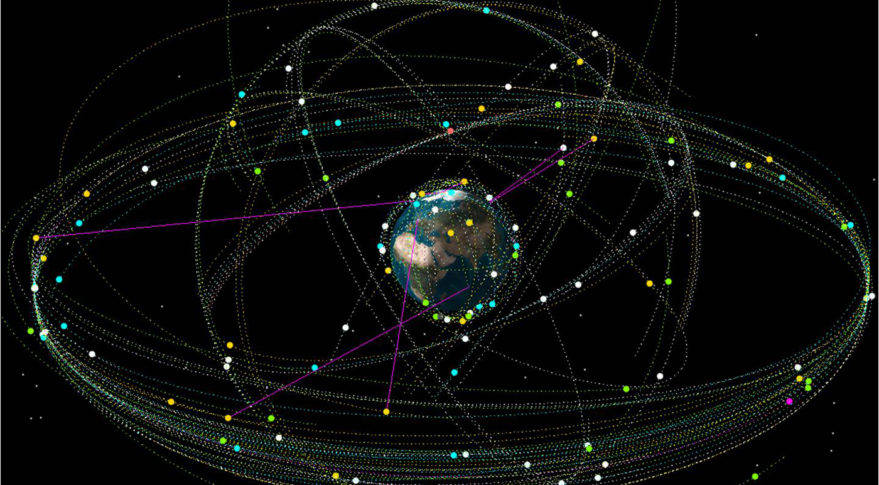
positions of satellites at time of publishing were correct but may have moved now

satellites

The problem with this argument is that a rogue state, or state sponsored dissident group, is being lawful in it’s actions in one view and unlawful in another. Robin Hood was by some definitions, a terrorist. Black and white hats are for cowboy films. The hats in space wars are multi-coloured and nuanced.

For instance, a GPS satellite is used for civil purposes and military. So is the mobile phone network and satellites and direct satellite communications used in those areas where there is no mobile telephone network.

You can describe the action as good or bad depending on which facts you select to present. The criticism is that the ‘threat’ that the threat on which the military base their plans and actions, can be exaggerated for funding approval reasons and, or just plain politics. A government likely to declare war on false intelligence on earth is just as likely to do the same in space. Different place, same gunmen.

There is also a non-military threat; namely asteroids. These are objects that enter the earth’s solar system from outer space and may be on a collision course with earth. The possibility is that a weapon of some kind may be able to alter the course of the asteroid. Comparing the then with now, money would be better spent on protecting the earth from humans rather than asteroids in my view, that threat being more immediate.

The last Hollywood blockbuster myth is one that has appeared on cinema screens since movies were invented – alien invasion. I call this a myth since my belief is that any civilisation that has found and is watching us for malign reasons would have acted by now. Because they have not I conclude that they are benign and waiting for humans to become spiritually aware enough to stop wanting to destroy the planet and each other.

Little Blue Men (and perhaps some ladies)

kind aliens

This is Butch and Sundance story yet again. The question for governments and billionaire entrepreneurs in search resources and a life boat for planet earth is;

Should we spend our time and money on fighting each other in space, or on protecting the earth and building a sustainable future?

I know what my answer would be because I have seen the statistics about life on Mars and in my view, it’s a hell not worth visiting.

I hope and expect we will forget Mars as an objective in the next decade, as future space based telescopes spy out so called, exo-planets. Astronomers now believe it likely that most stars have a system of orbiting planets based on observations of light from those stars. The new generation of telescopes will find new exo-moons. With so many new places to visit that are in the ‘Goldilocks‘ range of environmental factors similar to earth, man in the future will be spoilt for choice for places to colonise.

Those who choose to live in such places will have one important choice above all others. Shall we take guns to these places? My advice,based on Butch and The Sundance, is don’t.