
The following is a description of a process that I believe could bypass the current dead lock in peace negotiations. Today Ukraine is understandably against giving up territory for which it’s soldiers have died and, from their perspective, so is Russia.
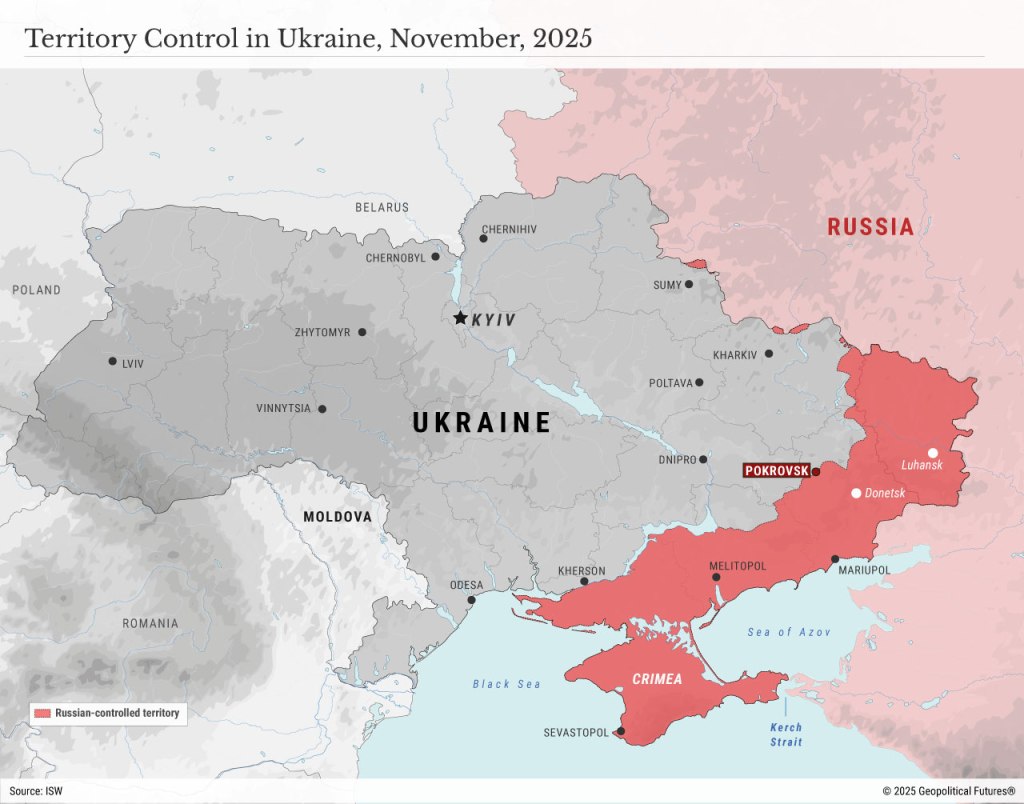
On 11 May 2014 referendums took place under the Russian controlled Donetsk and Luhansk People’s Republics . They asked in essence, whether the population preferred to be Russian or Ukrainian. This initially appears fair towards the citizens as many of whom speak Russian. However, the results were clearly unrepresentative as by then large numbers of loyal Ukrainian’s had fled! The world was given a clear demonstration of how dictators use democracy when and how it suits them.
So, my suggestion is to take another look at this idea of asking the people of these regions the same question, but only after allowing displaced Ukrainian citizens to return safely to their homes and after peace has been declared and sustained. Such a process would have to be supervised by a neutral international organisation such as the United Nations.
This resettlement process should be given an extended period for the social, economic and political ‘dust to settle’; say five years. These parts of Ukraine would remain a demilitarised zone between Russia and Ukraine pending an agreed peace plan for the future. It is wise to acknowledge that Ukraine acts as a buffer zone between Russia and NATO. This has so far kept the two sides apart and long may it be so.
But presently neither Ukraine nor Russia can agree on the border and negotiations involving the United States are deadlocked. In such a case, consulting the people of those disputed regions must be the fairest way to decide.
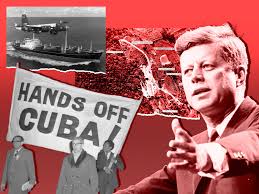
I would hope that Russia and Ukraine could invite soldiers in a peacekeeping role from non-European and non-NATO countries. The fear of NATO boots so close to Russia is in fairness to Russia, understandable. The Cuban missile crisis in 1962 that threatened full scale global war, was produced by just such a move and to repeat it at least in principle, would be to court extending the war for no clear advantage.
When reaching any peace agreement, diplomats work so that all sides are able to ‘save face’ and some sort of compromise is usually involved.
It should be pointed out to Russia that ‘Special Military Operations’ are not able to gain territory because of their self defined limits of operations. In contrast it is ‘total war’ that annexes neighbouring sovereign states as demonstrated by the German Nazis in the second world war. Ironically, we are told that the original aims of Putin were to eliminate Nazi’s from Ukraine and this story has apparently been the reason why Russian citizens are supporting the invasion of Ukraine. The right wing Azov Regiment in Mariupol were rightly or wrongly set up as the objective for Putin’s SMO. But it is clear that the initial invasion of Ukraine by forces on it’s northern border ‘on exercise’, intended to go straight for Kiev, with the intention of taking over the government.
Fundamentally, the two leaders are entrenched, literally and metaphorically over the old or a new Ukraine border. Therefore, I suggest that both sides should forget resolving their border claims at the present time. Instead, the regions under dispute and their populations, should be placed under the protection of a neutral organisation. There will be a promise and expectation to the citizens who live in those areas that in five years time they will be able to vote in a referendum to decide which country has sovereignty in their region. Immigration of citizens from both countries will have to be based on legal ownership of land and property otherwise illegal settlements will spring up as in Palestine!
Since Russia has already shown it’s willingness to abide by referendums over sovereigty, I would hope that Ukraine agrees to the plan. The delay of five years will allow genuine refugees to return to their homes, local and global economies and social services to ‘normalise’ and some stability to return to the regions. It might take ten or twenty years but this can be decided in the intitial negotiations over the agreement. Ultimately people will be able to vote for the system of government they prefer.
A note of caution when advocating referendums. They can be used to advantage as Putin has already shown. He has a precedent as also Adolf Hitler favoured using rigged, manipulated referendums (plebiscites) to provide a facade of democratic legitimacy to his dictatorship.
On the other hand, U.K. Prime Minister Margaret Thatcher disliked referendums calling them “a device of dictators and demagogues”. But she did submit to a referendum to decide whether the United Kingdom should join the European Economic Community in 1975.
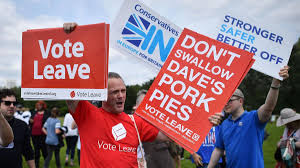
With this in mind, one should therefore treat referedums as carefully as unexploded ordance; the outcome can hurt! After a referendum result there might be left a substantial minority of disgruntled citizens for whom the outcome did not go their way. We saw this in the 2026 UK referendum over the question of whether to stay in the European Union. The result was narrowly in favour of leaving, a view that has reversed itself since. To avoid division and future instability, I suggest that a super majority is required of two thirds of the population before any result becomes law. The 50/50 referendum rule over Brexit was not open to public consultation. Brexit has illustrated however, that a large minority of disgruntled voters become considerably more political astute and active than a contended small majority and the same could occurr in the disputed Ukrainian territories.
To overcome perpetual border disputes, after a referendum has taken place, those uncomfortable with the outcome could be given the opportunity to move, together with generous compensation from Russia; what one might call ‘special military compensation’. Ukrainians could move to new Ukraine and Russian speaking Ukrainians who support the Putin regime could move to Russia.



















 Matters Blog