War Without End

Obviously violence between neighbouring countries should not happen, but when diplomacy fails, it does. This essay questions the best methods to mitigate the escalating war in the Middle East.

The day for Israel to robustly defend itself was October 7th 2023, but instead many Israeli citizen’s and soldier’s lives were sadly lost and hostages were taken, a failure it admits. The attack came from a country that Israel had occupied, surrounded with high walls, was accessed only through caged tunnels and sealed with check points. The war did not start on this day as some commentators suggest. It started in 1948 and even earlier.

In response to the attack the Israeli government declared it’s aims to eliminate Hammas and recover the hostages. My first question would be, is this vengeance or defence or both? Politically, military objectives need to be achievable and achieved as rapidly as possible. One year on, this has not happened. New aims on new fronts have been opened against the Houthis, Iran? and Hezbollah in southern Lebanon. Confused?

Diplomacy solves differences peacefully, war does the opposite. Diplomacy addresses grievances, war ignores the grievances resulting in grievances remaining; witness the conclusion of the First World War and the burning embers that ignited the Second and the inconclusive end of the Second World War that put thumbs on triggers in the Cold War.

Historically, few violent, subversive political organisations such as Hammas and Hezbollah have been eliminated by force. In recent history, ISIS have re-emerged after ‘defeat’ and in the 20th century, the IRA re-emerged using a new name.

In my view, the Zionist Israeli government have used questionable methods to ‘eliminate Hammas’. Tanks and artillery are traditionally not suitable weapons to fight an enemy in an urban context; especially one with a tunnel complex and ruined buildings forming defensive postions. The end of the Second World War saw Allied infantry troops fighting their way to Berlin, street by street, house by house; difficult and high risk tactics to clear whole cities of the enemy, but effective.
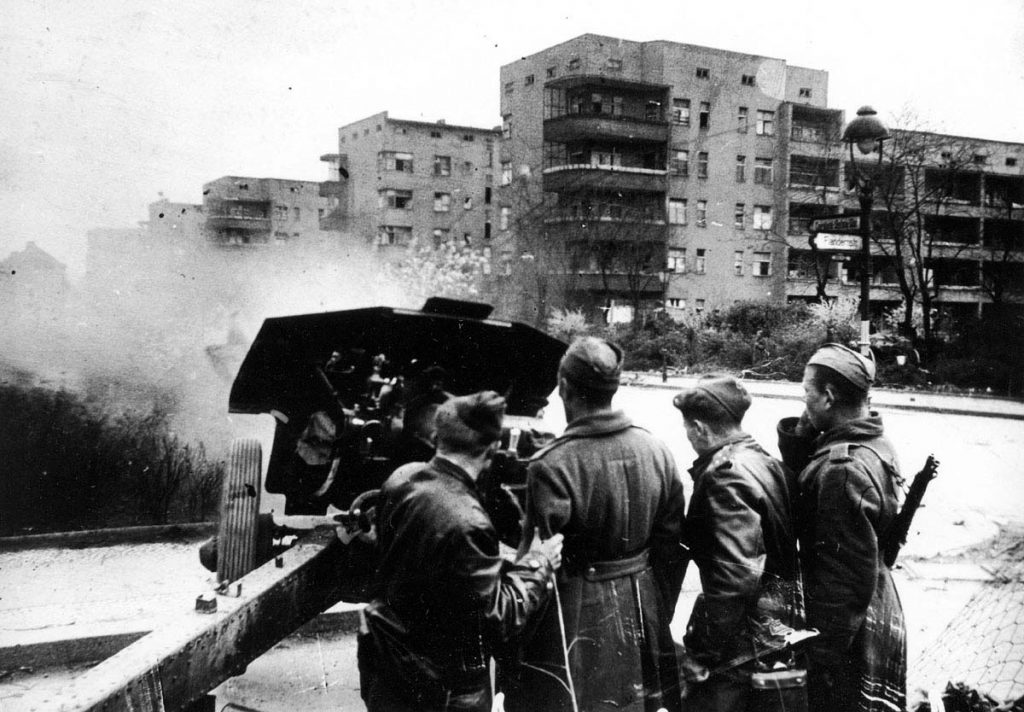
picture credit: BerlinExperiences 1945

Let us consider the second aim of the Israeli’s. The most politically astute days and months to save the hostages were immediately after they were taken. One year on, the task is far less likely ever to be achieved. On top of this, the protests by families of the hostages and undermine trust in their own government which will spread and breed wider disorder and protest.

Killing disproportionate numbers of civilians and destroying infrastructure such as hospitals and schools, is more likely to increase the ranks of Hammas fighters than reduce them, and time will tell if this is true.

At the same time, Israel has been slowly losing support from allies and other countries around the world, not for it’s aims but the manner in which is has attempted and failed to carry out it’s aims. Many observers around the world and in particular South Africa, have condemned the disproportionate loss of civilian life caused by the IDF.

I wish to point out confusion over the word used to describe ‘terrorists’. It is a term that carries considerable emotional weight without clearly defining what it is.

My definition is;

Terrorism by individuals or small cells, is lethal attacks on infrastructure and civilians during peace time in order to produce fear in a population for political motives. The IRA in the UK and ETA in Spain are examples of this from the C20th.

Terrorist tactics, when used on a large scale during peace time or war, becomes guerilla warfare.

A large well armed group using guerilla tactics in open warfare to attack opposing military forces are guerillas (meaning small war). The Mujahideen in Afghanistan fighting against the USSR and the Vietcong, North Vietnamese Army war with the USA are examples of this. Although they have inferior numbers and weapons guerillas can defeat a stronger opponent by attrition, local knowledge, basic instead of sophisticated logistical support and high, politically inspired, morale.

Open warfare is when a State declares itself at war against a specific enemy. Battles are fought by National forces as instructed by the government of each country. Organised land, air, sea and space forces confront similar enemy forces and seeks to overcome the enemy with maximum force in the shortest possible time.

The reader is invited to decide which definition best describes the Houthis, Hammas and Hezbollah, and the IDF. Contemporary leaders sometimes describe guerilla or even national armies as terrorists and in my view, this is more an emotional appeal for support than accurately describing the threat.

The tactics of terrorism and sometimes guerilla warfare have historically failed because brutal tactics particularly against civilians, wanes political support. Israel is currently failing in it’s objectives in my view, and is losing political support from within Israel, from it’s closest allies (including the Biden administration of USA) and the United Nations.

Israel was admitted to the United Nations on 11 May 1949 and participated in it’s aims.
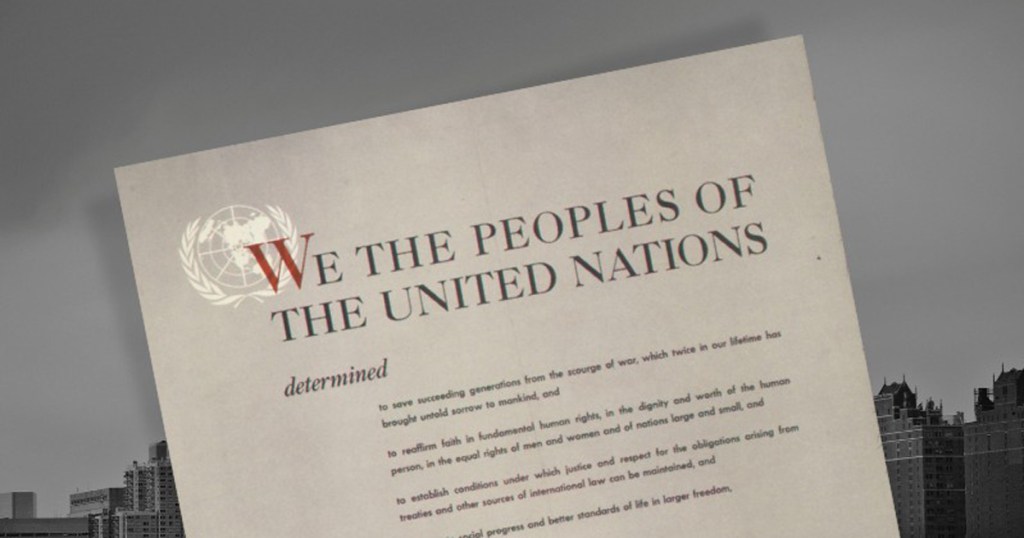
Now it has fired upon an UNFIL base in Lebanon causing injury UN operatives. The political contradiction is obvious and has outraged many nations, including allies of Israel.

Israel insists it is ‘defending itself’ which may convince many of it’s authority in religious Jurisprudence and International Law, but it is dangerous to confuse defence with offence. Anyone who has played chess or watched a team sport game, knows this.

The military advantage of defence is that cover and observation is achieved using pre-prepared defences. A small defensive force can repel a larger offensive force as proved historically by the history of castles and fortifications within Europe and the Middle East.

Israel is currently using a ‘Defence Force’ to attack it’s enemies to prevent them from attacking Israel. This shows that defence and attack are indeed questionable terms.

The British Army carry a card to remind them of the Rules of Engagement;

You can always act in defence of yourself, your team mates and civilians.

You can always return fire when fired upon.

Do not engage a target of opportunity without permission, unless you are in imminent danger.

UNFIL in southern Lebanon also have no authority to attack except when fired upon. In the Rwandan genocide between April and July 1994, nearly one million Tutsi and moderate Hutu were murdered whilst the international community and United Nations Peacekeepers stood by. But UNFIL were placed in Southern Lebanon as a buffer between Lebanon and Israel; in effect a ‘human shield’. Why Hezbollah are allowed to occupy this buffer zone is clearly questionable.

There is a case that the Old Testament ethic of ‘an eye for an eye’ describes proportionate use of violence, and is not a justification for vengeance. This interpretation is not commonly heard or debated. The word ‘vengeance’ is an elephant in Embassy meeting rooms.

The Israeli Government tactics in Gaza, the West Bank and Lebanon have so far failed in their objectives. For reasons described in this essay they are in my view, likely to continue to produce poor results, escalate violence rather than reduce it and reduce support for its cause amongst its allies, particularly the USA.

Specifically, there is loss of moral justification when civilians, peacekeepers and aid workers are killed and excuses such as ‘a mistake’, ‘inadvertent’, ‘targetting the enemy’, ‘we told them to move’, ‘the fog of war’ all risk accusation and investigation of war crimes. Weapons in the 21st century are surgically accurate and guided using real time intelligence.

Many observers have pointed out that there is no justification to using 2000lb bombs to destroy a building occupied mainly by civilians; whether bad people share the building or not. However the Israeli government ‘excuse’ themselves, there is, I believe, a better alternative not discussed publicly, perhaps for security reasons.

The IDF have specially trained soldiers in counter terrorism called the Mista’ravim. They are specialists in working undercover to capture or assassinate high profile enemy targets. Many Hammas leaders, if captured alive, could have been used to negotiate the return of Israeli hostages. This opportunity has been lost as well as the chance to show the professionalism of it’s special forces and sincere desire to protect civilians.

The Mistaravim picture credit: Jerusalem Post

Special Forces all over the world, acting on intelligence from local proxy sources and real time surveillance, are trained to enter buildings with the element of surprise to rescue hostages.

There is an argument that the IDF does not have sufficient special forces to search for the hostages. If this is the case, then an appeal can be made to it’s allies to support these rescues using allied specialist units. One hundred teams working together, could have swept Gaza and it’s tunnel systems before now and would have prevented the need to destroy infrastructure such as hospitals, on the scale that has occurred. A cynical observer might query the motive for not using this tactic.

The reader is invited to view the videos on social media that many parties have posted, and form an opinion as to what ethical rules parties to this war operate under and who is enforcing them.

If the world is watching an escalating war without rules, then we are all in danger; as the First and Second World Wars proved, should we care to remember.
Defence?

It’s all violence

At some point in it’s evolution, humanity has to decide whether to accept violence or not.

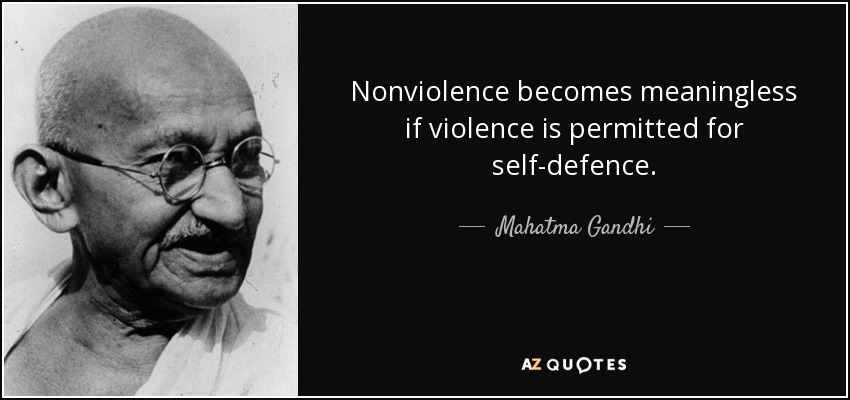
At present, it appears we accept violence within certain rules. We say that if you did not initiate the violence, then you can be violent towards the aggressor, to any degree. This is called ‘self defence’ and few can think of an alternative. But why should defence be more morally right than attack? Can either be justified? What is the difference, morally?

Suppose you were a citizen of the United States of America and you own a gun and know how to use it. You are woken in the middle of the night by a noise downstairs. You arm yourself and go down to investigate. You see a dark figure and shoot. At this moment you believe you are acting in self defence, as is your right. You switch on the lights and to your horror you see the body of your teenage son lying on the floor. He was creeping back into the house after a secret night drinking with his friends. This is not fiction. This happens.

Just because the law enables a gun to be the solution to your ‘problem’, was this the only solution? Were there other more proportionate actions you could have taken? Yes, you could have switched on the light before you shot at a higher risk to your own life, or you could have called the police. You could have just done nothing. Each approach is problematic but only one invites heart break.

I lived in a country where only specialist police carry guns, England. Good peace keepers should be skilled at talking down a potentially violent situation. It’s a technique and can be learnt. Now many officers carry a Taser non-lethal gun as well as non-lethal CS gas. Non-lethal is a practical half way to non-violence.

Between attack and defence there are a thousand grey variations. The best option is always somewhere between total war and total defence; not either or. Ultimately they both are characteristics of the same thing; violence.

Fortunately most sovereign countries do not attack each other and a state of peace exists. But we know that peace is a fragile situation, where historical, economic and political rivalry bubbles away under the surface like a dormant volcano. Violence has to be contained for peace to exist and this is created using ‘deterrence’. Joining forces with another group of nations is one method of deterring attack. Not being a threat is another and here we realise that it is impossible to deter another nation without them being scared of you. Russia is presently in this conundrum with it’s relationship to NATO countries.

We watched as Russia reached a tipping point and claimed that Ukraine had a Fascist army. Historically, the communists (Soviet Union) and fascists (Nazi Germany) were enemies and this history still clearly carries some import as ‘justification’. By fighting ‘fascists’ Putin possibly feels he has his predecessors moral high ground on his shoulder. Coupled with a perceived threat from an expanding NATO and Ukraine moving towards joining the European Union; Putin is clever though and he does not use the word ‘war’ or ‘attack’. He insists he is acting in ‘self defence’ to NATO’s growing threat and his military action is just a ‘special operation’.

Words are master deceivers and suit Putin well. Because two words, ‘attack’ and ‘defence’ are the same thing; a resort to violence is claimed to be justified.

Zionist politicians in Israel have more or less done the same thing. They have an historical antagonism towards the people of Palestine whom they have been squeezed into smaller and smaller enclaves. Any similarity between this and the Warsaw Ghetto in the Second World War is of course, purely coincidental. The question is whether Palestinian or Isaraeli fighters are defending their country by attacking their neighbour. Defence quickly escalates into violent action that can get wildly out of control. The question of ‘proportionate’ use of violence (an eye for an eye) is the current debate.

So how can non-violence ever replace violence? The answer is it probably can’t whilst humans are attached to a materialistic and territorial lifestyle which they guard with weapons. In this respect humans are less sophisticated morally than most animals who rarely fight their own species to the death.

We learn to deal with violent conflict as children in the school playground. When we become adults we are expected to rise above violence as a solution to problems.

Two boys start fighting in the playground. A huddle of eager spectators quickly forms around them. These bystanders are too immature to try to pull the boys apart and instead encourage them. A stronger third party with moral responsibility for order is required; a teacher.

The teacher breaks up the mob and marches the two boys off to the headmasters office.

‘He started it!’ is a common defence from children. Their false logic is that when attacked there is no other response than a defensive counter attack. There is usually an option to run.

If we change the scale of our example, to that of governments and countries, you will find that ‘he started it!’ is also used as a justification for the use of violence by sovereign states. Only a third party intervention from a body with higher moral and political authority has the power to stop and settle wars. After the horrors of the second world war the League of Nations and subsequently United Nations was created to step into this role. The objective voice of world opinion should, in theory, make the warring parties ‘see sense’ and the more mature aim of seeking a peaceful resolution.

The United Nations and the United States of America, could go to the preesnt Israeli Zionist government and point out that killing innocent women and children in Gaza is morally unjustifiable. Putin could be hauled into the headteacher’s office by the United Nations, but has not.

Mahatma Gandhi lead a nation using moral authority based on non-violence. He wanted the British to leave India and for Indian people to govern themselves. His tactics using moral discipline, diplomacy and example turned out to be more powerful than the military might of the British Raj.

War was described by Carl von Clausewitz as ‘ the extension of politics by other means.’ Personally, I would be more precise and describe war as the extension of politics by violent means. This creates the logical possibility that peace is the extension of politics by peaceful means.

Of course, peace is an abstract idea and never completely exists but there is a place close to total peace which might be reached using skilled, non-lethal force.

To use a personal example, when I was a boy at school, I never sought to fight. When I was inevitably confronted aggressively, I stepped forward, put my leg behind the thigh of the aggressor and pushed him to the ground. Yes, it was violent but it only hurt a bully’s pride.

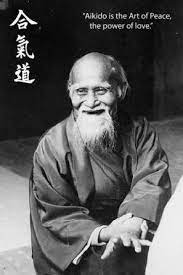
This was the extension of politics by peaceful means, meaning no one was hurt. Later in life I came across Aikido. This an unusual martial art in that it enables winning a fight without confrontation. For this reason it requires no strength and is ideal for women and the elderly.

An interesting example was given me by one of the teachers. He was on an ice-rink when he felt a hand going into his pocket and pulling out his wallet. Instinctively he grabbed the wrist of the thief and continued the forward movement of the pickpocket’s body. The result was to send him rapidly across the ice rink. In Aikido, the art is to avoid conflict using simple non-aggressive moves that eventually tire out or restrain the opponent until help arrives or submission.

City dwellers would do well to learn the tactics of pickpockets even if they do not feel able to defend themselves physically. Usually they work in teams in crowded places and choose victims carefully. This is done by the ‘spotter’. Then the thief moves in using much the tactics of the illusionist in a theatre to distract and act deftly. Then a third party intervenes by preventing escape or creating another distraction.

Governments would do well to learn from these examples at a micro scale of conflict. Having a clear aim is vital to managing any violent unsolicited action. The method of conducting the conflict and ending it with minimum force and casualties for both attacker and defender and vital. Fast and deft military moves have time and time again proved their worth on battle fields.

When Napoleon wanted to teach the Zhar of Russia a lesson for breaking their pact of unity in 1812, he formed an army and headed for Moscow. Contrary to most other opponents Napoleon had fought, the Russians did not line up and wait to be shot or cut down by flanking cavalry. Instead they conducted an extraordinary retreat, burning everything in their wake. Only when Napoleon reached Moscow did they choose their moment to swiftly counter attack. Napoleon’s army fled in disarray and only 5% of the original army returned to France.

Sun Zhu in his famous book on military tactics said, ‘engage with the ordinary, win with the extraordinary’. A little side stepping and originality can nimbly avoid a cataclysmic confrontation like Ukraine v Russia. ‘Give some ground,’ is one solution.

Special forces, such as the British Commando’s came to the forefront of military tactics in the Second World War, where small teams of four men used guerilla tactics against an unprepared enemy. Casualties for the attacking side were minimal compared to strategic gain.

Ultimately the choice is not whether to attack or defend but to avoid unecessary violence by what ever means possible. There are always alternatives that require imagination and focused problem solving techniques in exactly the same way the animals avoid killing their own species. There is no ‘perfect’ state of non-aggression where humans in their present terratorial state of consciousness are concerned. Perhaps in the future, peace will break out and violence will never be the preferred problem solving option. In the words of , ‘what if there was a war and nobody came.’

“Ah! There is the rub.”