To see a world in a grain of sand, Heaven in a wild flower 19th century poet, William Blake
There is a great deception present in the lives of human beings. We cannot imagine consciousness outside of our own heads. Perhaps the emergence of Artificial General Intelligence is beginning to suggest that this can be the case. We shall see.
In Ancient Egypt and Ancient Greece and Rome, consciousness was understood to naturally inhabit matter. Matter was then defined as the four elements of earth, air, fire and water. Spirit was the fifth element and the one that gave ‘life’ and made all things (mineral, vegetable and animal) feel alive – conscious.
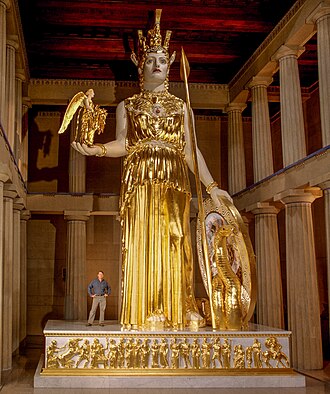
In ancient religions, priests would invite spirit to occupy statues made in the form of a human or animal body. If the spirit had archetypal characteristics of both animal and human bodies this was represented such as Thoth and Anubis in ancient Egypt.
For the Greeks and Romans, a statue in a temple or a home shrine was a means of communication with a living god. This was not only vital for daily life but for personal continuity into the afterlife.
In ancient Japan, the religion of Shinto took a simpler animistic relationship with nature. This deep reverence for the natural world is reflected in traditional Japanese arts and crafts. The practice of ‘wood bathing’ in Japan today, is a modern manifestation of becoming deeply energised by the spirit of woodland and individual trees.
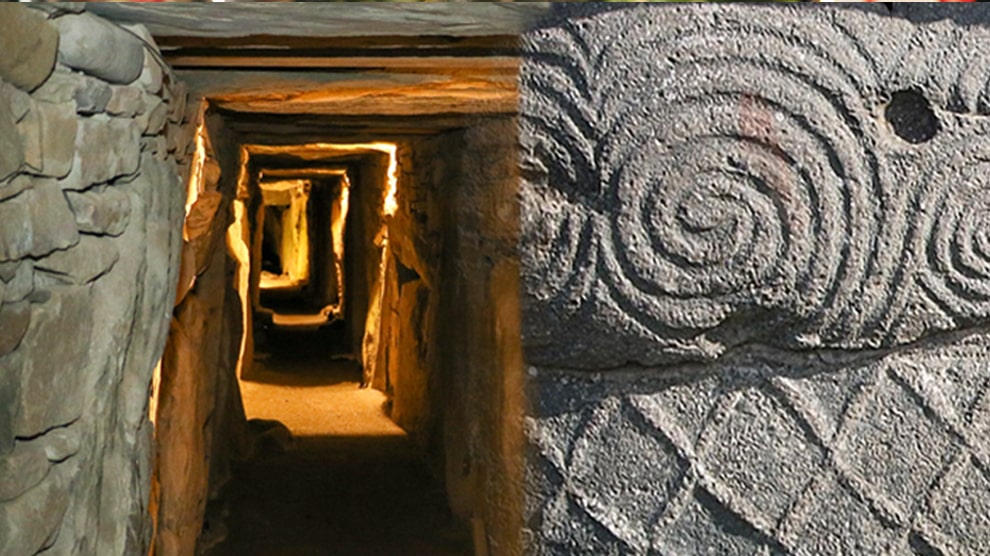
The ancient Celts in Western Europe manipulate the invisible energies of the landscape. They controlled them by moving earth and stones to sympathetically increase the power of the ‘earth spirit’. The animals, vegetables and minerals benefited from this bio-electromagnetic energy. Humans in particular rode the energy like a wave in the initiation chambers built into their long barrows and dolmens.
In north America the first nation tribes held nature in the high respect that one gives one’s grandmother. They called her Unci Maka and revered the landscape as if it were their own grandmother’s body.
“Every part of this soil is sacred in the estimation of my people. Every hillside, every valley, every plain and grove, has been hallowed by some sad or happy event of days long vanished. Even the rocks, which seem to be dumb and dead as they swelter in the sun along the silent shore, thrill with memories of stirring events connected with the lives of my people, and the very dust upon which you now stand responds more lovingly to their footsteps than yours, because it is rich with the blood of our ancestors, and our bare feet are conscious of the sympathetic touch.”
Chief Seattle in his Treaty Oration of 1854–
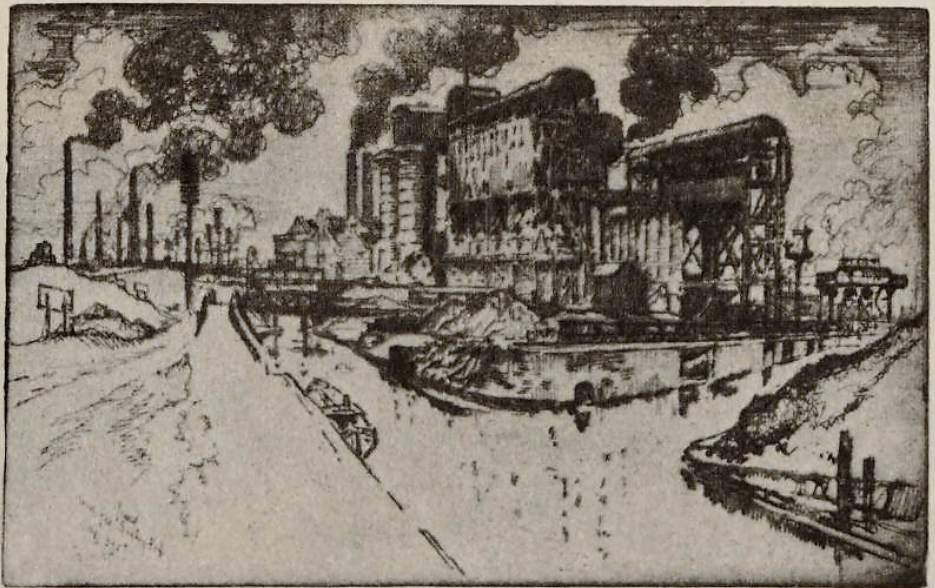
Sadly, the industrial revolution and the ‘religion’ of scientific materialism turned its back on animistic spirit traditions. People in industrialising countries left the land of their ancestors for what William Blake called ‘dark Satanic mills’. At least fifty per cent of the world’s population today live in cities.
Nineteenth century scientists such as Sir Isaac Newton reduced the understanding of nature to a series of cause-and-effect mechanisms or ‘natural laws’. It is less well known that he was also open to the possibility that there are more mysteries than conclusions. He studied the ancient art of Alchemy and the Torah for the greater part of his life. Society embraced his scientific discoveries and ignored his spiritual search.
Today, scientists know that matter and energy cannot be reduced to a few laws. The picture is more complex. As in the study of the human body, there is not only anatomy, but physiology – what things are and how they work.
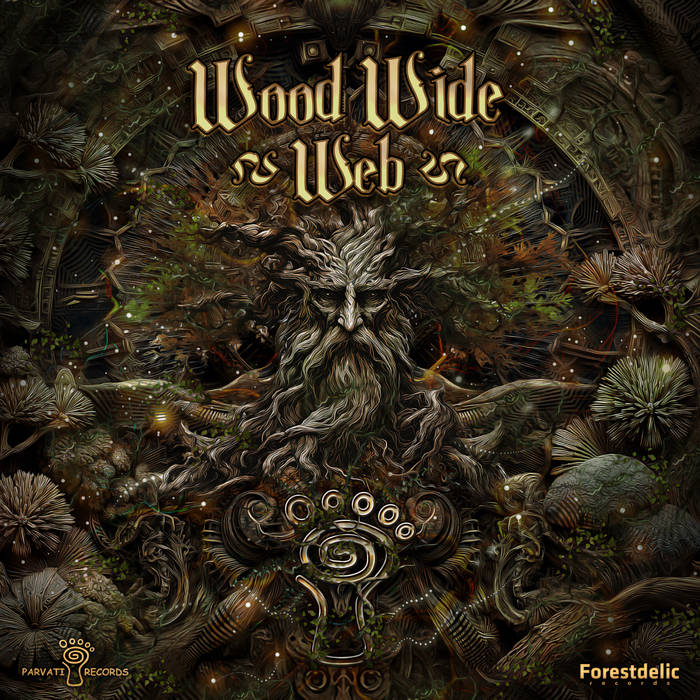
The ‘wood wide web’ describes how tree roots and fungi connect to share information, nutrients, and moisture.
In the parallel worlds of nature spirits; fairies, elves, goblins, water spirits and the rest, have always been described as living in communities, not isolation. They mirror organic organisational truths that require co-operation in order to provide the resilience to loss through adversity. A new by-pass has little regard for the unseen.
Nature never discards anything as worthless. In physics, energy is not lost, only turned into another type of energy. Matter will similarly ‘change state’ from solid to gas and never be lost.
It is so in the municipal allotment where sunlight is absorbed by vegetables the remains of which eventually break down into humus for future crops. There is a circular pattern of renewal which today is respected as ‘sustainable’. Nature achieves it without effort, but modern societies struggle to achieve without loss of ‘convenience and comfort’. Even human consciousness is recycled under the same principle and occupies many organic bodies in it’s learning and initiation journeys using the power of physical reality.
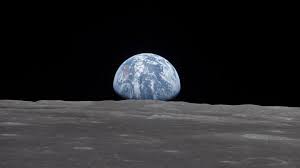
Nature will always provide spiritual and physical nourishment for human beings. However, the supply of the latter is not infinite for the obvious reason that there is only one ‘Grandmother Earth’. Therefore, as the size of the human population seriously threatens the vast eco-systems of the planet either population or ‘standard of living’ or both, must reduce.
International Institute for Sustainable Development
This fact is painful to industrialists and those who benefit from the draining effects on the planet of mass production. As materialist can not conceive of or carry out a solution to the damaged Earth in material terms, space exploration is posited as a way to ‘get more stuff’ even when planets are known to be distant wastelands.
Human populations have already thrived at a sustainable and advanced material standard of living throughout history and around the world. What gave people purpose and comfort was a universal enjoyment of spirit and human consciousness. The extraordinarily high standards of ancient artists, sculptors, musicians and engineers and architects contrasts with modern creations devoid of pulse.
If one challenges what spirit is and what benefits it brings then that is another subject. Suffice to say that the urge to follow a ‘religion’ as a step to a non-material spiritual path is one that is found in even the most so called ‘primitive’ societies.
Curious and disillusioned souls who have been immersed in modern city life travel to hidden pockets of the Amazon rainforest to learn and experience a living spirit world from traditional indigenous shaman and healers through the drug Ayahuasca.
The journey into nature becomes a journey into the hidden areas of oneself and nature is realised as the perfect teacher for that. The religious dogmas of the past are today seen by many as trees that bear no fruit only promises of future fruit.
When William Blake wrote poetry and painted pictures describing his mystical vision and path, society was open to his ideas even if they did not understand. I would argue that this intuitive leap into unknown possibility is required again today so that a complete change of direction for humanity can be achieved.
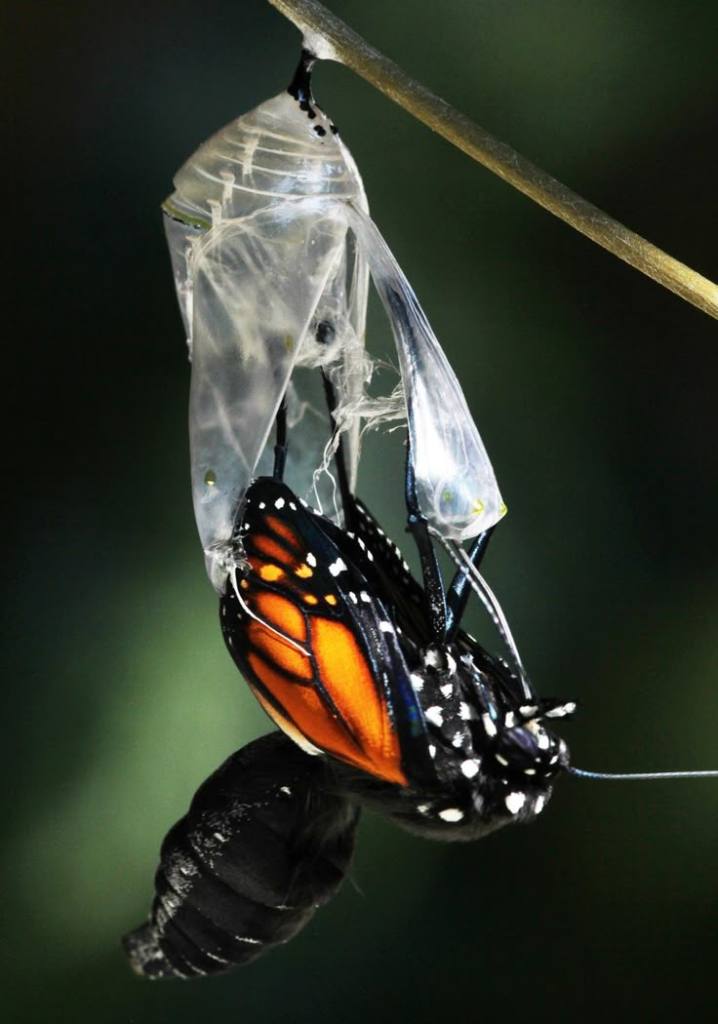
There is an idea and possible reality of a ‘new earth’ revealing itself at this present time. It is not the planet of old, nor the ideas of our ancestors. It is an escape from a cocoon that is no longer comfortable or at least, no longer sustainable.
Leaving the safety of a cocoon and growing angelic wings; that is a move into the unknown accomplished by butterflies every day.
“All things are alive and have their own language, vibrations and luminosity that you can feel with you psychic body.”
Kyriacos C. Markides “The Magus of Strovolos” page 99 Penguin Books


Wonderful far reaching post 🙏🕉️ As a Buddhist one of my most important daily activities is mindfully pottering about in my garden and reflecting on our Interbeing 🙏
LikeLiked by 1 person