Me First

Humans are social animals and their historic ascent to the top of the food chain, came largely from this instinct to act as a group.

We should not be too conceited about this however as many creatures live as a ‘colony’. When a wolf pack moves across ground in line, the strongest animals lead and follow and the weakest take a place in the middle for safety. Penguins form a dynamic huddle to survive the sub-zero winds. Those on the perimeter continually shuffle towards the centre before going back the edge.

Even insects such as drone bees, protect future of the colony in the shape of the Queen, above their own lives.

Humans, however, have a freedom to ignore the ‘greater good’ and act purely in their individual interests. The result is clearly apparent in ‘western’ societies, where the wealthy thrive and the poor strive to survive. Heroic characters such as Robin Hood of Nottingham, epitomised this ‘greater good’ principle and heroically stole from the rich to give to the poor.

As the R.M.S. Titanic cut through the icy waves, part of the wealthy owner’s focus was to beat the record time for a crossing of the Atlantic by an ocean liner. The White Star Line needed to beat the competition. This desire and it’s consequences, as we know, seeded catastrophe.

Ironically, when it came to individuals on the sinking ship, there was an honourable decorum, and the men generally helped the women and children onto the lifeboats. ‘Me first’ as an instinct for survival was selflessly over ridden by the ‘common good of the species’ and the orchestra played on.

These philosophical reflections on social morality shine a revealing light on what is happening today in western societies.

A certain candidate for the forthcoming elections for the president of the USA, has the campaign slogan, ‘America First’. This highlights the paradox between the rights of the State and the individual. There is an implied promise that by making America ‘great again’, each and every citizen will get a fair share of the apple pie.
But there is no promise and if the homeless of ‘down town America’ stopped to think about this vague contract, they might not vote for the orange Orang U’tang again.

Governance along lines of the good of all and sharing, or socialism if you want, was part of the American Declaration of Independence. The King of Great Britain was characterised as the Sheriff of Nottingham in the Robin Hood story. He was a tyrant, as had most British Kings been since Alfred the Great.

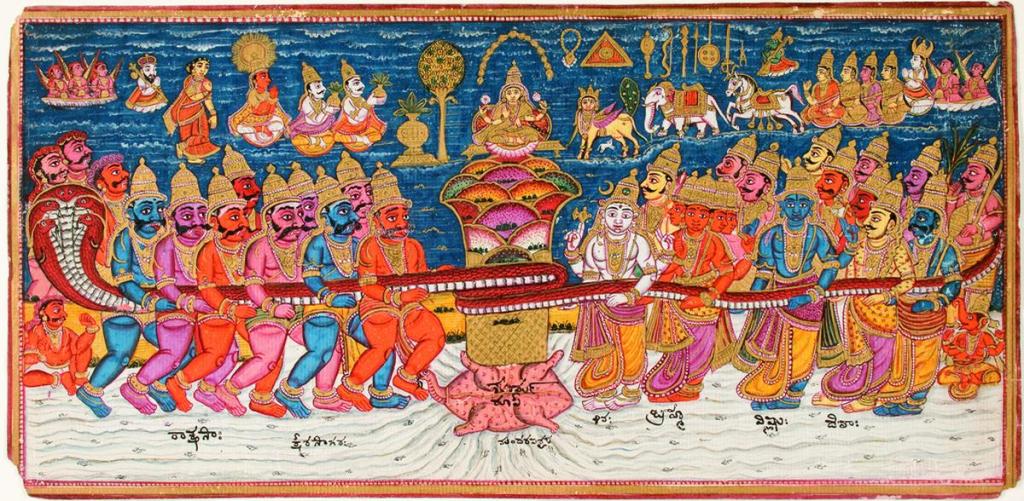
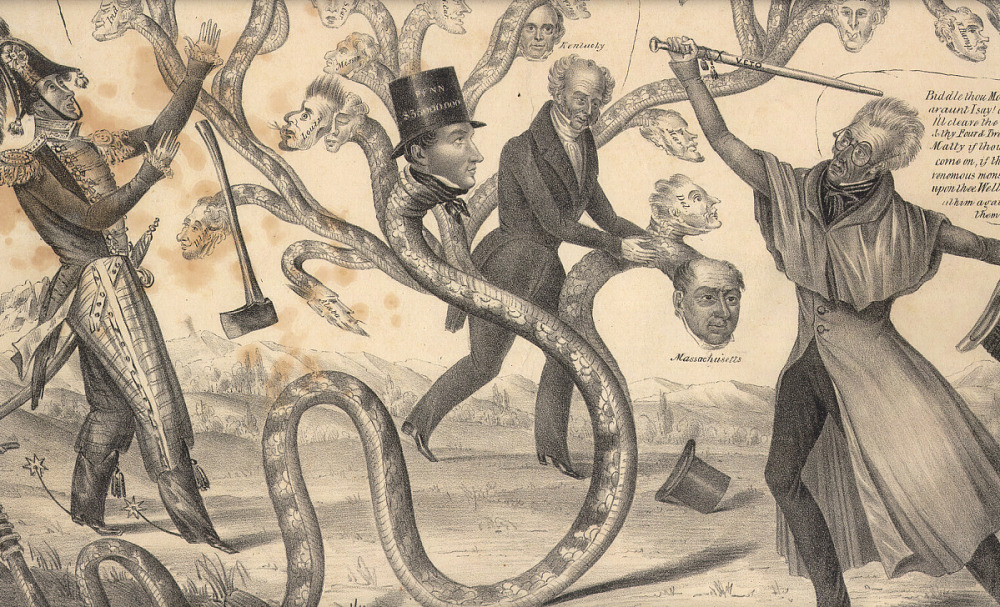
The governance of a nation by one person ironically contained a great advantage for the common people. If you remove the tyrant Monarch, you end his reign in one swing of the sword. But today, ‘treason for the common good’ is not so simple. With the many levels of power in modern democracies, the monster has many self regenerating heads.

You might find yourself slashing and lunging at the Military Industrial Complex, the Deep State, the Secret Societies, the Elected Government, the Illuminati, the Billionaire families and the Tech Billionaires, the Banks including the Central Reserve, the numerous Institutions of State (some declared and some not), the Dark Web, major organised crime…the list goes on. If it is hard to fight a royal monster with one head, it’s near impossible to fight one with many.

But revolution rarely results in lasting peace. It generally creates a lull whilst the monster just grows another head.

In the United Kingdom of Great Britain and Northern Ireland, in 2016 there was a referendum for change. The question was whether the State should remain part of the European Union. As the fifth richest nation in the world at that time, the citizens of that country saw the EU as a kind of Robin Hood, that took from the rich countries and gave to the poor ones. When they asked the question, ‘what is in it for me?’ their was silence. So just over half of those who were motivated by this ‘injustice’ to vote, voted for ‘independence’ or ‘us first’. They were persuaded that a country that turns it’s back on it’s 27 neighbours is going to be much better off and if not better off, British. Again, there was an expectation that what benefits the Nation will ‘trickle down’ to the individual.

picture credit: Sunday Mirror

Seven years on, poverty is such a problem in the UK that the poor, go to food banks in order to survive. If they become ill, their beloved NHS will send to the end of a very long line of the sick and dying. If they can no longer afford to pay the monthly mortgage payments or rent, they will have to sofa surf whilst waiting in an even longer line for ‘social housing’. Either that or a cardboard box under a bridge. These and many other social failures herald an era where the State is run by the prosperous with little deference to the deprived.

Russia and China look on with interest. A divided community of European Nations and a division between the USA and Europe pulls, the trigger of the starting pistol for their plans. The communist system embraces the principle of reducing individual wealth so that everyone is equally poor, or at best, equally good party members.

If they ever existed in Communist regimes, the rights of the individual were banished during the SARS -2 , Covid 19 pandemic. Those who view social ‘lock downs’ as a rehearsal, will be wondering what is coming next. If the richest want to abandon ship, at this moment in time they cannot move their money out of China. Control of money by the State, is a very modern way to control the individual.

The citizens of Western democracies are discovering that cash machines are disappearing from the high streets…as are the high streets. States are setting up digital currencies giving them complete control over the individual. Freedom to travel is being restricted to 15 minute zones and autonomous cars will not be driven by citizens but the Ministry for Citizen Movement. Even the right to decide what goes into their own bodies, once held as sacrosanct, was rescinded during the Covid pandemic.

At a time when individuals find themselves in a world that presently stumbles from one crisis to another, they must ask themselves if these world problems are real and if so, do they want the solution being offered by the State?

There is no system of governance that is perfect be it right or left wing. This is because organisation has to incorporate change of social and individual values, swinging sometimes to the left and at other times to the right. Like the shuffling penguins in an Arctic huddle, an penguin may experience extreme cold for a period of time before it’s turn to shuffle to the warm centre again.

picture credit: Birdwatching Magazine

Democracies are the nearest system of governance to this ideal, as they generally swing from left to right every set number of years. But it’s not a smooth series of transitions and often change is poorly managed. Social housing was sold off in the 1980’s in the UK and no government of any description has sought to bring it back. The result is a housing shortage crisis.

At a global level, there is a ‘climate crisis’. Nations of the world are being asked to join together in overcoming an imminent threat to each and every citizen of the world. Right wing politicians in individual rich countries like the UK, argue that they only caused 1% of the emergency so they do not have to help the rest of the world. Again we hear the ‘me first’ argument but upscaled to global proportions.

The West does not have control of the Equatorial Rain Forests and the benefits they bring to climate change. Neither does it have control of the American Meridional Overturning Circulation (AMOC) and rising sea temperatures and melting polar ice, nor the new hole in the Ozone Layer over northern Arctic regions.

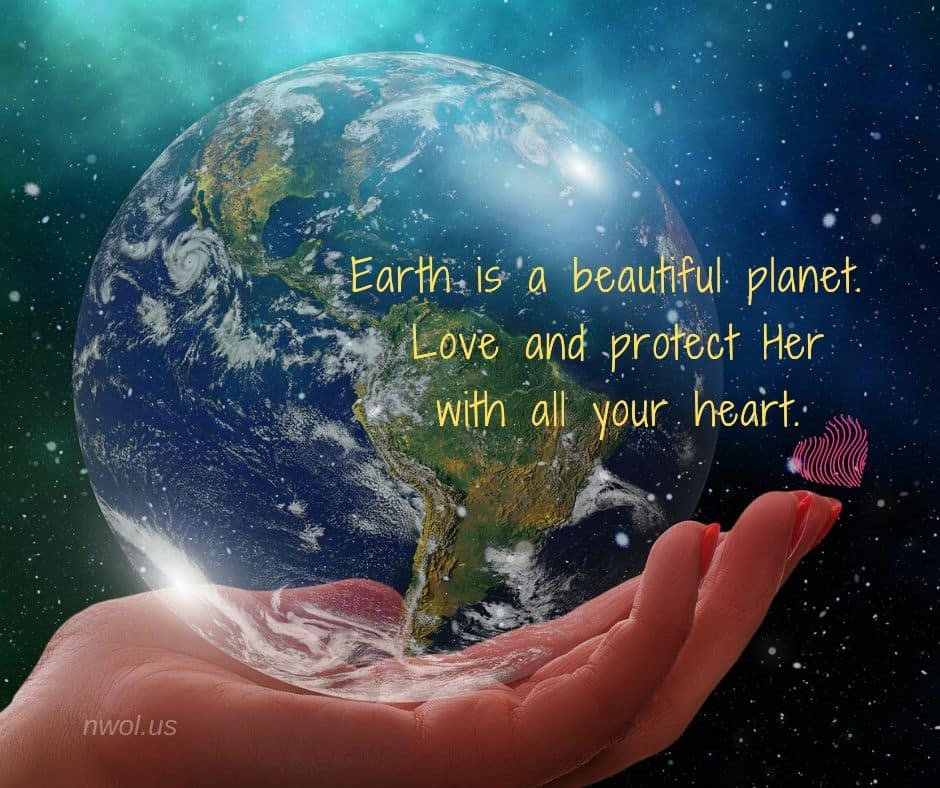
This blue and green spinning space ship is racing towards a metaphorical iceberg. In the rush for the life boat known as Space X and other wildly hopeful Mars missions, you might discover that there is a new component in human evolution. It is called ‘the survival of the richest’, otherwise known as ‘me first’.

Where is God?

It is easy to understand atheists. For a start, God presents invisibly. That’s not a good way of convincing people that you exist. Rather like the whole idea of Father Christmas, you can only get away with lying to the naïve for so long. Wise, older children don’t believe.

Similarly, in the two holy books the Christians have, the God of the first book operates as a sort of terror organisation ranting against those in need of a good smote, and the God of the second book introduces a family member who operates as a punch bag rather than a puncher.

If you were born in the East instead of the West, you might have aligned your thoughts and feelings with Buddhists. They skip over the whole idea of a Creator with more practical definitions of good behaviour (noble paths) and just getting along with each other. This philosophy works, as the world turns whether humans believe in God or not…making Him or Her, philosophically surplus to requirements.

Reading his books or listening to the late, great Alan Watts on You Tube, you might become convinced that this is the case. He describes the famous stone being thrown into the middle of the equally universal pond and the circle of ripples spreading outward. These ripples are like the illusion of life we are invited to understand. In reality, the water is not moving at all! The water remains motionless on the x axis, and bobs up and down on the y.

The waves of the sea are similarly completely static and what you are watching is merely kinetic energy disappearing on a beach, making sand.

It’s a clever argument. Because of this illusory nature of life, a good Zen Buddhist should discount illusion and just sit.

But what if illusion is real? Who says that? Well the Idealists say that. Just because you cannot see energy does not mean it does not exist. Radio, gamma rays, X-rays and a whole rainbow of information rich, electro magnetic energy is passing by and through you as you read this. Not seeing does not prove non-existence.

If you wish to live in a material universe then you will always disagree with believing in the invisible. There must be proof, you say. But of course, Sir Isaac Newton produced the Newton’s cradle to show energy moving invisibly through matter centuries ago. Albert Einstein famously equated matter and energy as being the same over a hundred years ago. Energy is a fine form of matter and matter is a dense form of energy. And now, Quantum Physicists working at the sub-atomic scale, prove matter is far more strange than it appears to be to the human eye. The greatest trick of all is that two molecules, a billion light years apart, will act in unison.

This is describing a universe that is beyond miraculous. In my view, materialism should have died long ago, when the saints and prophets consistently demonstrate that the Universe is both matter and information rich energy. If matter was dead, prophets like Jesus the Christ, could breath energy into it and bring it back to life. ‘Take thy bed and walk.’

The energy part is what we call God, since it not only activates matter but also imbues matter with information. So to believe in the real Santa Claus, what you need is a belief in the chimney, a crashing descent of a body down the chimney and an unexpected present in the fireplace.

Image by © Royalty-Free/Corbis

This is a far more inclusive philosophy than the atheists describe in my view. You can try to insist that everything except matter is an illusion but really, the world has spun too many times, to believe it is a simple as that. Small minds like to reduce things to the minimum because it creates a mental clarity, but really, there is no clarity. For the believer, there is only mystery. There is only the infinite (all our prayers, incantations, thoughts, wishes, beliefs, fantasies, commands, intentions, regrets, affirmations and the rest) extending outwards from a spinning ball of hot matter.

The Society for Cake

There exists in a certain country a “Society for Cake” and this is how it came about.

A man who was generally regarded as ‘wise’ or ‘holy’, was reputed to ‘know everything about cake’. His authority was questioned however when certain ‘specialists’ challenged him and spoke in minute detail about cake. Their methodology was to ‘drill down’ into a certain aspect of cake to which they felt drawn.

There were those who believed cake was ‘all about decoration’. They described the many characteristics of icing and how objects such as figures could add meaning to the cake or delight; such as a single cherry.

There were others who preferred to regard cake as simply the representation of an anniversary or special event. They were deeply absorbed in birthday, Christmas and wedding cakes and studied their cultural and social significance, including the rituals surrounding their making and consumption.

Others were more practical and engaged in the acquisition of cake recipes from all around the world. They went to great lengths to source very specific ingredients measuring each in exact proportion before placing the mixture in the oven until perfectly cooked.

Those who were particularly fond solely of eating cake, set about merely to consume various cakes in a variety of settings. Some were picnic enthusiasts, some were ‘high tea’ aficionados. They were particularly known for making judgments in cake competitions.

In the most extreme form of specialisation, there were those who studied the upper half of a two layer cake, some solely the lower half and a ‘fringe’ minority who were satisfied merely in researching the cream, jam or other edible binding agent that kept the two parts together. These ‘specialists’ were few in number yet grew in importance merely because they were skilled in self publicity.

An observer would have found that all of these specialists had the following characteristics in common. They all believed that their particular view took precedent over any other which they liberally denounced as ‘misguided’ or ‘missing the point’ or ‘old fashioned’ and so on. They all had ideas based on some particular honed view point on how such and such a cake could be improved. These details were not understood by others; a fact which the specialists used to their advantage to gain merit.

One day a young boy was with his grandfather who was a friend of the sage who ‘knew everything about cake’. The boy asked where this man could be found and his grandfather told him. The boy visited the sage and handed him a gift wrapped in a handkerchief. The wise man unwrapped it and was delighted by the boy’s mother’s simple round cake. He took a bite and smiled broadly with pleasure.

After they had both reduced the cake to crumbs, the boy walked away having learnt a lesson that would stay with him throughout his life.

When old enough, he started the “Society for Cake”, stipulating one rule only to qualify for membership. The rule was that personal opinions about cake, based on entrenched specialisations, were never to be considered or spoken.

Matter into Energy

Many present day thinkers, expound the present times as being highly consequential to the evolution of the earth and it’s inhabitants.

Whilst there are various extraordinary events playing out on the material plain, we should also consider what is going on in the plains parallel to us; as described in the Hermetic principle; ‘as above so below, as below, so above’.

A recent event caught the attention of the whole world as an intensely tragic and complex human story. I am referring to the Titan submarine disaster in which five brave explorers lost their lives.

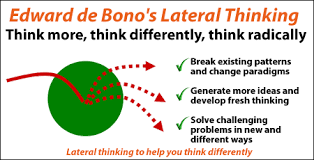
Let us take a sideways view of the roots of that story as it is symptomatic, in my view, of far more consequential radical changes in human experience.

The Tower of Babel is featured in the old Testament as a pinnacle of human achievement, both literally and metaphorically. The building was intended to reach into the domain of the gods, in an act of vanity and false bravery that was punished by God using elemental destruction.

This tower, as were the pyramids of ancient Egypt, was intended to ‘fix’ a moment in time when the great cosmic cloud which was the original Universe, changed state and became matter. Imagine water vapour turning into liquid, then ice and that is the process which the Universe went through until the present day.

There are many indications that the great wheel which started this process is beginning to change direction. Matter is returning to energy and synchronically, humans in their physical and energetic bodies, will follow the same pattern; matter will return to Mind for they are both just energy (E=Mc2).

In gathering together the strongest possible materials to build a ship capable of withstanding enormous pressure, were it’s creators not guilty of a vain project against nature? And the greatest error of all, to take this ship to a place where thousands of people had died in horrific circumstances; the waters memory of a titanic tragedy?

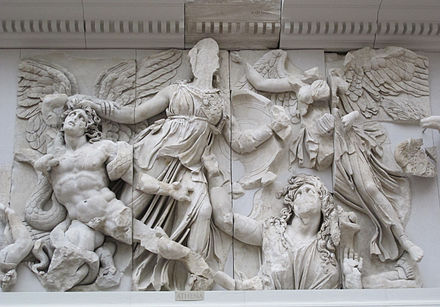
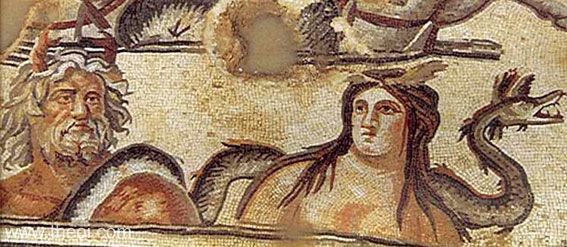
On a parallel plane, there exist in this same place ‘thought beings’ of enormous energetic strength who were known in ancient times as Titans.

The Titan ‘Oceanus’ who rules the North Atlantic Ocean

Just because we no longer encounter spirit beings and choose to regard memory of them as ‘fantasy’, does not mean they no longer exist.

The popular trilogy of Matrix films describe the dual realities, where the hero Neo has to move into another dimension and fight the ‘programme’ or ‘thought being’ known as Smith, an almost impossible opponent, stronger even than the once dependable ‘Oracle’; a possible reference to the Oracle of Delphi in ancient Greece.

Let us take a downward journey into the metaphysical plane where Titans not only lurk today, but have been awakened by the cataclysmic events – many still to come – of the present era.

We should understand that the Titans fundamentally resist any change of consciousness in human beings and many people are experiencing such a change in the present time. They were known as Saturn’s ‘enforcers’ as they resist change by force.

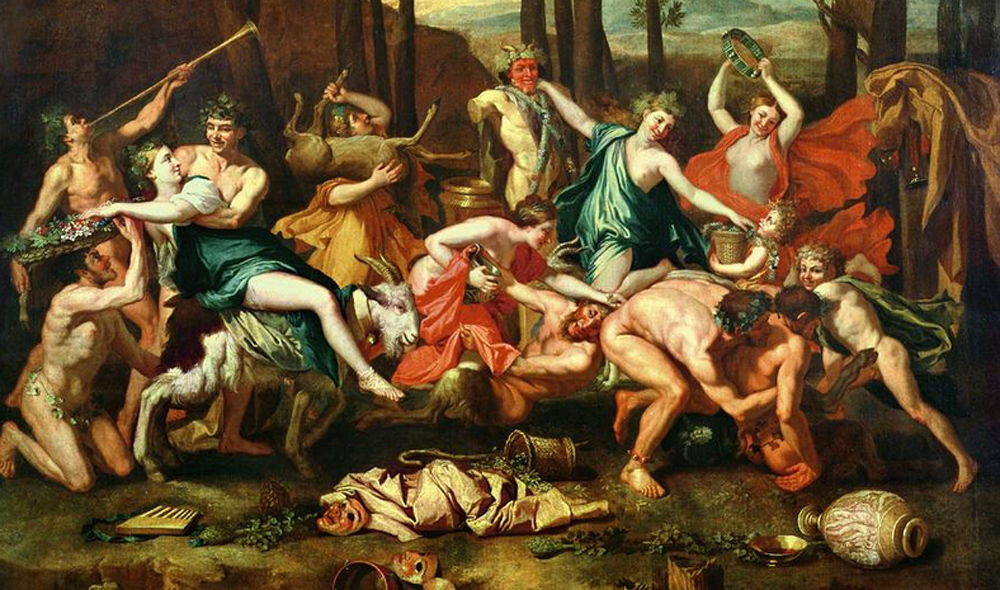
‘Dionysus, like Zeus, represents the evolution of a new form of consciousness, and again the Titans were determined to nip it in the bud. Again we see that Titans are the consciousness eaters.’

The Secret History of the World’ by Jonathan Black; page 93.

Their mother is Gaia, the Earth goddess who has been subject to enormous stress and degradation by the vain and self centred activities of humans. She has started and will continue to engage the elementals (earth, air, fire, water, spirit) in destabilising human activities using earth movements, storms, forest fires, Tsunami’s and rising sea levels. These cataclysms, while daunting, are in fact the birth pains of the creation of a New Earth, as described in the accounts of Dolores Cannon (a modern day Oracle ), for those who wish to know more and have access to You Tube.

There is already a gate between the melting material plane and the next evolutionary experience of human beings; an ‘Oceangate’ into the so called ‘Fifth Dimension’.

The effect of this opportunity is a mental transition from regarding the Universe through an illusory dualistic pair of spectacles, into a single monocular Unity. Human history and art describes this struggle between opposites a rather ‘inevitable’ human condition. In reality, love and hate are purely concepts that bear no relation to the single emotion they represent, just as laughter and tears are dual aspects of just one feeling. Think of all ‘opposites’ and join them together on a flat continuum and you will understand.

In the same way that the animal kingdom evolved from one to two eyes, so humans will take one further evolutionary leap into intuitive perception and communication using the single pineal gland. This organ is a remnant of the vegetable ‘Lantern of Osiris’ depicted in ancient Egyptian paintings as sprouting from the centre of the forehead, also known as the ‘third eye’ in Eastern Yogic practice and is painted on the forehead as a Bindi, in Hinduism. New perception needs new organs and the opening of the ‘fire cone’ is just this.

Fontana de la Pigan, The Vatican, Rome

In Islamic tradition, we shall know of the metaphorical ‘end times’ (meaning transition not ending) when ‘end time’ events happen; such as the worship of the Antichrist or ‘One eyed one’.

Abu Hurairah (May Allah be pleased with him) said:

The Messenger of Allah () said, “Let me tell you something about Dajjal (the Antichrist) which no Prophet had told his people. He is blind (in one eye) and will bring with him something like Jannah and Hell; but what he calls Jannah will be in fact Hell.”

source: https://sunnah.com/riyadussalihin:1818

Could it be that the screens of our computers and cell phones represent just such a transition of consciousness from our physical reality into a virtual reality. This change is a technological mirror of change in parallel planes; from the 3/4D plane into the 5D. How many mobile phones are circulating the Kaaba in the pockets of the faithful at this very time?

AI is an abbreviation that hints at ‘An I’. In human consciousness we are moving towards ‘An I’; meaning union with the One, rather than the chaotic multiplicity of life today. This is the deeper level of understanding of the Universe; from the multiplicity of religions and all the converging areas of human experience into the One Mind, or as simply stated in the Old Testament of the Holy Bible;

And He said, ‘Say this to the people of Israel: ‘I AM has sent me to you’” (Exodus 3:14). 

In conclusion, just as the process of ‘solidification’ into matter is the end result of the liquid and gaseous origins of the Universe, so our present ‘solid’ physicality is starting to melt. Between water and air are the waves that carry the energy which is the One Mind and the invitation is for us to ride with the waves.

Think of that, next time you sit on the beach watching the waves, and if you see the sea receed followed by a huge wave coming towards you, know that the only escape is to jump.

Are You Happy?

picture credit: Sydney Morning Herald

It’s a good question. Animals are simple enough, as their days consist of the need to satiate their needs for survival and emotions. Beyond this, whatever happens doesn’t bother them too much, so long as it isn’t a threat. Watching a cat snoozing or a hog gently feeding it’s young in mud, grants us this insight.

But as humans, surely our need for happiness goes deeper than the animals?

At the beginning of a life, we know a new born child has an instinct to seek it’s mother’s breast. After this physical and emotional nourishment, the infant can sleep, if only for a few hours before demanding the same again. At this level of development, humans are not obviously more sophisticated than animals, although admittedly, the process of complex learning, such as language, has undoubtedly begun.

Children can also become unhappy, as we know too well. The smallest discomfort or denial of pleasure creates a disturbance in the emotional well being of a child that we have all experienced. Unhappiness is the inevitable accompaniment to happiness and both become much of an adult’s life.

We are encouraged to immerse in this compulsive process of ‘pleasure seeking’ in a bid to overcome the roller coaster, which is the happy / unhappy continuum. Buddhist identify this pattern as ‘desire’ and recognise it as being a hopeless continuum; like the donkey following the carrot on a stick.

picture credit: Bloomberg

‘Recreational’ drugs try to break this cycle with the falacy of pursuing ‘happiness in a bottle’; where happiness is mistaken for chemically induced pleasure. Most people who have taken recreational drugs such as alcohol, will know that the ‘high’ comes at the cost of a ‘low’.

Despite this fickleness, the pursuit of pleasure is in some way less complicated than what one might call happiness. It can be induced by purely physical stimulation of the body. Happiness cannot.

To examine how pleasure and happiness are different, it might be that ‘happy’, has an emotional level as well an instinctual ups and downs. The heart gives us richer less tangible feelings of happiness that are less fleeting and can reward us even as a memory, for a lifetime. One’s marriage day is contained in the folded memories of the heart, like the birth of a child or one’s first love.

Happiness is in this way more constant than pleasure and is a function of both physical and emotional experience.

But we can climb this ladder one more rung if we consider the spiritual level of human experience. However much one may try to deny one’s spirituality, much of the progress of human civilisation documents this step upwards and is expressed in great works or sculpture, art and literature. The human experience is shown to be capped by spiritual experience and this results in what we call ‘contentment’. Religions and spiritual traditions around the world venerate people who reached ‘contentment’ by breaking attachment to this world and becoming an embodiment of the contentment found in love.

Souls who have attained a high level of spiritual contentment, will no longer be reliant on pleasure, and be ‘in but not of, the world’.

Neither will they be tugged hither and thither by emotional demands. Emotional feelings are not ignored, but observed dispassionately and recognised for what they are; passing, fleeting, capricious, irrational, beautiful, absorbing…a string of contradictory adjectives, which describe life.

Spiritual realms, we might observe, are not reached by being a slave to the world. Rather, they are reached by a process of no longer believing in unwanted connections to a ‘reality’ that is ultimately, not real.

A ‘holy man or woman’ historically has been recognised by this detachment from all pleasures and displeasure and all happiness and unhappiness. Torturers in the middle ages for instance, might inflict the most disturbing acts on their bodies. They might throw them into the deepest dungeon in the castle but evolved beings will emerge having removed the metaphorical thorn from the lion’s foot (the pain of life), as did Daniel in the Old Testament. No cruelty or threat of harm disturbs them, because they do not include this pattern of behaviour in their thoughts and emotions. Historically such stories of saints and prophets abound.

The great wheel of Fortune on which most people find themselves today, is in contrast, relentless.

Modern living in Western societies is hard for the majority. Depression and even suicide, has risen seemingly in proportion to one’s level of comfort. However rich a person is or famous, they find that they are not exempt from the torturer’s wheel because they are bound to it, as are most of us.

So long as people seek everything, except spiritual contentment, they will only ever achieve fleeting pleasure and happiness. The rest of the time they will be in the grip of desire for pleasure and happiness.

Only when the wheel stops, are you permitted, to step off.

The Beggar King

We may consider ourselves ‘modern’ but most social scientists today will agree that we operate as members of a tribe. Class distinction is an example. In each class we accept difference of ‘rank’ with alarming credulity. We know that those ‘above us’ may not deserve automatic respect and yet that is the way it is.

Many of the politicians in power today are people who you would think twice to employ to clean the windows of your house, and yet they are tribal ‘chiefs’. So who are these people and why did we hand over our power to them?

The Beggar’s Opera: picture credit The British Libary

There has been a lineage of ‘royal families’ since prehistoric times. In Mesopotamia there was discovered a ‘King’s list’; a long line of Kings stretching back in time. In Ancient Egypt, hieroglyphs name a chronology of the Pharaoh’s who were the mid-point between man and the gods. Power was handed down as a birthright and royal families, including the Roman Caesar’s, accepted incest as a means to maintain the ‘blue blood’.

The problem with monarchs was always that there are good monarchs and bad ones. The self indulgences of dynasties such as the Bourbons in France, were persuasive catalysts to republican revolutionaries.

But what is interesting is the way in which since then, some Republics have morphed back into Monarchy’s. The United States of America is an interesting example. The Pilgrim Fathers were intent on leaving behind the absolute power of the royal families of Great Britain. The original Constitution of the United States of America handed power to the individual. The Freemasons who wrote this, including such figures as Thomas Jefferson and Abraham Lincoln, did not anticipate how power would slowly return to the president. Today, the President of the United States is given the freedom from prosecution and pomp once only afforded to Kings. If they have an idea they make it law. They are free to write ‘executive orders’ with as much alacrity as Popes write bulls and Monarch’s, decrees.

My point is that however far you try to strip an individual of absolute power, it doesn’t work. The present Presidents of China and Russia are examples of how to ‘eliminate the opposition’, in the same brutal manner as various Caesar’s in Ancient Rome. Today, there are more people living under dictators than democracies.

The only power that ‘the people’ retain is protesting on the streets. Today, many countries ruled by dictators, such as Iran, Myanmar, China, Russia, have had to deal with popular public demonstrations demanding basic rights for the individual. Often their pleas go unheard and their banners are without words.

picture credit: frank-ramspott

In all of these affairs, both of state and in business, there rises to the surface, persons whose suitability as figures of respect, is doubtful at best. Those who seek power over others are almost by definition the least worthy. In democracies, there is no election of those who wish to be even considered as candidates. ‘Running for office’ is left to self promotion and lambasting the opposition; characteristics generally found in the most narcissistic and least worthy personalities.

You may be wondering where this sad description of human self organisation is leading. Well, there has to be a solution to the problem.

In the many native tribes of North America, there was also a system of leadership which was known as ‘Goose Leadership’. A group would sit in a circle and a goose feather would be produced. The rule for the meeting was that only those who held this feather were able to speak.

The result was a collective assurance that if someone had some poor ideas, their influence would not hinder the others for long! Similarly, the inspired suggestions would be recognised and adopted.

The significance of the goose feather is of course, from the instinct of geese to share the lead role in their familiar V-shape flying formation.

What arises here is a noble social structure that is neither strong nor weak, rich nor poor. This is contrary to the binary ideal within other systems of social organisation where only wealth and power gain respect. Between absolute wealth and absolute poverty, there is always a more balanced, middle path.

The Prince Siddhartha Guatama was born in a palace and lived in northern India, with a life of luxury beyond imagination. But he was aware enough to realise that he was unfulfilled by this lifestyle.

He left his life of total sensory satisfaction to become a wandering ascetic and teacher. At one stage this left his body in a most withdrawn and malnourished state and statues sometimes depict him with his rib cage exposed and thin limbs. Aestheticism also did not satisfy him and he finally gave up the search for the right path, by sitting under a tree.

Here he attained enlightenment and the name Budh was applied to him as a form of respect which in it’s masculine form is Buddha, in the same way that Jesus was the Christ.

Buddha, “Awakened One” or “Enlightened One,” is the masculine form of budh (बुध् ), “to wake, be awake, observe, heed, attend, learn, become aware of, to know, be conscious again,” “to awaken” “”to open up” (as does a flower),””one who has awakened from the deep sleep of ignorance and opened his consciousness to encompass all objects of knowledge.”It is not a personal name, but a title for those who have attained bodhi (awakening, enlightenment).Buddhi, the power to “form and retain concepts, reason, discern, judge, comprehend, understand,”is the faculty which discerns truth (satya) from falsehood.

source: Wikipedia

A benign leader is not then, an individual concerned with status and personal wealth. Such a leader will discard these ‘trappings’ as of no value.

Most importantly, I am optimistic enough to believe that the leaders who will emerge for humanity in the near and far future, will have benign, spiritual qualities. They will not live in palaces but be content with a humble dwelling amongst the common people. They will own little, in the manner of the native American people, and be perfectly content.

‘Living by need and not greed’ as Manhatma Ghandi once advised, will become the norm. Many god-less people, used to unsustainable European materialist lifestyles, will have had their day. Their lives will become like those of Kings and Queens of the past who had to be beheaded before they understood their arrogance!

To give up riches and power requires considerable humility, the type present in those who we find begging on the streets. They may not have sought humility, but life – either fairly or unfairly – has brought them to the depths of despair.

We are all capable of beings King’s, as in the goose leadership model. We are also all capable of being beggars. Neither is a sustainable position however, either socially or spiritually. If we are to learn anything from the history of mankind, it is to realise that the ideal place for the individual to be is somewhere in the middle, without pride or greed and with the desire towards the common good for all.

Such a psychological transformation is contained in the concept of the ‘Beggar King’; the one who was once powerful and once the lowest, but has now found a ‘happy medium’; what the Buddha called, ‘The Middle Way’.

Matter Over Mind

When is a weather balloon not a weather balloon?

We live in a physical reality. From birth we engage with this moving and static universe and learn how it works; how to manipulate it and survive.

Then someone comes along who does ‘magic’. Perhaps it was at a children’s party when you first encountered a conjurer who made objects appear and disappear. Rows of coloured flags explode from her hat and little red balls pop out of her mouth.

Suddenly, rules that govern physicality are turned upside down, so like innocent children, we just laugh.

Later on in life, we understand that magicians are illusionists. They have studied the techniques of deception and taught themselves how to use them. Here are some;

Speed; prestidigitation, dexterity e.g. playing card tricks.

Misdirection; directing the audience so that they assume the contrary e.g. which ball the cup is in. Focusing the audience on one thing whilst doing another unnoticed, such as stage ‘banter’ and ‘slight of hand’.

Concealment; classic ‘smoke and mirrors’ such as using a curtain to hide a deceit.

Props; devices which appear to be not what they are; they have hidden doors, mirrors and compartments that reveal previously hidden objects.

Psychology; hypnotism, mentalism e.g. reading unconscious signalling in facial expressions to determine personal facts.

This list is not exhaustive but the main point is, magicians do not use obvious cheating. They know that they can be accused of using ‘stooges’ to perform pre-rehearsed actions. To counter this challenge, magicians use methods such as throwing a Frisbee randomly into the audience to choose who to invite to take part in the trick. Illusionists may be tricksters, but they will need to leave the audience without any explanation of what they have just observed, or lose credulity and reputation.

picture credit: EarthSky.org

Very recently an ‘air balloon’ was shot down over North America by the USA. The official story was that this balloon carried instruments used by China to spy on America. Questions were naturally asked as to how this and many other such balloons were not monitored or even known to exist, by those in charge of defending the nation. After some ‘re-calibration’ of America’s air space, surveillance and monitoring equipment, three new objects were found. Most significantly these were never ‘rationalised’ as balloons. One was described as ‘hexagonal’ and an ‘unidentified object with no obvious means of propulsion’ and the others of different shapes, equally unidentifiable. After several days, during which wreckage was recovered, it was announced that these three objects were in fact ‘weather balloons’. Do you get the feeling that matter is being described to make you form an opinion that the government want you to have?

The initials U.F.O were avoided quite deliberately for understandable reasons. Further obfuscation (misdirection) has been created because UFO’s are now called Unidentified Aerial Phenomena or UAP’s and there is an equivalent Unidentified Submersible Phenomena or USP’s. For those in the know, and as described by Dr. Steven Greer on You Tube for decades, there are clandestined (‘black ops’) projects outside of the military and government control which have built anti-gravity craft using alien reverse engineering obtained in the 1950’s. The other three UAP’s in question, were almost certainly examples of anti-gravity, human engineering. The cover-up to their undeniable discovery (prompted but not connected to the ‘weather balloon’ incident) is what the counter intelligence community term ‘stage craft’. This is a simile from our familiar family entertainment shows where illusionists make things appear and disappear at will.

This series of events is worthy of particular attention as they provide a clear example of how public perception can be manipulated to whatever the non-democratic departments of governments desire.

The illusionist techniques employed in such ‘minor’ incidents can of course be scaled up to gain public approval of serious government policy. Within the military known as ‘psychological operations’, there are ‘false flag operations’ where an innocent third party, such as a ‘hostile state’ is blamed using fabricated evidence.

picture credit: Wikipedia

For instance, the ‘Gulf of Tomkin’ incident was probably the tipping point that committed the USA to war in Vietnam in 1964. North Vietnamese motor torpedo boats are meant to have engaged American ships in the Gulf of Tomkin whereas there are other claims that these were not NVA’s craft but American. A more mainstream explanation to the illusion is that there was a ‘communication error’ by the Americans which stands out as being vague at best and unforgiveable at worst. In all cases, unforgiveable.

picture credit: Pinterest

That is not the only war needlessly started. In 2003 the USA and an allied co-coalition, invaded Iraq on the grounds that there were ‘weapons of mass destruction’ in Iraq. This despite the fact that UN observers had been searching for such weapons for months and found nothing. The war was justified as being intended to;

“disarm Iraq of weapons of mass destruction, to end Saddam Hussein’s support for terrorism, and to free the Iraqi people”. (source Wikipedia.com)

History or ‘hind sight’ now enables most people to see than none of these three objectives were justified or effective. There were no WMD’s. Hussein did not support Al Quaida and the Iraqi people did not necessarily find foreign invasion a better option to living under a cruel but stable dictator. Iraq was destroyed, leaving little working infrastructure and services, and the regional and tribal ‘commanders’ were left to fight each other in the power vacuum…so called ‘freedom’.

Similar examples of ‘illusion’ by politicians, industrialists, pharmaceuticals and clandestined world actors, are to be found almost everyday in current news reports.

My overall point is that a scientist is not a person who understands things, but one who questions things. In the material ‘reality’ that most people believe is ‘all and everything’, everyone needs to be scientifically sceptical about how world events are reported. The techniques of the illusionist are frequently applied in a manner that appears to be without motive. Discovering the motive is the final and most hard to find piece of the puzzle.

This subject is extremely complex and the ‘stage craft’ of the actors confirms we are watching an act, but this is not a kid’s party. Most people chuckle and sit back in their seats, rather than refuse to leave until what has really been going on, is explained. There is after all, always an explanation, it’s just that, with the serious problems of today, we get the feeling that we are never intended to find out what it is.

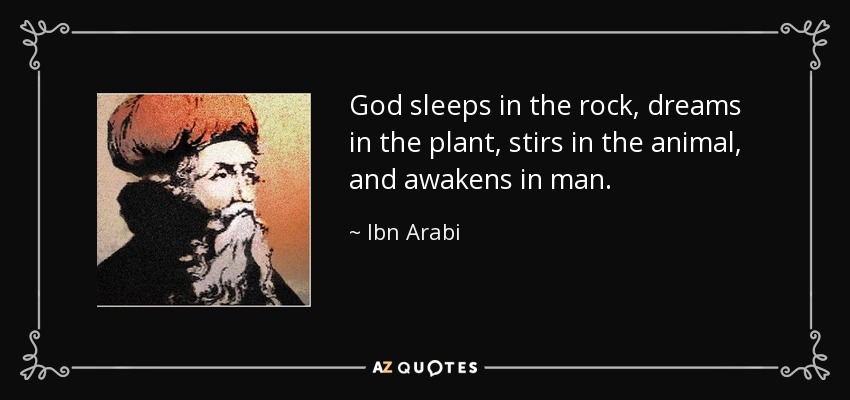
picture credit: AZ Quotes

All of this may be rather bleak. However, mankind was never sent here to change the world, just to learn to be a better human being. Perhaps we have to look at this problem from a completely different perspective and that is to consider why there even is matter at all. Perhaps the knowledge that matter is interchangeable with energy casts some understanding. If mind / Universal Mind was seeking to know itself it could not do this in a vacuum. It has to create a very dense version of energy, which is what we call matter. In this material universe we are able to perceive how energy works because the two are the interchangable; it’s just that matter goes slowly enough for us to interact with it intelligently.

Those lessons, which the material Universe with all it’s entanglements and complexity, are directly transferable to the energetic or spiritual universes and when applied, give the greatest understanding of this highest spiritual truths.

You want to know what is spiritual?

Don’t approach spirituality.

To know what is spiritual,

Figure out what is physical.

Master Shi Heng Li Shaolin Monk

Hive Mind

This essay will explore the philosophical implications of this idea from the insect kingdom, a ‘hive mind’. In a very special way it might enable us to explore the mystery of our own ‘consciousness’ as an individual, in a group, and in spirit. The ‘hive mind’ concept has been more widely understood, since the eponymous non-fiction book by Garett Jones published in 2015.

Today, scientists are exploring the question of how sentient, animals are. They define this as ‘having a sense of self’. Animals, seeing their reflection in a mirror, react as if another animal was present; a being which is non-self. But there are some life forms that move ‘as one’; such as a flock of birds. Their sense of ‘self’ or ‘being conscious of self’ , becomes subservient to their social group’s consciousness. Picture credit below of a bird shape murmuration, to Country Living Magazine;

I would argue that this capacity to act either as a group or individually, is found in nature on a graded scale, that is; solely, partially or totally and every grade between these. In other words, some (if not all living beings) are able to act both individually and collectively at different times depending on the objective.

Let us examine this idea in more detail. I would like to start with the mineral kingdom, as the understanding that minerals in their many forms is conscious, is not so odd. Indeed, most indigenous people’s live comfortably with this concept. However, as this idea may seem ‘odd’ to city living humans, let us start with the vegetable kingdom. This image from the National Forest Foundation shows a map of tree connections.

Certainly trees have a historical place in the line of sentient beings in the cultures of indigenous communities. Modern Japanese today venture into mature forests to absorb the energetic ‘atmosphere’ which they term, ‘tree bathing’. Scientists have discovered that trees communicate with each other through their roots and associated connecting fungi. One tree may tell another, for instance, of a disease or insect infestation, which is attacking it. The other trees then initiate chemicals into their own sap that will protect against this attack to themselves and collectively; a form of viral inoculation and lock down.

J.R.R. Tolkien in his book The Lord of the Rings, imagined a race of giant trees called ‘Ents’ who were as alive as humans. Today the film ‘Avatar’, features a civilisation of other worldly beings whose lives centre on a magnificent sentient tree with enormous spiritual significance to their society.

The insect world is clearly where the idea of a ‘hive mind’ originated. The queen, workers and drones each have their own specialisation which is hard wired into their DNA. As a group, bees communicate on matters of hive survival using dance to express information. Their consciousness could be defined as ‘collective’ for this reason and there is a limited sense of self in each bee; at least enough to ‘speak’ to others.

Ants and termites (above) operate in the same way as specialised entities with specific functions to act for the benefit of the community. The structures they can build are extraordinary in their size and complexity. Surely, only a sense of communal consciousness could maintain this level of concentration on the task and produce something far greater than the individuals power to do so.

Interestingly, some insects are more individualistic. A spider, for instance, generally works alone as it needs space to create it’s webs. Without anthropomorphising, such a creature must surely feel that it is separate from the reality it senses, otherwise it could not ‘plan to catch another life’.

In animals we find a similar spectrum of ‘degrees of self awareness’. The birds are the most well known for acting in flight as if they were one organism in some species. Scientists who have study these ‘murmurations’ have proposed that each bird acts a micro-second after it’s neighbour. This may be the case but it does not rule out a collective consciousness governing their behaviour.

Penguins survive in extreme climates by acting in favour of the community and the individual. Those on the outside of a large formation of birds standing in a blizzard, will be allowed to edge to the centre of the huddle and then start moving towards the perimeter again. This flow gives and even chance to each bird of enjoying the collective heat of their bodies.

At the other end of the spectrum of animals acting individually, is the wild and domestic cat. It appears to have a high degree of sense of ‘self consciousness’ and will act according to it’s own rules and commands. The Lion as the ‘King of the Jungle’ indicates this propensity to act according it’s own survival needs and a sense of ‘self’ compliments the demands of the pride.

The mysterious process of the evolution of the domestication of wild animals gives reason to consider how wild and domesticated animals differ. In what ways are they different mentally, as well as physically? Personally, I believe that domesticated animals have a higher degree of sense of self than their wild relatives. This is because their consciousness is less centred on survival and is able to focus more on itself. It feels both individual and aware of it’s relations with other sentient beings, such as humans and other domesticated animals.

With humans these matters become more complex. I would suggest that we are at the high end of the sliding scale of individuality; that is we are distinctly individual both in appearance and a sense of self or self consciousness. We might identify collective behaviour such as tribal dance or even military tattoos as a ‘hive mind’ ability. But personally, I believe this is merely ‘mimicking’ the hive mind consciousness through repetition. This is to rule out the spontaneous consciousness of the group as a whole but this effect only happens in special moments, as most dancers would assert.

Humans differ also in that we have access to another dimension of consciousness. Professor G.J. Jung called this the ‘collective unconscious’. This concept of a hidden process of motivation in human activity, is at first difficult to understand – which it is by definition of being ‘unconscious’. Humans can not only manipulate consciously, as in politics and advertising, but confuse personal identity with the collective. In other words, our sense of ‘self’ is easily confused. We believe that everything in our mind, is us. For instance, supporters of a team watching a football match become identified at an individual and collective level with the game they are watching. They may have dressed in colours of their team to create this illusion of identification, and will certainly feel to their core the associated feelings of success or failure with the (their) team and it’s individual members.

In other words, humans become confused at a most fundamental level, with what is ‘the hive mind’ and what is their own. There is a comfort and protection in this illusion and it is hard to break. At it’s most malign manifestation, a group of humans will riot and cause damage and injury to others that as individuals, they would never do. In some cases, whole nations can be caused to commit acts to harm other nations, known as war.

The few humans who have leapt out of this illusion are the prophets, saints and mystics. At a spiritual level, such persons have separated their individual sense of ‘self’ and entered what is called the ‘Universal Consciousness’. Such figures are revered in all religions and an example in modern western societies would be Jesus the Christ. He is revered for having ‘died for others’, in other words, to have completely surrendered to the hive mind both in the physical dimension and spiritually.

I would argue that the mineral, vegetable and animal kingdoms also have access to this spiritual / universal dimension of consciousness but not in a sentient way. In other words, they are so limited by their DNA , instincts and highly specialised physical bodies, that they cannot gain discernment of the ‘Universal Mind’ as humans may. We are uniquely able to enter higher dimensions outside of our own bodies. Humans who have physically died and then come back into their bodies recount remarkably similar spiritual experiences, ( including the most ‘hard headed’ scientists ) and their stories abound on social media.

In this spiritual kingdom, there is another, similar hierarchy of self awareness and communal awareness, on this planet.

If one can accept the idea that ‘mentality’ can exist in the ether without physical form, then it becomes easier to understand, if not experience, the other entities or beings, described historically and universally in the spiritual dimension.

These start with the identification of ‘spirits’ which are either of a natural or human origin, move through ‘jinn’ to higher intelligences such as angels and arch angels, and summit in the concept of ‘God’ – or to the non-believers, ‘Universal Mind’.

The concept of hive mind, enables one to grasp the idea of a universal consciousness. All of this, that we see as individuals, is an illusion. It is not ‘us’. Self is merely a manifestation of the infinite consciousness, the great Mind ‘who art in heaven’. It is expressed more perfectly in mathematics than attempts in words, however, geometry is traditionally the closest expression of the Creator’s Mind.

How apt it is then, that when the Great Bee Keeper in the Sky, lifts up the frame containing the honey of heaven, what have our little bees made? – why, a maze of perfect hexagons.

Imagination Theory

If we shadows have offended,

think but this and all is mended,

that you have but slumbered here,

While these visions did appear.

The Faerie ‘Puck’ in William Shakespeare’s ‘Midsummer Nights Dream’

The greatest mistake a human can make, in my view, is to not treat imagination as real. This does not mean that what we call ‘reality’, is unreal. Reality and imagination both have a vital role to play in our lives.

The character of Ebenezer Scrooge in Charles Dickens’s A Christmas Carol, had to learn this lesson three times in order to understand himself better. Three ‘spirits’ took him on three journeys into his own past, present and future. From objectively viewing his own character weaknesses, his false pride was beaten into submission and he learnt the most valuable life lesson of all – unconditional love. These ‘imaginary’ journeys and the lessons overpowered the lonely ‘refority’ he had built for himself.

All of us encounter these three ‘spirits’ in our lives, if we can make a leap of faith and objectify our ‘imaginary’ selves as ‘real’.

The first such spirit we encounter is in our childhood when we understand very little about the real workings of life. Rather, we ‘act out’ roles that our imaginary selves would like to be in the future…our ‘Christmas yet to come.’ The dressing up box is a most useful item, enabling children to assume wildly fanciful roles as magicians, dentists, racing drivers, astronauts and so on. The most ordinary prop fulfils the need for an exact semblance of physical reality in their imaginary world. Watching children at play is a most rewarding way to understand our own susceptibility to imaginary states of mind. When we are children, fantasy often overwhelms what we feel is our ‘objective self’ and teases us with pleasures and torments, in a safe way. But, like Peter Pan, some children refuse to ‘grow up’ into an adult. The world of frigates, flying and fairies is far too much fun to frizzle away.

The character of Walter Mitty is a literary example of how there can be a child in an adult’s body. Mitty lived in an absorbing ‘dream world’ with flights of fancy that would replay dreams with himself in the lead role. He would encounter a situation the real Walter Mitty would be completely unable to deal with, and compensate with his imagination; such as flying a plane or conducting an orchestra. This is the ‘ghost of Christmas present’ where as individuals we have moved on the adulthood, but in a failed way. Unlike Walter Mitty, most people engage with the ‘hum drum real world’ and it’s seemingly endless burdens and chores, punctuated by few delights. Remember the character played by Tom Hanks; Forest Gump? For this character, a string of exciting situations were both wild and implausible enough to be fantasy and yet were firmly, real. Forest, in contrast to Walter Mitty, had mastered the most important challenge of all; to successfully merge imagination with reality.

Our most important decision is to find what people call our ‘destiny’, but this often sounds rather a vague destination. Even the decision to find a career is an extremely difficult one for a young person. From the view of an elder, I would define ‘destiny’ as simply following the people and things that you love. Although this sounds simple it is of course much harder that it sounds, as there are often obstacles to our dreams. As a child my dream was to be an Admiral but when the time came, my eyesight was not good enough. Watching Lionel Andres Messi play football for Argentina in the 2022 World Cup, is to see a man fulfill his destiny as a footballer. Those who purchased his No.10 shirt and wore it to the match were merely living the dream of a third partie’s achievements, a dead end path to their own destiny.

When we follow and act out an overwhelming excitement to do something, this is our own dream becoming true. Unfortunately, it is a sad fact that less than 4% of Western Europeans are in what they would call ‘their dream job’. The rest find themselves working in order to earn money and have no dream. The servers in the restaurants in Hollywood are often ‘wannabe’ film stars. The lucky minority who are ‘successful’, appear on our television screens.

As well as finding the employment that makes us fulfilled, we must find a partner who fits our ‘imaginary ideal’ of a partner. This again is a huge challenge as the ‘ideal’ man or woman is rarely found and if found; is available and inclined to reciprocate those feelings. If the latter does happen, as in the fairy story of the prince and princess falling in love for ever and ever, then blue birds will sing among the pink clouds and the castle turrets will tower over the cheering crowds at their wedding. Walt Disney has relived this imaginary moment for millions of children and adults and I would argue it is not wrong to dream. Through all these types of stories, whether in ancient myths and legends or on soap TV and radio, we learn to match objectively, our imaginations with reality. It is like two QR codes marked on two sheets of glass. When they slide over each other, the two appear to be identical. The worlds of imagination and physicality are just as unique and, when blue birds start flying around your head for real, they are in perfect harmony.

To return to our Christmas Carol theme, we enter the final stage of life. The woman or man lose their beauty as their body withers with age but their mind is usually disproportionately active and many older people will give you their ‘feeling age’ as their early twenties. When you engage them in conversation, they will recount their times of ‘Christmas past’ when significant moments fulfilled them. These will be substantially real but also coloured by imagination. Like old black and white films that have been digitally ‘colourised’, life becomes a series of memories which are a mixture of physical reality and imagination. The best are of course, those moments when our ‘dreams come true’.

Memories are valuable, but we should not forget that our true self is always in the present.

For this reason we cannot compare ourselves with others and form judgements.

We can only use the ‘guiding spirit’ (who taps on the frozen window pane of our own self pity one night) to remind us of who we might be and that we are not that person yet. The Dickens story recounts how it is never too late to learn how to become better. It is never too late to live the dream that you always wished for. It is never too late, unless you are one of those people who refuses to be motivated by your own imagination; to follow your own ‘yellow brick road’ that leads to the encounter with the Wizard of Oz or purchase the ‘giant Christmas turkey’ that with unconditional love, fills the bellies of all, including Tiny Tim.

What Mr. Scrooge had learnt was that living the present moment is the ultimate present to oneself and those around you.

Fifty Shades of Love

If the Inuit have multiple words for ‘snow’ then you might think that there are many words in English for ‘love’. Language has the ability to enable mutual understaning, even for the most mundane thing;

qanuk: ‘snowflake’kaneq: ‘frost’kanevvluk: ‘fine snow’qanikcaq: ‘snow on ground’muruaneq: ‘soft deep snow’nutaryuk: ‘fresh snow’pirta: ‘blizzard’qengaruk: ‘snow bank

So why does the word ‘love’, in all languages, fail to identify the spectrum of feelings it could and should represent?

Before we start, let us agree that the word ‘feeling’ affirms love is an emotion. It is not the instinct ‘lust’ although the two may often be confused! As it can with the love of beauty and attraction that is only ‘skin deep’. Perhaps these errors once ‘launched a thousand ships’ to enable Paris to seduce Helen of Troy, or was an epic love story?

Lust has been crystallised in the English language by the phrase ‘to make love’. But clearly, animals ‘make love’; if all that is meant is to have sexual intercourse. When looking up ‘roll in the hay’ in a thesaurus, there are twenty seven synonyms for this expression. Clearly, westerners are as interested in sex as the Inuits are snow.

But we are going to pass over lust and concentrate on it’s more sublime incarnation and affirm that love is one of the most sublime emotions that humans ever experience. Although not easy to find, It too has many shades if we can find words to ‘nuance’ it into sub-categories.

So if we think of how we ‘love’ in our daily lives we can identify several ‘objects’ for our love to directed.

Romantic love should be our first choice as here we find the core of the word and it’s associated feeling. Romance sends humans into true and false expectations that are sometimes completely out of character. In youth this feeling is unknown and untested. But we are already on a collision course with that special person who will come into our lives. The emotional ‘volcano’ that erupts can leave one without thought and speech so paralysing is the impact of the explosive force. And just as in the making of volcanic mountains, the results of the experience last forever; impermeable to all later hurricanes and earthquakes.

The greatest romantic love involves a kind of electronic circuit, where both ends of the battery connect in what is called ‘requited love’. It’s corollary, unrequited love has spawned many an ancient Saga such as Sir Lancelot’s love for King Arthur’s wife, Guinevere.

Then there is love which has a different character; more calm and assured. When we think of how we love members of our family, we use the same word ‘love’ although there is no sudden ‘falling in love’. We learn to love our parents and siblings from birth to grave, a process that is not one necessarily of our own making. It is like a cosmic ‘arranged marriage’ where a soul is placed into the intimate company of strangers, it’s family. What we call ‘paternal’ and ‘maternal’ feelings of love are curiously blended with their equivalent instincts of unconditional parental protection; in the same way that ‘romantic love’ depends, in subtle ways, upon instinctual drives.

When children are old enough to leave the ‘love nest’ they call home and go on their own way, their connection with ‘family members’ falls more to a purely emotional attachment instead of one based on physical dependence. But when parents have bad characters and the process of childhood has involved abuse by parents towards their children, the detachment of a child to the family home becomes a ‘release’.

In that situation we have moved to the opposite end of the scale of the ‘fifty shades of love’ and discover the word ‘hate’. Hate after all, is the same as love only destructive in it’s effects rather than constructive. But the emotions come from the same source.

Romantic lovers and family members sometimes find themselves in the space of mutual emotional hate at the beginning and or end of relationships. In Shakespeare’s play ‘Much Ado About Nothing‘ the principal characters of Benedict and Beatrice cannot stand the sight of each other. Through the play their characters develop towards a deeper understanding of their similarities rather than their differences. The English language deserves a word for the ‘love / hate’ relationship!

We find the same scarcity of words when we describe ‘love’ in the context of religion and the concept of ‘loving God’. Those religions founded on monotheism, place intermediaries between the Divine and ourselves such as the prophets and the saints, their disciples and the self elected clergy who claim to be able to understand what was going on in the lives of the characters in the holy books.

There are those who have a direct relationship with the Divine with no intermediaries. Their relationship with God is greater than any love for any human and many retreat to monasteries and nunneries to play out and understand these feelings. Is such a feeling irrational? Again we need another word for ‘love of God’ because without it, we can cancel without due consideration the possibility that prophets and mystics can unconditionally love God.

As we scan these ‘shades of love’ we find next a rather prosaic category of ‘love of places, activities and things’. These I place together as they are generally dismissed by the aforementioned mystics as being ‘illusions’ at worst and ‘not of benefit to the soul’ at best.

And yet ninety nine percent of human activity is centered on the places, activities and things that we love. People who express in exceptional and imaginative ways are the artists in society. They choose things that inspire a love, such as nature in it’s many forms and people in their many activities, that they wish to share with others.

Certainly artists are able to observe and understand their feelings of love and passion in a focused and controlled way. Just as the person smelling blends of tea in a tea factory, artists are able to savor their deepest emotions, such as love, and present their inspiration in a way that is agreeable to others.

An example might be the Moghul mausoleum, the Taj Mahal in Agra (picture credit Smarthistory). It was famously built by the Shah Jahan to express his eternal love for his favourite wife Mumtaz Mahal. This leads us into the idea that love between human beings can be regarded as limited by society (monogamy) or plural (bigamy). With such dilemmas we can observe how ‘uncontrolled’ our emotions can become in the eyes of ‘society’ and again many great works of literature and art have been inspired to explore how this plays out among the humble and the great.

We should not overlook one of the most extraordinary aspects of love between humans; that we have an infinite capacity for love. Our hearts are wells that do not run dry, circulating love as effeciently as blood. Which is why many religions extorty Universal love for all things. As Jesus the Christ said, ‘love thy neighbour’.

The subject of love is indeed an immensely contradictory and complex; partly because of a lack of words to describe it’s many faces and flavours but also because of what today is identified as ’emotional intelligence’. If the ‘e’ in emotion represents the ‘energy’ that causes feelings to erupt as if from nowhere, the ‘motion’ part of the word describes how feelings are constantly changing. If we form fixed beliefs in our minds and accomplish specific skills in our bodies that do not change, can we extrapolate this to the idea that emotions are the same?

It would be good to believe this and allow our emotions, thoughts and bodies to constantly learn ‘new tricks’ throughout our lives. Our minds may wish to give the appearance that they are ‘in control’ but our emotions can overrule mind and the decisions it makes.

‘Don’t believe a thing just because you thought it.’ Groucho Marx.

What differentiates love from mind and body, in my view, is that emotions can understand what we might term, ‘truths’. A woman for instance may take a dislike for a person who her husband admires for no explainable reason, just a feeling. And years later the husband arrives at the same conclusion using the circuitous route of logic and deduction.

At the most sublime level the words of the prophets and saints express eternal truths when they experience a direct and immutable Divine command. Since such commands are always based on love and light, all who follow these words will benefit.

We can conclude then that love has multiple incarnations and pushes and pulls us simple humans, in the way that asteroids and meteors dance with solar systems. There are irresistible forces at work that can propel us further and faster as well as sometimes, cause us to crash.

What appears to be important and yet missing, is the ability to use language in subtle and, yes, exquisite ways, to direct our course of destiny. If nothing deserves better attention, I would contend that what, who, how, where and when we submit our very own ability to love; then we have learned the greatest trick of all.