A New Kingdom

Prejudice is to have an opinion based on false feelings and, or false information. It is to be so fixed in opinion that even when new facts are presented, prejudices are not eradicated.

Prejudice manifests as both positive and negative opinions and feelings. We can praise those who are not worthy of praise and hate those who do not deserve hatred.

Prejudice requires a process of discriminating judgments based on casual classifications such as gender, social class, age, disability, religion, sexuality, race, ethnicity, nationality. The classifications are in themselves chosen irrationally. This is commonly through received opinion either within a group of mutually minded and self selected people, or through inherited ideas and opinions which are accepted and shared uncritically.

Prejudice has been a problem for social groups across time and the world. It has created wars, injustice, repression and hatred between individuals and groups since the beginning of time.

‘He hears but half who hears one part only.’

These are the words of Aeschylus the ancient Greek playwright, written around 500 BC when a new form of clear thinking was heard, if not always respected.

Failure to listen to previously excluded or new facts because they do not support a belief based on opposing facts, is a form of false thinking.

Such a weakness is what temporal law and it’s practitioners aim to rise above, but even and sometimes especially in a Court of Law, arguments present opinions based on a version of the facts, rather than the facts themselves.

There are few who are not a product of their own prejudices and the opinions that reveal them. There is always something that will make a person ‘turn away’.

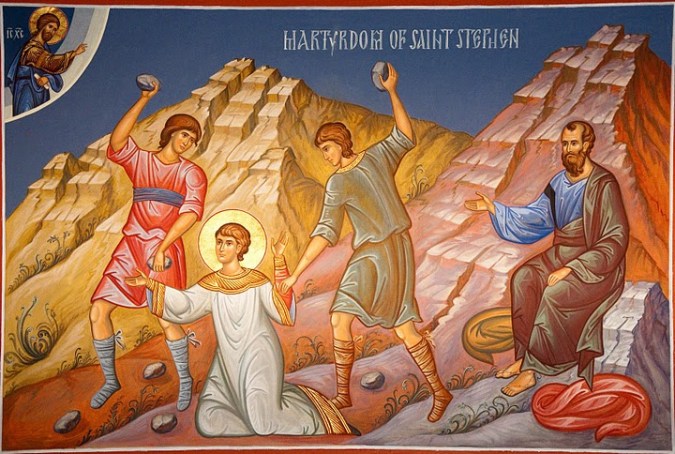
Throughout history, those who have refused to adopt the prejudices of their peer groups, have been murdered or imprisoned. Rarely are they respected and given the respect they deserve. When this respect is given, their moral authority raises them to a respected position in society, or post death, to sainthood.

picture credit: en.holyorderofststephen.org

saint-stephen

Such a clear view and the ability to speak it, is commonly found in those with a highly spiritual understanding. The word ‘mystic’ is unfortunate in English for its similarity to ‘mist’. In a mist we cannot see and are lost, which is a good metaphor for humans who do not possess clarity of thought. That is the precise opposite of mystical ‘vision’.

A mystic is a person who has achieved perfection at all levels of being, including thought. They do not necessarily express ideas that conform to social, religious or cultural norms.

This has lead to their persecution throughout history as they do not say what people expect and require them to say in order to support shared prejudices. The very presence of a clear thinker, such as Socrates, is an affront to the uninitiated.

The initiation that humans are better for acquiring is the ability to train their observations to override what they have not observed. With this ability, people are able to act with complete compassion and love of others, whatever these people may believe or represent.

God blesses those who love and are without judgment towards others.

Such people are needed today and yet how many ‘saints’ are presented in the media? Certainly there is a long line up of ‘sinners’ and the ‘misguided’ – some in positions of authority that they do not deserve, and some on their way to the prisons in shame.

This process is continuing and the present time will create opportunity for men and women of high moral authority to be heard and respected. You will know them for they are without prejudice and pride.

They have walked on the earth before and are here now. Times of tumult and disruption of the norm, herald their recognition and the beginning of the enrichment of societies.

The enrichment is not the type that has lead previous and present generations i.e. wealth and fortune.

‘Jesus said that we could not serve both God and wealth, and it is obvious that Western society is organised in the service of wealth.’

John B Cobb ‘Eastern View of Economics’

To have one’s treasure stored in a parallel dimension, is not a common aim in modern Western Society. And yet, a literal and metaphorical polar shift is already happening and this will bring about a complete change of society.

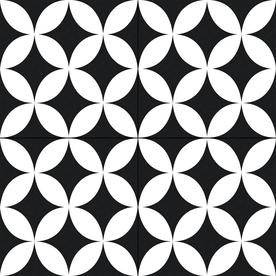
Black shall be white and white shall be black.

black and white pattern

Only when all men and women have abandoned their prejudices will they be able to see their own society and those who make up society, that they had not seen before.

The truth, as someone once said, is stranger than you think.

Don’t Fence Me In

This the title of a wonderful old song sung, I think by Bing Crosby. It’s all about the exploration of the west in nineteenth century North America. After millennia of humans and animals roaming free, cattle ranching introduced ‘ownership’. The Native American Indians didn’t understand it and gave away their lands before they realised they would have to fight and ultimately die for the ‘reservations’ that were left for them.

picture credit; WallpaperWeb.com

Stampede_African_Cape_Buffalo_Herd

It is an paradox that man craves freedom but loves boundaries. Astronauts report on viewing earth from space, that it appears as one planet. There are no political boundaries that we are so used to see on global maps. Boundaries are ultimately arbitrary. They serve only the tribal mentality of ‘them and us’ present in early man and persisting, almost unconsciously, to the present day.

The poet Robert Frost wrote a poem which included the line, good fences make good neighbours. This concept, at one end of the spectrum of possible combinations of freedom and enclosure, works – but only temporarily. Eventually, because of tribalism and greed, a fight breaks out.

When the British realised the rule of India by a distant Queen of England was over, they were faced with the problem of handing over a sub-continent to self rule. A problem because the Muslims and Hindus were at each others’ throats. If the British left there would be a blood bath. So they drew an arbitrary border on a map and created a new country, Pakistan. Like the creation of the Berlin walls, it divided families, created mass migration, a loss of homes and livelihoods and riots and slaughter. Tribalism, whether under religious or any other banner, is never good for all. Today India and Pakistan face each other with tolerant hostility, with a hundred nuclear missiles each, ready to wipe out each other and the rest of us. As an afterthought little Kashmir remains a flashpoint where this could happen. When you draw political maps, you had better know what you are doing for now and the next thousand years.

When the UK made the minority vote decision (only a quarter of the population voted in favour of Brexit ) to leave it’s partners in Europe, it had not considered the effects this would have on Northern Ireland and Scotland. The border in Eire was created centuries before to create a ‘non catholic’ portion of Ireland that could be controlled from England. The political reasons for it’s connection with United Kingdom are changing, and a likely consequence of the UK seeking ‘independence’ is losing Northern Ireland to the Irish and Scotland to the Scots.

Virus’s, and all the malign forces that nature unleashes on humanity; virus’s do not respect political boundaries. It takes two weeks for a virus to travel around the globe. The only way to extinguish a virus is for each person to crawl into their own cave and stay there. They may die or they may survive. In this situation one is not even aware that one’s neighbours, also potentially dying, are on the other side of the wall.

When this current Covid-19 pandemic is over, as it will be, the nations of the world should take stock. They need to seek to understand the lessons that come from such a pandemic, for virus’s are a greater problem than terrorism and extremism and wars and all our man made horrors. In 1919 the second wave of Spanish Flu killed everyone who caught it.

Surely, world leaders must learn that humanity has more to gain from co-operation and tolerance towards all living beings, whether animal or human. There are no boundaries in nature except those created by habitat and when there is enough habitat to go around, everyone is happy. When large populations move to escape political or natural upheavals, these people are ourselves coming in the other direction.

In Europe, the European Parliament and non-governmental organisations like the WHO, have failed to create a strategy to cope with immigration. Countries on the edges of Europe such as Greece and outside such as Lebanon are full to bursting point. Now Greece is shooting warning shots into the sea at immigrant boats.

In the United States, the solution to immigration from Southern American failing states, is of course ‘a wall’. As if we had not learnt from history how the Berlin wall was pulled down and how Palestine was shrunk into walls – good walls rarely make good neighbours.

Mankind craves to be free and this moment in history is a time for humans to come out of their caves and obeyance to tribal rules. Instead of hating and fighting each other, we are in a position to see the greater picture from above, where barriers do not exist. There is only humanity, and the sooner we treat the planet and each other with humanity, the sooner we will lose the feeling of being ‘fenced in’.

The Good Life

There is a remarkable pair of photographs on the BBC website today. They show satellite images of eastern China, Hong Kong and Japan. The images are filtered to show the intensity of air pollution. The January 2020 image shows ‘business as usual’ and the principal cities and urban conurbations are highly coloured from yellow to high risk, red. The February 2020 image shows no coloured areas at all! The air is clean because production in the factories has stopped. Ironic that such a gift to the populations, of sunshine and clean air occurs when millions are in quarantine.

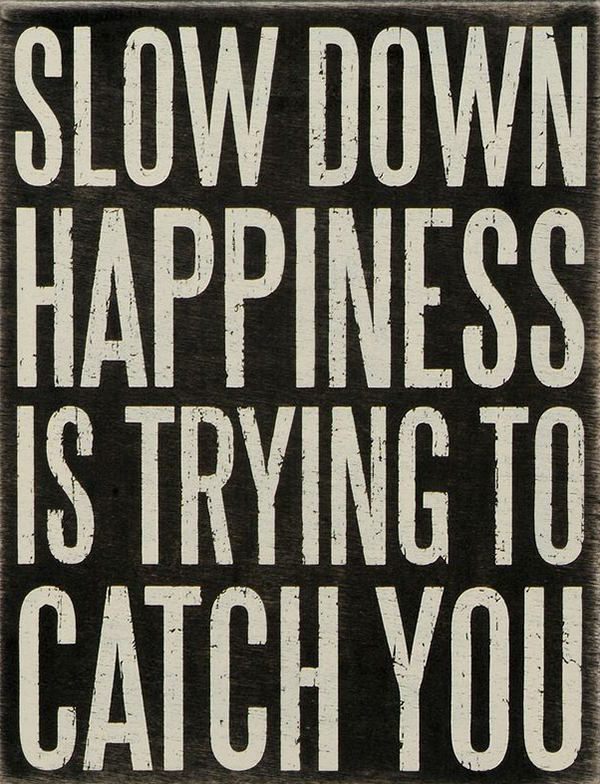
The message we can draw is not how contagious viruses are – we know that. No, the message so plain to see is ‘slow down and stop!’

slow-down poster

The industrial tenets of, ‘more and faster’ for profit and a promise of prosperity for all, are also familiar to us. Humans deserve a good life so the growth of benefits from industrialisation, cannot be denied. Over one hundred and fifty years ago people started to leave the land and live in cities. This process means that now about half the populations of most countries live in cities.

In response industrial production is speeding up, as robots and AI are literally taking over from humans. The only question is; at what point is ‘a good life’ reached?

A casual observer in a modern metropolis, might perceive a collective sadness in the faces of passers by – anxious to reach their individual destinations. If asked if their life is a ‘good life’ – I wonder how they would reply?

picture credit: WithPause.com

Snail credit With Pause

When I was a student in London in the mid-70’s, I took part in a ‘slow walk’. A collection of willing volunteers met at the north end of Hammersmith Bridge and lined up across the wide pavement. We set of in a bunch like marathon runners, only it took us three or four hours to reach the south side of the bridge – a distance of maybe three hundred metres.

Slow walking took discipline at first, but soon became strangely normal. My mind felt completely relaxed. I might as well have been in meditation – in fact, I was.

picture credit: Londr.com

hare and tortoise credit Londnr

That was part of my ‘good life’ when I had time to be fast or slow and chose the latter. There are in the present day, many experiences of ‘slow living’ available as an alternative to the human ‘race’. There is slow food, slow travel, slow cities, slow schools, slow books, slow living and slow money. See www.slowmovement.com and tell your friends!

In 2020 humanity is crossing the threshold where too much – too fast – too wrong – is damaging the planet and as a consequence, ourselves. Whether it is air pollution, sea level rising, food shortages, water shortages – industrialisation is ‘biting back’ the hands that turn the handle.

Sloww-Slow-Living-Synonyms-Infographic

This latest virus Covid 19, is amongst other things, a firm message for humans to ‘slow down and stop!’ Perhaps those confined to a room for two weeks, will draw a positive from the experience. ‘Not doing’ can alter expectations significantly. If ones normal expectations are unrealistic then the distress that comes from failure to satisfy those expectations, will never be encountered. Success or shall we say, contentment, comes from watching a spider cross a floor or a raindrop slide down the window; experiences usually never observed and enjoyed.

We will inevitably all discover that less and slower is more!

Somewhere between the extremes of fast and slow, is where humans can find the ‘good life’ they seek. How close to ‘slow’ do you dare to go?

Jesus Loves Computers

The following events are entirely fictional and set in modern Palestine where an enlightned Spanish chap called Jesus, is giving a group of his friends and followers a piece of his wisdom.

An early computer

J an Early Computer

And it came to pass that some of the disciples were mystified by the whole thing around ‘computers’, for much of Palestine was then buzzing about them and their unique qualities.

So they said unto Jesus, one Sunday afternoon when it had begun to rain and all around had gathered together in someone’s house,

‘What about computers?’

And Jesus replied, ‘Oh, ye of little understanding. Don’t you know nothing?’

And those who heard this looked at each other in a quizzical fashion and were confused by the double negative in the question which believe me makes no sense in Spanish any more than in English.

John, who considered himself a bit of a computer expert, stood up amongst them and cried, ‘please tell these ignoramuses Lord, so that I no longer have to ‘fix things up’ for them for I am weary of their attention seeking and quizzing.

And Jesus was compassionate towards John for he was also ‘up to here’ with quizzingness but knew it was just his Father having a bit of a joke so he asked those who were then gathered together and enjoying a round of hot drinks,

‘What is it you want to know?’

And one man who was a shepherd from the hills all his life asked, ‘tell us how a computer has a RAM, for I have a Ram and am confused.’

Jesus thought for a minute or so, making a pattern of little dots in the sand with his finger and then looked up. ‘The RAM is like unto a Juggler who stands in the market place. He has in his pockets sixteen sponge balls whose colour is red.’

Jesus eyed his audience and saw that so far they understood.

‘And he starteth juggling with three balls and the crowd is amazed that he can keep them all in the air at once, until he picketh another from his pocket and continues with four balls.’

‘And so the juggler keeps his concentration sufficient that soon he has extracted all sixteen balls from his pocket and is keeping them in the air by throwing them higher and moving as fast as he possibly can.’

The disciples and a few other goat herders who had heard about the hot drinks and had slipped in to get dry and warmed up, looked at each other and saw that no one knew what Jesus was on about. So one of them stood up and said,

‘Eh?’

Then John, seeing the vexation on the face of his Lord, and the gnashing of his teeth and clenched fists and all the signs of high blood pressure, did turn to this ignoramus and said, ‘Look, it’s simple, the computer has to make many tasks work at the same time and that is the Random Access Memory which is limited but can be expanded simply with a larger RAM card in the  RAM card slot or an additional card if there is space, making the users computing experience faster and smoother.’

Looking into the heart of a computer does not need to be confusing;

J Inside a computer

Jesus looked around at the glazed-over eyes in the room and implored John to not confuse the situation further, and John sat down mumbling to himself and grabbing his hot chocolate that someone else had been holding for him.

The Lord continued, ‘And if you are in pain to understand about other parts of a computer fear not, for all shall be explained unto you.’

‘What about CPU’s then?’ came a voice from the back of the room and prompting a sustained mumbling of approval at the question and some nodding of heads.

‘Mine’s 1.6 Ghz dual core. What does that mean?’

Jesus looked like he knew the answer to this question and rubbed his hands together.

‘The CPU is like unto the heart and lungs of a camel.’

‘Mine isn’t!’ came a shout of surprise from amongst them. ‘A camel? Bloody ridiculous. Why’s he on about juggling and cam…’

‘Look, it’s a parable you numbskull. Jesus is explaining using an extended metaphor to help dispel the mystery of something which defies understanding in ordinary language.’ John was always quick to defend Jesus’s teaching technique.

‘Creep!’ came a muffled response but it was not heard by all, for they were anxious to learn more. Jesus continued, ‘And if a camel has a small heart and lungs, when it is asked to carry a heavy load at a high speed, it creates much heat. This heat might be dispelled by a camel rider holding a large palm leaf acting as a fan or perhaps throwing a bucket of water over the camel…’

‘Where do you get a bucket of water in a desert!’ heckled a disbeliever.

Quoth John instantly ‘It’s a parable donkey brain!’

Jesus lifted his arms up and continued, ‘and if that camel had a larger heart and lungs, like if it had a better central processing unit, it would be able to run up sand dunes at great speed with heavy loads and be only slightly overheated and out of breath at the top of the dune.’

Jesus saves

The next course of sweet things made of pastries and dates was passed around and Jesus sat down for a while, for he was in need of a sugar boost.

At length, when the final course of wine and cheese had been enjoyed and all assembled were nicely relaxed and leaning against, on, or in improvised pieces of furniture and things scattered in the room like storage urns and camel saddles…someone asked, ‘What about Operating Systems?’

Jesus stood up and looked down amongst them as if the room was circling around his head, although it was not.

‘I’ll tell you about Operating Systems, for they are like unto a system of rules and beliefs that form a religion. These rules are given by Divine command, from someone like William Pearly Gates who started in a mates garage and now owns most of Palestine. He looked out of the window and saw a Window and called his inspiration, Windows 4AD. And he formed a series of commands and programmes that were readily understood by the computer and made an interface between the Father, William and ordinary people like yourselves gathered in this room.’

‘What, all of us?’ came a gasp.

‘Yes, even the most humble amongst you, who has had little education past nursery level, and perhaps is unable to even read or write due to some incurable incapacity like dyslexia or ADHD leading to anxiety and behavioural problems…Ye are those who will be first to understand exactly how to open documents and save them properly.’

And all in the room were moved because they thought computing was for the educated and rich who sat around in Palaces and hobnobbed with the senior military ranks in their secluded villas with pools and fine Sea of Galilee views that turned out to be rather too distant to truly impressed but looked good in the sales literature and sold houses quickly…they realised that such people would be the last to understand how to use computers because their heads were all in a muddle…whereas, the most stupid members of society like themselves were in line to be first to enter the Pearly Bill Gates because of their humility and frankly, lack of fear, and understanding of how computers could change their lives from simple peasants to men and women of wisdom and high ethical standing.

And the angels stood around in the room and applauded those now gathered there asleep, for their fear and anxieties about computers had been destroyed once and for all eternity.

J Gates-of-Heaven

Is God King?

Alan Watts recounts the following anecdote in one of his erudite lectures entitled ‘The Nature of God and Death’;

An astronaut was asked on returning to earth, ‘did you see God?

‘Oh, yes,’ was the reply.

‘Tell us more about what you saw.’

‘She was black.’

When the Pilgrim Fathers sailed over the horizon, their great mission was to escape the rule of monarchy. Things from which we try to escape however, have an unnerving habit of following us around. So it was for the first settlers in the green and pleasant shores of eastern North America. Without a ‘lord and master’ or ‘father’ figure, everything would be much better, right?Pilgrim-Fathers-painting-Mayflower-Bernard-Gribble

The irony, in their religious beliefs, was that their metaphor for the Divine was a King. If it is odd that the Divine is restricted to being conceived as the masculine principle, we can forgive Biblical writers for being restricted by their own language. There are few words ascribed to neutral or ‘combined’ genders in most languages and unfortunately this has narrowed the way we think. ‘God the Queen’ would have been a very strange concept to Christians of most ages although they only had to refer back to ancient Egypt to broaden their views. The King Osiris was married to Queen Isis, who is often depicted with their infant son, Horus on his mother’s knee. The ‘Holy Family’ represent an all inclusive metaphorical Deity who is active and present throughout the entire biological process of pro-generation, as well as present throughout the entire cosmic process of creating the Universe. The origins of Judeo -Christian beliefs in the religion of Ancient Egypt, are preferred to be ignored despite clear paths of provenance.

It is a fact that religions per se, do not thrive on original thought. The Pilgrim Fathers were accepting of the fact that no one had thought to include the Pilgrim Mothers in the title of their congregation. They were also content to worship a ‘God the King’ even though the autocratic system of government was so abhorrent to them. Monarchs have a power over their subjects which ranges between the benign and malign, depending on the character, mood and carbuncles of the monarch. In a way, the freedom sought by the Pilgrim Mothers and Fathers, was a philosophical freedom as well as a temporal one. They felt justified in asserting their own free will over any other will.

Face-of-God-

But since the Christian God is one that has given ‘free will’ to his and her subjects, it is open to debate as to whether they were escaping God or a religious restriction of the concept of the Divine pedalled by an all powerful Church, usually in temporal cahoots with a monarch.

For political rather than religious reasons, the Constitution of the United States of America was written with precisely this abhorrence of the ‘all powerful King’ in mind. Judges and Representatives of the people were given tripatied power. No one person should wield political power over the people. For this reason the people were given the free to bear arms and form militias should the politically powerful become malign – in their view.

If government on earth is a mirror of celestial politics you have to wonder whether Angels are similarly empowered to zap their superiors with cosmic ray guns?

This did, of course, happen in the leaves of the Old Testament and the dualistic nature of even Angelic creatures is contained in the story of Beelzebub and his rebellious angelic army challenging the Divine ruler. The rest, as they say, is history.

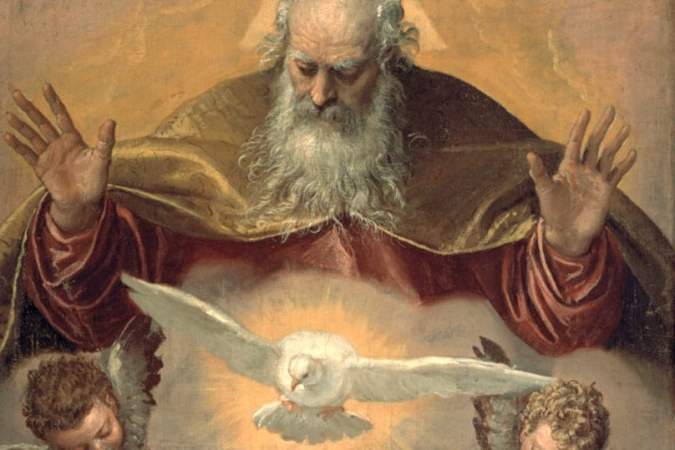
God with grey beard and dove

So to return to the question of whether the Divine Being is a white Anglo Saxon male, the answer is, clearly – doubtful. Long white beards aside, human kind has created the monotheistic God in his own image, and since King James and the other chroniclers of the good book were egotists, God has always been what psychologists call a ‘projection’.

This is fitting since much of the Universe is no more than an projection of the Universal consciousness. In this the Divine Feminine and Masculine principles interplay as a sort of fantasy dance – the gyrations of Kali and Shiva – who create and destroy in equal measure.

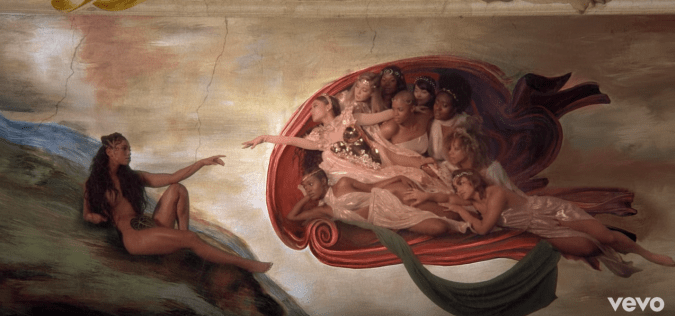
Eve and Godess

We depict any Godhead as male at our peril. If Jesus used the metaphor ‘Father’ it was not an implication of gender that was intended but the figure of the pro-generator. Jesus was fond of metaphors since mystics find the language of the market place appropriate to use to describe higher concepts. The parables he told contain metaphors which strongly describe unspeakable ideas in the sense that words are not enough. The return of the Prodigal Son to his father is describing the process of individuation within a maturing human being – the path which if followed leads to a union with the Divine. The ‘fat calf’ which we are all in danger of becoming during our easy lifestyles on earth, has to be slain and consumed.

When you eat remember this of me.

The errant son evolves to become a father. An errant daughter evolves to become a mother. An errant non-gender specific person becomes a vother*.

(*Using the principle of ‘ the infinite abundance of thought’ to make up words where missing – Vother is a neutral person.)

Light through clouds

So, no, God is not King, nor even a humble father. These were always crude metaphors, crudely carved by restrictive words and dualistic thought. The ancients and the religions of the Far East such as Buddhism and Hinduism, have no difficulty conjuring up ambiguous and contradictory Godheads who break and write as many rules as they can. Reality is not polarised, with one half favoured over the other. Neither does an authority figure ‘reign in heaven’ or anywhere else. Such prosaic concerns are respected by mystics but dismissed as irrelevant to higher task of the search for Divine Union.

Render unto Caesar the things that are Caesar’s;

The ( perhaps ) unpalatable truth to many, is that we the people are king, if only for a day or our humble fifteen minutes of fame. Even if only glimsped once in this lifetime it is my belief that;

Ours is the Kingdom, for ever and ever, Amen.

Whilst it is unfair to criticise the Pilgrim Fathers with the benefit of a good deal of hind sight, one has to wonder what would have happened if they had re-assessed their religion as well as their politics. If their aim in leaving Europe was to seperate from the percieved corruption of the Church of England they had an oppurtunity to wipe the slate of indoctrination clean completely. As unlikely as it was in 1620 for such a shift in belief, if the early church leaders had met and discussed universal outlooks with the native people and their holy men, they might have made some radical philosophical discoveries. At least it is possible for a present day comparison to be made.

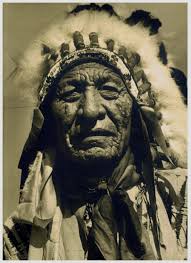
black elk

The Holy Man of the Oglala Sioux, Black Elk, is described as understand God in the following way;

‘Black Elk learned that whoever found a centre also became the centre of the universe and that is where God dwells…By placing himself at this centre which is simultaneously physical, spiritual and metaphorical, he encountered the Great Mysterious One…the centre of oneself becomes the centre of the universe. The centre of the earth and the centre of the person are one and the same.’

‘Finding All Things in God’ by Hans Gustafson published by Lutterworth Press

The Peaceful Warrior

‘Immortality has to be earned’

One of the myths of living in the twenty first century is that we can strive less and less, to obtain more and more. The factories built by our forefathers spawned this expectation. But there are many fruits of labour and only one is the comfortable life styles that accompany industrialisation. Another is spiritual fulfilment as a human being, involving a strenuous process of self development, unaided by quick fixes.

The industrialised society has brought people from the fields and housed them in cities where they are fed, entertained and provided with work. In a profane society, this is the deal. There is nothing else we are told, and yet when humans are presented with the bleakness of city life, they tend to aspire to the sacred, non-tangible and unobtainable.

The wrapper on a pack of butter boasts a picture of a rural idyll, the horn of cornucopia from which all goodness flows. In the background is a snow capped mountain, the place we might dream where we can find some sort of spiritual cornucopia as well.

But ascending spiritual mountains is not for the faint hearted. Stories of spiritual aspirants abound in all cultures and they usually go one of three ways. Either they become ascetic and turn to skin and bones, or they indulge and become addicted to luxury, or they find a central way – what Guatama Buddha called ‘the Middle Way’. Whichever track you are start, it is a commitment to struggle every minute of the day. Like the ‘dead man’s handle’ on a train, when pressure is released the journey comes to a sudden halt.

picture credit alamy.com

cat from alamy dot com

The individual on a spiritual path is perilously under constant threat of rolling backwards, should they falter in their attention. They therefore need the concentration of a cat watching a mouse hole.

The path of a soldier is something few get the opportunity to experience and perhaps few would want to. The price of failure for warriors is extinction by either bad luck, bad planning or an invincible enemy. The click of a twig in a wood at night, the faint glow of a cigarette or a moment of inattention might trigger what they call, shock and awe.

Soldiers sign up to take such fatal risks. They train constantly to achieve a high level of physical and psychological advantage over their foes. Soldiers can stand still on parade for extended periods because they are centred in their attention, not their dreams. They are standing to ‘attention’, that is alert.

This level of concentration is also fundamental for those on any spiritual path. The difference is that the spiritual strive to attain an inner peace, not an outer war. They do this by mounting an ‘inner war’ – the true meaning of ‘jihad’.

In Japan and China there have long been traditions of ‘warrior monks’ who use martial training to hone their spiritual and warrior skills. There is no contradiction because being at peace and being at war are just two extremes of the same experience. The experience of total concentration and control manifests as being centred in one place and in this moment transcendence can take over. The archer hits the bulls eye with the eyes closed – read ‘Zen and the Art of Archery’.

When our emotional, physical and psychological states experience synchronicity, we approach the highest state of being and it approaches us with even greater clarity.

Every second of every day, a martial artist is fully aware, even in sleep. Senses become heightened to the degree that even an ant walking on the path of a warrior is circuited and blessed with a prayer. By occupying the space in the ‘centre of the storm’, the peaceful warrior is immutable.

There is a story of a Zen monk sitting in a tall building in Japan as an earth quake shakes the city. The other people in the room run for the door in a state of high panic. Their instincts and emotions have taken control of their actions. The monk however continues to sit motionless. For him the danger and panic are states that will pass. For the other people the danger is something to be countered as best they are able, carried along in a state of uncontrolled terror.

If the building was about to collapse, they would all die, including the monk, but who would have died with the dignity of being in perfect control?

With this example we can see that life is not about achieving old age, or how sociable you have been. Animal families do this and in most cases do it better.

Although gifted with extraordinary skills, animals thrive through good fortune and persistence in acquiring food, a mate and a place to sleep. Being concentrated on these becomes their fatal flaw. Habitual actions that are learnt and used by their predators to trap them. If you have learnt to fly, the spider is already spinning her web for you.

In Zen and many martial arts, there are higher levels of skill than physical prowess. The skill of the Zen master or Sensei in a Dojo, is to out think the thinker, to perform a challenge that is outside the normal. The patterns which ordinary humans follow are the traps which spiritual teachers use to shift consciousness.

This is the mechanism of the Koan which poses an impossible question. To the casual mind, a question begs an answer. That is the way the intellect has been trained. That is the sticky web. This is how it feels…

What is the sound of one hand clapping?

In peace and in war, success demands we take the path ‘least expected’. It may make us look foolish or in other ways, unwise. Gaining criticism causes much the same inner confusion as gaining praise. Thinking and moving or not-thinking and not-moving should be juggled at the highest strategic level. The guidance of the peaceful warrior comes from possibilities and opportunities which may or may not, reveal paradise in the distant future. Infinite possibles are considered and assessed simultaneously, as in the warriors game of multi-dimensional chess.

The two most important spiritual ‘powers’ (in the language of the superhero gods and goddesses) are the ‘iron grip’ and ‘unpredictability’. The earth is the perfect environment for a training ground for these qualities. For after death the soul needs both in as large a dose as possible to survive the experience in continuity between a life lived on earth and the afterlife. Without a physical body our invincible hold on our intention becomes the means of giving direction to our Soul, the eternal centre of our consciousness.

By being unpredictable in this world we give ourselves the means to counter the traps that await us…the traps that are described in such accounts as ‘Pilgrims Progress’ by John Bunyon. We must ready ourselves to be a joker, an iron man…all of those super heroes that haunt the popular comic books and the imagination of the young warriors about to engage in the eternal, yet ultimately, peaceful war.

The All Seeing I

There are quite a number of theories as to why an all seeing eye above a pyramid, appears on the dollar bill.

dollar bill eye

Clearly there are masonic connections with the originators of the United States of America and the original intention. There may have been as many as twenty one signaturees of the American Constitution who were Freemasons.

They largely reflected anti monarchist views and promoted European Enlightenment ideals of liberty and self governance. God was not encapsulated in a ‘religion’ but seen as an entity who largely left humanity to it’s own devices, whilst keeping a benign watch on things.

Also, the ‘eye’ on the dollar bill is clearly disembodied; without the arms and legs. This ideal of the Creator is more akin the gnostic view, than the Christian.

The symbol shows rays coming from the eye in all directions. This is important. Firstly the rays are coming from the eye, not into it. It is therefore akin to the sun and akin to the Ancient Egyptian deity Ra.

Whilst the human eye is perfectly adapted to receive and focus electromagnetic energy in the wavelength of light, modern science does not support the idea that eyes emit light. Yet in Ancient Greece, Plato and Socrates believed the eye was an organ that emitted a ‘fire’ to produce a ‘visual touch’ sensation. This reversal of what is today ‘the norm’ is not as nonsensical as it may seem. In ancient times the physical world was seen more as a system of energies, rather than the solid physical forms of today. Given that perception then it is quite possible that a human can feel with the eyes by emitting energy. We have all probably had the experience of someone watching us from behind or from a distance whom we cannot physically see.

The other symbol is the truncated pyramid above which the eye floats. The pyramid has thirteen courses and this number is repeated in other symbols present. It’s significance to the designers was clearly important and probably has several interpretations. Personally I would view it as a unification of the numbers one and three, one being the Godhead and three the Holy Trinity – in Christian symbolism which the Freemasons were most likely to use. At another level one interpretation I find interesting is by Swaller de Lubicz who said that thirteen is ‘the manifestation of the good or bad generating power’.

Swaller de Lubicz is a renowned investigator of the sacred sites of Ancient Egypt whose theories were unorthodox but very interesting. His book ‘The Temple in Man‘ is recommended.

In the Old Testament of the Bible and Torah, God is just such an energy that passes judgement and destroys that which it does not approve. Although this image of the Creator is at odds with the New Testament, for the Jews and many other societies, God is not just ‘Mr. Nice Guy’.

In science, the physical universe is in a constant process of decay known as ‘entropy’ and creation; with entropy ultimately being the winner. Even our own bodies reflect this state, and one day our bodies will expire, despite constant renewal processes.

So the eye at the top of the pyramid is more likely, in my view, to be an ‘Old Testament’ eye. Whilst man has freewill to make mistakes and good judgements, so does the Creator. Divine intervention does not, in theory, take place however in a contradictory way is does. God permit cities to be destroyed as does man.

The all seeing eye of God is not just protection, as worn by many as a symbol in the Middle East and known as the ‘evil eye’ or more accurately – protection from evil.

So, why a pyramid and why one without a point? Most pyramids are pure representations of the geometric pyramid form. To do otherwise is rare but there is one and it is well known. It is the so called Pyramid of Cheops on the Gaza Plateau in Egypt. This was one of the first to be built and many of the latter pyramids were pale imitations. There has never been a ‘pyramidion‘ stone and it was constructed to have a flat platform at the summit.

pyramidion1

In my personal researches, I have come to the notion that pyramids were constructed to accumulate electromagnetic energy (amongst other reasons). This was done using rock which conducts ions and between anodes and cathodes. In the base of the pyramid are underground water courses associated with the river Nile. These bring in positive ions to the pyramid to be draw upwards through the centre. They were never intended to be emitted from the point of the pyramid as most others do, because other uses of the energies were being made in the chambers.

Suffice to say that I believe most pyramids were constructed to emit a steady stream of electromagnetic energy, from a height and in all directions, to other pyramids. This was a world wide network as evidenced by the presence of ancient pyramids on all the continents, including Antarctica!

A Pyramid and Tesla Tower with similar construction

Pyramid and Tesla Tower

The concept of ‘mobile phone’ masts as a network of transmitters and receivers of information encoded microwaves, is something most a familiar with in the modern world. It should not be so extraordinary to imagine such a network existed in the past using more primitive materials but with sophisticated, intuitive software.

The pyramids were transmitters and receivers between computers. If you wonder how computers existed so long ago, I am of course referring to the human brain, a computer so multi complex that it will be several decades, perhaps never, when it is replicated by scientists.

A form of ‘telepathy’ is plausibly existent between people such as twins or even husbands and wives, who finish each other’s sentences.

The ‘all seeing eye’ or ‘all knowing eye’ is therefore quite plausibly something contained not only in the mind of God but also His construction, humans.

The Ancient Egyptians denoted the Eye of Horus as in the diagram below. There is a convincing connection between this stylised image of the eye and the cross section of the human brain. This includes the pineal gland where our ‘extrasensory perception’ originates and is known as the ‘third eye’ – another illusion to the number three.

eye of horus

The ‘eye’ is also at a poetic level the ‘I’ or feeling of individual identity within the multiverse symbolised by the number 3 or the Trinity. I and 3 is of course code for, 13. The American Constitution protects the political and human rights of the individual and was fundamental to the creation of a free state which the USA has enjoyed for centuries, (at least in it’s imagination, when such issues as slavery are concerned.)

You can see, therefore that the information contained as they say in ‘plain sight’ on such a lowly item as a bank note is the perfect place to maintain a profound cognisance intended by the ‘Founding Fathers’, never to be forgotten.

In the Beginning

Before the Earth was born and the great stars were in the sky, there was a traveller.

His name was Enki and he was what people now call a ‘god’ although this is not really the case. He is a being, like any other with an idea of himself as a traveller, warrior and hunter. He takes pleasure in his life and meeting other similar beings with whom he passes the time as he pleases.

Sumerian – Enki

Enki

This ‘entity’ or ‘god’ is no more ‘powerful’ than a snail that crawls upon the earth in our present day. For even a snail guards it’s own identity with pride – in the way of any ‘god’.

The ‘gods’ are therefore not interested or indeed able to alter the course of the consciousness of other centres of consciousness that coalesce in identical or alternative dimensions.

So it was that in the very first stages of the formation of a universe in the dimension known as ‘matter’ – Enki had to develop a means of travel – for in the material world it is necessary to move molecule by molecule and the number of these is infinitely great.

He built for himself a sophisticated ‘cocoon’ that enveloped his consciousness. He took the dimensions of this cocoon from nature. So it was that geometry and proportion were made to coalesce in the material world for the first time that was not spontaneous and without ‘will’.

At the moment of his arrival in this dimension – there were already animals and spirits in the form of amalgamated living beings living and parading on the planet he chose. This planet was itself a living being known as ‘Gaia’ and welcomed new entities for the diversity of genetic form that they brought. Enki lived on his own in a large swathe of trees that covered mountains and continents. He plucked animals and birds from their nests at night when his ‘cocoon’ craved replenishment. It was necessary for him to explore new regions and so he set off one day on a journey.

His journey took him out of the forest and across Oceans until he came to a place around which everything spun. He dipped his huge hand into the empty space that was there and pulled out enormous volumes of light and dust that he flung away. At the same time he sang the heavenly scale of one octave and at each pure note, the dust held itself together to form a perfect sphere. These spheres remain even today and are visible travelling in a line around the centre of all mass, known as the Sun.

So Enki worked and at the end of his travails he sat and rested, this being the seventh day. Then he set about creating a sphere to travel around Gaia to keep her strong and stable.

And for the last part of this heavely symphony, Enki set about creating a creature using just the clay at his feet. This creature was was modelled much on Enki’s own proportions and power. But he wanted this being to have more than just strength. He wanted it to have beauty, so he created a smaller replica using the mysterious proportions that govern music and harmony in every dimension that exists in the physical world.

The two being’s were later named Adam and Eve and from this moment on, Gaia had to support the actions of Adam and Eve, based on their desires.

Enki never made himself known to his creations but slipped back to the great forest from which he came. When he needed to know what was occurring in the world that he had made, he connected with the seven planets. Each one resonated at an exact frequency from which the consciousness of minor ‘gods’ travelled. These minor ‘gods’ were not permitted to interfere with the activities of Adam and Eve and their progeny but tasked merely as observers. However as the interest of Enki moved to other dimensions, the minor ‘gods’ took pleasure in interfering. They would even present themselves in apparent material form and give their advice – un-requested more often – on how a certain aspect of a mortals life should proceed.

Naturally as a result of these unimaginable encounters, the mortals began to study their ‘protectors’ and gave them names – which are the names of the seven planets to this day. The mortals concentrated so hard on them that they began to offer sacrifices of mineral, plant and animal form.

TempleGopuramMars temple-gopuram-mars

They also built resplendent temple’s that followed the divine proportions of their own bodies. In them they placed replicas of themselves as minor ‘gods’ which the eponymous observers could inhabit at will and in doing so occupy both an ‘observing’ position and a surreptitious means to influence mortal proceedings and outcomes.

Venus

Venus de Milo

In this manner, the world as we know it today evolved from being influenced from without to within. Individuals have become ‘explorers’ ‘hunters’ and ‘warriors’ in the manner of their and this Universes originator, Enki.

It is hard for them to progress into the next dimension because they devote their resources too much to fighting each other. This trait or compulsion, does them little credit and builds no resilience to explore into the openings of new dimensions. It makes them weak and mistrustful. To this end certain empowered souls have travelled amongst the mortals and introduced the idea that they must emphatically learn to love each other in the manner of their original progenitors, Adam and Eve.

Through this means the future progenitors will progress into what was called a ‘Kingdom’ by one soul traveller. This realm is one where energy vibrates in harmonious patterns and allows consciousness to maintain an idea of a ‘reality’ that is completely separate from the material world. It is hard for the mortals to end their fixation on the material world. Although it is fraught with the laws of decay through chaos and violence, they still find great fascination in it’s beauty and sustaining power over their bodies.

Free of their Gaia-formed bodies, a very few of the mortals have and will evolve, in the manner of Enki, into a dimension that is more benign to their spiritual progress and less centred on ‘earthly’, constructive and de constructive processes.

To open this space they must travel in their minds through the forest of their thoughts to the very centre around which everything rotates. This centre they visualise and name a ‘black hole’ and they fear it as a place where matter and energy disappear. This however is not the case because all energy and matter re-appears in another forest – another garden from which others one day – will also bid to escape.

This is the nature of the Universes of Universes that turn in on themselves perpetually, without end or beginning.

Renaissance of the Renaissance

Where is the wisdom we have lost in knowledge?

Where is the knowledge we have lost in information?                          

Choruses from the Rock by T.S. Eliot

Futures have many directions. They spread into an infinity of possibilities every second of the day. This is true for the micro management of everyday things to the macro management of the planet and the cosmos.

One future is with us now and like all futures – it has been here before. What I am talking about is the tendency for people, science, art, industry, politics to start working together.

This may sound like the norm but in a culture of competition, copyright, industrial secrets, political manoeuvres, artistic repression and exploitation – believe me, working together has not been normal.

Art and science as pure and applied subjects have always led a culture into new possibilities. This was true particularly in Ancient Egypt where the great library in Alexander brought together learning and expression from all over the world. The Buddhist teachers were there and many influential thinkers and scholars of the second and third centuries B.C. It was by all accounts a Universal library a sort of Wikipedia of it’s day.

Lighthouse_-_Thiersch

When a large spectrum of subjects are considered by a single or a collective mind some thing extraordinary happens. The subjects are discovered to have areas in common. For example an astronomer would have a lot to share with a sea captain who navigated by the stars. A surgeon might have plenty to share with an artist trying to understand the human body.

Because the ethos of the library was to discover what beliefs and understanding was held in common and the connections investigated. Information and knowledge are the paths resulting from the investigation of the spaces between what is already known.

It was fitting that Pharos Lighthouse of Alexandria built between 284 and 286 BC spread light ‘across the world’. The metaphor of enlightenment is apt when considering the sharing of knowledge. It is the discovery of electromagnetic radio waves and their ability to carry information – that heralded the global sharing of information today, via the internet.

Ancientlibraryalex

With the spread of libraries across the eastern end of the Mediterranean the Alexandrian library fell into disuse and suffered destruction by armies and Christian zealots.

Many of the scholars, artists, sages and seers who frequented the library moved or fled. Using text books and records, often made by Arab scholars, some information and knowledge survived.

One of the nexus’s of the world to which the knowledge travelled, was Venice. It was the terminus of the Silk Road and linked the East with the Middle East and Western Europe.

The Ancient Greek texts on philosophy, astronomy, geometry, mathematics and their interpretation and substantiation by Arab scholars were like gold dust. Most contemporary lines of thought were abandoned in favour of this newly discovered old knowledge – like the Helio centric solar system. Much of it was ‘heretical’ to the church but eventually, the church had to hold it’s tongue. For the burst of colours from the fountain of knowledge were like the precious silks adorning the harlots and aristocratic women of the Venice. Artist and Scientist grew in renown and fame, patronised by wealthy families such as the Medici s. The flower that was opening was to be known as the Renaissance.

Today, despite or perhaps resulting from previous ignorance and prejudice, there is happening a similar flowering – inspired by Universal information and knowledge carried on the electromagnetic sea of the internet.

At the same time over the last few decades, academic institutions ( where the internet was first conceived and initiated ) – these institutions have started to share what they know with each other. This spark is vital to transform information into knowledge, ideas into creations.

For example, archaeologists studying Neanderthal humans are sitting around the metaphoric camp fire of storytelling, with forensic pathologists, palaeontologists, weapons experts, linguists and artists amongst many others – to visualise exactly how they lived.

Gone and the archaeologists who specialise in Western Mediterranean arrow heads for their entire academic careers. Such ‘silo’ thinking inhibits understanding. The arrow head was just a small part of the whole story of how Neanderthal humans lived and gives information but not knowledge.

This is just one example of the interconnections between artists and scientist that is now found in today’s Universities and places of study.

And most telling of all is the recreation of the ‘Renaissance Man’. These are artists or scientists who are also scientists and artists. For just as the first Renaissance created it’s Leonardo de Vinci’s, so we need and have today, our own ‘masters of all knowledge’.

This means considerably more than the previous scientists who wore a trade mark bow tie and long hair. Or  those artists who adopt a mannerism of the scientific method (sharks in tanks) in their conceptualisations.

What it will bring is the fruit from the flower – the seed that will give life to a new plant and perhaps the next Renaissance after the present one.

This fruit is what is known as ‘wisdom’. It is the essence of knowledge, just as knowledge is the essence of information and information the essence of data. There is a fractal that grows and shrinks, but always follows the same pattern.

In this seed the whole future of our civilisation has it’s potential to grow exponentially. We see it on the media everyday – new discoveries, new inventions, new ideas. Let us hope that these seeds will temper our desire for material prosperity, just as the Silk Road became a line of empty caravanserai’s.

Thinking About Thinking

Thought Maze

This may sound like digging a spade with a spade or mixing clouds – confusing.

But thinking is a tool and like all tools it needs to be made of high quality materials and regularly maintained.

Thinking was not taught in schools and places of further education. Perhaps it is on the National Curriculum now? If it is not and I was a parent I would want to know why. Because thinking is perhaps the most important of all acquired and learnt skills. Not only because it governs our whole perception of events and things we call – reality – but because it has the tendency to pretend it is not there.

Like a fish swimming in the sea, if you asked it where the sea was, it would not know.

The nearest we get to any sort of scientific reality is through ‘rational’ thought. To be rational is to use logic as a device in which information is chosen to be from a credible source, tested in every manner possible and judged to be useful or not.

Here are some of the ways of thinking that are problematic;

Filtering: when information is presented the thinker chooses either consciously or unconsciously the facts which fit the thinkers prior beliefs.

For example: a person develops a hatred towards a religion and it’s followers. Events around the world which reflect badly on those who may or may not represent that religion, are used as examples justifying extreme behaviour.

Polarisation: Dualistic thought considers only the two extremes of something that in reality has a million levels of degree. An action can be judged as bad when in fact it has some good effects. To judge how far along the see-saw between good and bad is complex and sometimes impossible.

For example: Criminals are sent to jail for an act that is perceived as ‘bad’. If Adolph Hitler had been murdered to stop the war early, was that a ‘bad’ act?

Over-generalisation: The thinker arrives at a conclusion based on sparse or selected facts. The saying ‘one swallow does not make a summer’ describes this. Sometimes political correctness will leap on one very minor aspect of a statement or action and generalise this into something much greater than it is.

For example a group of young girls wearing unsuitable clothing and footwear attempt to climb a mountain; get lost and have to be rescued suffering from hypothermia. Afterwards the politically correct Authorities revue whether to close access to the mountain for reasons of safety.

Mind Reading: Without their saying so, the thinker assumes to know what people are feeling and why they do what they do. This may be particularly directed towards how others feel about you.

For example someone you think of as a friend ignores you when you pass them in the street. You feel offended and decide to cut them out of your friendship circle. In reality they are short sighted (which you did not know about) and on this particular day they were not wearing their contact lenses and therefore did not recognise you.

Catastrophising: The thinker suffers from emotional fears which tell them to ‘expect the worse’. These type of emotional demons can be learnt in an unbalanced way from watching or reading tragic news reported from anywhere in the world. These events are not representative of the thinkers personal risks but never the less influence their decisions.

For example: A plane crashes in on the other side of the world the day before someone frightened of flying is due to fly. They cancel their ticket and take the train. The fact that air travel is the safest method of travel per mile, is ignored.

Personalisation: Another individual, often in authority, makes a decision that affects the thinker in a way that displeases them. The thinker does not refute the actions / decisions of the authority figure with reasoned debate. Instead the thinker personalises matters. In this way they move the debate from a subject they are less likely to win to won that may allow the thinker to ‘triumph’.

For example: A politician decides to allow the building of a nuclear power station contrary to the wishes of the local people. At a public meeting they pillory the politician over his or her personal conduct and private life.

Control Fallacies: You are Under Control

The thinker may feel that they are in a situation over which they have no control. This can lead them to feeling stressed and unable to escape.

For example; A person believes that the authorities are monitoring their behaviour using technology for sinister reasons. This is fictionalised as ‘Big Brother’.

Control Fallacies: You are In Control

The thinker feels that they are responsible for the pain, happiness or other feelings of those around.

For example the hostess of a dinner party is distraught when two of the guests have an argument in the garden.

To be continued…