Unexpected Human in the Bagging Area

Serving the machines

It is interesting to observe how the process of shopping has changed over the decades and wonder how this will evolve within the current rush by large corporations to replace humans with Artificial General Intelligence.
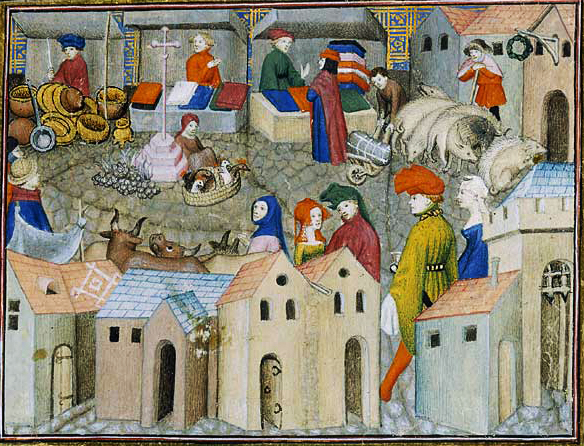
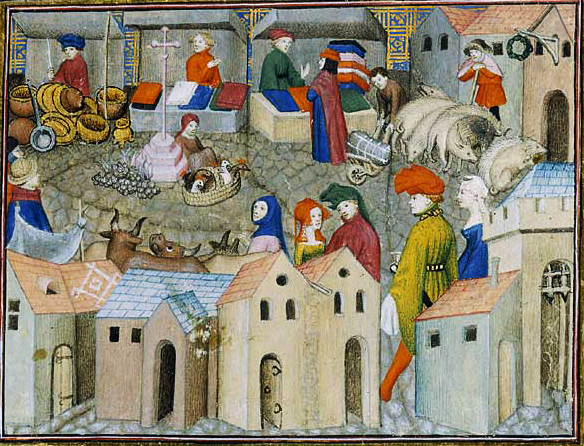
For hundreds of years people bought and sold produce in street markets. The social interaction in this daily event provided fresh wholesome local produce at prices that most people could afford including by barter.

If one were to score this system for its social interaction and satisfaction, I would give it 10 out of 10.

My grandfather was a Victorian and worked in a food emporium in England. The shop assistants stood between the merchandise stacked on shelves and the counter. Customers approached the counter and described what they wanted to the assistant. The food was either processed and weighed on the counter or handed to them in exchanged for payment.
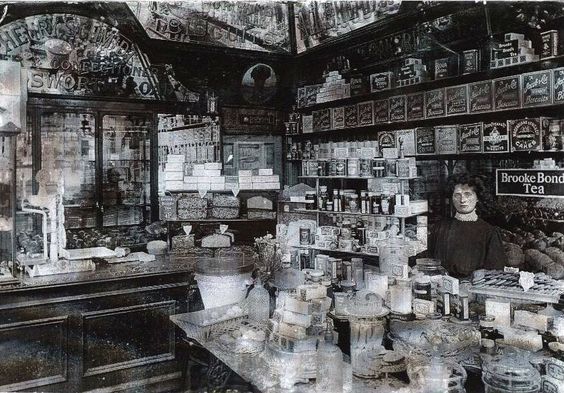
If one were to score this system for its social interaction and satisfaction, I would give it 8 out of 10.

The method of the exchange of goods changed in a revolutionary way in the 1960’s American style ‘supermarket’.

The counter was removed and customers were free to select items from the shelves. They had to place items in a wire basket that they carried to a ‘check out’ for an exchange of money to take place between customer and a friendly check out operator.
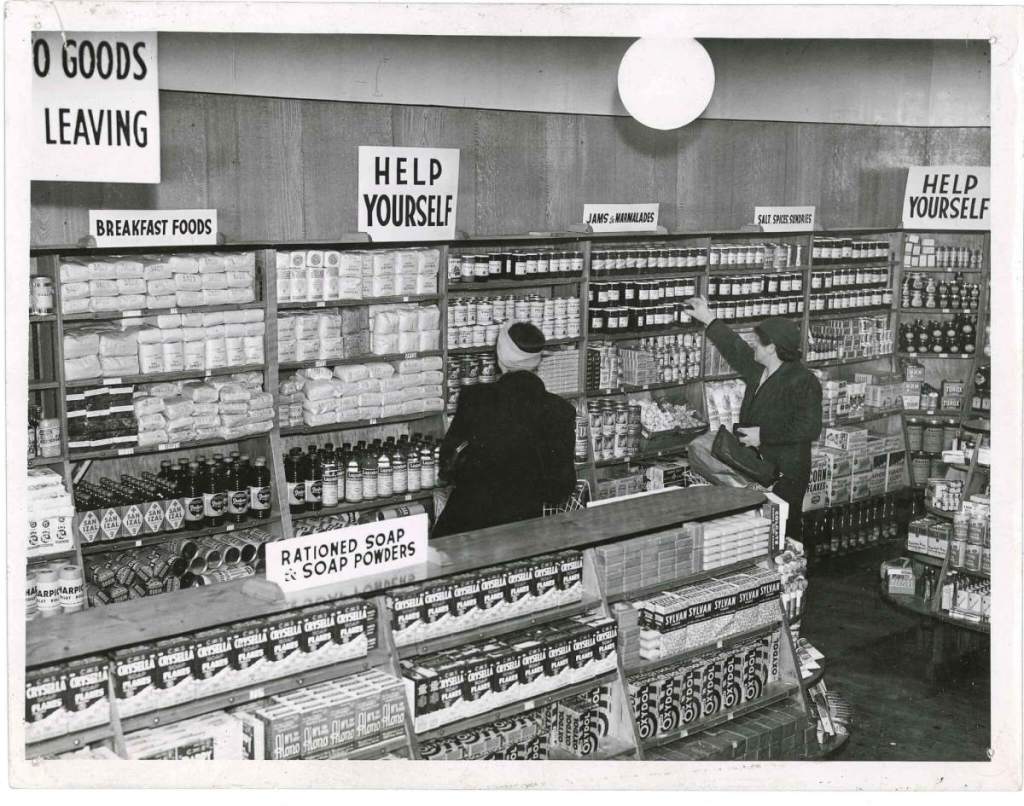
If one were to score this system for its social interaction and satisfaction, I would give it 6 out of 10.

(NOTE the ‘rationed soap’ in post war Britain and the lack of fresh produce.)

There has since been a move to eliminate the need for the shop to have check out tills. They are being replaced by areas in which the customer completes the whole process of pricing their selected goods, packing and completing payment. No employees for the food companies means higher profit.
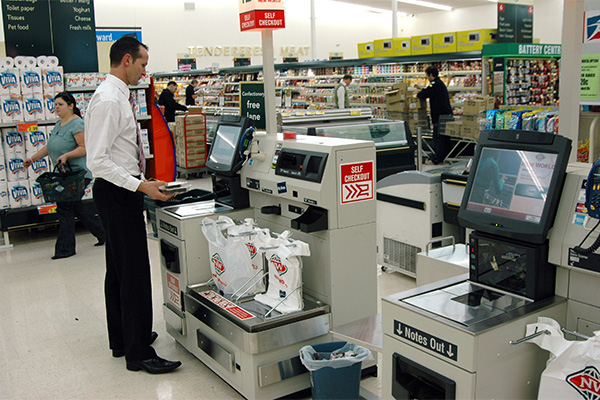
picture credit: Waterford Whispers News

If one were to score this system for its social interaction and satisfaction, I would give it 4 out of 10.

Today the process of the customer leaving home to go shopping is being reduced and perhaps will eventually not happen at all. Instead, goods are selected and paid for virtually online and delivered by human or robot to the customer’s front door. No expensive shops for the food companies means more profit.
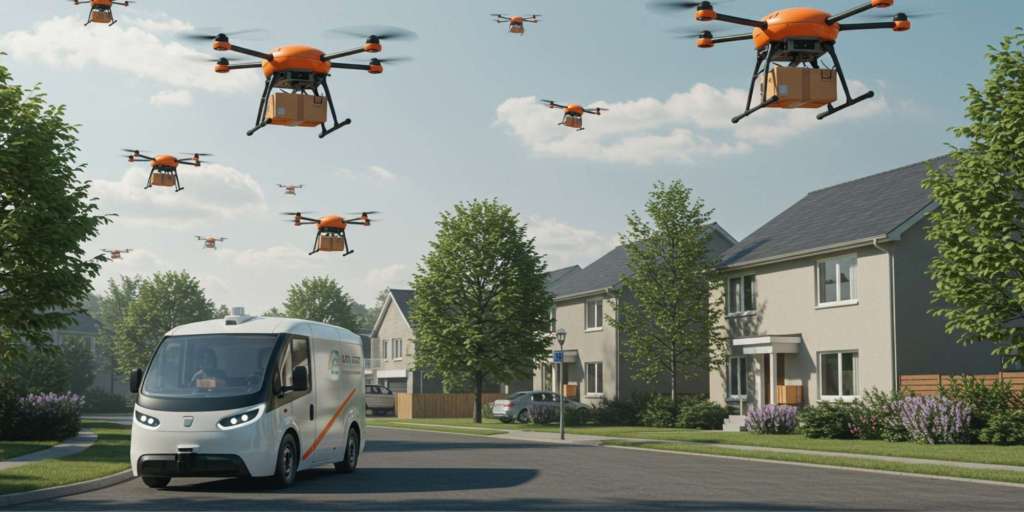
picture credit; Efulfillment Service

If one were to score this system for its social interaction and satisfaction, I would give it 2 out of 10.

This is a brief view of shopping as a social science until the present day. Each ‘innovation’ and ‘advancement’ has been conducted principally to boost profits for the company at the expense of customer’s social interaction and satisfaction.  One wonders what will happen next? Will it be a search for more profit or something more sinister?

In my view, life in the future will almost certainly involve Artificial General Intelligence which thankfully has not been matched by human general intelligence, yet. When it does, I expect governments around the world will use the distribution of goods to private customers as a process of exchange not for money, but obedience.

The model of ‘lock downs’ was developed in the ‘pandemic’ of 2020 for what has turned out to be of doubtful benefit. Citizens in countries of all political persuasions were expected to stay at home and not complain. Food, water and medicines could be obtained but movement in public places was surveyed and strictly policed on the grounds of ‘public safety’.
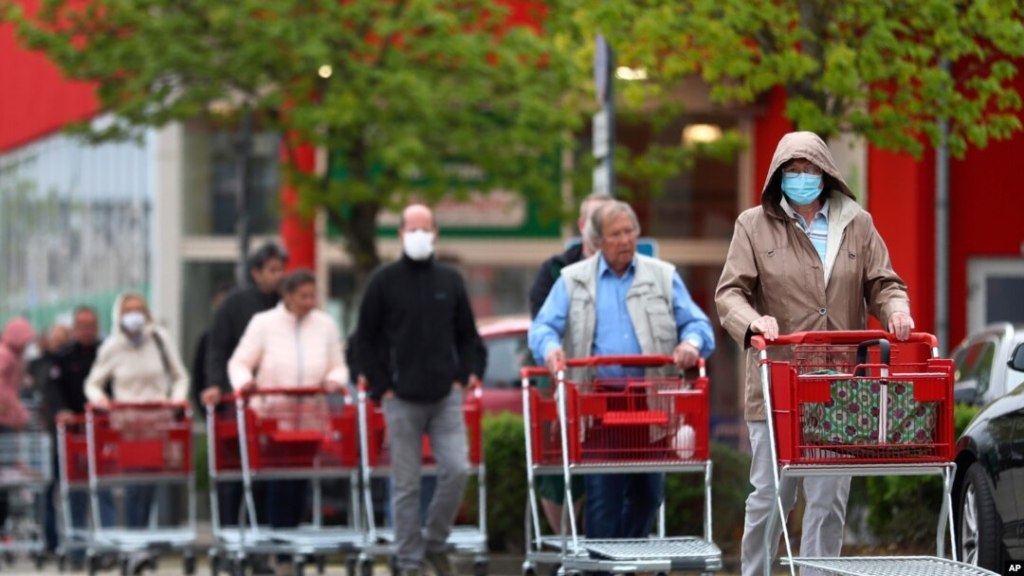
picture credit: VOA

The advantage for governments of this system is that the principal of citizens being free to do what they want, is disallowed. People will not be permitted to consume the quantity and quality of food they can afford, as today. Instead, customers will be told that they can only have what is available. Vital services and goods will be shared out in this way, based on availability rather than need. Various ‘plausible’ reasons will be given for the unavailability of food and groceries such as energy and fertiliser shortages (caused mainly by sinister or negligent and reckless government policies, such as not supporting farmers).

As happened in the Democratic Republic of China during the pandemic, mobile phone apps enable governments to control people; such as free movement to work and shops. This system might easily extend tomorrow into rationing of goods and services for ‘the common good’ and ‘safety’ and ‘unavoidable shortages’ etc.

If one were to score this system for its social interaction and satisfaction, I would give it 0 out of 10.
However, hackers using spybots and malware purchased from the dark web, can be expected to try to outsmart the government smartphone apps. As in all closed systems of exchange, there will emerge a black market. At certain times and places, people will be able to meet pop-up traders selling wholesome local products such as organic chicken eggs, grains and vegetables. Neither AGI nor governments will know anything about it.

The wheel will have turned full circle.

The Problem Problem

The problem with problems is that their solution requires skilful analysis and creativity.

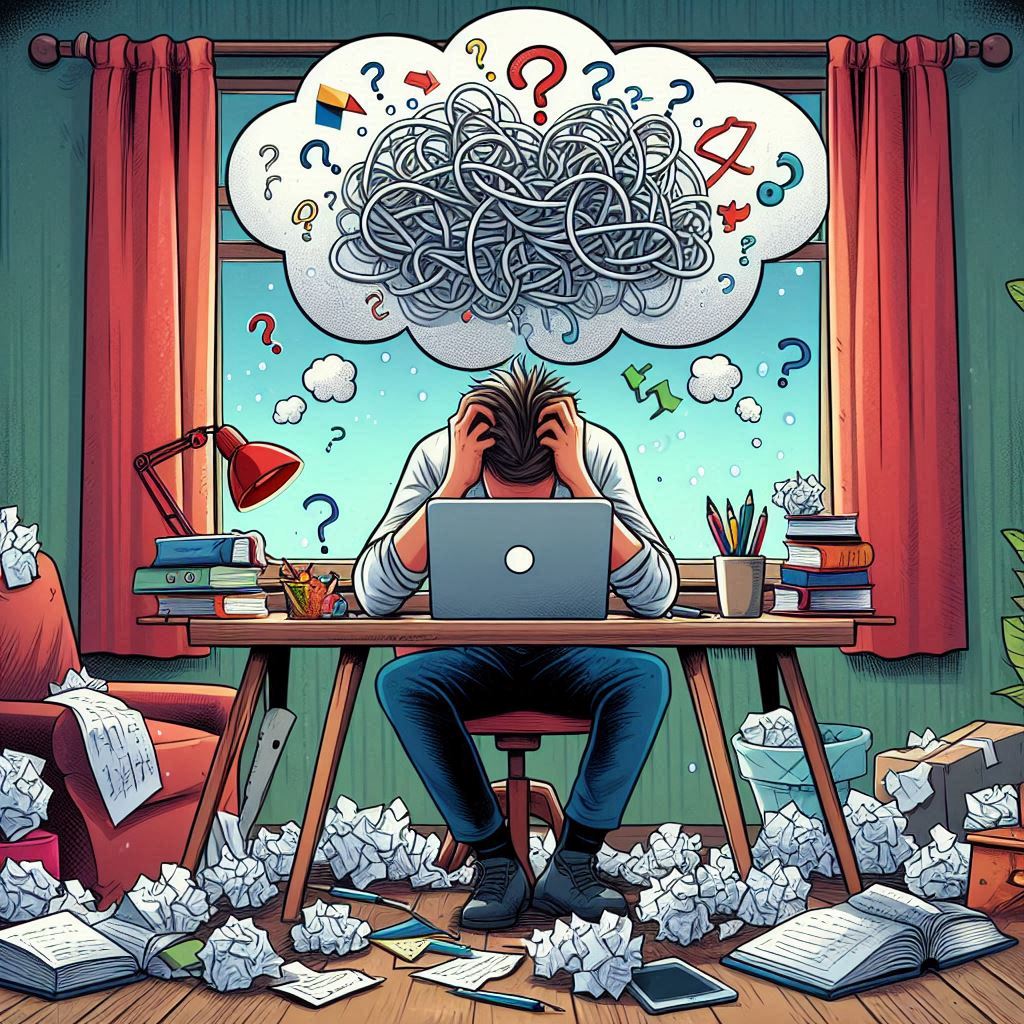
This is obvious except – who teaches problem solving? Overcoming difficulties is something we expect children to ‘pick up’, as learnt behaviour. By the time we reach adulthood, overcoming complex challenges is assumed to have been mastered. Yet, the problems that we encounter through life, if not solved properly, can have just a devastating effect on our lives as a metaphorical bomb. It is the same for those in charge of large corporations and governments who are known to rely on learning from failure as a somehow justifiable, problem solving technique. The joker advises, ‘try everything until something works’.

There is a story which you are likely to know, about a group of people in a dark room describing an elephant. Each holds and touches a different part of the elephant, which stands patiently; wondering where the light switch is. At the end of their examination each describes the unique part of the elephant that they have examined. None of the participants has an overview of what the whole elephant looks like, so they are all wrong.

It’s a wise story. What it tells us is that everything is not as it appears. Many things are extremely complex and far larger than our expectations and experience and greater than our abilities to interact with them constructively.

As we go through a physical life on planet Earth, we are constantly challenged. The material world is in a constant state of entropy, causing repeated and unexpected disruption, such as your car breaking down or your body ageing.

Because we are human, our ego’s present us with a story about ourselves which says optimistically, ‘I can cope’ or pessimistically ‘I have to die sometime’. If we took a step back and looked at the problems humans suffer, our sense of ‘everything’s alright’ would be replaced humility without pessimism.

Religions have picked up on this and many require the congregation to fall to their knees in the face of that elephant that sits in our minds; vanity.

Yet, is it not courageous to look adversity in the face and smile? There is an archetype of this model which is ‘the hero’. He or She is a humble human who manages to overcome all sorts of impossible problems and captures the prize! Whether this is Odysseus on his epic voyage or Superman defending New Yorkers; heroes have super natural knowledge and powers.

Or do they?

In native communities, education of children consists of physically showing them the problems of bush-life and how to overcome them. An Australian First Nation child will be shown how to collect honey from trees without being attacked by bees and leaving enough for the colony to survive.

But in modern fast changing societies, complex problems are expected to be solved by those who have no prior instruction or experience. Government ministers frequently display an extraordinary naivety when it comes to their principal role, which is to allocate resources and make laws that solve society’s problems.

The examples are numerous. In the UK and many other nations, people are landing on beaches and demanding asylum; as is their right in most countries. The ‘sticks and carrots’ that have led them there are numerous and complex.

Attempts by nation states such as Spain, Greece, Italy and the United Kingdom to ‘stop the boats’, take hold of merely the elephants tail whilst imagining the little tassel on the end is the elephant. One government suggested that a threat of deportation to a third country will stop people reaching their shores in unsafe boats. Another political party takes hold of the metaphorical elephant’s leg and suggests that putting the organisers in jail will stop the problem; which again will not be ineffective because the elephant is not a leg.

In the Middle East, you have to ask what problem Israel’s government is currently trying to solve with open hostility against it’s neighbours. Problems of the people of the tribe Judea go back millennia, yet the Zionist government repeatedly tries to argue that the present problems started on 7 October 2024. Were it so simple to be true. Were the whole truth be known.

When the Sars-2 Covid virus was ‘mysteriously’ released in 2021/22, the problem was not examined in full, and when a solution was required, the pharmaceutical companies were able to react almost immediately. Inquiries into the response to the pandemic uncover ineffective, wildly expensive responses. Countries that did almost nothing like Sweden, and much of Africa came out the best.

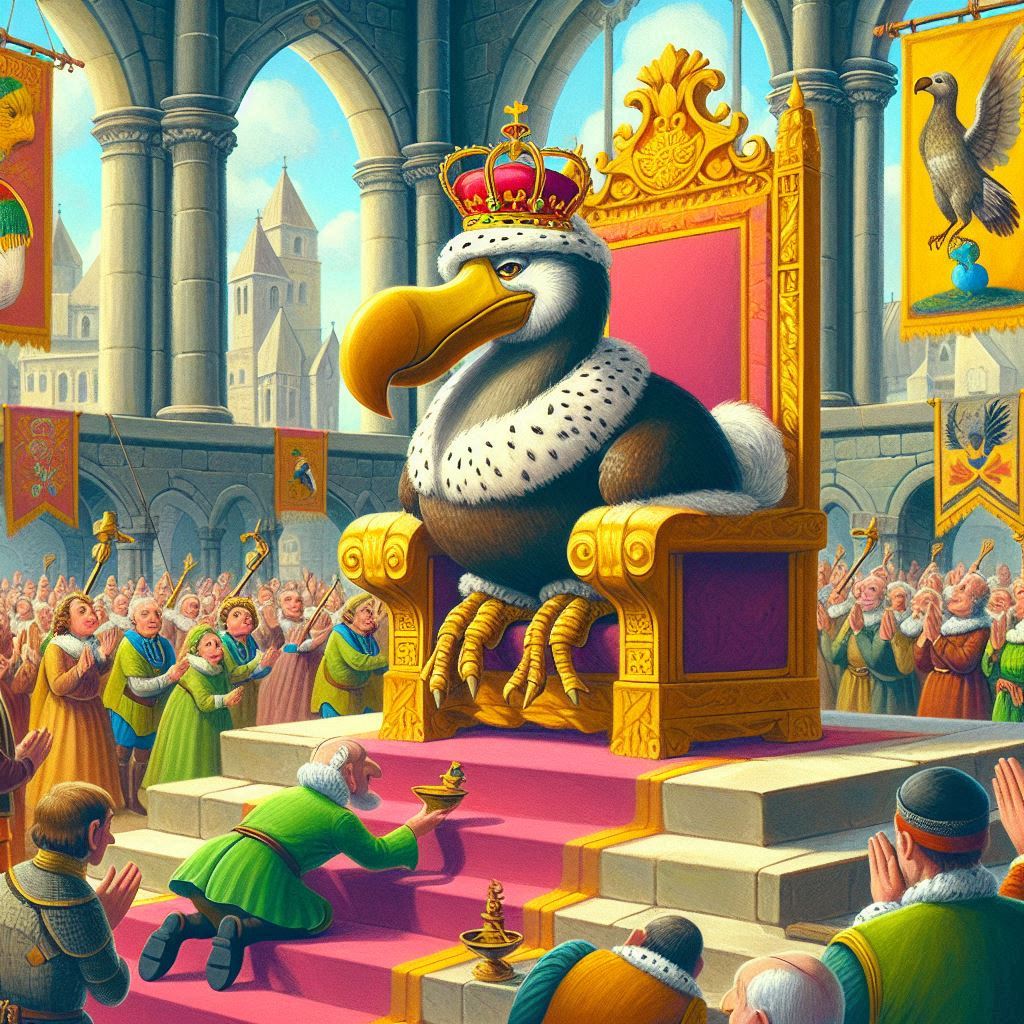
The ‘Do Do’ was a bird that flourished on the island of Mauritius until humans appeared in wooden sailing ships. The hapless birds wandered around in a dream, not expecting to be eaten by hungry sailors. The flightless birds had failed to solve their problem. The Portuguese word ‘do do’ means ‘stupid’ which the birds were not, but victims of those who should have understood sustainability.

Today, humans are facing similar population collapse or even extinction from multiple directions.

In my view, oligarchs and corporations, secret societies, media moguls, ‘big pharma’, the military industrial complex, and international criminal organisations exploit human weakness of poor problem solving by deliberately making problems. Interference in elections, rumour and propaganda, distortion of truth, psychological warfare, hacking, negative suggestion, assassination by ‘dirty tricks’, creating riot and unrest, reducing and disrupting food supplies, and many other techniques, are deployed against unwary populations. All whilst any government that genuinely cares for it’s citizens, is running to catch up.

Understanding the causes of problems is the first step to find a solution. The problem must be understood in every aspect of it’s nature and origin, in a unbiased and factual manner. Then a tested solution that is ‘cost benefit’ proven, has to be found and implemented in a timely manner.

When examining the many problems today, all over the world, you might expect a supposedly neutral and unbiased organisation such as the United Nations to have a department that is expert in defining and solving problems. The Secretariat, the Economic and Social Council and the General Assembly are ideally placed to work in this way, and yet world problems continue to cascade out of control. The United Nations has bravely spoken out early about the genocide in Palestine, but has not stopped it.

Stopping a descending spiral of harm, characteristic of weak problem solving, becomes a battle with a Giant, that even global organisations with their huge resources can not win.

Have we put the Do Do’s in charge?