Taking Things Lightly

‘Angels fly because they take things lightly’

There are two meanings for the word ‘light’ in the English language. The first is ‘something that is not heavy; an easy burden’ and the other is that everyday source of illumination…’light’.

To consider ‘burdens’ first. In the West we tend to acquire information and knowledge at an early age, in a process known as ‘education’. The Victorian roots of this social ideal of free ‘education for all’ has evolved and developed but is still stuck in it’s original root ‘fact learning’ principle. Not useful facts such as what temperature to cook a lasagne but academic facts. Some young people must be highly bemused by this emphasis on information that bears no relation to ‘real life’. Even in later life, adults look back at their school curriculum and realise they have only ever used a tiny fraction of what they were taught.

My generation in the 1960’s, memorised basic multiplication tables and this at least has proved useful, but now most mental arithmetic is obsolete.

picture credit;
Rainbow Resource Centre

Higher education tends to move towards the ‘knowledge’ of things – that is connecting the dots that are the packets of information in order to make sense of things.

Yet the process is remorseless in as much as in an ‘information age’ there is no chance to pause for breath. Knowledge piles up in the library shelves of the mind and collects dust. There is an attempt at some point in life to form ‘opinions’ that cannot be taken down by ‘counter argument’ but it is not easy. There are two sides, we learn, to every conviction.

The very way that we are taught to think encourages the ‘taking of sides’ as politics, sports and even wars, mirror. We have to be in one camp or the other or we risk being in no camp at all.

All of this in my view creates a bonfire of the mind that is a type of collective psychosis. We are literally made ill in the mind, leading to depression in people of all ages and in it’s most extreme manifestation, suicide.

Now I am never one to shine light on a problem without having a personal suggestion as to what the solution might be, so here it comes. It involves challenging the very basic assumption that ‘the more you know the cleverer you are’. Memory ‘quiz shows’ on television…even the IQ test…re-enforce this assumption. The biggest swot gets the prize for remembering stuff but then runs into the green room and bursts into tears because there is no IQ for emotional intelligence. The ageing library in our heads of the unused and forgotten, is testament to how education heads us into unsatisfied and unfulfilled beings.

The technique I use now that I am ‘older and wiser’ is to deliberately ignore and forget most stuff. Like so much compost from the garden of life, I create a huge rotting pile of ‘information,’ and let it create heat on it’s own; somewhere where it will cause no harm.

I have come around to thinking that as children in quite a good place, mentally. We are good at questioning, we do not judge, we do not form opinions, we laugh and cry without fear of judgement and when we are hungry, eat.

A Zen master once wrote;

When I eat I eat, when I sleep I sleep.

Simplicity is a virtue that education demands we forget. And yet, humans enter this world with an infinite capacity for self understanding that has not come from books. The ‘University of Life’ has created many self taught geniuses who might never have risen above the formally educated. Those children who spent their school days looking out of the window can do very well for themselves because they have learnt the power or dreaming.

picture credit; The Marketing Desks

If we need a skill, we watch others and acquire it. It is this process of ‘absorption’ which is how we learn naturally. People living close to the land in ‘indigenous tribes’ never go to school but simply absorb all they need to know from the tribal elders.

Wise people, exude an air of calm and a capacity for understanding that is not directly proportional to the number of years that person has spent in education. Wisdom is more a river than a sea. It is constantly moving in speed and direction. It does not study itself or how close it is to it’s final destination, it just is.

So to move to the second meaning of ‘lightly’. Light is that part of the electromagnetic spectrum of energy which illuminates us physically. Our eyes seek light just as our minds seek illumination. When the mind acquires clarity, clarity acquires the mind, meaning; there is a process that takes humans far beyond any skills that they might be encouraged to learn in ‘normal life’.

And because our bodies are completely interconnected, the light which falls upon the eye and the mind also penetrates the heart. By this I do not necessarily mean emotions, although emotional intelligence is part of it, but the certainty of knowledge and the knowledge of certainty that is perceived through the heart.

As a human clutters the mind during the journey through life, like a monkey in a forest of fruit, so too becomes the heart full of nonsensical impressions. These express themselves primarily through the ego and that part of the mind Buddhists call ‘the monkey mind’. It never stops analysing and repeating words to itself, except when it uses the mouth to force other unsuspecting monkeys to listen to it’s own opinions.

picture credit; dreamactsucceed.blog

You will intuit an ‘enlightened human being’ by the aura of silence and the gentle movements of that person’s body. They will always be completely present. This skill of operating in comparative emptiness to other human beings is needed for moving into parallel dimensional, places that are not apparent to those ‘over busily’ concerned with the physical world.

To the devout, there is only one other dimension worth living in which is the place occupied by Divine love. All other places encountered on this journey are regarded as similar to the ‘dunya’ or ‘maya’ of the physical world in that they have no value and are no more a destination than wind and waves are.

Just as humans can undergo this process of change in a lifetime, so can planets and stars and Universes, all of which have their own lifetimes, albeit on a completely different scale. The energy we know as light is part of the great spectrum of energy that pervades creation, and like all energy, it contains information on a scale incomparable to the largest library on earth.

When humans overcome the limitations of the physical world by becoming one with the physical world, they begin to have access to these ‘Oceans of Knowledge’. This knowledge of certainty is a mere by-product of the greater relationship with love and the loving Creator that is behind all the multiple veils of creation.

In the beginning God created the heaven and the earth. And the earth was without form, and void; and darkness was upon the face of the deep. And the Spirit of God moved upon the face of the waters. And God said, Let there be light: and there was light. Genesis 01:03

The Cave of Light

Roman Barcelona – picture Eportfolios@McCaulay

There is a city plan used by the Romans which is a circle divided vertically and horizontally into four sections. The divisions form streets aligned to the four points of the compass.

The circular form aligned to the cardinal directions had been used by many other cultures before, most notable being the great Henge’s found around the world. Research into these has revealed their astronomical alignments predicted precisely the solar, lunar and stellar cycles. The motivation for understanding these cycles was to appease the instinctive and intuitive desire to be in harmony with nature. Ancient civilisations depended on the cycles of nature for their next meal and their most holy festivals.

There are four principle solar annual events; the equinoxes and solstices. Using the solar calendar the winter solstice occurs in December, the summer solstice in June, the spring equinox in March and the autumn equinox in September; on around 21st and 22nd days of these months.

These correspond with four sacred festivals that originate in ancient times and are celebrated to this day, even if they have morphed from their origins.

In the most simple way we can divide the six months from September to March as being ‘winter’ and the subsequent months as ‘summer’. There are six months of ‘darkness’ and six months of ‘light’ in the broadest of terms.

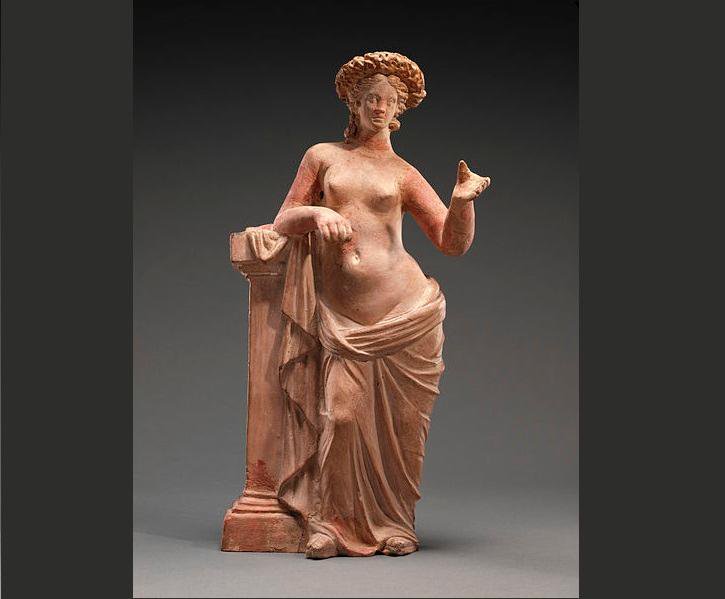
In the myths of ancient Greece and Rome, the goddess Aphrodite or Venus lived in the light or ‘Heaven’ and Persephone in darkness or ‘Hades’. Both were in love with Adonis and appealed to Zeus to decide how they could share him. His decree was that they should have him for six months of each year.

Aphrodite – picture Smithsonian Magazine

The figure of Adonis is in this way critical to understanding the importance of the movement of the seasons in ancient times. Nature lived and died quite literally, as did their harvests, from these forces. If the harvests failed, famine turned nature and cities into wastelands.

April is the cruellest month, breeding

Lilacs out of the dead land, mixing

memory and desire, stirring

dull roots with spring rain

The Wasteland – The Burial of the Dead – (opening lines) by T.S. Eliot

This uncertainty placed enormous importance for people to give proper respect to the ‘gods’ and nature through ritual worship.

Within the solar year are overlaid the twelve ‘moons’ or months within each solar cycle. The phases of the moon and sun combined were known then and to this day, to govern the process from seed to harvest. This is naturally between spring and autumn, the exact length of this season being determined by latitude. Nevertheless, the spring equinox is a date used today to fix the date of the festival of Easter. This is the Sunday after the first full moon after the 21st or 22nd March, proving the importance of the moon combined with the sun in their influence for humans and everything on earth.

We know this because of the plethora of ancient gods and goddess whose lifespans fitted into these celestial cycles. Because spring is the ‘rebirth’ of nature there are corresponding stories incorporating the ‘death and resurrection’ cycle. In the Christian calendar this is known as ‘Easter’ but it is known that that the goddess Astarte preceded this in the ancient Near East. Much later Ostara ( medieval Germanic) gave rise to the traditional Easter symbols of the moon gazing hare and eggs.

Ostara by Johannes Gehrts

What is less well known in our current times is the antithesis of this ‘spirit of new life’. There is a tradition of the deaths of various ancient gods and goddesses at this time; the goring of Adonis by a boar, Dionysus with the first leaves from grape vines, the rape of Persephone and the death of Hyacinthus. Each of these however is given a heavenly reprieve by a resurrection. Adonis was turned into a Myrtle tree, Persephone released from Hades for six months of the year and Hyacinthus turned into a spring flower, the Hyacinth by Apollo – the Solar deity.

Apollo and Hyacinth – picture Wikiart

It was natural therefore when the Roman Church fixed the date for the death and resurrection of the Christ Jesus, to choose the beginning of spring in the celestial manner described above. The church fathers did not need to know about the strong and balanced influence of the sun and full moon at this time of year, but relied upon the old method of supplanting old ways with a new religion using the previous festivals.

Adonis is an interesting mythological character as for many scholars his festival occurred in spring. In the city of Byblos (in modern Lebanon) where he was born and worshipped, the river ran red each year with the spring rains mixed with red earth. This fertility symbol and literal fertility for the fields, remind us of the menstrual cycle in women, bearer of eggs; nature’s cycle is the same as the human cycle.

And yet, according to Rudolph Steiner in his lecture on Easter*, the ‘Festival of Adonis’ was celebrated at the time of the autumn equinox rather than spring.

(*available on You Tube)

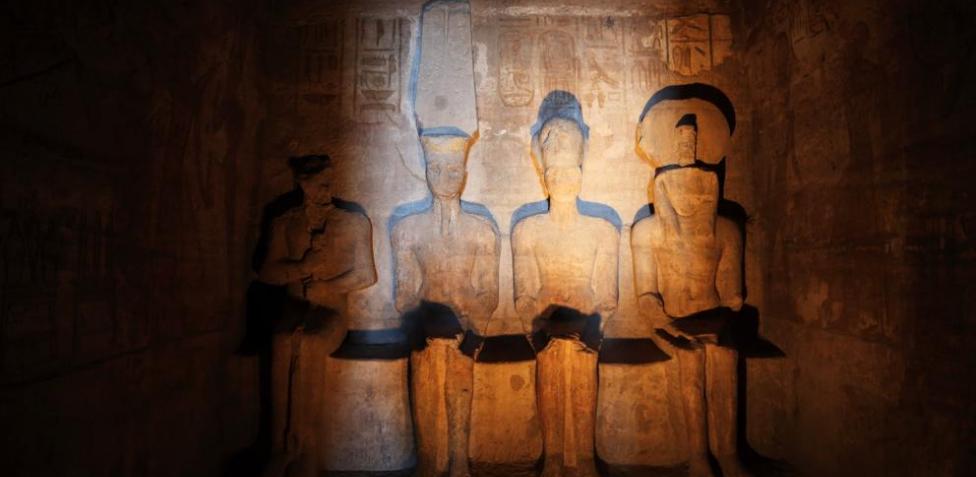
Numerous ancient temples (the Great Temple of Abu Simbel, Egypt) and dolmens (New Grange, Ireland), are aligned to allow the solstice rays of sun to penetrate an entrance passage into a womb like chamber and fill it with life giving light.

Abu Simbel solar solstice – picture La Vanguardia

Steiner describes the ‘Feast of Adonis’ as being conducted by women in pagan societies. They would sow seeds like cress, on a thin layer of soil in a broken pot shard. After tending them during the spring, the summer drought would kill the plants. After two days of ceremonial mourning, these were ceremonially processed on the third day to the sea or a nearby lake to be immersed as an ‘image’ of Adonis. Adonis is therefore a tragic god who is ‘born to die’ as much later was written into the story of the Christ Jesus. Further evidence is contained in Sir James Fraser’s prodigious work The Golden Bough (an anthropological study of Mediterranean religions) claiming the Jesus is a fertility god in the lineage of Adonis.

The Entrance Stone to the Garden Tomb – picture Inspiration Cruises and Tours

The references to dying processes taking three days, is described by Steiner as being a reference to an ancient understanding of the human dying process which also takes three days. The first day completes the death of the physical body, the second the ‘ether’ body and the third the ‘astral’ body. This is an theosophical categorisation similar to the ‘body, soul and spirit’ of the Hermeticists or ‘animal, vegetable and mineral’ of the Idealists. Either way, man and nature take three days for the process of dying or ‘transitioning’.

It is a fact that the dying sun the during winter solstice, stops moving on the horizon for three days, before the days lengthen again. The circular stone rolled over the tomb in which the body of Christ Jesus was moved after a similar number of days, referencing him to be a solar deity; a ‘sun of God’.

The true dates of the life of Christ are not stated in the Bible, although there are a few clues. If we are persuaded to imagine the nativity to take place in the winter, then there are suggestions that state otherwise. The first is that shepherds were out in the fields at night, indicating that they were ‘lambing’ – a season that all farmers know. A ‘census’ of people is unlikely to be held in the dark and cold winter months for practical reasons; the Romans were practical administrators. The ‘star in the east’ is likely to be Venus which is well known by agricultural communities, to rise in the early morning in the East in the spring.

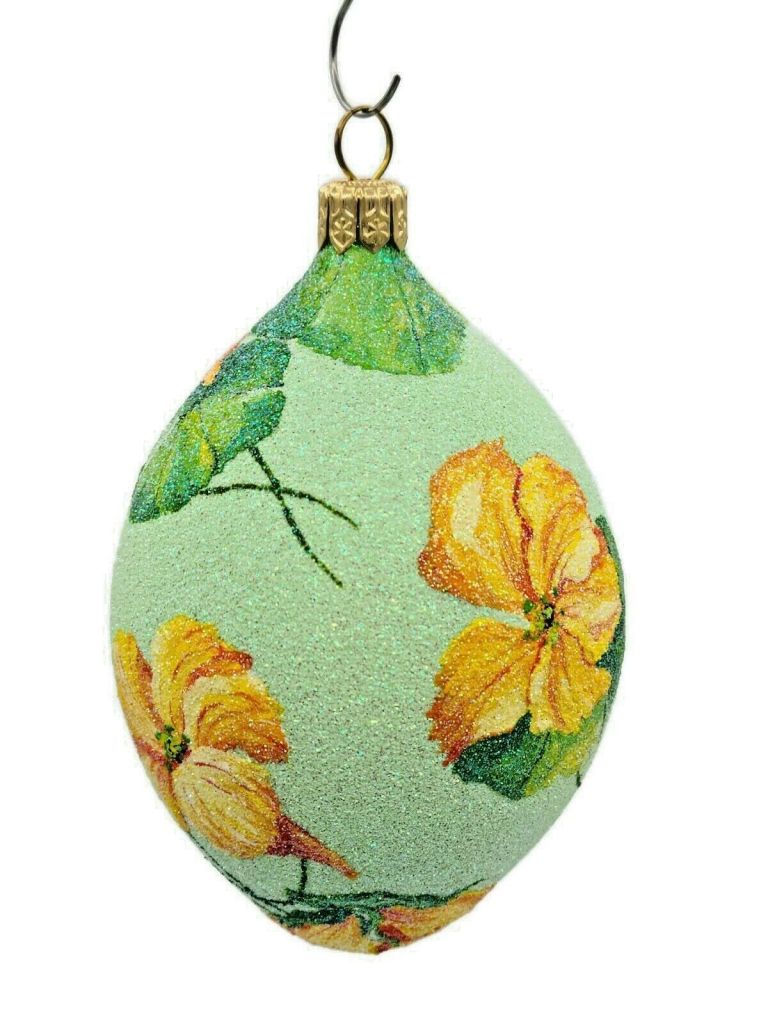
Nastrium Egg – picture The Ornament Emporium

Finally, it is curious how men travelling east were following a star appearing in the east. It is probably, in my view, that this information is coded and the direction east indicates a time of year rather than direction of travel; after all, their direction of travel is not important information to progress the story and a good story teller would omit this. It is only included to complete the sub-narrative.

The east road of the city is of course corresponding to spring on the solar calendar and the time of year you would expect a ‘sun god’ to be born. So, whether the ‘Christ Mass’ is held in the winter, spring, summer or autumn is open to interpretation and would not be contradicted by the Bible.

What modern observers would do well to recognise is not the dogma but the symbolism of the Christian churches. The ‘mass’ is confidentially encouraging congregations to drink blood and eat human flesh on the solar day of the week whilst facing the rising sun.

For me, the symbols are only partly transcendent, as we feel in the energy of spring, while carrying more than a hint of the macabre death and the dying sun/son.

That corpse you planted last year in your garden,

Has it begun to sprout? Will it bloom this year?

Or has the sudden frost disturbed its bed?

poem: The Wasteland 1922 – The Burial of the Dead – T.S. Elliot

Seeing is Unbelieving

Seeing is Unbelieving

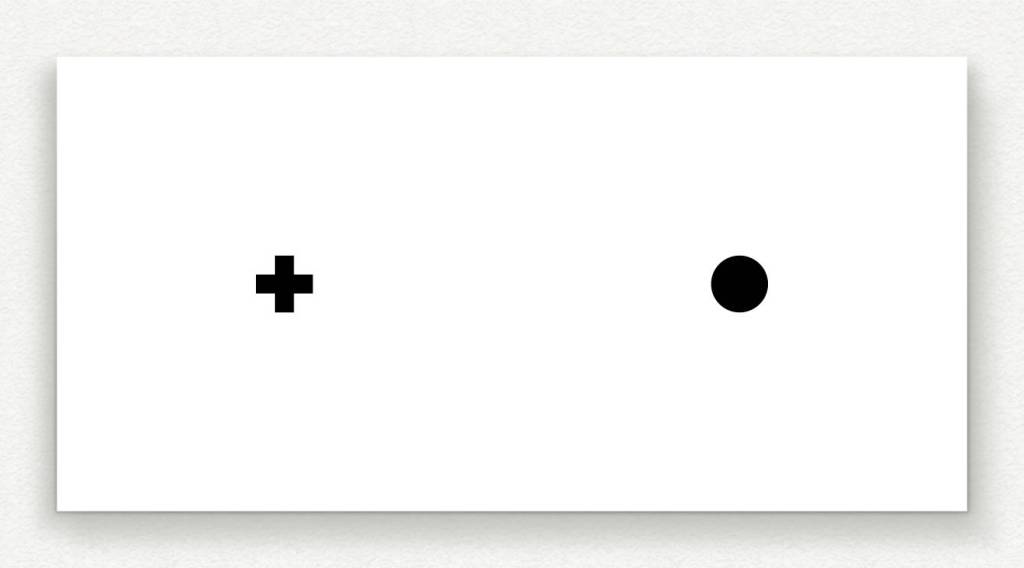
There is an intriguing eye test in which the subject looks at a cross and black dot spaced out on a sheet of paper. As the paper is drawn closer, whilst staring at the cross, the black dot disappears.

The explanation we know to be the ‘blind spot’ in the retina where the optic nerve enters and fans out. What is intriguing is that the brain is constantly filling in this ‘blind spot’ with information that we are not aware of.

It is the same with white ceilings. If there is a blemish or a stained patch, the brain will ‘see’ the ceiling as perfectly white. What we see is therefore, in some degree, doubtful.

Perhaps it will help us if we define ‘seeing’ and ‘looking’. Most of the time we ‘look’ without discernment. If however we focus our mind on what we are looking at, more information and understanding will become apparent. Artists learn to ‘see’ in order to render every aspect of the subject they are describing to an extraordinarily high degree.

The visual apparatus of humans can be trained, but we should also realise that what the brain does with the information is highly selective.

When two soccer teams play a match, the supporters identify with their own team. If there is an incident where the referee has to make a decision in favour of one side or the other, both sets of ‘witnesses’ i.e. supporters, will be highly biased towards their own side. They will talk about the incident and the injustice of the referee’s decision for weeks afterwards, based on their own biased view.

picture credit;
The Nutmeg News

Witnesses in criminal cases are notoriously biased and the justice system has to record what they saw as objectively as possible. When two witnesses present differing versions of events, which is the truth?

In one extreme case when people on a bus witnessed an incident in Israel, the police used a hypnotist to access what they saw in extraordinary detail. Our brains retain most of what we see, it is just that we blank most of it out unconsciously. Hypnotism retrieves this information in an unbiased way, so that for instance, car registration plates will be remembered.

Unfortunately, we do not have hypnotists to solve our family arguments about who said what to whom and how long this has been going on. Neither do whole nations have access to truthful descriptions of what is going on in the world and dictators exploit this.

It is possible to create a narrative so extreme that it can even be used to start a war with a neighbour. Witnesses to events in the war, even professional reporters, are today regarded as suspect in their reporting because even the media can either intentionally or unintentionally, select the truth according to their editor’s wishes.

picture credit; World Press Freedom Index

Even the photographs and videos are no longer able to be trusted as software is available to alter them.

All of this happens in what we call ‘the physical world’ but of course what we see is not always physical. Take an audience watching a film in a cinema. They are certainly not watching anything ‘real’ in the conventional sense, but they will be completely transfixed by the narrative being played out before them. There may be some self awareness retained as the popcorn in handed around which is similar to the way hypnotised subjects experience what they are viewing, but their focus is mainly in a virtual reality.

Hypnotised subjects reveal much about the complexity of how visual information reaches the mind and how it is interpreted. There is one case referred to in Michael Talbot’s book The Holographic Universe, in which a man is hypnotised and told that his teenage daughter is invisible to him. She stands in front of him and much to the delight of the audience and his giggling daughter, he swears he cannot see her. Then the hypnotists takes out a unique watch and presses it against the back of the young lady. He asks the father details about the watch which he squintsat and reports correctly everything he is asked about the watch.

There is no explanation for this phenomenon, but clearly it shows us that what we see is far more extensive and complicated in it’s mechanics than the diagrams of the eye that we study at school, explain.

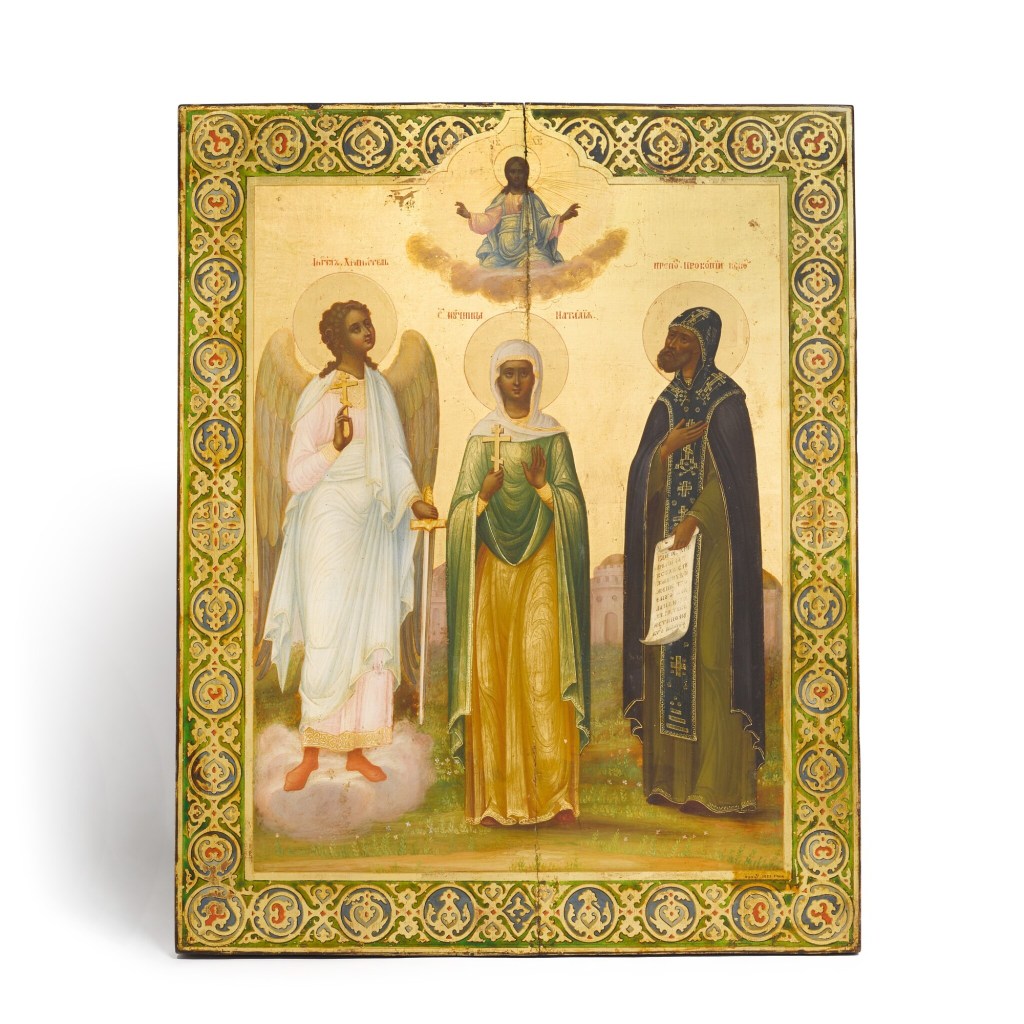
In a lifetime a person may experience visual ‘discontinuities’. These generally fall into the concept of ‘extra sensory perception’ such as seeing ghosts, spirits, poltergeist events, psychokinesis. Lorna Burne is a modern mystic who has written books about how she has seen and interacted with angels and archangels since she was a child. Her whole visual world includes angels and spirits which the ‘ordinary’ observer is completely unaware.

picture credit; Southerbys

Is it right to dismiss those with ‘second sight’ and their experiences or should society be more tolerant and inclusive towards people who in historical times would be regarded as either saints or witches?

Ironically, history has always taught us not to believe our eyes. The whole concept of an invisible God enables us to ‘look inward’ into our hearts and minds. A God who is never revealed is not open to be disproved or proved and yet, humans have sustained the experience of the ‘godhead’ across aeons and continents. The ancient Greeks experienced a world in which minor gods revealed themselves to mortals, and their stories, artefacts and architecture give vivid and consistent accounts of each and their powers to help or obstruct human endeavour.

The Ancient Greeks also believed in the idea that the eye ‘sees’ by projecting energy at the subject in the manner of a torch in a darkened room. Mind was an integral part of the process of seeing to the extent that the observed physical world is capable of being created by the observer.

Quantum physics has rested it’s gaze on exactly this probability; that the observer alters the events that take place right before our eyes. It supports the ‘idealistic’ philosophy in which mind has control of the material Universe. We understand that the Creator or Mind initially created the Universe by thought alone. Now scientists can step down through the different scales in which energy and matter perform their visual effects, and conclude that they personally are part of the experiment.

It is intriguing therefore as ordinary people, to become more sceptical about the ‘reality’ of our world of physicality and factor in our dreams, memories, intentions, ideals, beliefs, expectations, preconceptions in an attempt to grasp the slippery fish we call our world.

Democracy by Numbers

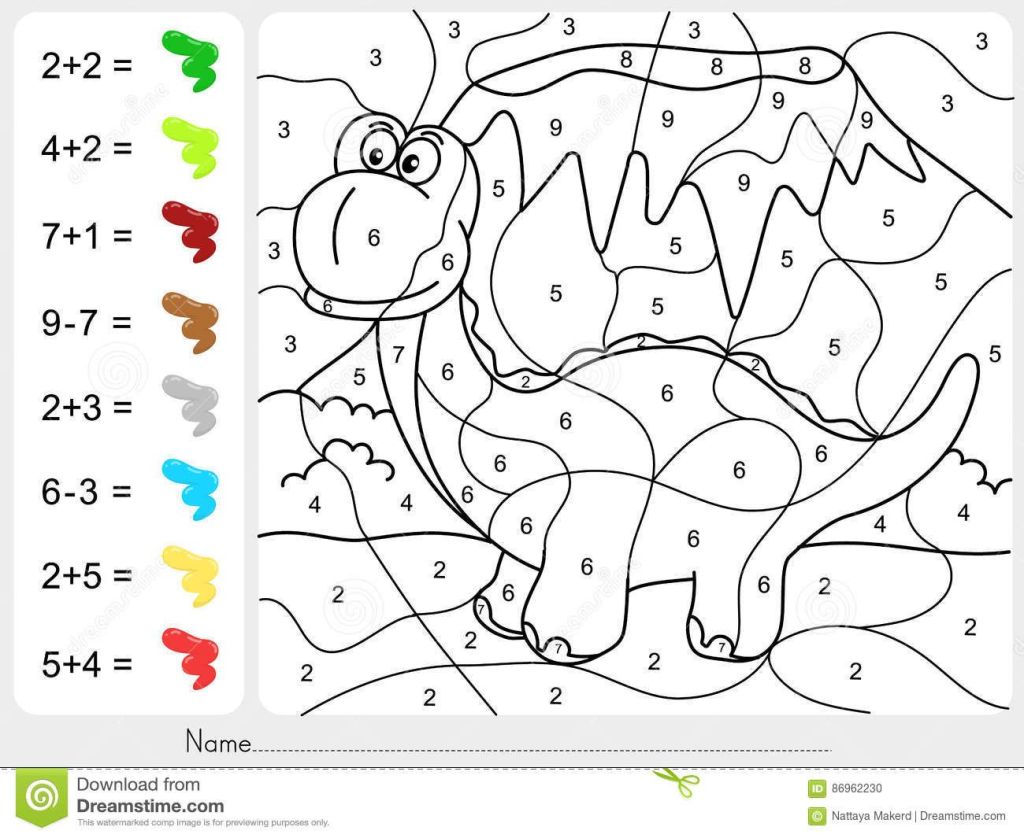
There is a system of ‘painting by numbers’ for novice painters which gives great looking results using very basic skills. A picture created by a professional is divided into sections of say, seven different hues and tones. Each is given a number between one and seven and all the novice painter has to do is fill in each section of the canvas with the appropriate colour or hue.

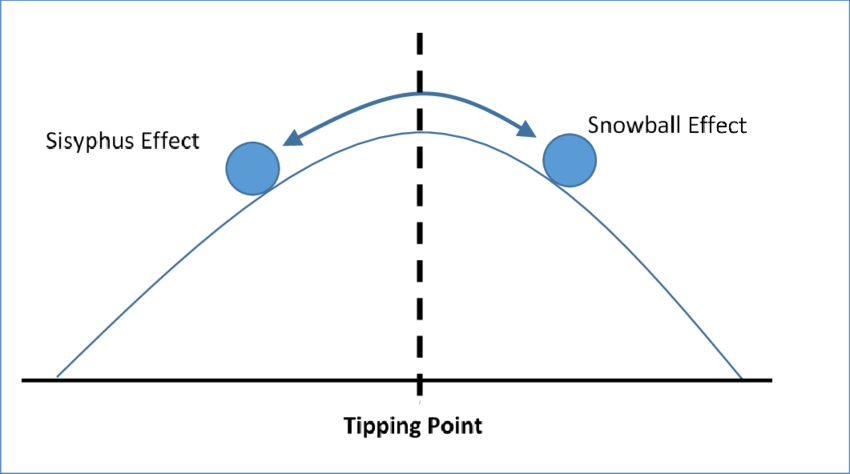
The majority of the world is now governed by autocratic leaders. In the previous decades of the twentieth century this was not the case but recently the tipping point was passed and autocrats now ‘rule the world’ – or do they?

You see, what I am doing here is making an error of thinking committed by ‘democratic thinkers’, whereby there there are only two possibilities – most or least. What is the ‘most’ or majority, becomes the ‘status quo’ for the oversimplified reason that ‘most people want it’.

It’s a beguiling argument because it simplifies everything into one overgeneralisation, hitting contradictory nuances and unintended consequences right between the eyes with a knock out punch.

At our peril. Because in my view we should always go one layer deeper into what a ‘majority’ is and what effects it will have on the government of a country.

To go back to a basic definition of democracy;

Control of an organization or group by the majority of its members.

So let’s see how self styled Western democracies fit this definition.

The first glaring contradiction is the rise of the super rich, super powerful entrepreneurs like Bill Gates, Elon Musk and others.

These and their lesser known ilk, now constitute one percent of the population of the world and yet, influence most of it and control at least 25% of it, directly or indirectly. Elon Musk created an electronic car when most American motor manufacturers, except Ford, were going out of business. You could also question; how comfortably does a software engineer sit in the theatre of mass vaccination?

Democracy in this 1% of world leaders, (which is what they are by any definition) does not exist. No one voted for any of them or the technologies that they pushed to the top of the mountain.

So there we have brush No.1. Paint in all the areas with the number one on your painting.

The next significant number is No. 50. This is the magic ‘tipping point’ in any democracy that defines the majority. Once you have this number of voters and ‘a few more’ then you control everything.

Or should they? Well, if we are thinking about ‘free elections’ in western democracies then these never really happen for the simple reason that a large number of people prefer not to vote. In some countries, this problem is countered by making it illegal not to vote…but this makes most liberally minded people uncomfortable… as does the idea of someone under a certain age voting. What right does a sixteen year old have to have an opinion on a country’s energy policy, a policy that is likely to affect them for the rest of their lives unlike an eighty year old who can vote but probably doesn’t have that long left to live.

Then there is the management nuance created by a 51% to 49% result. Imagine you survive a plane crash into the Pacific Ocean. You are bobbing up and down in a life raft with 8 passengers who look to you, the only member of crew to survive. They discount you as their leader as you are just a ‘trolley dolly’. Four of them argue that we should all start paddling. Four say we should stay put, so they all look to you for the casting vote. You know that whichever option you support there is going to be trouble. If everyone starts paddling there will be four who will not be putting their back into the effort. Worse still, they will begin to moan about what a waste of effort it is and how the rescuers will now not find you. The effect on moral is catastrophic. The same will happen if you follow the option to stay put and there is no sign of rescue.

If you think this is an unlikely scenario then just look at ‘Brexit’ and how the 48% to 52% vote (by those who bothered to get out of bed that morning because they thought Brexiteers would never win) has and is, panning out.

picture credit; Are We Europe

The third number on our palette is No.100. This is the colour for the 100% majority in favour. The rule in this version of democracy is that unless everyone agrees, nothing will get done. For this reason autocrats favouring the mere appearance of democracy whilst carry on as a despot, imprison the opposition (or worse) and create voters who are too frightened to vote against another ten years of tyranny.

Anyone who has lived in a family will know how this works and the misery it causes. Dad decides we are all going to the seaside, whilst Mum objects because she has an old friend to meet and Kitty wants to go on a school museum trip and Jazz wants to play in the local soccer team finals. Dad overalls and the family go to the seaside and all have a miserable time. The next day, they all go off in their individual directions and all is well.

Rarely do countries have the same interests and ideals in common which is why it is difficult for the European Union gain consensus in the 27 member countries. The only way is to ‘water down’ the proposal to such an extent that it causes no offence to anyone, but of course such vague proposals then become open to misinterpretation or biased interpretation from then on.

Most blatantly the United Nations Security Council gives the right to ‘veto’ any proposal to all of it’s seven member countries. This means that if one of them is committing war crimes somewhere outside it’s own country, it can veto any criticism and carry on.

So far I have placed three colours on the palette; 1% of unelected powerful people, 51% majority who upset the rest and the 100% who want their own way.

It would be reasonable to ask at this point ‘what does work?’, for democracy is meant to be the foundation stone of modern western civilisation.

Well, the only variation of the rules of democracy that does work in my view, is the requirement for a ‘super majority’. In this system it is recognised that the 51/49 split is unfair and becomes unworkable.

picture credit; Hype and Stuff

A super majority is therefore anything over a 60/40 or 66/34 split.

It’s subtle to understand at first but comes closer to what might be called ‘common sense’ management. If there are four in the family car heading off to the seaside, at least three are happy to be there and soon the fourth finds that perhaps it wasn’t such a bad idea after all or at least, it’s a fair deal.

If the super rich entrepreneurs and Oligarchs were compelled to pay 99% taxes, their power to influence would be taken away and their wealth fed into the poorest people in societies, creating the greatest benefit for most. Most of the super rich might well find that living off 1% of their wealth actually made them happier human beings or at least, that it was a fair deal. After all, Robin Hood was far more popular than the Sheriff of Nottingham.

If Russia is committing war crimes then the Security Council of the United Nations should have to power to act to investigate the allegations and call a cease fire or put in UN troops until the heat of battle dies down, and common sense prevails. Five to Two in favour is a reasonable super majority; get over it Russia and (abstaining) China.

To return to the ‘painting by numbers’ analogy, we can see that one coat of one hue paint is simple, but creates no work of art. Once the notion of ‘government by the people’ is broken down to examine the question ‘how’, several hues of interpretation present themselves. We must be bold because in calling everything ‘democratic’ we are committing the sin of over-simplifying.

Yes, they are all democratic but the devil is in the ‘how’ you create your democracy. You will need nuanced thinking to make things work whether on the small family scale or at a national level. The more colours in your painting the more it’s going to be a master piece and less like an amateur filling in spaces.

A Very Mexican Standoff

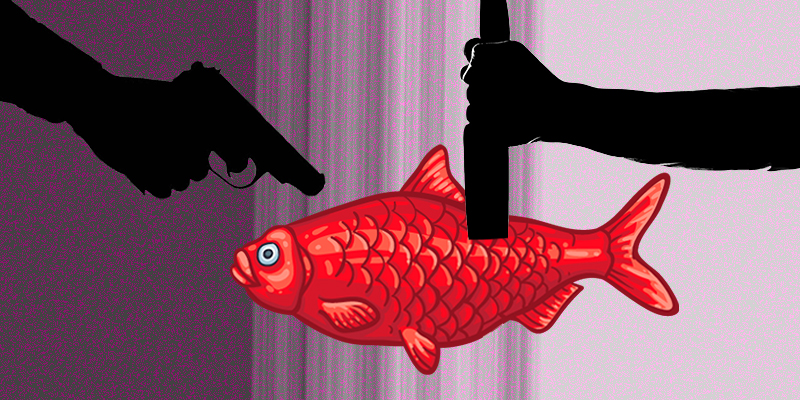
The current ‘red-herring’ sliding around the fish monger’s slab of international politics at the moment, is ‘war in Ukraine’.

picture credit: crimereads.com

Why so? Well, focus is slowly moving away from the ‘pandemic’ and Russia is seizing the moment to fill the vacuum of global politics. Moving troops from here to there and parking them in a notionally strategic position has been a war of nerves since the beginning of time. The fact that the current Russian force is roughly 120,000 troops with air support, tanks, artillery and mechanized infantry including specialised support does not mean the Russians will attack.

Ukraine has a far larger opposing Army some of which will have had recent experience of fighting in the East of the country. It also has the important advantage of being in ‘defence of the homeland’ – a double win strategically.

Russia is probably still be wiping it’s bloody nose after invading Afghanistan between 1979-89 and having to withdraw humiliated; a mistake curiously repeated in the previous twenty years by Western countries and the USA.

Russia will be aware of the domestic problems associated with fighting a war in Ukraine. When body bags start arriving back in the homeland military airfields, people and politicians become disheartened; which leads to social unrest.

President Putin is like the grinning fox in the tale of Little Red Riding Hood. He is nobody’s granny and hides his real agenda under a red cloak. So what is the fox up to?

Strategically, he wishes to rebuild the Union of Soviet Socialist Republics. The vulnerability of the Baltic States and Finland and the current moves by NATO to bolster forces in these countries, evidences a very real perceived vulnerability. In the south of Ukraine, Putin intends to encircle the southern states using the Crimea and it’s ports, and then head for Kiev. He might go around the Chernobyl exclusion zone or straight through it. It will not affect his mobile troops whose vehicles are protected from high dose radiation.

But in my view he does not need to do any of this. The implied threat is enough to rattle the Ukraine politician’s cages and create division amongst it’s allies. At some point he will move in a pro-Russian Ukrainian leader and the country will be in his control without a drop of Russian blood staining the Dnieper River.

No, using the distraction techniques of a deceiver, Putin is hiding his real intentions. In a grand way, Russia whips up fear in it’s citizens concerning the spreading presence of NATO in Eastern Europe. Strategically he is right to do so, for everything that NATO does to creep into countries sharing borders with Russia, arms Russia with this accusation. Even if such a country is pleading to join NATO, this is not a reason for NATO to accede to the request. It is wiser to maintain ‘buffer’ states that are neutral to both sides. ‘No-man’s land’ may not make a country feel particularly safe, but strategically it is less likely to become a place for battle.

If NATO agrees to expand for no better reason than being asked, it plays into the Russian politician’s political argument that it feels threatened.

Bear in mind that a wise general will be ‘pre-emptive’ just as will a street fighter in a back alley. Hit before you are hit, particularly if tactical nuclear weapons are in the mix, is a sound strategy because it gives the element of surprise to the attacker whilst giving the attacker the ability to describe the action as ‘defence’.

We know that ‘attack’ is the best form of defence from watching sports on TV. In the heat of war, who is defending and who is attacking becomes blurred. This means who is ‘at fault for starting it’, will be unclear.

So NATO’s growth towards the East into countries previously part of the Soviet Union or USSR, needs very sensitive consideration. Moscow argues that Russian speaking populations have a right to it s protection. English speaking countries, such as the Falkland Islands, do the same.

NATO is astonishingly powerful, especially with the mighty presence of the USA over it s shoulders. It is probably the most militarily powerful country in the world, even on it’s own. The NATO alliance has created peace through strength since the second world war and needs to keep it that way because not only Russia is rattled.

China is too, not least because of the powerful US naval presence in the South China sea.

Enter the Mexican Standoff. Three notional adversaries; three fingers on triggers. The triggers have become increasingly light to the touch with the appearance of powerful artificial intelligently controlled land, sea and air craft of all descriptions. No more dead soldiers and sailors for the folks to see at home; just heaped up robots.

A three sided standoff is presently occurring between NATO, Russia and China; forget Ukraine and terrorism and whatever other threat, for they are real but lesser evils.

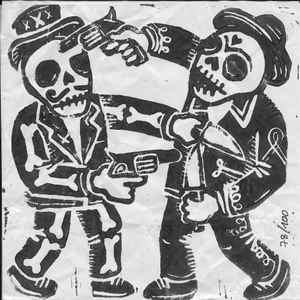
Look down the barrel of the gun you are holding as two equally skilled marksmen look down theirs at you. You pause. If you drop your aim or so much as blink, you will be shot dead from two directions. If you shoot first, that might be the last thing you do. As you shoot one of your adversaries, the bullet from the third has already passed through your heart and embedded itself in the wall behind you.

A Mexican standoff breaks when one side becomes weaker than the other two. Then it is two onto one, although your next fight is with the second strongest, not the weakest.

Skilled fighters need to assess their opponents accurately and win the fight by patience not pride. Two Samurai in ancient Japan might face each other for minutes even hours, before replacing their swords, bowing and walking away. A fight is not worth starting if you are not going to win.

Armies deploy in the same way. At present, Russia and China are glancing at each other and moving, imperceptibly, closer together. That’s the movement that the false Ukraine ‘threat’ is hiding.

But in world politics, something else is happening. The Winter Olympics 2020 is all flags, bunting and lateral flow tests in Beijing. Traditionally a political truce is called for all participating countries. That’s what the five rings intertwined represent.

‘Please leave your armour and swords at the entrance to the stadium, proud warriors from all Greek city states.’

But most Western leaders have refused to attend for reasons that are not hard to find but should they not respect for the International Olympic Committee’s decision, and override your politics? Why was China ever permitted to bid for the Olympics if human rights is an glaring issue for so many?

One world leader had no trouble making the decision to attend; Vladimir Putin. Red carpets (and red flags) were rolled out for him as a line of black limousines slid up to the Birdsnest Stadium VIP entrance. The Olympic opening ceremony was about to begin.

Even before this moment President Putin and President Xi Jinping had already met. In a long statement they expressed their mutual intentions through cooperation as;

Russia and China stand against attempts by external forces to undermine security and stability in their common adjacent regions, intend to counter interference by outside forces in the internal affairs of sovereign countries under any pretext, oppose colour revolutions, and will increase cooperation in the aforementioned areas,”

The ‘adjacent regions’ includes Ukraine, no doubt, and interestingly the sovereignty of such regions is vowed to be mutually respected and defended. Even Putin could never honourably, invade Ukraine after such a statement. And if you are thinking that he is quite capable of lying, do not ignore the single, no-bluff. Putin could choose the ‘honourable path’ and ‘moral high ground’ because he has no intention of invading Ukraine and has nothing to lose by not doing so.

As China and Russia creep closer together the stakes in the poker game change and the facial expressions need to remain unreadable. But two guns versus one gun is dangerous for the one gun.

China and Russia versus NATO (and any countries insane enough to join NATO at this time), is one street fight nobody will ever win.

Perhaps this is the only glimmer of sunshine in a world crisis presently being ignored or unseen by Western media. If anyone shoots, all three will die, so they just continue to face each other down. But every moment focused on the ‘Ukraine Crisis’ is, in my opinion, the sight of NATO blinking and Russia and China seizing the advantage. Bang!

Don’t Bother Us

It happens sometimes, that social norms change. On the balance of probabilities, not all of these changes will be for the better. This leaves the challenging task of pinpointing the changes that are for the worse.
In pursuit of this task, I offer to the reader the common experience of telephoning a company or government department for some purpose or other. When you reach the correct recipient, you are greeted by yet another recorded message. It tells you politely that ‘you are in a queue’ and ‘we apologise for the delay due to an unusual high volume of calls’ and if it can get away with it, ‘call back later’. The caller is expected to think that he or she was in some way, adding to the problem for ringing the company at a busy time. We are expected to blindly accept the company policy of not employing enough call takers to answer the telephone in a timely manner.

You know this because there is never the message, ‘we have failed to employ sufficient people to speak to our customers and not valued you.’

Call Centre

The ebb and flow of demand is in some way is understandable. There is a phenomenon that makes shops sometimes empty and sometimes full. Anyone who has worked in a shop will have experienced this. Companies that operate public transport know that their buses and trains are insufficient to meet the demand in the rush hours and making huge loses the rest of the day. We get that, but it should never be a 24 hour excuse. Customers with any sense are going to use competitors instead, or in the case of government departments, start sending endless emails and create another problem.

My reply is that this attitude or ‘go away’, if accepted, is the ‘thin end of the wedge’. Of course phone calls can often be made again, later, but what happens when the stakes are higher?

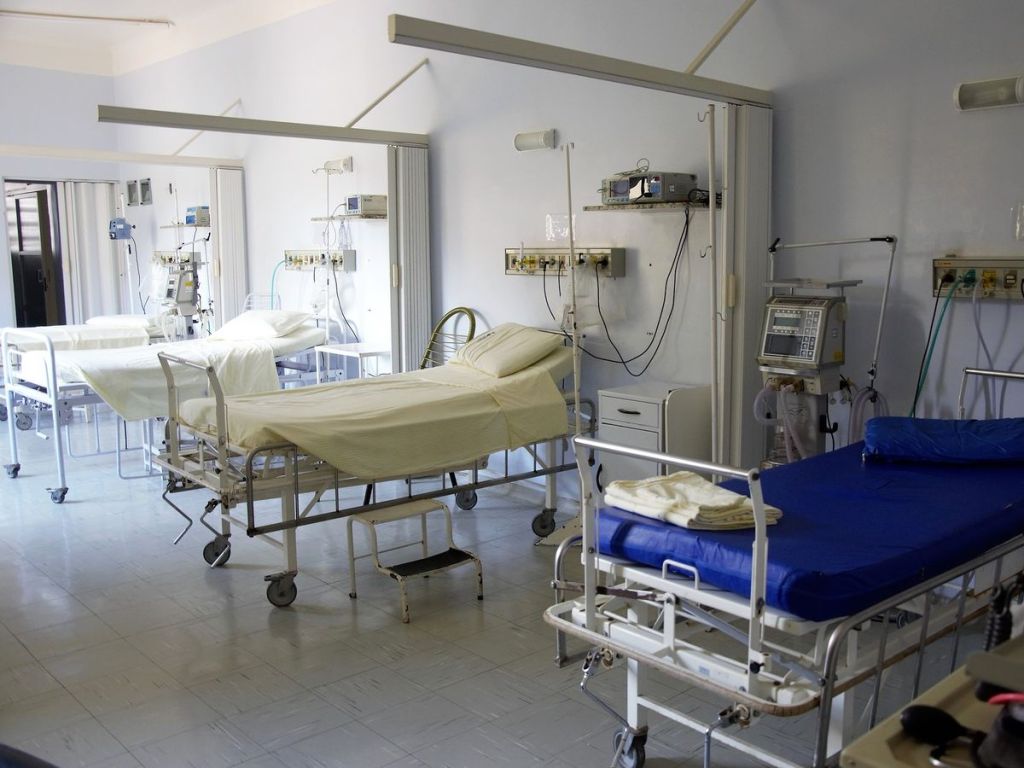
One current example is the manner countries are operating their hospitals during the Covid 19 pandemic. Because of the fear of the hospital not being able to deal with a sudden high demand from patients with Covid symptoms, the solution is to empty the hospitals of other patients and any newcomers; refuse to give them beds. The system of ‘triage’ (treatment according to immediacy of need) is dropped. Cancer patients are sent home and those awaiting urgent operations are told to seek private treatment (certainly in the UK at least).

Picture Credit; Wales Online ‘Patients waiting up to 13 hours for a bed’.

Suddenly the health service’s problem of not having enough hospitals, beds and staff for national emergencies such as wars, famines, plagues, epidemics, pandemics…is not the hospital’s or anybody’s fault except the ill for being too many in number.

‘This situation is completely unprecedented,’ explains the UK government minister, in the hope that the public will accept the lie that pandemics have never happened before and are not at the top of the list of known and planned for threats to public health and social order.

Because society has already accepted the ‘don’t bother us’ reply to reasonable requests. The breaking of Hippocratic oaths by doctors and dereliction of duty and possibly criminal law by hospital managers and government ministers apparently goes unnoticed or at worst tolerated.

There may be differences around the world as to the degree of the point I am making but as a generality, the ‘don’t bother us’ excuse for poor planning and execution has become acceptable.

We should all ask ourselves; are governments guilty of watching people die for lack of or negligent plans for such events? If the current pandemic is not sufficient example to chew on, the next is indisputable.

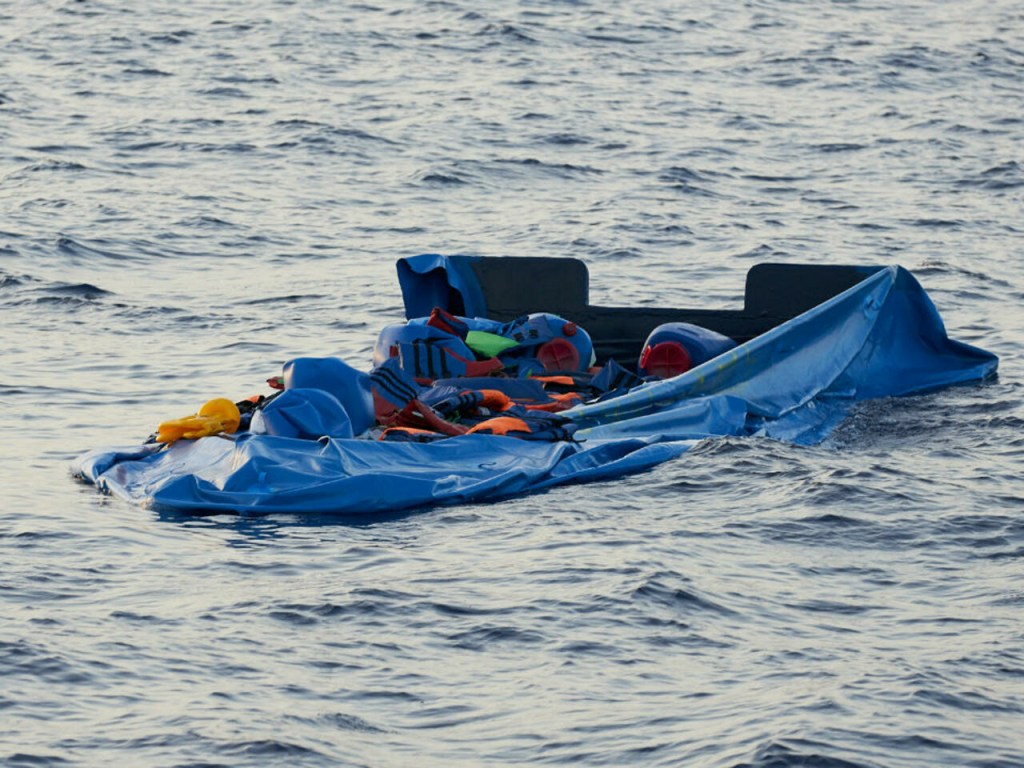
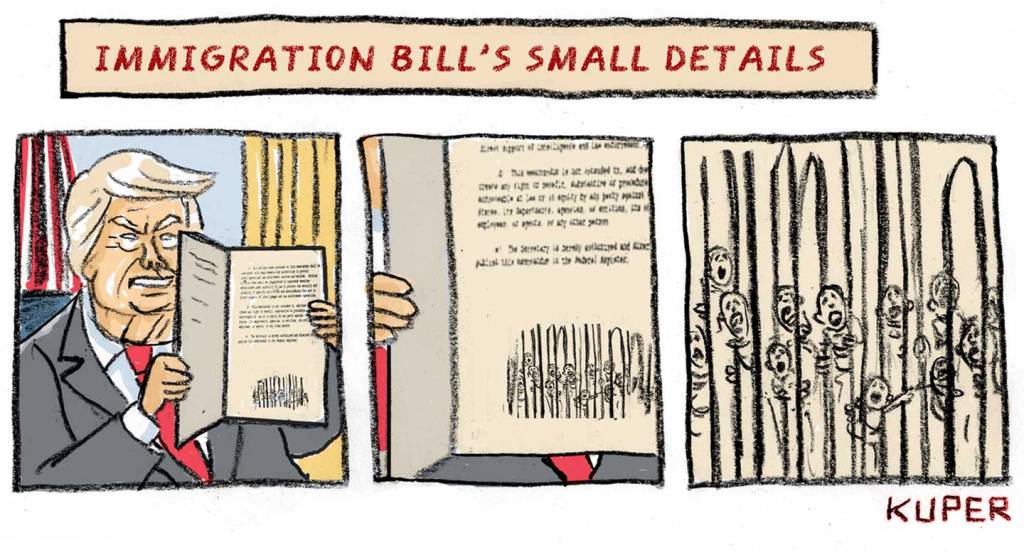
Due to climate change, wars, famine, economic decline, inept and / or corrupt governments in the world today, there are mass migrations of people. Some are seeking a better life, some an easier life, some free hand outs, some legitimate political asylum. The problem of deciding on the motive of these people and whether to accept them as citizens is regularly discussed. In some blocks like the European Union, a policy which is acceptable to all it’s nation states is notably absent.

Historically, countries have prospered when they have had a benign policy to immigration and at times people have been encouraged to migrate and become citizens of say, Australia and the USA. But with more people on the planet than ever before, the sharing of resources is now problematic. Migration has to be controlled in an ethical manner respecting the human right to claim political asylum…but for governments the ever rising numbers of applicants has been put in the ‘difficult’ box.

Picture Credit; Channel 4 ,com

In situations of life and death like this, the ‘don’t bother us’ reply that many governments would like to and have made, becomes immoral and bordering on fascism.

The United Kingdom has experienced a large rise in illegal immigration since it left the European Union. Before, it was able to co-operate with France, it’s nearest neighbour and controller of ports, roads and railways. But since the Brexit kick in the teeth to France, the French have far less interest in being part of measures to control the dangerous crossing of the English Channel. This a 30 mile stretch of water with dangerous tides, bad weather and one of the busiest shipping lanes in the world.

People, families, have died attempting this crossing. One solution promoted by the current Home Secretary, Priti Patel, is to turn migrant boats around mid channel. You might as well erect a sign here or in the straights to Italy or Greece saying, ‘don’t bother us’.

So how is it that the UK can continue this ignorant (meaning to ignore in a base and uninformed manner) attitude and why are there no protest marches demanding taking the problem seriously? After all ‘immigration’ and ‘controlling our borders’ were two problems that swung the vote in favour of leaving the European Union.

Could it be because the citizens of Britain have become used to ‘don’t bother us’ as a reasonable reason for sending people away?

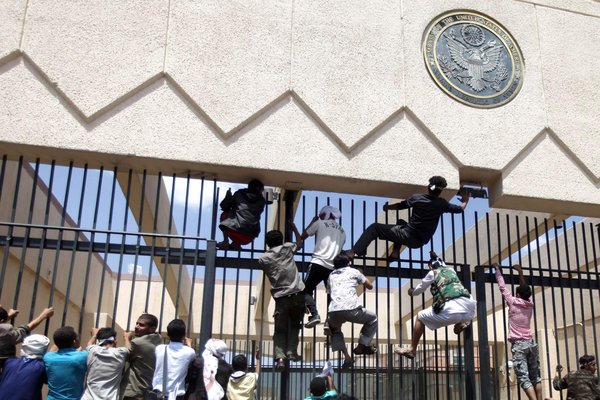
It is internationally enshrined in law, that a person must travel to a country before being able to claim political asylum. You might wish to question why when counting the washed up bodies on the beaches of Kent and Sussex. Why is it not possible to go to the British Embassy in say, the People’s Democratic Republic of Congo and make your case for UK political asylum there? No money will have passed hands to illegal traffickers, no houses will have been sold to pay the traffickers, no political confidences should have been breached creating a need to flee, and documents should be to hand. Certainly staff in any country’s local embassy, will have the best evidence to hand for proving or disproving claims. Even the creation of an ‘humanitarian visa’ for immediate travel would be a step towards respecting the basic human right to life and travel.

picture credit; DiploFoundation

Why is it not so? I recently heard on the BBC radio that the reason you cannot claim asylum in this way is because Embassy’s will be unable to cope with the demand.

This is probably true, at least in the short term. People will be rushing to capital cities and setting up camp sites in the grounds of Embassy’s of their choice. But are they wrong to do this? Are they seeking preferential treatment? No, just wishing to make a claim for international help and avoid the perilous journey at the hands of criminals to safety.

Consider how much better the recent withdrawal from Afghanistan would have been if the processing of refugees was not taking place on the tarmac of the airport under the watchful eye of the Taliban, but in a safe and timely manner in an Embassy? There might be a coffee machine instead of a Kalashnikov.

But as things stand, governments reduce the risk of their various Embassy’s being ‘overwhelmed’ by forcing refugees risk their lives and perpetuated criminal trafficking gangs and modern slavers, before their claim will be considered.

The ‘don’t bother us’ principle is used to justify the injustice of the rules of the nineteenth century being applied in the twenty first. It’s as if the universality of the internet had never happened.

The question we should all be asking is, what will be our next vital need to be refused by our government on the grounds that the system cannot cope? Is their answer something we should question or tolerate?

Prayer and Miracles

Most people have some idea of what a prayer is. They will either pray on the basis of this belief or not. In the West young people are encouraged to pray in school and in some families at home as well. But as common as prayer is, I believe the question is rarely asked, ‘how does it work?’


I do not believe that prayer is a method of ‘getting things’ for yourself. It might be appealing to keep ‘requests to God’ as a back stop to failure in life, but that was never part of the deal with the Almighty. If we remember Genesis, part of the punishment for obtaining knowledge is freewill. That is, if we foul up it’s entirely our fault.


The Arabs have a saying; ‘Trust in God but tie up your camel first’. So when people ask the question, ‘how could God let this happen?’ they are imagining a perfect universe in which God is an autocratic ruler. That would be simple, but turning oneself into a victim and apportioning blame outside of oneself is a philosophy doomed to disatisfaction. It should be comon sense that camels will walk off on their own if not tied to a palm tree. We are responsible for our own actions and that was always the deal.


If you can agree with this philosophy of personal account and blameworthyness, then it is easy to adjust to the reality that God will not respond to prayers asking for earthly personal rewards.
To an intellectual where words are all that there is, this is an unsatisfactory state of affairs. They might become so frustrated by the lack of answers that they form the conclusion that ‘there is no God’. It’s logical but of course, logic does not run the Universe. If it did there would be no access to and need for spirituality.


In my own view and probably others, prayer does create change but an inward change, not outward. If you examine the palmed hands and prostration and kneeling common to many religions, it is obvious that a submissive posture and quiet mind is paramount to effective prayer. The effect of this is like plucking a guitar string in one room and somewhere else another guitar string chimes in sympathy. This is the resonant universe in which all things are connected quiet naturally and without effort. In this way, I argue, we are connected to the all powerful Creator God however you imangine that ‘Mind’ to be.


If you look at sacred imagary throughout history, minor gods and angelic forms are depicted carrying and playing musical instruments. The classic example is angels with harps, flutes and even reeds in the wind are metaphors for resonance between God and the physical world.


Prayer, in any religion, can have the effect of stilling the human mind and spirit to become in harmony with the God-self, that is the tiny part of the Creative Mind within ourselves. This is hidden reason why Muslims are required to pray five times a day, to keep the inner Divine strings humming constantly.


Resonance, to paraphrase the prophet of Islam, Mohammed, (sas) can move mountains.


Tibetan monks in 1939 were recorded by Kjellson levitating huges rocks up a mountainside to build a monastery. They used the power of their long musical horns arranged in a specific pattern and backed by rows of humans in prayer.


By becoming One with the Universe we can create events that we want.
This is part of the paradoxical nature of being alive in which a human with freewill can direct that freewill to union with the Creator of freewill and thus a ‘connection’ that is not connected…as in two strings vibrating in harmony.


So we move on to miracles. I said at the begining that prayer is not a means to get what we want. That was not quite true because there is an exception and that is miracle making.
There are rare moments (and by that I mean very rare) where Divine intervention at a resonant level as described, can make a humble individual ‘all powerful’.

Jesus the Christ was revered for his miracles, some of which are described quite literally in the Holy Bible and some allegorically. An example of a literal miracle is raising Lazarus from the dead, something Jesus was taught to do by the gnostics of the time. An example of an allegorical miracle would be turning water into wine.
In the old testament we have the Israelites being chased by the mighty Egyptian army and trapped by the Red Sea. One faithful follower entered the waters and started to walk. At the point where his head went under water the seas parted.


So if we ignore the allegorical stories about miracles as having another purpose, we can see the common theme that real miracles happen when an individuals or a collective’s very existence is in danger of extinction. It may not happen at a time and in accordance with human desire.


Delay and misdirection are caused by the impurity of our human resonance with God, not the other way around.
As the old saying goes, ‘the pot always calls the kettle black’. So the sooner we stop ignoring or doubting His prescence within each one of us, the sooner our lives will change.
You Will Own Nothing and You Will Be Happy

Quotation from ;The Great Reset by 2030 – World Economic Forum

What do the bad guys usually want? From the Blofeld’s and Goldfingers of our imaginations to the Alexander the Greats and Caesars, we might think the answer is, ‘world domination’.

In our present era, there is indeed smoke in the air warning us of a world conflagration. The word ‘global’ is something we are accustomed to hearing; in a way that would not have been, say one hundred years ago.

Since then, we have had round the world flights and sailing navigation’s and of course two world wars. Now we are told of a global climate emergency. Global is the new National.

Sadly, for we had to wait until the sea was lapping at our toes and the wind spinning away our hats before taking responsibility – if that was achieved at the recent COP 26 in Glasgow. Those living near the sea may be wise to go out and buy aqualungs.

picture credit Bulletin of the Atomic Scientists

Concurrently we have yet another global emergency called the ‘pandemic’. This could also have been better prepared for, as humanity has been fighting virus’s for it’s entire history and has never been so well armed to respond as we are today; even if the common cold has escaped elimination.

And then there is China, and the Chinese Communist Party. When I studied China in school fifty years ago, the Chinese people went around on flocks bicycles and ‘stuff’ was made in Hong Kong. Now the Chinese are the center of the world’s commerce and principle producer of goods. This is driven by low wages, long hours ( ‘search engine ‘ the numbers 669) and economical (though global climate harming ) global traffic and trade. Most Pacific rim nations view the highly capable Chinese military as their principle threat and many human rights organisations lay numerous allegations of inhumanity, at the door of the Chinese leaders.

First Chinese bicycles. Historical artwork of people riding bicycles in Shanghai, China, in 1900. Taken from: Histoire de la Locomation Terrestre, published in Paris in 1936. Credit Science Photo Library

Is all this global Covid, Climate and China just chance or should we be suspecting ‘foul play’ on a scale never conceived of before?

If humanity feels it is being forced into a corner with basic freedoms being taken away, why is this and who is doing it?

In my view the ‘giant at the top of the bean stalk’ is technology. No one ever voted for new technology. A few scientists have had second thoughts on realising how destructive their discoveries are e.g. the A-bomb…but most inventions, like the washing machine, set us free.

For the freedom loving democracies, life, in my view, is about to become a whole lot less free. To understand the means to this end one must only look at China and how it uses technology to control in fine detail, the lives of it’s citizens. CCTV cameras produce images with names and numbers floating above each face in the supermarket or airport concourse. Money as cash has long gone as it cannot be traced. Instead citizens wave their phones at tills in shops and the transaction goes straight to CCP headquarters…just in case they might need it.

picture credit : My London

By the time it reaches Europe and the USA I predict mobile phones will enable our governments to more or less monitor and control our lives. Everything you are and do will go to a special sealed circuit board in your phone. It will be called your ‘Freedom Pass’. Sounds okay doesn’t it, but read on. Interestingly Elon Musk has other plans to insert this techology directly into your brain, something that may be used instead of or as well as mobile phones. Both will of course be presented as benefits to the individual.

‘Everything you are’ means your personal details and bio metrics, consumer profile, money and possessions, travel, education, health and politics.

‘Everything you do’ means your work and leisure, credit and tax records, work skills and placement, travel credits, health status, voting credits.

The first of these should not surprise us as this is what computers do and have been doing since the 1990’s. What we haven’t reached yet is the experience of having our money and assets frozen because we voted for the wrong party ( oh yes, you will use your phone to vote ) or our self drive car restricted to no further than a five mile radius, (known as a withdrawal of travel credits ) because we put up a post on social media criticising the government.

Cleverly your ‘Freedom Pass’ will measure your ‘credits’ not take your ‘freedom’ away. It will just take credits that you were awarded for following government protocols, away. Your fault, not the governments.

If this future shocks and horrors you then there is an alternative, but be warned, it is not for the faint-hearted.

picture credit Maribyrnong City Council

The alternative is to throw your mobile phone into a lake. Some of us lived before mobile phones and before domestic computers and I can assure you, life was fine and dandy. Birds sang, beaches were clean and people made love not war.

If you fancy this lifestyle today it is probably because you are spiritual. I mean by this that for your life is not just about local gossip and watching TV and going to the supermarket – the sort of life style acted out on the TV soaps.

Those who have a deeper vision of what it is to be human and free will probably be either extremely rich ( so that they are part of the Global Government Party ) or spiritual. By spiritual I encompass all religions and those who have a feeling of a Divine presence or if you prefer ‘goodness in life’. For them it is not important if the supermarket refuses to accept payment because their money credit has been taken over by the State. There is an option, an alternative lifestyle that is not ‘Mad Max’.

You will have to leave the cities, where 50% of humanity have already been funneled. Eventually most people will eventually be sent to cities in order to ‘protect the environment’ or ‘preserve a scientific special interest zone’ or some other ‘desirable noble cause’. In reality it is to put the sheep in their pen.

Freedom lovers will vote with their feet and choose to live in small self-sufficient communities in remote locations. The governments will be powerless to stop this because they will not need to. People living ‘off the grid and off the net’ are no threat to what governments are aiming to achieve. However hard you try to grow just corn, there is always a corner or a dip in the field where weeds grow. Governments know this.

picture credit: Educalingo

There will be ‘sheep’ and ‘goats’ in most countries across the globe. The sheep will be tended for their basic needs but under the watchful eye of the sheep dog. The goats will move to the wild lands, too high for sheep, too few in number for the sheep dog to chase.

Perhaps you will see in front of you the stairs that enable believers to climb into the ‘New Earth’ as Dolores Cannon calls it. Your vibrational level will change your perception fundamentally. Dolores uses the metaphor of an aircraft propellor which becomes invisible when it changes frequency of spin.

So even though your are still here , you will not be. What was important in the material world will become inconsequential. As a Tibetan monk once told the Dalai Lama after 18 years of captivity by the Chinese, ‘I was in danger twice. Both times because I came close to not forgiving my captors.’

Agro and Shampoo

What is it with Hotels? I have to admit to having a problem with them.

The clue is in each hotel room. Central to the arrangement of most hotel rooms is a bed and a bed is generally, for sleeping in. And there we have the crux of where I find most hotels get it wrong. The whole notion that their guests basically just want to comatose, appears to be foreign to them. Because of this fundamental misunderstanding, much of what hotels provide becomes a waste of effort and money for all parties. People who want to sleep and or are asleep, do not require a conference suite, a swimming pool, a spa, a restaurant, a dining room, a library, a grand view of the city, an entertainment programme, a stage, a discotheque, wide screen television for sports coverage etc. etc.

We just want a bit of peace, and a toothbrush.

hotel shampoo

Instead, you get aggravation and cheap shampoo.

The problem with so called ‘facilities’ is generated in part by the hotel star system, which awards stars not on the quietness of the hotel and politeness of its staff, but on the breadth of it’s facilities.

I can accept there may be families and business travellers who intend to spend days and weeks in the hotel and need these things. In this case these quests should be directed to hotels which do not provide an environment for guests to sleep.

If I were head of the United Nations Peace on Earth Commission (if they don’t have one, they should), I would categorise hotels between places of rest and the rest. I would award ‘bed’ symbols for quietness rather than ‘stars’ for what are sources of sleep deprivation.Hotels

Perhaps it is time to give some examples of what I mean. I look back to earlier last year when I went with friends to a charming town in the Alpujarras in Southern Spain. The hotel where we stayed the night had a central courtyard around which corridors accessed private rooms. The floors and walls were compleltely tiled. This meant that every footstep was amplified depending on the size of guests steel toe caps. Every cough, conversation and slamming door, was heard by everyone. My friends in the morning, complained that they had to endure a woman talking for two hours on her mobile phone in the corridor, before they could get to sleep.

Continue reading

Dynamic Resources

I want to point out a problem that defies a solution in present international law.

It is about ownership of ‘resources’ by nation states. We know that many disputes have started over this issue so in my view it needs absolute clarity.

The issue is like where we find water. It is either static like in a lake or dynamic, as in a river. Nations acquire rights over lakes and that is simple. But when the resource is moving there are many parties interested to the water, in addition to the owner of the lands over which it passes.

The concept of a nation ‘owning’ both it’s static and dynamic resources, can lead to a loss of those resources to neighbouring states and in some cases, the whole planet.

Picture Credit: British Antartic Survey

The Antarctic Treaty was drawn up and agreed by twelve nations on 1st December 1959. It aims to protect the freedom of scientific investigation by peaceful cooperation. In reality it does a lot more than that. Antarctica is unique in being protected as a shared and protected world resource and the planet is no doubt a better place because of this.

However, global warming is affecting Antarctica. Glacial shelves are breaking off as giant icebergs with increasing size and regularity. Fresh water previously frozen is and will, affect ocean currents which in turn change climates.

Such issues are normally ‘dealt with’ by the government of that country but in this case there is no such responsibility held by a nation state.

This illustrates how the legal concept of ‘it’s in my country so I own everything in it’ sometimes falls short. The rule of thumb works in most countries but clearly not always.

Picture credit: Alliance Photo

When we forensically consider the case of a country ‘owning’ a resource because it is within that country’s boundaries, neighbours and or the whole planet, can be affected. For instance, the rain forests of South America are, or were, regarded as the ‘lungs of the planet’. They absorbed CO2 gas, slowing one of the main causes of climate change. If we examine the attitude of Brazil to it’s rain forest, the Bolsinario government refuses to be advised by non-Brazilian interested parties. It claims the right to destroy the rain forest and all the resources it contains. The rights of the indigenous tribes are also not respected.

If I found a hoard of Roman gold coins in my garden I would have to inform the government of the country I live in, let us say the UK. They might regard the ‘trove’ as a national treasure an take away my right to it’s worth. Or they could give all or part of it’s value to me, depending on the higher national interest. In this case a ‘lesser owner’s’ rights are trumped by a ‘higher owner’s’ rights. This concept could be appropriately upscaled to national and international rights. The latter trumping the former where the international interests serve a higher purpose than short term economic gain. At present this would not work because legal rulings require the threat of sanctions or even physical force if ignored. There are only limited means to do this at present.

Yet there is another perspective achieved when we consider just the dynamic resources of the country; those most like to be problematic. Dynamic resources are not rooted to the soil like trees and minerals. A simple example is water again. A river may often pass through several countries before it discharges into a greater body of water. Who owns this water as it moves? When the river flows at a constant speed and volume, then the concept of owning the water as it crosses ‘your’ country works. When the rainfall drops or a country near the source of the river pollutes it or decides to build a dam, then they are problems. Such a dispute is occurring between Egypt and Ethiopia at the present time as Ethiopia builds a dam to create hydroelectricity from the Blue Nile.

A moving resource should clearly respect the rights of all countries. As it passes though several countries each should have a right to influence it’s management.

picture credit: Eastbourne Herald The River Cuckmere East Sussex England

Lawyers and Diplomats would clearly have a great deal to think about to formalise this concept But the world should not delay in my view. Every migrating bird, every ice berg, every bee and butterfly is a shared resource capable of influencing the well being of every human being.

The human race is presently facing an era of catastrophes caused by increasing populations desiring finite global resources and climate change. Denial of these facts was a phase in the 1970’s but not anymore.

When we consider how vital dynamic resources are, it is clear that many are jointly owned and enjoyed by all of humanity. In addition, human beings share a right for dynamic resources not to be destroyed or degraded. The concept of one country having a right to pollute water before it enters it’s neighbour’s land, should be trumped by an international law.
picture credit: NASA

Whales travelling through oceans have no concept of the countries they are passing. Why should one particular country, such as Japan, feel it has rights over whether these whales should live or die? If the consensus of the world is that the whales should not die, then an international body should have to power to order their protection.

Such a body could come under the wing of the United Nations. The chamber might find itself debating the right of the Brazilian government to destroy the Amazon rain forest for Brazil’s short term economic gain and the world’s long term loss. The debate would include the unique forna and flaura and the rights of future generations to have access to this DNA bank. The forest contains chemicals with medicinal properties, viruses that should never be released and countless creatures that once lost, will never be replaced. The neighbouring countries to Brazil, could demand their right to not have desert and refugees, wildlife and viruses crossing into their countries. The indigenous people would also be empowered to demand respect of their rights to the dynamic resources of the forest, in addition to their ancestral land rights.

If the resources that are dynamic are given the international status they deserve, there will be fewer international conflicts over ‘me and mine’ and more co-operation or ‘us and ours’.

Laws work when they embody truths the are Universal. If they are applicable in every corner of the Universe at all scales, they are more enduring and relevant than passing political values. The law would be called The Global Treaty of Dynamic Resources 2021.

Such a law and it’s enforcing body, will become even more important when humans begin to explore new planets and space. It might well be expanded to include static resources. The race to mine the moon that we see today, is about commercial rights to resources that are becoming scarce on earth, so called ‘rare earth elements’. Similarly, the filling up of the earth’s upper atmosphere and deep space with satellites, needs strategic guidance to avoid commercial exploitation and associated ‘space wars’.

If humans don’t get this right, then the next phase after the literal ‘carving up’ of our beloved planet, will be the ‘carving up’ of space and a repitition of the resource-driven disputes and wars in history. Even Helen of Troy was a dynamic resource and if a ruling had been made by a respected Greek god, the Trojan wars would never have happened!

One comment made by many of the men and women who have looked down on earth from space is that there are no national boundaries. We are so used to political maps that the real picture has, until now, been hidden by nationlism. Globalism, whether desired or not, will be the next paradigm for planet care, in my view. Without it, shared dynamic resouces will be seized or destroyed by the short term priorities and political ‘gain’ of politicians who rule without a trace of compassion for the people or the planet. You know who they are.

picture creadi: Pinterest